
EARLY MOBILIZATION FOR TECHNOLOGYDEPENDENT CHILDREN Asa Cook Jerimiah

EARLY MOBILIZATION FOR TECHNOLOGYDEPENDENT CHILDREN Asa Cook, Jerimiah Lorentz, Chimezie Ileje

BACKGROUND
Mobilization in Recovery ■ Physical activity sufficient to elicit acute physiological effects that: – Enhance ventilation – Central and peripheral perfusion – Circulation – Muscle metabolism – Alertness Saoirse Cameron et al
Benefits of Mobilization ■ Shortened hospital stays ■ Fewer ventilator-dependent days ■ Better functional status upon discharge ■ Decreased muscle loss Saoirse Cameron et al

Technology-Dependent Children ■ Common Conditions Include: – Neuromuscular disease – Congenital abnormalities of lungs/airways – Complications from serious injury, illness, or surgery ■ Equipment – Gastrostomy and Jejunostomy Tubes – Ventricular Shunts – Baclofen Pumps – Indwelling Central Venous Catheters – Tracheostomies Society of Hospital Medicine
Need Statement ■ Mobilize technology-dependent children to support recovery ■ Lack of child-friendly physical therapy technology ■ Reduced accuracy of assessment of recovery progress
Project Scope We propose to deliver a portable mechanical device that converts a patient’s physical effort into an engaging display for a technology-dependent child and quantifiable data accessible to a clinician. It is essential that children are encouraged to complete the necessary exercises so that their documented progress is accurate. We will deliver a prototype of the device, along with diagrams, user instructions, and other documentation appropriate for reproducing the product, to Dr. Allan Doctor by April 23, 2018.

DESIGN REQUIREMENTS
Safe for Use ■ User with limited range of motion ■ Must accommodate wires, tubes, accessories of medical equipment ■ Electrically insulated ■ While in use – must occupy < 0. 5 m 3 – Not exceed 1. 5 m in any dimension
Support Patient Use ■ Accessible to user positioned 0 – 45° parallel to ground ■ Withstand forces applied by users (Human Performance Capabilities) – Grip force 800 N – Pedal force 800 N
Motivate User to Engage in Physical Activity ■ Attention span rule of thumb: 3 – 5 minutes/year of age (Fort Carson MEDDAC) ■ Interface engages user for 3*y minutes
Enter and Exit Room Easily ■ Transportable through 2. 03 x 0. 91 -meter door ■ Moved with under 120 N of Force (Das and Human Performance Capabilities)
Convert Mechanical Effort into Output Desired by User ■ Record duration and intensity of physical activity ■ Output based on existing therapy data ■ Accuracy of calorie counter within 25% (Park)
Provide User Progress ■ Accessible to physicians, caretakers, and patients ■ Simple report: images and < 20 words ■ Detailed report: measurements within 3% error (Poon)
Simple to Use ■ Used in home, hospital, or rehab center ■ Setup time < 5 minutes for first-time user
Budget of $1000 ■ Cost of prototype – User Interface – Mechanical components – Computer ■ Seeking departmental and outside funding

EXISTING SOLUTIONS
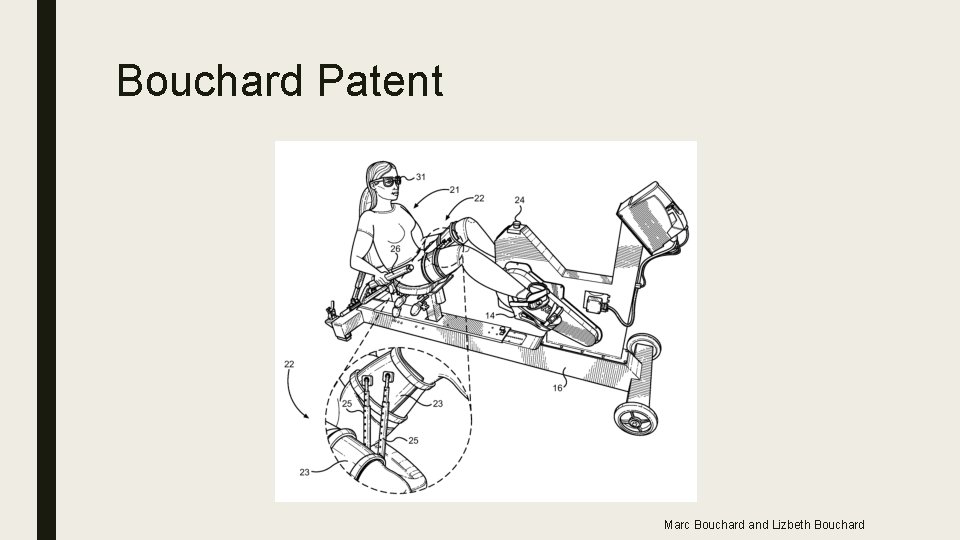
Bouchard Patent Marc Bouchard and Lizbeth Bouchard
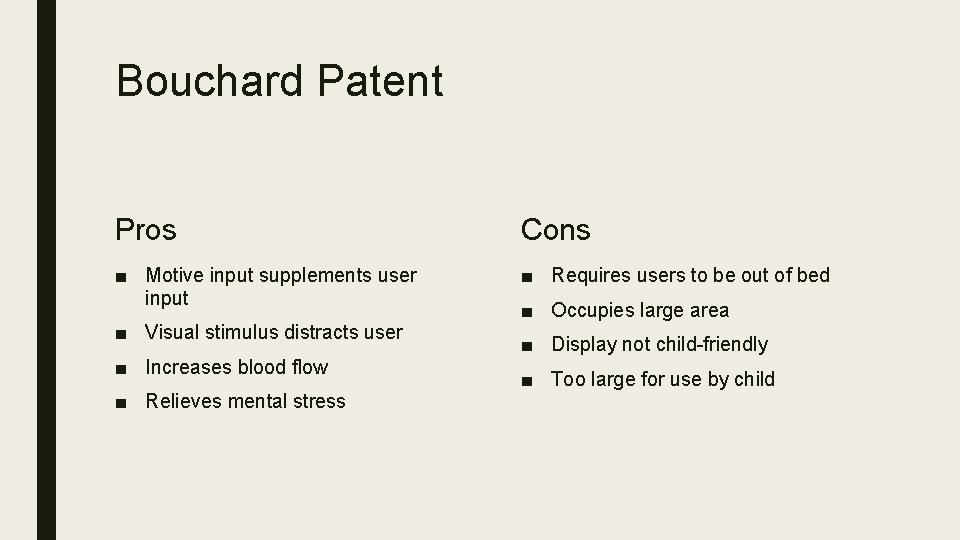
Bouchard Patent Pros Cons ■ Motive input supplements user input ■ Requires users to be out of bed ■ Visual stimulus distracts user ■ Increases blood flow ■ Relieves mental stress ■ Occupies large area ■ Display not child-friendly ■ Too large for use by child
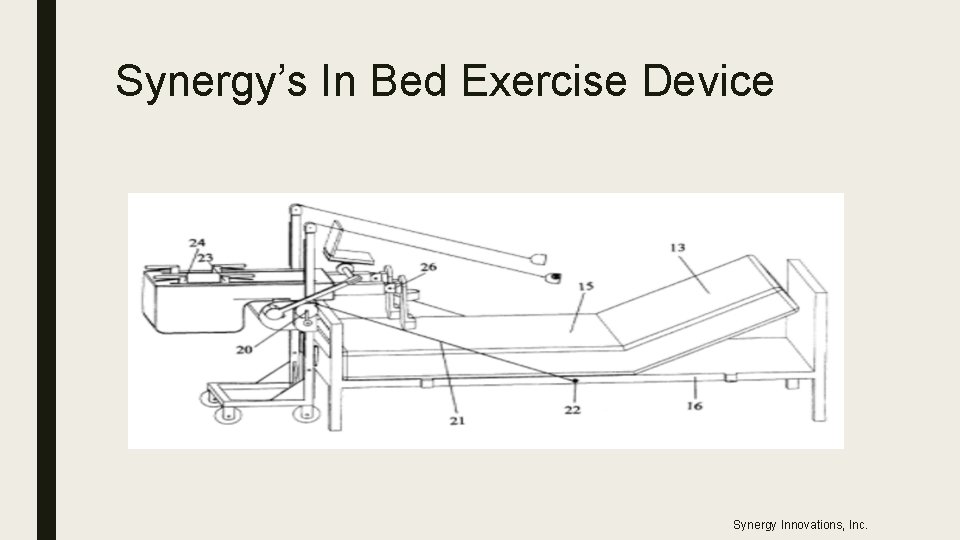
Synergy’s In Bed Exercise Device Synergy Innovations, Inc.
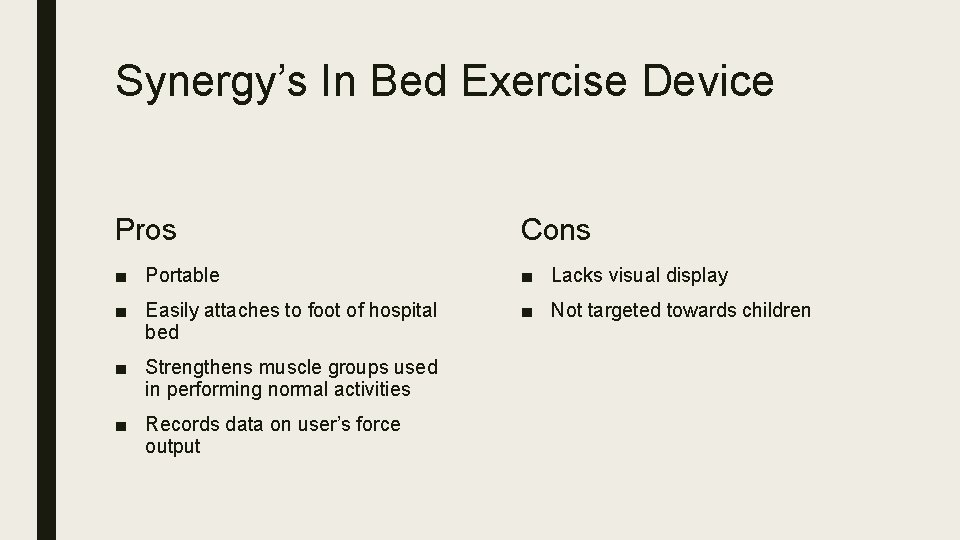
Synergy’s In Bed Exercise Device Pros Cons ■ Portable ■ Lacks visual display ■ Easily attaches to foot of hospital bed ■ Not targeted towards children ■ Strengthens muscle groups used in performing normal activities ■ Records data on user’s force output
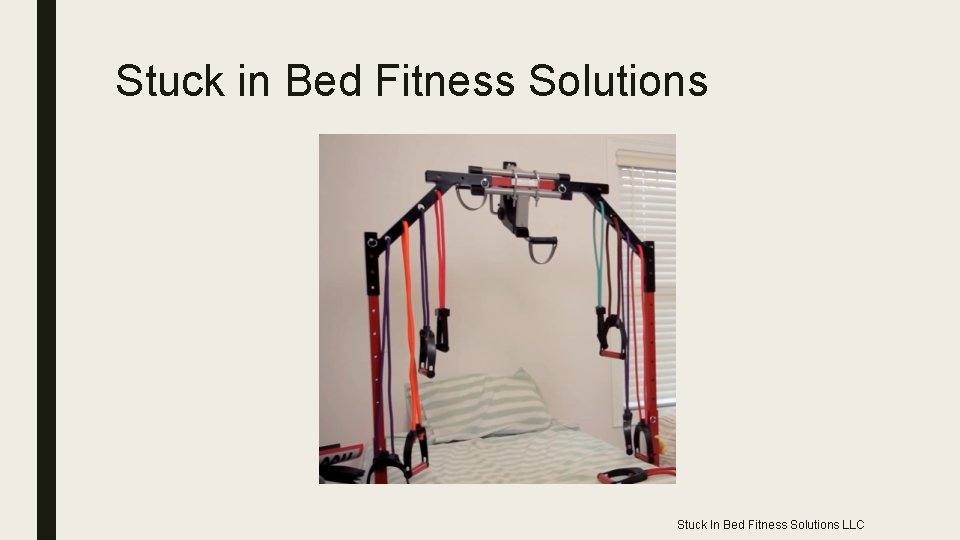
Stuck in Bed Fitness Solutions Stuck In Bed Fitness Solutions LLC
Stuck in Bed Fitness Solutions Pros Cons ■ Able to engage entire body ■ Lacks interactive interface/display ■ Designed for rehabilitation ■ Relies solely on user input ■ Accessible to individual laying in bed ■ Not child-friendly
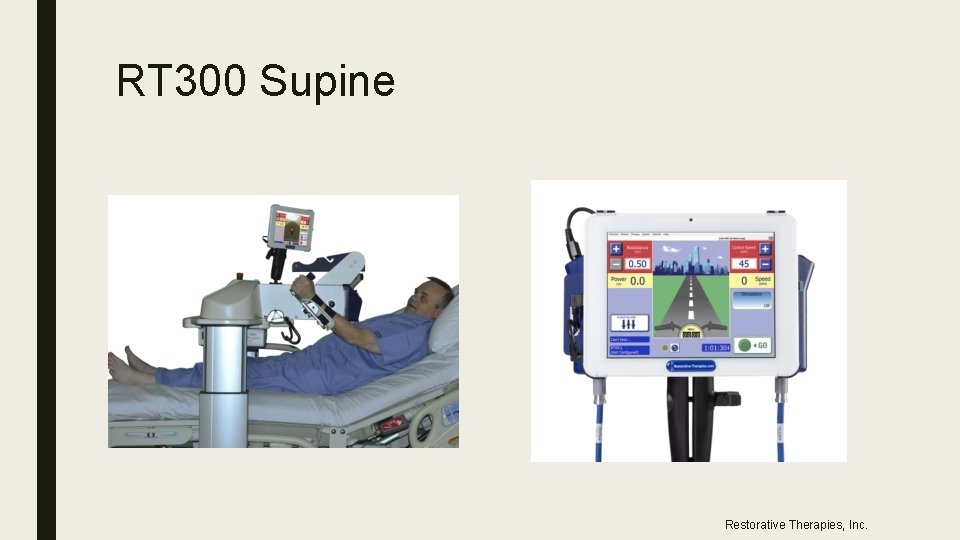
RT 300 Supine Restorative Therapies, Inc.
RT 300 Supine Pros Cons ■ Reclined user can operate with arms/legs ■ Display not child-friendly ■ Interactive visual display of biker ■ Adjustable height ■ Wheels allow for easy transport ■ Completely surrounds bed ■ Large

OUR DESIGN TEAM

Asa Cook ■ Graphic Design ■ Funding Manager ■ Website Creation and Management ■ Literature Review (Background)
Jerimiah Lorentz ■ Software Development ■ Literature Review (Existing Solutions) ■ Website Management

Chimezie Ileje ■ Hardware Development ■ CAD Design ■ Literature Review (Specs) ■ Website Management
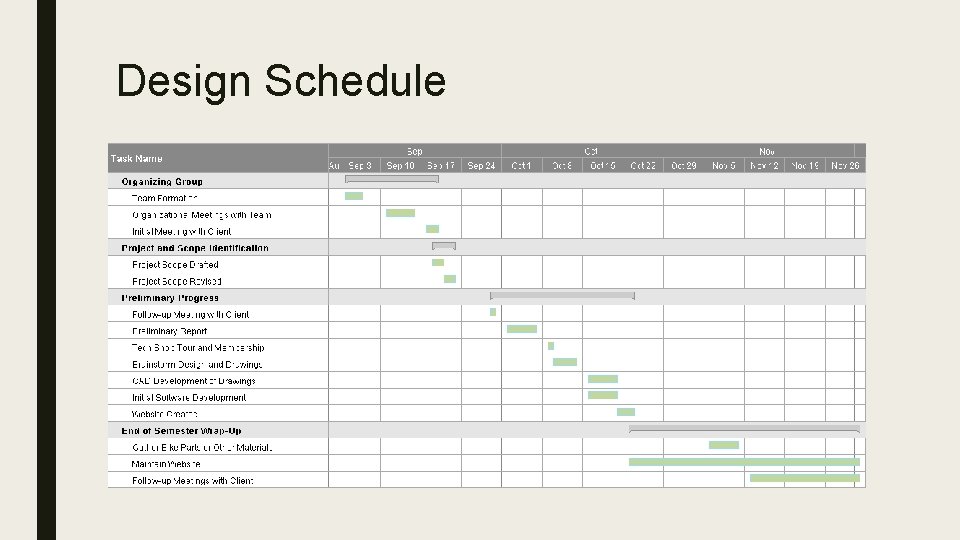
Design Schedule
Sources ■ Barriskill, Andrew Bruce, Scott Simcox, Robert Flesher, and Susan Harkema. Supine Cycle. Restorative Therapies, Inc. , assignee. Patent US 9511256 B 2. 6 Dec. 2016. Web. ■ Bouchard, Marc, and Lizbeth Bouchard. Motorized Lower Body Rehabilitation Device and Method. Marc Bouchard and Lizbeth Bouchard, assignee. Patent US 20120329611 A 1. 6 Dec. 2016. Web. ■ Cameron, Saoirse, et al. “Early Mobilization in the Critical Care Unit: A Review of Adult and Pediatric Literature. ” Journal of Critical Care, vol. 30, no. 4, 2015, pp. 664– 672. , doi: 10. 1016/j. jcrc. 2015. 032. ■ Das, Biman. Advances in Human Strength Measurement and Modeling in Workspace. Advances in Physical Ergonomics and Human Factors: Part I, AHFE Conference, 2014, p. 293. ■ Fort Carson MEDDAC. Attention Deficit Disorder (Short Attention Span), 2000. ■ National Aeronautics and Space Administration. “Human Performance Capabilities. ” NASA, 7 May 2008, msis. jsc. nasa. gov/sections/section 04. htm. ■ Poon, Leonard W. “Active Living, Cognitive Functioning, and Aging. ” Active Living, Cognitive Functioning, and Aging, Human Kinetics, 2009, p. 100. ■ Society of Hospital Medicine. “Technology Dependent Children. ” Journal of Hospital Medicine, vol. 5, no. S 2, 8 Apr. 2010, p. 80.
- Slides: 31