
Early Middle Ages Life in Western Europe after
- Slides: 28
Early Middle Ages: Life in Western Europe after the Fall of the Roman Empire
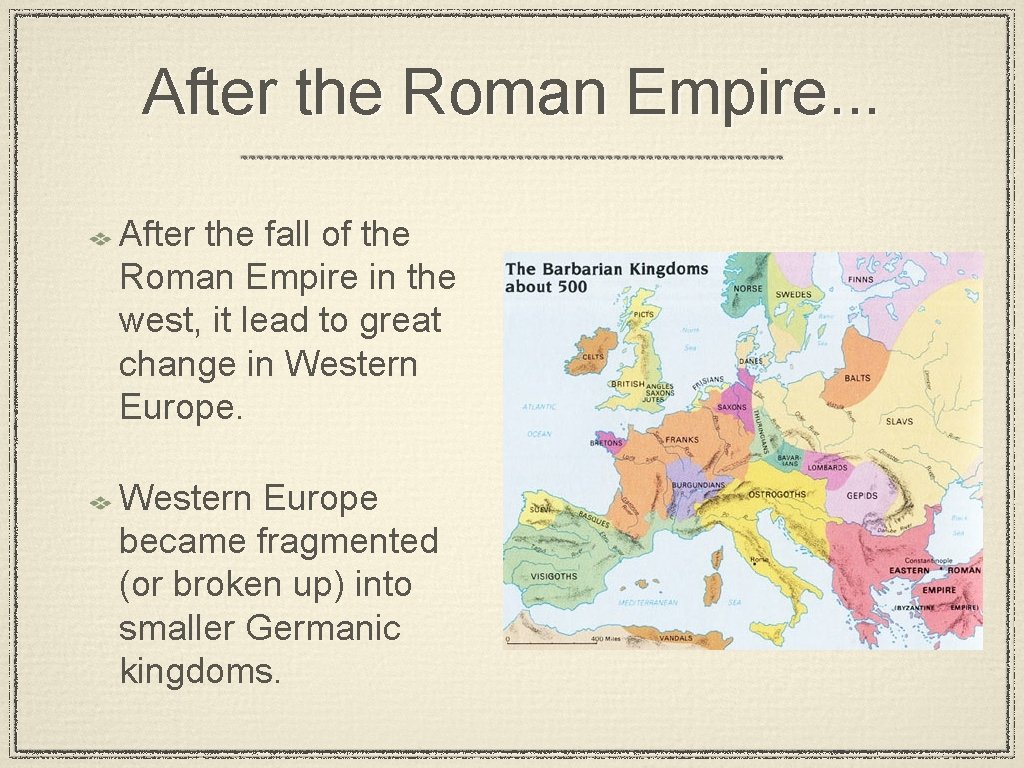
After the Roman Empire. . . After the fall of the Roman Empire in the west, it lead to great change in Western Europe became fragmented (or broken up) into smaller Germanic kingdoms.
Germanic kingdoms The Germanic tribes could not read or write so learning declined The Germanic tribes carried on a rich oral tradition of songs and legends but usually no written language No common language as Latin began to change from region to evolve into the Romance languages (French, Spanish, Italian, etc. )
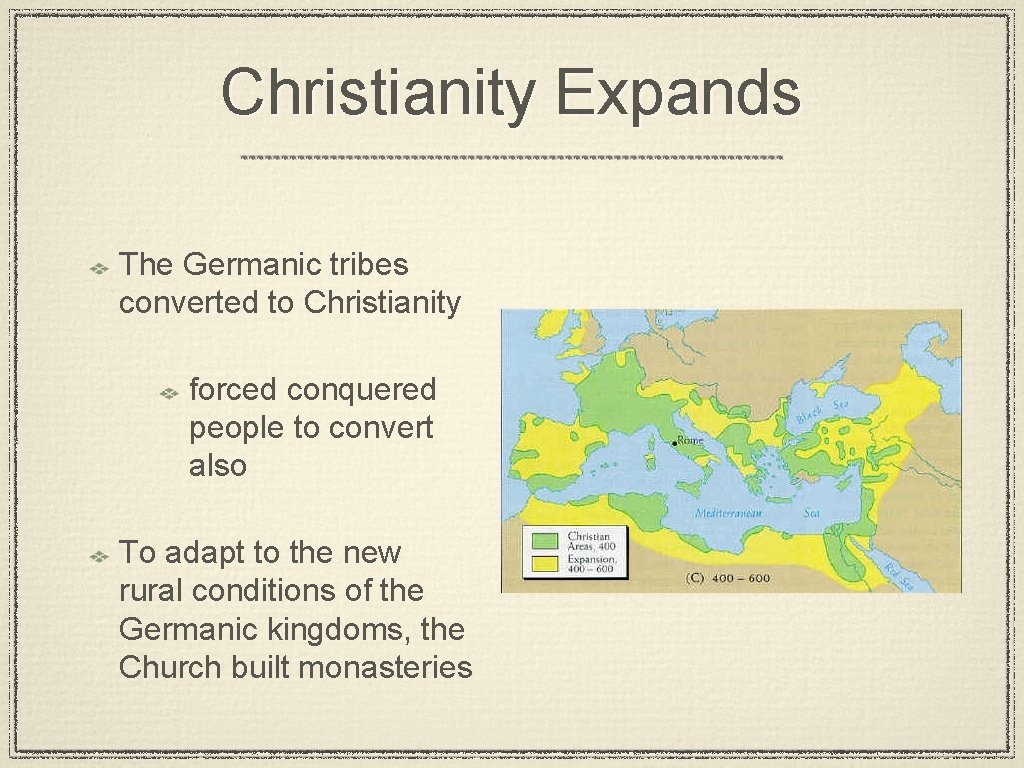
Christianity Expands The Germanic tribes converted to Christianity forced conquered people to convert also To adapt to the new rural conditions of the Germanic kingdoms, the Church built monasteries
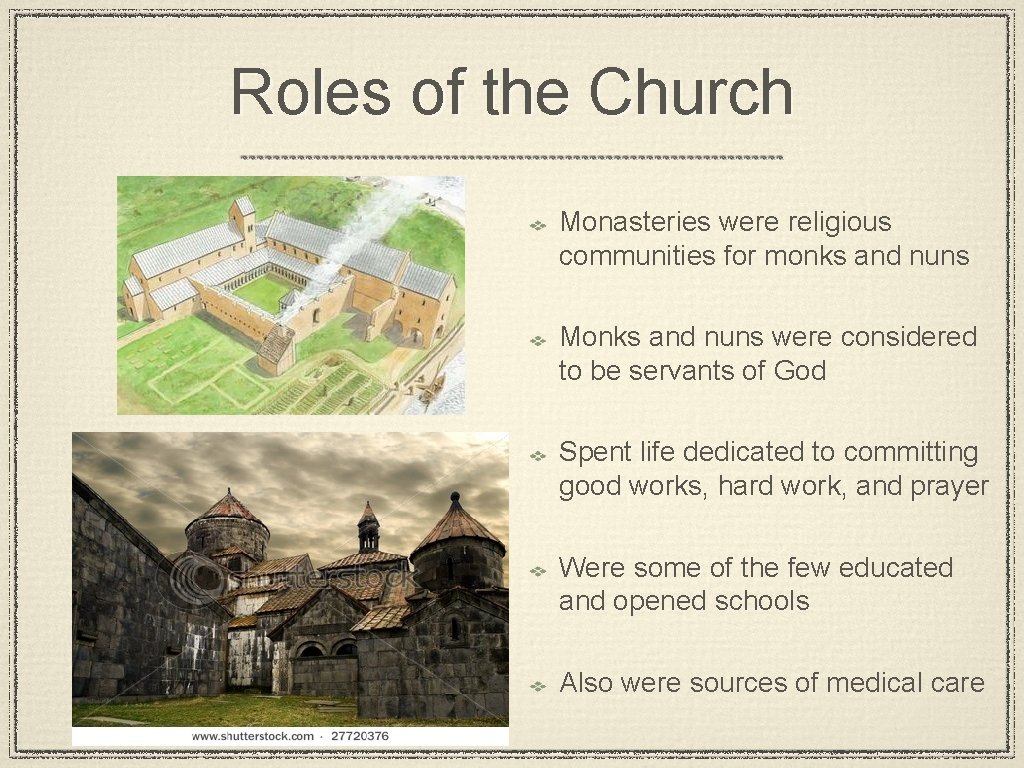
Roles of the Church Monasteries were religious communities for monks and nuns Monks and nuns were considered to be servants of God Spent life dedicated to committing good works, hard work, and prayer Were some of the few educated and opened schools Also were sources of medical care
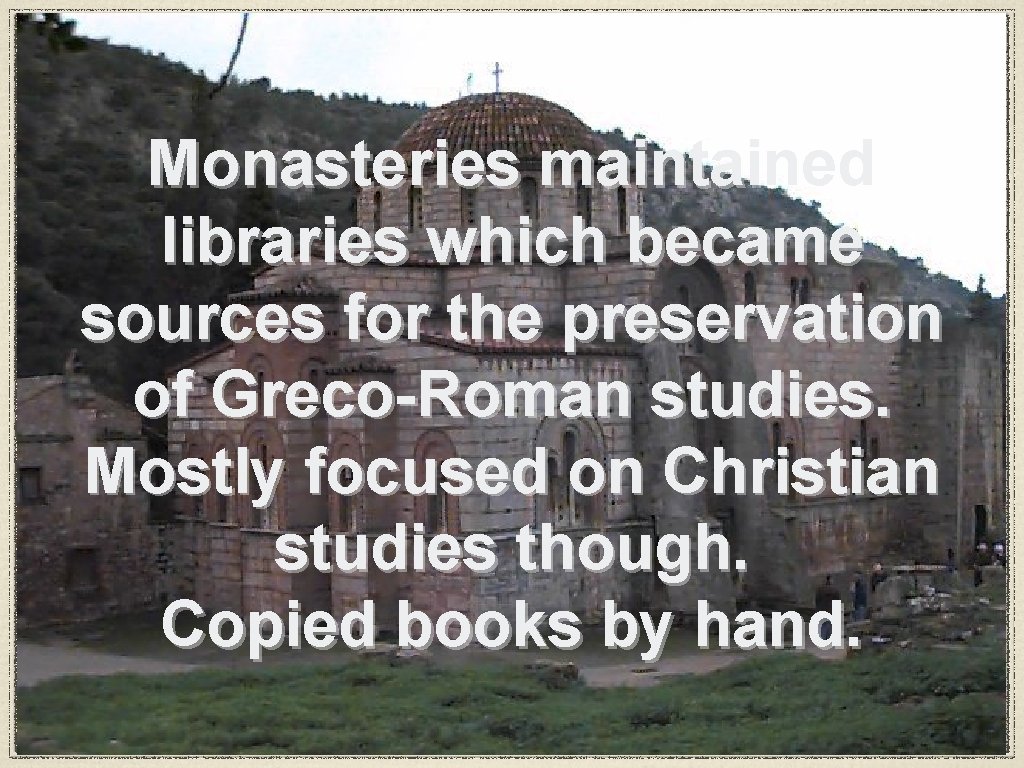
Monasteries maintained libraries which became sources for the preservation of Greco-Roman studies. Mostly focused on Christian studies though. Copied books by hand.
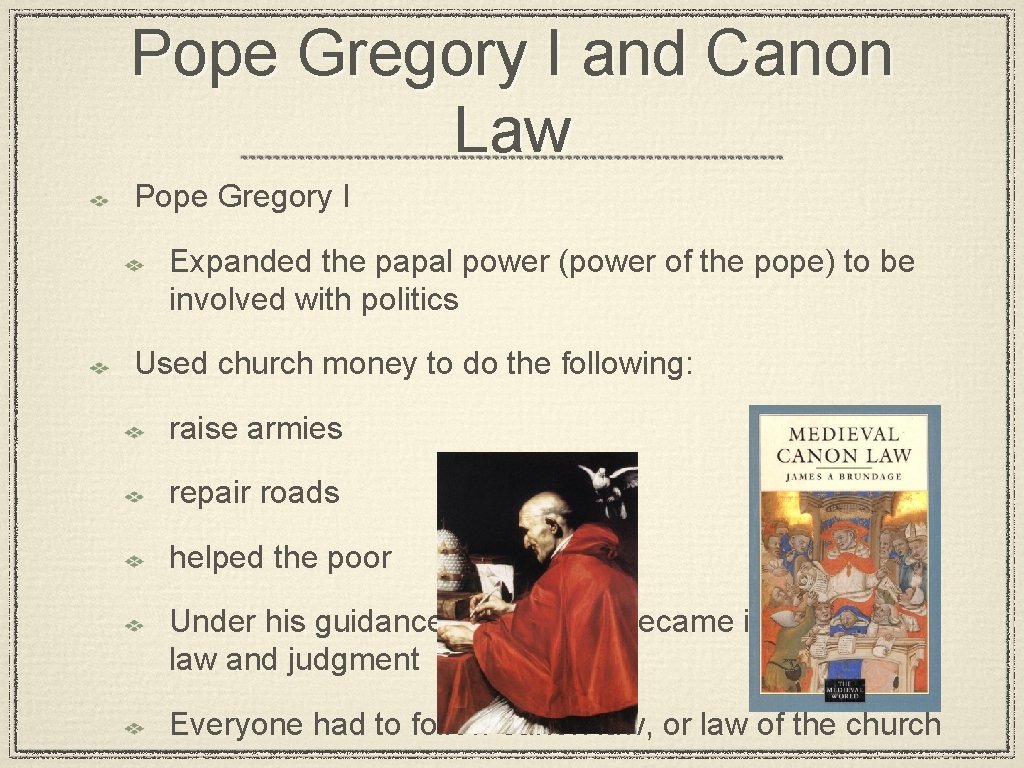
Pope Gregory I and Canon Law Pope Gregory I Expanded the papal power (power of the pope) to be involved with politics Used church money to do the following: raise armies repair roads helped the poor Under his guidance, the church became involved with law and judgment Everyone had to follow canon law, or law of the church
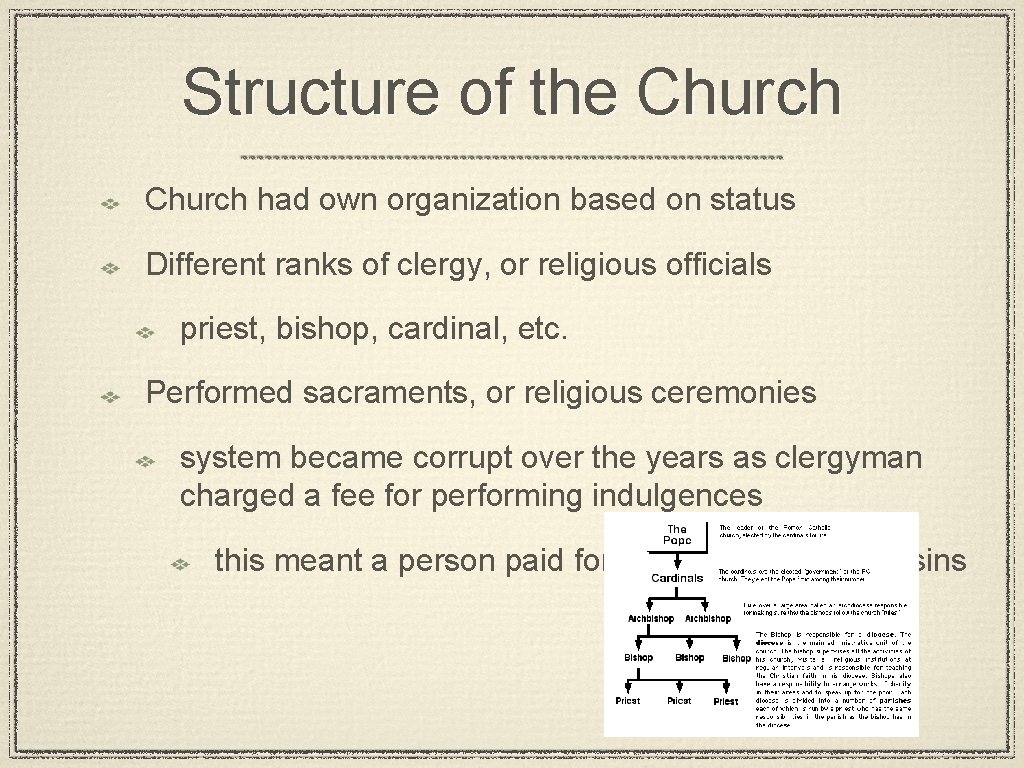
Structure of the Church had own organization based on status Different ranks of clergy, or religious officials priest, bishop, cardinal, etc. Performed sacraments, or religious ceremonies system became corrupt over the years as clergyman charged a fee for performing indulgences this meant a person paid forgiveness for their sins
Review Question: What did Pope Gregory I do with the power of the church?
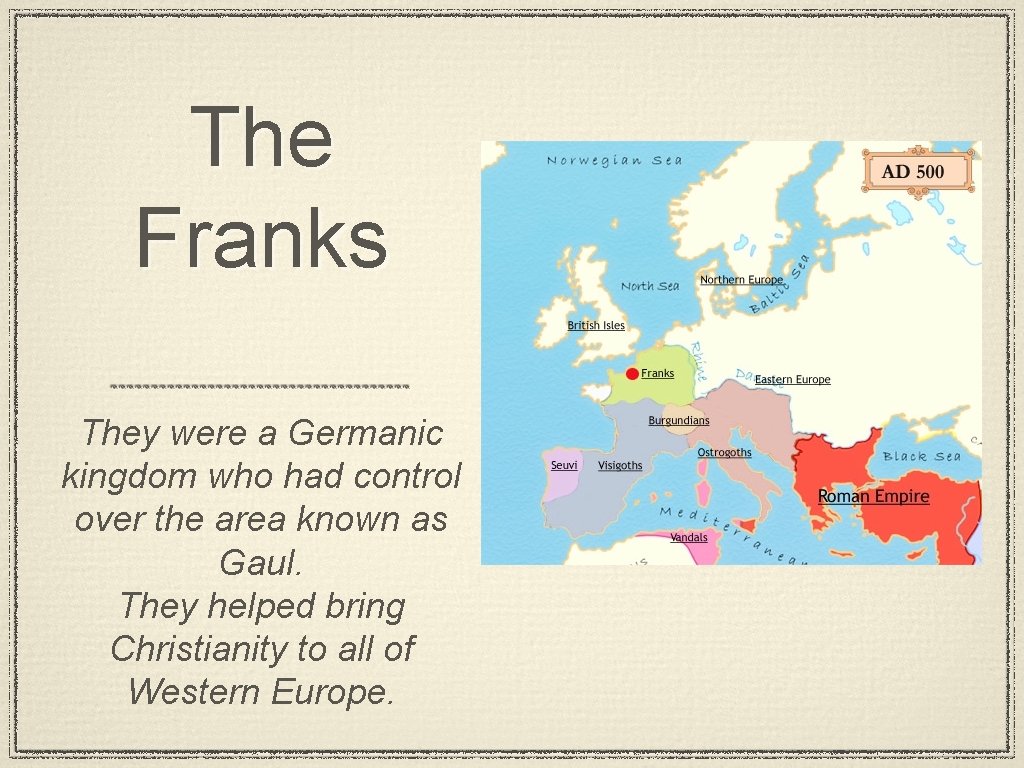
The Franks They were a Germanic kingdom who had control over the area known as Gaul. They helped bring Christianity to all of Western Europe.
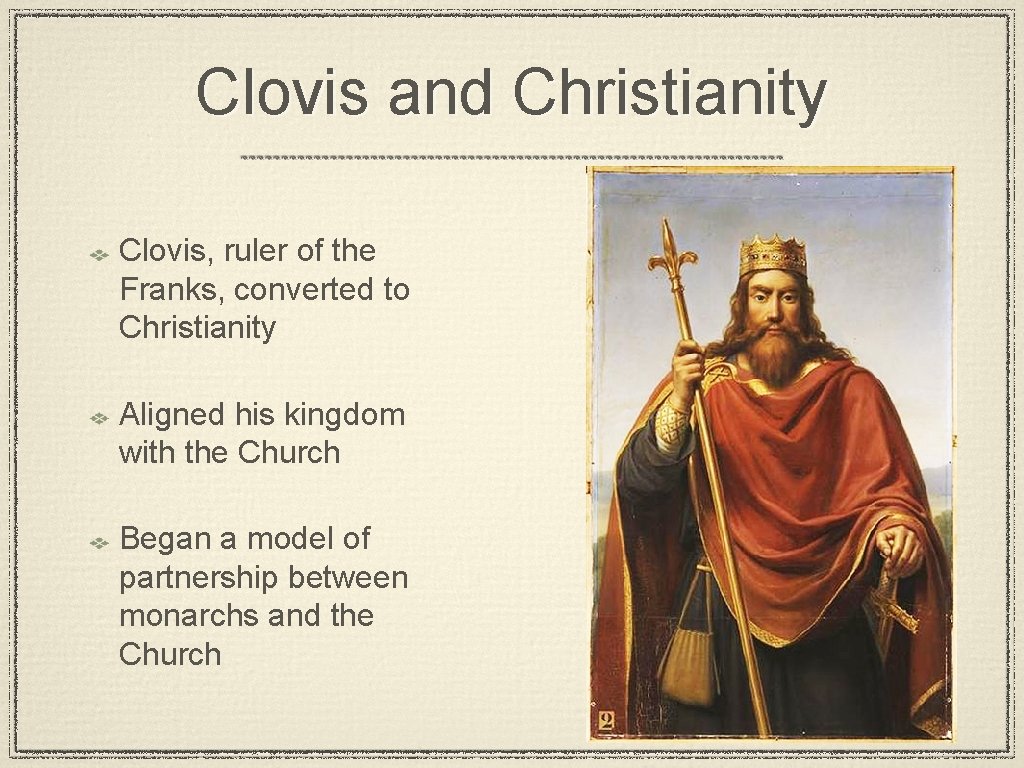
Clovis and Christianity Clovis, ruler of the Franks, converted to Christianity Aligned his kingdom with the Church Began a model of partnership between monarchs and the Church
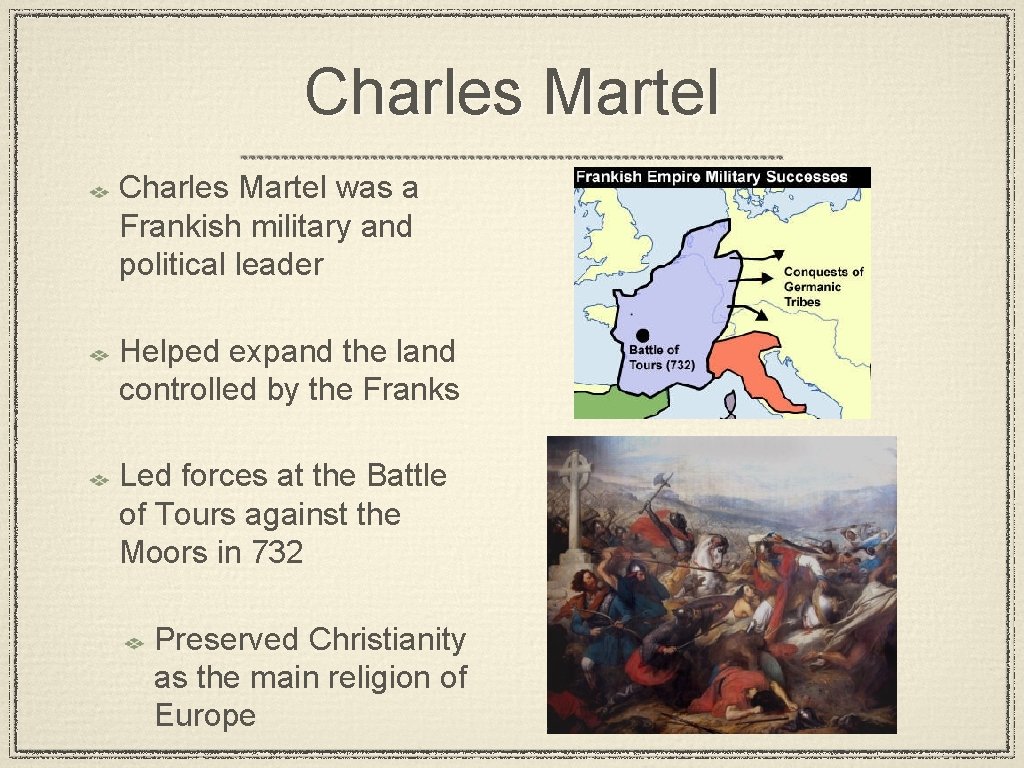
Charles Martel was a Frankish military and political leader Helped expand the land controlled by the Franks Led forces at the Battle of Tours against the Moors in 732 Preserved Christianity as the main religion of Europe
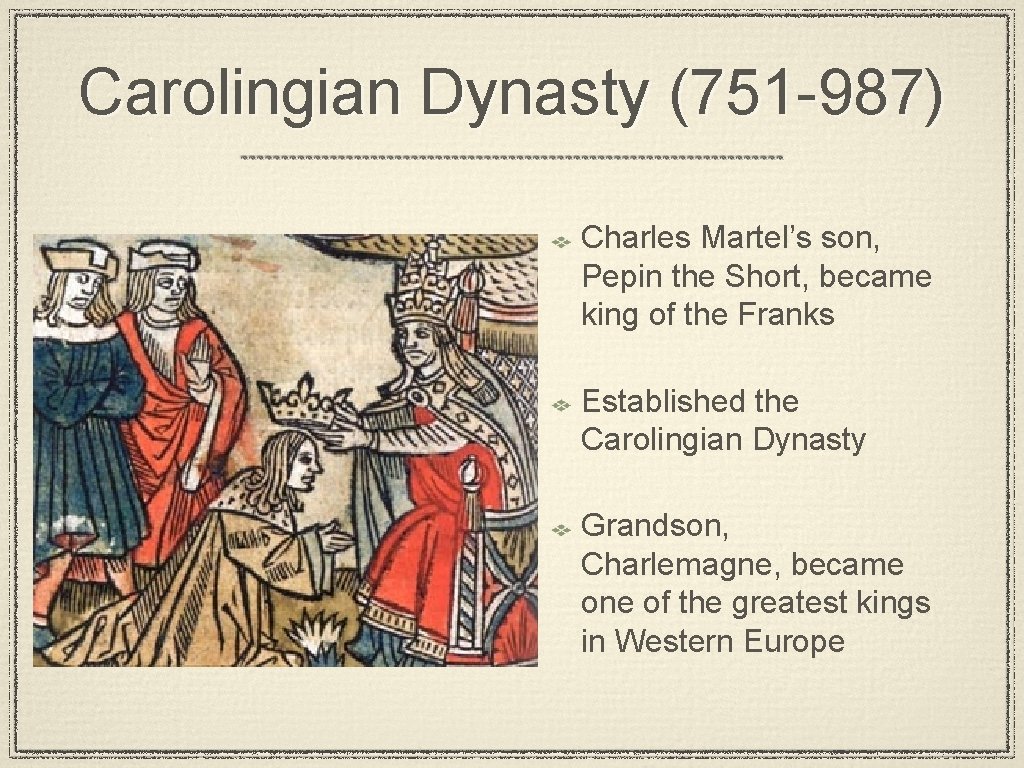
Carolingian Dynasty (751 -987) Charles Martel’s son, Pepin the Short, became king of the Franks Established the Carolingian Dynasty Grandson, Charlemagne, became one of the greatest kings in Western Europe
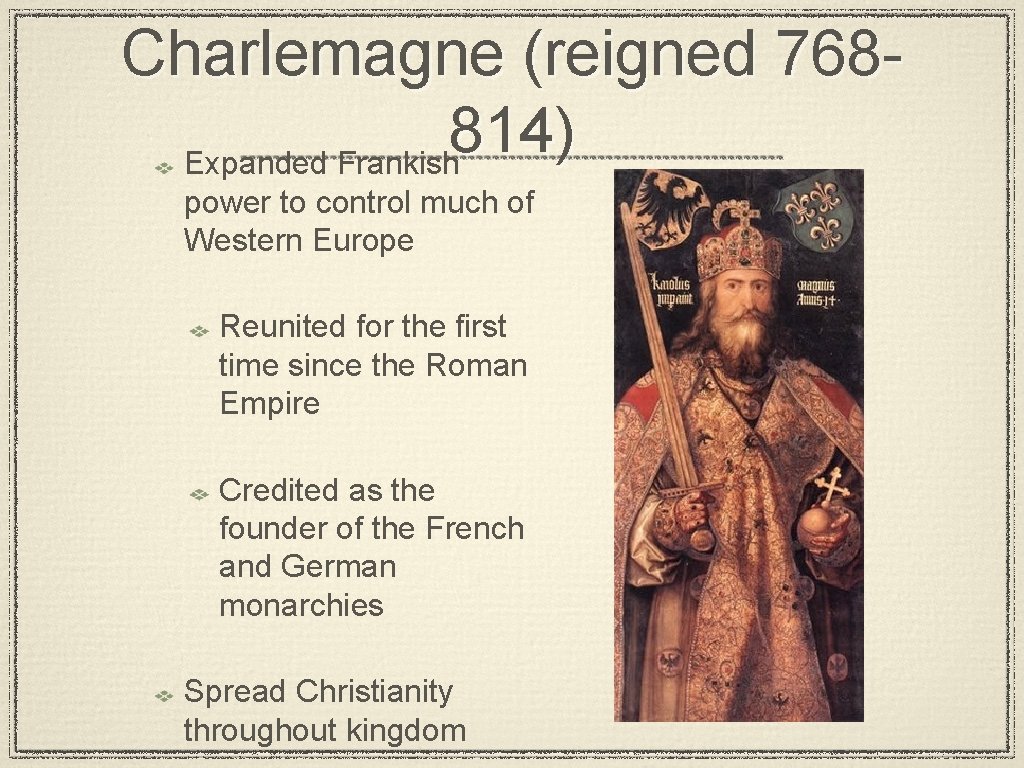
Charlemagne (reigned 768814) Expanded Frankish power to control much of Western Europe Reunited for the first time since the Roman Empire Credited as the founder of the French and German monarchies Spread Christianity throughout kingdom
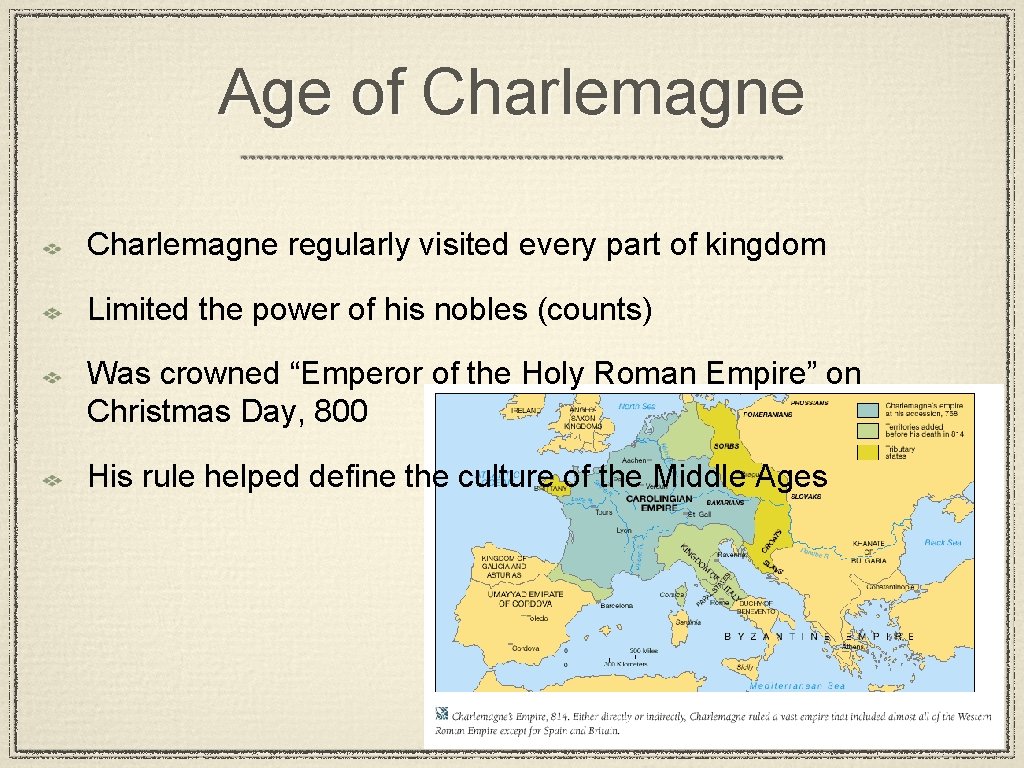
Age of Charlemagne regularly visited every part of kingdom Limited the power of his nobles (counts) Was crowned “Emperor of the Holy Roman Empire” on Christmas Day, 800 His rule helped define the culture of the Middle Ages
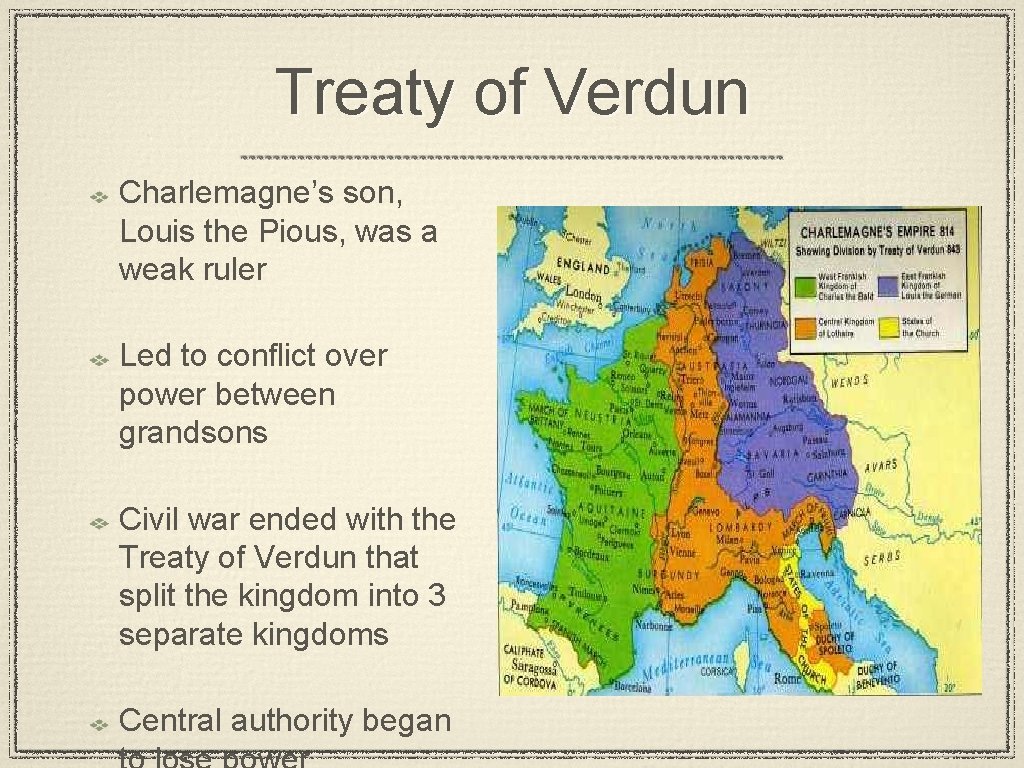
Treaty of Verdun Charlemagne’s son, Louis the Pious, was a weak ruler Led to conflict over power between grandsons Civil war ended with the Treaty of Verdun that split the kingdom into 3 separate kingdoms Central authority began
Review Question: What impact did Charlemagne have on Europe?
Invasions Change Europe Forever What impact did the invasions of the Vikings, Magyars, and the Moors have on Europe?
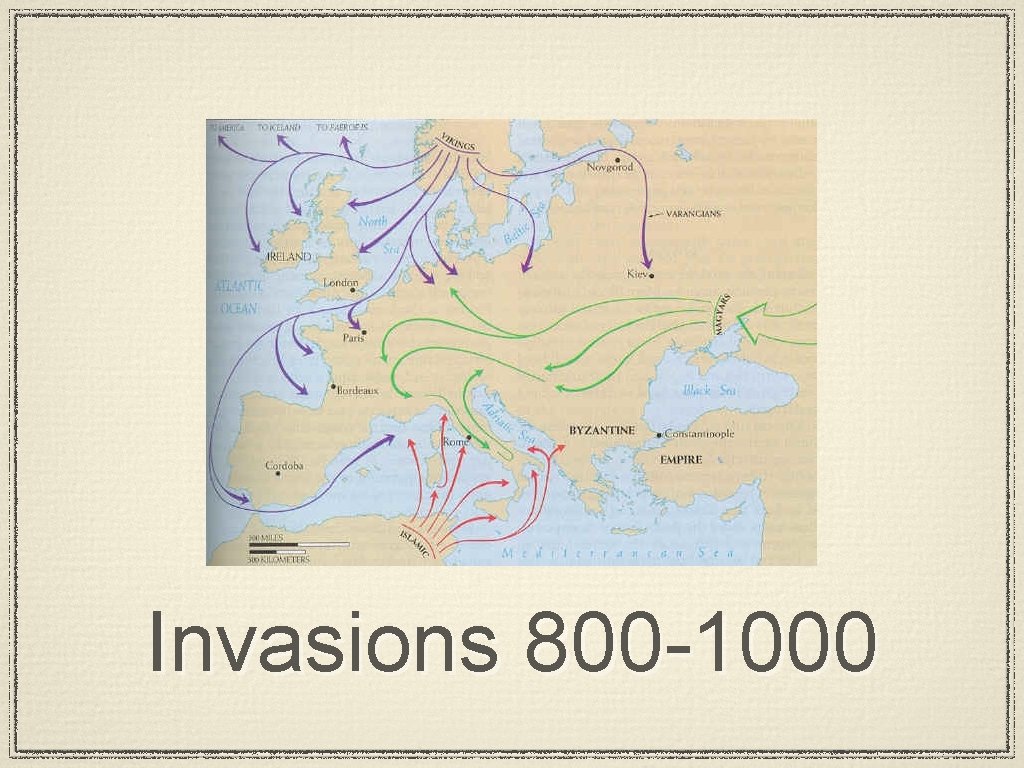
Invasions 800 -1000
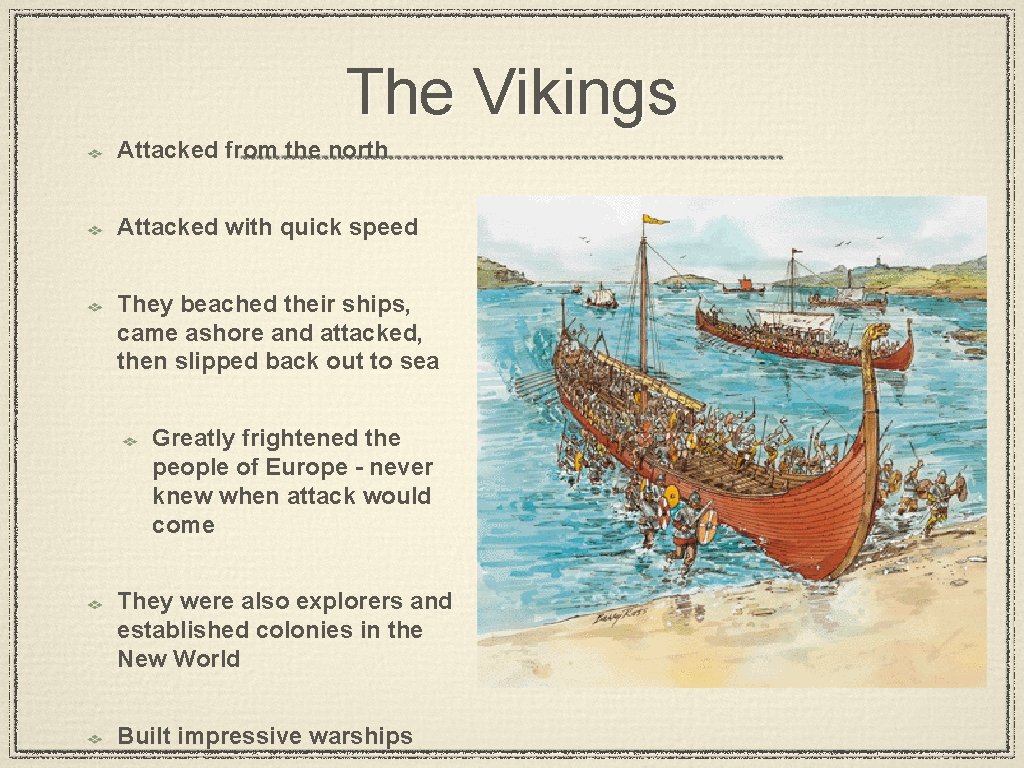
The Vikings Attacked from the north Attacked with quick speed They beached their ships, came ashore and attacked, then slipped back out to sea Greatly frightened the people of Europe - never knew when attack would come They were also explorers and established colonies in the New World Built impressive warships
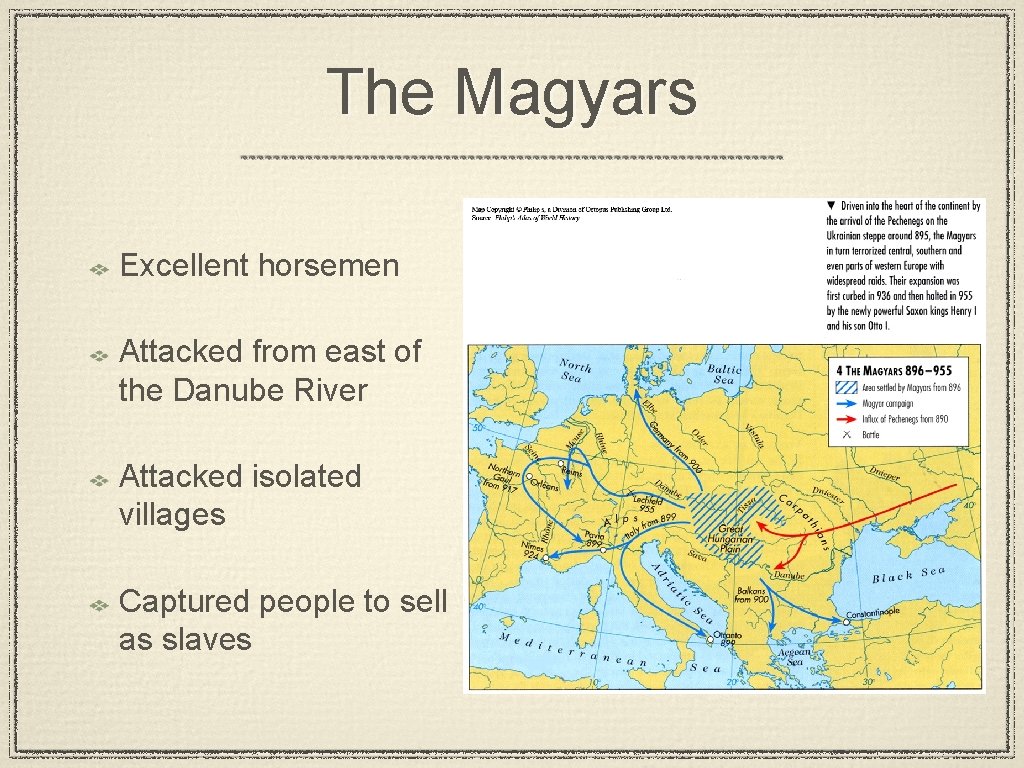
The Magyars Excellent horsemen Attacked from east of the Danube River Attacked isolated villages Captured people to sell as slaves
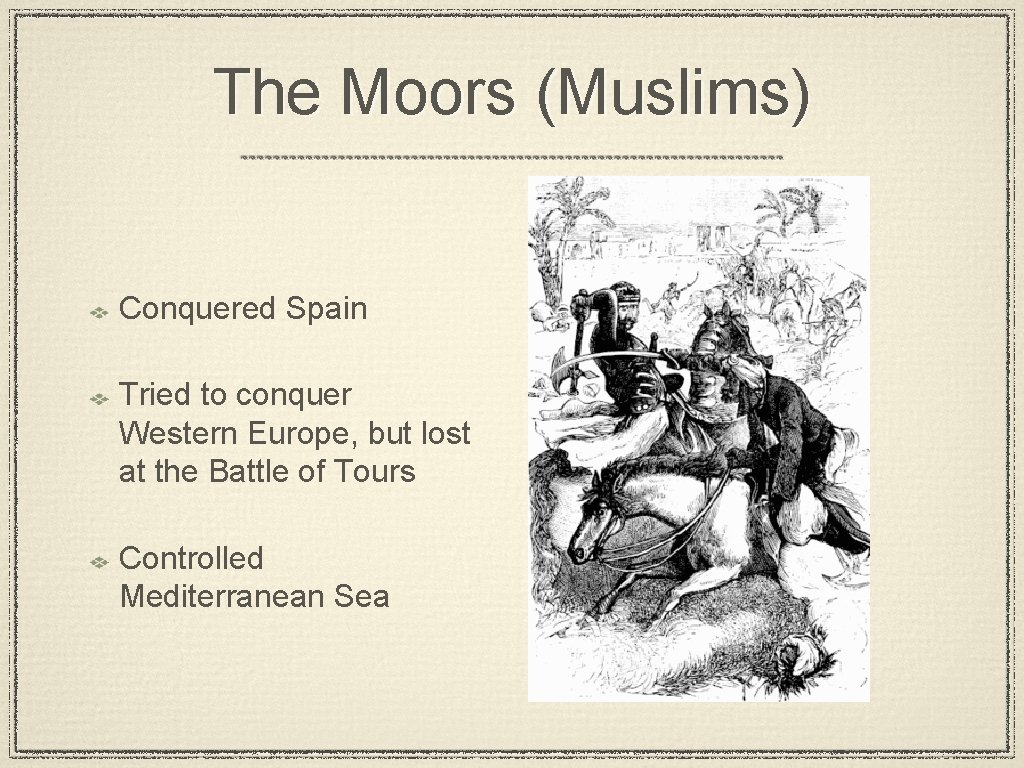
The Moors (Muslims) Conquered Spain Tried to conquer Western Europe, but lost at the Battle of Tours Controlled Mediterranean Sea
Effects of the Invasions Caused widespread disruption and disorder Most Western Europeans lived in constant danger and fear Turned to local leaders rather than central authority Kings were ineffective
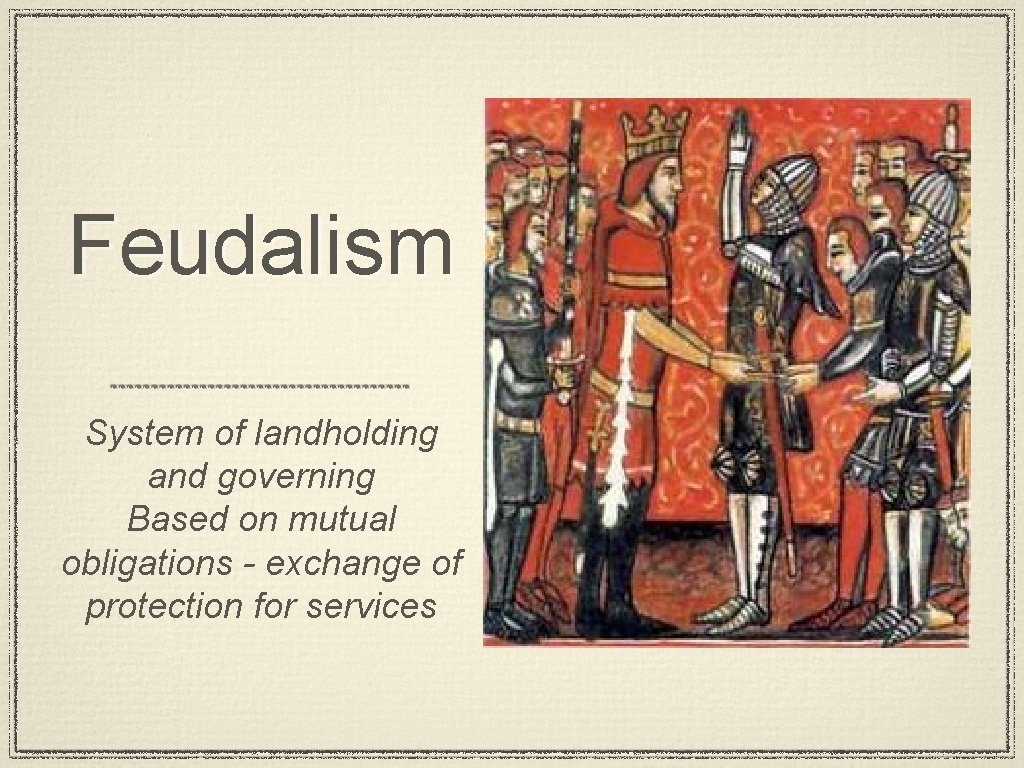
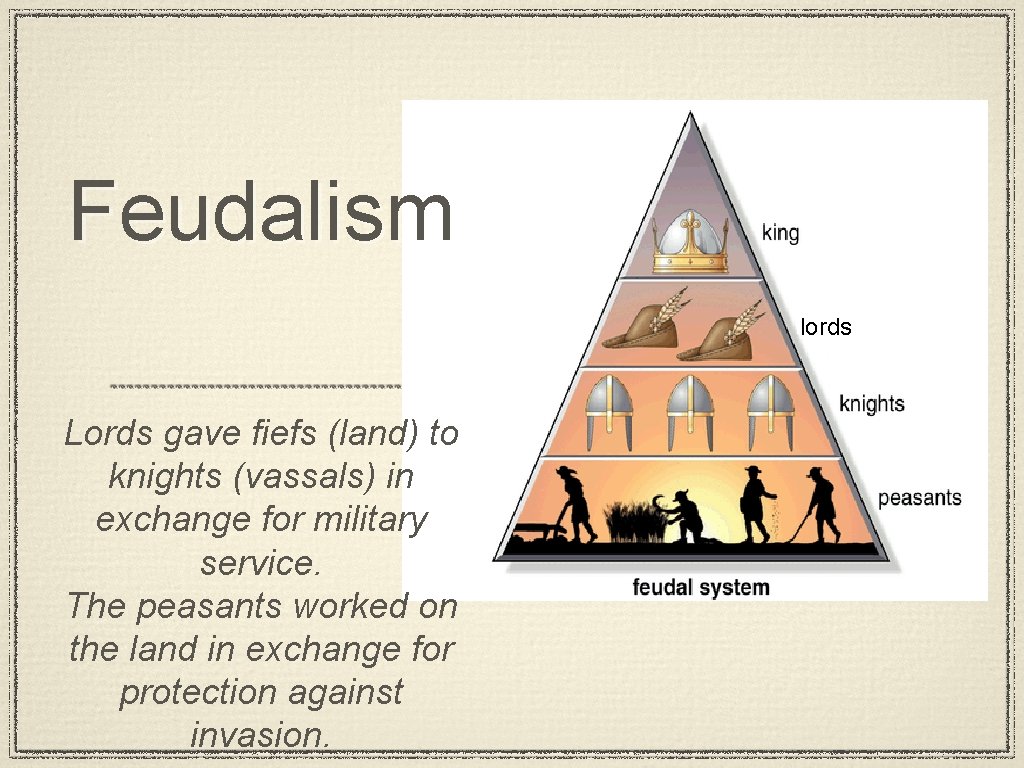
Feudalism System of landholding and governing Based on mutual obligations - exchange of protection for services
Feudalism lords Lords gave fiefs (land) to knights (vassals) in exchange for military service. The peasants worked on the land in exchange for protection against invasion.
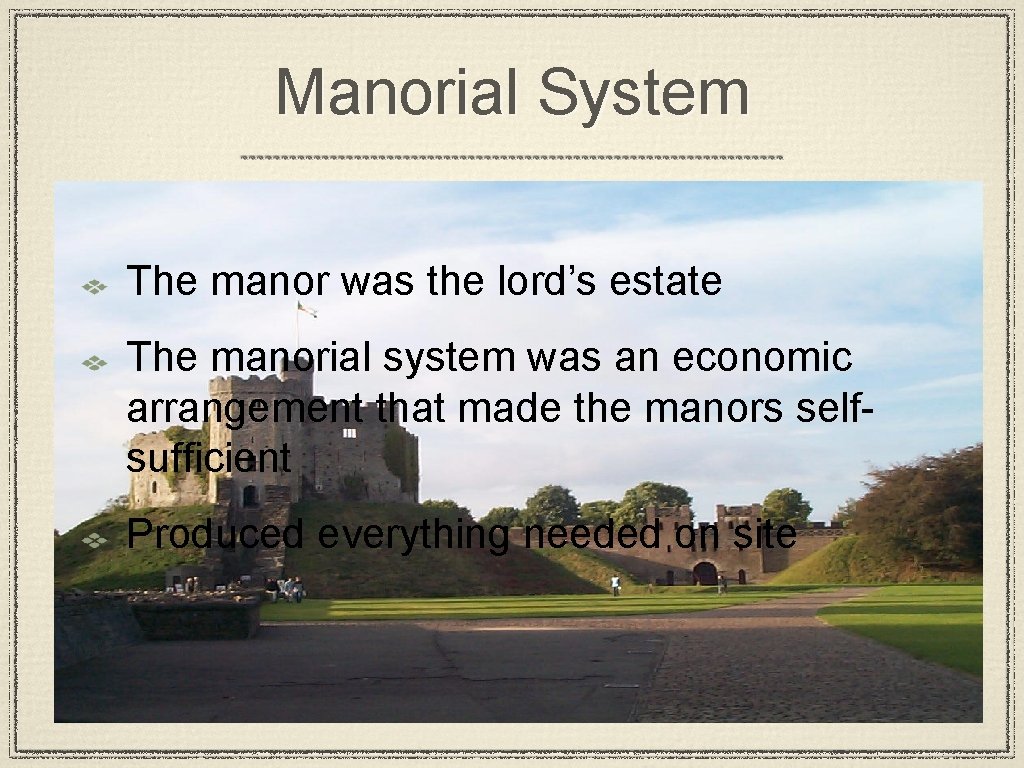
Manorial System The manor was the lord’s estate The manorial system was an economic arrangement that made the manors selfsufficient Produced everything needed on site
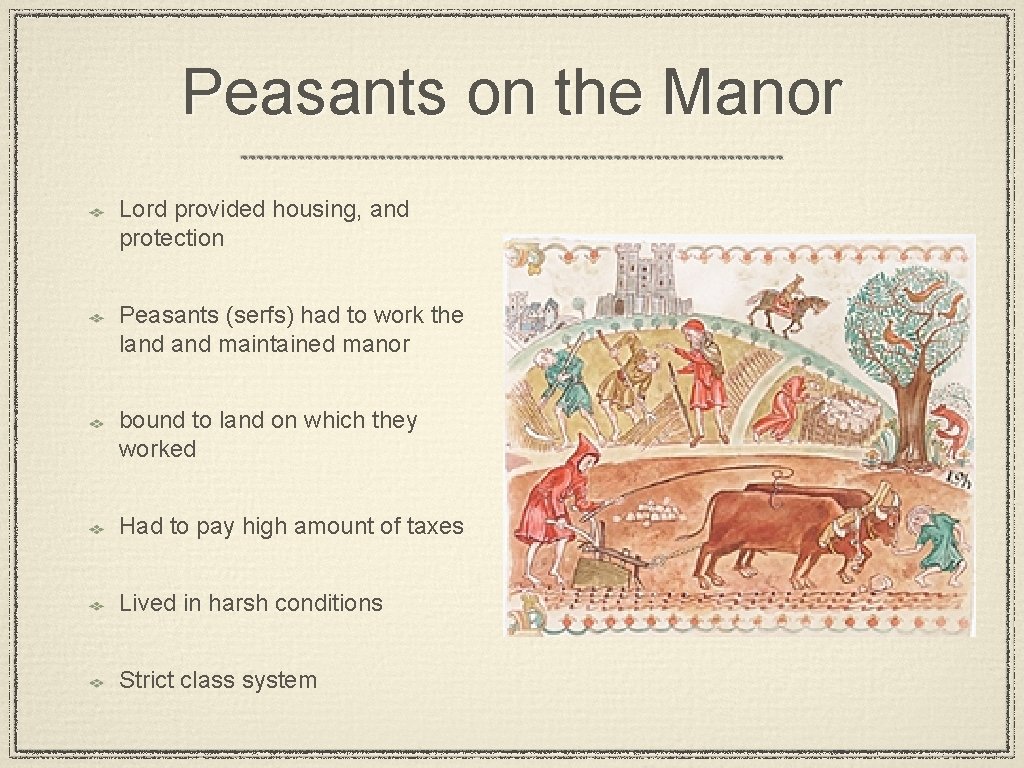
Peasants on the Manor Lord provided housing, and protection Peasants (serfs) had to work the land maintained manor bound to land on which they worked Had to pay high amount of taxes Lived in harsh conditions Strict class system
Review Question: What is feudalism?