
Early Medieval African States Africas Climate From North
- Slides: 24
Early & Medieval African States
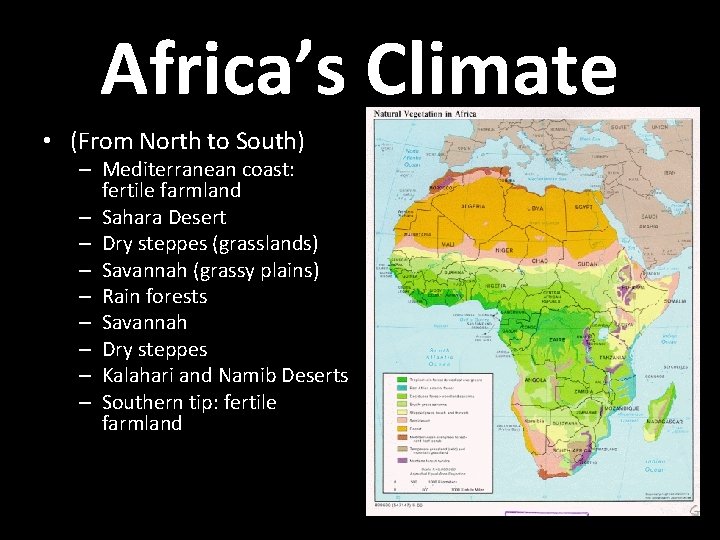
Africa’s Climate • (From North to South) – Mediterranean coast: fertile farmland – Sahara Desert – Dry steppes (grasslands) – Savannah (grassy plains) – Rain forests – Savannah – Dry steppes – Kalahari and Namib Deserts – Southern tip: fertile farmland
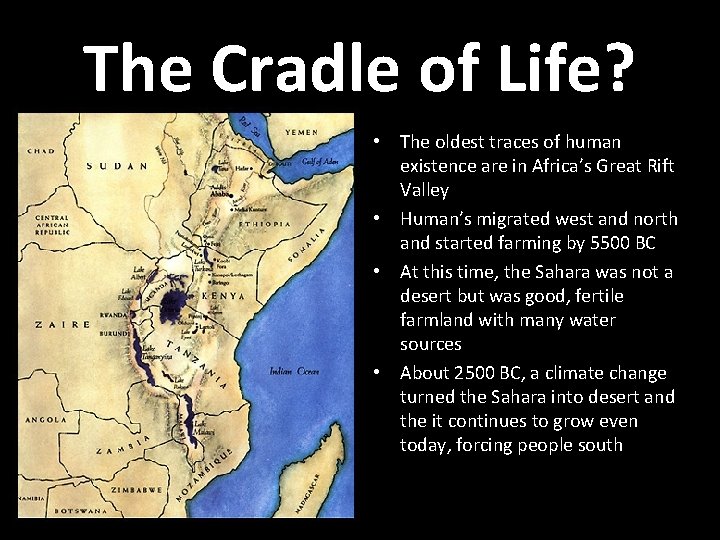
The Cradle of Life? • The oldest traces of human existence are in Africa’s Great Rift Valley • Human’s migrated west and north and started farming by 5500 BC • At this time, the Sahara was not a desert but was good, fertile farmland with many water sources • About 2500 BC, a climate change turned the Sahara into desert and the it continues to grow even today, forcing people south
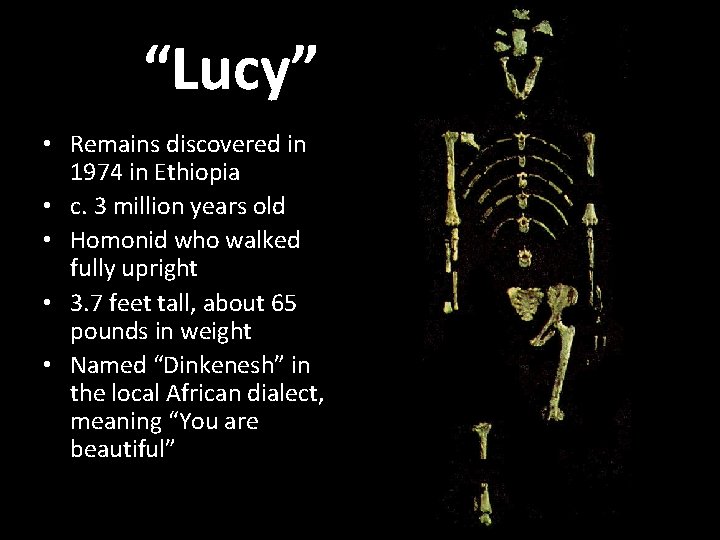
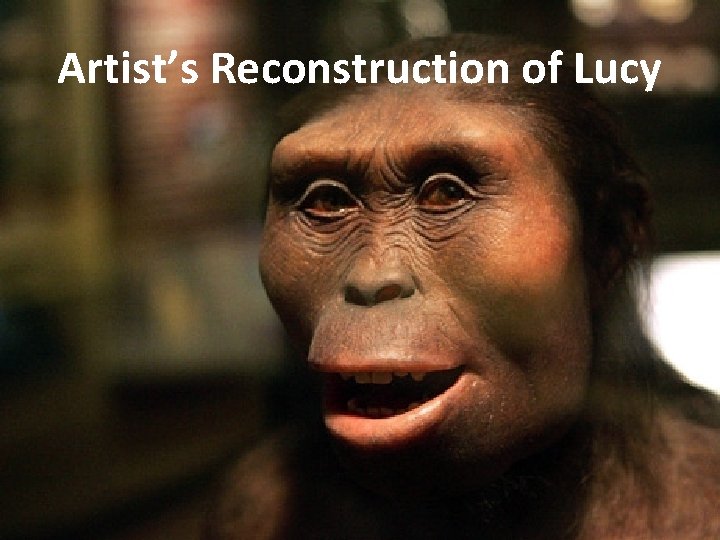
“Lucy” • Remains discovered in 1974 in Ethiopia • c. 3 million years old • Homonid who walked fully upright • 3. 7 feet tall, about 65 pounds in weight • Named “Dinkenesh” in the local African dialect, meaning “You are beautiful”
Artist’s Reconstruction of Lucy
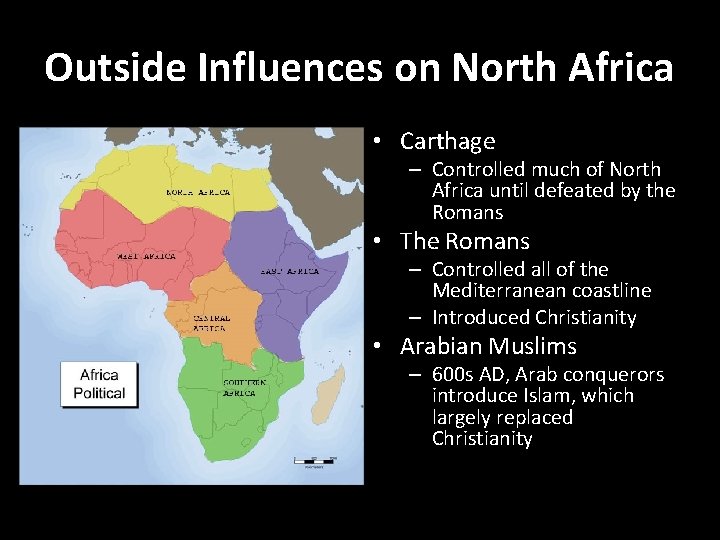
Outside Influences on North Africa • Carthage – Controlled much of North Africa until defeated by the Romans • The Romans – Controlled all of the Mediterranean coastline – Introduced Christianity • Arabian Muslims – 600 s AD, Arab conquerors introduce Islam, which largely replaced Christianity
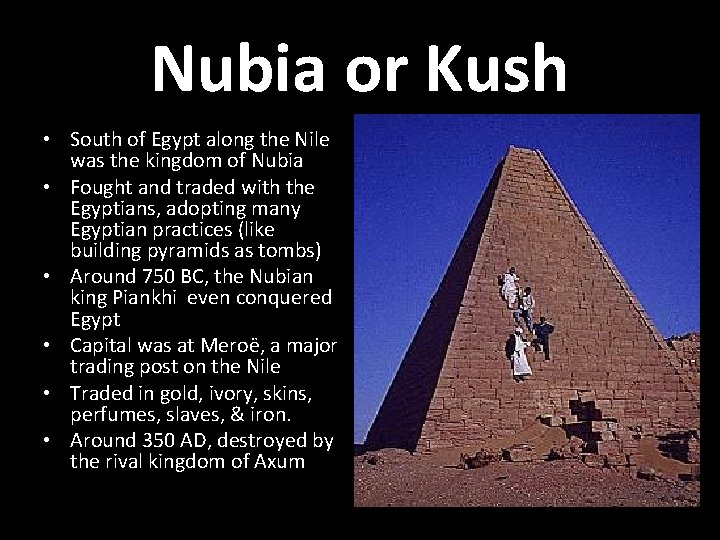
Nubia or Kush • South of Egypt along the Nile was the kingdom of Nubia • Fought and traded with the Egyptians, adopting many Egyptian practices (like building pyramids as tombs) • Around 750 BC, the Nubian king Piankhi even conquered Egypt • Capital was at Meroë, a major trading post on the Nile • Traded in gold, ivory, skins, perfumes, slaves, & iron. • Around 350 AD, destroyed by the rival kingdom of Axum
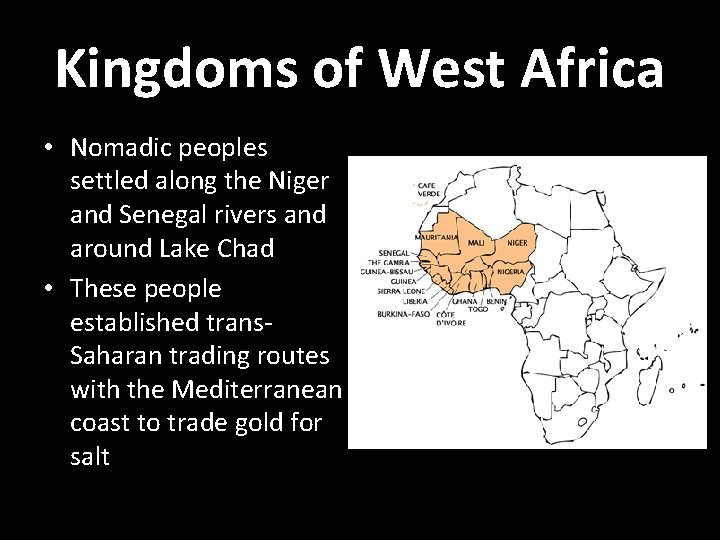
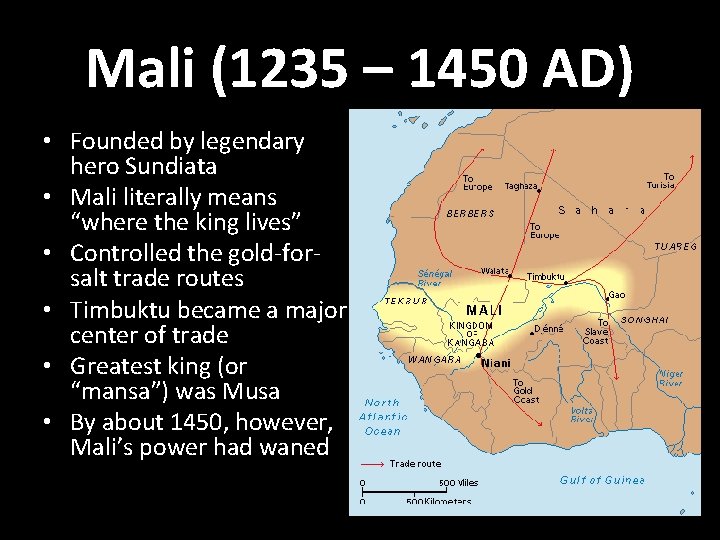
Kingdoms of West Africa • Nomadic peoples settled along the Niger and Senegal rivers and around Lake Chad • These people established trans. Saharan trading routes with the Mediterranean coast to trade gold for salt
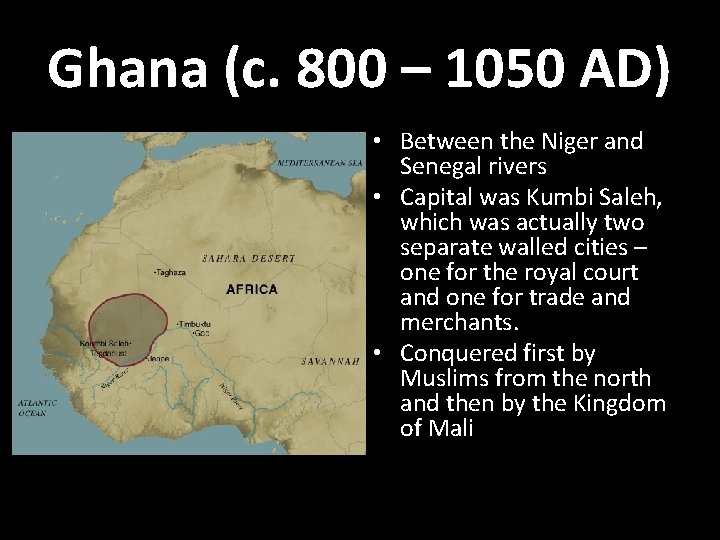
Ghana (c. 800 – 1050 AD) • Between the Niger and Senegal rivers • Capital was Kumbi Saleh, which was actually two separate walled cities – one for the royal court and one for trade and merchants. • Conquered first by Muslims from the north and then by the Kingdom of Mali
Mali (1235 – 1450 AD) • Founded by legendary hero Sundiata • Mali literally means “where the king lives” • Controlled the gold-forsalt trade routes • Timbuktu became a major center of trade • Greatest king (or “mansa”) was Musa • By about 1450, however, Mali’s power had waned
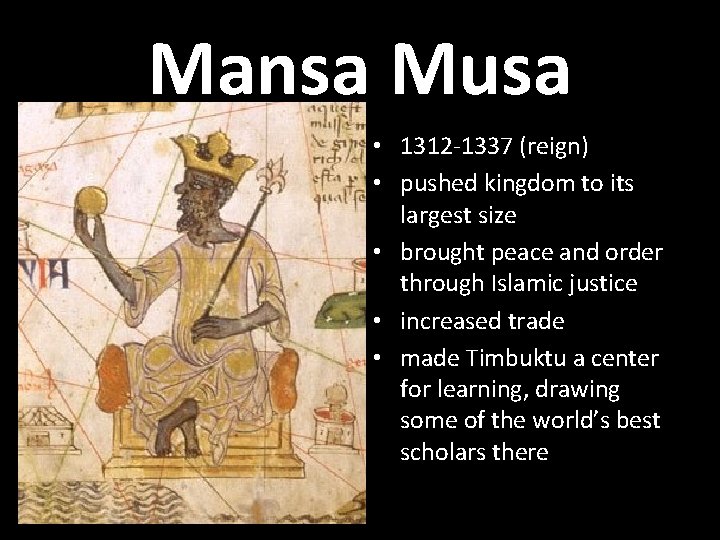
Mansa Musa • 1312 -1337 (reign) • pushed kingdom to its largest size • brought peace and order through Islamic justice • increased trade • made Timbuktu a center for learning, drawing some of the world’s best scholars there
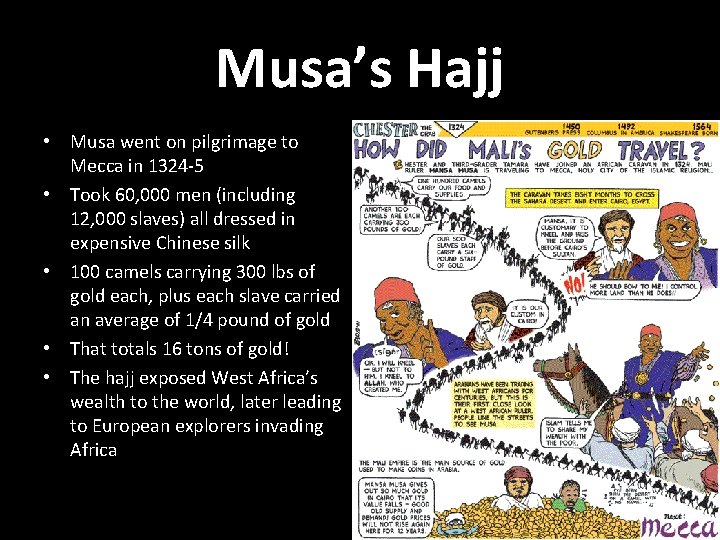
Musa’s Hajj • Musa went on pilgrimage to Mecca in 1324 -5 • Took 60, 000 men (including 12, 000 slaves) all dressed in expensive Chinese silk • 100 camels carrying 300 lbs of gold each, plus each slave carried an average of 1/4 pound of gold • That totals 16 tons of gold! • The hajj exposed West Africa’s wealth to the world, later leading to European explorers invading Africa
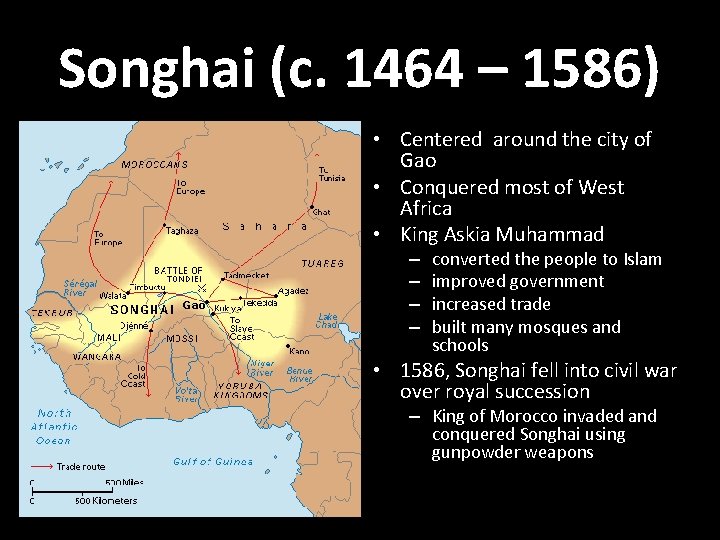
Songhai (c. 1464 – 1586) • Centered around the city of Gao • Conquered most of West Africa • King Askia Muhammad – – converted the people to Islam improved government increased trade built many mosques and schools • 1586, Songhai fell into civil war over royal succession – King of Morocco invaded and conquered Songhai using gunpowder weapons
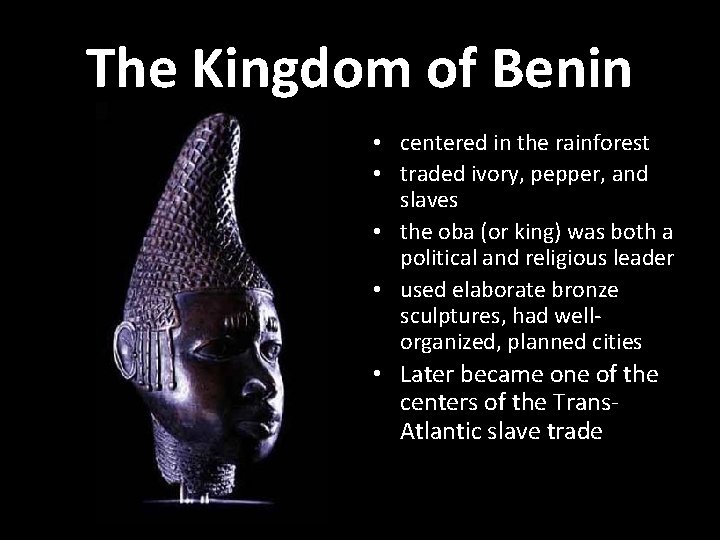
The Kingdom of Benin • centered in the rainforest • traded ivory, pepper, and slaves • the oba (or king) was both a political and religious leader • used elaborate bronze sculptures, had wellorganized, planned cities • Later became one of the centers of the Trans. Atlantic slave trade
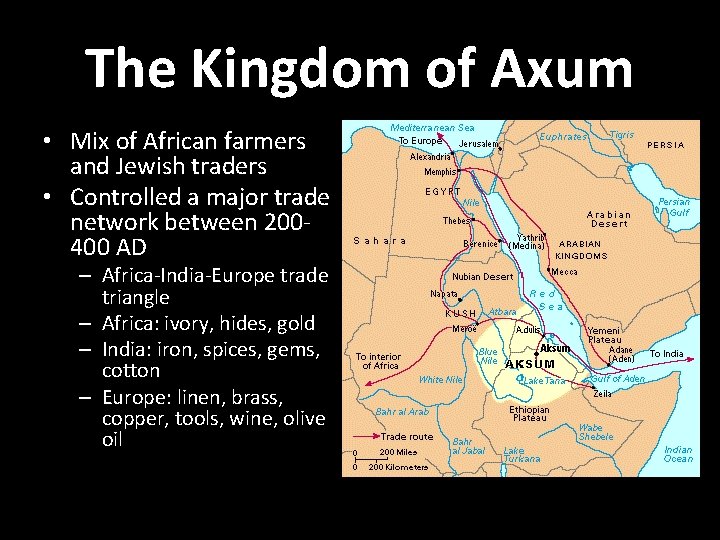
The Kingdom of Axum • Mix of African farmers and Jewish traders • Controlled a major trade network between 200400 AD – Africa-India-Europe trade triangle – Africa: ivory, hides, gold – India: iron, spices, gems, cotton – Europe: linen, brass, copper, tools, wine, olive oil
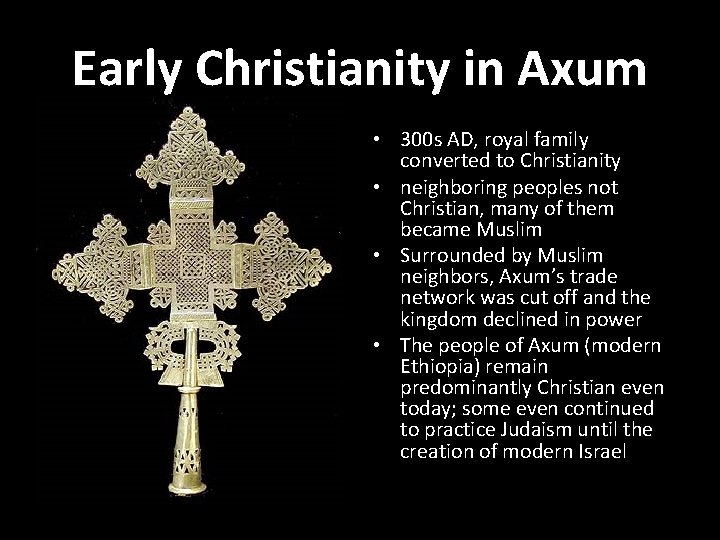
Early Christianity in Axum • 300 s AD, royal family converted to Christianity • neighboring peoples not Christian, many of them became Muslim • Surrounded by Muslim neighbors, Axum’s trade network was cut off and the kingdom declined in power • The people of Axum (modern Ethiopia) remain predominantly Christian even today; some even continued to practice Judaism until the creation of modern Israel
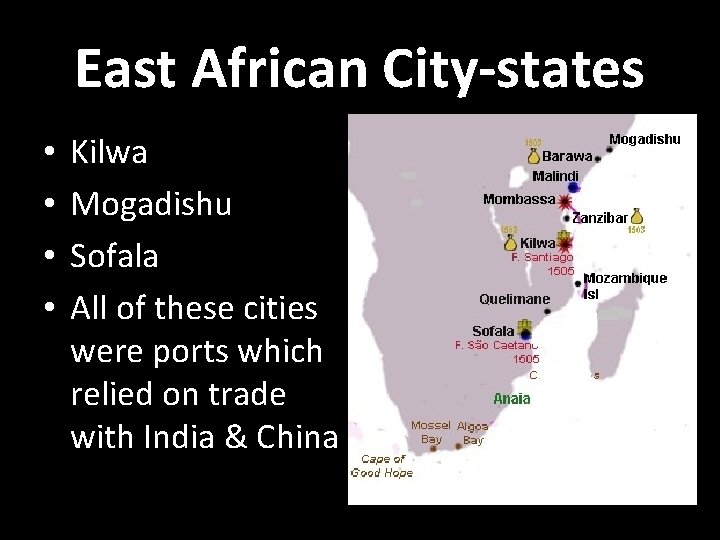
East African City-states • • Kilwa Mogadishu Sofala All of these cities were ports which relied on trade with India & China
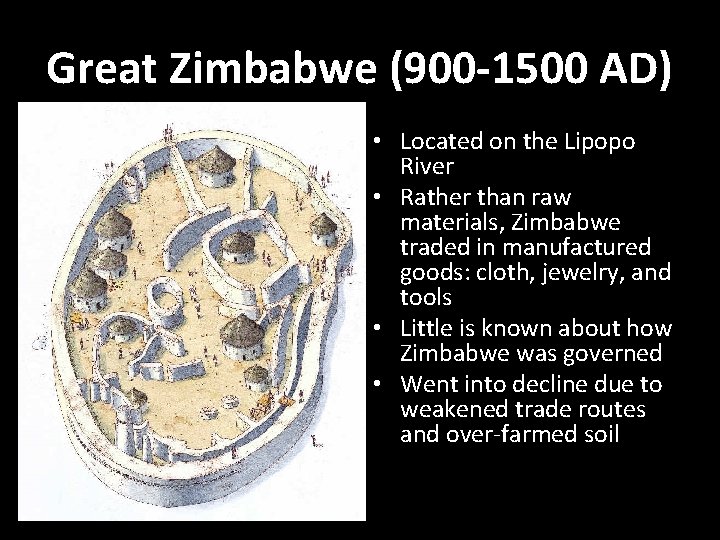
Great Zimbabwe (900 -1500 AD) • Located on the Lipopo River • Rather than raw materials, Zimbabwe traded in manufactured goods: cloth, jewelry, and tools • Little is known about how Zimbabwe was governed • Went into decline due to weakened trade routes and over-farmed soil
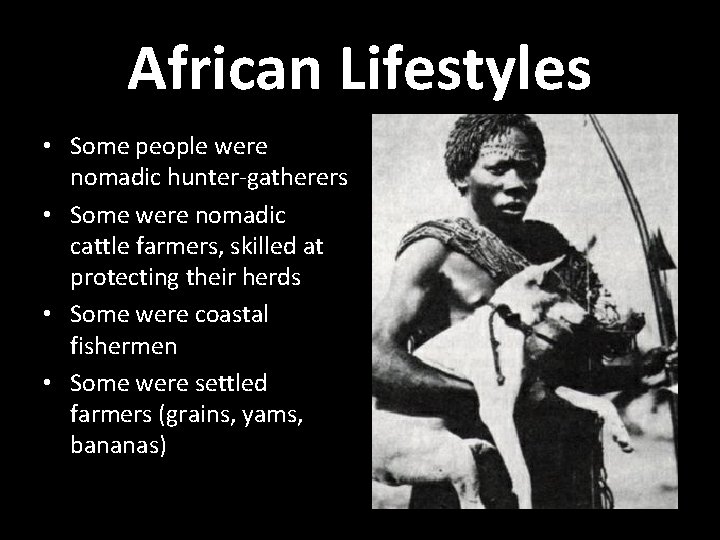
African Lifestyles • Some people were nomadic hunter-gatherers • Some were nomadic cattle farmers, skilled at protecting their herds • Some were coastal fishermen • Some were settled farmers (grains, yams, bananas)
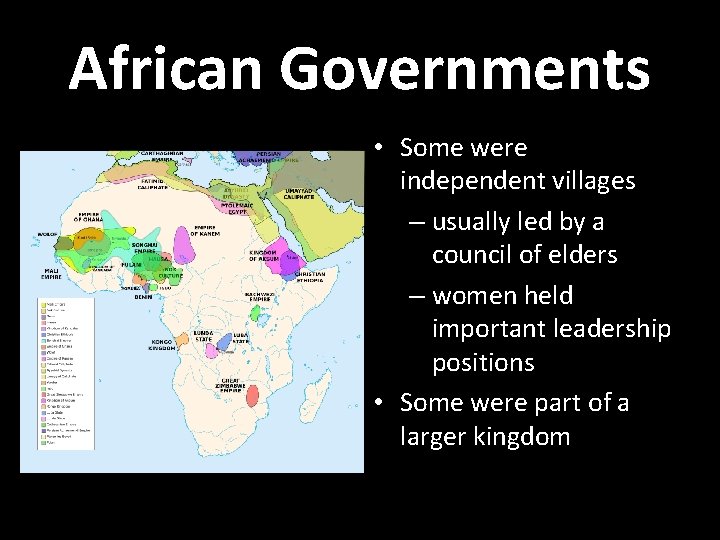
African Governments • Some were independent villages – usually led by a council of elders – women held important leadership positions • Some were part of a larger kingdom
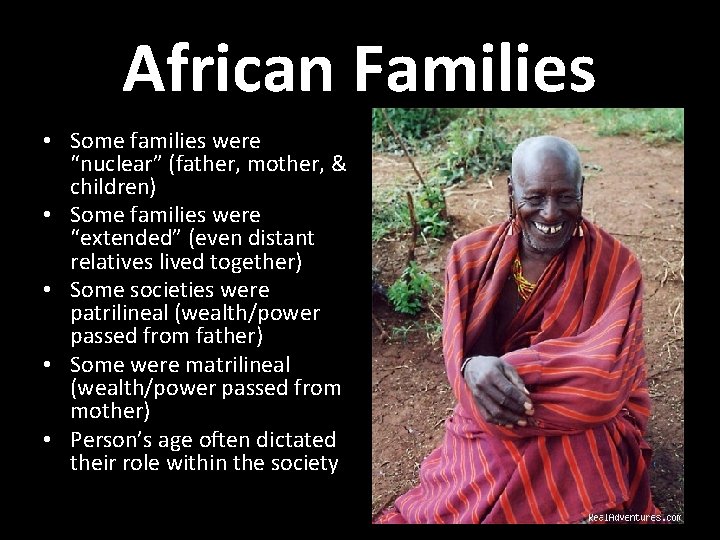
African Families • Some families were “nuclear” (father, mother, & children) • Some families were “extended” (even distant relatives lived together) • Some societies were patrilineal (wealth/power passed from father) • Some were matrilineal (wealth/power passed from mother) • Person’s age often dictated their role within the society
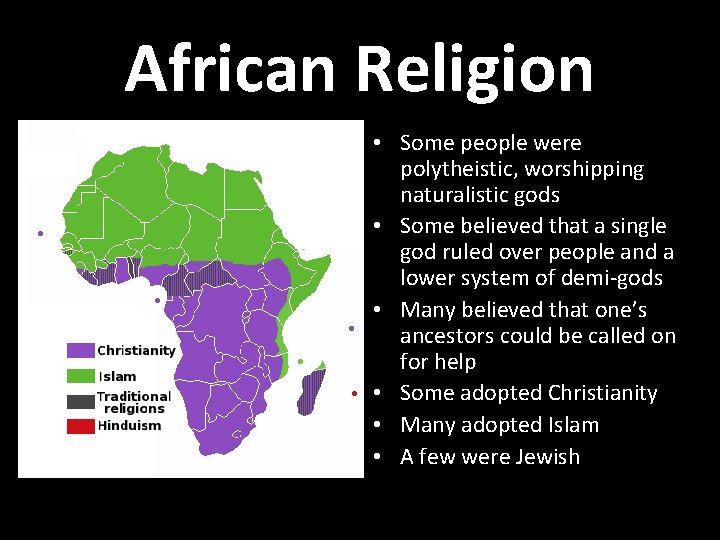
African Religion • Some people were polytheistic, worshipping naturalistic gods • Some believed that a single god ruled over people and a lower system of demi-gods • Many believed that one’s ancestors could be called on for help • Some adopted Christianity • Many adopted Islam • A few were Jewish
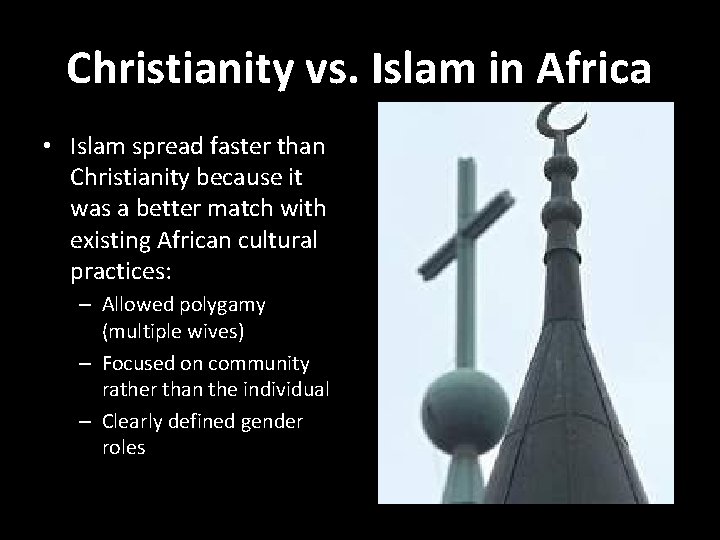
Christianity vs. Islam in Africa • Islam spread faster than Christianity because it was a better match with existing African cultural practices: – Allowed polygamy (multiple wives) – Focused on community rather than the individual – Clearly defined gender roles
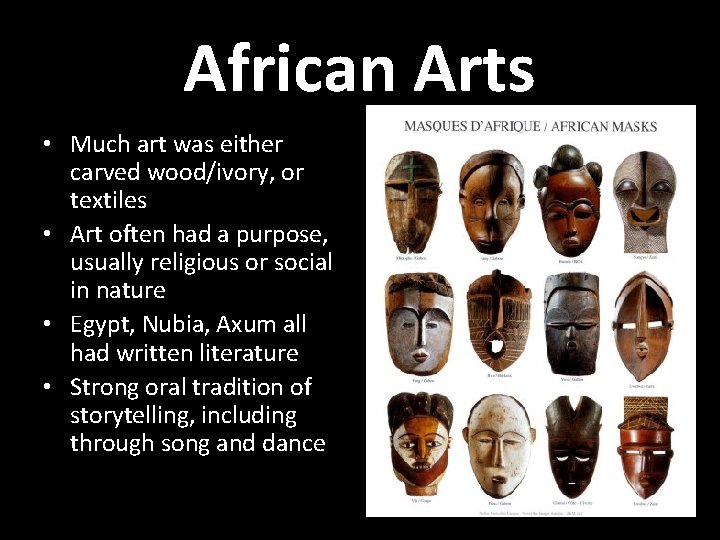
African Arts • Much art was either carved wood/ivory, or textiles • Art often had a purpose, usually religious or social in nature • Egypt, Nubia, Axum all had written literature • Strong oral tradition of storytelling, including through song and dance