
Early life history and survival of spring chinook
- Slides: 21
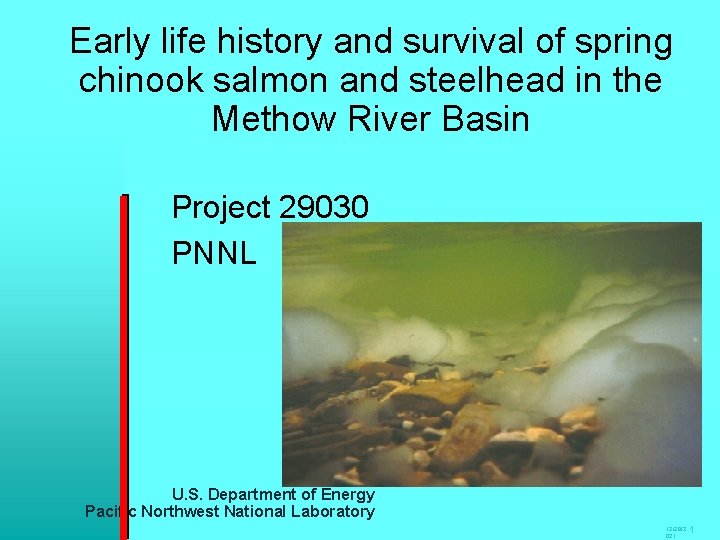
Early life history and survival of spring chinook salmon and steelhead in the Methow River Basin Project 29030 PNNL U. S. Department of Energy Pacific Northwest National Laboratory 12/29/2 021 1
Relevant NMFS Action Items • Action 150 : in subbasins with listed salmon and steelhead, BPA shall fund protection of currently productive non-federal habitat, especially if at risk of being degraded, in accordance with criteria and priorities BPA and NMFS will develop by June 1, 2001. • Action 193 : the Action Agencies shall investigate state-of-the-art, novel fish detection and tagging techniques for use, if warranted, in long-term research, monitoring, and evaluation efforts U. S. Department of Energy Pacific Northwest National Laboratory 12/29/2 2
subbasin summary statement of needs • “design and implement an over-winter ecology and fish • • • abundance study” to quantify use and survival of stream type spring chinook salmon and steelhead through summer and winter of their first year. “design and implement a study that evaluates which life history stages of fish species utilize which habitat components at various times of the year” understand the relationship between fish abundance and ground water discharge monitor smolt outmigration of spring chinook salmon examine and determine natural life history characteristics of steelhead. identify limiting factors to increased productivity of springof Energy U. S. Department Pacific Northwest National Laboratory chinook salmon and steelhead in distinct watersheds 3 12/29/2
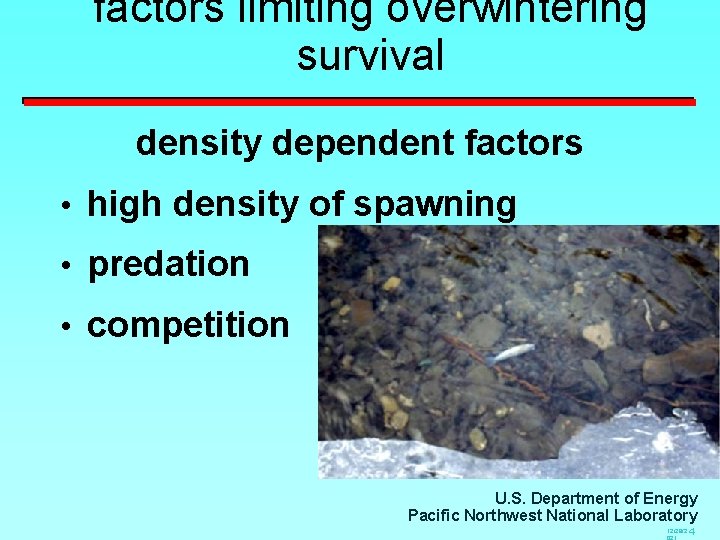
factors limiting overwintering survival density dependent factors • high density of spawning • predation • competition U. S. Department of Energy Pacific Northwest National Laboratory 12/29/2 4
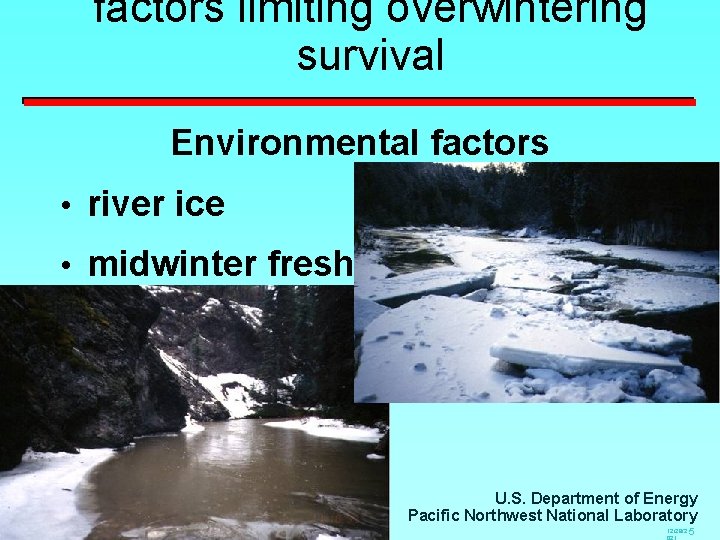
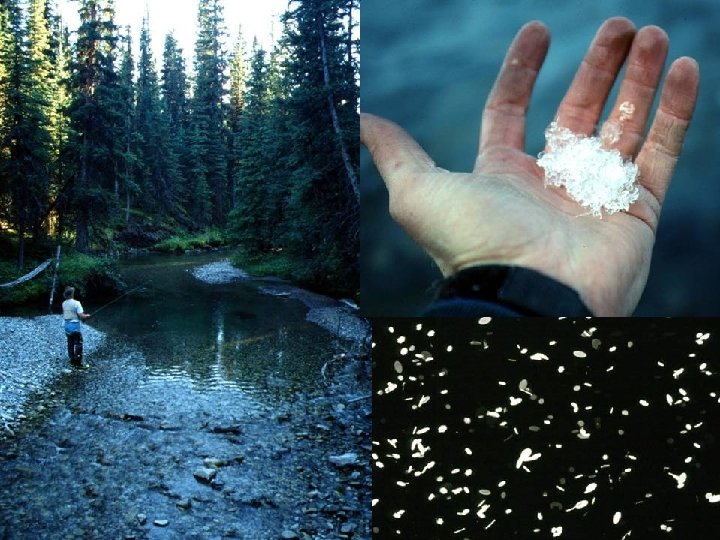
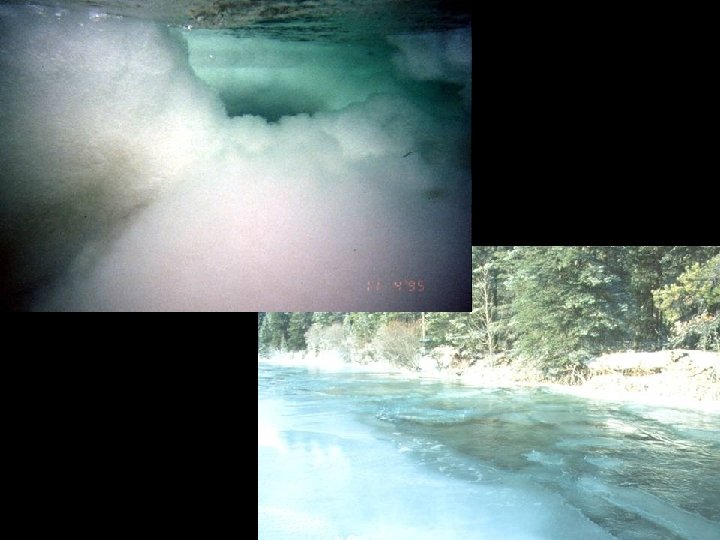
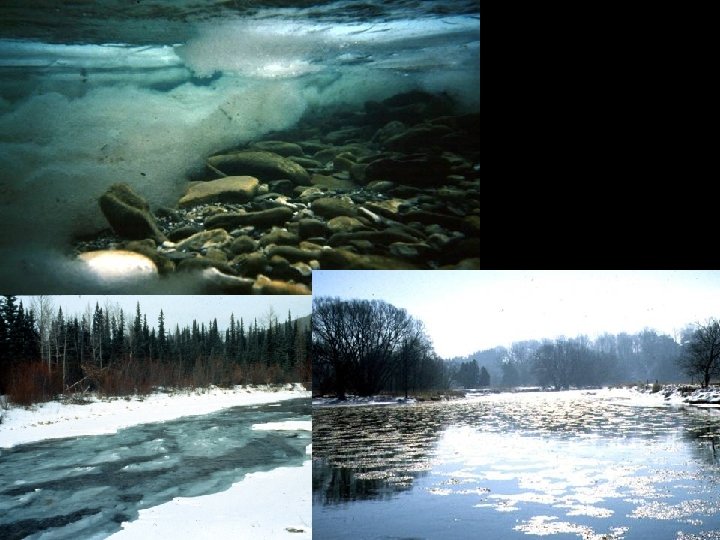
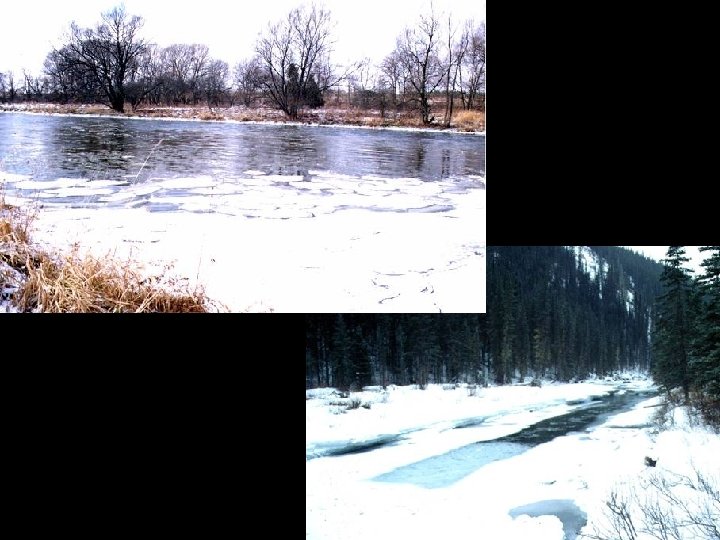
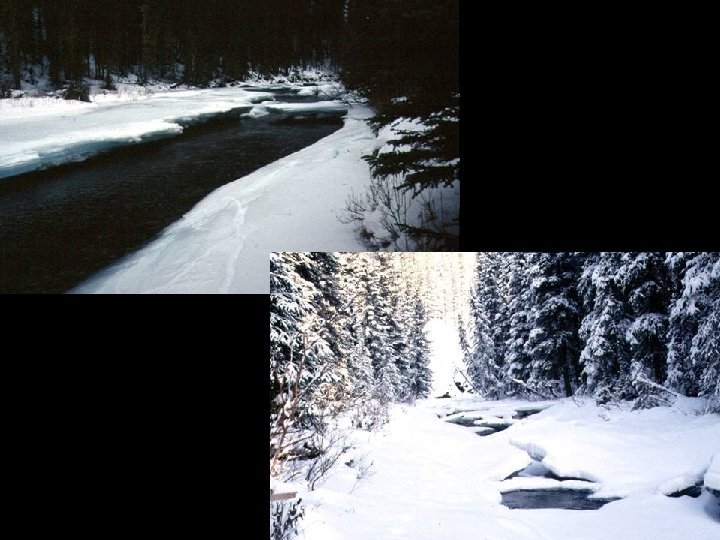
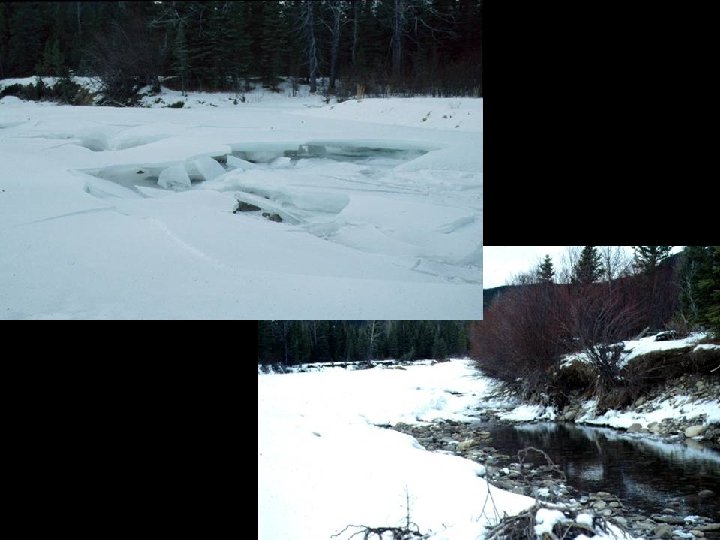
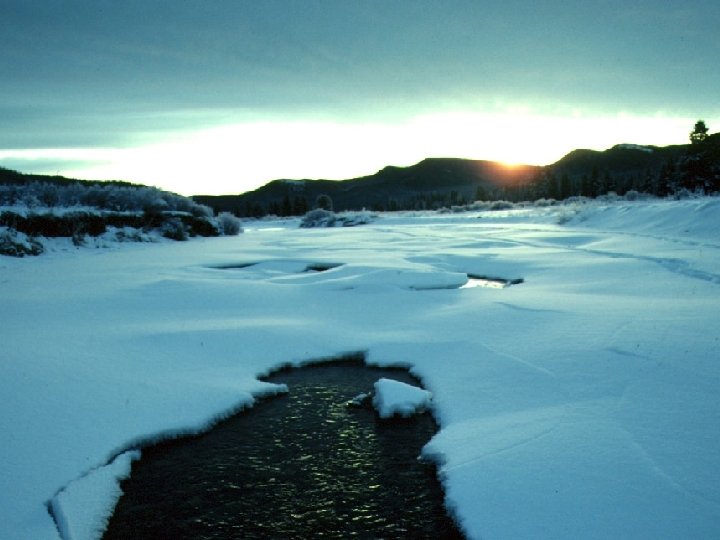
factors limiting overwintering survival Environmental factors • river ice • midwinter freshets U. S. Department of Energy Pacific Northwest National Laboratory 12/29/2 5
Objectives • Determine differential survival of juvenile spring chinook salmon and steelhead in relation to habitat quality and quantity • Describe fish behavior and quantify habitat use and selection using underwater videography and snorkeling • Investigate how life history and survival is associated with warm groundwater presence, river ice, and other habitat parameters to determine optimal areas for habitat protection and enhancement U. S. Department of Energy Pacific Northwest National Laboratory 14 12/29/2
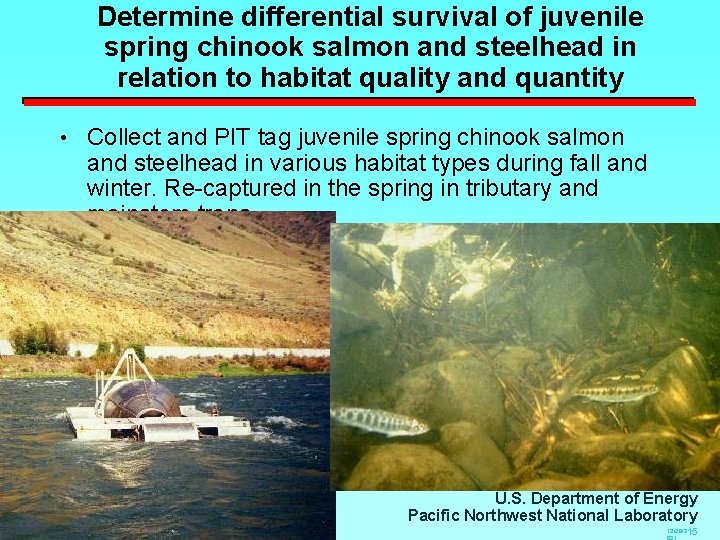
Determine differential survival of juvenile spring chinook salmon and steelhead in relation to habitat quality and quantity • Collect and PIT tag juvenile spring chinook salmon and steelhead in various habitat types during fall and winter. Re-captured in the spring in tributary and mainstem traps. U. S. Department of Energy Pacific Northwest National Laboratory 15 12/29/2
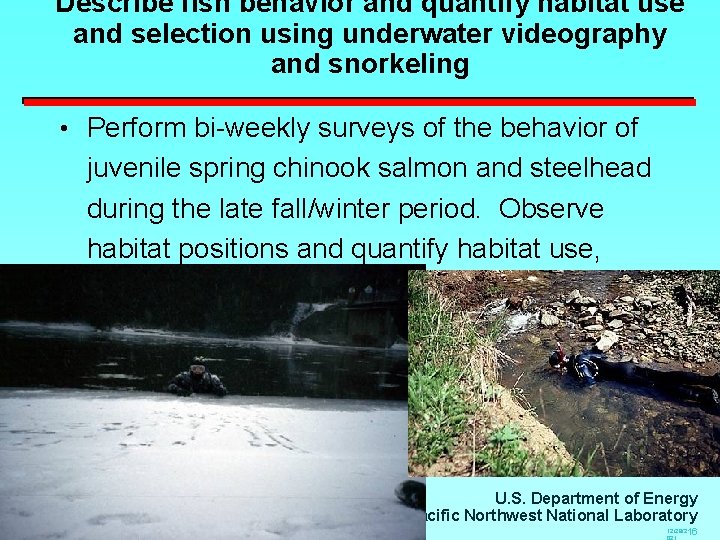
Describe fish behavior and quantify habitat use and selection using underwater videography and snorkeling • Perform bi-weekly surveys of the behavior of juvenile spring chinook salmon and steelhead during the late fall/winter period. Observe habitat positions and quantify habitat use, availability and selection. U. S. Department of Energy Pacific Northwest National Laboratory 16 12/29/2
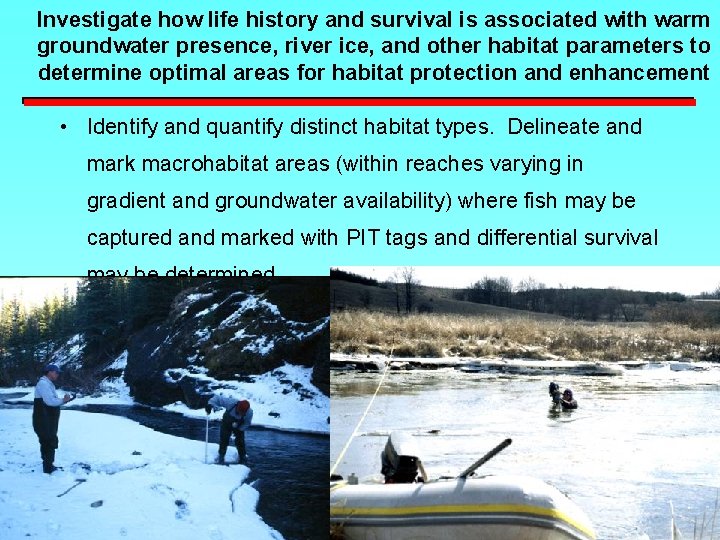
Investigate how life history and survival is associated with warm groundwater presence, river ice, and other habitat parameters to determine optimal areas for habitat protection and enhancement • Identify and quantify distinct habitat types. Delineate and mark macrohabitat areas (within reaches varying in gradient and groundwater availability) where fish may be captured and marked with PIT tags and differential survival may be determined. U. S. Department of Energy Pacific Northwest National Laboratory 17 12/29/2
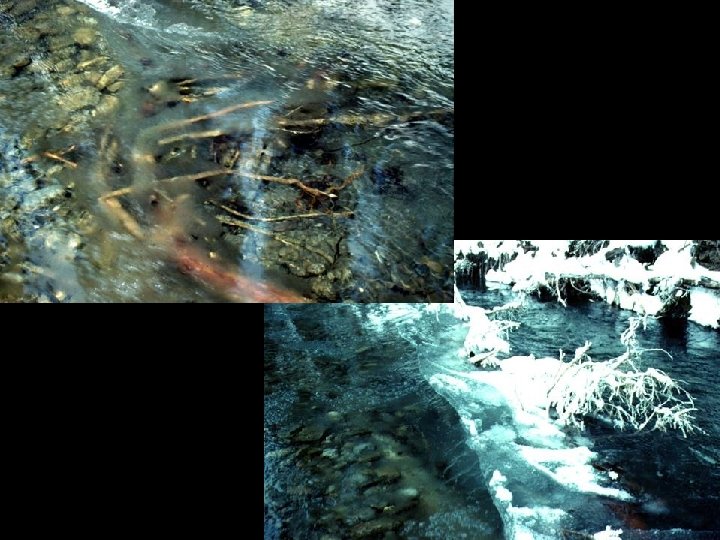
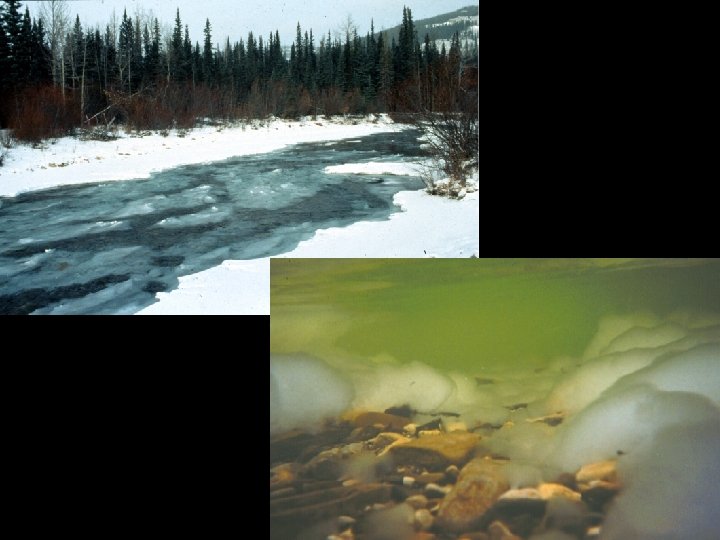
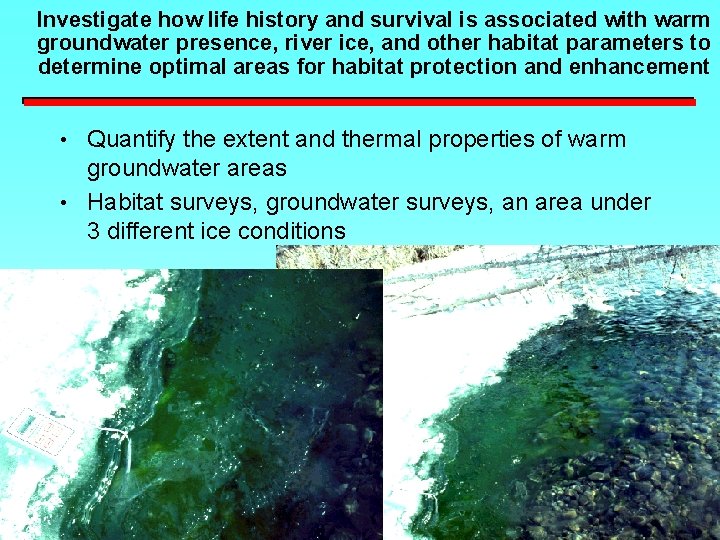
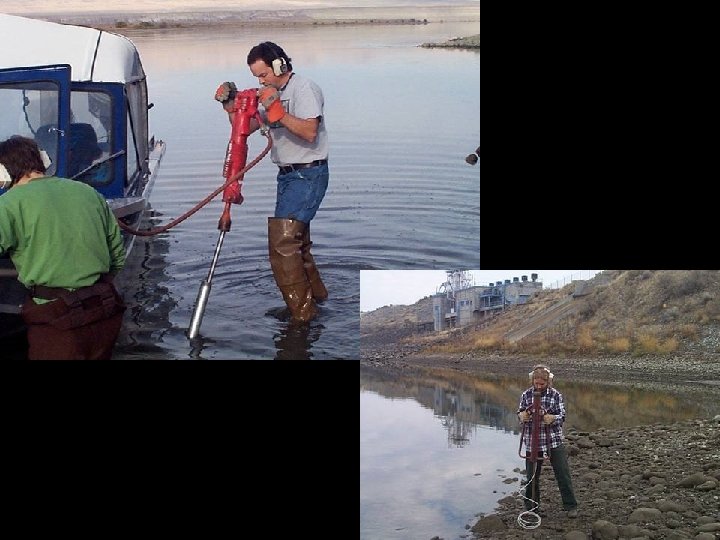
Investigate how life history and survival is associated with warm groundwater presence, river ice, and other habitat parameters to determine optimal areas for habitat protection and enhancement • Quantify the extent and thermal properties of warm groundwater areas • Habitat surveys, groundwater surveys, an area under 3 different ice conditions U. S. Department of Energy Pacific Northwest National Laboratory 18 12/29/2