
Early Identification Strategies for identifying and supporting potentially

- Slides: 26
Early Identification Strategies for identifying and supporting potentially dyslexic children in the Early Years © 2013 Judith Stansfield - SEN ICT Consultant
Dyslexic or Young? Dyslexic traits • • • Short term memory (auditory) Short term memory (visual) Easily distracted Reverses letters/ numbers Sequencing problems Language /wordfinding Organisation of self/work Gross / fine motor skills Patterns and relationships Extreme youth traits • • • Short term memory (auditory) Short term memory (visual) Easily distracted Reverses letters/ numbers Sequencing problems Language /wordfinding Organisation of self/work Gross / fine motor skills Patterns and relationships
So what is the difference? • History of dyslexia in the family • Apparently ‘clever’ child who is not making progress • Loves stories, but slow / no progress in reading • Reluctance to write but may be good at drawing, drama and have creative ideas
Why intervene? • Interventions will help any child progress • Early help will reduce risk of ‘failure’, losing confidence and low self esteem • Strategies will become life-long tools • Reduce risk of child becoming a ‘naughty’ problem
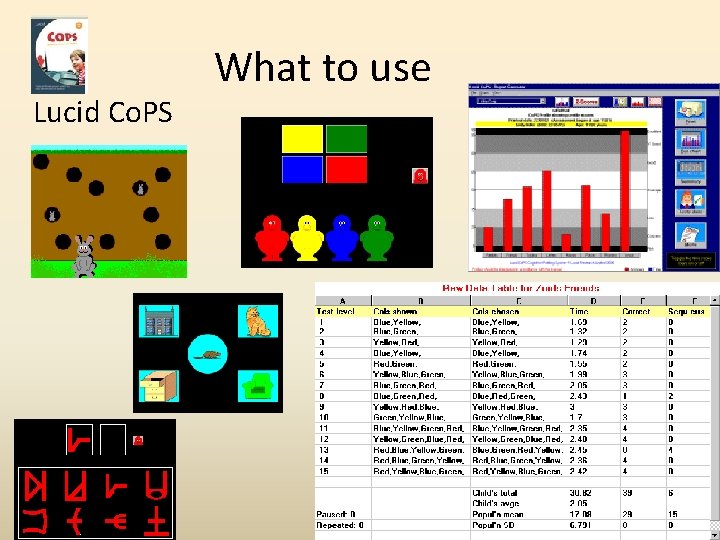
What can be done? • Use a dyslexia screening program • Find out the child’s strengths and weaknesses • Use the strengths to support weaker areas • Get the child to repeat oral instructions before starting a task
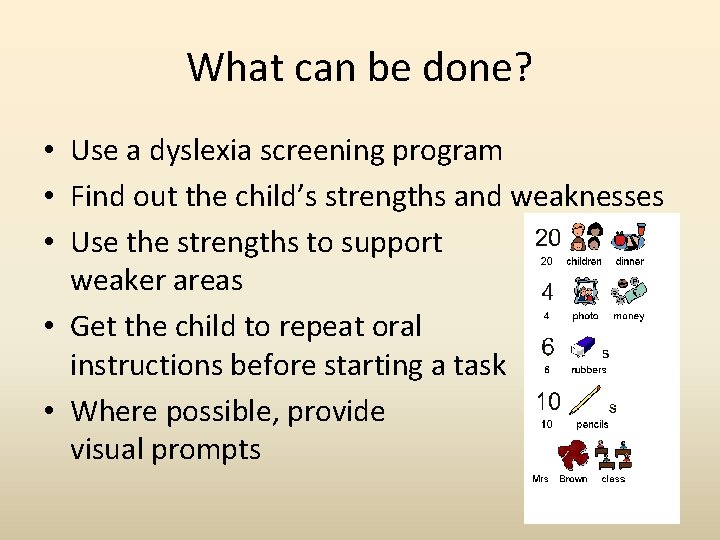
What can be done? • Use a dyslexia screening program • Find out the child’s strengths and weaknesses • Use the strengths to support weaker areas • Get the child to repeat oral instructions before starting a task • Where possible, provide visual prompts
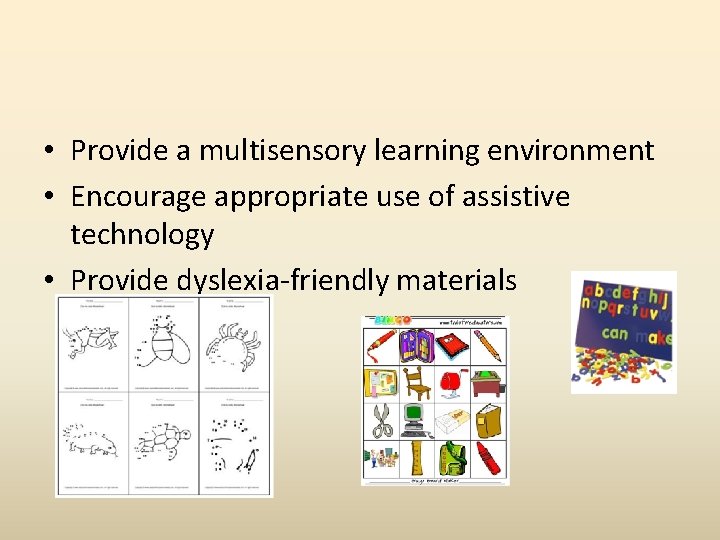
• Provide a multisensory learning environment • Encourage appropriate use of assistive technology • Provide dyslexia-friendly materials
Case Study: T • • • Family history of dyslexia Older brother on Gifted and Talented Register at 5 years T bright / good language / problems with phonics at 5 years School recognised ‘problem’ Put her in Nurture group for literacy and numeracy in Reception Support continued in small group for Y 1 -3 One day a week before-school reading club in Y 3 Awarded the Lower KS 2 Creative Writing Trophy in Y 3 Currently Y 5 – confident, happy child who reads books avidly / spelling idiosynchratic / writes copious stories, party plans, playlets
Lucid Co. PS What to use
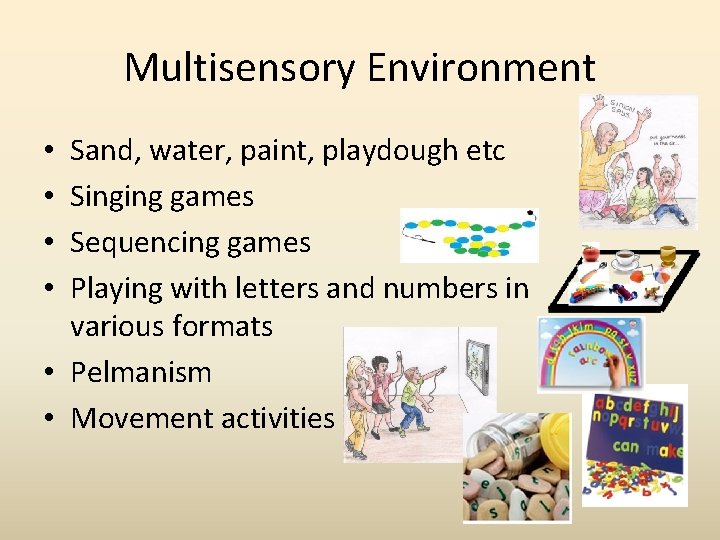
Multisensory Environment Sand, water, paint, playdough etc Singing games Sequencing games Playing with letters and numbers in various formats • Pelmanism • Movement activities • •
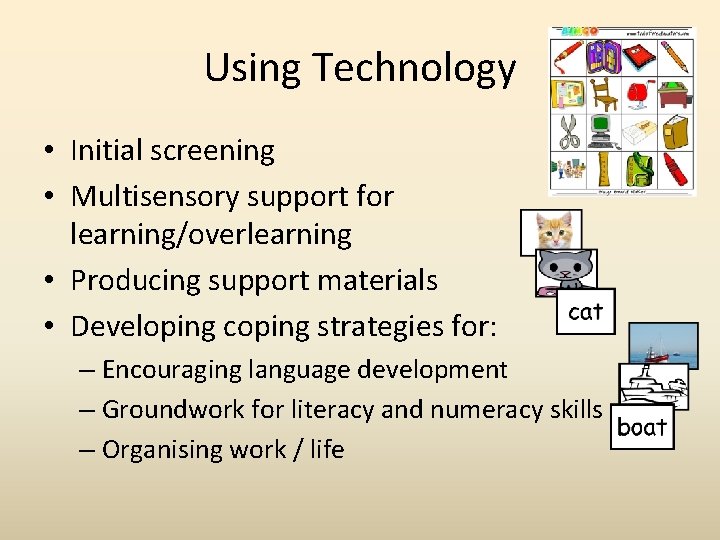
Using Technology • Initial screening • Multisensory support for learning/overlearning • Producing support materials • Developing coping strategies for: – Encouraging language development – Groundwork for literacy and numeracy skills – Organising work / life
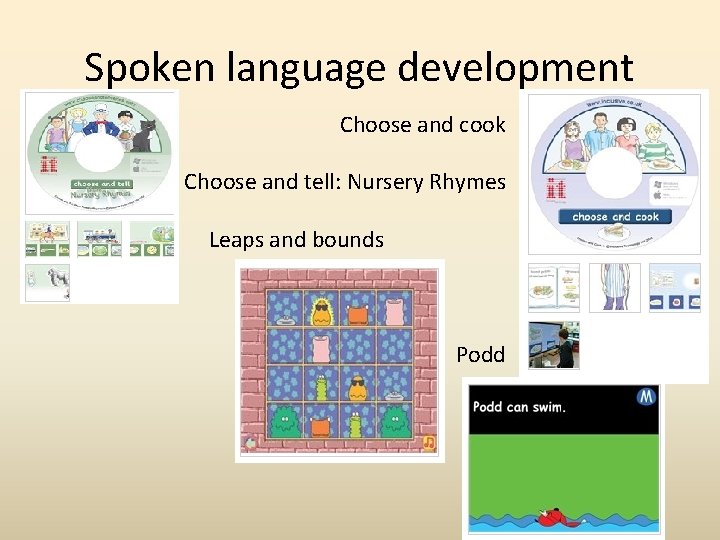
Spoken language development Choose and cook Choose and tell: Nursery Rhymes Leaps and bounds Podd
Early Number Counting Songs Choose. IT Readymades: Numeracy Fizzy’s First Numbers
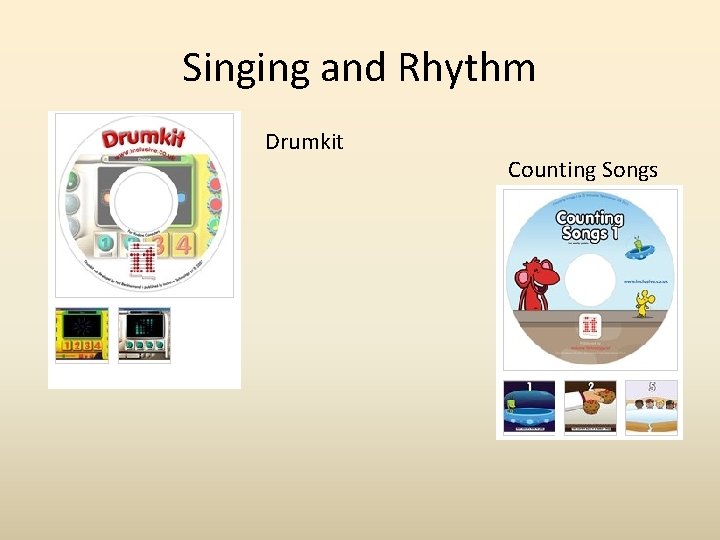
Singing and Rhythm Drumkit Counting Songs
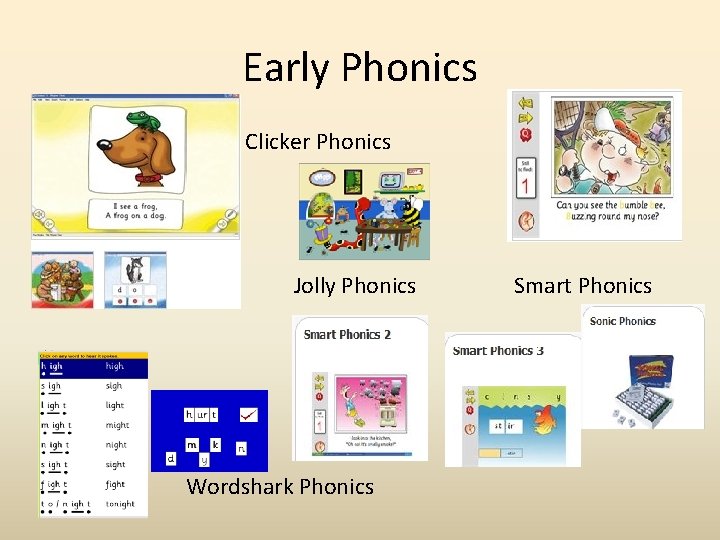
Early Phonics Clicker Phonics Jolly Phonics Wordshark Phonics Smart Phonics
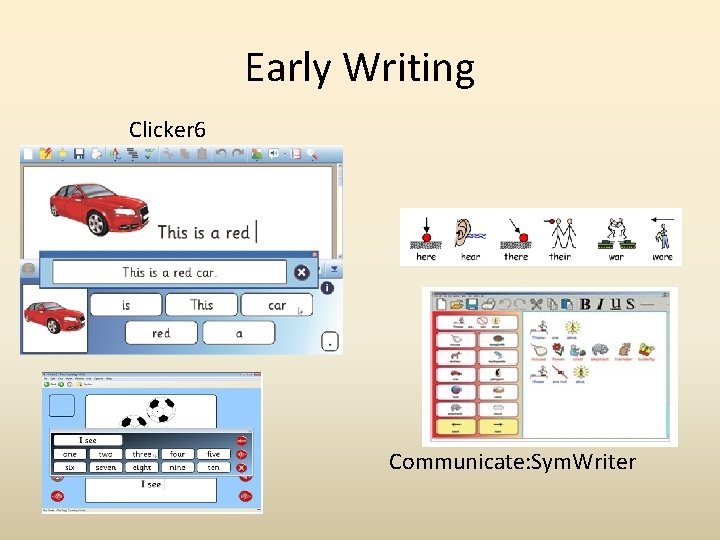
Early Writing Clicker 6 Communicate: Sym. Writer
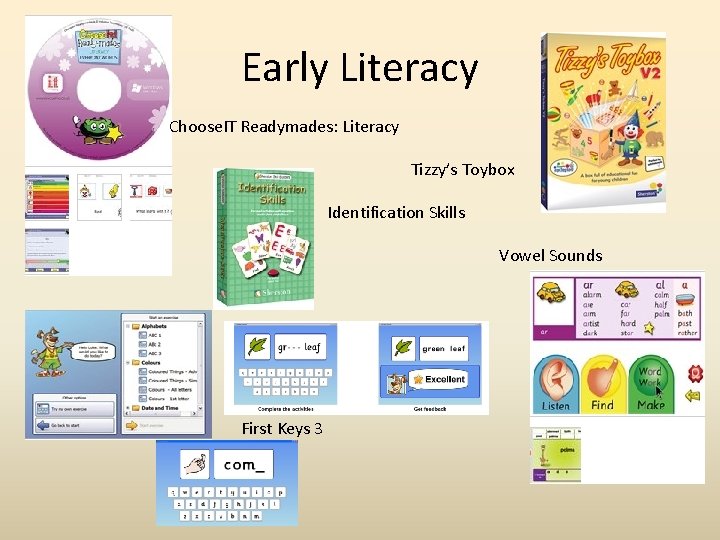
Early Literacy Choose. IT Readymades: Literacy Tizzy’s Toybox Identification Skills Vowel Sounds First Keys 3
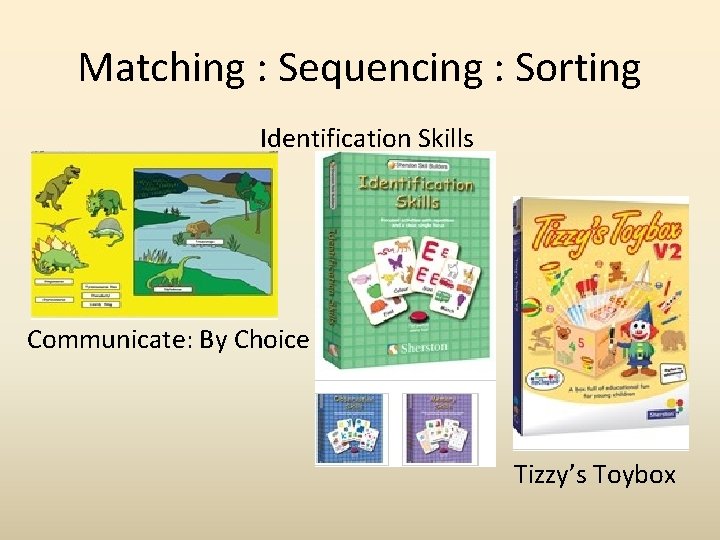
Matching : Sequencing : Sorting Identification Skills Communicate: By Choice Tizzy’s Toybox
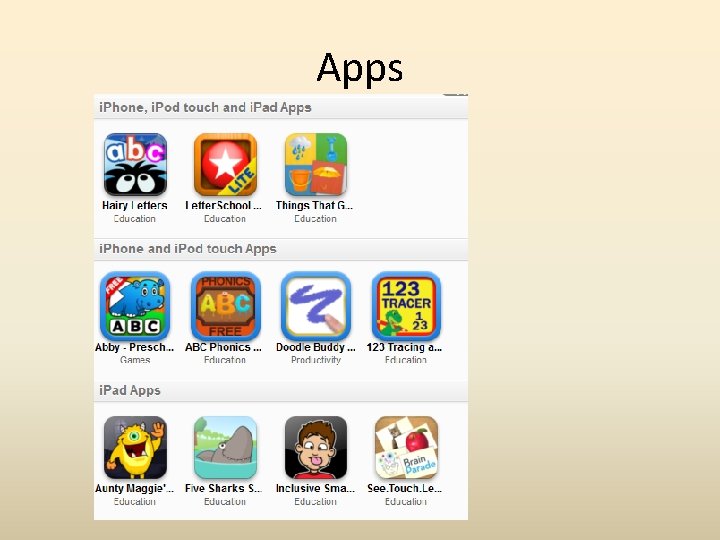
Apps
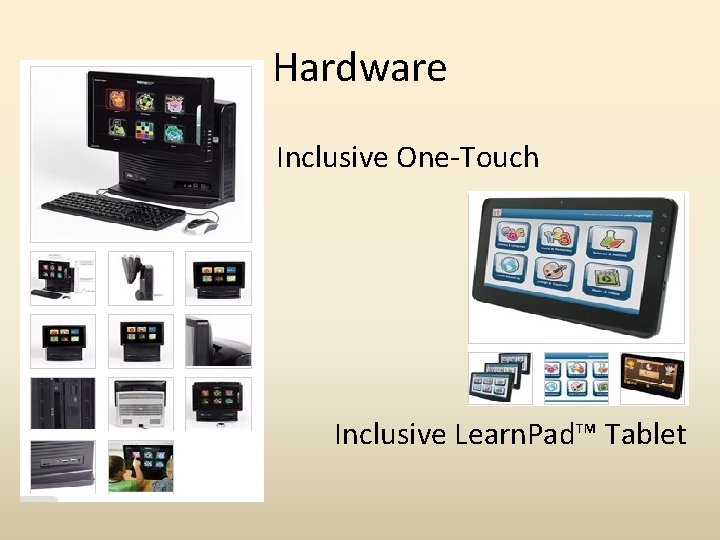
Hardware Inclusive One-Touch Inclusive Learn. Pad™ Tablet
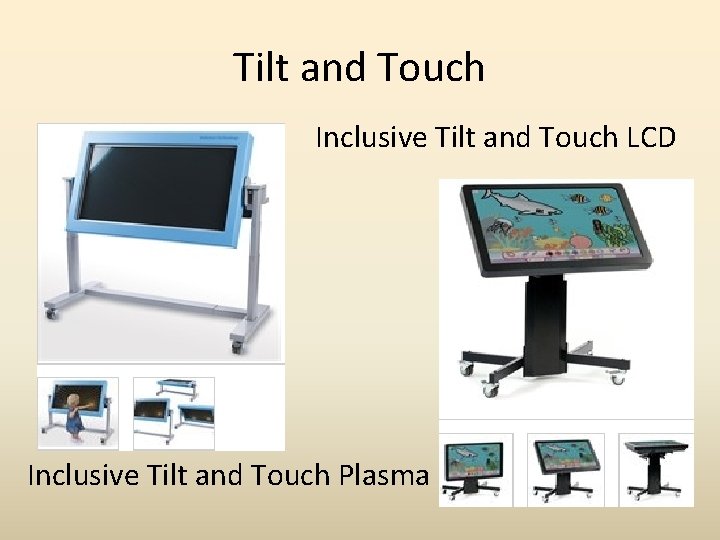
Tilt and Touch Inclusive Tilt and Touch LCD Inclusive Tilt and Touch Plasma
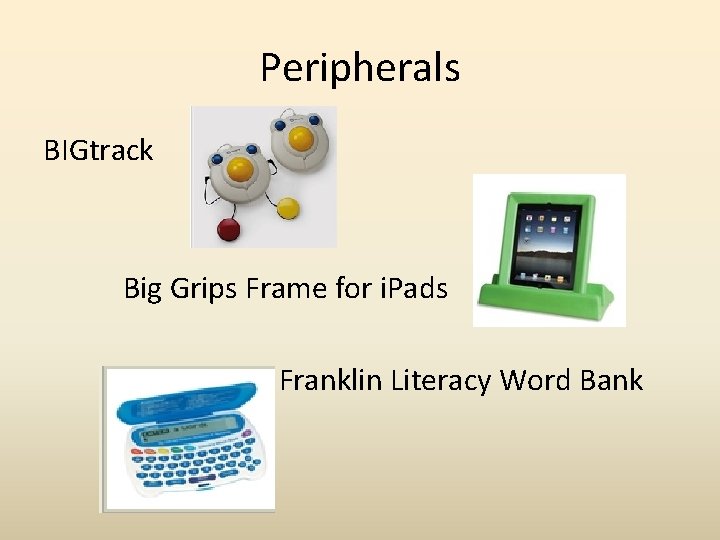
Peripherals BIGtrack Big Grips Frame for i. Pads Franklin Literacy Word Bank
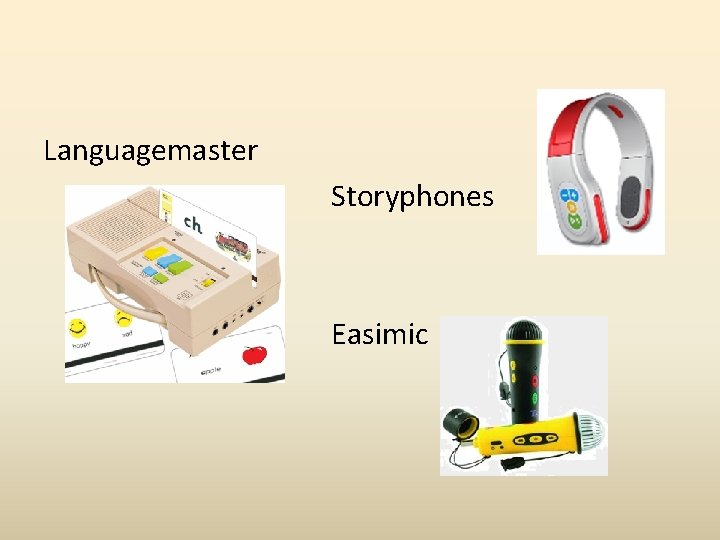
Languagemaster Storyphones Easimic
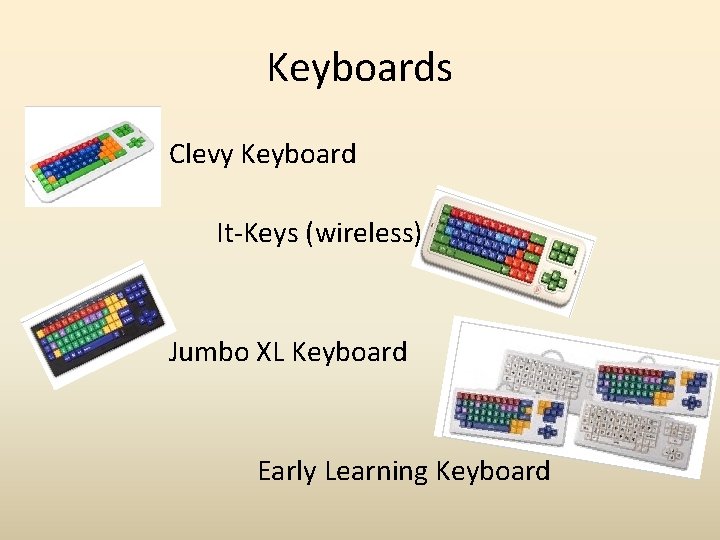
Keyboards Clevy Keyboard It-Keys (wireless) Jumbo XL Keyboard Early Learning Keyboard
Useful websites www. inclusive. co. uk www. dyslexic. com www. thedyslexiashop. co. uk www. bdatech. org www. bdadyslexia. org. uk www. bdastore. org. uk www. dyslexiaaction. org. uk
This presentation was produced by Judith Stansfield, author of Dyslexia: Early Identification with illustrations by Diane Giblin. ISBN 978 -1 -872653 -55 -6 It may be purchased from www. bdastore. org. uk The presentation may be copied for educational purposes, but not sold on for profit. www. jcstansfield. wordpress. com