
EARLY HUMANS The Discovery of LUCY Australopithecus afarensis

- Slides: 12
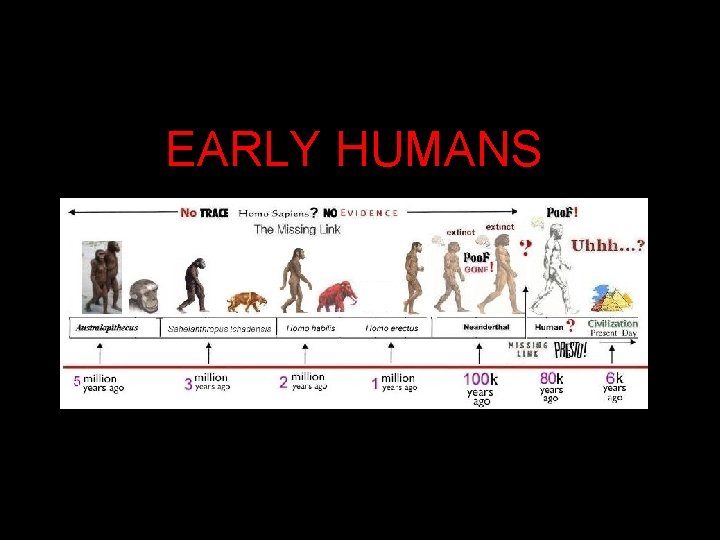
EARLY HUMANS
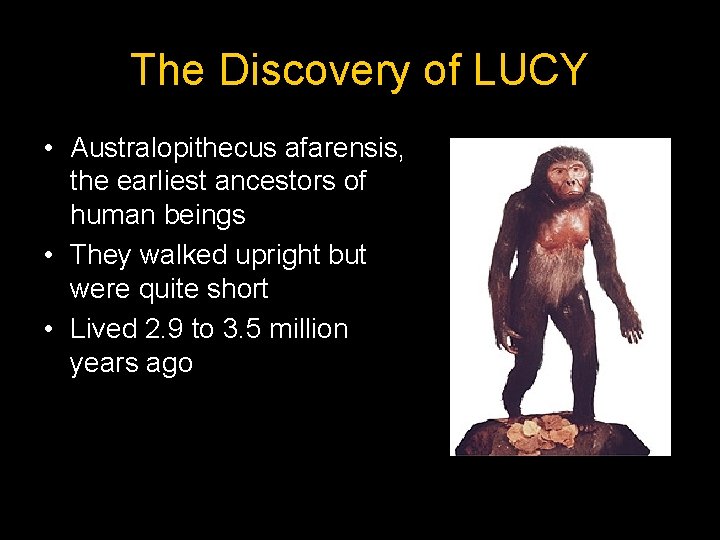
The Discovery of LUCY • Australopithecus afarensis, the earliest ancestors of human beings • They walked upright but were quite short • Lived 2. 9 to 3. 5 million years ago
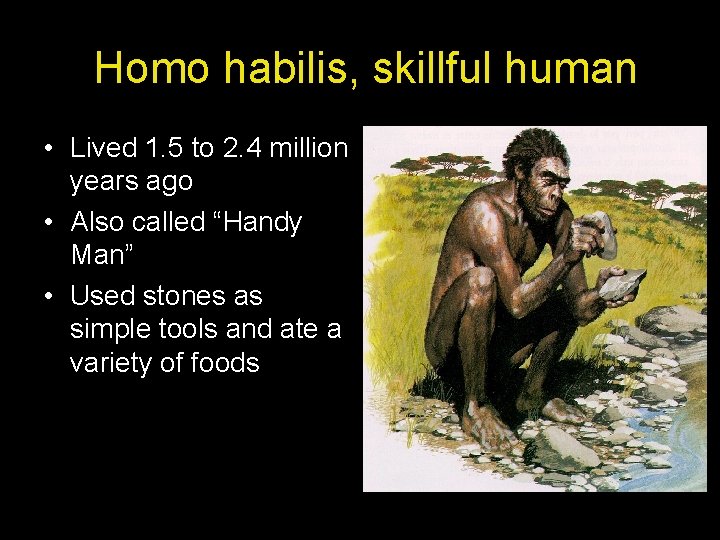
Homo habilis, skillful human • Lived 1. 5 to 2. 4 million years ago • Also called “Handy Man” • Used stones as simple tools and ate a variety of foods
Homo Erectus, upright human • Lived 300, 000 to 1. 6 million years ago • Used fire • Made stone axes and chopping tools
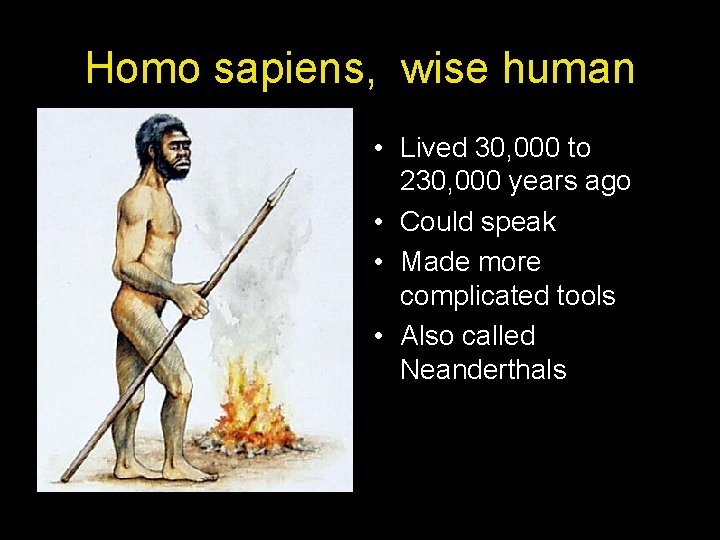
Homo sapiens, wise human • Lived 30, 000 to 230, 000 years ago • Could speak • Made more complicated tools • Also called Neanderthals
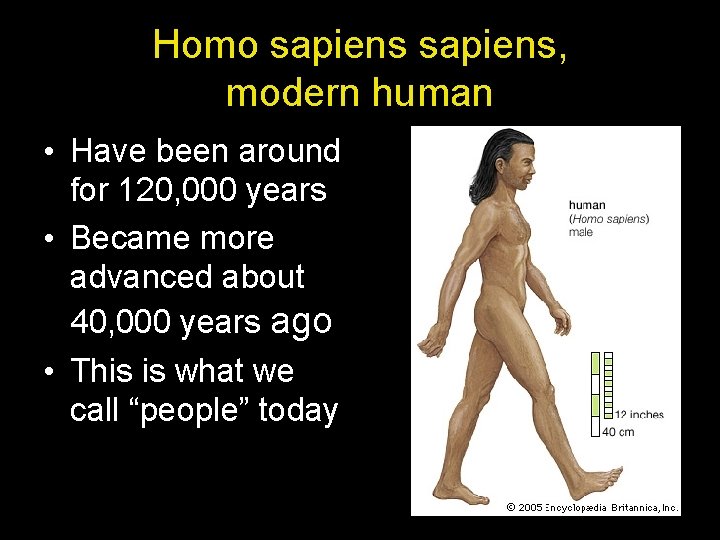
Homo sapiens, modern human • Have been around for 120, 000 years • Became more advanced about 40, 000 years ago • This is what we call “people” today
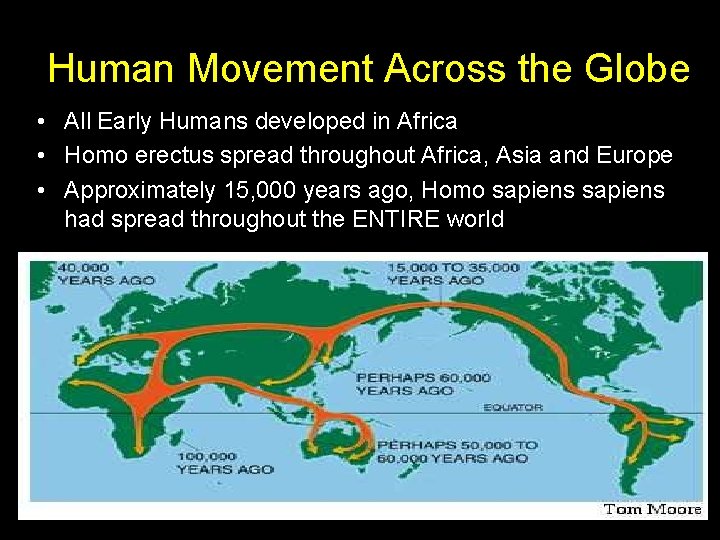
Human Movement Across the Globe • All Early Humans developed in Africa • Homo erectus spread throughout Africa, Asia and Europe • Approximately 15, 000 years ago, Homo sapiens had spread throughout the ENTIRE world
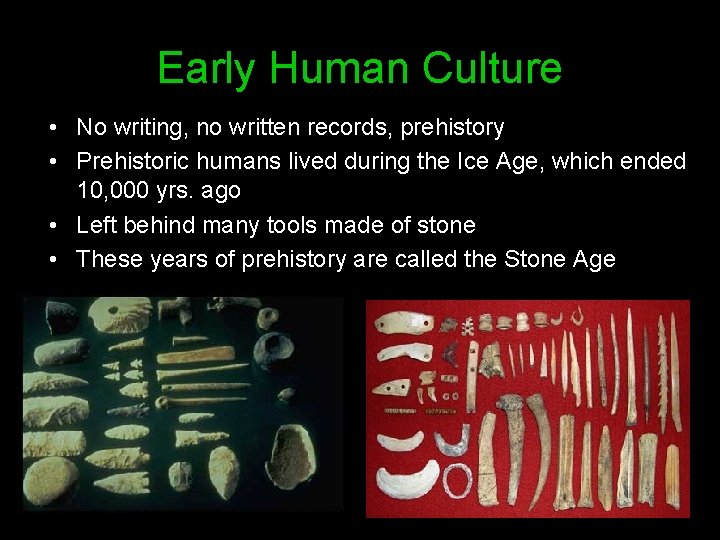
Early Human Culture • No writing, no written records, prehistory • Prehistoric humans lived during the Ice Age, which ended 10, 000 yrs. ago • Left behind many tools made of stone • These years of prehistory are called the Stone Age
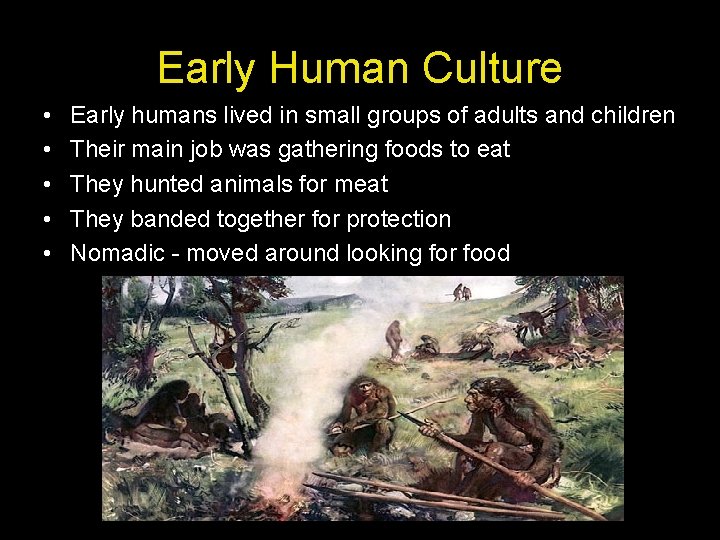
Early Human Culture • • • Early humans lived in small groups of adults and children Their main job was gathering foods to eat They hunted animals for meat They banded together for protection Nomadic - moved around looking for food
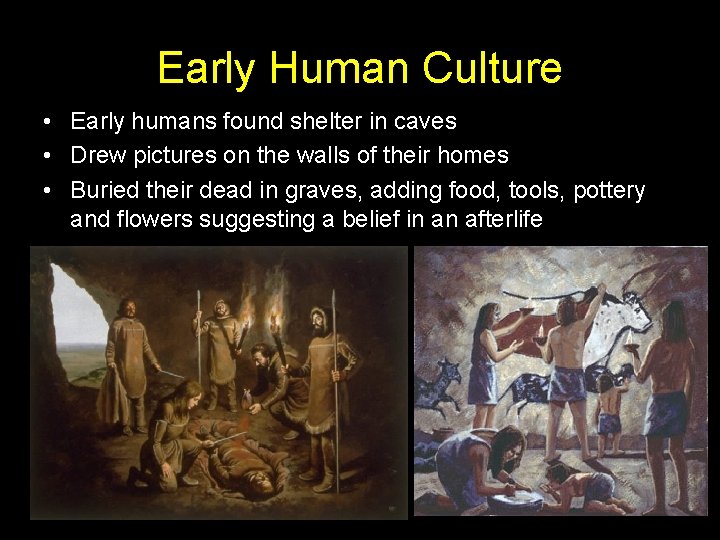
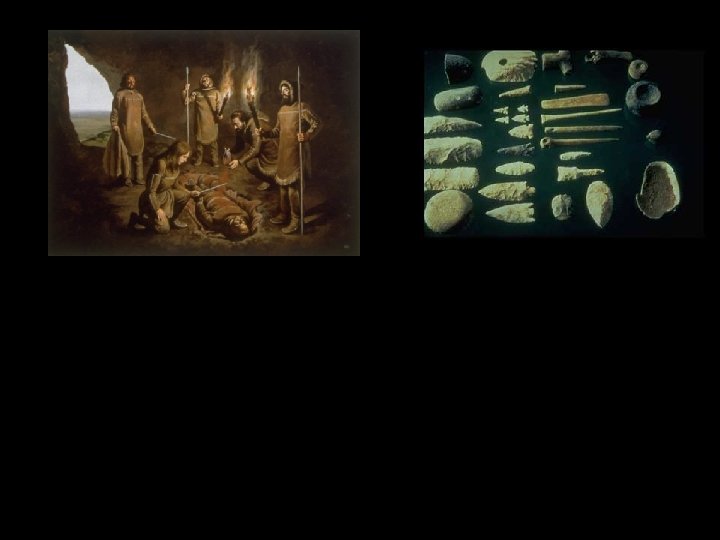
Early Human Culture • Early humans found shelter in caves • Drew pictures on the walls of their homes • Buried their dead in graves, adding food, tools, pottery and flowers suggesting a belief in an afterlife
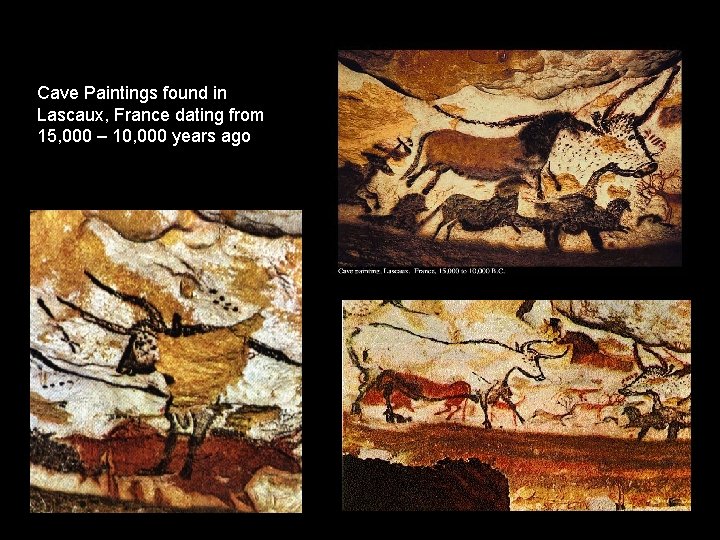
Cave Paintings found in Lascaux, France dating from 15, 000 – 10, 000 years ago