
Early Humans Hominids are the family of mankind











- Slides: 73
Early Humans Hominids are the family of mankind and his or her relatives. Hominids are the early ancestors of humans.
Prehistory • Prehistoric or Prehistory – refers to the time before the advancement of writing.
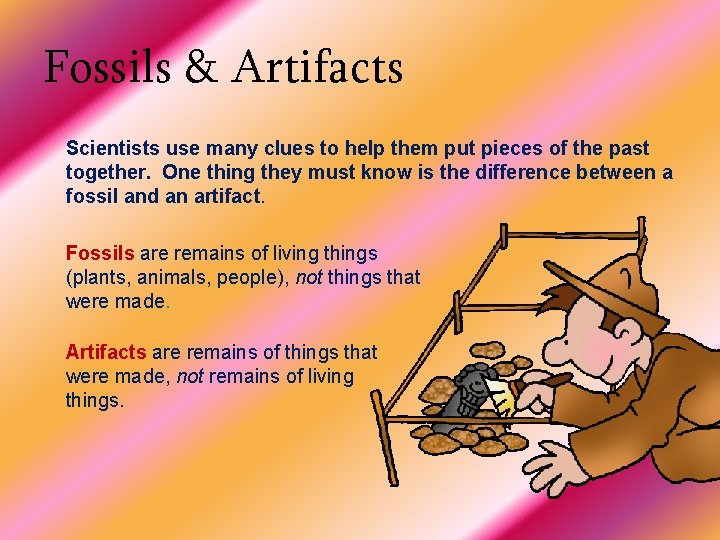
Fossils & Artifacts Scientists use many clues to help them put pieces of the past together. One thing they must know is the difference between a fossil and an artifact. Fossils are remains of living things (plants, animals, people), not things that were made. Artifacts are remains of things that were made, not remains of living things.
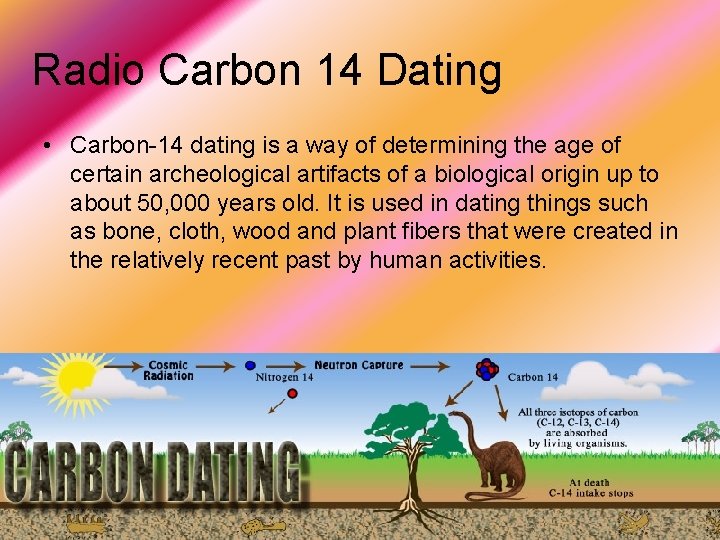
Radio Carbon 14 Dating • Carbon-14 dating is a way of determining the age of certain archeological artifacts of a biological origin up to about 50, 000 years old. It is used in dating things such as bone, cloth, wood and plant fibers that were created in the relatively recent past by human activities.
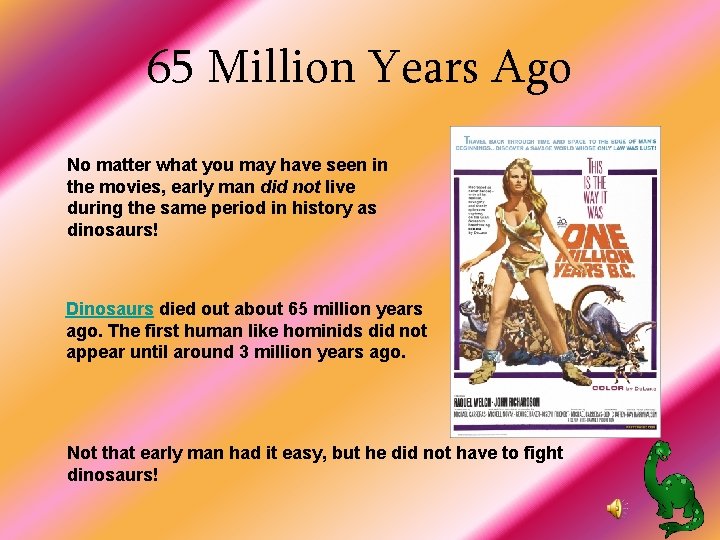
65 Million Years Ago No matter what you may have seen in the movies, early man did not live during the same period in history as dinosaurs! Dinosaurs died out about 65 million years ago. The first human like hominids did not appear until around 3 million years ago. Not that early man had it easy, but he did not have to fight dinosaurs!
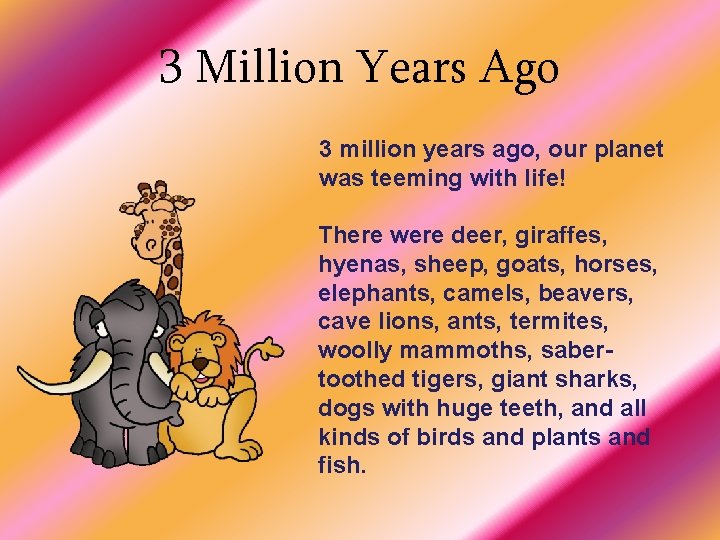
3 Million Years Ago 3 million years ago, our planet was teeming with life! There were deer, giraffes, hyenas, sheep, goats, horses, elephants, camels, beavers, cave lions, ants, termites, woolly mammoths, sabertoothed tigers, giant sharks, dogs with huge teeth, and all kinds of birds and plants and fish.
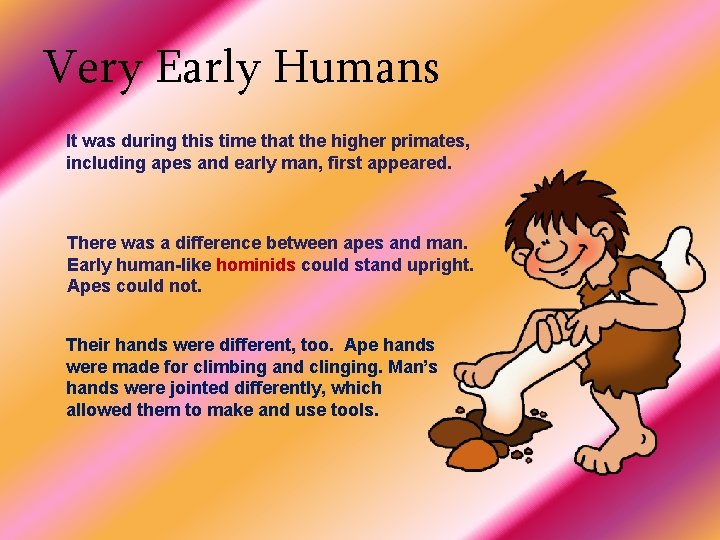
Very Early Humans It was during this time that the higher primates, including apes and early man, first appeared. There was a difference between apes and man. Early human-like hominids could stand upright. Apes could not. Their hands were different, too. Ape hands were made for climbing and clinging. Man’s hands were jointed differently, which allowed them to make and use tools.
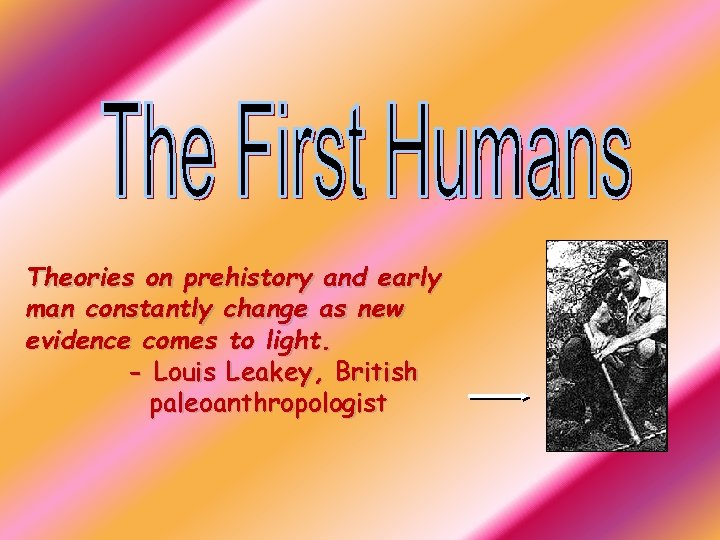
Theories on prehistory and early man constantly change as new evidence comes to light. - Louis Leakey, British paleoanthropologist
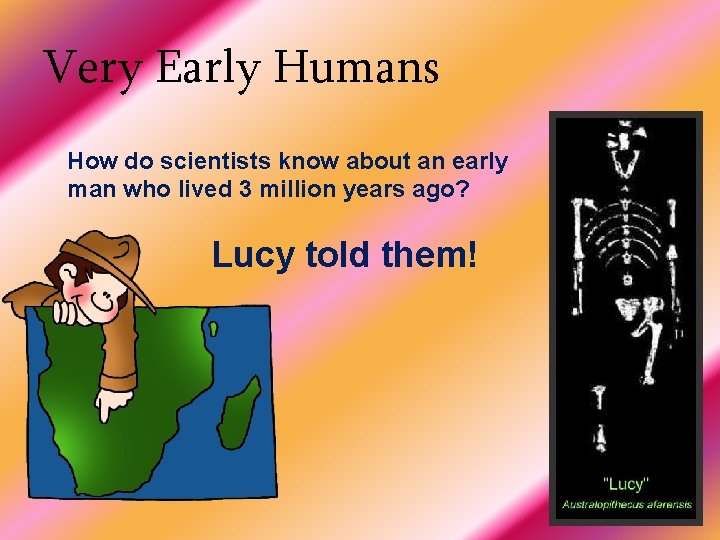
Very Early Humans How do scientists know about an early man who lived 3 million years ago? Lucy told them!
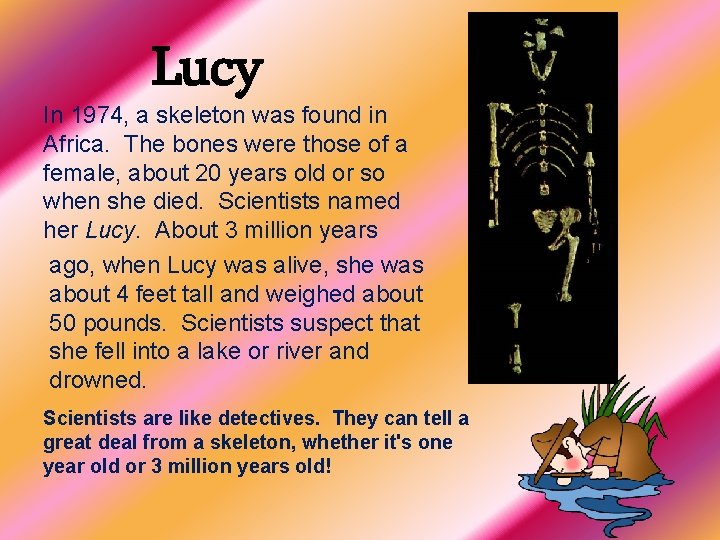
Lucy In 1974, a skeleton was found in Africa. The bones were those of a female, about 20 years old or so when she died. Scientists named her Lucy. About 3 million years ago, when Lucy was alive, she was about 4 feet tall and weighed about 50 pounds. Scientists suspect that she fell into a lake or river and drowned. Scientists are like detectives. They can tell a great deal from a skeleton, whether it's one year old or 3 million years old!
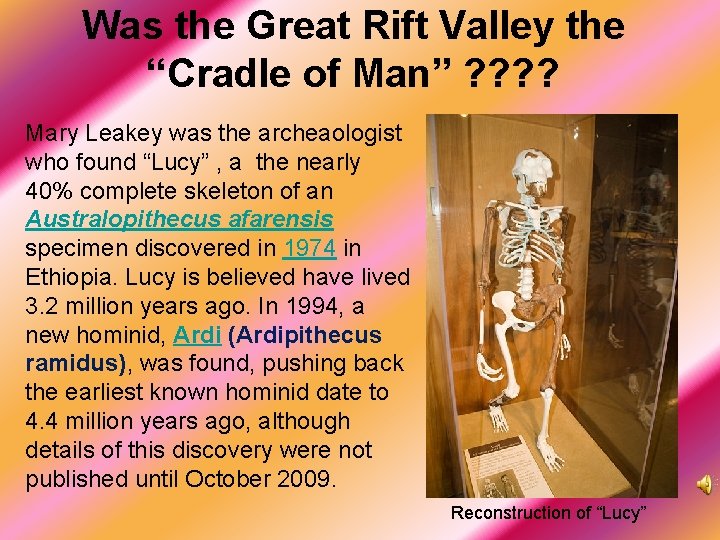
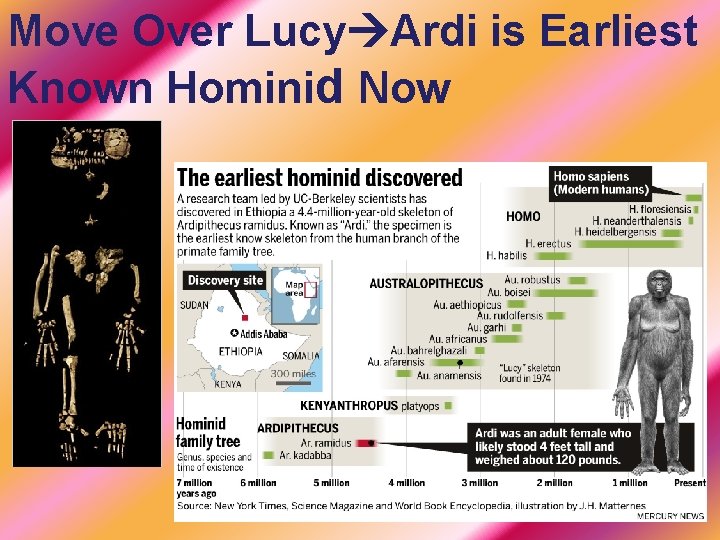
Was the Great Rift Valley the “Cradle of Man” ? ? Mary Leakey was the archeaologist who found “Lucy” , a the nearly 40% complete skeleton of an Australopithecus afarensis specimen discovered in 1974 in Ethiopia. Lucy is believed have lived 3. 2 million years ago. In 1994, a new hominid, Ardi (Ardipithecus ramidus), was found, pushing back the earliest known hominid date to 4. 4 million years ago, although details of this discovery were not published until October 2009. Reconstruction of “Lucy”
Move Over Lucy Ardi is Earliest Known Hominid Now
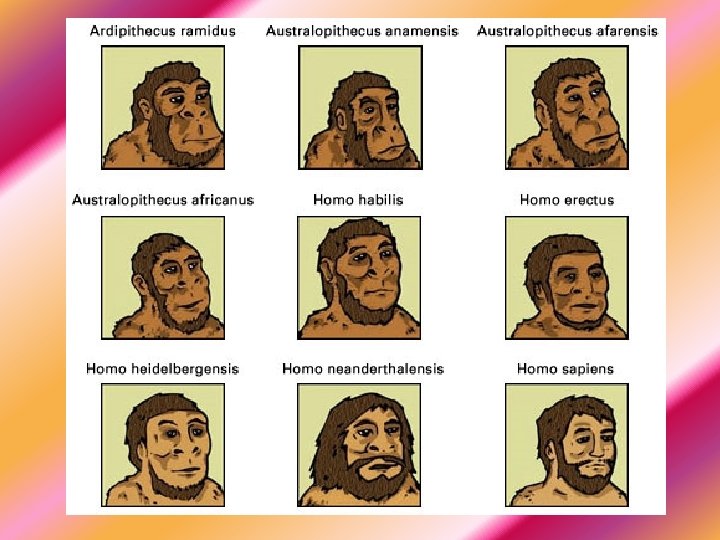
Some Hominids and Early Humans 1. Australopithicus (“Southern Ape”) 2. Homo Habilis (“Handy Man”) 3. Homo Erectus (“Upright Man”) 4. Homo Sapiens (“Wise Man”) – Homo Sapiens Neanderthalensis 5. Homo Sapiens (“Doubly Wise Man”) -- Cromagnon Man and Early Modern Humans
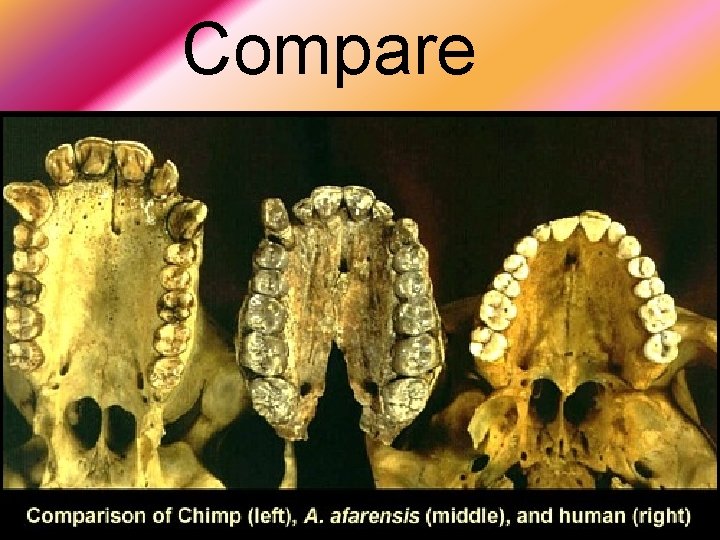
Compare
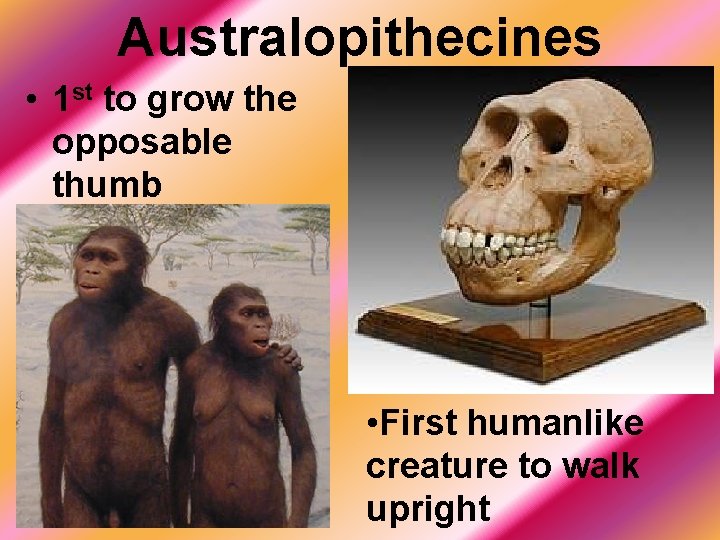
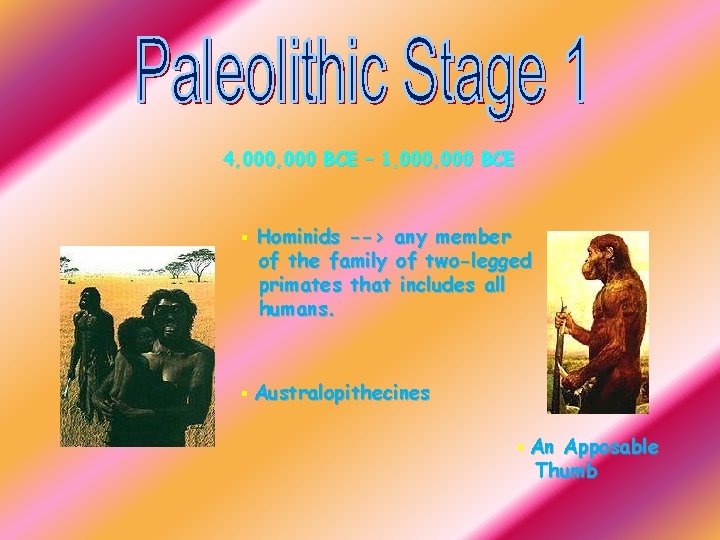
Australopithecines • 1 st to grow the opposable thumb • First humanlike creature to walk upright
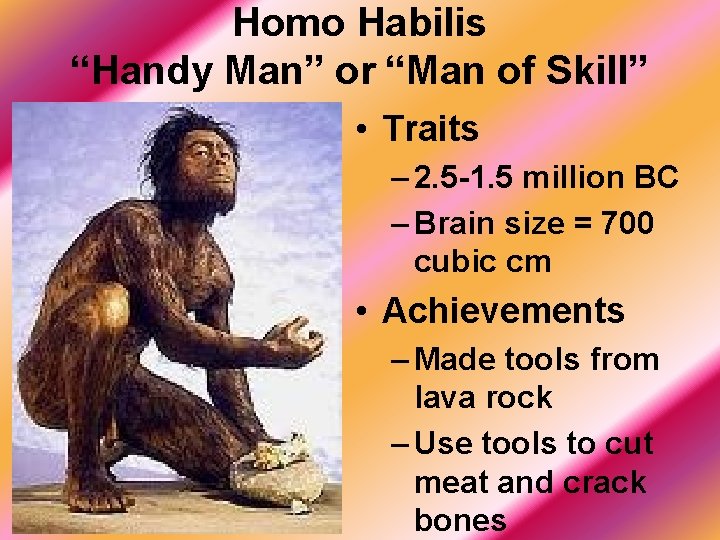
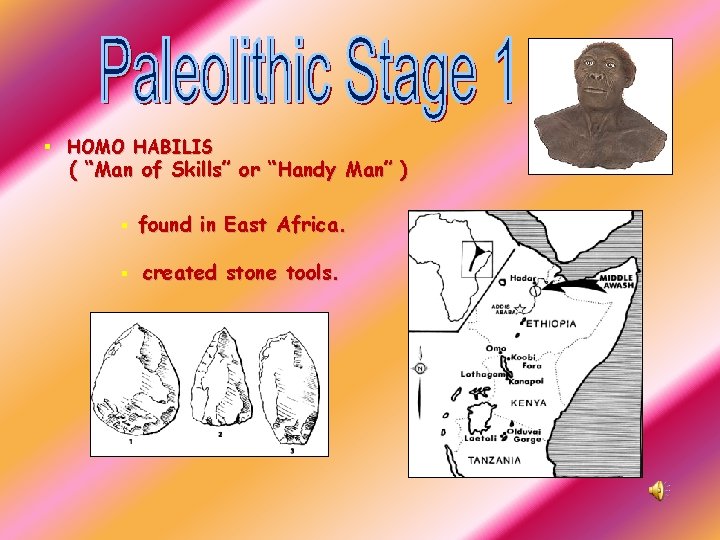
Homo Habilis “Handy Man” or “Man of Skill” • Traits – 2. 5 -1. 5 million BC – Brain size = 700 cubic cm • Achievements – Made tools from lava rock – Use tools to cut meat and crack bones
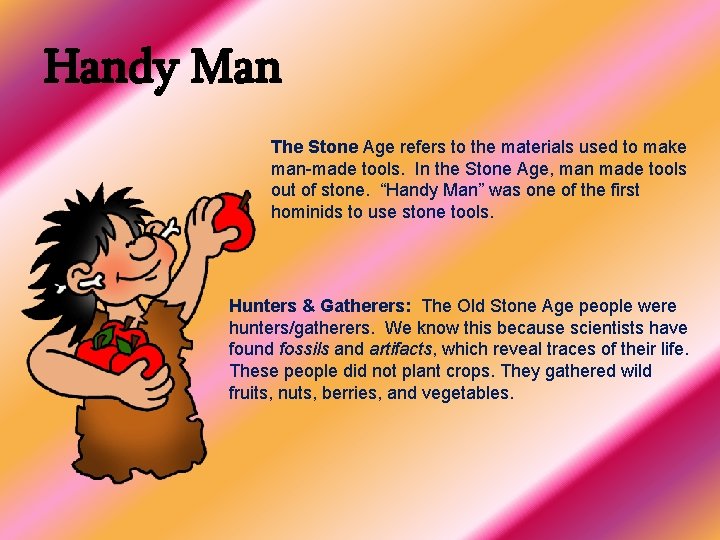
Handy Man The Stone Age refers to the materials used to make man-made tools. In the Stone Age, man made tools out of stone. “Handy Man” was one of the first hominids to use stone tools. Hunters & Gatherers: The Old Stone Age people were hunters/gatherers. We know this because scientists have found fossils and artifacts, which reveal traces of their life. These people did not plant crops. They gathered wild fruits, nuts, berries, and vegetables.
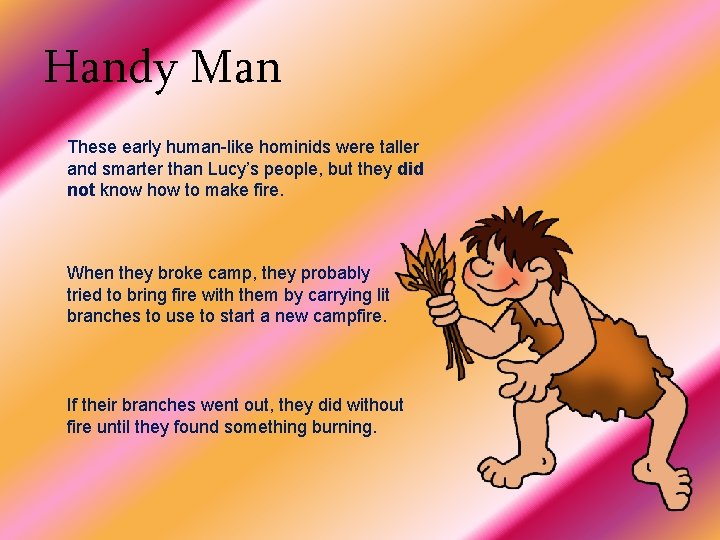
Handy Man These early human-like hominids were taller and smarter than Lucy’s people, but they did not know how to make fire. When they broke camp, they probably tried to bring fire with them by carrying lit branches to use to start a new campfire. If their branches went out, they did without fire until they found something burning.
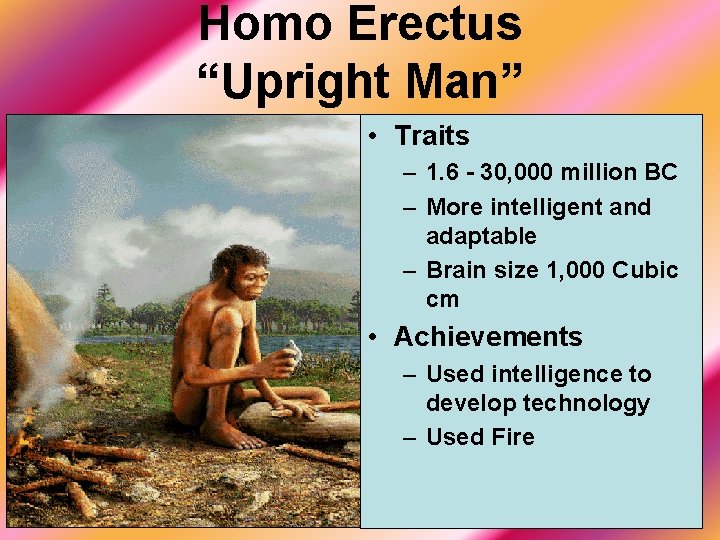
Homo Erectus “Upright Man” • Traits – 1. 6 - 30, 000 million BC – More intelligent and adaptable – Brain size 1, 000 Cubic cm • Achievements – Used intelligence to develop technology – Used Fire
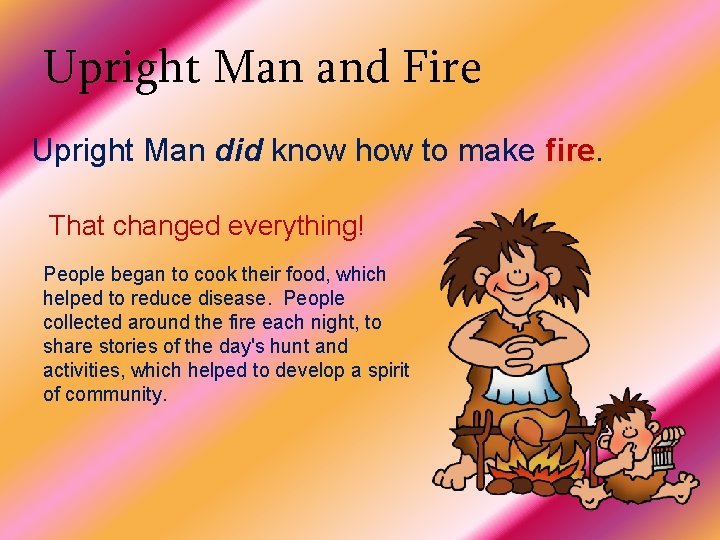
Upright Man and Fire Upright Man did know how to make fire. That changed everything! People began to cook their food, which helped to reduce disease. People collected around the fire each night, to share stories of the day's hunt and activities, which helped to develop a spirit of community.
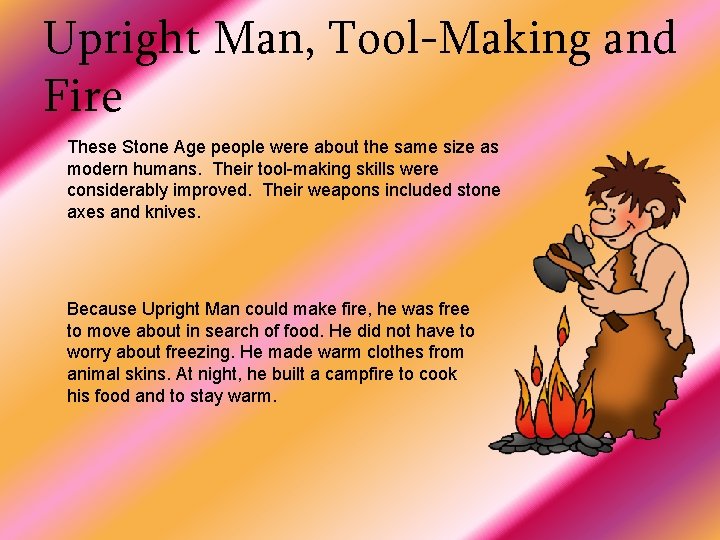
Upright Man, Tool-Making and Fire These Stone Age people were about the same size as modern humans. Their tool-making skills were considerably improved. Their weapons included stone axes and knives. Because Upright Man could make fire, he was free to move about in search of food. He did not have to worry about freezing. He made warm clothes from animal skins. At night, he built a campfire to cook his food and to stay warm.
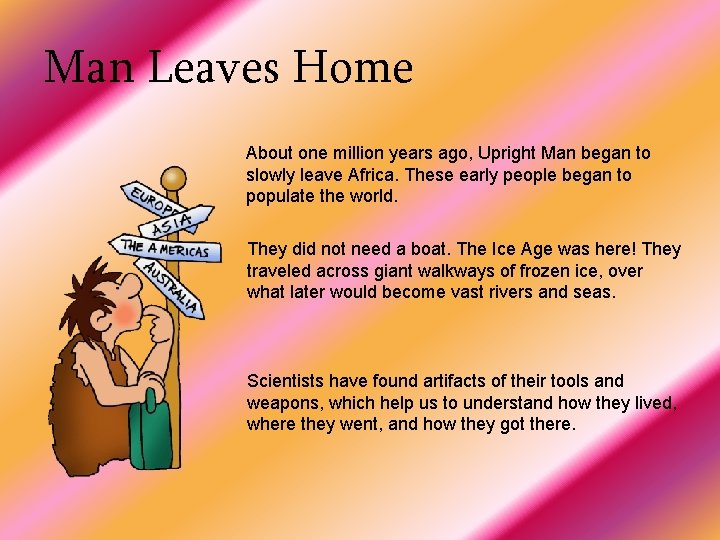
Man Leaves Home About one million years ago, Upright Man began to slowly leave Africa. These early people began to populate the world. They did not need a boat. The Ice Age was here! They traveled across giant walkways of frozen ice, over what later would become vast rivers and seas. Scientists have found artifacts of their tools and weapons, which help us to understand how they lived, where they went, and how they got there.
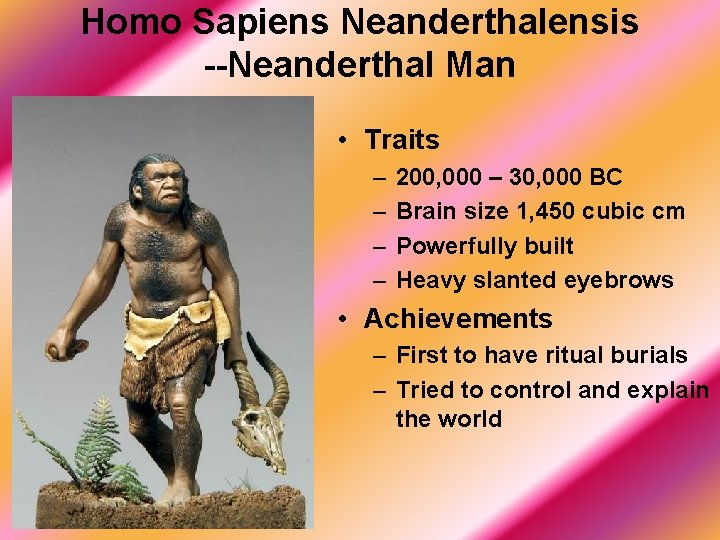
Homo Sapiens Neanderthalensis --Neanderthal Man • Traits – – 200, 000 – 30, 000 BC Brain size 1, 450 cubic cm Powerfully built Heavy slanted eyebrows • Achievements – First to have ritual burials – Tried to control and explain the world
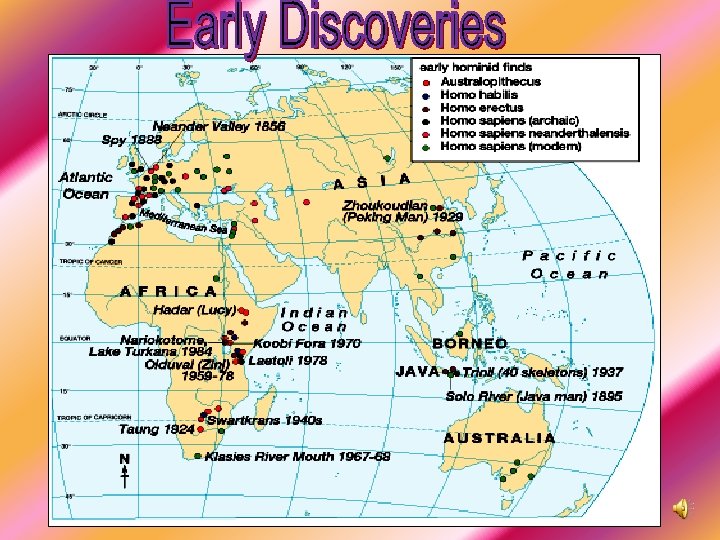
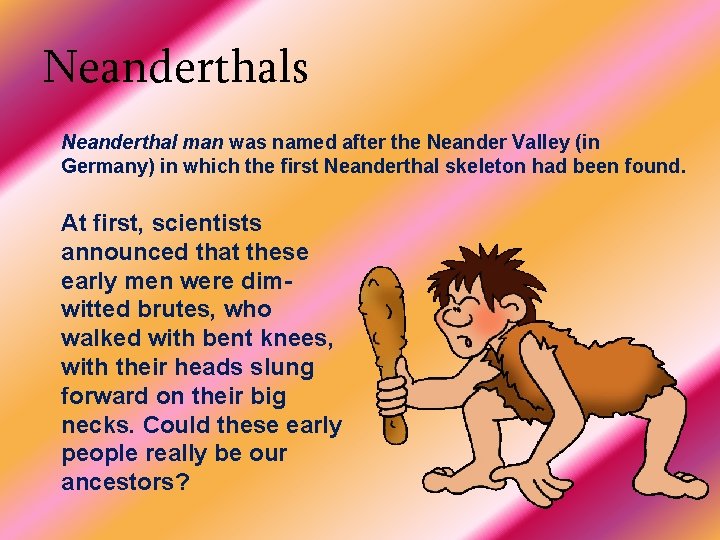
Neanderthals Neanderthal man was named after the Neander Valley (in Germany) in which the first Neanderthal skeleton had been found. At first, scientists announced that these early men were dimwitted brutes, who walked with bent knees, with their heads slung forward on their big necks. Could these early people really be our ancestors?
Neanderthals But scientists had made a mistake! The bones were bent because they were part of the skeleton of an old man suffering from arthritis! Arthritis is a disease that bends and cripples bones.
Neanderthals Still, Neanderthals were different from other species of early humans. They were tall and smart, and used caves as their homes. They were great hunters. Considering how smart they were, and how advanced for their time, scientists are puzzled that the Neanderthals were one of the early species of man to die out. Many species of man died out in these early days. But why the Neanderthals? It is a history mystery.
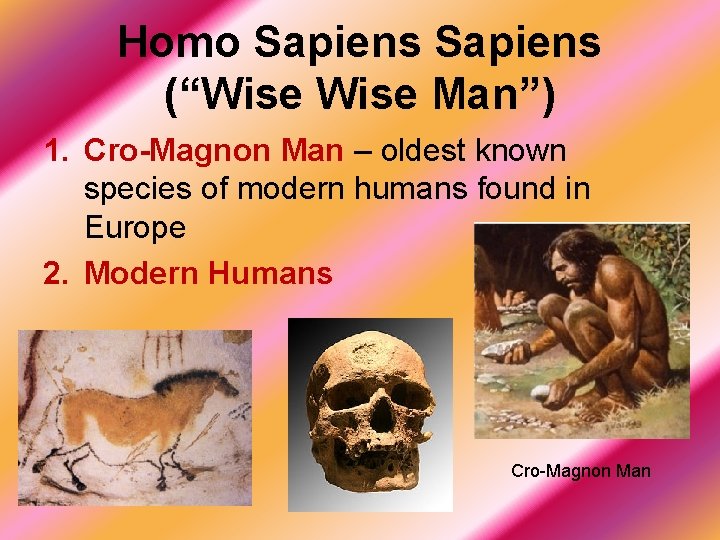
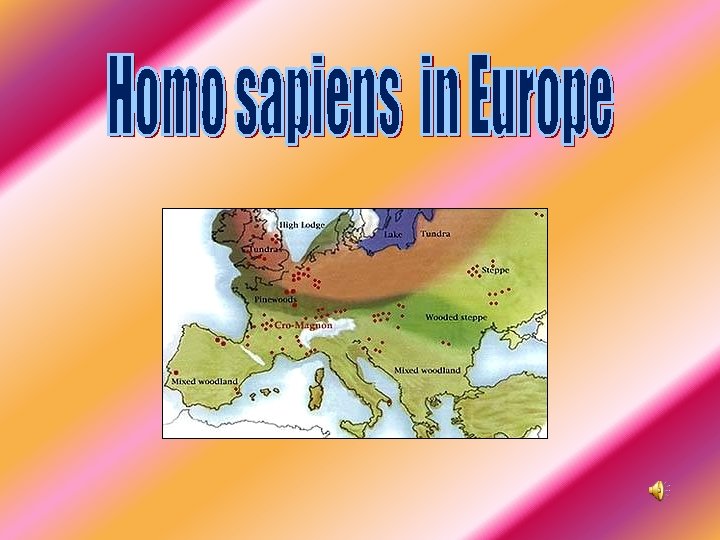
Homo Sapiens (“Wise Man”) 1. Cro-Magnon Man – oldest known species of modern humans found in Europe 2. Modern Humans Cro-Magnon Man
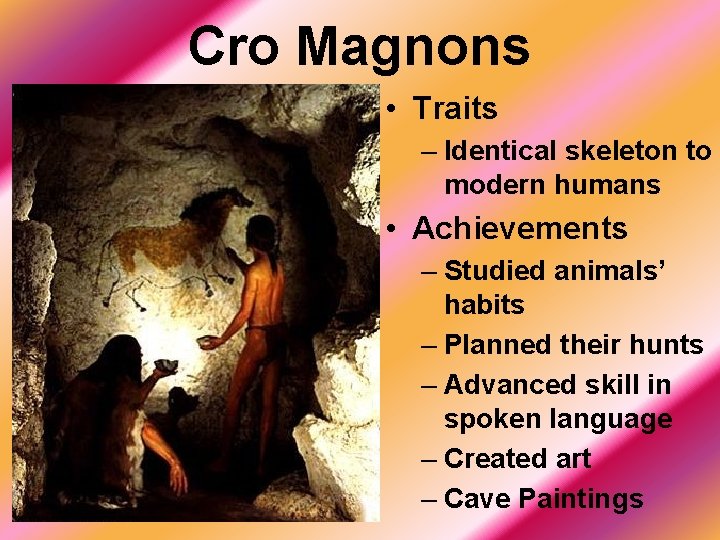
Cro Magnons • Traits – Identical skeleton to modern humans • Achievements – Studied animals’ habits – Planned their hunts – Advanced skill in spoken language – Created art – Cave Paintings
Cro-Magnon Man Another group of early men stood out during this period. Scientists nicknamed this group “Cro-Magnon man”. Cro-Magnon man lived in Europe. This group did not live a life of constant struggle for survival because they worked together to provide food for their tribe.
Cro-Magnon Man These Stone Age people learned to cure and store food for the long winter. They used traps, which allowed them to catch food while they were busy doing something else. Fisherman used nets woven from vines and fishhooks. Some groups built rafts and canoes to catch bigger fish in deeper waters. They made clothing and jewelry. They invented the bow and arrow.
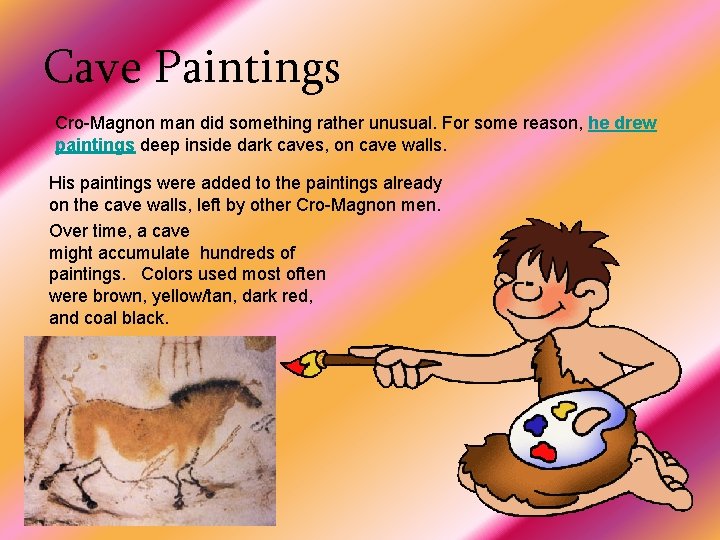
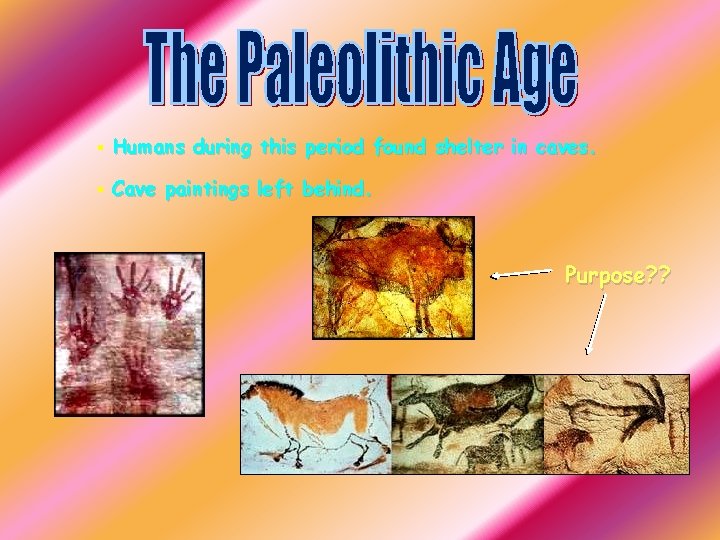
Cave Paintings Cro-Magnon man did something rather unusual. For some reason, he drew paintings deep inside dark caves, on cave walls. His paintings were added to the paintings already on the cave walls, left by other Cro-Magnon men. Over time, a cave might accumulate hundreds of paintings. Colors used most often were brown, yellow/tan, dark red, and coal black.
Cave Paintings Animals were well drawn and filled in with natural colors to give them even more shape and substance. They drew stick figures for hunters. They drew stencils of hands.
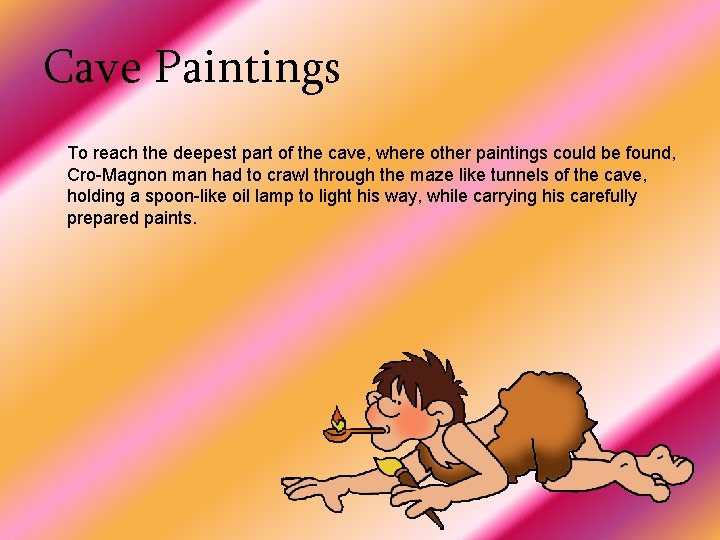
Cave Paintings To reach the deepest part of the cave, where other paintings could be found, Cro-Magnon man had to crawl through the maze like tunnels of the cave, holding a spoon-like oil lamp to light his way, while carrying his carefully prepared paints.
A Mystery It was quite dangerous. Cro-Magnon man had no idea if he might run into a cave lion. He might fall into a hole and die. Why did he do it? Perhaps it was a coming of age ceremony, or perhaps it served a religious purpose. Maybe it was a sort of, “I was here. ” There are many history mysteries. This is one of them.
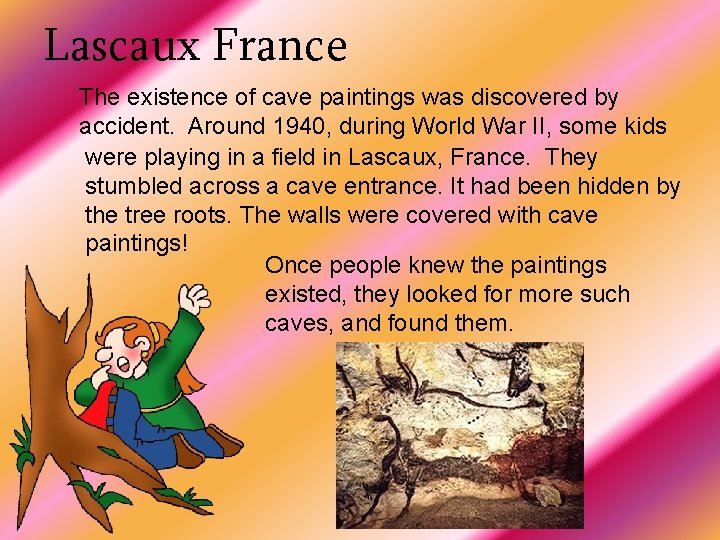
Lascaux France The existence of cave paintings was discovered by accident. Around 1940, during World War II, some kids were playing in a field in Lascaux, France. They stumbled across a cave entrance. It had been hidden by the tree roots. The walls were covered with cave paintings! Once people knew the paintings existed, they looked for more such caves, and found them.
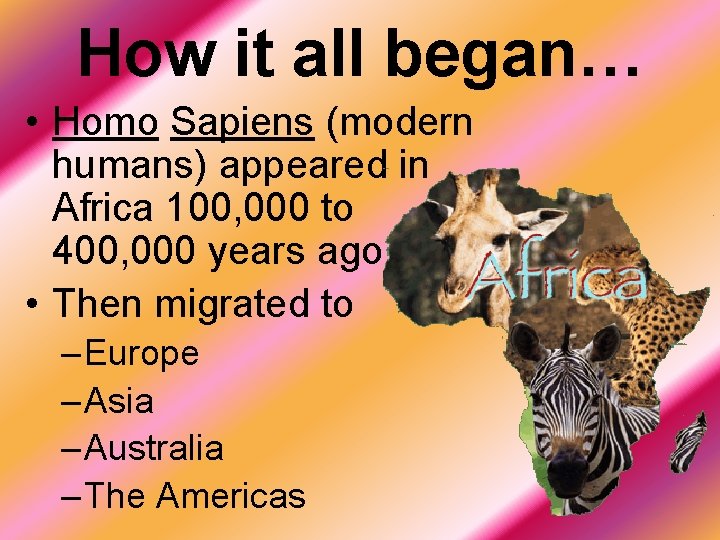
How it all began… • Homo Sapiens (modern humans) appeared in Africa 100, 000 to 400, 000 years ago. • Then migrated to – Europe – Asia – Australia – The Americas
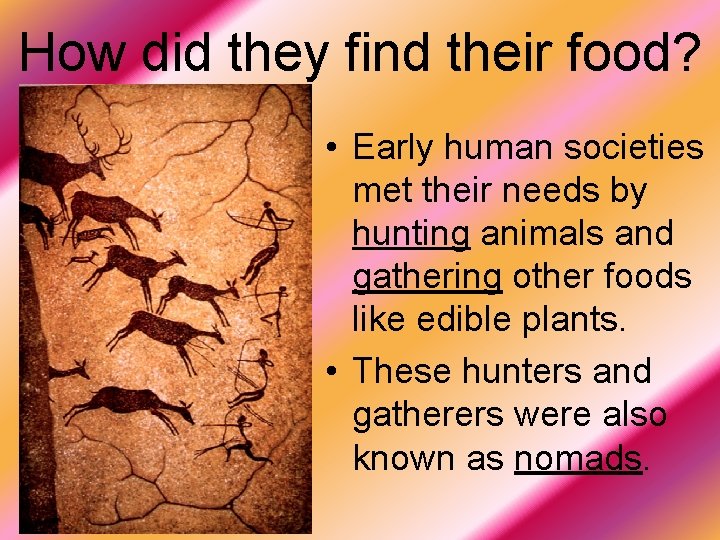
How did they find their food? • Early human societies met their needs by hunting animals and gathering other foods like edible plants. • These hunters and gatherers were also known as nomads.
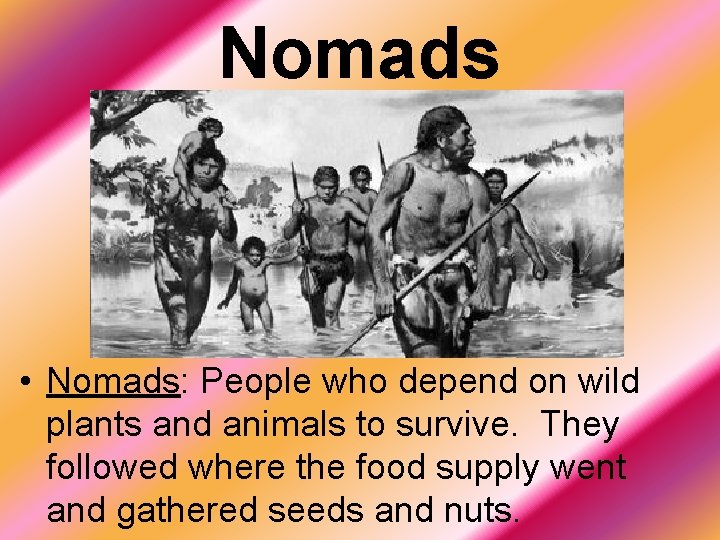
Nomads • Nomads: People who depend on wild plants and animals to survive. They followed where the food supply went and gathered seeds and nuts.
HUMAN LIFE IS SPLIT INTO 2 PERIODS: 1. The Paleolithic Era (The Old Stone Age) 2. Neolithic Era (The New Stone Age)
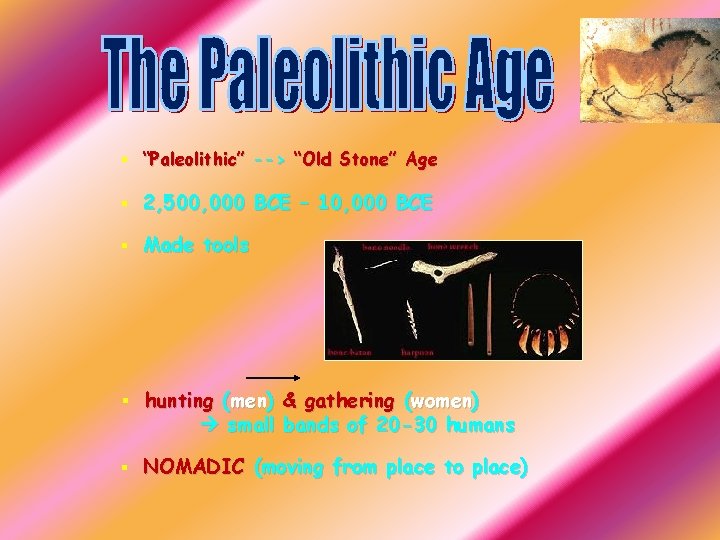
§ “Paleolithic” --> “Old Stone” Age § 2, 500, 000 BCE – 10, 000 BCE § Made tools § hunting (men) & gathering (women) small bands of 20 -30 humans § NOMADIC (moving from place to place)
§ Humans during this period found shelter in caves. § Cave paintings left behind. Purpose? ?
4, 000 BCE – 1, 000 BCE § Hominids --> any member of the family of two-legged primates that includes all humans. § Australopithecines § An Apposable Thumb
§ HOMO HABILIS ( “Man of Skills” or “Handy Man” ) § found in East Africa. § created stone tools.
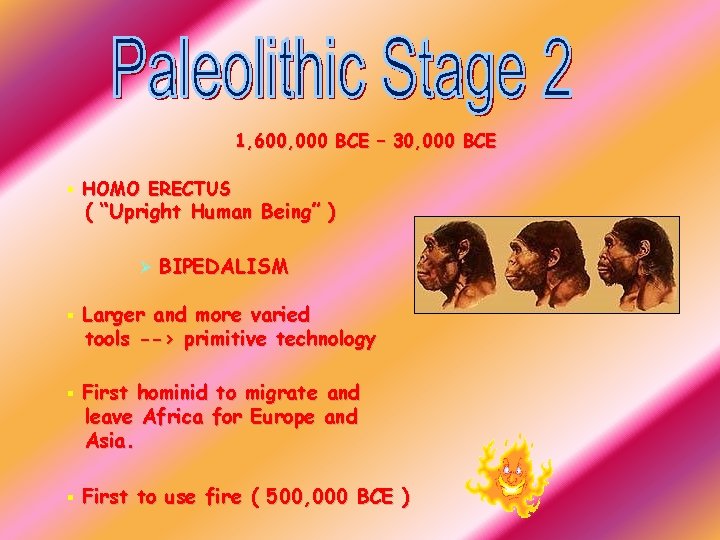
1, 600, 000 BCE – 30, 000 BCE § HOMO ERECTUS ( “Upright Human Being” ) Ø BIPEDALISM § Larger and more varied tools --> primitive technology § First hominid to migrate and leave Africa for Europe and Asia. § First to use fire ( 500, 000 BCE )
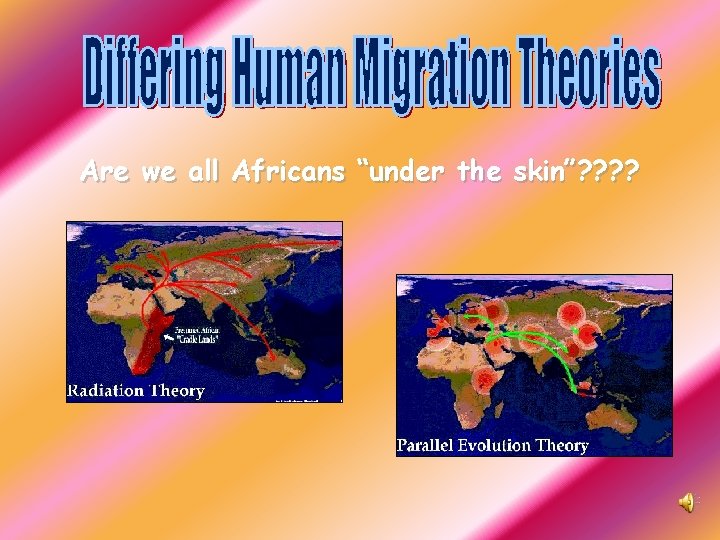
Are we all Africans “under the skin”? ?
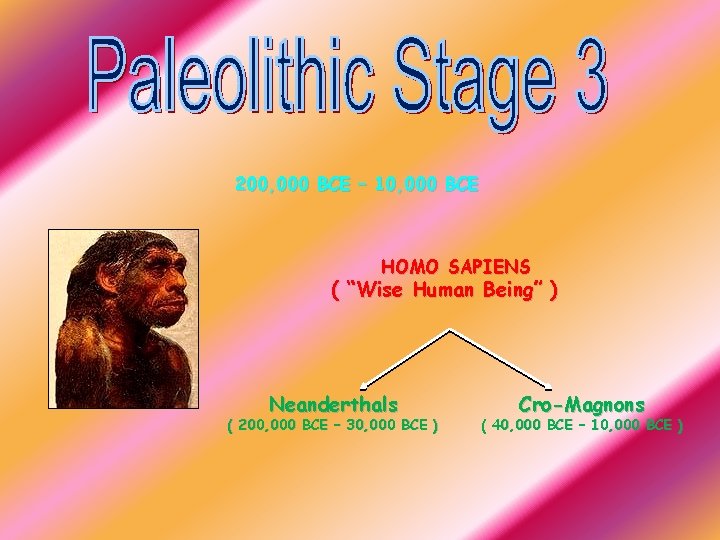
200, 000 BCE – 10, 000 BCE HOMO SAPIENS ( “Wise Human Being” ) Neanderthals ( 200, 000 BCE – 30, 000 BCE ) Cro-Magnons ( 40, 000 BCE – 10, 000 BCE )
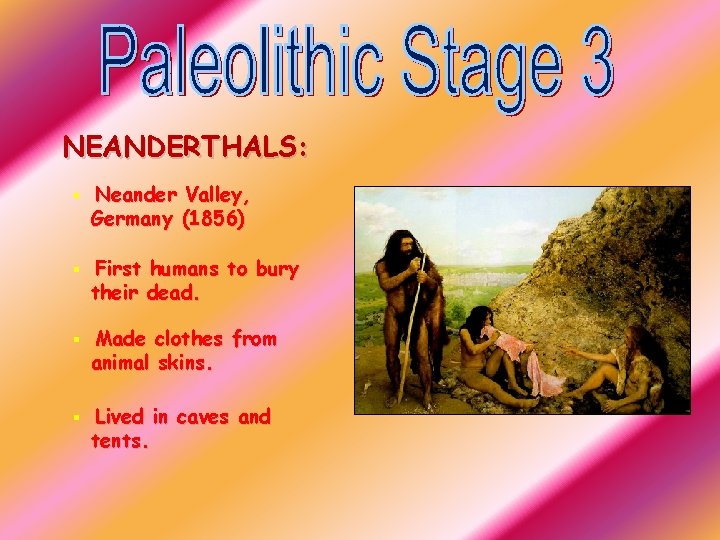
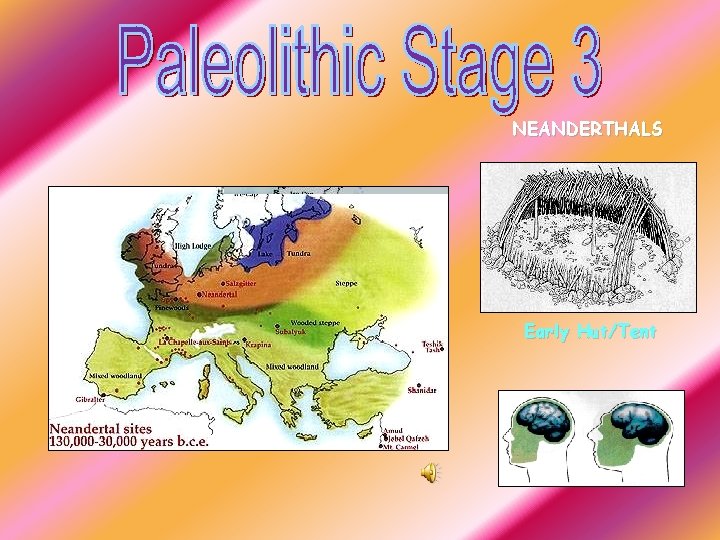
NEANDERTHALS: § Neander Valley, Germany (1856) § First humans to bury their dead. § Made clothes from animal skins. § Lived in caves and tents.
NEANDERTHALS Early Hut/Tent
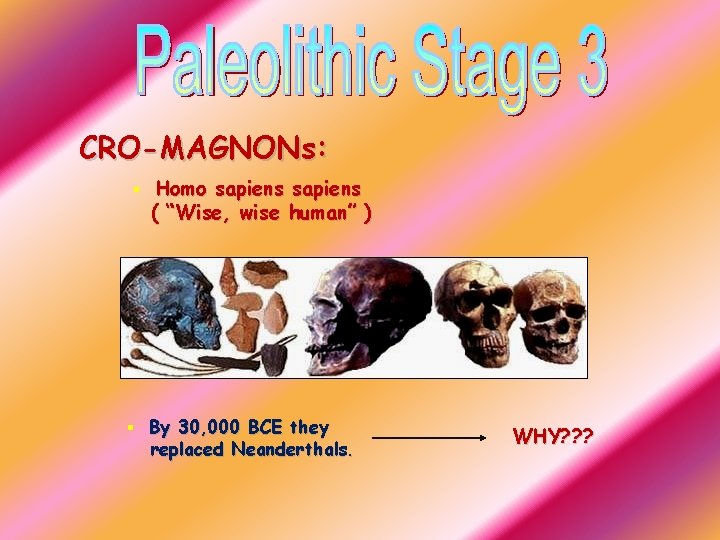
CRO-MAGNONs: § Homo sapiens ( “Wise, wise human” ) § By 30, 000 BCE they replaced Neanderthals. WHY? ? ?
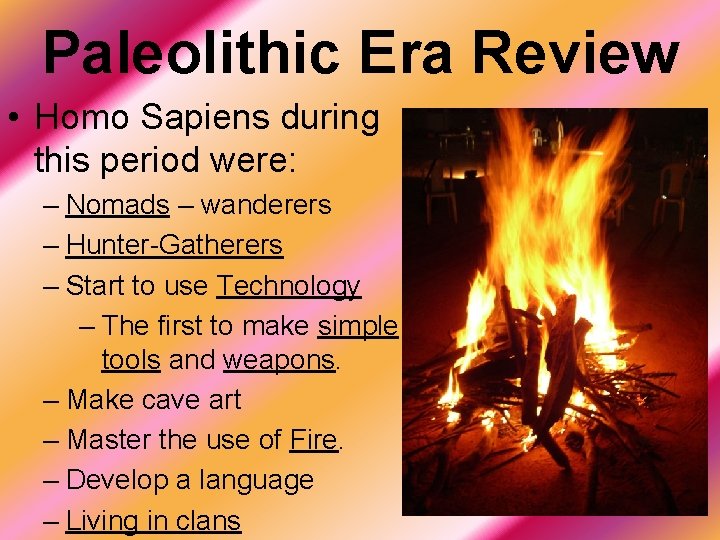
Paleolithic Era Review • Homo Sapiens during this period were: – Nomads – wanderers – Hunter-Gatherers – Start to use Technology – The first to make simple tools and weapons. – Make cave art – Master the use of Fire. – Develop a language – Living in clans
70, 000 BCE – 10, 000 BCE
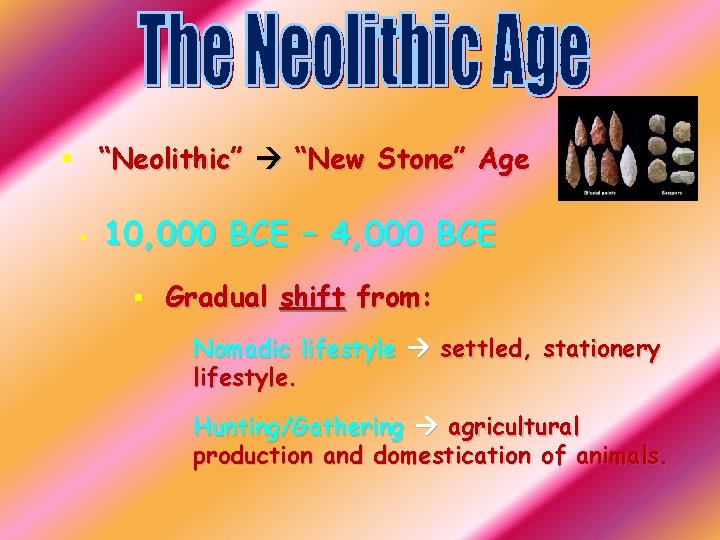
§ “Neolithic” “New Stone” Age § 10, 000 BCE – 4, 000 BCE § Gradual shift from: Nomadic lifestyle settled, stationery lifestyle. Hunting/Gathering agricultural production and domestication of animals.
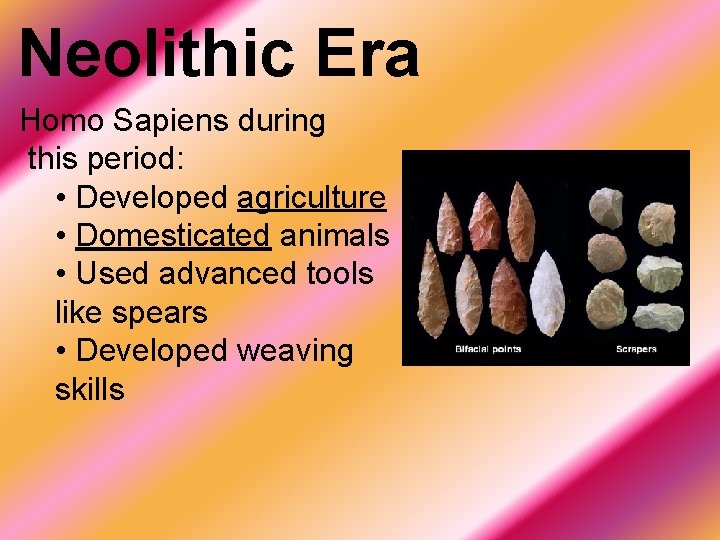
Neolithic Era Homo Sapiens during this period: • Developed agriculture • Domesticated animals • Used advanced tools like spears • Developed weaving skills
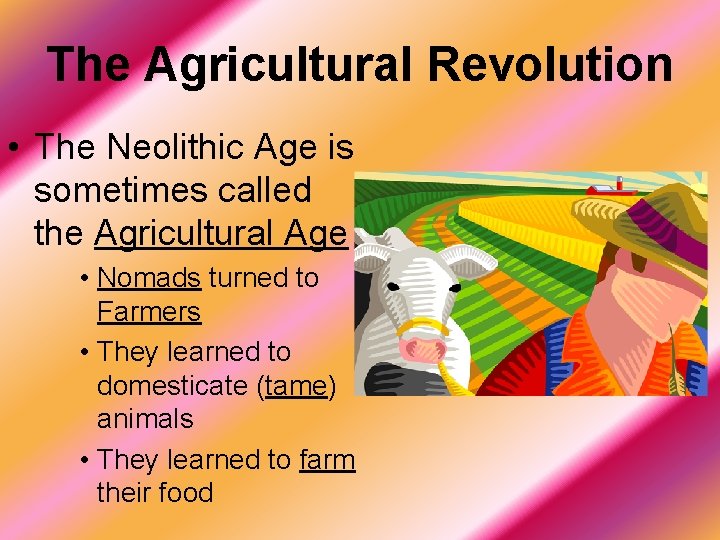
The Agricultural Revolution • The Neolithic Age is sometimes called the Agricultural Age • Nomads turned to Farmers • They learned to domesticate (tame) animals • They learned to farm their food
Why do some archaeologists believe that women were the first farmers?
Why do you think the development of agriculture occurred around the same time in several different places?
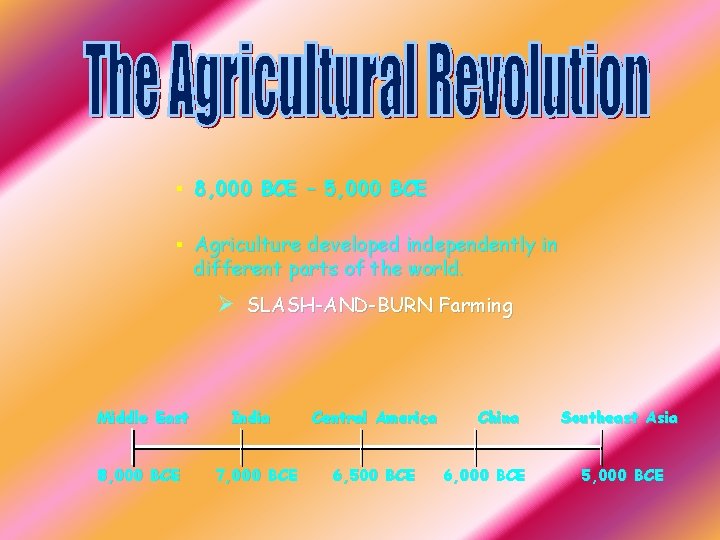
§ 8, 000 BCE – 5, 000 BCE § Agriculture developed independently in different parts of the world. Ø SLASH-AND-BURN Farming Middle East 8, 000 BCE India 7, 000 BCE Central America 6, 500 BCE China 6, 000 BCE Southeast Asia 5, 000 BCE
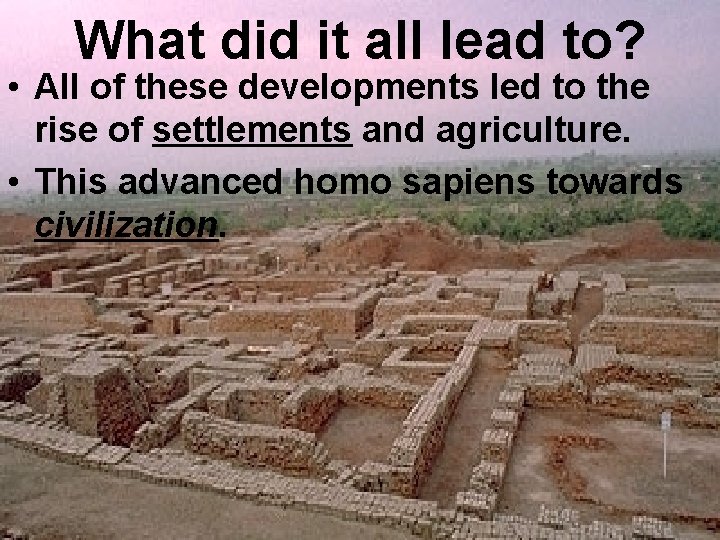
What did it all lead to? • All of these developments led to the rise of settlements and agriculture. • This advanced homo sapiens towards civilization.
§ Growing crops on a regular basis made possible the support of larger populations. § More permanent, settled communities emerged. § 9, 000 BCE Earliest Agricultural Settlement at JARMO ( northern Iraq ) wheat
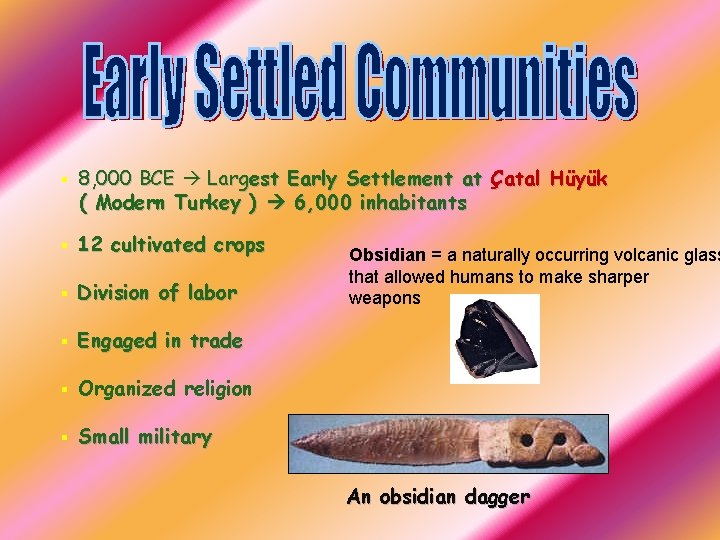
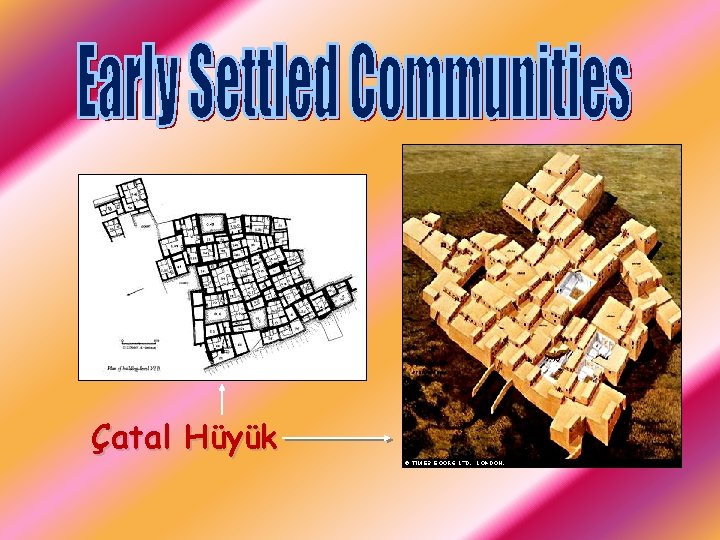
§ 8, 000 BCE Largest Early Settlement at Çatal Hüyük ( Modern Turkey ) 6, 000 inhabitants § 12 cultivated crops § Division of labor § Engaged in trade § Organized religion § Small military Obsidian = a naturally occurring volcanic glass that allowed humans to make sharper weapons An obsidian dagger
Çatal Hüyük
What role did the food supply play in shaping the nomadic life of hunter-gatherers and the settled life of the farmers?
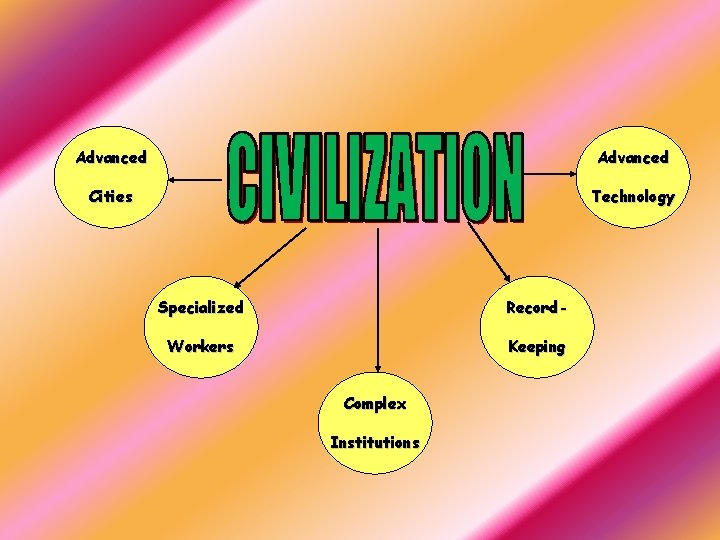
Advanced Cities Technology Specialized Record- Workers Keeping Complex Institutions
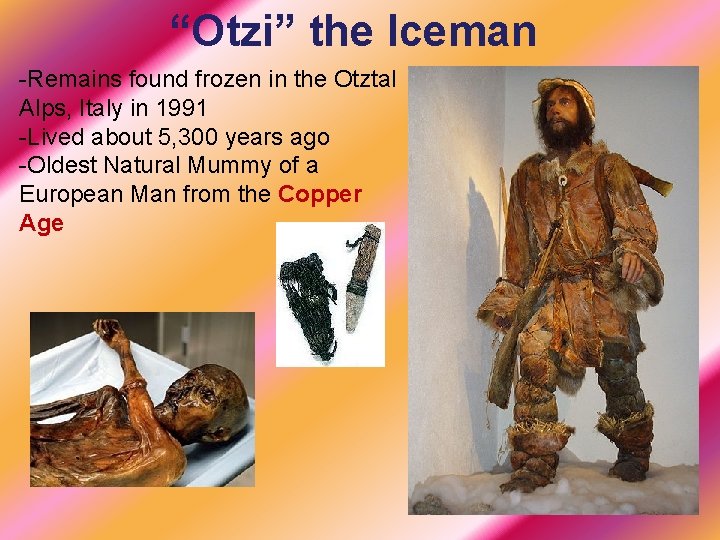
“Otzi” the Iceman -Remains found frozen in the Otztal Alps, Italy in 1991 -Lived about 5, 300 years ago -Oldest Natural Mummy of a European Man from the Copper Age
… Sorry, Fred and Wilma were not real!