
Early History of the Western Hemisphere W 2


- Slides: 61
Early History of the Western Hemisphere
W 2. 1 Describe the characteristics of early Western Hemisphere civilizations and pastoral societies • Early agrarian civilizations and pastoral societies emerged. Many fundamental institutions, discoveries, inventions, and techniques appeared • Pastoral societies developed cultures that reflected the geography and resources that enabled them to inhabit the more challenging physical environments such as the tundra and semi-arid regions of North and South America.
Era 3 – Classical Traditions and Major Empires, Western Hemisphere • Mayan, Aztec, and Incan societies had their beginnings in Era 3 but became more prominent as civilizations in Era 4 – but you need to teach them in MS • Analyze civilizations and empires that emerged during this era, noting their political, economic, and social systems, and their changing interactions with the environment. • Analyze innovations and social, political, and economic changes that occurred through the emergence of agrarian societies of Mesoamerica and Andean South America and the subsequent urbanization and trading economies that occurred in the region
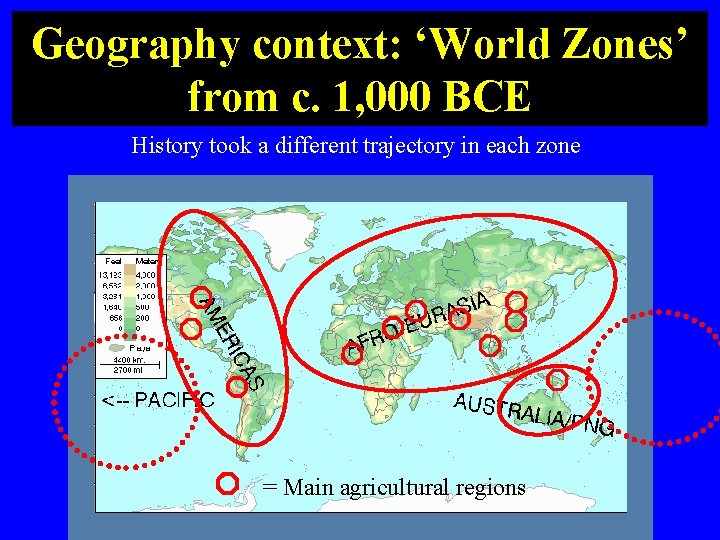
Geography context: ‘World Zones’ from c. 1, 000 BCE History took a different trajectory in each zone = Main agricultural regions
Questions about the place of the Americas in World History • How do the histories of the different world zones differ? – How is the history of the American world zone • Similar to and • Different from – The histories of the Australasian and Pacific zones? – The history of the Afro-Eurasian zone? • What can these differences and similarities tell us about human history in general?
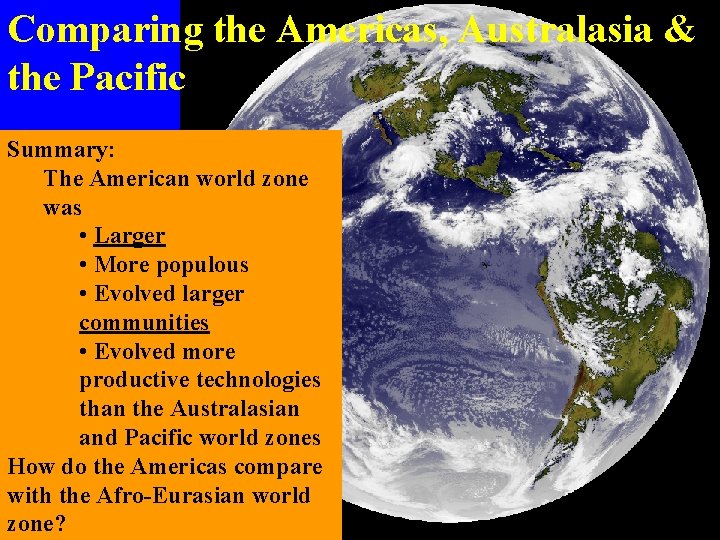
Comparing the Americas, Australasia & the Pacific Summary: The American world zone was • Larger • More populous • Evolved larger communities • Evolved more productive technologies than the Australasian and Pacific world zones How do the Americas compare with the Afro-Eurasian world zone?
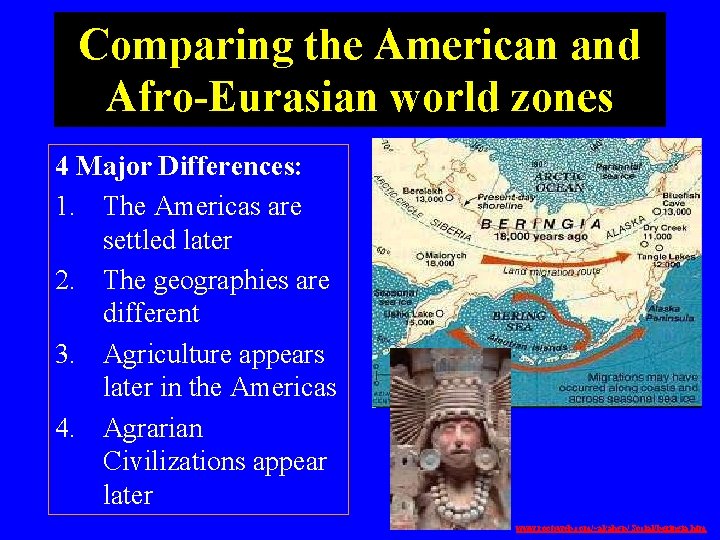
Comparing the American and Afro-Eurasian world zones 4 Major Differences: 1. The Americas are settled later 2. The geographies are different 3. Agriculture appears later in the Americas 4. Agrarian Civilizations appear later www. rootsweb. com/~akahgp/ Social/beringia. htm
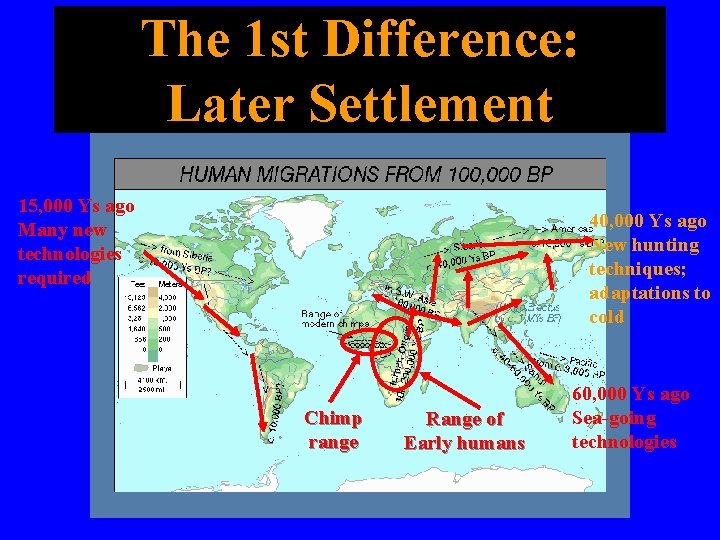
The 1 st Difference: Later Settlement 15, 000 Ys ago Many new technologies required 40, 000 Ys ago New hunting techniques; adaptations to cold Chimp range Range of Early humans 60, 000 Ys ago Sea-going technologies
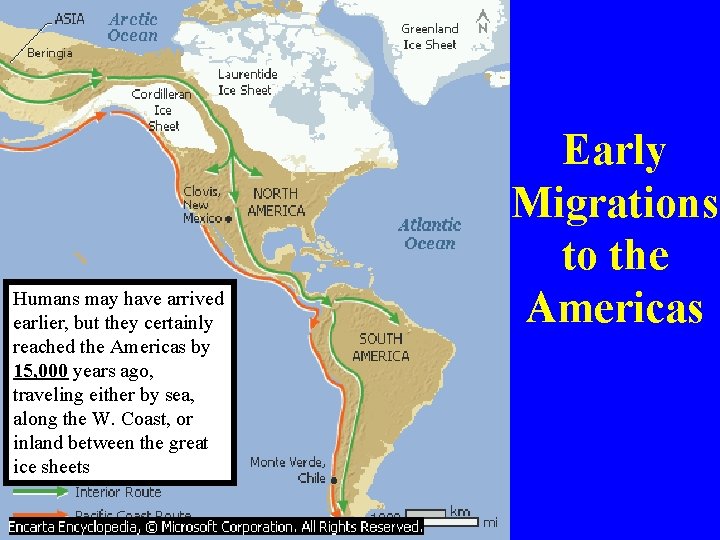
Humans may have arrived earlier, but they certainly reached the Americas by 15, 000 years ago, traveling either by sea, along the W. Coast, or inland between the great ice sheets Early Migrations to the Americas
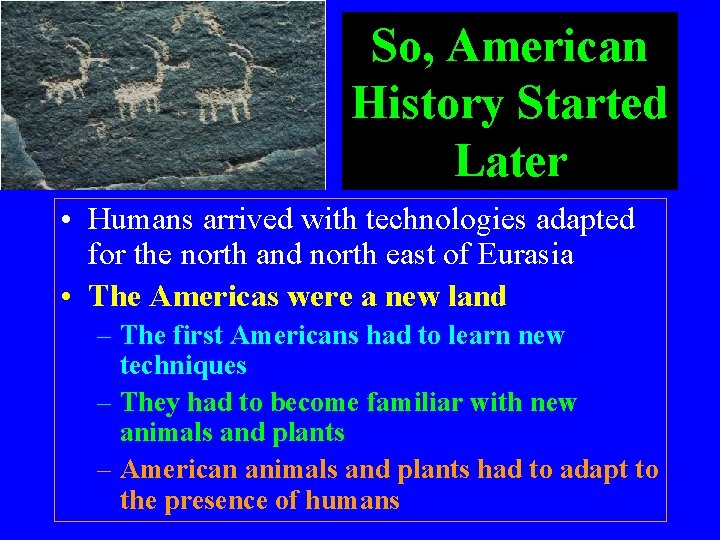
So, American History Started Later • Humans arrived with technologies adapted for the north and north east of Eurasia • The Americas were a new land – The first Americans had to learn new techniques – They had to become familiar with new animals and plants – American animals and plants had to adapt to the presence of humans
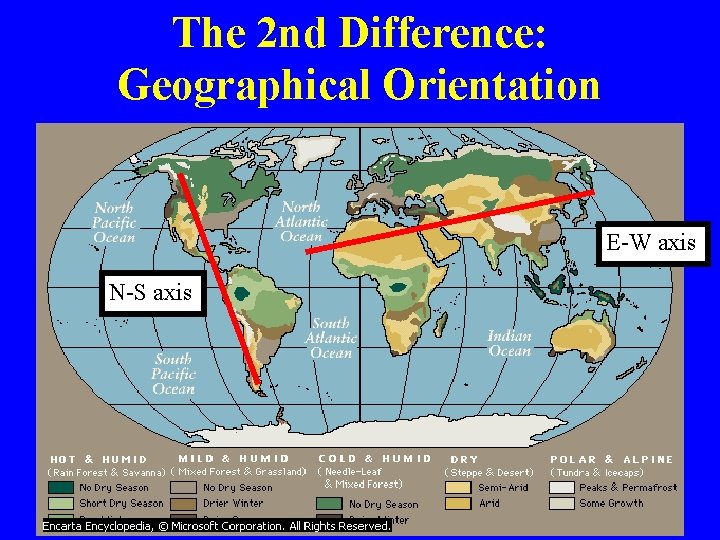
The 2 nd Difference: Geographical Orientation E-W axis N-S axis
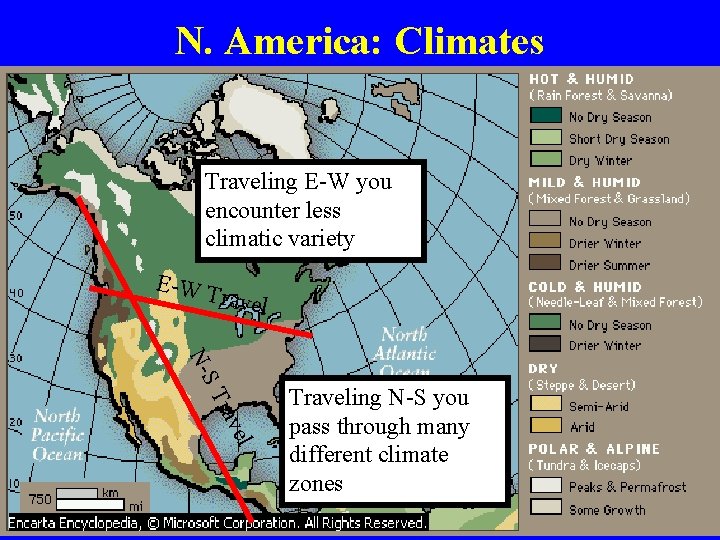
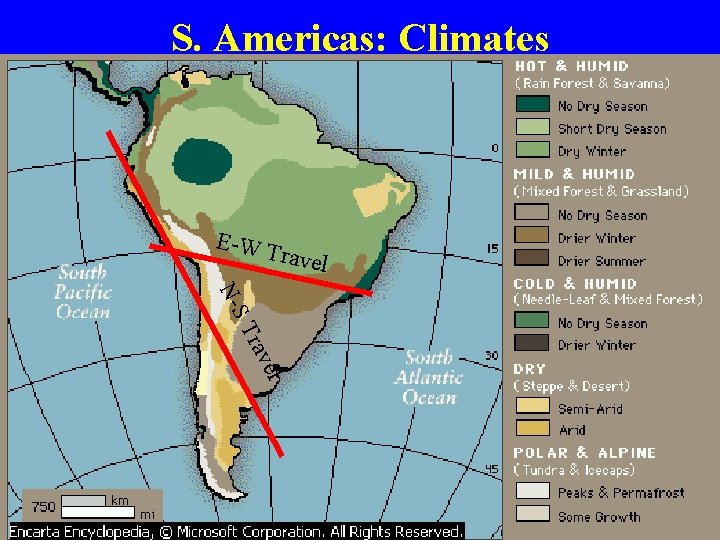
Traveling south through the Americas meant adapting to many different environments The Biologist, Jared Diamond, has pointed out that: • Migrating east through Afro-Eurasia was fairly easy – Climates and environments did not change too much – So it was easier to adapt familiar technologies • Migrating south through the Americas was tougher – Climates and environments changed as you moved towards and away from the equator – Still, humans migrated all the way in c. 2, 000 years (a sign of the increasing adaptability of humans by 13, 000 years ago) – But exchanging technological ideas was tougher
N. America: Climates Traveling E-W you encounter less climatic variety E-W T ravel el rav ST NTraveling N-S you pass through many different climate zones
S. Americas: Climates E-W T ravel el rav ST N-
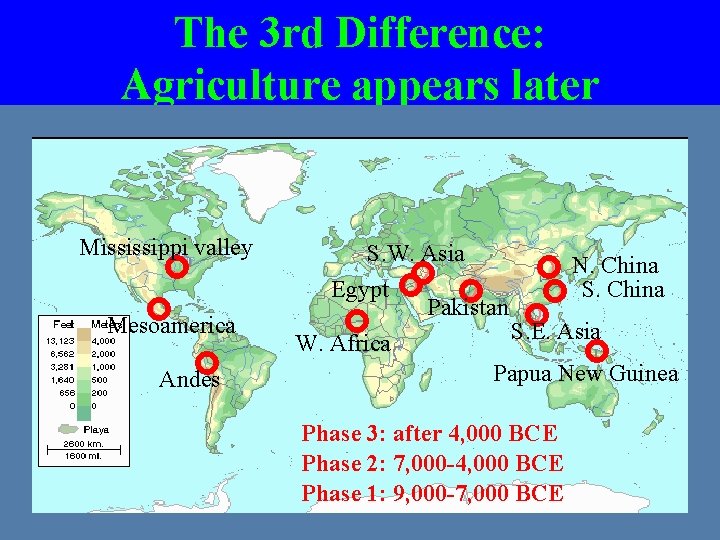
The 3 rd Difference: Agriculture appears later Mississippi valley S. W. Asia Egypt Mesoamerica Andes W. Africa Pakistan N. China S. E. Asia Papua New Guinea Phase 3: after 4, 000 BCE Phase 2: 7, 000 -4, 000 BCE Phase 1: 9, 000 -7, 000 BCE
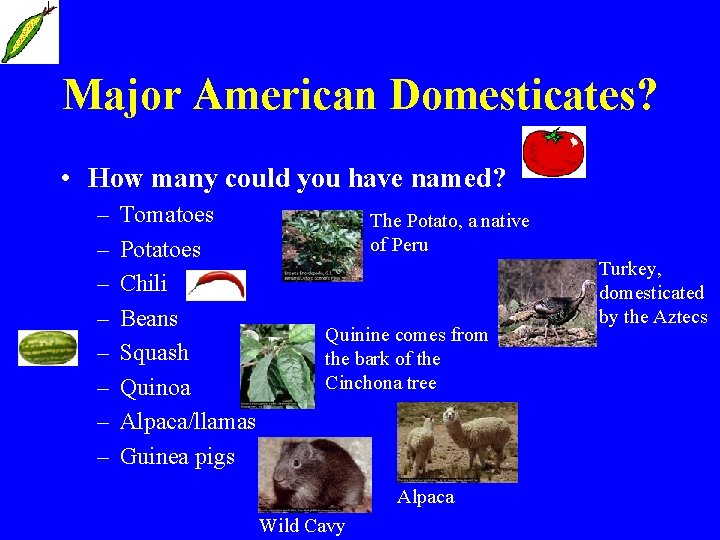
Major American Domesticates? • How many could you have named? – – – – Tomatoes Potatoes Chili Beans Squash Quinoa Alpaca/llamas Guinea pigs The Potato, a native of Peru Quinine comes from the bark of the Cinchona tree Alpaca Wild Cavy Turkey, domesticated by the Aztecs
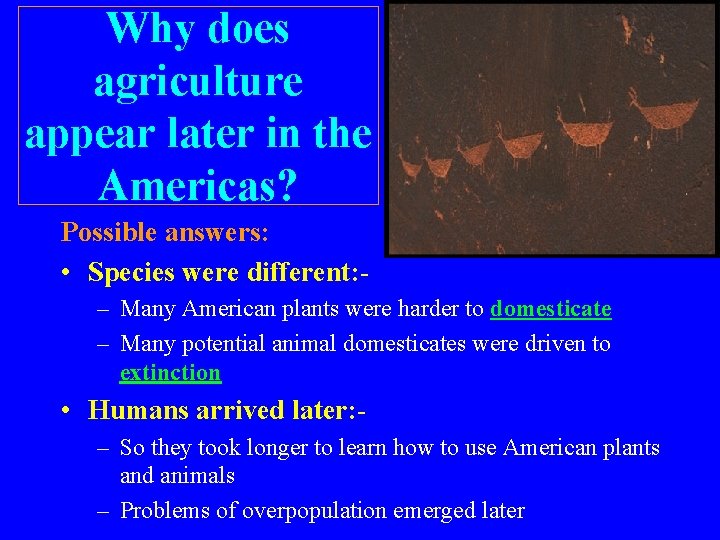
Why does agriculture appear later in the Americas? Possible answers: • Species were different: – Many American plants were harder to domesticate – Many potential animal domesticates were driven to extinction • Humans arrived later: – So they took longer to learn how to use American plants and animals – Problems of overpopulation emerged later
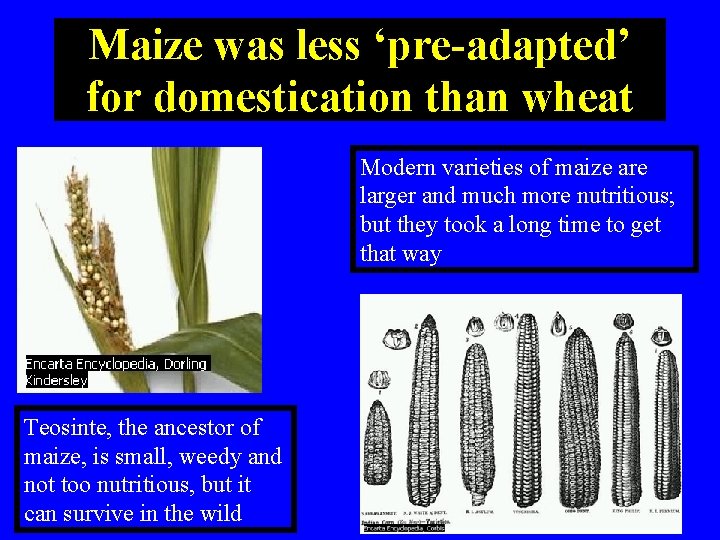
Maize was less ‘pre-adapted’ for domestication than wheat Modern varieties of maize are larger and much more nutritious; but they took a long time to get that way Teosinte, the ancestor of maize, is small, weedy and not too nutritious, but it can survive in the wild
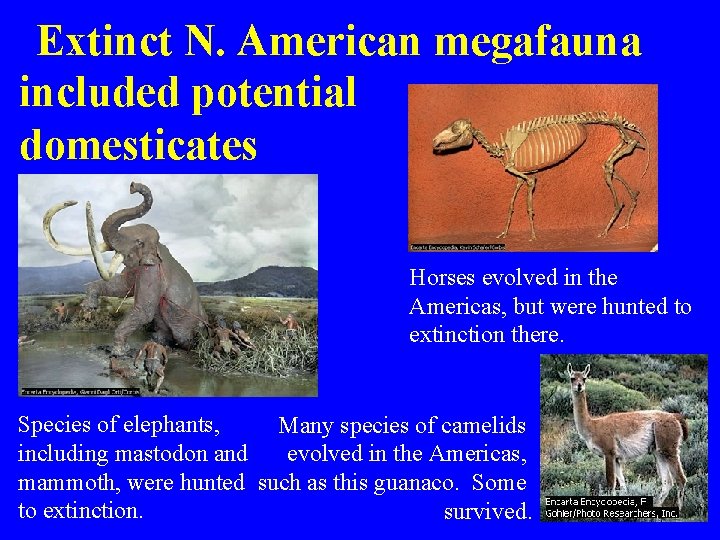
Extinct N. American megafauna included potential domesticates Horses evolved in the Americas, but were hunted to extinction there. Species of elephants, Many species of camelids including mastodon and evolved in the Americas, mammoth, were hunted such as this guanaco. Some to extinction. survived.
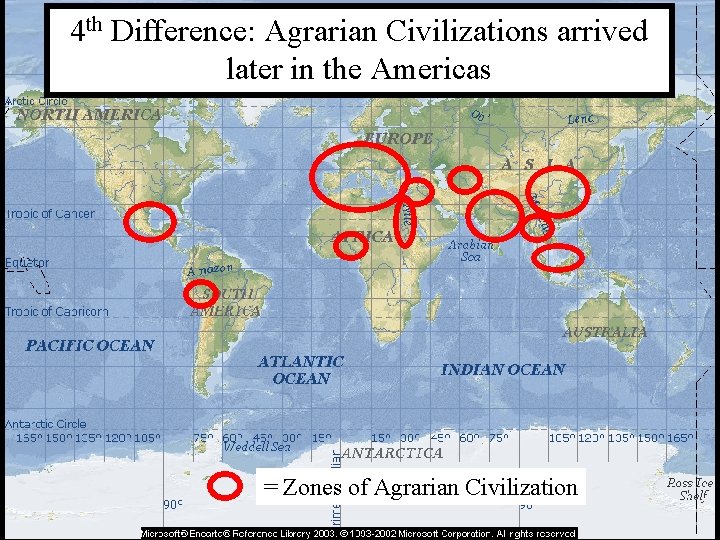
4 th Difference: Agrarian Civilizations arrived later in the Americas = Zones of Agrarian Civilization
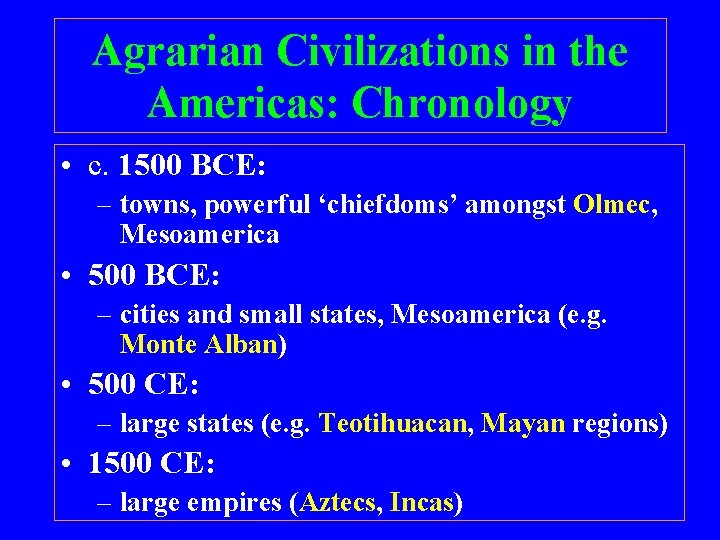
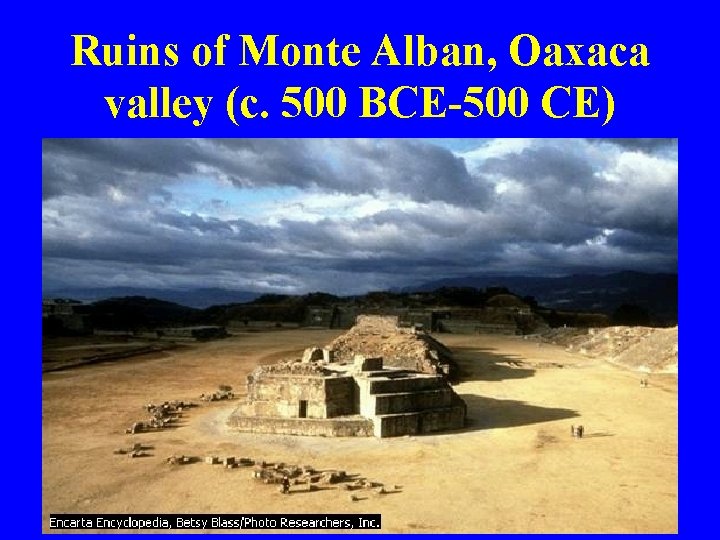
Agrarian Civilizations in the Americas: Chronology • c. 1500 BCE: – towns, powerful ‘chiefdoms’ amongst Olmec, Mesoamerica • 500 BCE: – cities and small states, Mesoamerica (e. g. Monte Alban) • 500 CE: – large states (e. g. Teotihuacan, Mayan regions) • 1500 CE: – large empires (Aztecs, Incas)
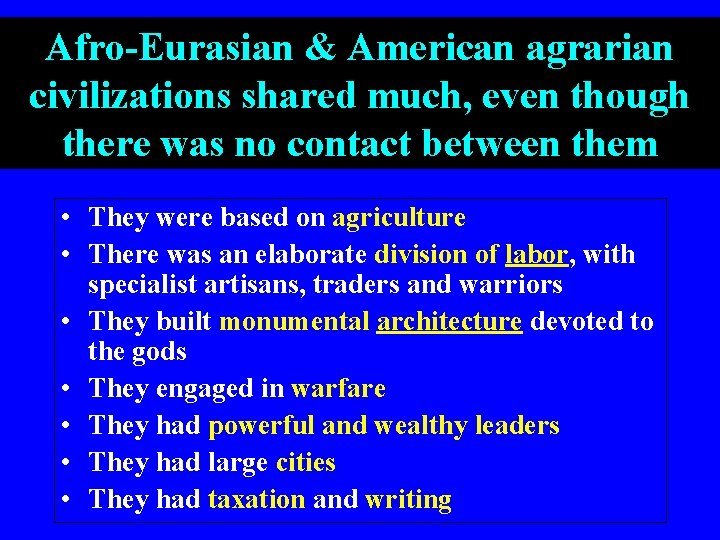
Afro-Eurasian & American agrarian civilizations shared much, even though there was no contact between them • They were based on agriculture • There was an elaborate division of labor, with specialist artisans, traders and warriors • They built monumental architecture devoted to the gods • They engaged in warfare • They had powerful and wealthy leaders • They had large cities • They had taxation and writing
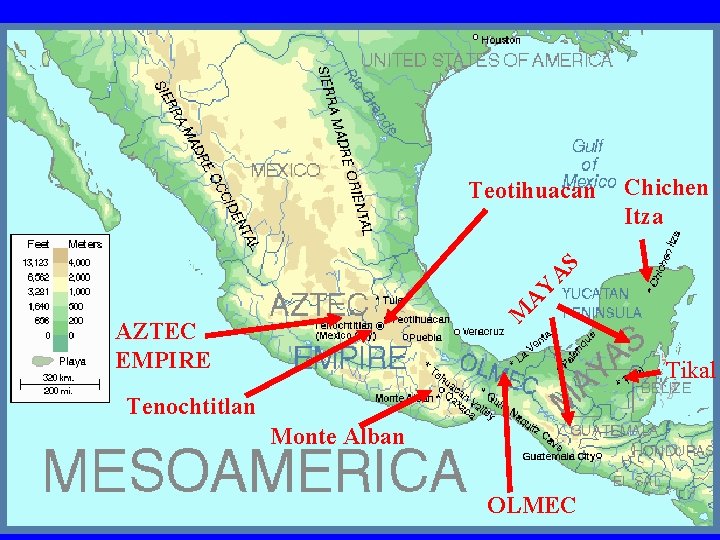
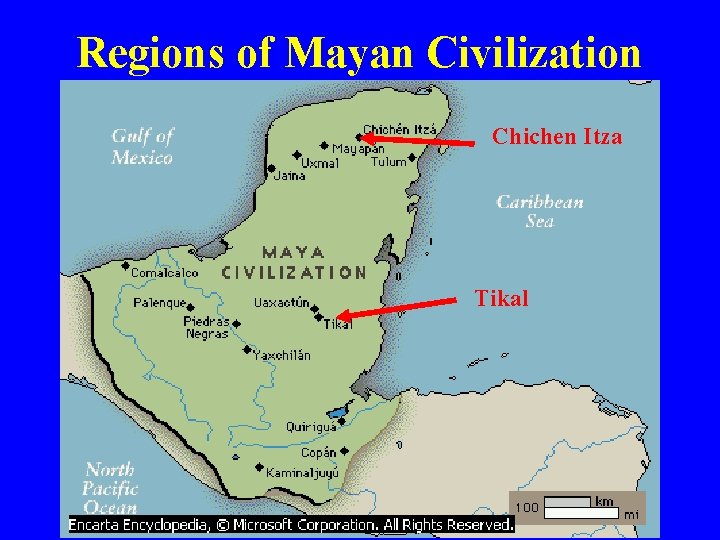
Chichen Itza M A Y A S Teotihuacan AZTEC EMPIRE Tikal Tenochtitlan Monte Alban OLMEC
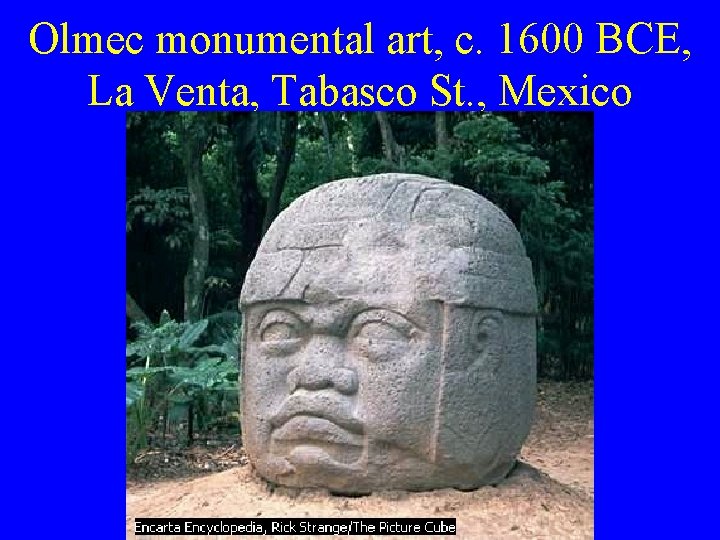
Olmec monumental art, c. 1600 BCE, La Venta, Tabasco St. , Mexico
Ruins of Monte Alban, Oaxaca valley (c. 500 BCE-500 CE)
Regions of Mayan Civilization Chichen Itza Tikal
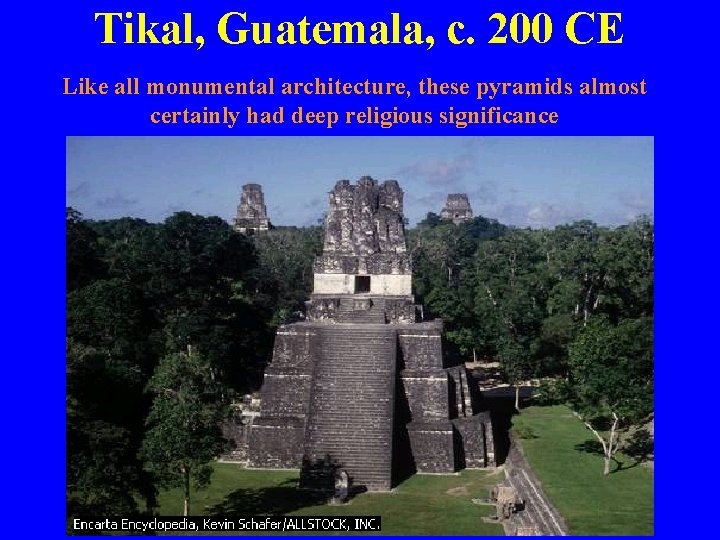
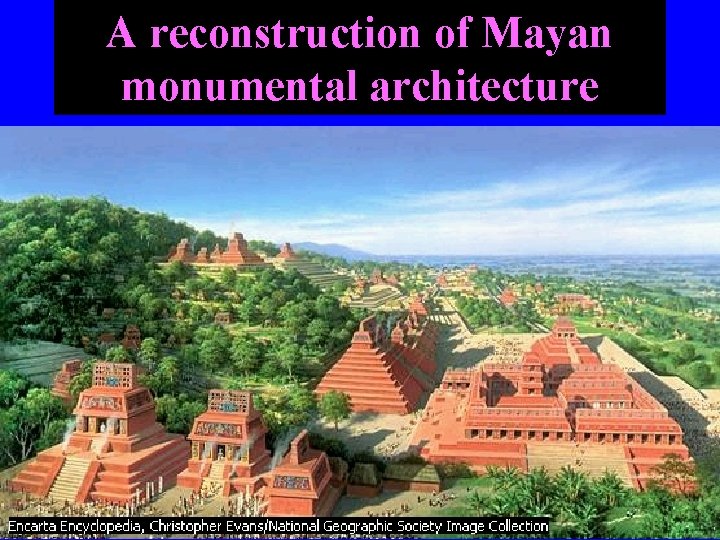
Tikal, Guatemala, c. 200 CE Like all monumental architecture, these pyramids almost certainly had deep religious significance
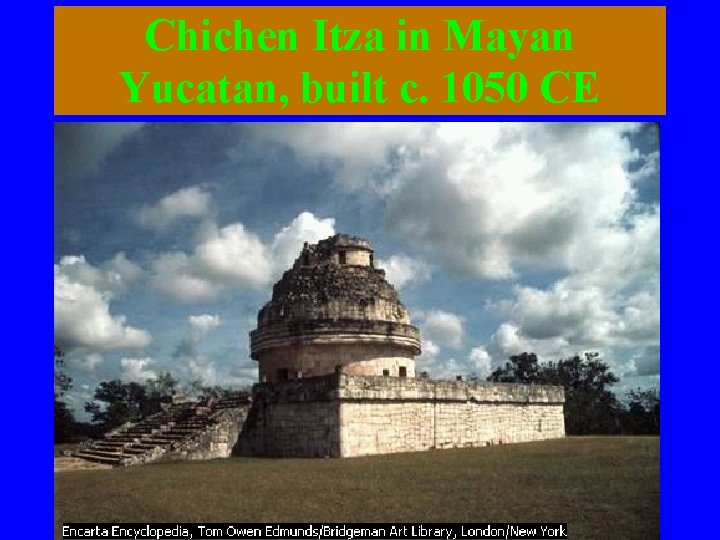
Chichen Itza in Mayan Yucatan, built c. 1050 CE
A reconstruction of Mayan monumental architecture
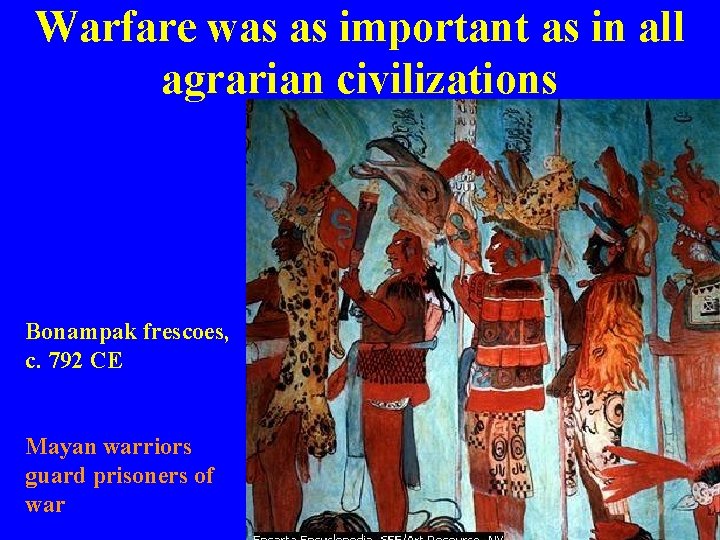
Warfare was as important as in all agrarian civilizations Bonampak frescoes, c. 792 CE Mayan warriors guard prisoners of war
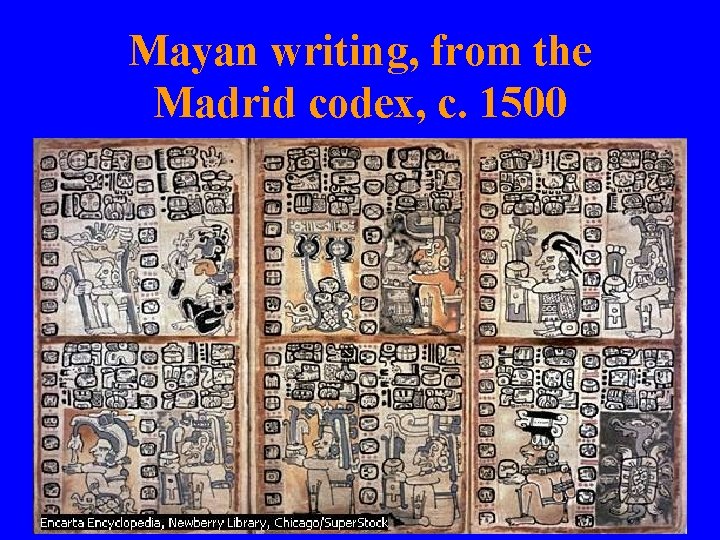
Mayan writing, from the Madrid codex, c. 1500
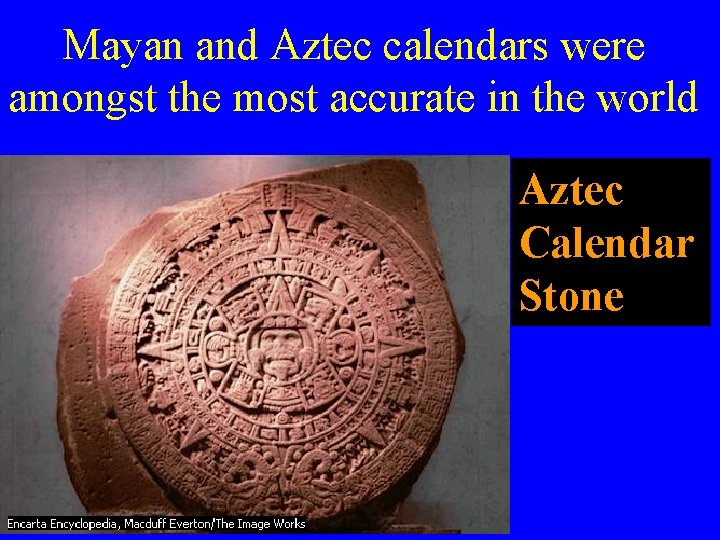
Mayan and Aztec calendars were amongst the most accurate in the world Aztec Calendar Stone
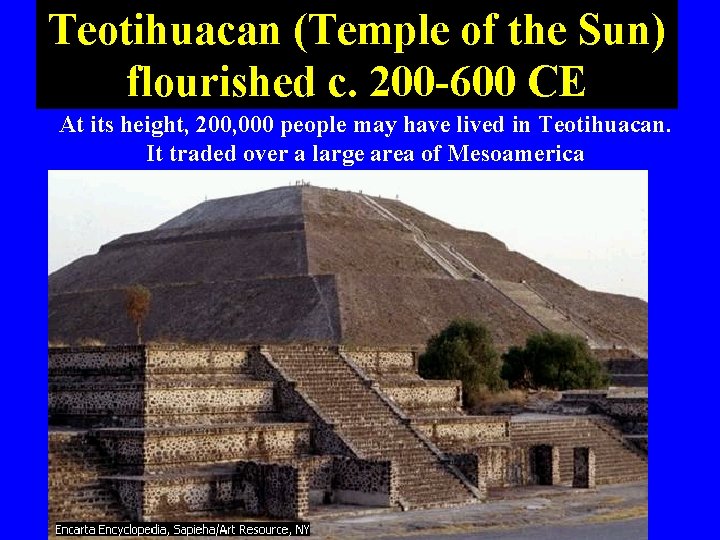
Teotihuacan (Temple of the Sun) flourished c. 200 -600 CE At its height, 200, 000 people may have lived in Teotihuacan. It traded over a large area of Mesoamerica
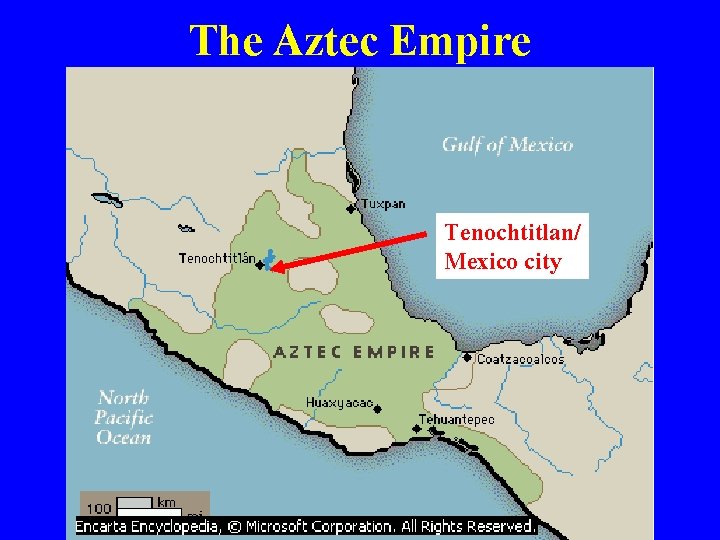
The Aztec Empire Tenochtitlan/ Mexico city
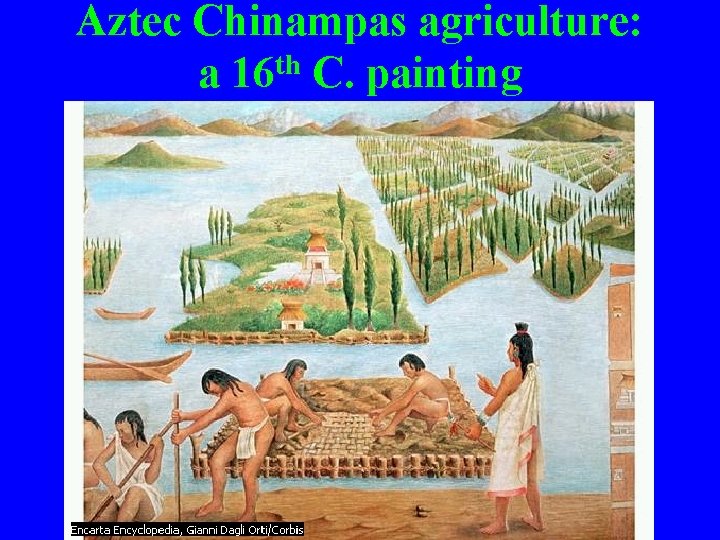
Aztec Chinampas agriculture: a 16 th C. painting
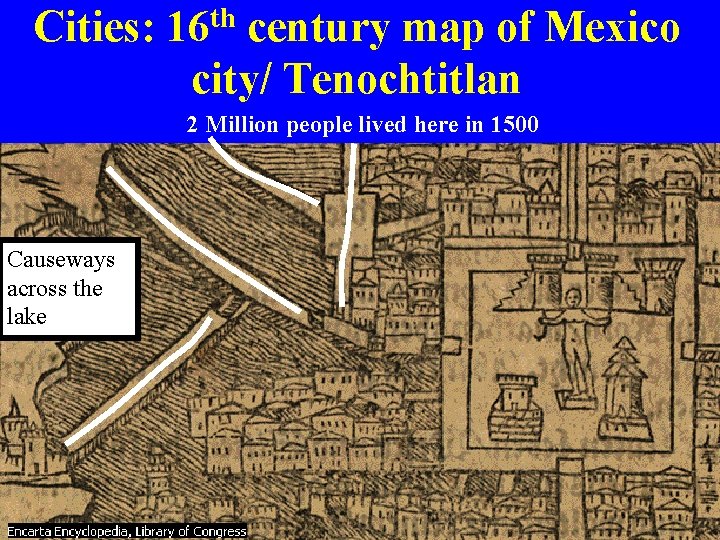
Cities: th 16 century map of Mexico city/ Tenochtitlan 2 Million people lived here in 1500 Causeways across the lake
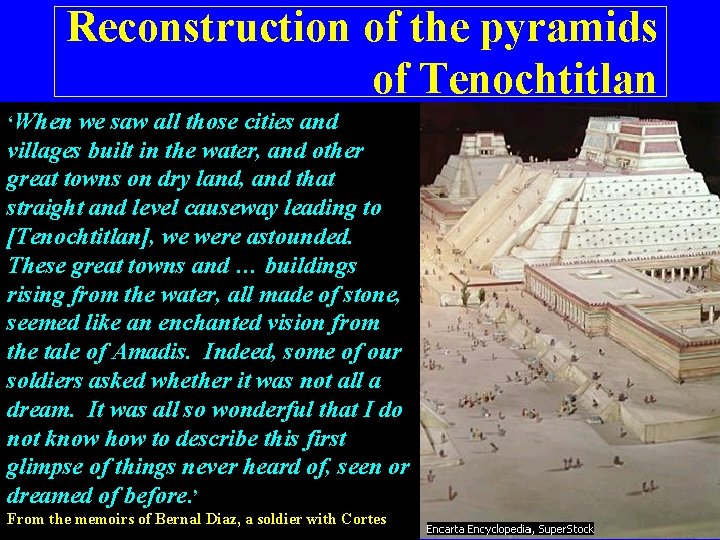
Reconstruction of the pyramids of Tenochtitlan ‘When we saw all those cities and villages built in the water, and other great towns on dry land, and that straight and level causeway leading to [Tenochtitlan], we were astounded. These great towns and … buildings rising from the water, all made of stone, seemed like an enchanted vision from the tale of Amadis. Indeed, some of our soldiers asked whether it was not all a dream. It was all so wonderful that I do not know how to describe this first glimpse of things never heard of, seen or dreamed of before. ’ From the memoirs of Bernal Diaz, a soldier with Cortes
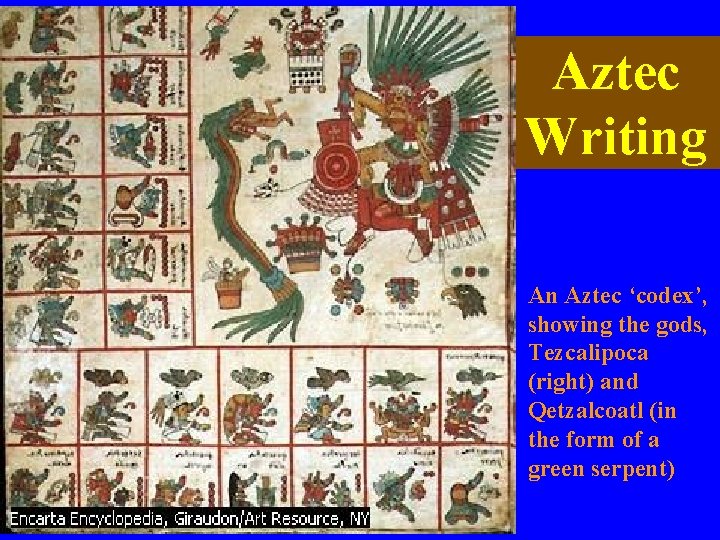
Aztec Writing An Aztec ‘codex’, showing the gods, Tezcalipoca (right) and Qetzalcoatl (in the form of a green serpent)
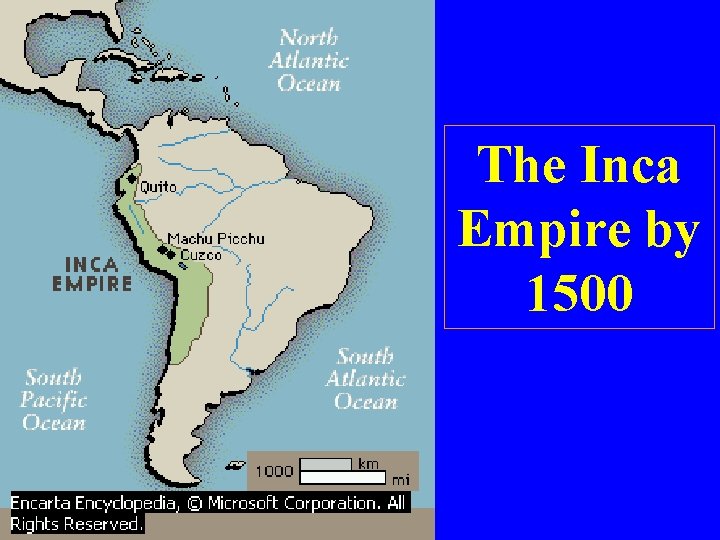
The Inca Empire by 1500
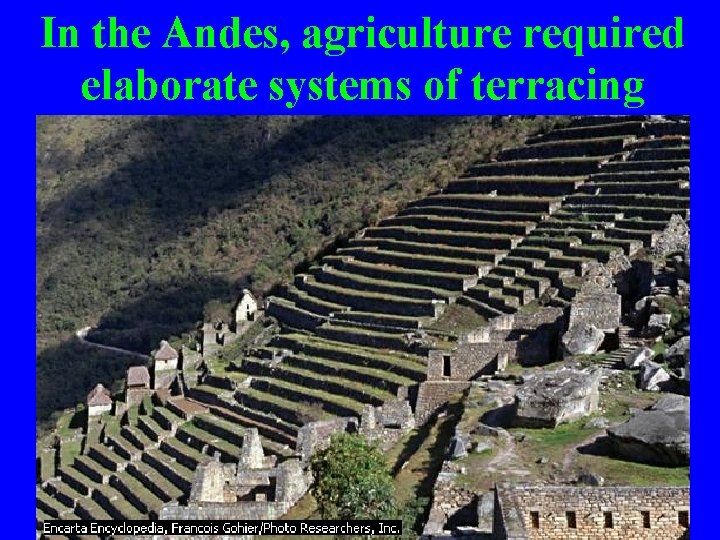
In the Andes, agriculture required elaborate systems of terracing
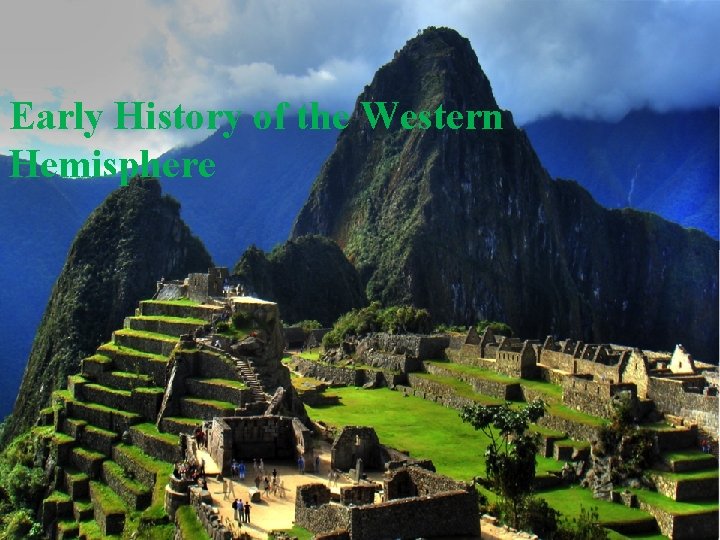
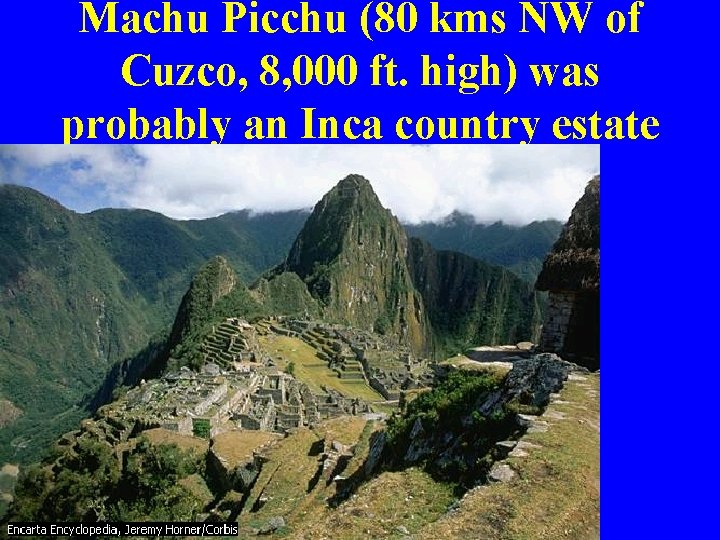
Machu Picchu (80 kms NW of Cuzco, 8, 000 ft. high) was probably an Inca country estate
Writing or Accounting? The Inca did not have a system of writing, but used knotted ropes, or ‘quipu’ to record important state information.
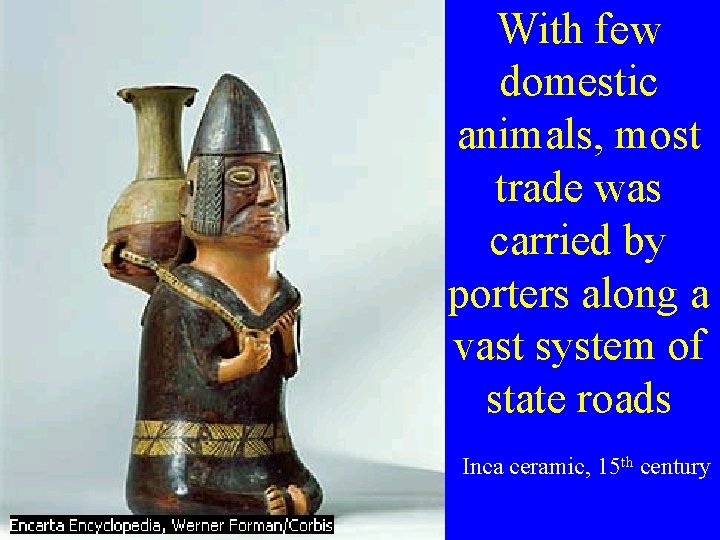
With few domestic animals, most trade was carried by porters along a vast system of state roads Inca ceramic, 15 th century
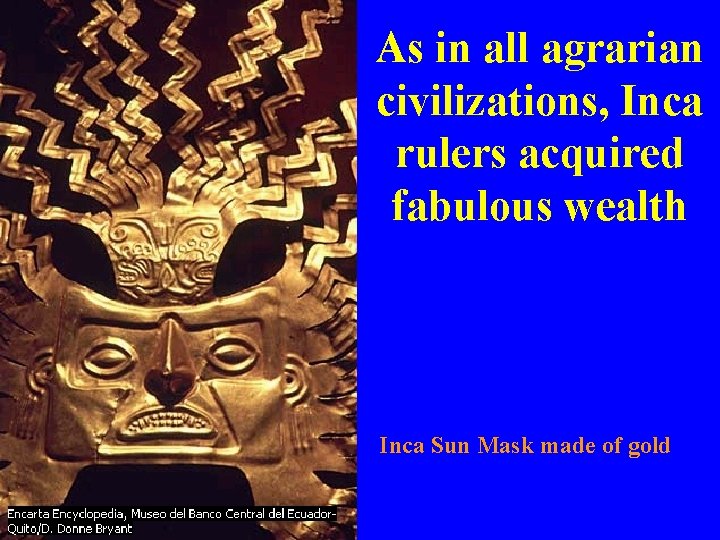
As in all agrarian civilizations, Inca rulers acquired fabulous wealth Inca Sun Mask made of gold
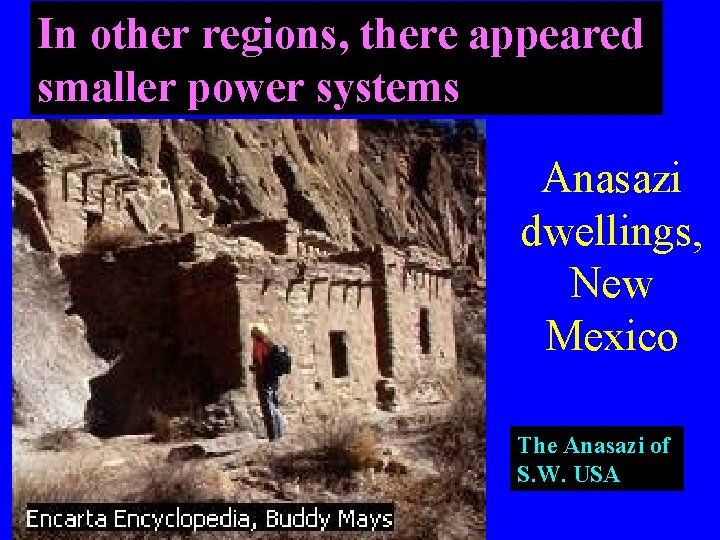
In other regions, there appeared smaller power systems Anasazi dwellings, New Mexico The Anasazi of S. W. USA
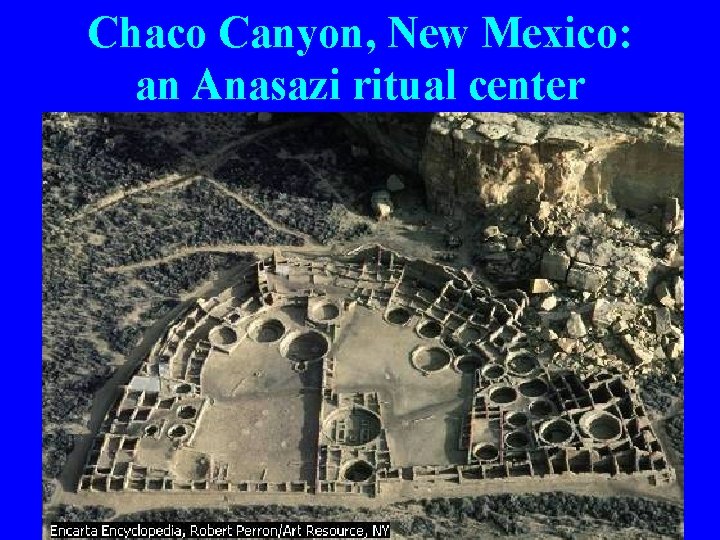
Chaco Canyon, New Mexico: an Anasazi ritual center
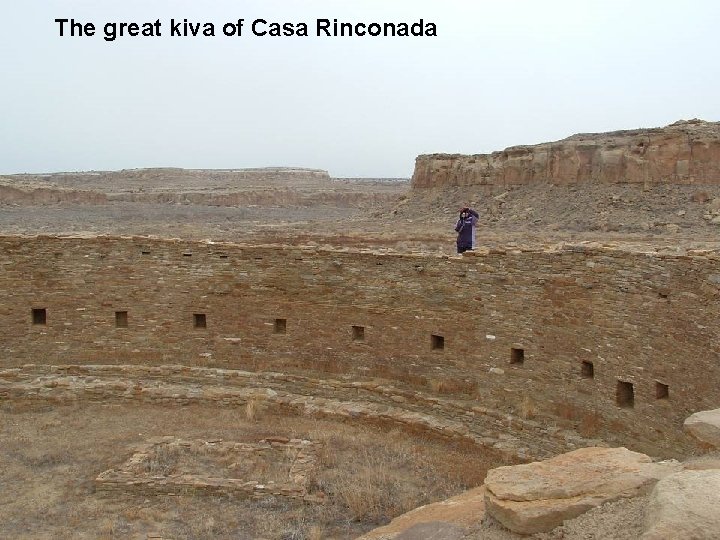
The great kiva of Casa Rinconada
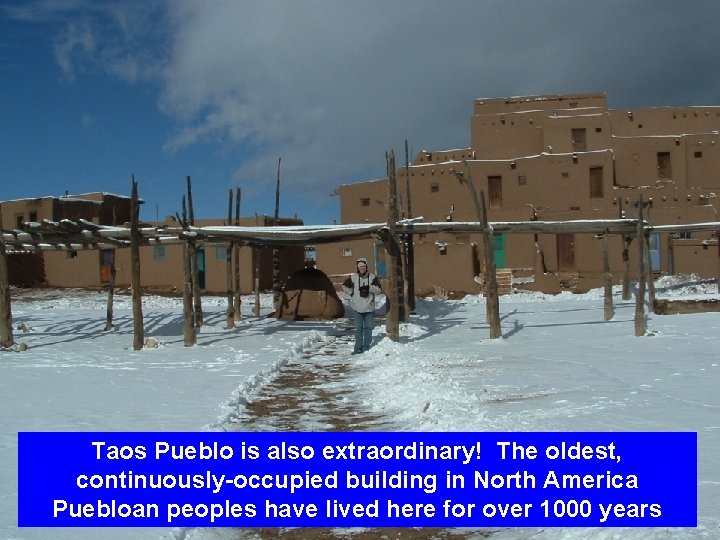
Taos Pueblo is also extraordinary! The oldest, continuously-occupied building in North America Puebloan peoples have lived here for over 1000 years
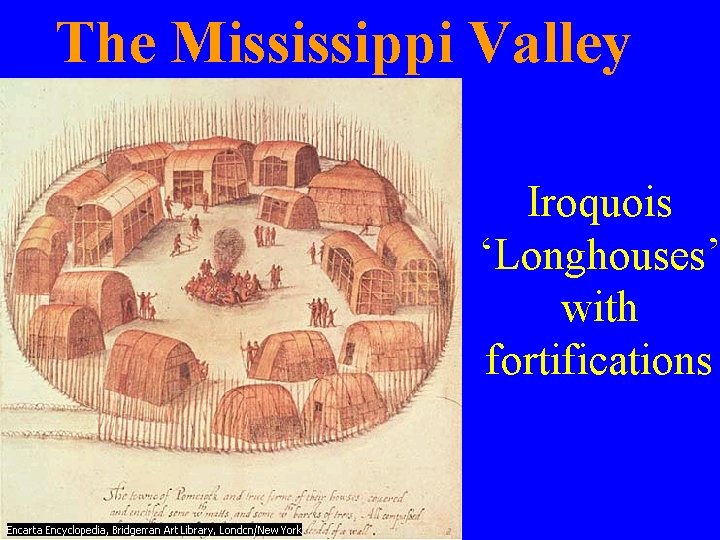
The Mississippi Valley Iroquois ‘Longhouses’ with fortifications
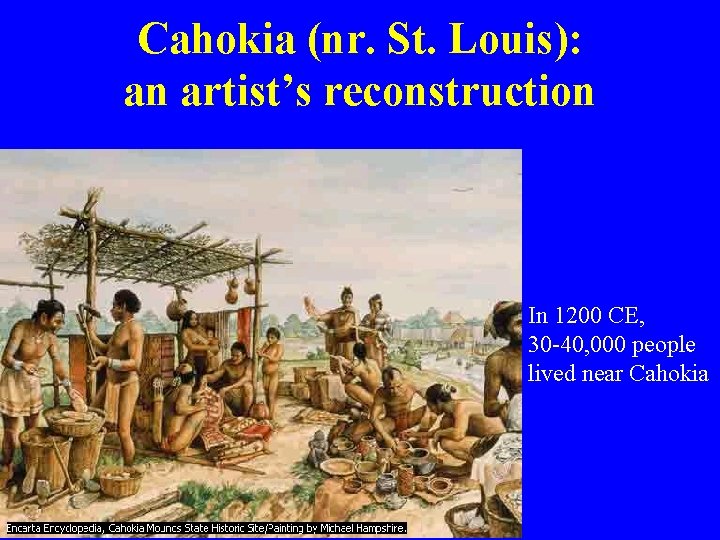
Cahokia (nr. St. Louis): an artist’s reconstruction In 1200 CE, 30 -40, 000 people lived near Cahokia
The death of a Cahokian chief Eyewitness account The French 16 th century explorer, Le Page du Pratz, ‘found himself in a rigidly stratified society, divided into nobles and commoners and headed by a chieftain known as the Great Sun, who lived in a village of nine houses and a temple built on the summit of an earthen mound. Pratz witnessed the funeral of the Great Sun. His wives, relatives, and servants were drugged, then clubbed to accompany him in death. ’
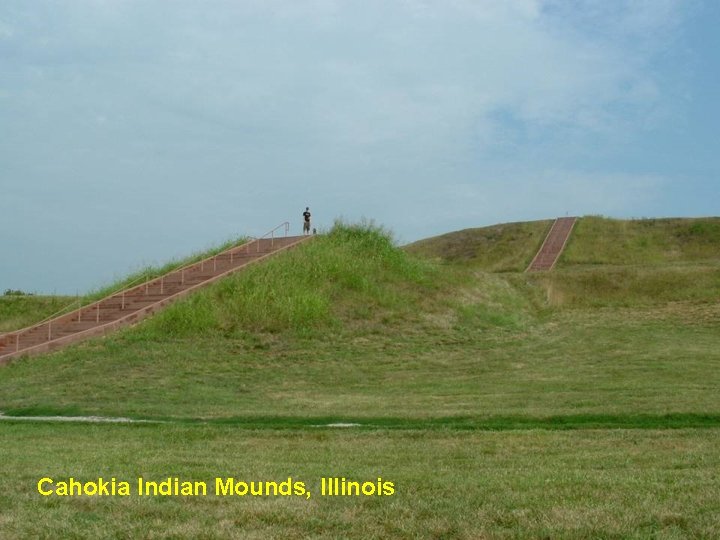
Cahokia Indian Mounds, Illinois
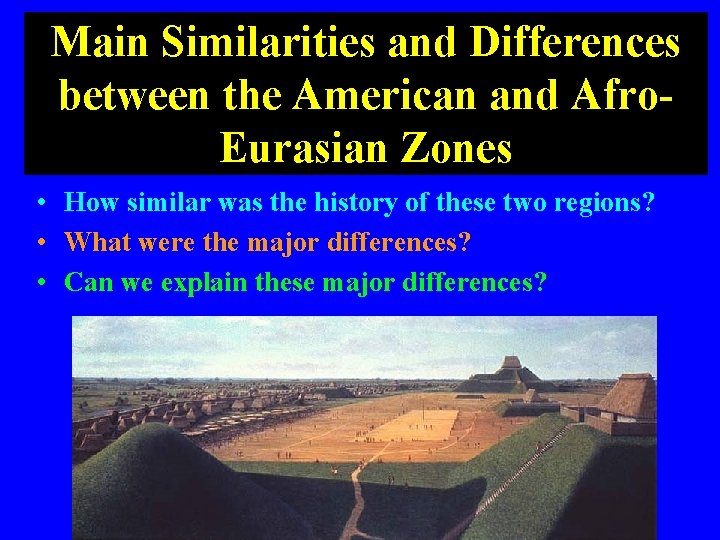
Main Similarities and Differences between the American and Afro. Eurasian Zones • How similar was the history of these two regions? • What were the major differences? • Can we explain these major differences?
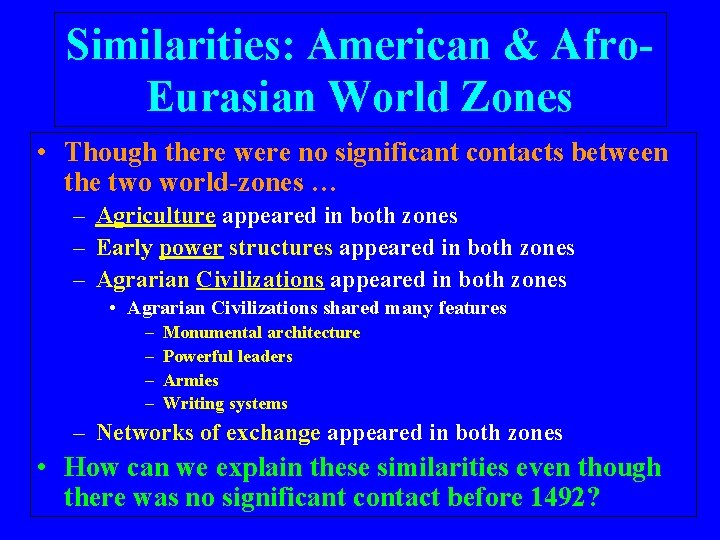
Similarities: American & Afro. Eurasian World Zones • Though there were no significant contacts between the two world-zones … – Agriculture appeared in both zones – Early power structures appeared in both zones – Agrarian Civilizations appeared in both zones • Agrarian Civilizations shared many features – – Monumental architecture Powerful leaders Armies Writing systems – Networks of exchange appeared in both zones • How can we explain these similarities even though there was no significant contact before 1492?
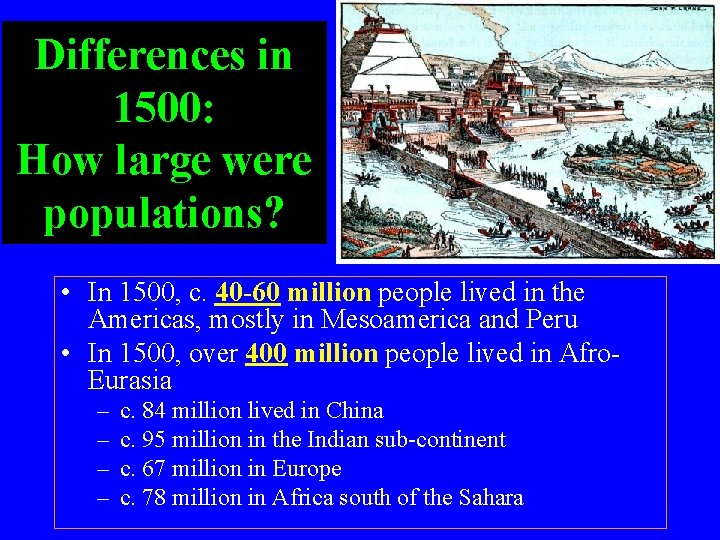
Differences in 1500: How large were populations? • In 1500, c. 40 -60 million people lived in the Americas, mostly in Mesoamerica and Peru • In 1500, over 400 million people lived in Afro. Eurasia – – c. 84 million lived in China c. 95 million in the Indian sub-continent c. 67 million in Europe c. 78 million in Africa south of the Sahara
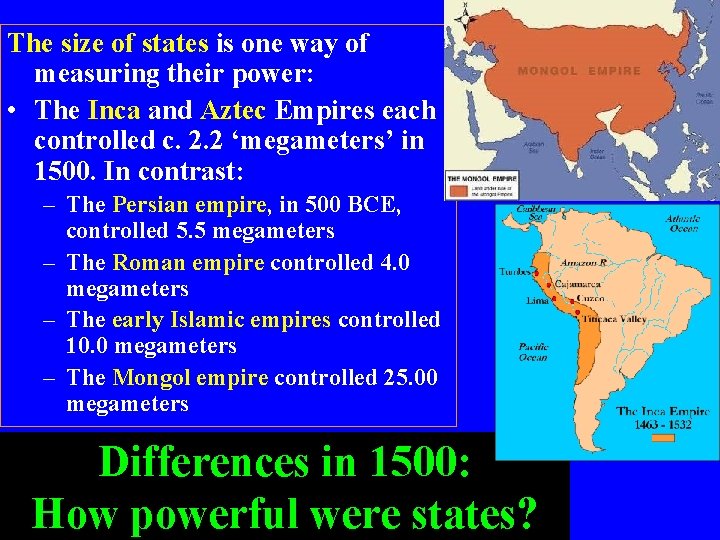
The size of states is one way of measuring their power: • The Inca and Aztec Empires each controlled c. 2. 2 ‘megameters’ in 1500. In contrast: – The Persian empire, in 500 BCE, controlled 5. 5 megameters – The Roman empire controlled 4. 0 megameters – The early Islamic empires controlled 10. 0 megameters – The Mongol empire controlled 25. 00 megameters Differences in 1500: How powerful were states?
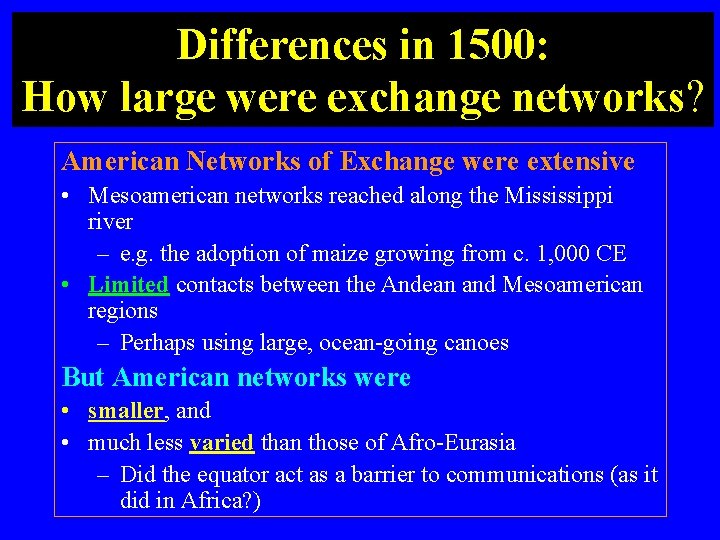
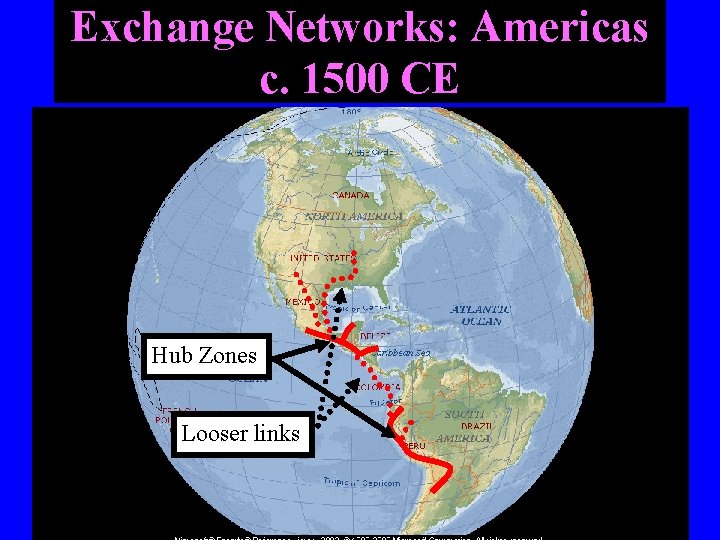
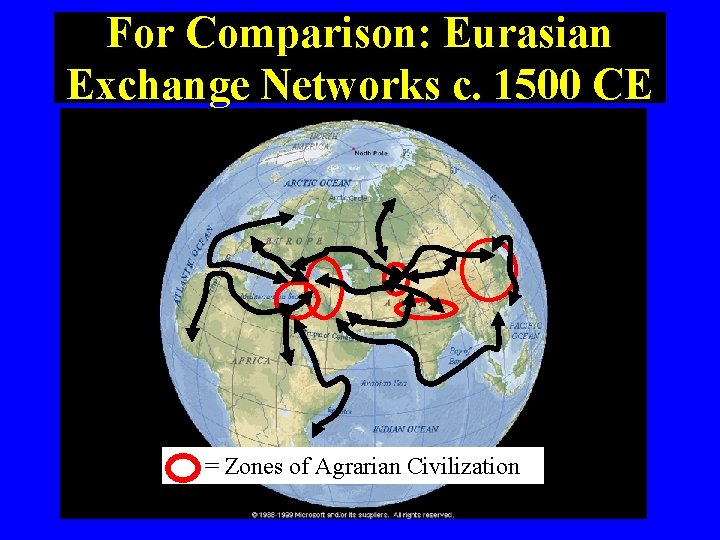
Differences in 1500: How large were exchange networks? American Networks of Exchange were extensive • Mesoamerican networks reached along the Mississippi river – e. g. the adoption of maize growing from c. 1, 000 CE • Limited contacts between the Andean and Mesoamerican regions – Perhaps using large, ocean-going canoes But American networks were • smaller, and • much less varied than those of Afro-Eurasia – Did the equator act as a barrier to communications (as it did in Africa? )
Exchange Networks: Americas c. 1500 CE Hub Zones Looser links
For Comparison: Eurasian Exchange Networks c. 1500 CE = Zones of Agrarian Civilization
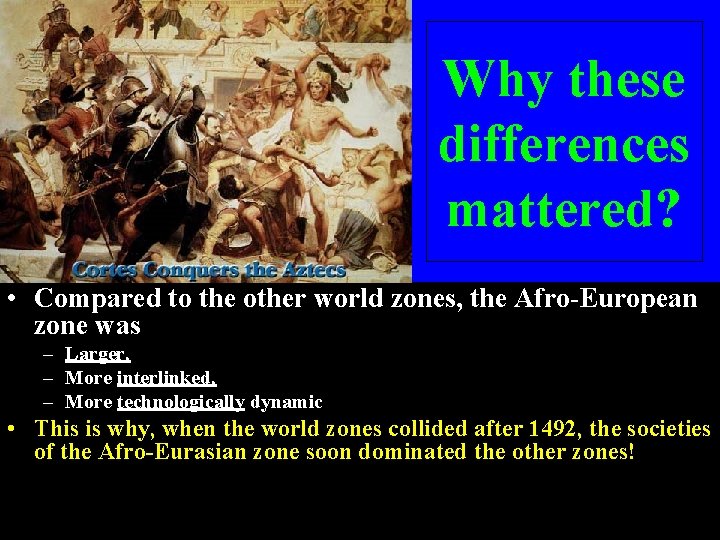
Why these differences mattered? • Compared to the other world zones, the Afro-European zone was – Larger, – More interlinked, – More technologically dynamic • This is why, when the world zones collided after 1492, the societies of the Afro-Eurasian zone soon dominated the other zones!