
Early Help in Westminster Early Help 3 levels
- Slides: 6
Early Help in Westminster
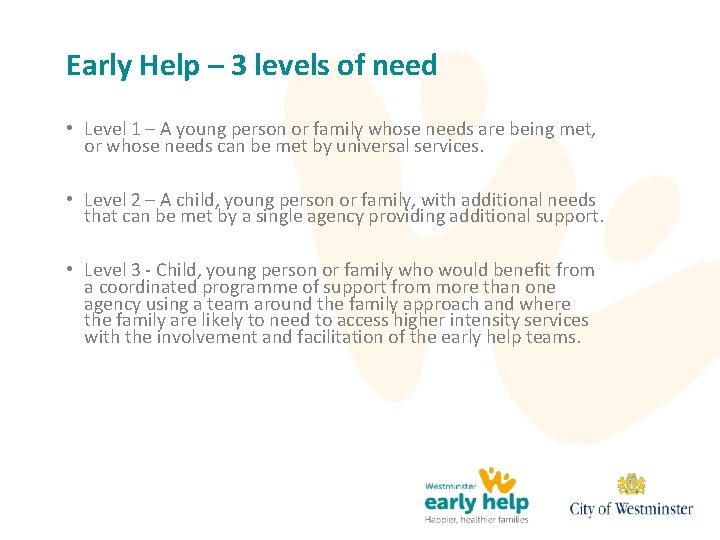
Early Help – 3 levels of need • Level 1 – A young person or family whose needs are being met, or whose needs can be met by universal services. • Level 2 – A child, young person or family, with additional needs that can be met by a single agency providing additional support. • Level 3 - Child, young person or family who would benefit from a coordinated programme of support from more than one agency using a team around the family approach and where the family are likely to need to access higher intensity services with the involvement and facilitation of the early help teams.
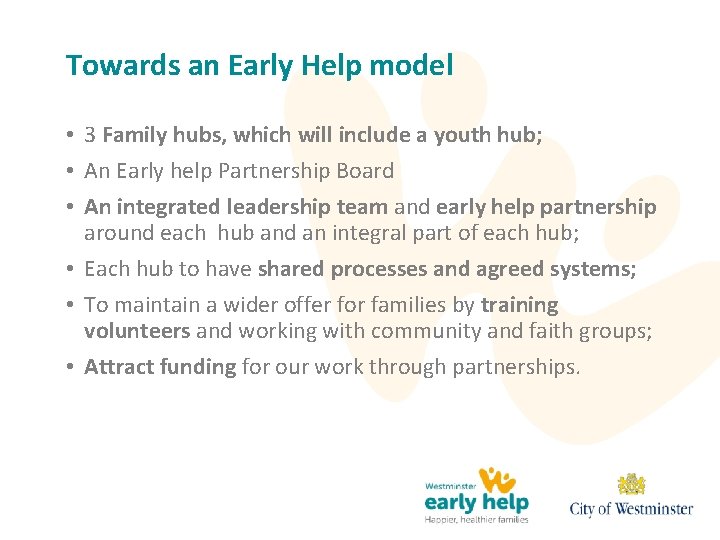
Towards an Early Help model • 3 Family hubs, which will include a youth hub; • An Early help Partnership Board • An integrated leadership team and early help partnership around each hub and an integral part of each hub; • Each hub to have shared processes and agreed systems; • To maintain a wider offer for families by training volunteers and working with community and faith groups; • Attract funding for our work through partnerships.
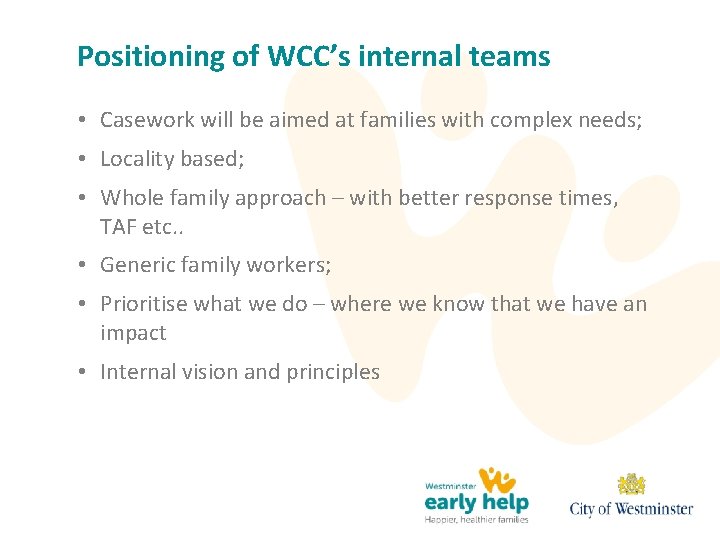
Positioning of WCC’s internal teams • Casework will be aimed at families with complex needs; • Locality based; • Whole family approach – with better response times, TAF etc. . • Generic family workers; • Prioritise what we do – where we know that we have an impact • Internal vision and principles
Shared Early Help Strategy • Ensuring the youngest (0 -5) children in our communities get off to the best start by promoting positive attachments, systematically identifying need from pre-birth and providing support at the earliest point. • Promoting emotional well-being and build resilience for all ages through universal and targeted programmes for the whole family. • Promoting speech, language and reading so that children receive the best possible start in life. • Developing an earlier and more targeted response to domestic violence and abuse. • Improving family relationships, with particular focus on helping parents who are in conflict to work better together, whether they are together or separated. • Promoting healthy eating to prevent and reduce childhood obesity and improve oral health. • Strengthening parents’ and young people’s resilience in managing their behaviour and the wider risks to children’s wellbeing within their communities. • Improving school attendance, developing inclusive alternatives to school exclusion and enabling successful progressions into training or employment for both young people and their parents
Early Help – developing the system • To develop an Early Help workforce that is relational and trauma informed. • To learn from the Earned Autonomy pilot in developing one shared operating model; • To progress the integration of health and social care teams; • To develop better communication about the Early Help system for parents and amongst professionals; • To continue to develop our model of Family Hubs as an integral part of this strategy; • To develop clear and integrated pathways with adult mental health services; • To develop the work with the voluntary sector in collaboration with the Young Westminster Foundation; • To involve the community in developing the service, including the co-ordination of volunteers across the system • To explore new models of working more closely with schools