
Early Embryonic Development Glossary of Functional Terms Embryo
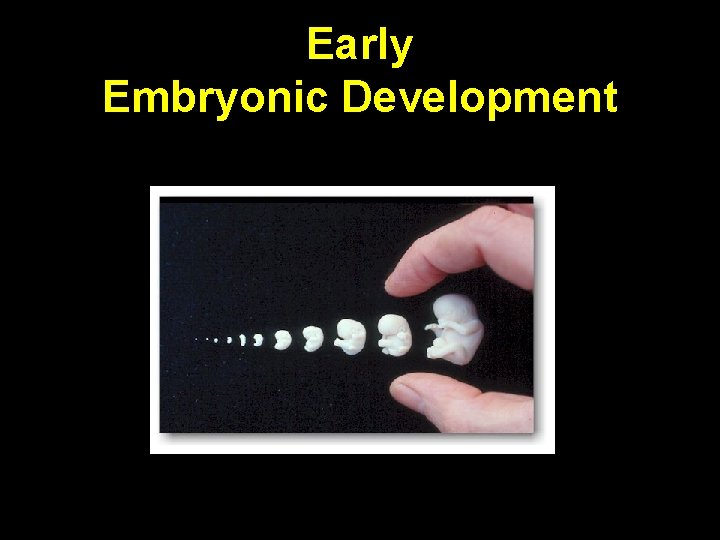
Early Embryonic Development
Glossary of Functional Terms • Embryo – an organism in its early stages of development • Fetus – human embryo after eight weeks of development • Blastocyst – structure formed in the early embryogenesis of mammals blasto = bud, germ [blast off] cyst = bladder [cystic fibrosis]
![• Ectoderm – outermost germ layer of most animals ecto = outside [ectoparasite]](http://slidetodoc.com/presentation_image_h2/bb94291555f0c4dd66b5b4fa58633cd0/image-3.jpg "• Ectoderm – outermost germ layer of most animals ecto = outside [ectoparasite]")
• Ectoderm – outermost germ layer of most animals ecto = outside [ectoparasite] dermis = skin [dermatologist] • Mesoderm – middle germ layer of most meso = middle [Mesopotamia] • Endoderm – innnermost germ layer of most animals endo = internal [endoskeleton]
• Morula – a solid ball of cells resulting from cleavage of a fertilized ovum formed before the blastula and develops into the blastula. [morula = mulberry] • Blastula - early animal embryo that develops from a morula, consisting of a sphere of cells with a central cavity blasto = bud, germ [blast off]
![• Blastocyst – blastula in mammals cyst = bladder [cystic fibrosis] • Gastrula](http://slidetodoc.com/presentation_image_h2/bb94291555f0c4dd66b5b4fa58633cd0/image-5.jpg "• Blastocyst – blastula in mammals cyst = bladder [cystic fibrosis] • Gastrula")
• Blastocyst – blastula in mammals cyst = bladder [cystic fibrosis] • Gastrula - double-walled stage of the embryo resulting from invagination of the blastula [gastro- = stomach, gastronomy]
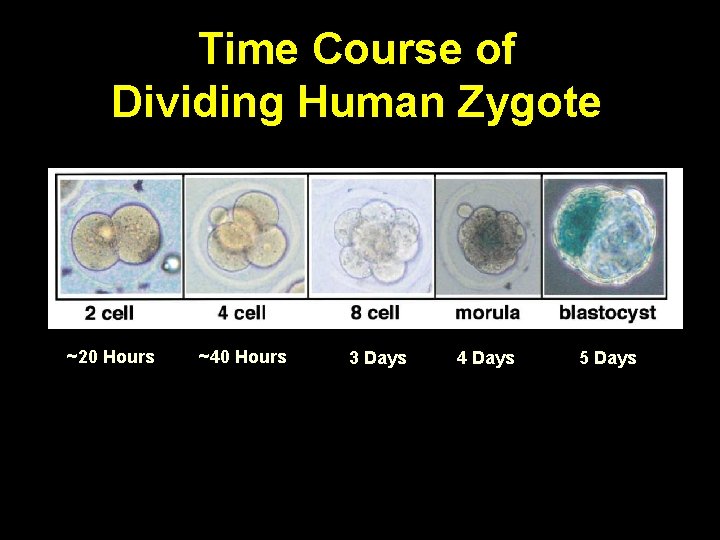
Time Course of Dividing Human Zygote ~20 Hours ~40 Hours 3 Days 4 Days 5 Days
Gastrulation http: //www. gastrulation. org/Movie 9_3. mov
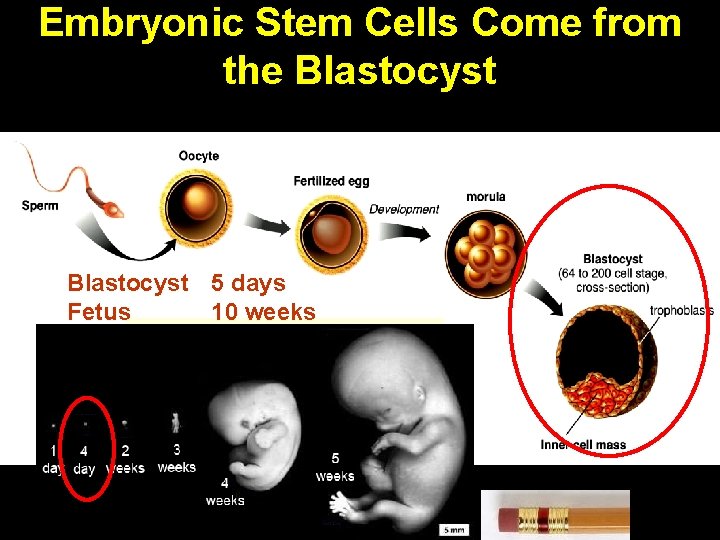
Embryonic Stem Cells Come from the Blastocyst 5 days Fetus 10 weeks Full-term 40 weeks
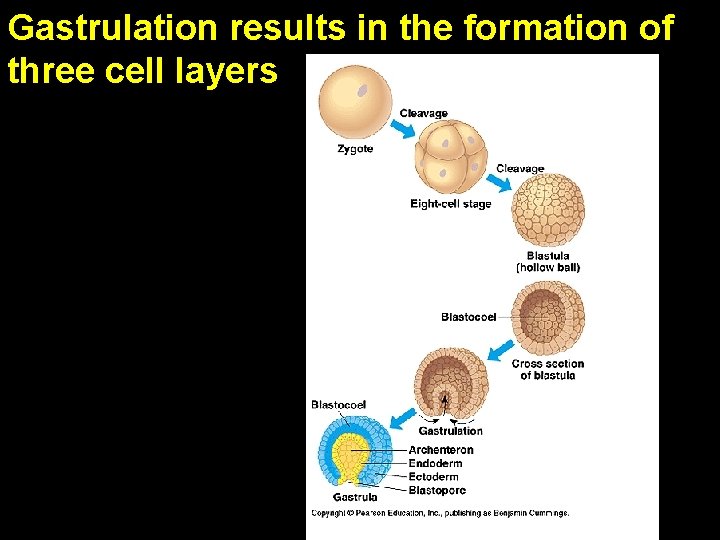
Gastrulation results in the formation of three cell layers A
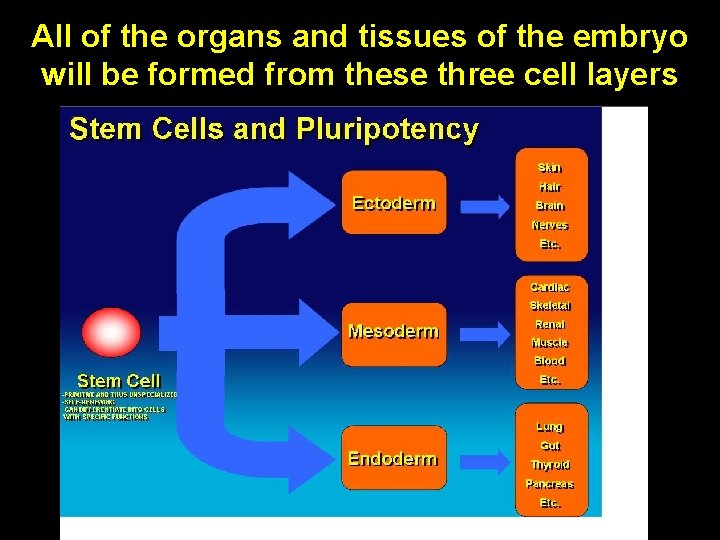
All of the organs and tissues of the embryo will be formed from these three cell layers
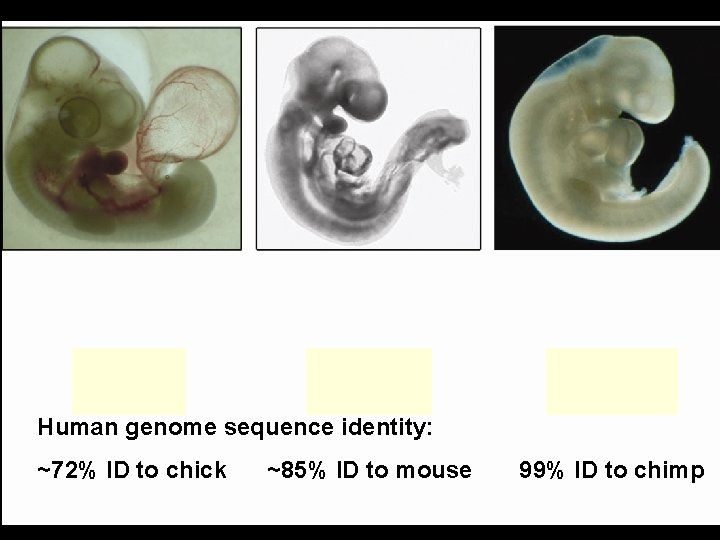
Human genome sequence identity: ~72% ID to chick ~85% ID to mouse 99% ID to chimp
- Slides: 11