
Early Elective Delivery EED A policy action plan
- Slides: 21
Early Elective Delivery EED A policy action plan to reduce the rate of non-medically indicated early deliveries in Illinois Anna Calix
Definition • NQF: “a delivery before 39 weeks of gestation without medical or obstetrical indication—is linked to neonatal morbidities and mortalities with no benefit to the mother or infant” • AWHONN: “on-medically related choices—called “elective”—include inducing labor without cause, as well as birthing via cesarean without a medical reason for surgical delivery. When these choices are made without cause before your pregnancy is term, they’re called “elective, early deliveries. ” They’re also called “dangerous” for the many immediate and life-long risks documented in research for both you and your baby. ” • ACOG: “performed for a nonmedical reason. Some nonmedical reasons include wanting to schedule the birth of the baby on a specific date or living far away from the hospital. Some women request delivery because they are uncomfortable in the last weeks of pregnancy. Some women request a cesarean delivery because they fear vaginal birth. ”
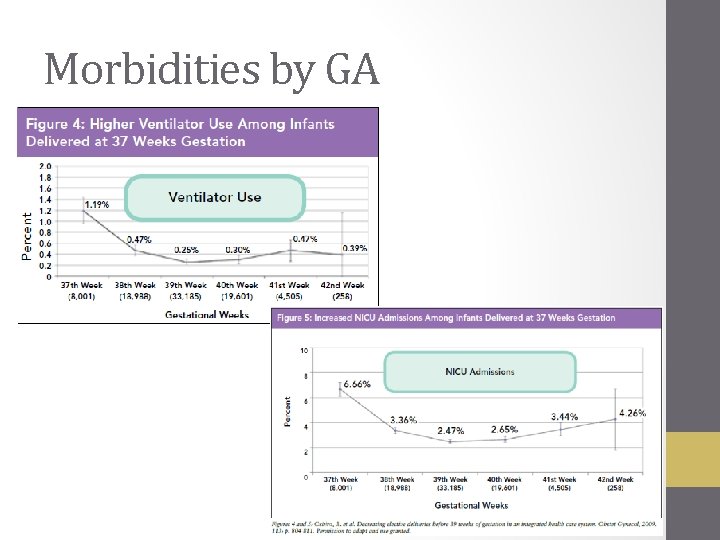
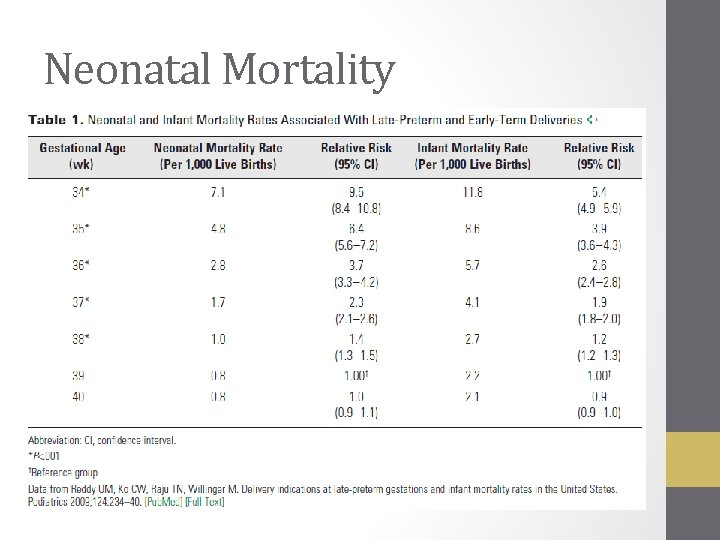
Issue: health risks • Illinois’ overall 2014 EED rate in hospitals was 2% ; ranging from 0 -45% 6 • EED increases risk of both short term and long term health problems • Higher morbidity & mortality rates in pre-term neonates • Maternal: longer labor, increased risk of c-section, hemorrhage, infection 1
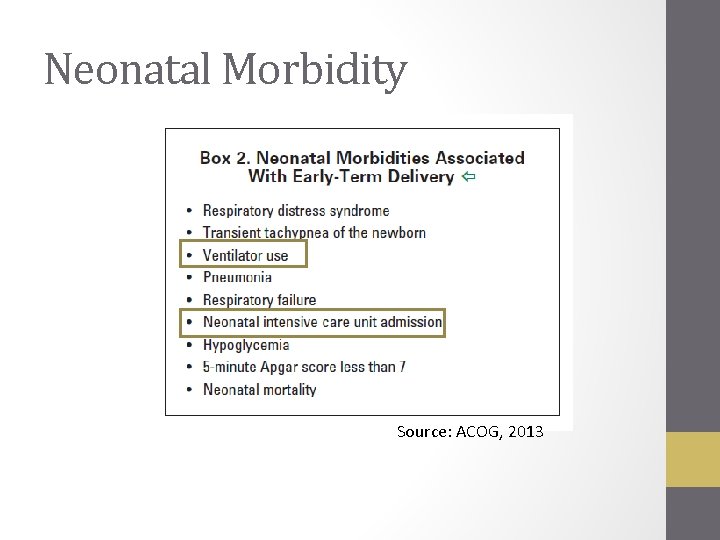
Neonatal Morbidity Source: ACOG, 2013
Morbidities by GA
Neonatal Mortality
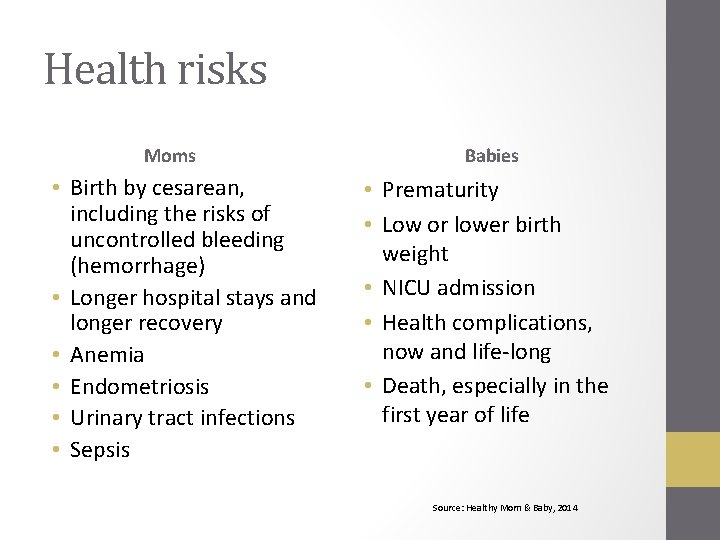
Health risks Moms • Birth by cesarean, including the risks of uncontrolled bleeding (hemorrhage) • Longer hospital stays and longer recovery • Anemia • Endometriosis • Urinary tract infections • Sepsis Babies • Prematurity • Low or lower birth weight • NICU admission • Health complications, now and life-long • Death, especially in the first year of life Source: Healthy Mom & Baby, 2014
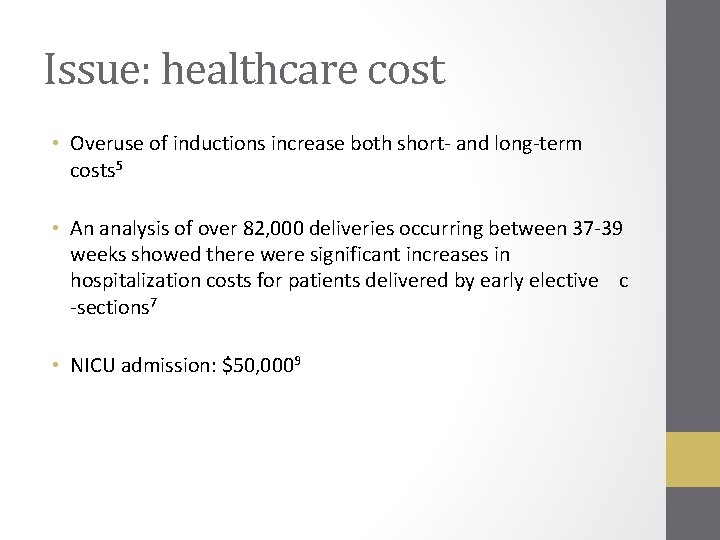
Issue: healthcare cost • Overuse of inductions increase both short- and long-term costs 5 • An analysis of over 82, 000 deliveries occurring between 37 -39 weeks showed there were significant increases in hospitalization costs for patients delivered by early elective c -sections 7 • NICU admission: $50, 0009
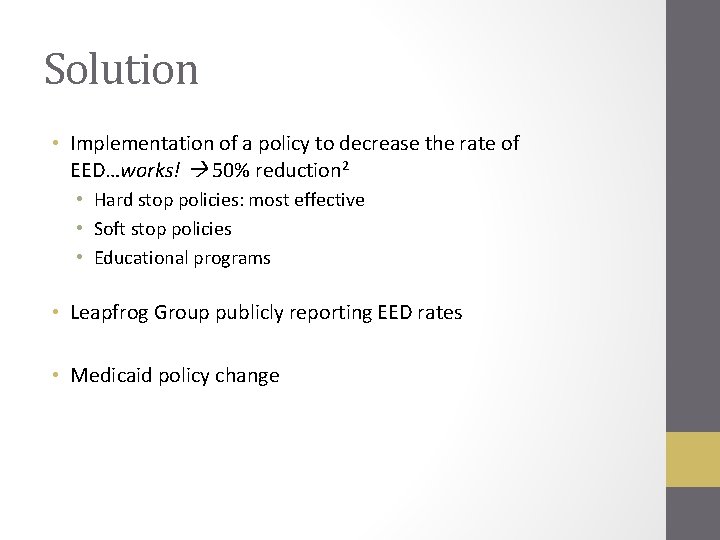
Solution • Implementation of a policy to decrease the rate of EED…works! 50% reduction 2 • Hard stop policies: most effective • Soft stop policies • Educational programs • Leapfrog Group publicly reporting EED rates • Medicaid policy change
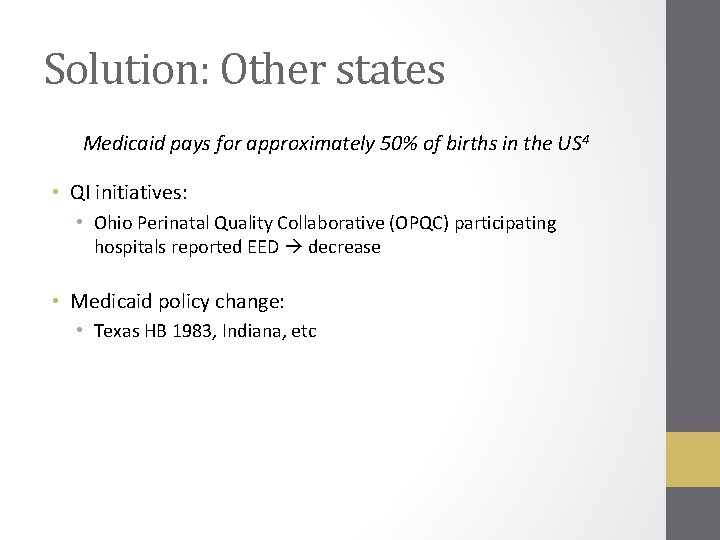
Solution: Other states Medicaid pays for approximately 50% of births in the US 4 • QI initiatives: • Ohio Perinatal Quality Collaborative (OPQC) participating hospitals reported EED decrease • Medicaid policy change: • Texas HB 1983, Indiana, etc
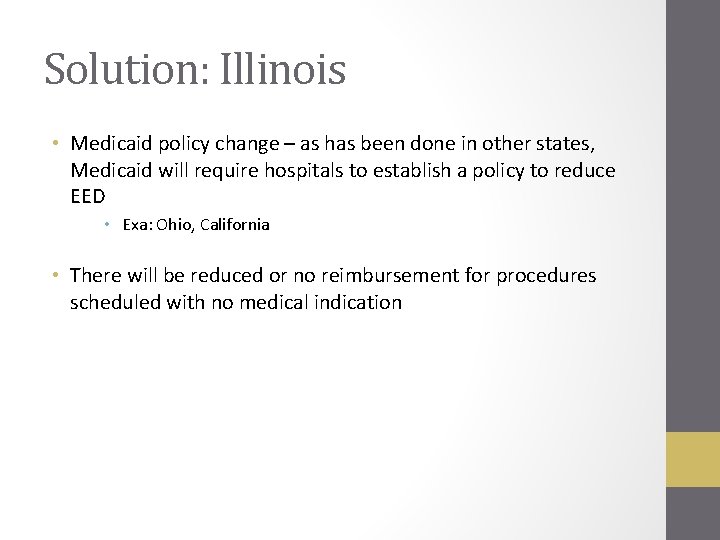
Solution: Illinois • Medicaid policy change – as has been done in other states, Medicaid will require hospitals to establish a policy to reduce EED • Exa: Ohio, California • There will be reduced or no reimbursement for procedures scheduled with no medical indication
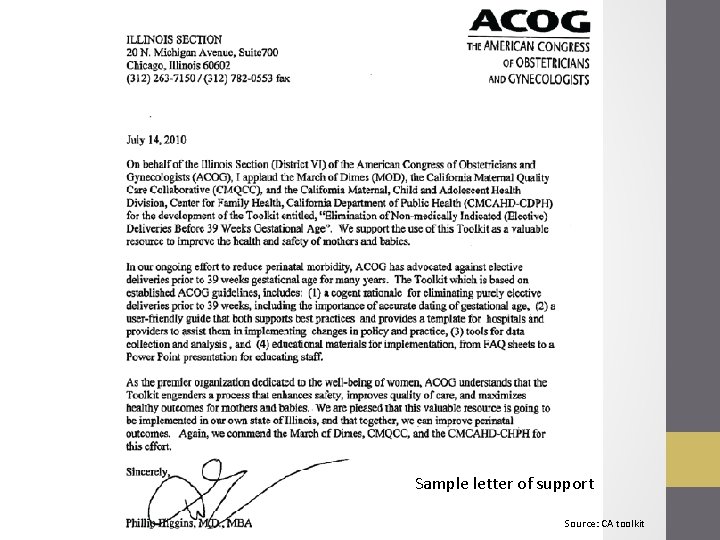
Policy entry point • Support from many stakeholders • Letters of support from ACOG, Strong Start & other organizations • Interested legislators
Sample letter of support Source: CA toolkit
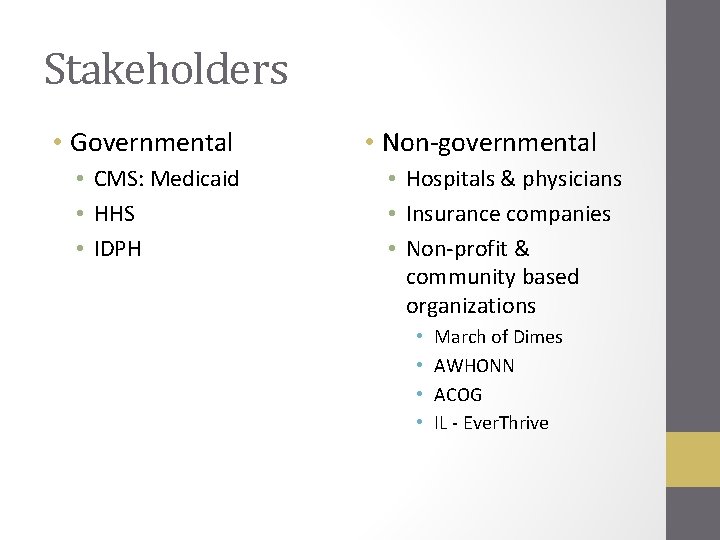
Stakeholders • Governmental • CMS: Medicaid • HHS • IDPH • Non-governmental • Hospitals & physicians • Insurance companies • Non-profit & community based organizations • • March of Dimes AWHONN ACOG IL - Ever. Thrive
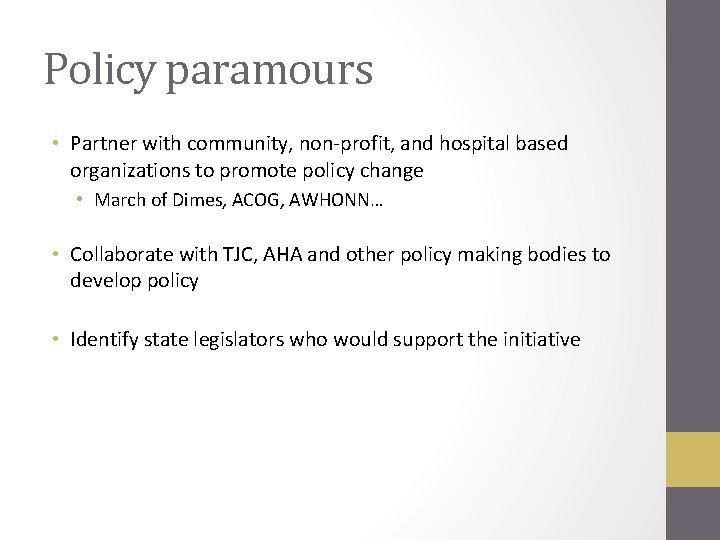
Policy paramours • Partner with community, non-profit, and hospital based organizations to promote policy change • March of Dimes, ACOG, AWHONN… • Collaborate with TJC, AHA and other policy making bodies to develop policy • Identify state legislators who would support the initiative
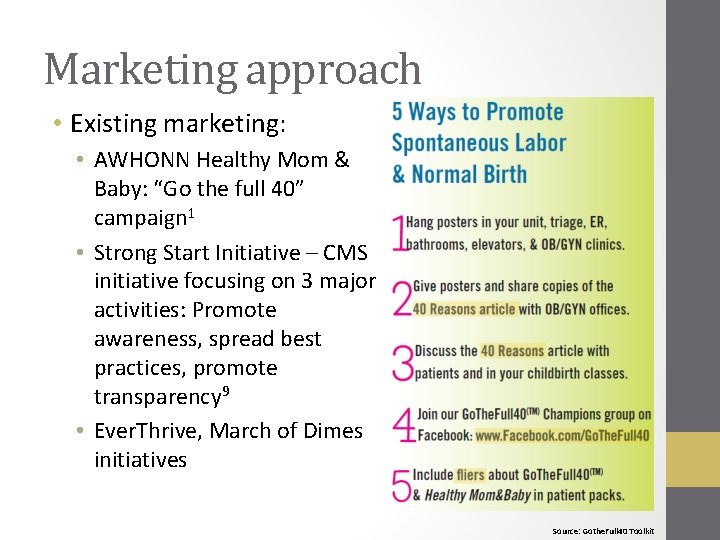
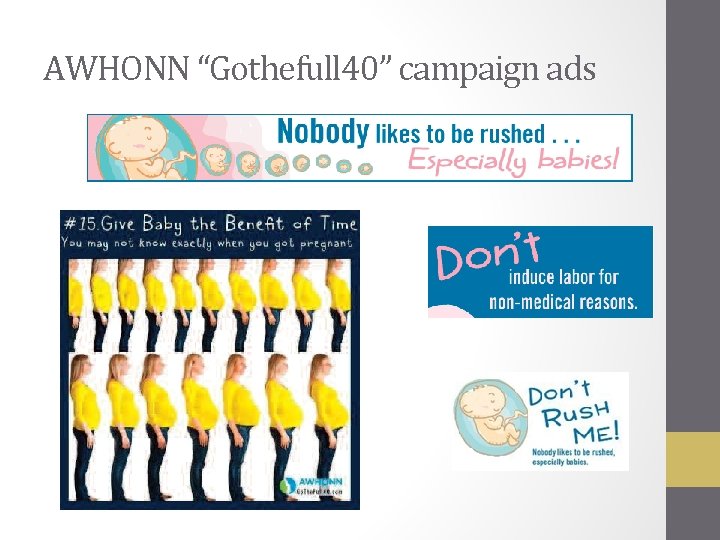
Marketing approach • Existing marketing: • AWHONN Healthy Mom & Baby: “Go the full 40” campaign 1 • Strong Start Initiative – CMS initiative focusing on 3 major activities: Promote awareness, spread best practices, promote transparency 9 • Ever. Thrive, March of Dimes initiatives Source: Gothe. Full 40 Toolkit
AWHONN “Gothefull 40” campaign ads
Marketing approach • Print, electronic & social media • Education • Awareness • Partnerships • Hospitals & providers • Insurance companies • General public/mothers • Legislators
Marketing approach • Education! “A survey of insured women who recently gave birth found that only 25. 2% of women defined full term as 39 -40 weeks. But, more importantly, 92. 4% of women reported that giving birth before 39 weeks was safe. ” - California toolkit
Resources • • • Leapfrog Group Childbirth Connections March of Dimes ACOG AWHONN Lamaze international NQF Playbook for the successful reduction of EED California toolkit for reducing EED CMS Strong Start toolkit ACOG list of other relevant organizations: http: //www. acog. org/About-ACOG/ACOGDepartments/Deliveries-Before-39 -Weeks/Other. Organizations
References: 1. 40 reasons to go the full 40. (n. d). Health 4 Mom. Retrieved from: http: //www. health 4 mom. org/zones/go-the-full-40 2. Avoiding early elective deliveries. Sep 17, 2014. Healthy mom & baby. Retrieved from: http: //www. health 4 mom. org/avoiding-early-elective-deliveries 3. Elective delivery before 39 weeks. FAQ 181. American College of Obstetricians and Gynecologists. 2013. Retrieved from: http: //www. acog. org/-/media/Forpatients/faq 181. pdf? dmc=1&ts=20150713 T 0028547127 4. Elimination of non-medically indicated (elective) deliveries before 39 weeks gestational age toolkit. California Department of public health. 2011. Retrieved from: http: //www. leapfroggroup. org/media/file/Less. Than 39 Weeks. Toolkit. pdf 5. Go. The. Full 40 campaign toolkit. March 2015. Retrieved from: http: //www. health 4 mom. org/wp-content/uploads/2015/03/Go. The. Full 40 -Toolkit_V 2 -1. pdf 6. Hospital rates of early scheduled deliveries. 2014. The Leapfrog Group. Retrieved from: http: //www. leapfroggroup. org/tooearlydeliveries 7. Important information on HB 1983. 2011. American Congress of Obstetricians and Gynecologists. Retrieved from: http: //www. acog. org/About-ACOG/ACOG-Districts/District. XI/Important-Information-on-HB-1983 -and-Less-than-39 -Weeks 8. Nonmedically indicated early-term deliveries. Committee Opinion No. 561. American College of Obstetricians and Gynecologists. Obstet Gynecol 2013; 121: 911 -5. 9. Strong Start for Mothers and Newborns Initiative: Effort to Reduce Early Elective Deliveries. (n. d). Center for Medicare & Medicaid. Retrieved from http: //innovation. cms. gov/initiatives/Strong-Start-Strategy-1/index. html