
Early Earth Early Earth History Formation of Earth
- Slides: 18
Early Earth
Early Earth History Formation of Earth �Geologic evidence shows that Earth is about 4. 6 billion years old �the early atmosphere was composed of some of the following gases: water vapor, hydrogen, methane, and ammonia – What’s missing? Oxygen gas
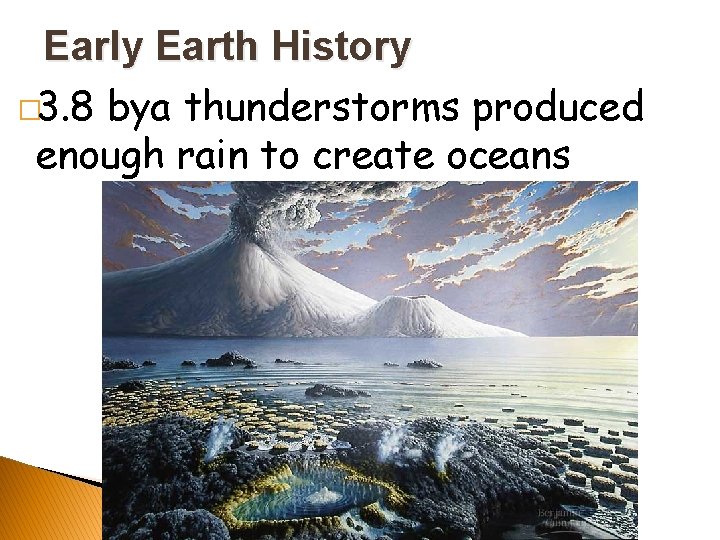
Early Earth History � 3. 8 bya thunderstorms produced enough rain to create oceans
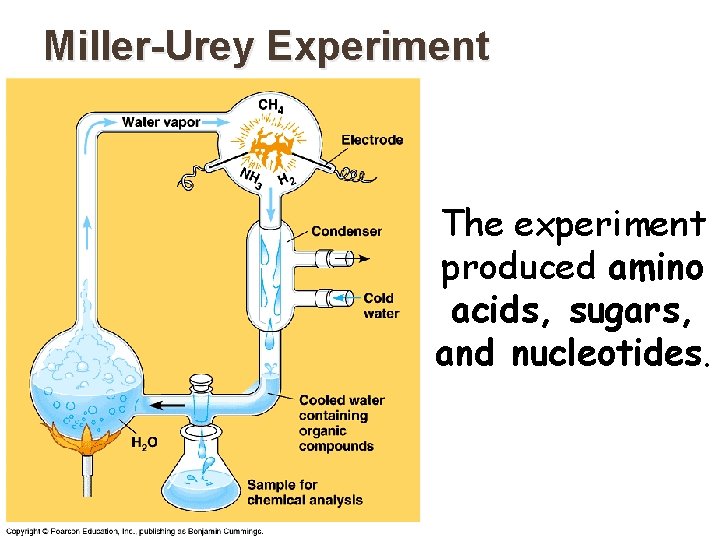
The First Organic Molecules �organic molecules cannot spontaneously form today due to the presence of oxygen �Stanley Miller and Harold Urey (1950) tested a theory that organic molecules could form under early Earth conditions
Miller-Urey Experiment � The experiment produced amino acids, sugars, and nucleotides.
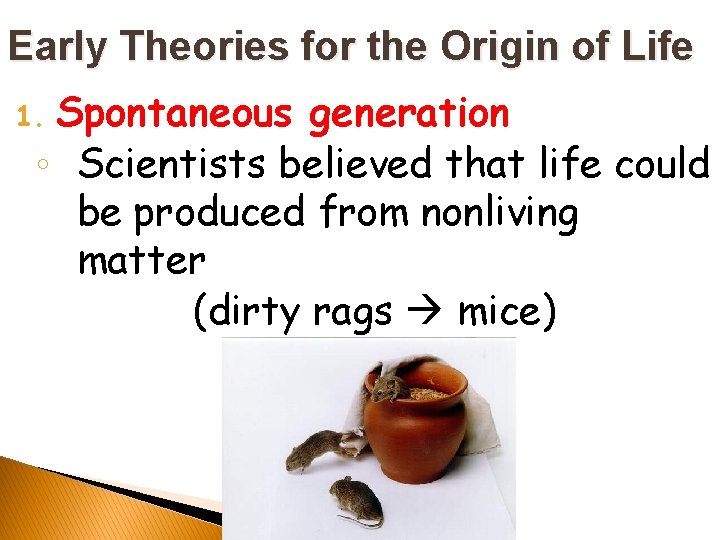
Early Theories for the Origin of Life Spontaneous generation ◦ Scientists believed that life could be produced from nonliving matter (dirty rags mice) 1.
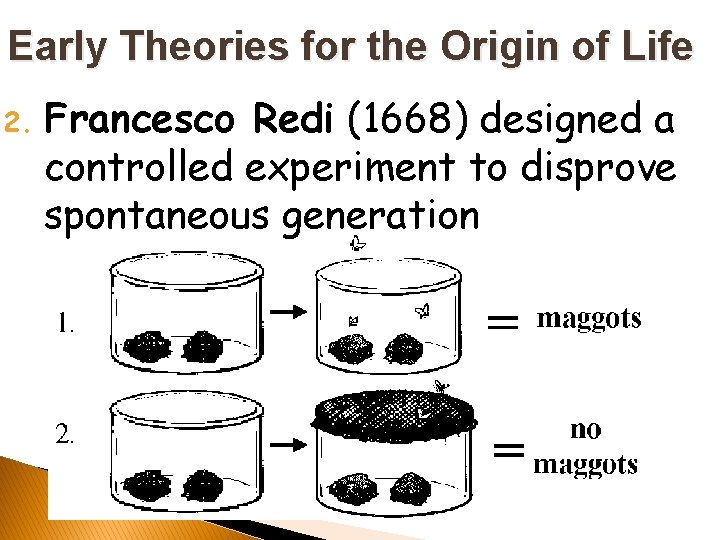
Early Theories for the Origin of Life 2. Francesco Redi (1668) designed a controlled experiment to disprove spontaneous generation
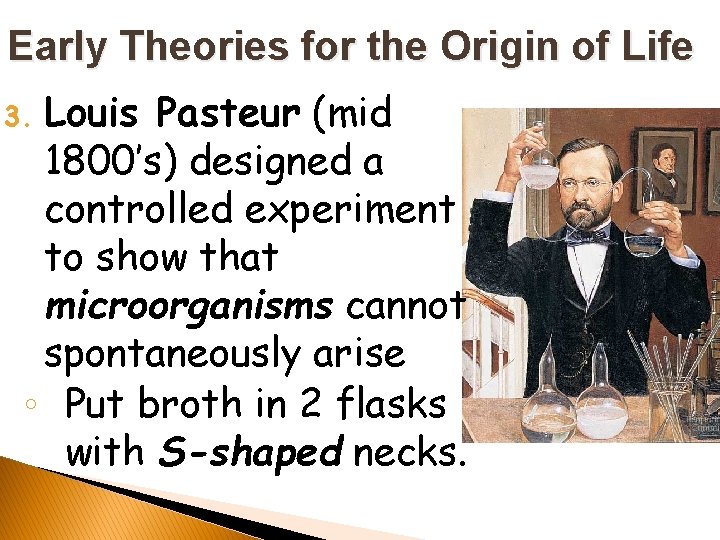
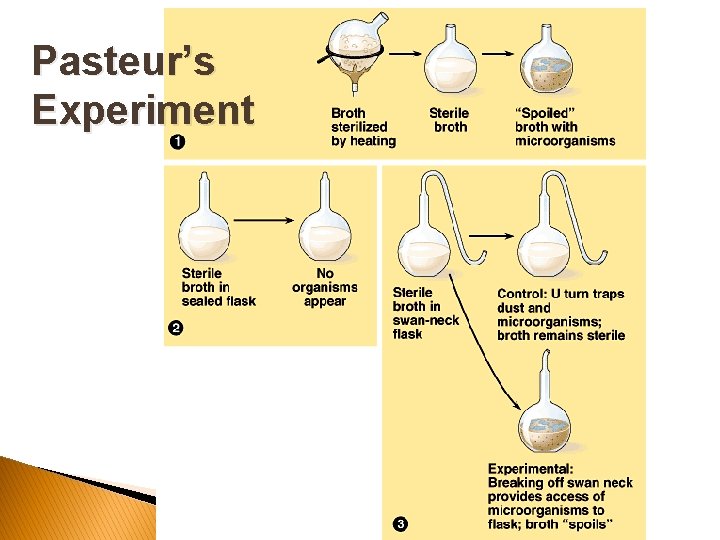
Early Theories for the Origin of Life Louis Pasteur (mid 1800’s) designed a controlled experiment to show that microorganisms cannot spontaneously arise ◦ Put broth in 2 flasks with S-shaped necks. 3.
Pasteur’s Experiment
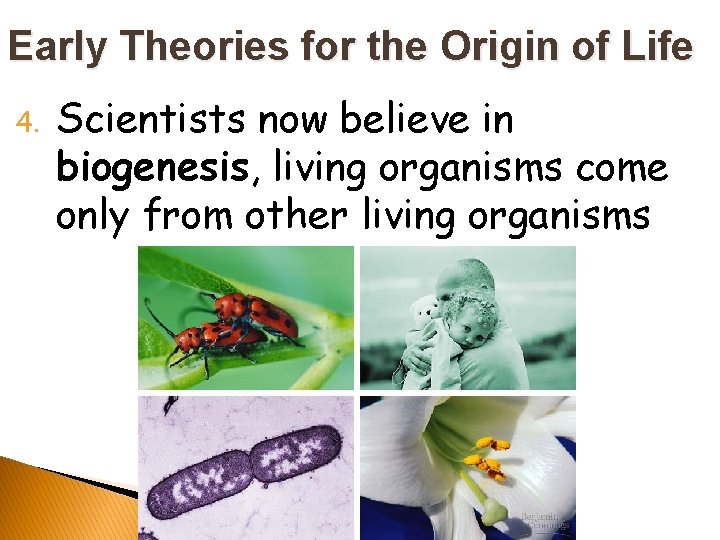
Early Theories for the Origin of Life 4. Scientists now believe in biogenesis, living organisms come only from other living organisms
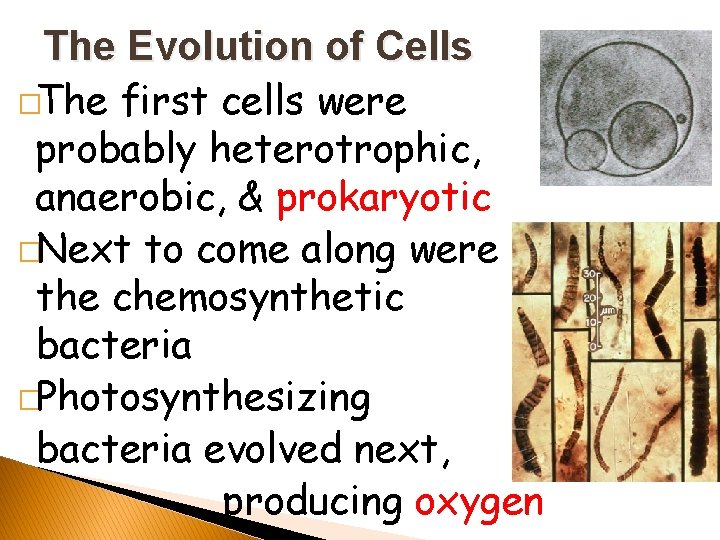
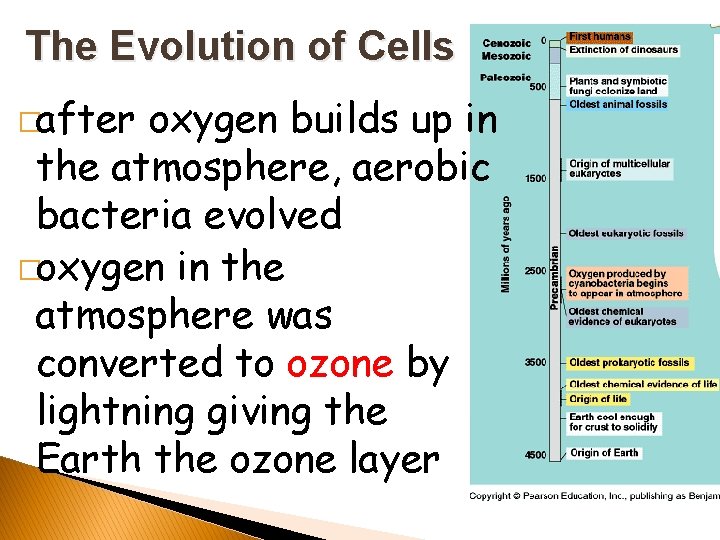
The Evolution of Cells �The first cells were probably heterotrophic, anaerobic, & prokaryotic �Next to come along were the chemosynthetic bacteria �Photosynthesizing bacteria evolved next, producing oxygen
The Evolution of Cells �after oxygen builds up in the atmosphere, aerobic bacteria evolved �oxygen in the atmosphere was converted to ozone by lightning giving the Earth the ozone layer
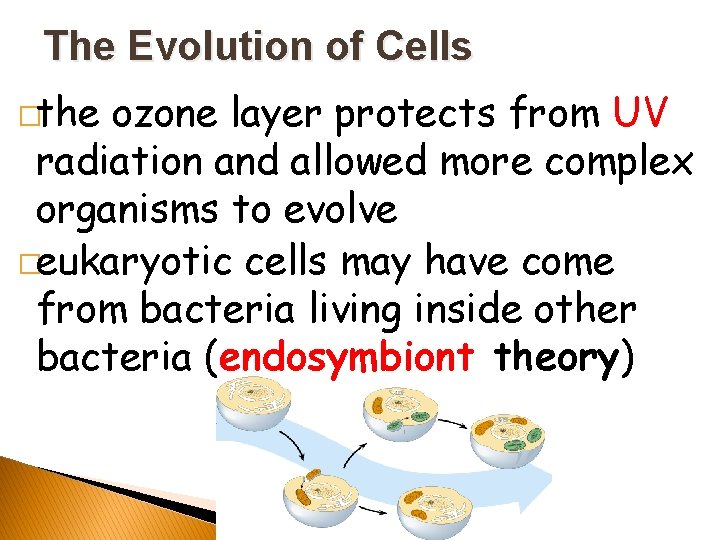
The Evolution of Cells �the ozone layer protects from UV radiation and allowed more complex organisms to evolve �eukaryotic cells may have come from bacteria living inside other bacteria (endosymbiont theory)
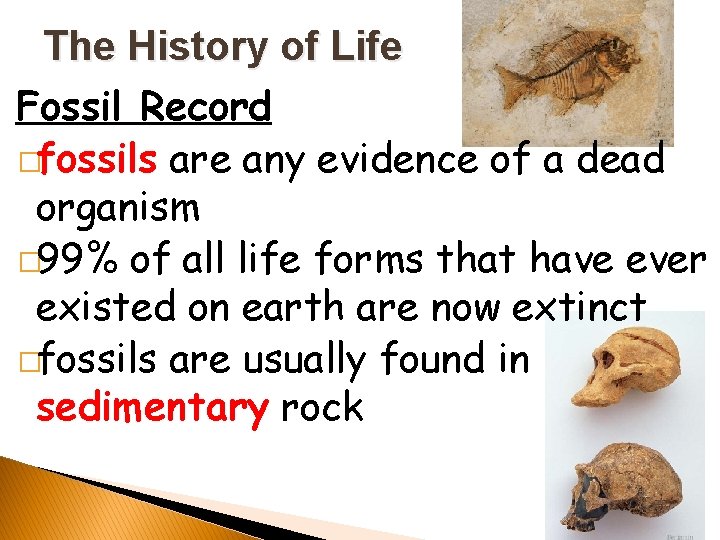
The History of Life Fossil Record �fossils are any evidence of a dead organism � 99% of all life forms that have ever existed on earth are now extinct �fossils are usually found in sedimentary rock
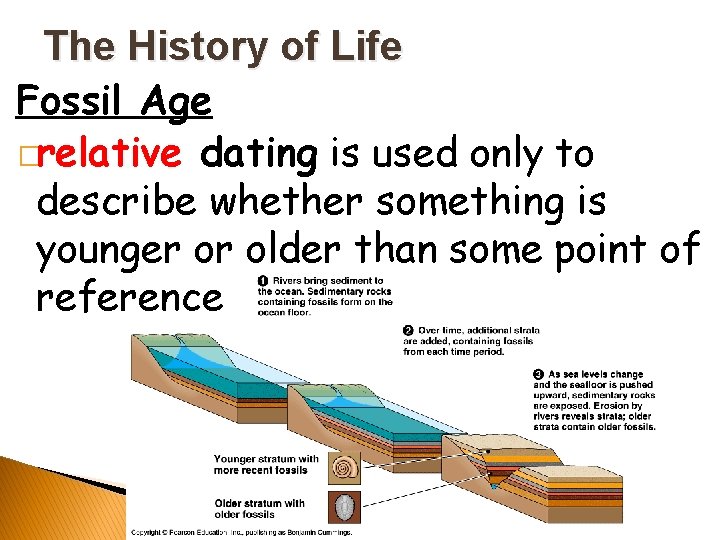
The History of Life Fossil Age �relative dating is used only to describe whether something is younger or older than some point of reference
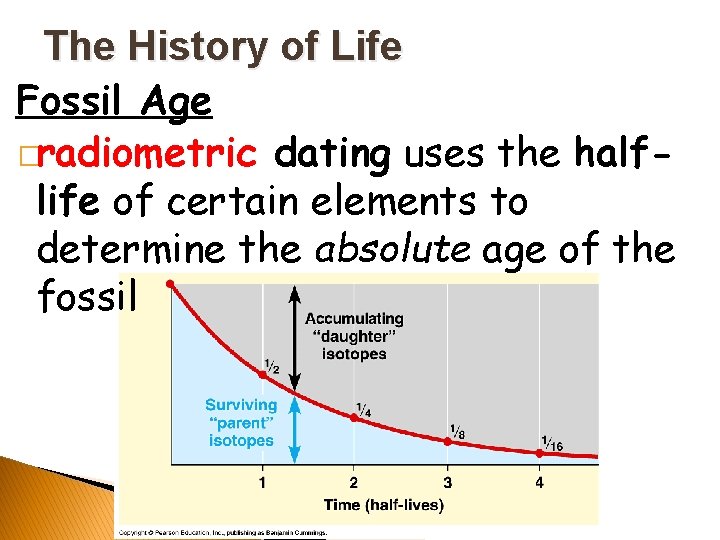
The History of Life Fossil Age �radiometric dating uses the halflife of certain elements to determine the absolute age of the fossil
The Geologic Time Scale �the geologic time scale is a calendar based on the appearance of different types of organisms that have appeared during Earth’s history ◦ is divided into 4 eras ◦ a mass extinction occurred at the end of each era
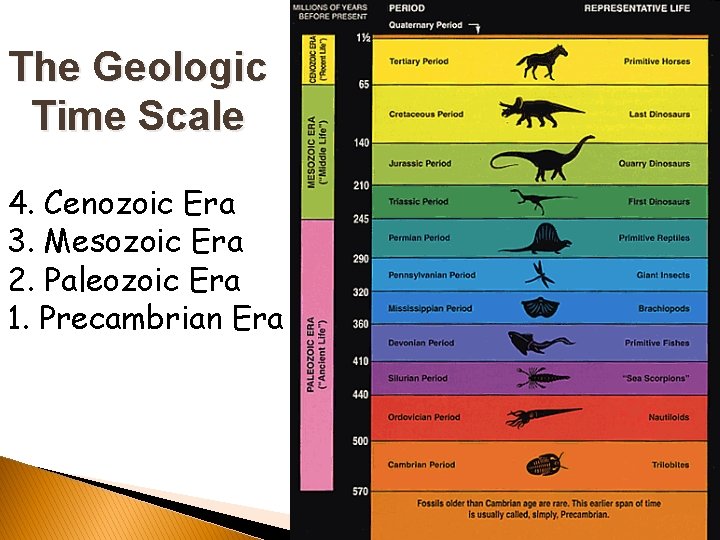
The Geologic Time Scale 4. Cenozoic Era 3. Mesozoic Era 2. Paleozoic Era 1. Precambrian Era