
Early Earth early bombardment earliest phase of Earth
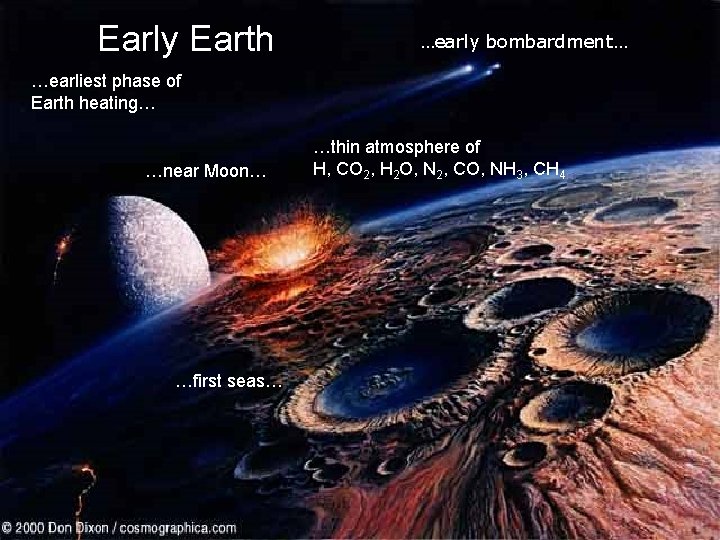
Early Earth …early bombardment… …earliest phase of Earth heating… …near Moon… …first seas… …thin atmosphere of H, CO 2, H 2 O, N 2, CO, NH 3, CH 4

Early Bombardment 2 phases? Relative dating
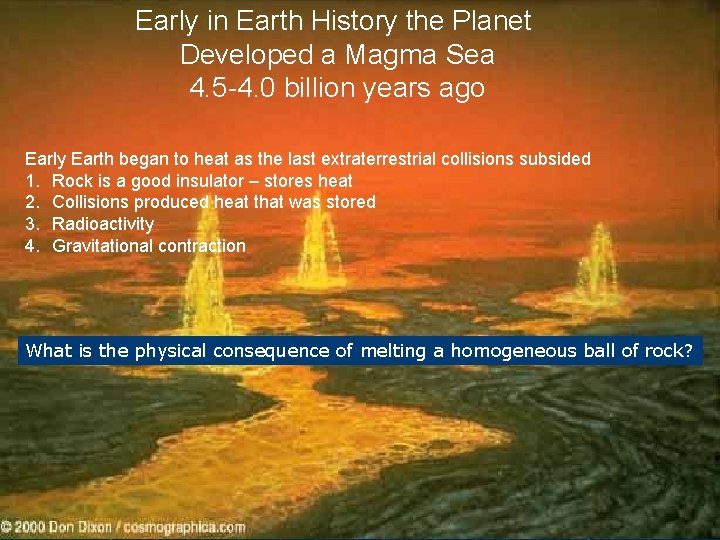
Early in Earth History the Planet Developed a Magma Sea 4. 5 -4. 0 billion years ago Early Earth began to heat as the last extraterrestrial collisions subsided 1. Rock is a good insulator – stores heat 2. Collisions produced heat that was stored 3. Radioactivity 4. Gravitational contraction What is the physical consequence of melting a homogeneous ball of rock?
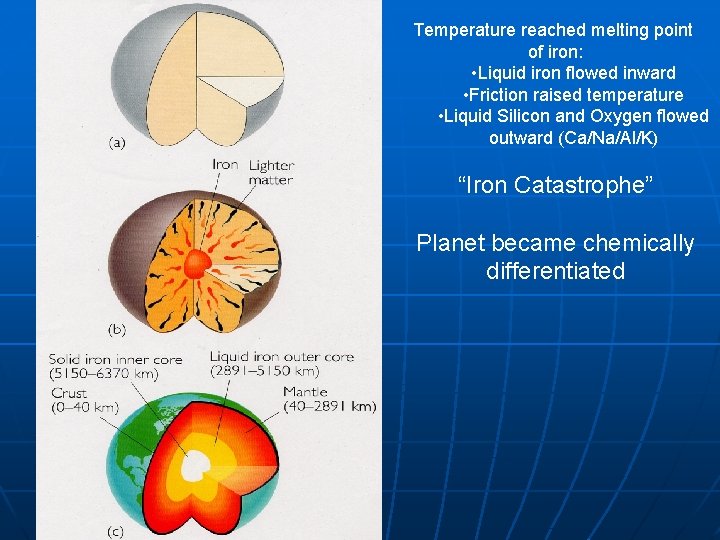
Temperature reached melting point of iron: • Liquid iron flowed inward • Friction raised temperature • Liquid Silicon and Oxygen flowed outward (Ca/Na/Al/K) “Iron Catastrophe” Planet became chemically differentiated
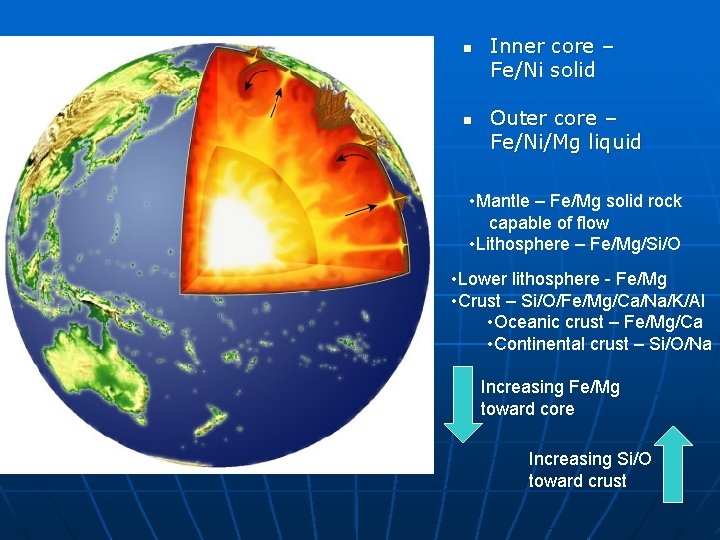
n n Inner core – Fe/Ni solid Outer core – Fe/Ni/Mg liquid • Mantle – Fe/Mg solid rock capable of flow • Lithosphere – Fe/Mg/Si/O • Lower lithosphere - Fe/Mg • Crust – Si/O/Fe/Mg/Ca/Na/K/Al • Oceanic crust – Fe/Mg/Ca • Continental crust – Si/O/Na Increasing Fe/Mg toward core Increasing Si/O toward crust
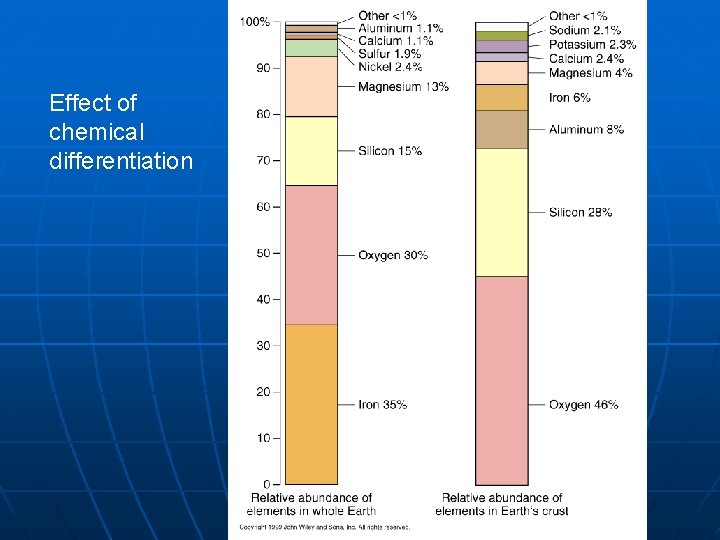
Effect of chemical differentiation
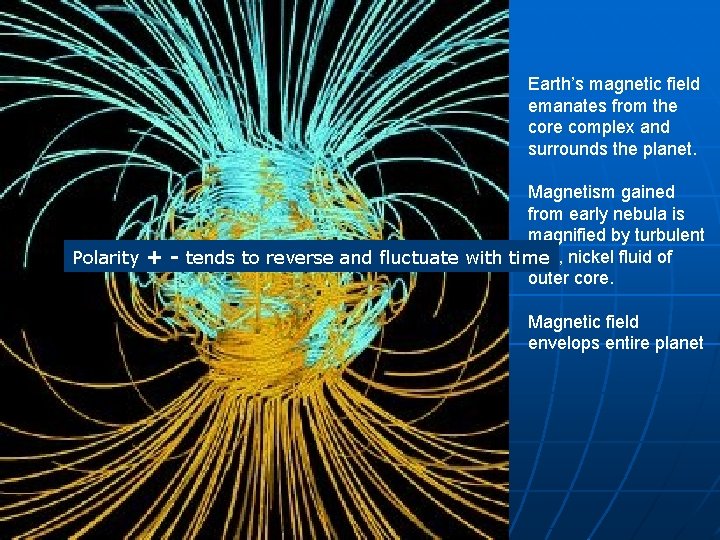
Earth’s magnetic field emanates from the core complex and surrounds the planet. Magnetism gained from early nebula is magnified by turbulent iron, nickel fluid of Polarity + - tends to reverse and fluctuate with time outer core. Magnetic field envelops entire planet
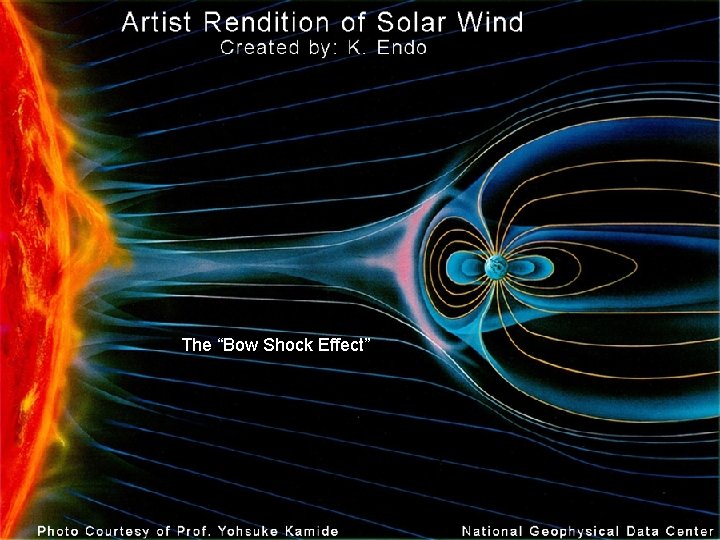
The “Bow Shock Effect”
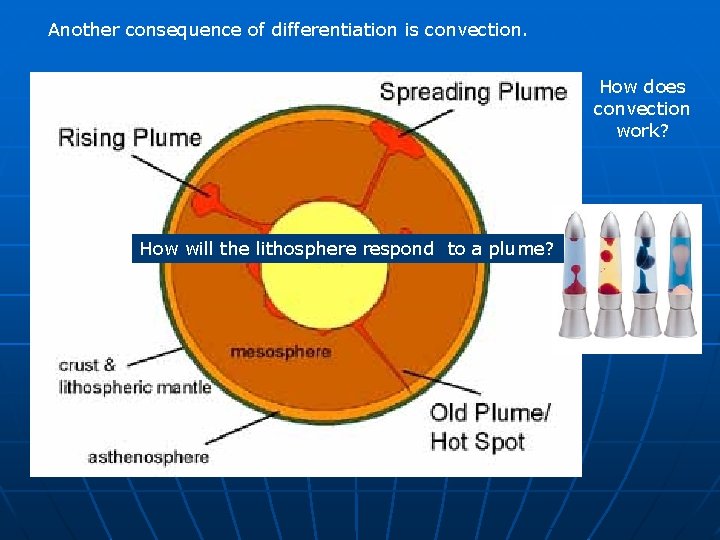
Another consequence of differentiation is convection. How does convection work? How will the lithosphere respond to a plume?

The continental rifting process
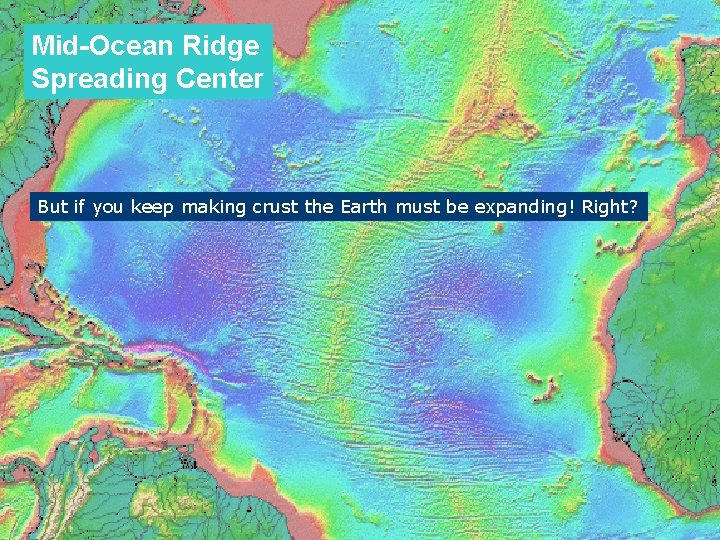
Mid-Ocean Ridge Spreading Center But if you keep making crust the Earth must be expanding! Right?
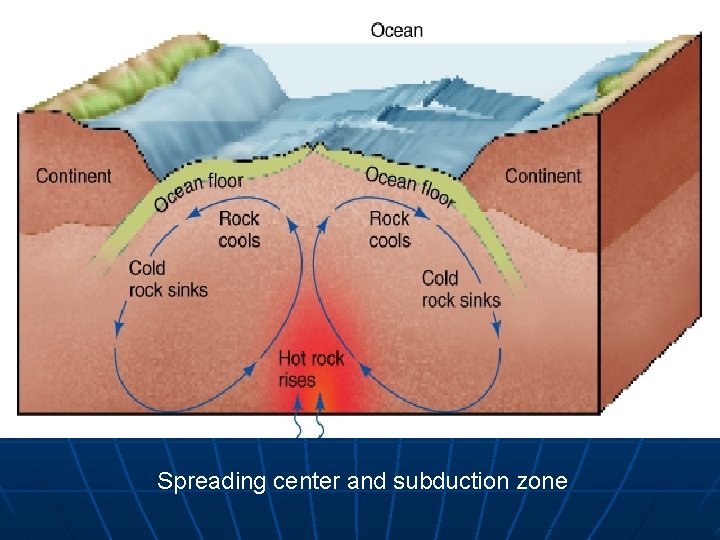
Spreading center and subduction zone

Global Tectonics Partial Melting Partial melting is responsible for evolving mantle rock… among other things this gives us continents.

Continental lithosphere – general chemistry is Si, O, Al, Na, K…in the form of a rock “Granite” Oceanic lithosphere – general chemistry is Fe, Mg, Ca, Si, O in the form of a rock “Basalt”


“Ridge Push” “Slab Pull” Plate Movement “Plate Drag”


Main Types of Plate Motion Convergent Divergent Transform

Five types of plate boundaries Divergent Transform Convergent • Ocean-Ocean • Ocean-Continent • Continent-Continent
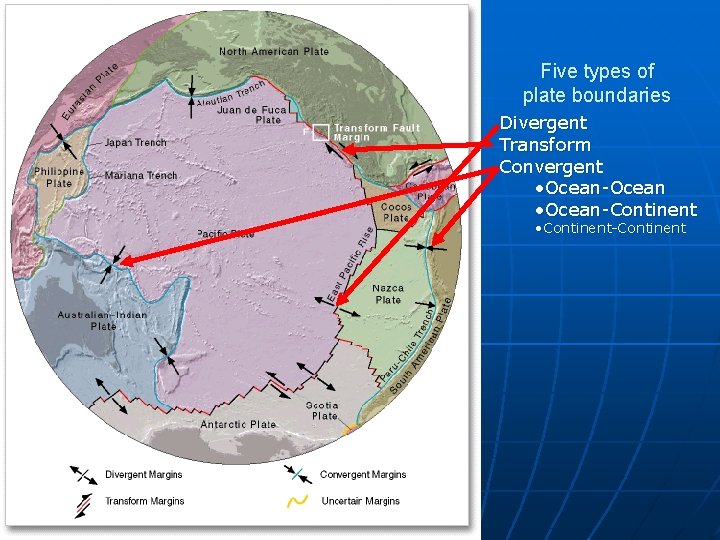
Five types of plate boundaries Divergent Transform Convergent • Ocean-Ocean • Ocean-Continent • Continent-Continent

Divergent Boundary
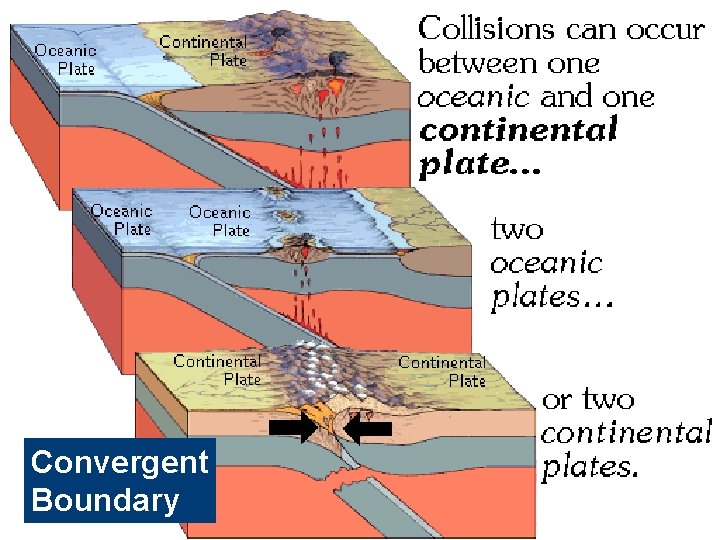
Convergent Boundary

Transform Boundary


Modern Earth Pangea 240 million

Origin of India


Hot Spot
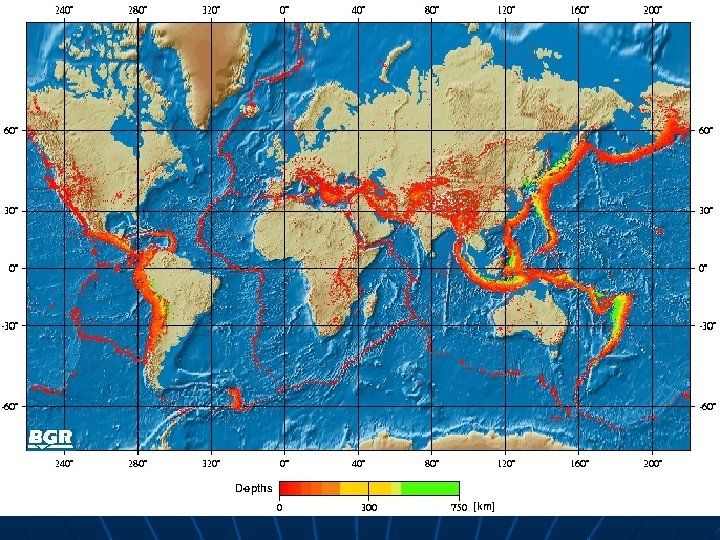

Paleomagnetism

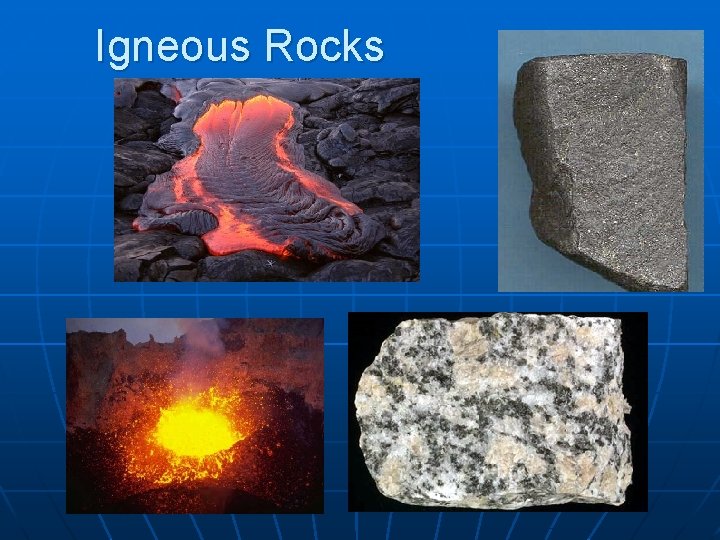
Igneous Rocks
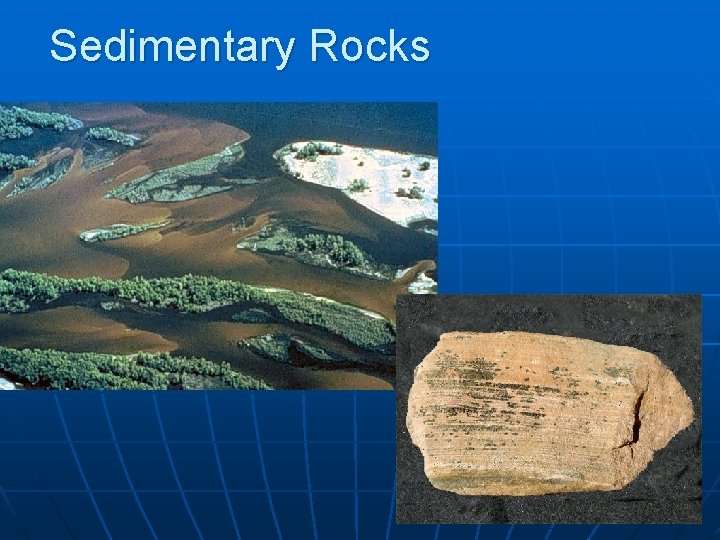
Sedimentary Rocks
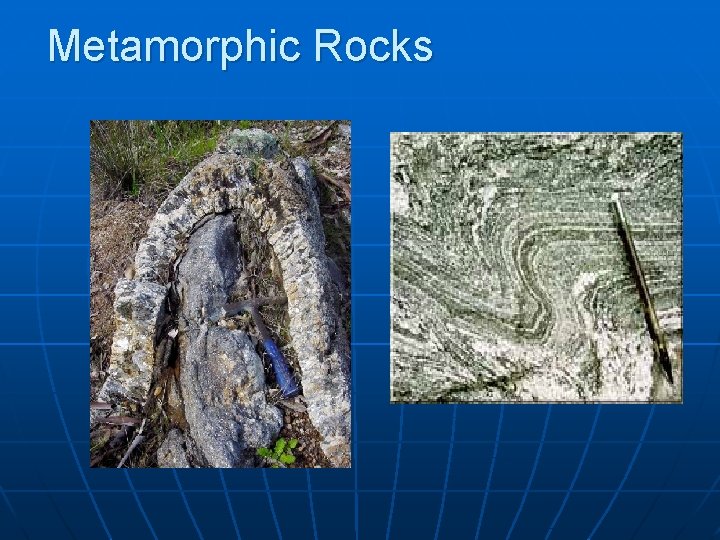
Metamorphic Rocks
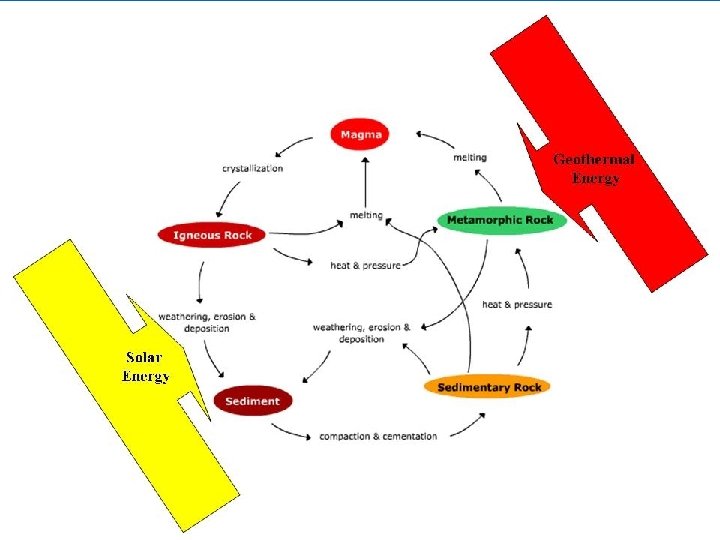
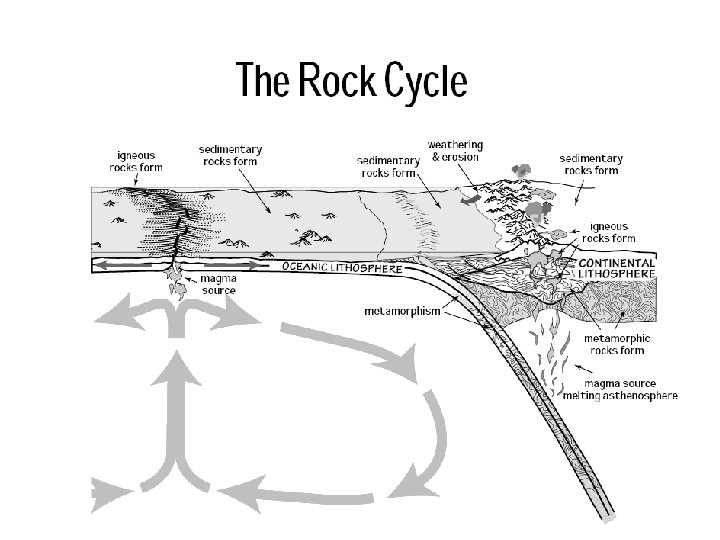
The Rock Cycle
- Slides: 36