
Early Detection of Invasive Fishes in Lake Superior
- Slides: 18
Early Detection of Invasive Fishes in Lake Superior Joshua Schloesser and Henry Quinlan U. S. Fish and Wildlife Service Ashland Fish and Wildlife Conservation Office Joel Hoffman U. S. Environmental Protection Agency Office of Research and Development Mid-Continent Ecology Division
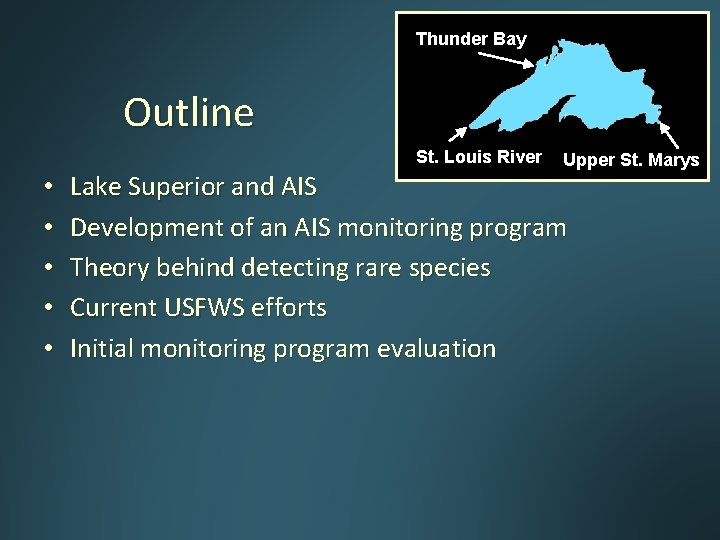
Thunder Bay Outline St. Louis River • • • Upper St. Marys Lake Superior and AIS Development of an AIS monitoring program Theory behind detecting rare species Current USFWS efforts Initial monitoring program evaluation
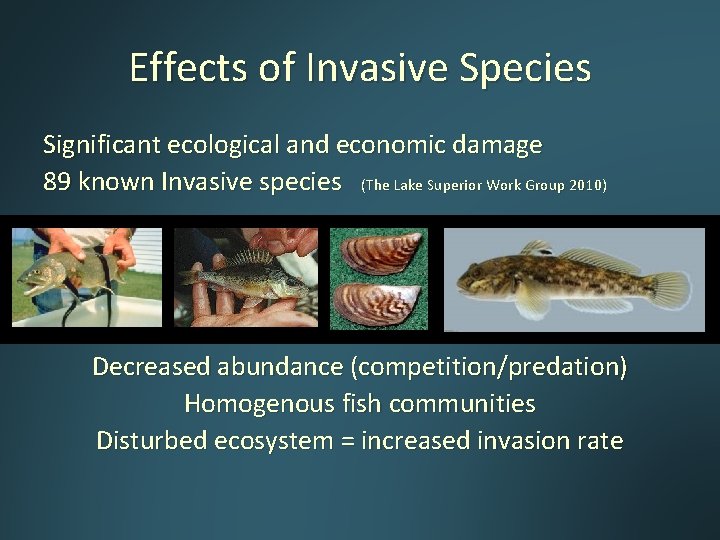
Effects of Invasive Species Significant ecological and economic damage 89 known Invasive species (The Lake Superior Work Group 2010) Decreased abundance (competition/predation) Homogenous fish communities Disturbed ecosystem = increased invasion rate
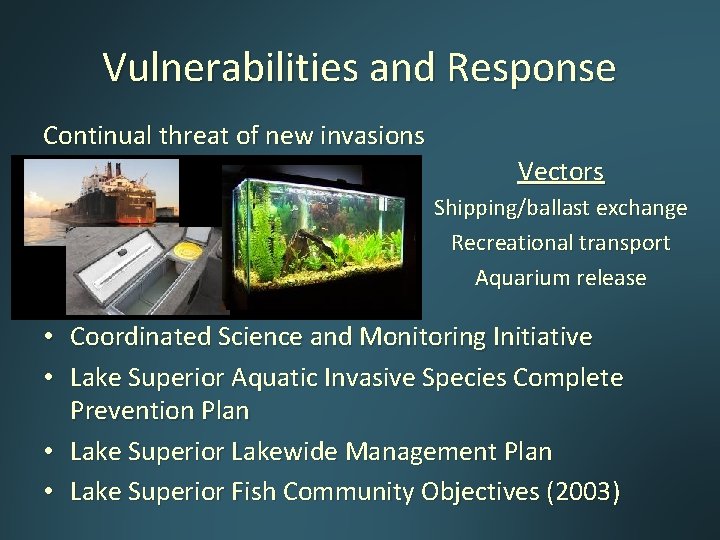
Vulnerabilities and Response Continual threat of new invasions Vectors Shipping/ballast exchange Recreational transport Aquarium release • Coordinated Science and Monitoring Initiative • Lake Superior Aquatic Invasive Species Complete Prevention Plan • Lake Superior Lakewide Management Plan • Lake Superior Fish Community Objectives (2003)
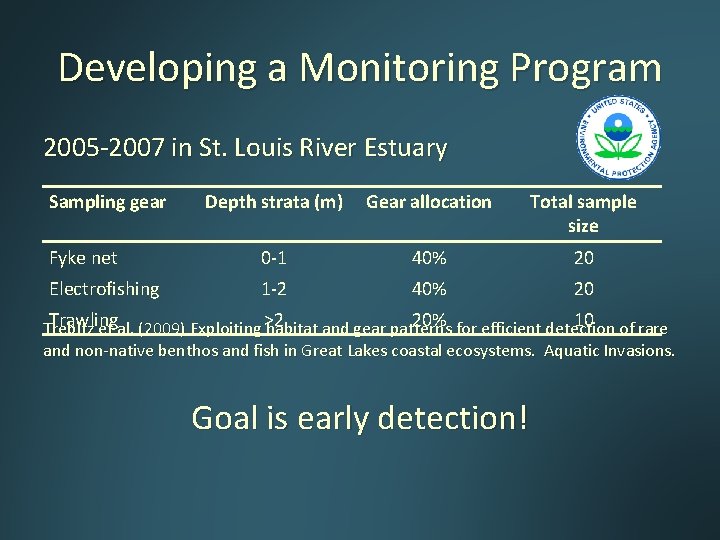
Developing a Monitoring Program 2005 -2007 in St. Louis River Estuary Sampling gear Depth strata (m) Gear allocation Total sample size Fyke net 0 -1 40% 20 Electrofishing 1 -2 40% 20 Trawling 20% for efficient detection 10 of rare Trebitz et al. (2009) Exploiting >2 habitat and gear patterns and non-native benthos and fish in Great Lakes coastal ecosystems. Aquatic Invasions. Goal is early detection!
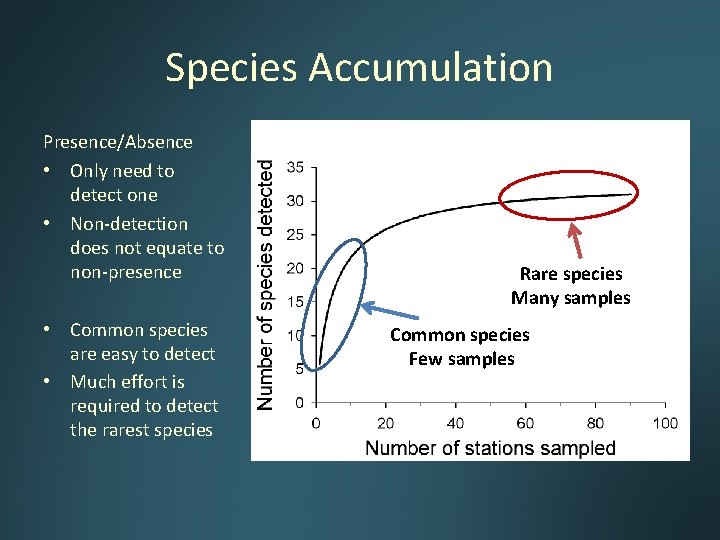
Species Accumulation Presence/Absence • Only need to detect one • Non-detection does not equate to non-presence • Common species are easy to detect • Much effort is required to detect the rarest species Rare species Many samples Common species Few samples
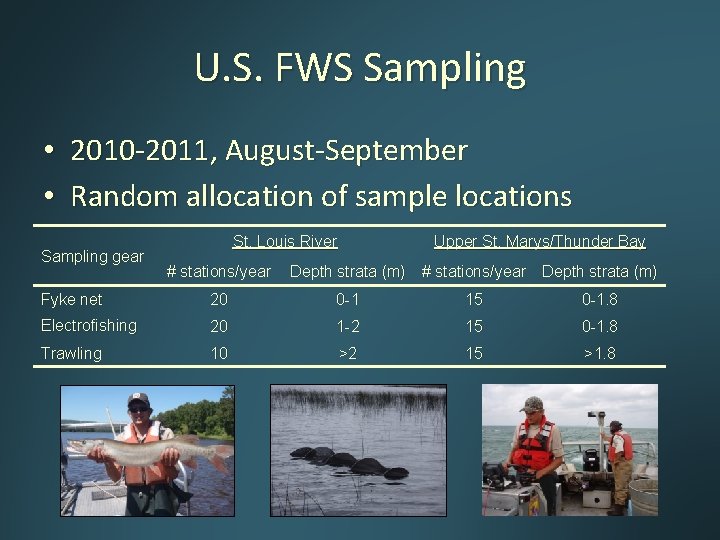
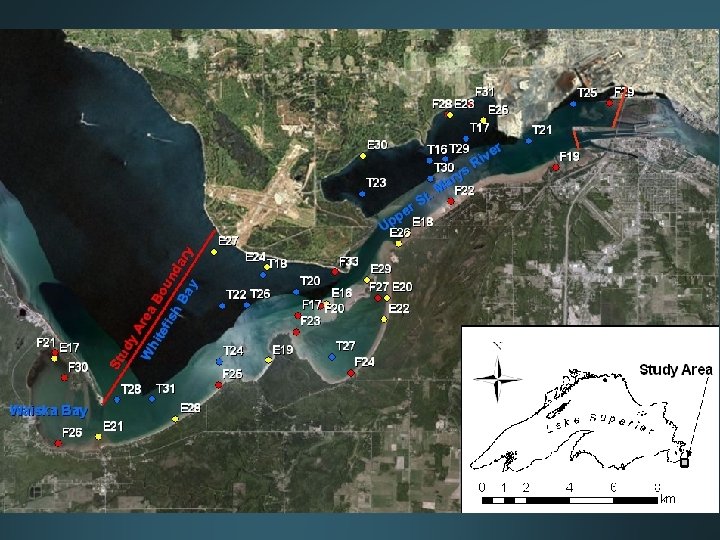
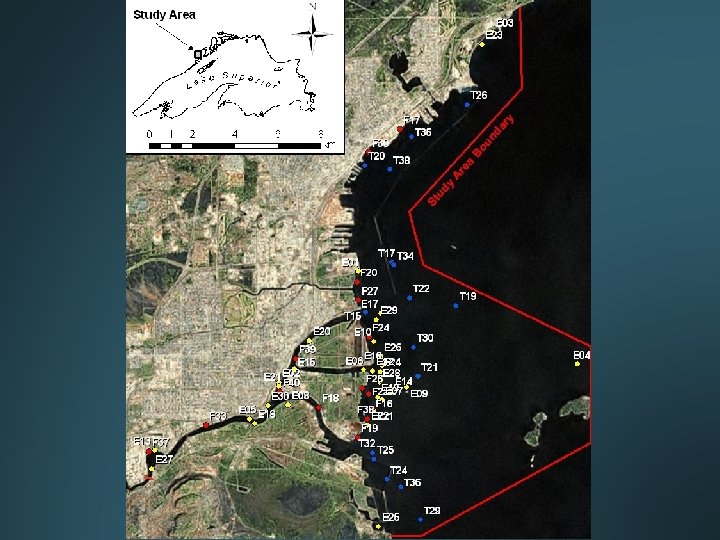
U. S. FWS Sampling • 2010 -2011, August-September • Random allocation of sample locations Sampling gear St. Louis River # stations/year Upper St. Marys/Thunder Bay Depth strata (m) # stations/year Depth strata (m) Fyke net 20 0 -1 15 0 -1. 8 Electrofishing 20 1 -2 15 0 -1. 8 Trawling 10 >2 15 >1. 8
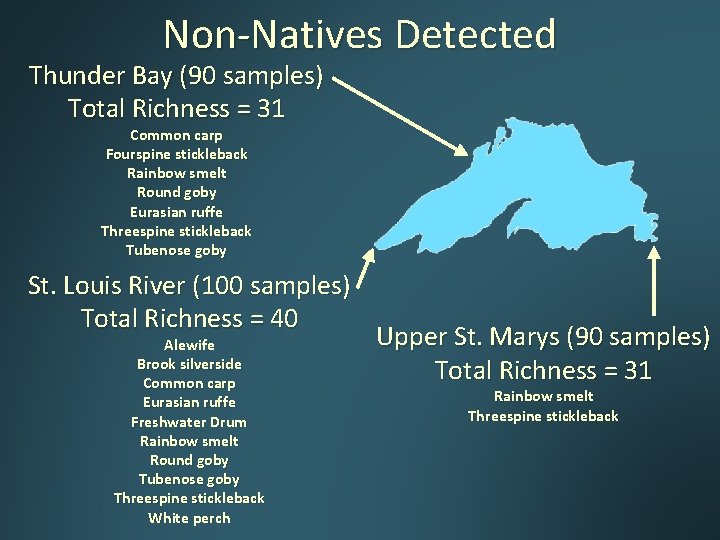
Non-Natives Detected Thunder Bay (90 samples) Total Richness = 31 Common carp Fourspine stickleback Rainbow smelt Round goby Eurasian ruffe Threespine stickleback Tubenose goby St. Louis River (100 samples) Total Richness = 40 Alewife Brook silverside Common carp Eurasian ruffe Freshwater Drum Rainbow smelt Round goby Tubenose goby Threespine stickleback White perch Upper St. Marys (90 samples) Total Richness = 31 Rainbow smelt Threespine stickleback
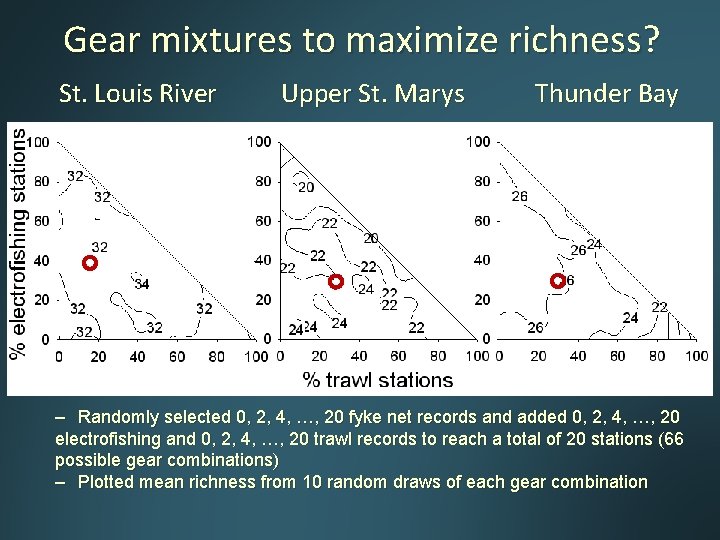
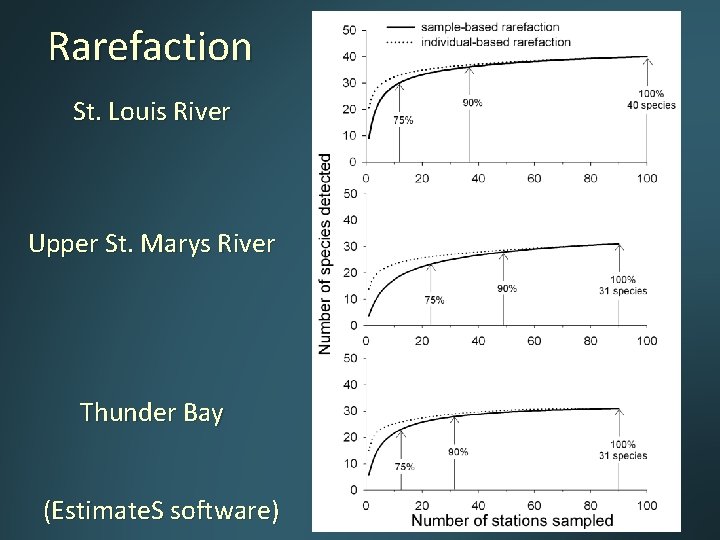
Gear mixtures to maximize richness? St. Louis River Upper St. Marys Thunder Bay – Randomly selected 0, 2, 4, …, 20 fyke net records and added 0, 2, 4, …, 20 electrofishing and 0, 2, 4, …, 20 trawl records to reach a total of 20 stations (66 possible gear combinations) – Plotted mean richness from 10 random draws of each gear combination
Rarefaction St. Louis River Upper St. Marys River Thunder Bay (Estimate. S software)
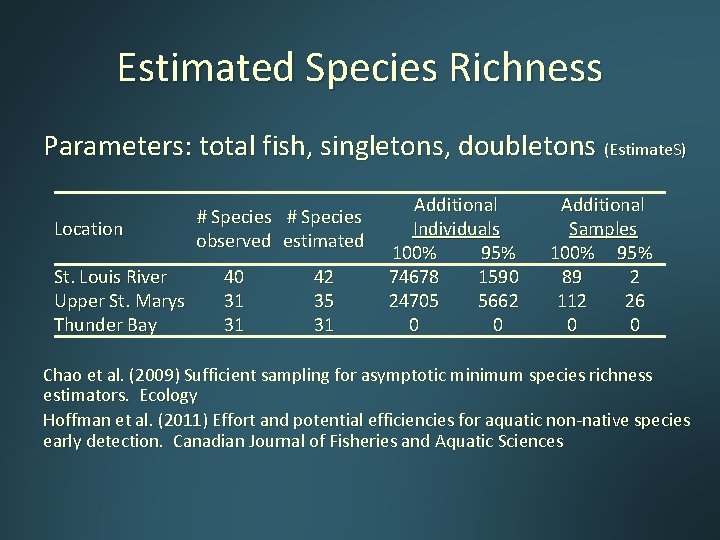
Estimated Species Richness Parameters: total fish, singletons, doubletons (Estimate. S) Location St. Louis River Upper St. Marys Thunder Bay # Species observed estimated 40 31 31 42 35 31 Additional Individuals 100% 95% 74678 1590 24705 5662 0 0 Additional Samples 100% 95% 89 2 112 26 0 0 Chao et al. (2009) Sufficient sampling for asymptotic minimum species richness estimators. Ecology Hoffman et al. (2011) Effort and potential efficiencies for aquatic non-native species early detection. Canadian Journal of Fisheries and Aquatic Sciences
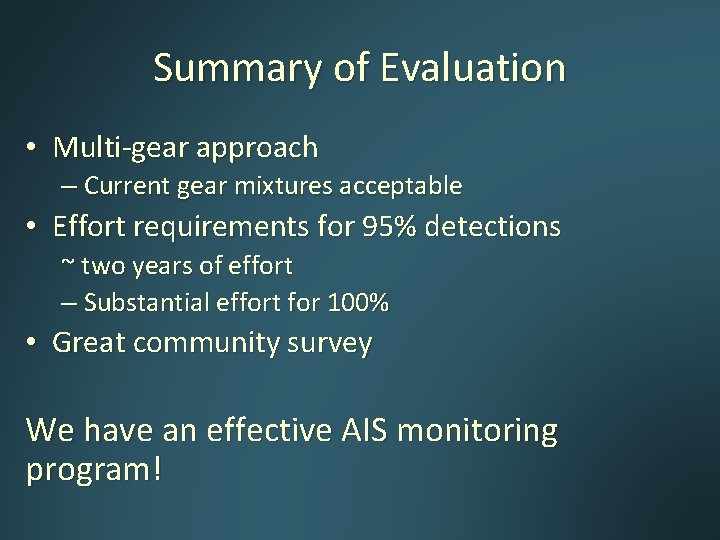
Summary of Evaluation • Multi-gear approach – Current gear mixtures acceptable • Effort requirements for 95% detections ~ two years of effort – Substantial effort for 100% • Great community survey We have an effective AIS monitoring program!
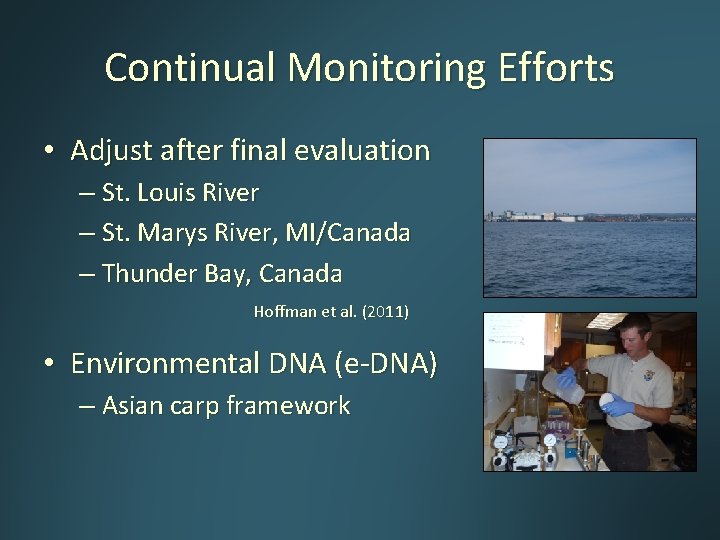
Continual Monitoring Efforts • Adjust after final evaluation – St. Louis River – St. Marys River, MI/Canada – Thunder Bay, Canada Hoffman et al. (2011) • Environmental DNA (e-DNA) – Asian carp framework
Cooperative Effort U. S. EPA, Mid-Continent Ecology Division Ontario Ministry of Natural Resources Fond du Lac Band of Lake Superior Chippewa 1854 Treaty Authority University of Minnesota-Duluth, Graduate School
Questions?