
Early Colonial Period European colonialism p One factor
- Slides: 51
Early Colonial Period
European colonialism p One factor that unifies the vast diversity of Mexico, Central America, South America and the Caribbean.
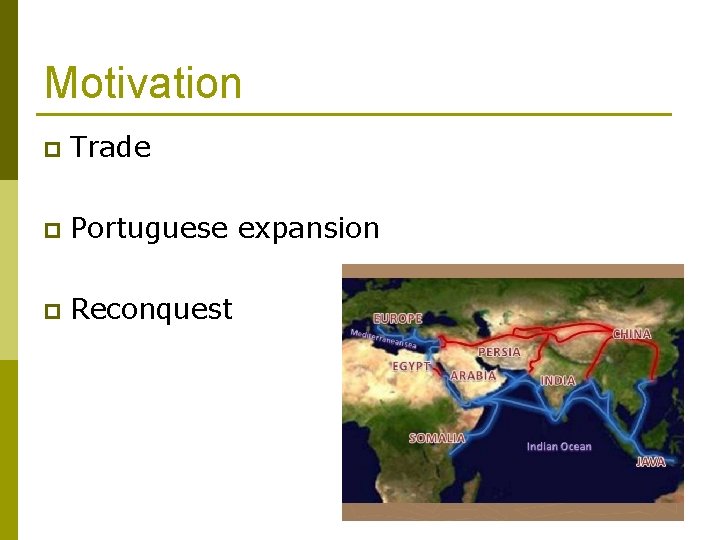
Motivation p Trade p Portuguese expansion p Reconquest
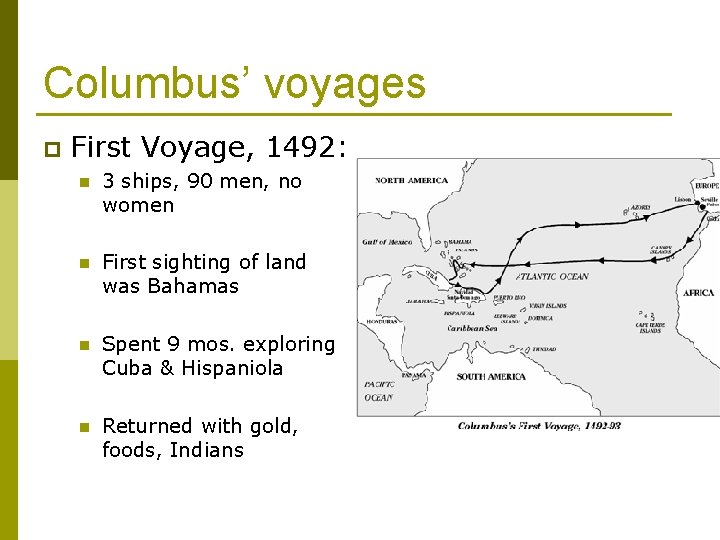
Columbus’ voyages p First Voyage, 1492: n 3 ships, 90 men, no women n First sighting of land was Bahamas n Spent 9 mos. exploring Cuba & Hispaniola n Returned with gold, foods, Indians
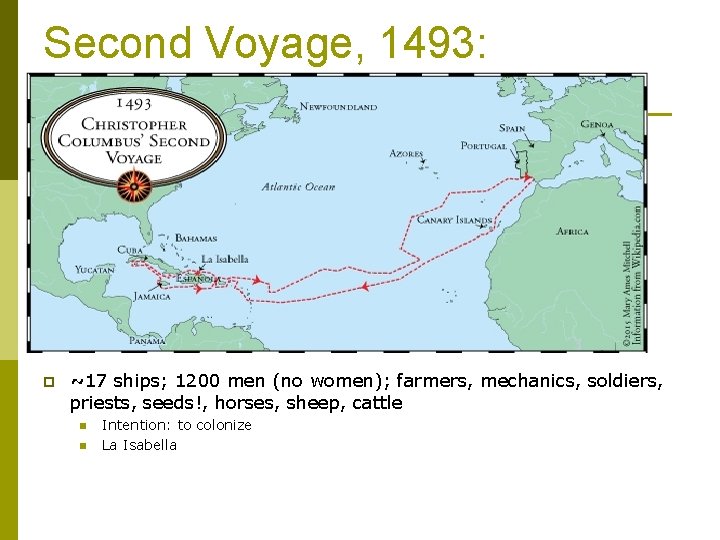
Second Voyage, 1493: p ~17 ships; 1200 men (no women); farmers, mechanics, soldiers, priests, seeds!, horses, sheep, cattle n n Intention: to colonize La Isabella
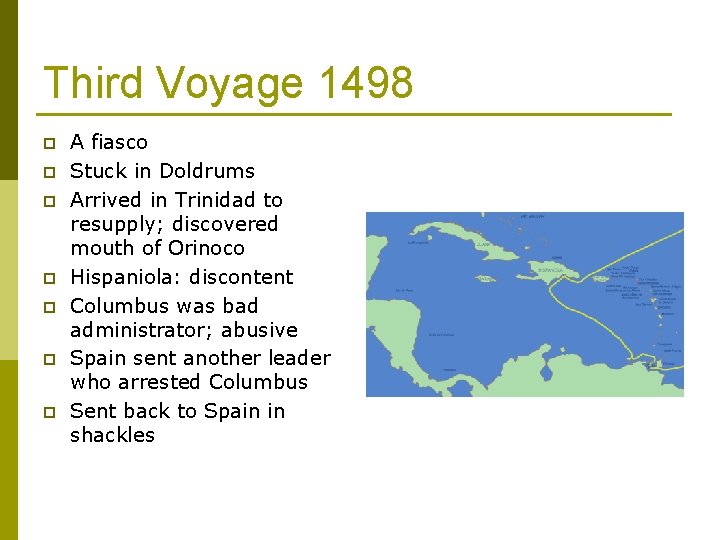
Third Voyage 1498 p p p p A fiasco Stuck in Doldrums Arrived in Trinidad to resupply; discovered mouth of Orinoco Hispaniola: discontent Columbus was bad administrator; abusive Spain sent another leader who arrested Columbus Sent back to Spain in shackles
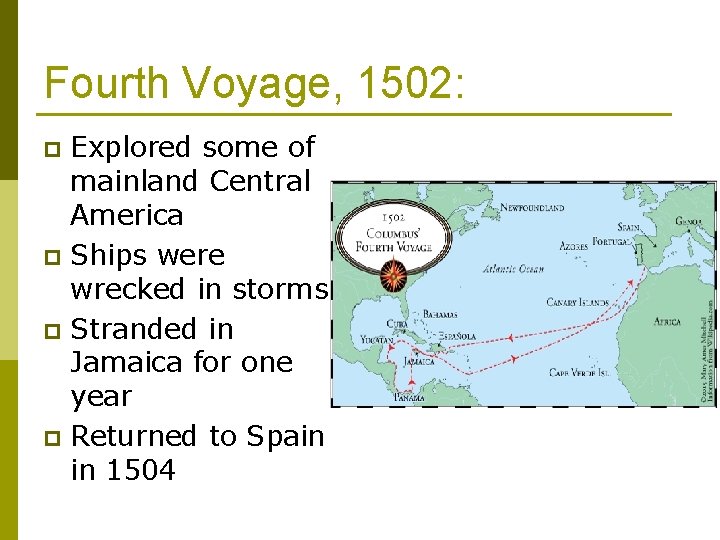
Fourth Voyage, 1502: Explored some of mainland Central America p Ships were wrecked in storms p Stranded in Jamaica for one year p Returned to Spain in 1504 p
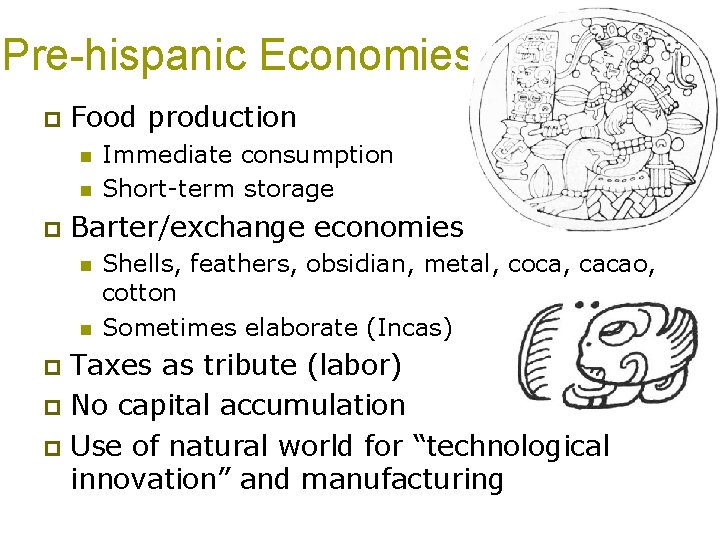
Pre-hispanic Economies p Food production n n p Immediate consumption Short-term storage Barter/exchange economies n n Shells, feathers, obsidian, metal, coca, cacao, cotton Sometimes elaborate (Incas) Taxes as tribute (labor) p No capital accumulation p Use of natural world for “technological innovation” and manufacturing p
Representations of Early colonial geopolitical order 1. Treaty of Tordesillas, 1494 2. Encomienda and mita systems 3. Forced Christianity 4. Colonial Governance: Viceroyalties, audiencias Capitanías 5. Mining and Agriculture 6. Networks of trade and transportation
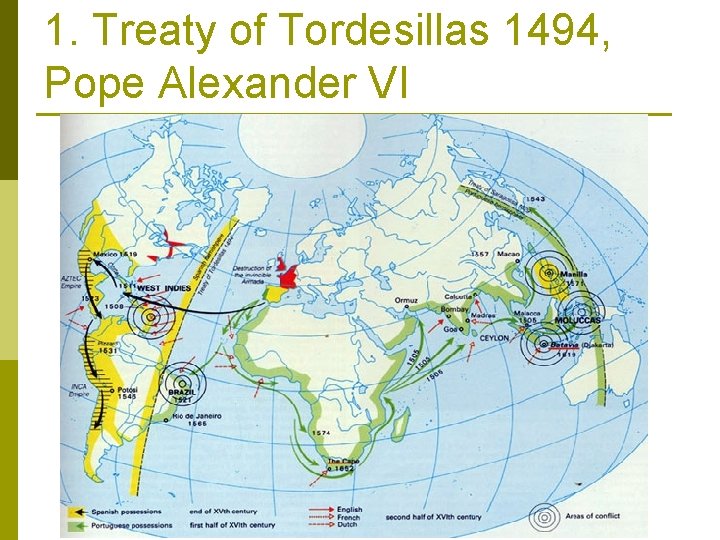
1. Treaty of Tordesillas 1494, Pope Alexander VI
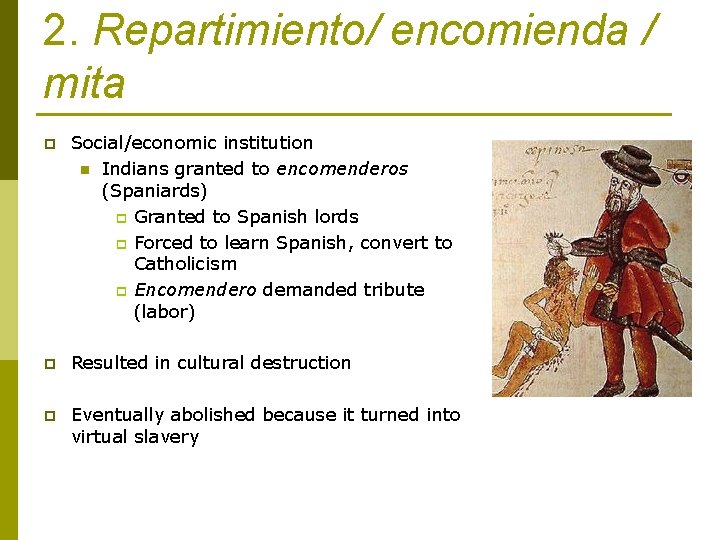
2. Repartimiento/ encomienda / mita p Social/economic institution n Indians granted to encomenderos (Spaniards) p Granted to Spanish lords p Forced to learn Spanish, convert to Catholicism p Encomendero demanded tribute (labor) p Resulted in cultural destruction p Eventually abolished because it turned into virtual slavery
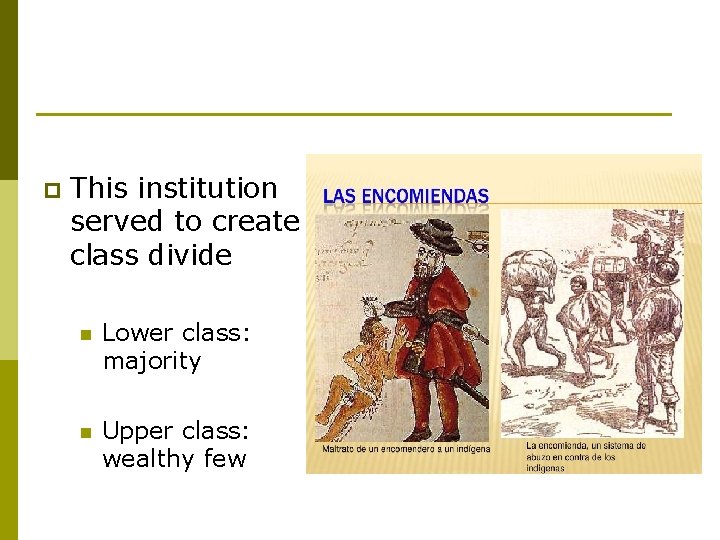
p This institution served to create class divide n Lower class: majority n Upper class: wealthy few
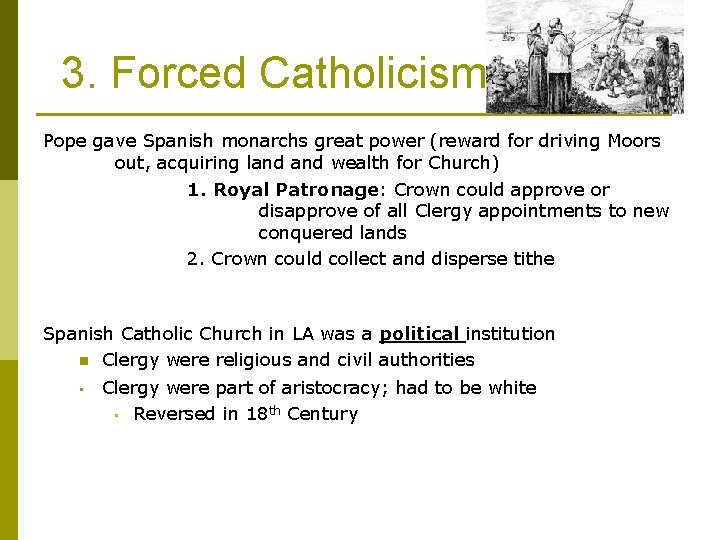
3. Forced Catholicism Pope gave Spanish monarchs great power (reward for driving Moors out, acquiring land wealth for Church) 1. Royal Patronage: Crown could approve or disapprove of all Clergy appointments to new conquered lands 2. Crown could collect and disperse tithe Spanish Catholic Church in LA was a political institution n Clergy were religious and civil authorities • Clergy were part of aristocracy; had to be white • Reversed in 18 th Century
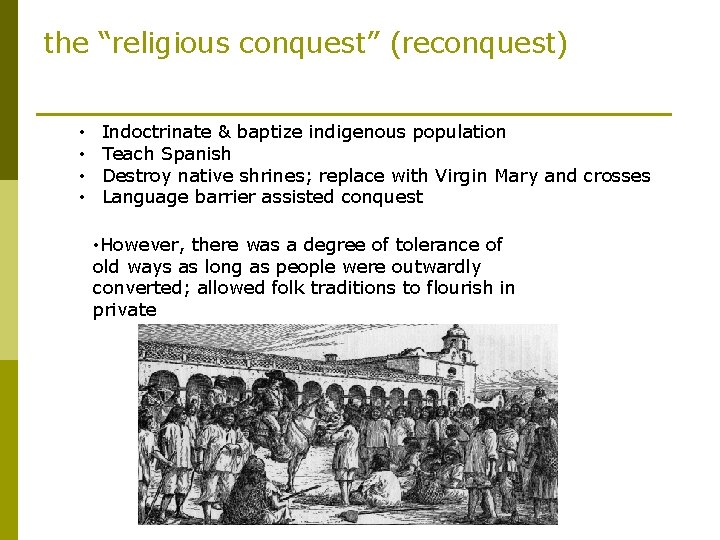
the “religious conquest” (reconquest) • • Indoctrinate & baptize indigenous population Teach Spanish Destroy native shrines; replace with Virgin Mary and crosses Language barrier assisted conquest • However, there was a degree of tolerance of old ways as long as people were outwardly converted; allowed folk traditions to flourish in private
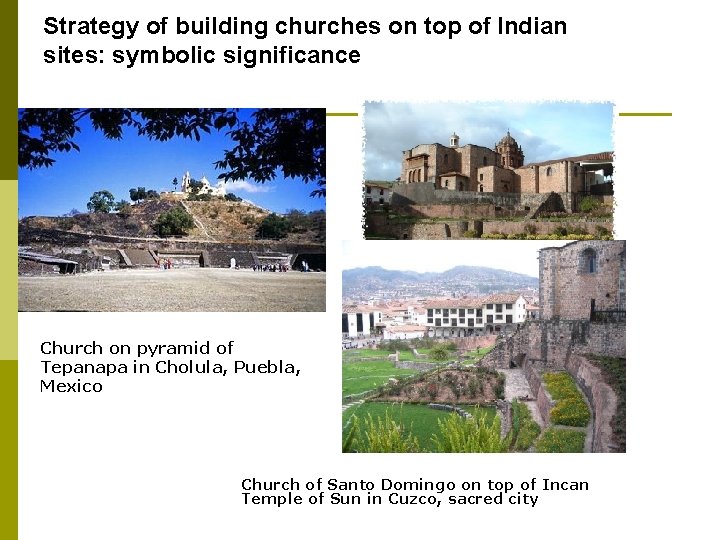
Strategy of building churches on top of Indian sites: symbolic significance Church on pyramid of Tepanapa in Cholula, Puebla, Mexico Church of Santo Domingo on top of Incan Temple of Sun in Cuzco, sacred city
Representations of Early colonial geopolitical order 1. Treaty of Tordesillas, 1494 2. Encomienda and mita systems 3. Forced Christianity 4. Colonial Governance: Viceroyalties, audiencias Capitanías 5. Mining and Agriculture 6. Networks of trade and transportation
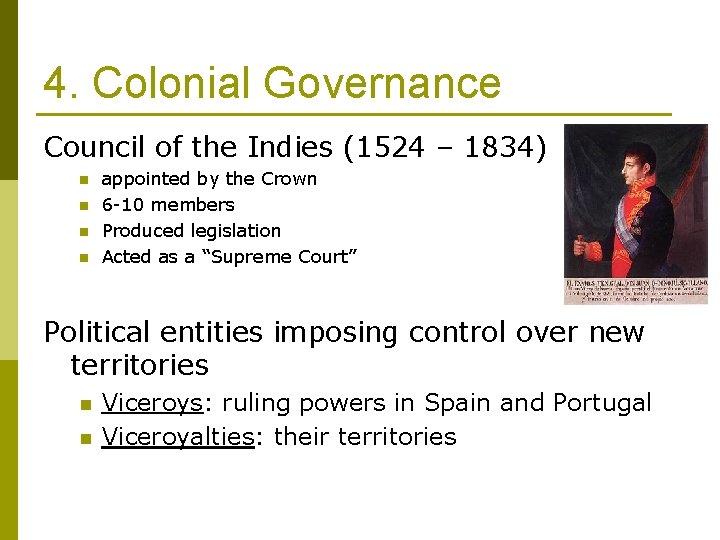
4. Colonial Governance Council of the Indies (1524 – 1834) n n appointed by the Crown 6 -10 members Produced legislation Acted as a “Supreme Court” Political entities imposing control over new territories n n Viceroys: ruling powers in Spain and Portugal Viceroyalties: their territories
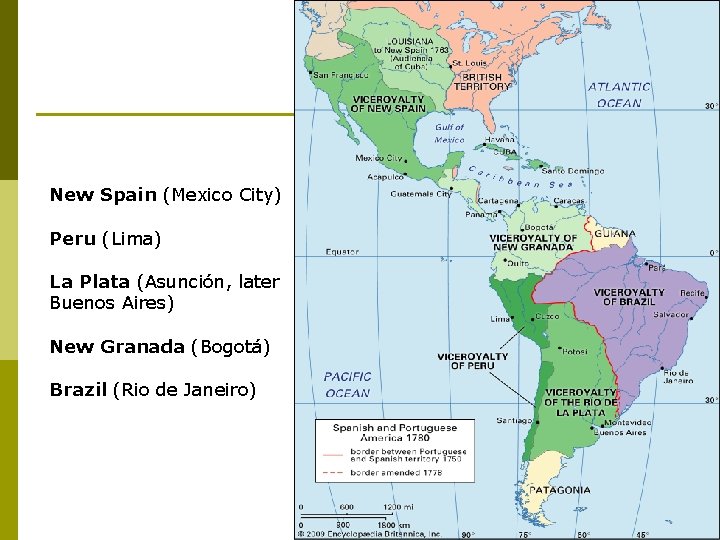
New Spain (Mexico City) Peru (Lima) La Plata (Asunción, later Buenos Aires) New Granada (Bogotá) Brazil (Rio de Janeiro)
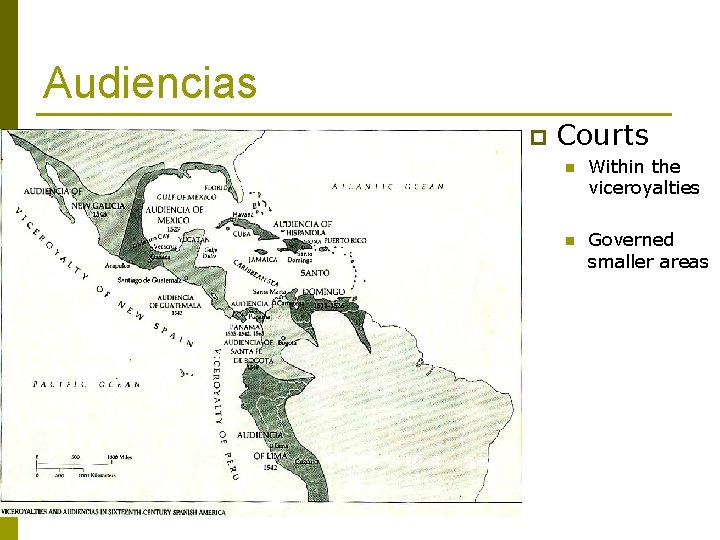
Audiencias p Courts n Within the viceroyalties n Governed smaller areas
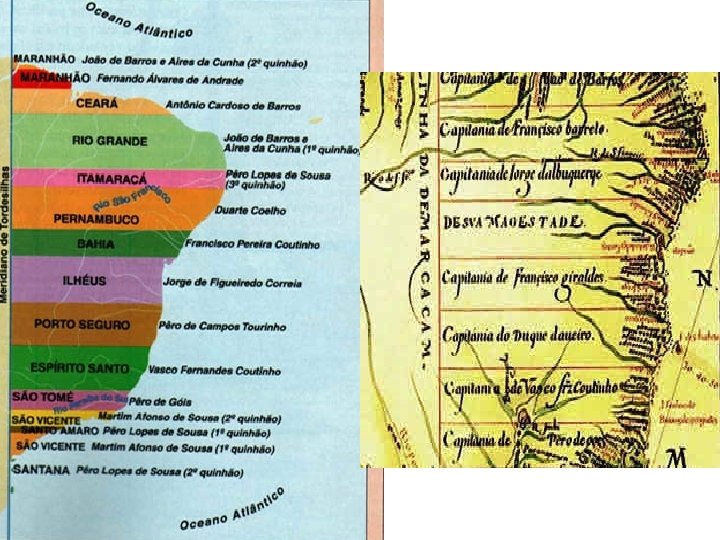
capitanías p Portuguese claims: based on exploration and treaty rights p King divided Brazilian territory into 12 large land grants (capitanías) n n Each controlled by a noble proprietor (responsible for development) Failed system Most were transferred to Crown in 1549 Some success in sugar cane production
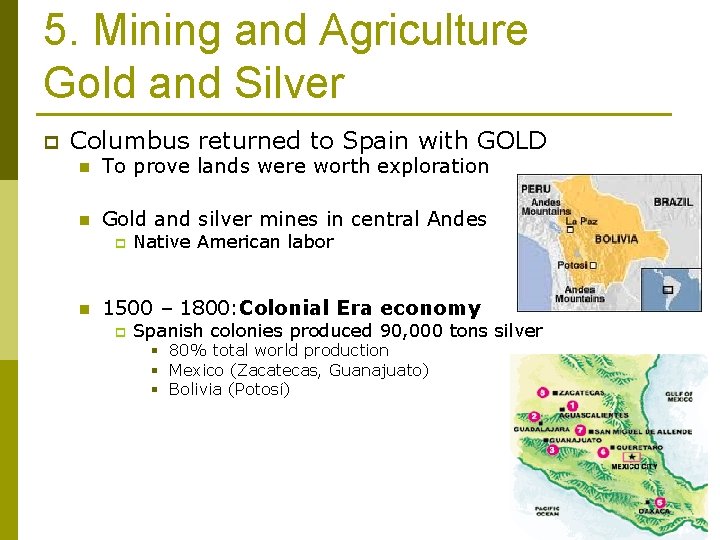
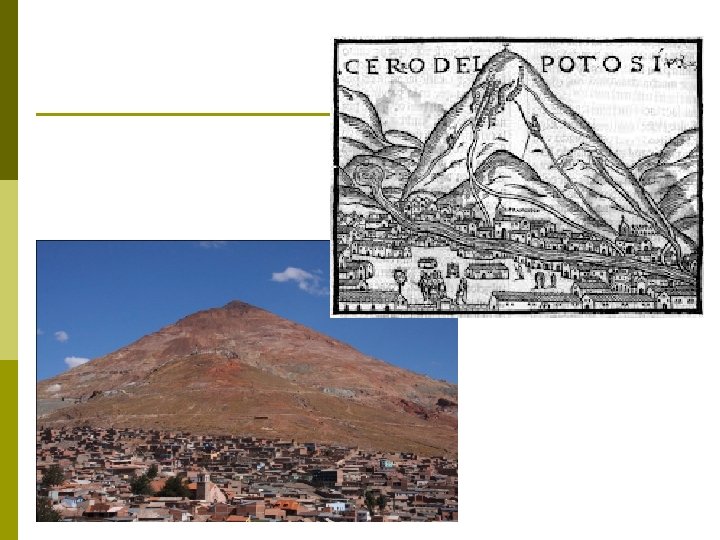
5. Mining and Agriculture Gold and Silver p Columbus returned to Spain with GOLD n To prove lands were worth exploration n Gold and silver mines in central Andes p n Native American labor 1500 – 1800: Colonial Era economy p Spanish colonies produced 90, 000 tons silver § 80% total world production § Mexico (Zacatecas, Guanajuato) § Bolivia (Potosí)
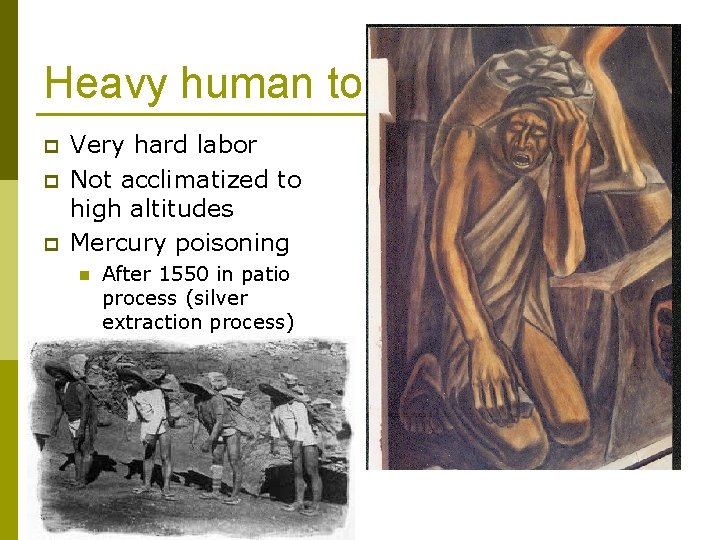
Heavy human toll p p p Very hard labor Not acclimatized to high altitudes Mercury poisoning n After 1550 in patio process (silver extraction process)
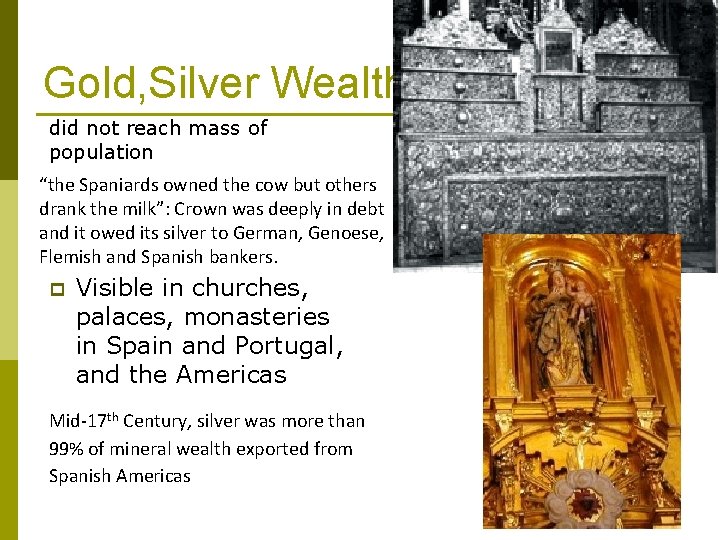
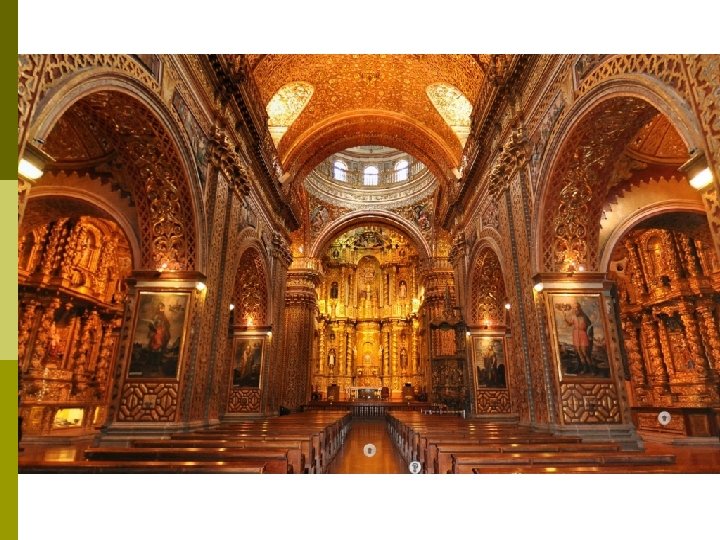
Gold, Silver Wealth did not reach mass of population “the Spaniards owned the cow but others drank the milk”: Crown was deeply in debt and it owed its silver to German, Genoese, Flemish and Spanish bankers. p Visible in churches, palaces, monasteries in Spain and Portugal, and the Americas Mid-17 th Century, silver was more than 99% of mineral wealth exported from Spanish Americas
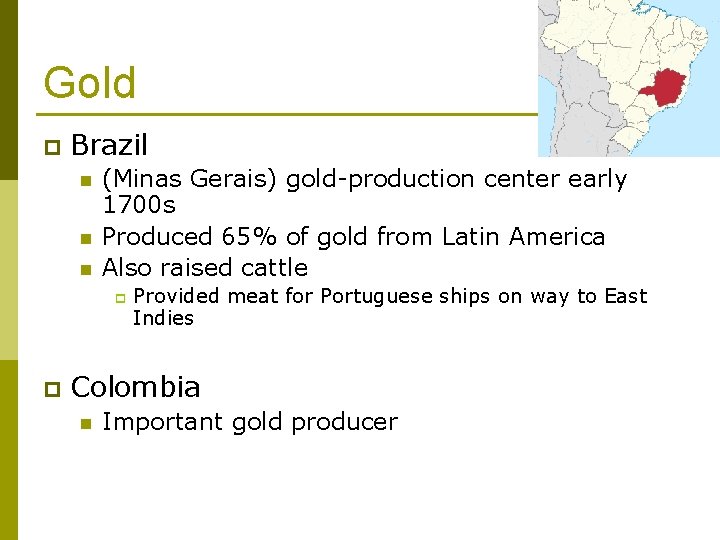
Gold p Brazil n n n (Minas Gerais) gold-production center early 1700 s Produced 65% of gold from Latin America Also raised cattle p p Provided meat for Portuguese ships on way to East Indies Colombia n Important gold producer
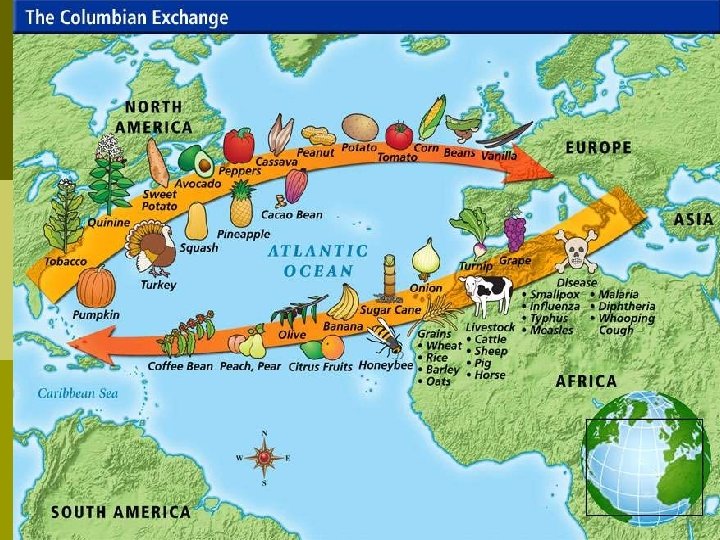
Agriculture q Indians and Mestizos practiced subsistence q q Indigenous crops & methods Commercial agriculture (selling commodities for markets) q Stimulated by ports, towns, mines Directed by Spain q Used many introduced Old World plants and animals q Little went to Spain q q Except sugar, hides, dyes
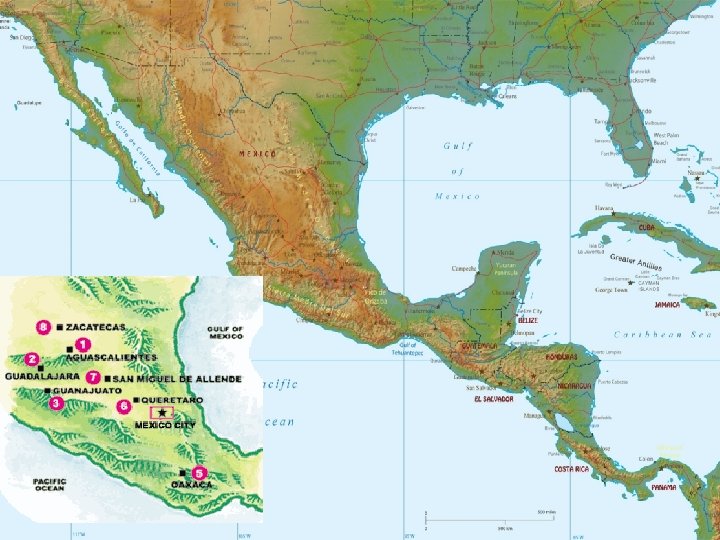
Mining and Agriculture linked economically, geographically p Main market for commercial farming and livestock was mines n p Tallow (candles), wine and brandy, meat, mules, hides As mines developed in Mexico… n Bajío of Guanajuato and Valley of Guadalajara became wheat and cattle areas
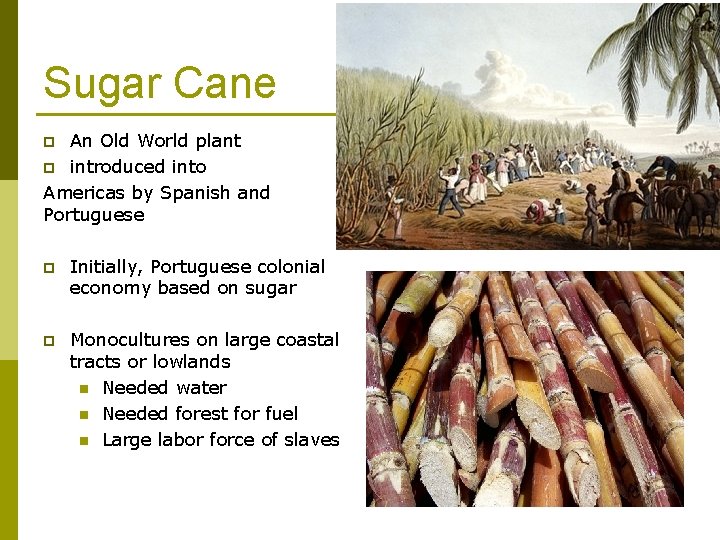
Sugar Cane An Old World plant p introduced into Americas by Spanish and Portuguese p p Initially, Portuguese colonial economy based on sugar p Monocultures on large coastal tracts or lowlands n Needed water n Needed forest for fuel n Large labor force of slaves
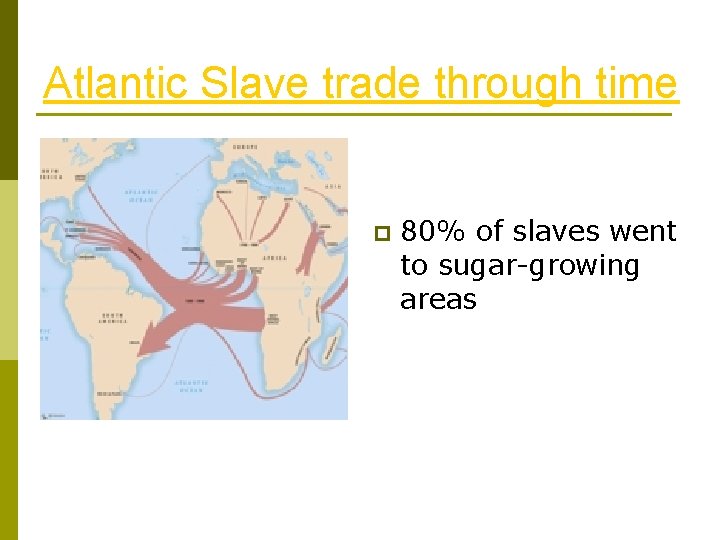
Atlantic Slave trade through time p 80% of slaves went to sugar-growing areas
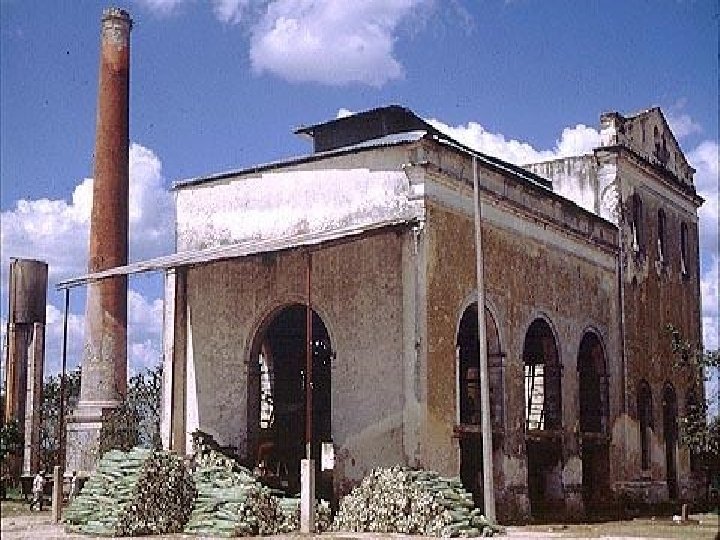
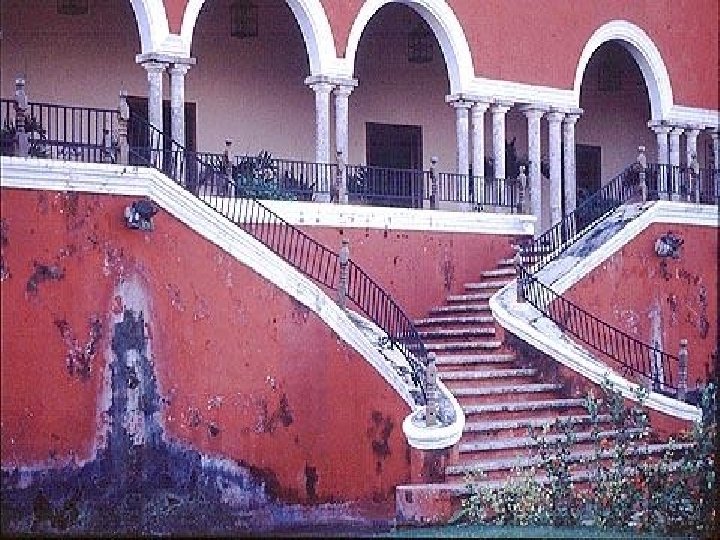
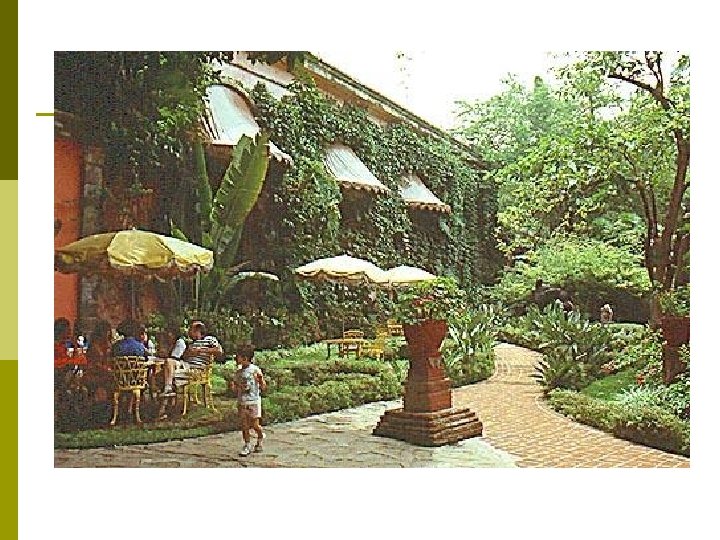
Haciendas / Estancias Large estates used in production of materials (ag, livestock, rope, sugar, lumber) p Plantations p Connected rural economies to urban centers n Compact group of buildings n n n p Produced for local market, not overseas trade n p House Worker huts Chapel Corrals granaries Henequen in northern Yucatán By late 1700 s, dominant form of rural settlement
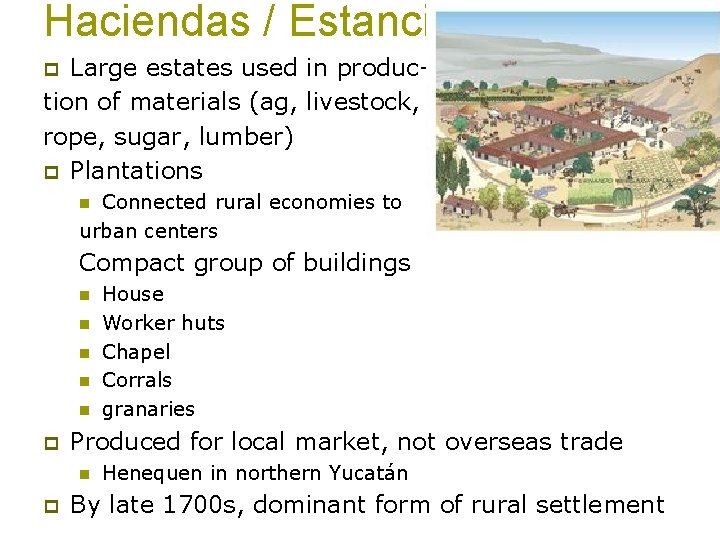
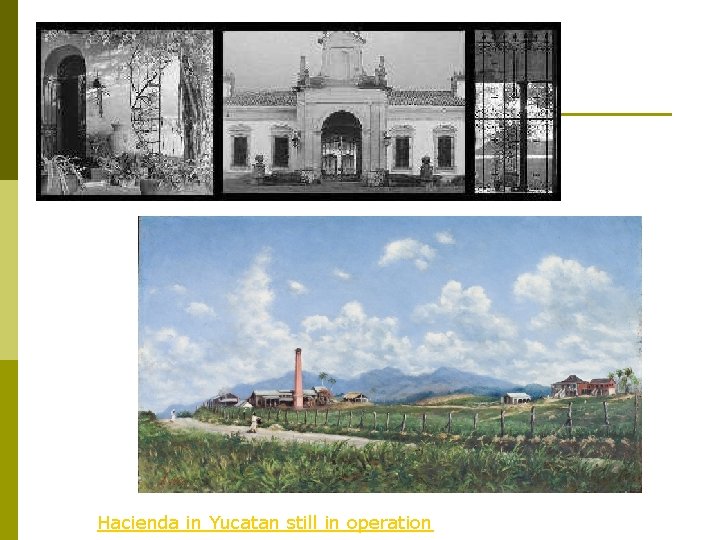
Hacienda in Yucatan still in operation
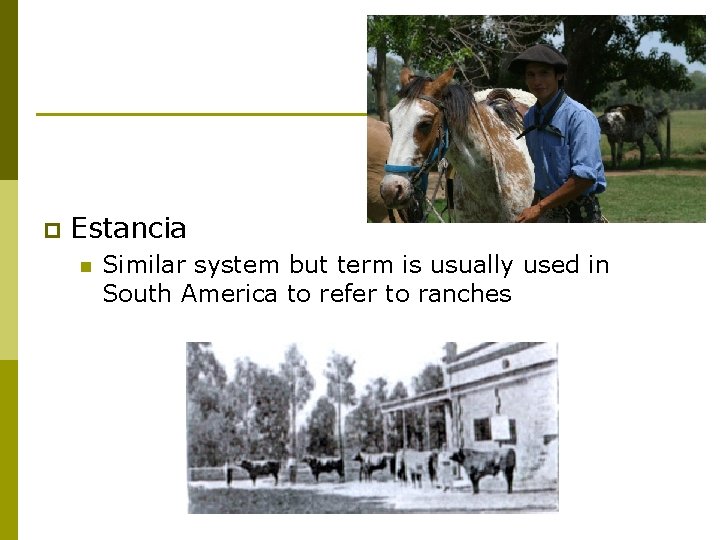
p Estancia n Similar system but term is usually used in South America to refer to ranches
Latifundios p Large landholdings owned by elite Latin families p Prestige p Private land could be acquired by a merced (royal grant) n Large (5000 acres) or small
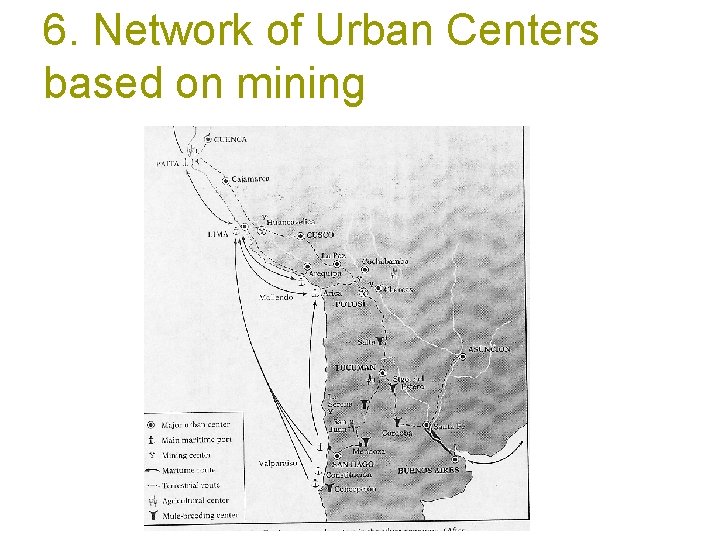
6. Network of Urban Centers based on mining
p Cheapest way to move goods: n n Ocean, coasts, rivers Overland travel very expensive, slow p p Sugar: low value n p 40 mile overland journey across Panama : 4 days Sugar plantation within 15 miles of coast in order to be profitable Silver: n High value of goods outweighed high cost of overland transport p Potosí to Lima: 4 months by mule
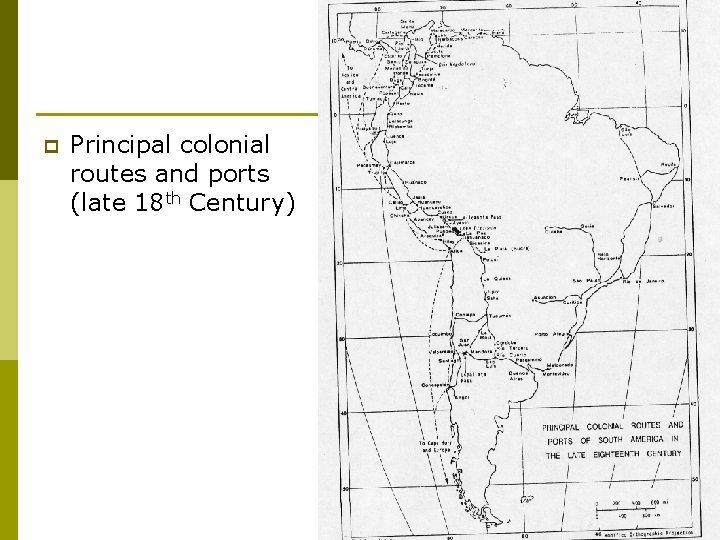
p Principal colonial routes and ports (late 18 th Century)
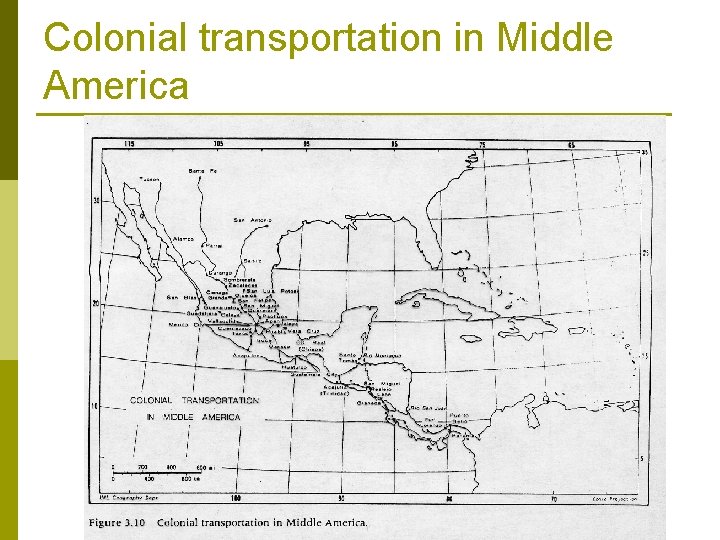
Colonial transportation in Middle America
Mercantile System Iberian royalty in charge of trade with Latin America Quinto Real (Royal Fifth): 1/5 (20%) tax on all metals mined in colonies Colonies could not trade directly with one another or with other countries; gold & silver had to be shipped to Spain so Spanish could then charge taxes
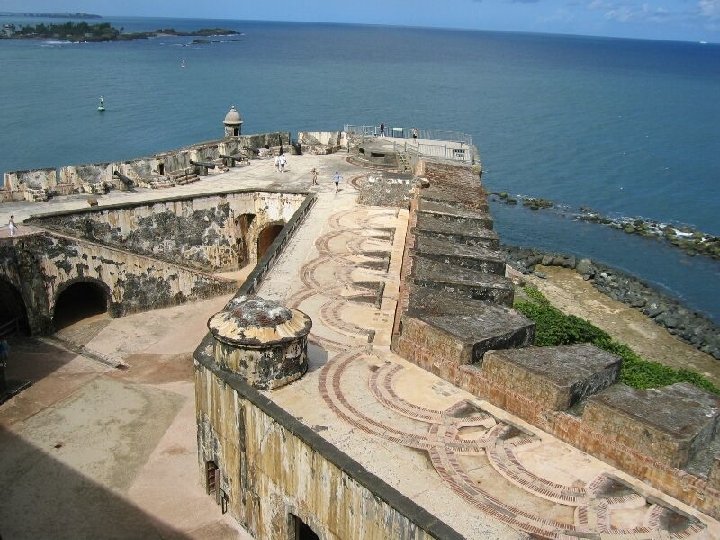
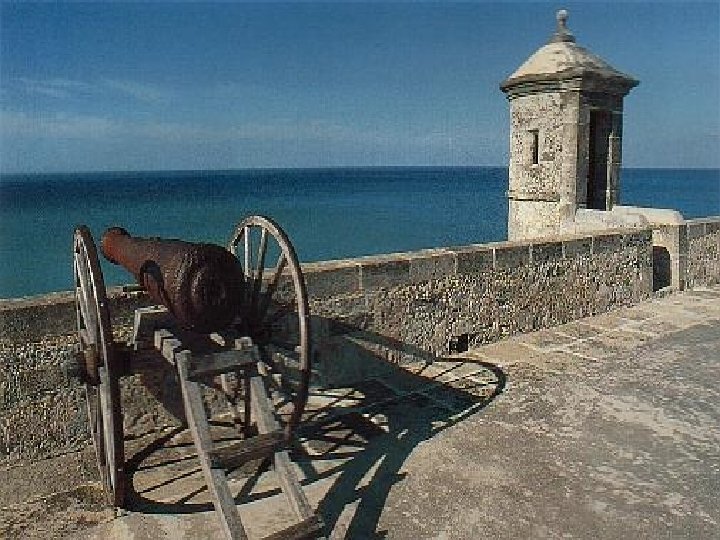
Flotas p Vessels loaded with gold and silver n n p Heavily guarded Traveled in groups (flotas) Coastal cities built huge fortresses n n Campeche City, Mexico Havanna, Cuba San Juan, Puerto Rico Veracruz, Mexico
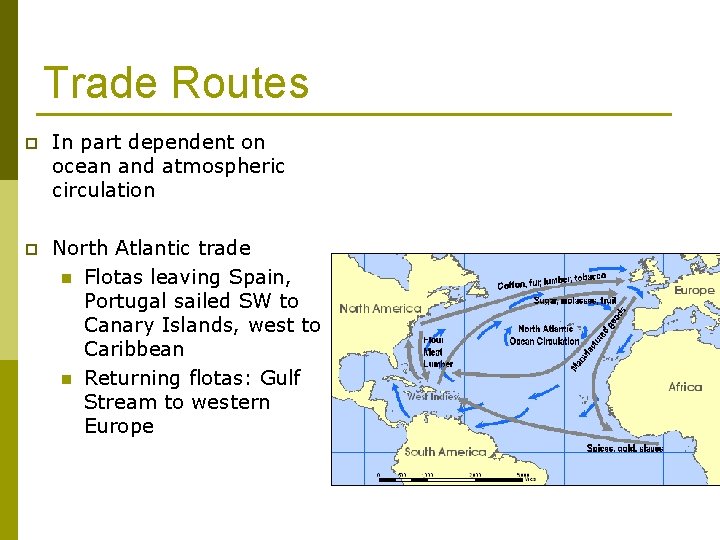
Trade Routes p In part dependent on ocean and atmospheric circulation p North Atlantic trade n Flotas leaving Spain, Portugal sailed SW to Canary Islands, west to Caribbean n Returning flotas: Gulf Stream to western Europe
Colonialism p Began Latin America’s dependence on a world economy with Northern powers (North Atlantic) p Seeds of many future problems: n n n Regional economies based on supplying Spain and Portugal’s demands Slavery fostered social injustice Local skills not developed p Did not have resources to build economies and states
p Map of colonization