
Early Civilizations of India and Pakistan Monsoon Seasonal




- Slides: 109
Early Civilizations of India and Pakistan.
Monsoon Seasonal winds which regularly blow from a certain direction for part of the year.
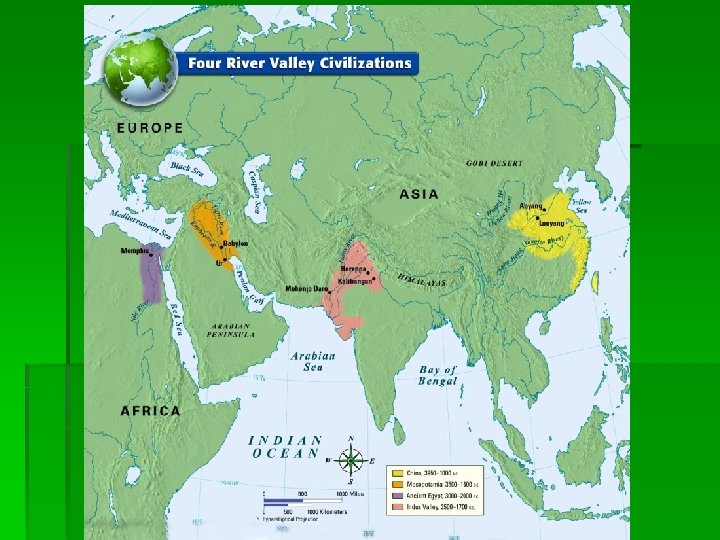
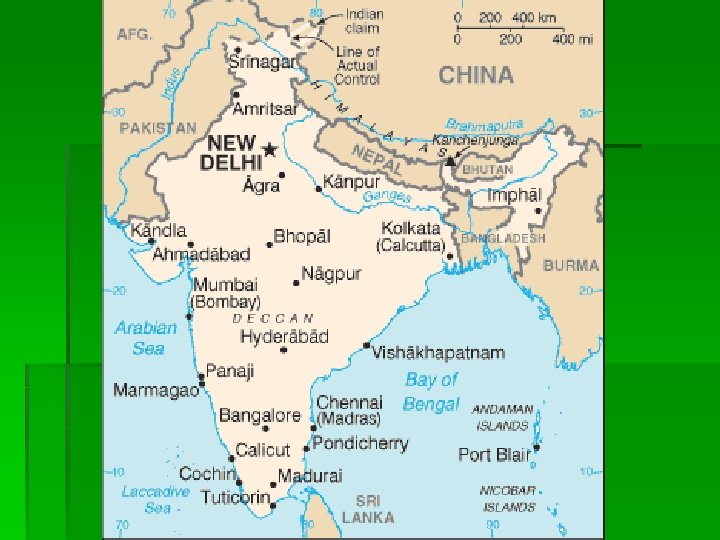
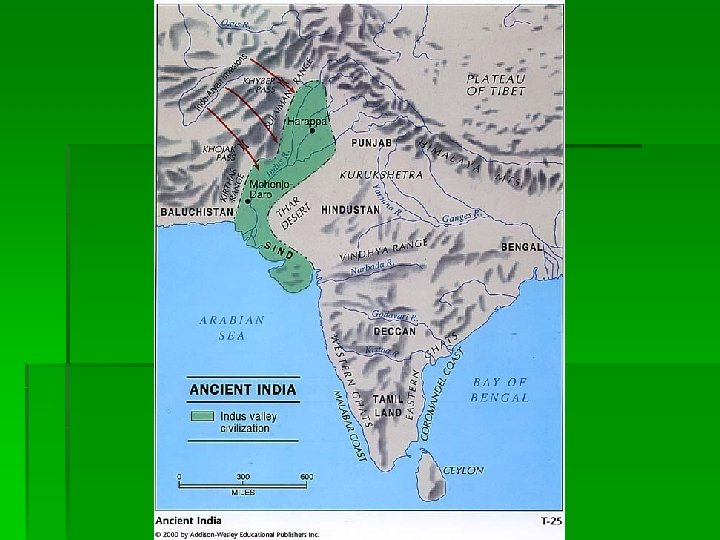
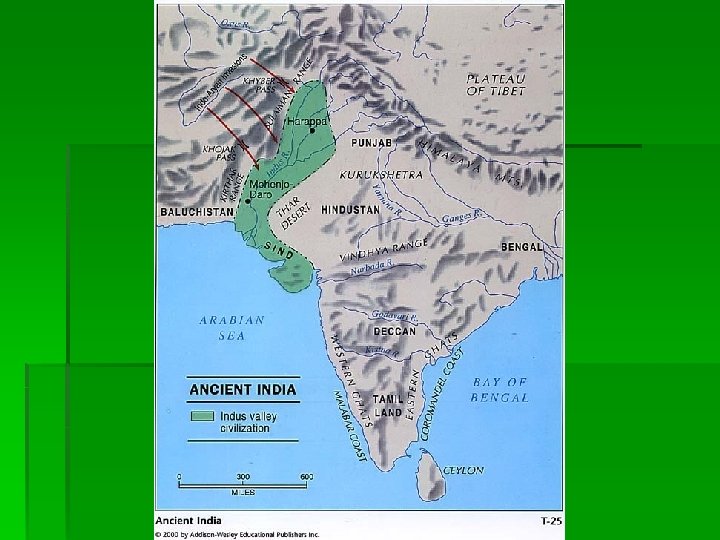
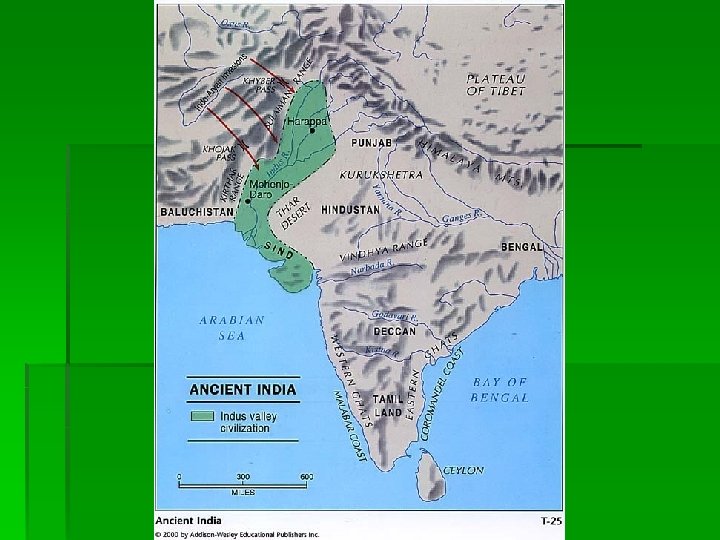
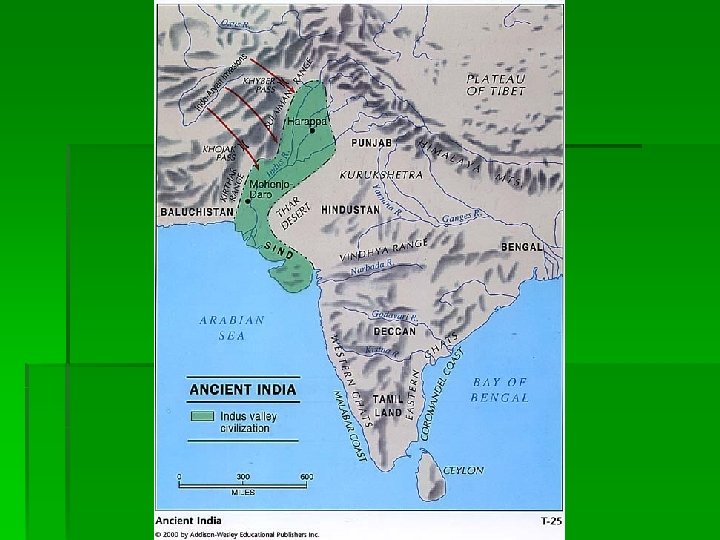
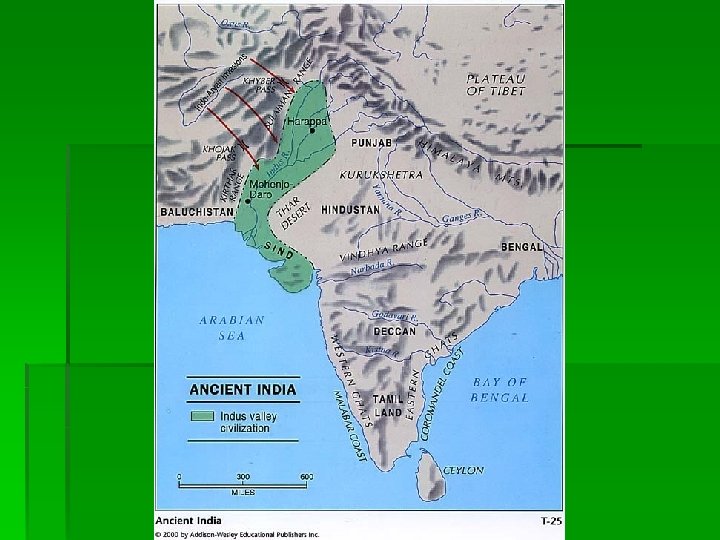
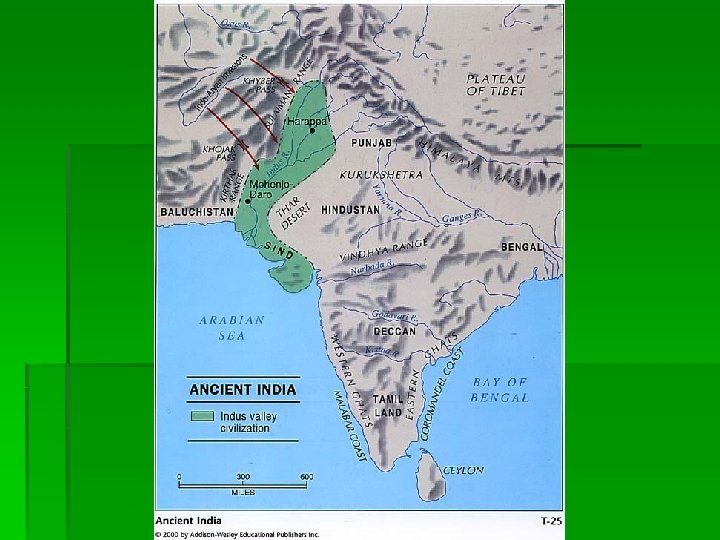
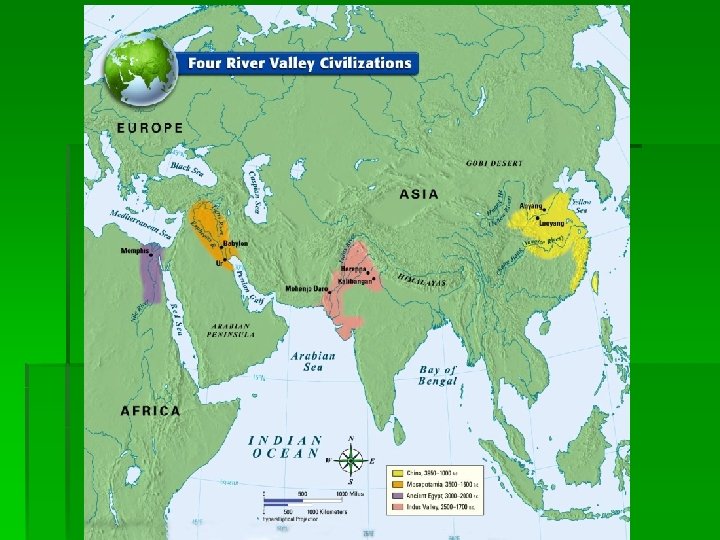
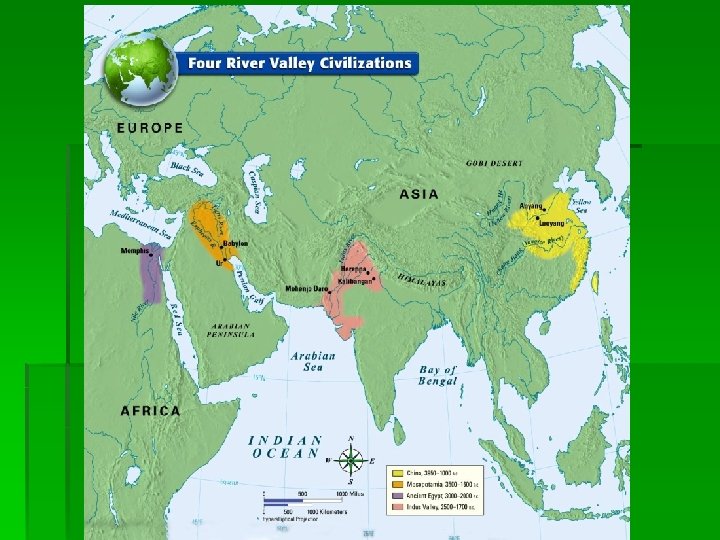
Geography of ancient India. § Located in South Asia on the Indian Subcontinent. § Made up of modern day India, Pakistan, Bangladesh, the island of Sri Lanka, Nepal, and Bhutan. § Naturally protected in the north by the Himalayan and Hindu Kush mountain ranges.
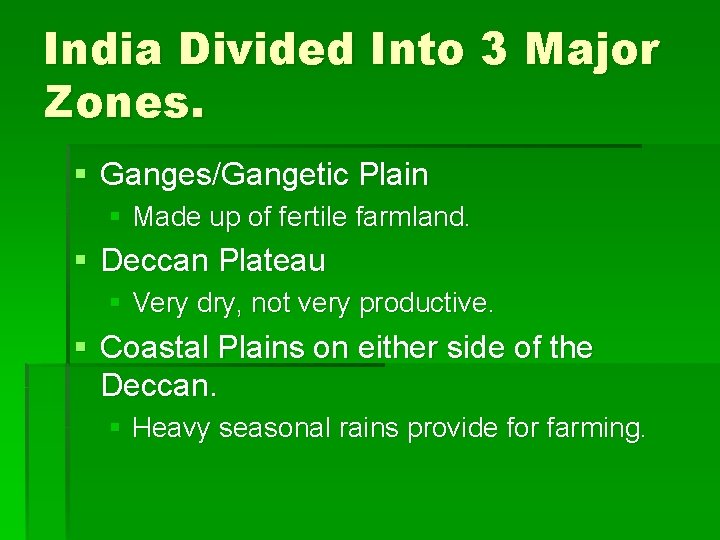
India Divided Into 3 Major Zones. § Ganges/Gangetic Plain § Made up of fertile farmland. § Deccan Plateau § Very dry, not very productive. § Coastal Plains on either side of the Deccan. § Heavy seasonal rains provide for farming.
Three Major Rivers § § § Indus (from which India gets its name) Ganges Brahmaputra
Mountain Ranges § § Himalayas Hindu Kush Eastern Ghats Western Ghats
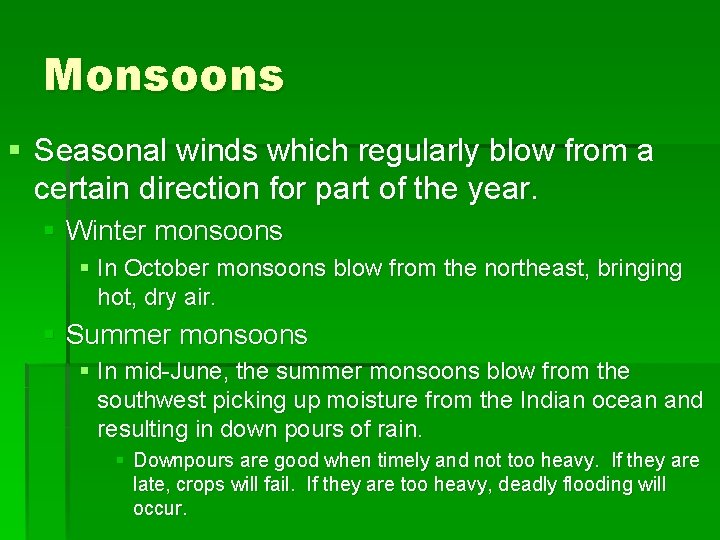
Monsoons § Seasonal winds which regularly blow from a certain direction for part of the year. § Winter monsoons § In October monsoons blow from the northeast, bringing hot, dry air. § Summer monsoons § In mid-June, the summer monsoons blow from the southwest picking up moisture from the Indian ocean and resulting in down pours of rain. § Downpours are good when timely and not too heavy. If they are late, crops will fail. If they are too heavy, deadly flooding will occur.
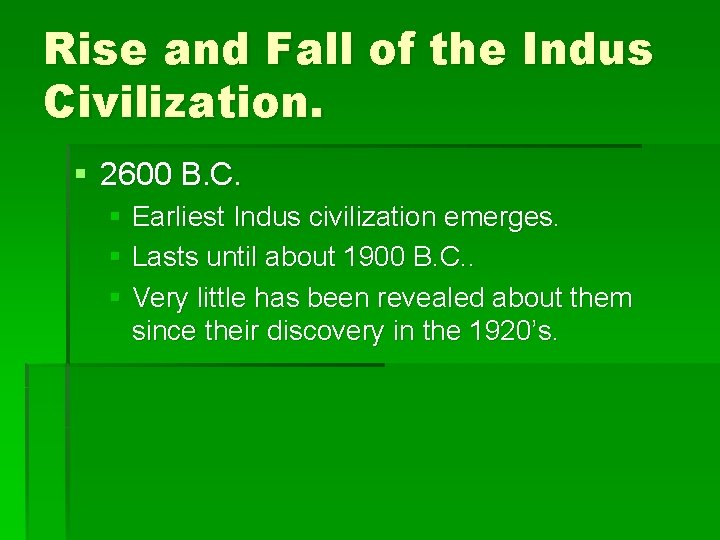
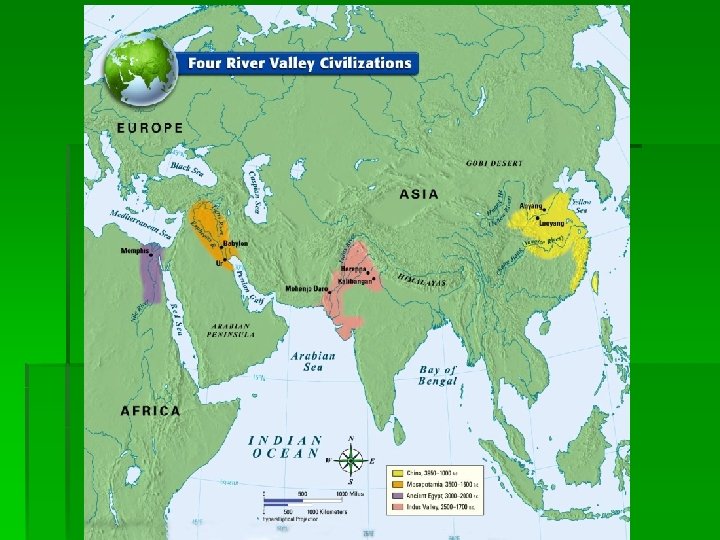
Rise and Fall of the Indus Civilization. § 2600 B. C. § Earliest Indus civilization emerges. § Lasts until about 1900 B. C. . § Very little has been revealed about them since their discovery in the 1920’s.
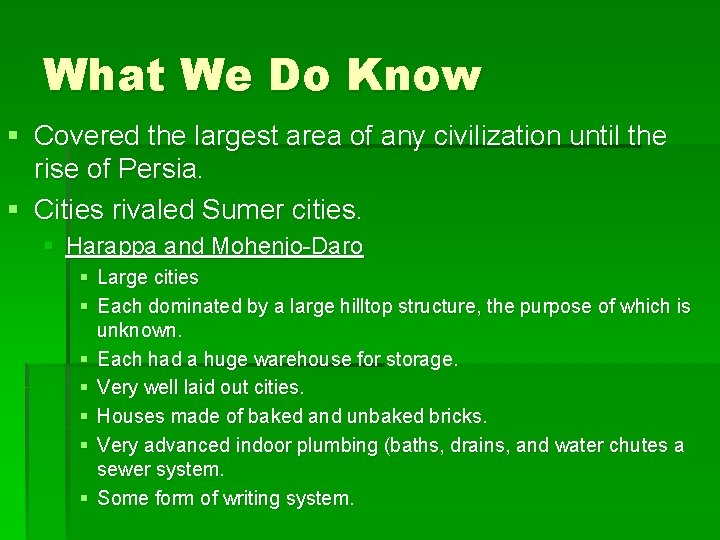
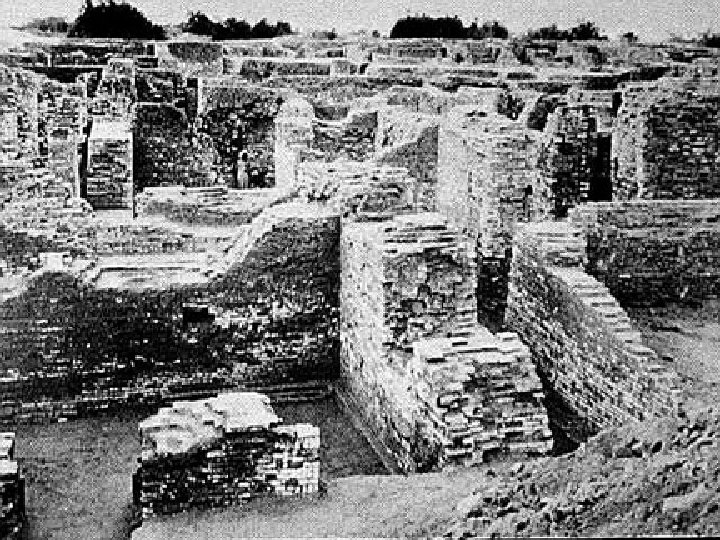
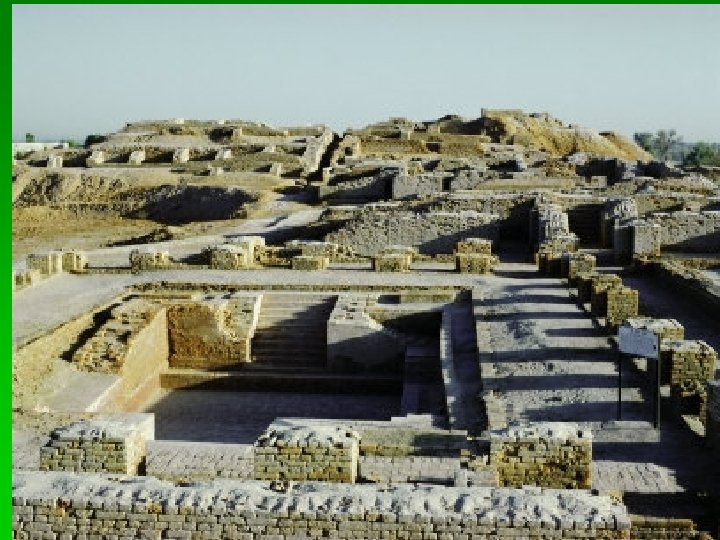
What We Do Know § Covered the largest area of any civilization until the rise of Persia. § Cities rivaled Sumer cities. § Harappa and Mohenjo-Daro § Large cities § Each dominated by a large hilltop structure, the purpose of which is unknown. § Each had a huge warehouse for storage. § Very well laid out cities. § Houses made of baked and unbaked bricks. § Very advanced indoor plumbing (baths, drains, and water chutes a sewer system. § Some form of writing system.
Farming and Trade § Most people were farmers. § Grew wheat, barley, melons, dates, and cotton. § Some people were merchants and traders. § Ships carrying cotton cloth, grain, copper, pearls, and ivory combs would sail to distant lands. Some even sailed up the Persian Gulf to Sumer cities.
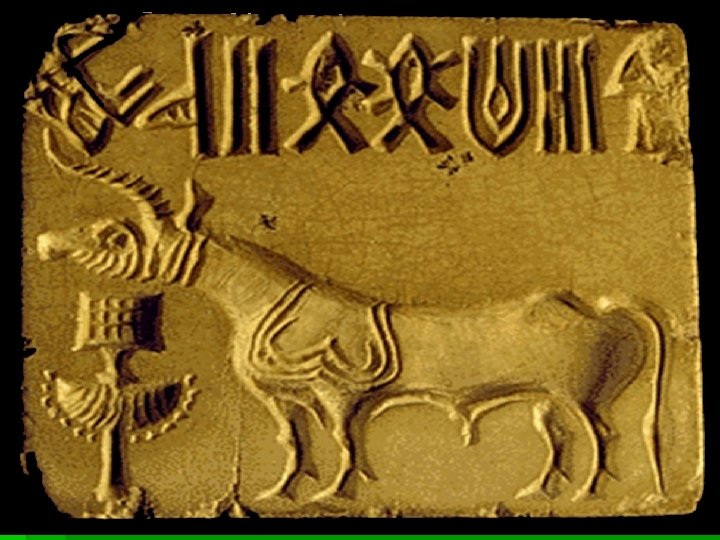
Religion § Polytheistic § Certain animals were sacred, like the water buffalo and bull.
Decline of the Indus Civilization. § By 1900 B. C. , the Indus Valley is in decline. § Pottery becomes crude rather than artistic. § Writing stops. § Mohenjo-Daro is abandoned. § Scholars are unsure of what caused this decline, possibly…. . § § Invaders Flooding Earthquake Environmental problems
The Aryan Civilization § Began somewhere between 2, 000 B. C. and 1500 B. C. § Nomadic people called the Aryans arrive in India. § Migrated with herds of cattle and horses from southern part of modern day Russia, into northwestern India. (Interactive map) § Built no cities, so there is little evidence for us to examine. § What we do know mostly comes from the Vedas. § The Vedas is a collection of hymns, chants, ritual instructions, and other religious teachings.
From the Vedas we learn that the Aryans were…. . § Warriors who fought in chariots with bows and arrows. § Liked to have a good time. § Valued cattle. § Eventually settled into villages to become famers. § Learned to make iron tools and weapons. § Led by chiefs called rajahs. § Rajahs were often the most skilled war leader, and were elected by other warriors to be the leader.
Social Classes § Classes based on occupation and divided into four groups. § Brahmins – Priests § Kshatriyas – Warriors § Vaisyas – Herders, Farmers, Artisans, Merchants. § Sudras – People who had little or no Aryan heritage, farm workers, servants, other laborers.
Religion § Polytheistic § Developed the notion of brahman, a single spiritual power that existed beyond the many gods of the Vedas, and which resided in all things.
Literature § Mahabhrata § Tells of warfare and religion. § Ramanyana § Teaches values and behavior.
Overarching Question? ? ? § The early Indus civilizations had some system of writing and also knew how to make iron weapons and tools. How might they have come into the knowledge of these two skills?
§ Trade was part of early the Indus civilizations. Some of the traders even travelled up the Persian Gulf to Sumer cities where cuneiform, the first form of complex writing, began. Also, the Hittites had brought the knowledge of extracting iron out of ore to Sumer which was then passed on to traders from the Indus Valley civilizations.
Empires of India
Dowry Payment a bride’s family pays to a groom’s family.
Sanskrit Ancient Indian language, written in clay.
Bureaucracy System of government that includes different job functions and levels of authority.
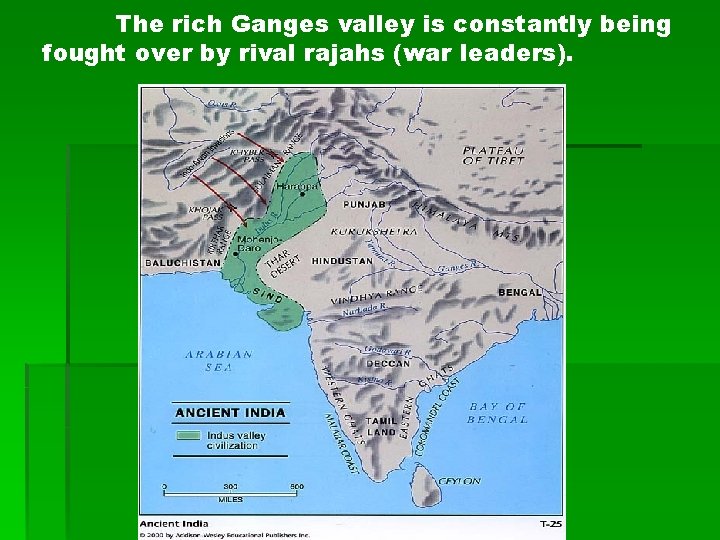
The rich Ganges valley is constantly being fought over by rival rajahs (war leaders).
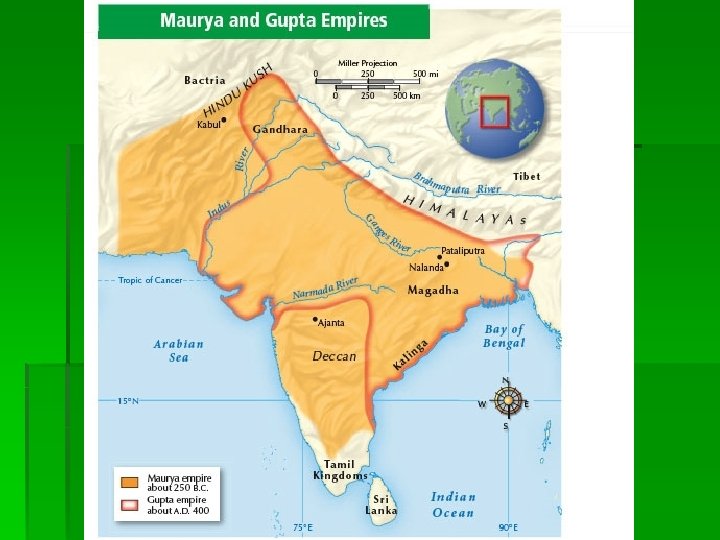
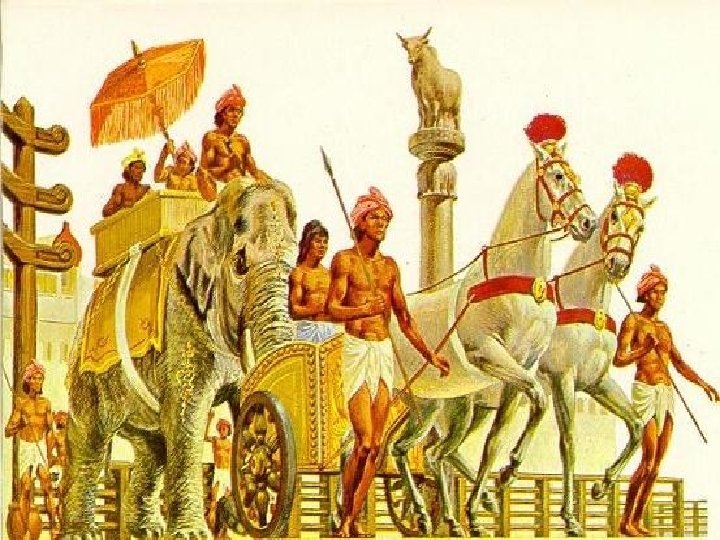
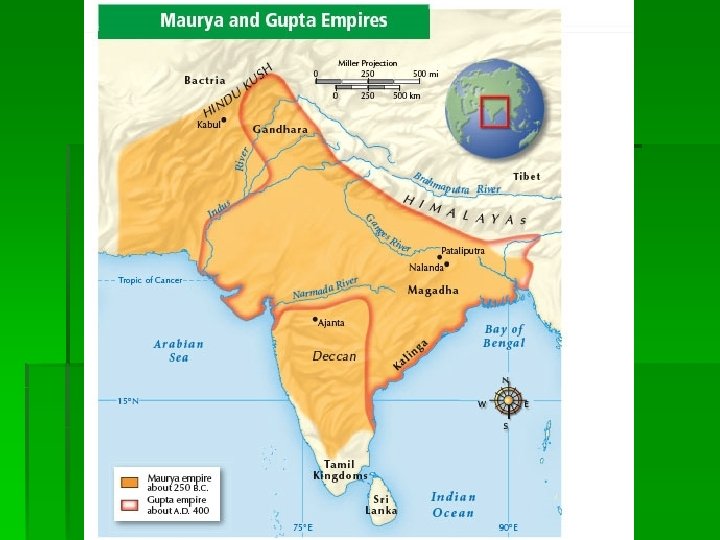
The Mauryan Empire (321 B. C. – 185 B. C. ) § Founded by Chandragupta Maurya § Capital City at Pataliputra. § Boasted schools, a library, and beautiful palaces. The walls of Pataliputra had 530 towers and 64 gates. § Chandragupta first conquered northern India. His son and grandson would expand the empire much farther south.
Organization in the Maurya Empire § Chandragupta set up a well-organized bureaucracy. § Royal officials supervise the building of roads and harbors to benefit trade. § Other officials collected taxes and managed state -owned factories and shipyards. § Royal police force reported on corruption, crime, and dissent. § Chandragupta’s palace was guarded by specially trained women warriors to protect him from enemies.
Emperor Asoka (286 B. C. ) § § § Grandson of Chandragupta. Most honored Maurya Emperor. Fought a long and bloody war to gain the Deccan plateau region. § Horrified by the slaughter of more than 100, 000 people, Asoka turned from conquering to Buddhism, rejecting violence, and ruling by his moral example.
§ Asoka spread Buddhism across much of India. § He had stone pillars set up across India with moral advice written on them. § Asoka’s rule brought peace and prosperity which united his diverse empire. § After Asoka’s death, the Maurya empire declines until it is finally shattered in 185 B. C. by rival princes seeking power in the Gangetic plain.
Trade’s importance in the South. § Tamil Kingdoms occupy southernmost part of India. § Tamil rulers improved harbors to support trade overseas. § Spices, fine textiles, and other luxuries are traded with the Roman empire. § When the Roman empire declines, trade with China increased.
The Golden Age of the Guptas (A. D. 320 – A. D. 540) § Guptas reunite much of northern India. § Organized a strong centralized government, which promoted peace and prosperity. § Ushers in a golden age of great cultural achievement. § Guptas leave much of the power in the hands of individual villages and city governments.
Trade and Farming Flourish § Wheat, rice, and sugar cane are produced on farms. § Artisans produce cotton cloth, pottery, and metal ware for trade. § Trading goods and surplus crops leads to great prosperity for the Gupta empire.
Education § Universities in the Gupta empire teach mathematics, medicine, physics, languages, literature, and other subjects. § Gupta/Indian mathematicians give us… § The concept of zero. § The decimal system of numbers we still use. § Gupta/Indian physicians… § § Used herbs and other remedies to treat illness. Set broken bones. Performed simple surgeries. Vaccinated people for small pox 1, 000 years before Europe.
Gupta Empire Declines. § Weak rulers, civil war, and foreign invaders bring an end to the Gupta Empire. § No other great empire would rise for another 1, 000 years.
Family and Village Life in Indian Society. § Most Ancient Indians were peasant farmers in small villages. § Duties associated with their caste, family, and village roles shaped Indian life. (They continue to do so today) § Parents, children and grandchildren shared a home. § Father or oldest male headed the household. § Property belonged to the whole family.
§ Family trained children in the traditions of the duties of their particular caste. § Children worked at family trade or in the fields with family members. § Parents arranged marriages for their children based on their caste and family interests. § Parents of the bride provided a dowry to the groom’s family. § (Bride burnings)
Women In Indian Society § Few rights within the family and society. § Rebirth into a higher existence was believed to be gained through devotion to her husband. § Widows often were expected to join her dead husband on his funeral fire. This was believed to make them a “virtuous woman”.
Overarching Question? ? ? § How did the Gupta empire lead to a golden age in India? § The Guptas promoted peace and prosperity, allowing villages a lot of freedom to govern themselves. In this time of peace, trade and farming flourished, leading to great prosperity. This opened the door to a growth in arts and education.
The Rise of Civilization in China.
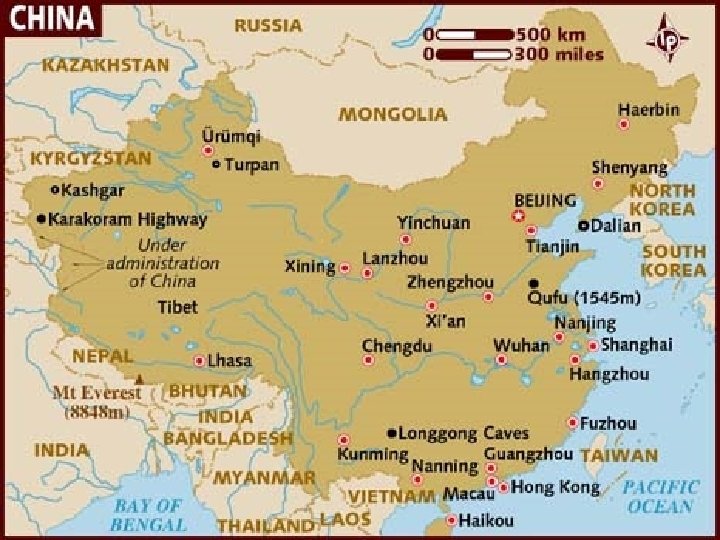
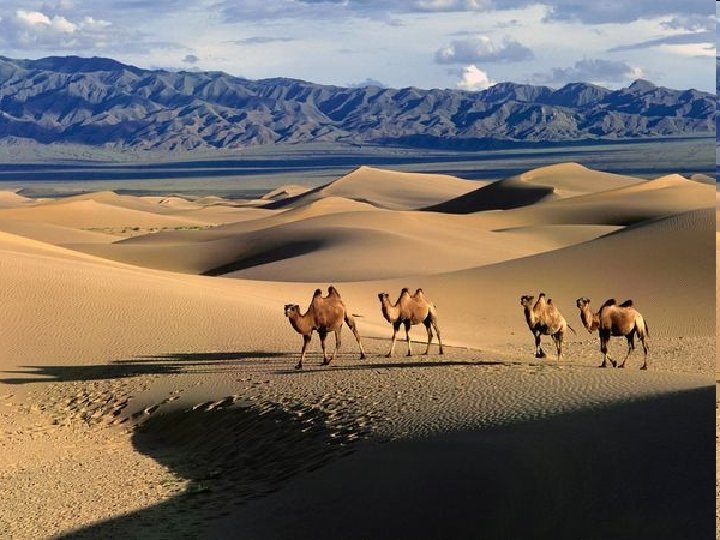
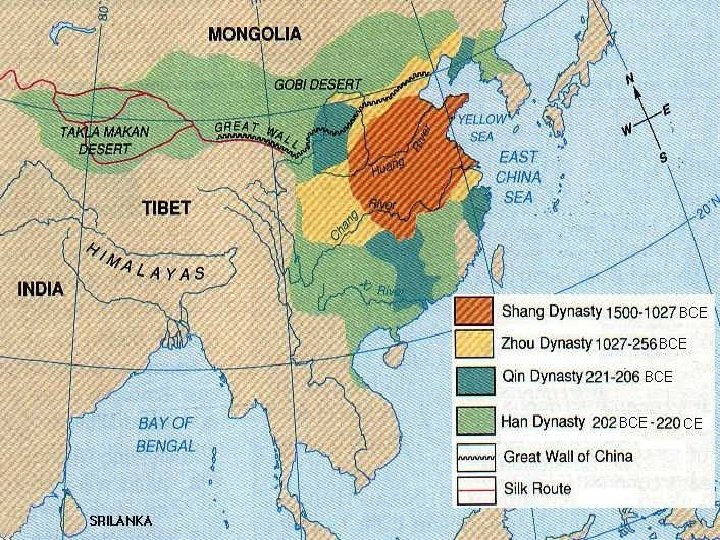
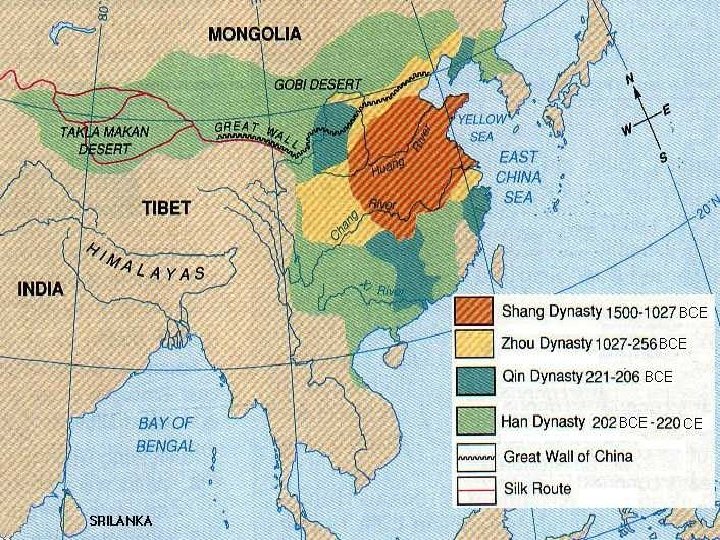
Geography of China § Ancient China was separated from Egypt, the Middle East, and India by long distances and physical barriers. § Tian Shan and Himalayan mountains barricaded the west and southwest. § South blocked by thick rainforests. § North shielded by the Gobi desert. § The Pacific ocean on the eastern border. § Despite these barriers, nomadic invaders repeatedly attacked and plundered Chinese cities.
Beginning of Chinese History § Neolithic people began farming in the Huang (yellow) river valley. § The need for irrigation projects probably led to the rise of organized government. This began the Huang (Yellow) River Valley Civilization.
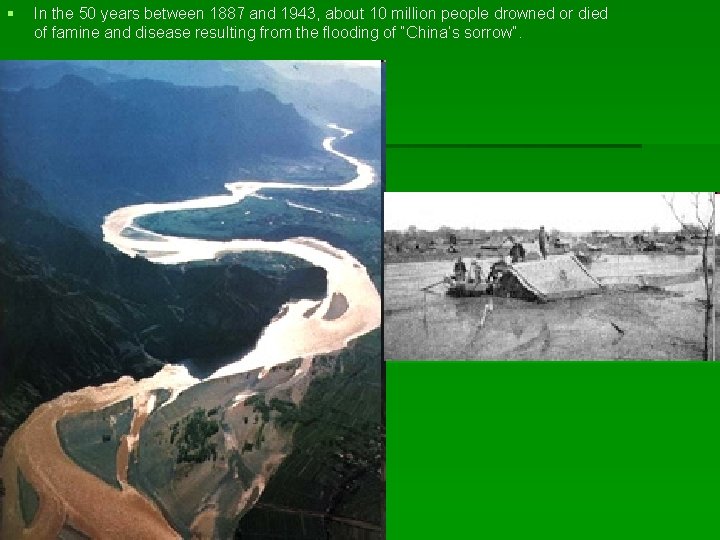
China’s Sorrow § The Huang river is also known as the “China’s Sorrow” because of its flooding. § Yellow soil blown into the river from the Gobi Desert by winds from Siberia and Mongolia, raises the water level. § Floodwaters would burst through their dikes, wiping out towns and destroying crops leading to mass starvation.
§ In the 50 years between 1887 and 1943, about 10 million people drowned or died of famine and disease resulting from the flooding of “China’s sorrow”.
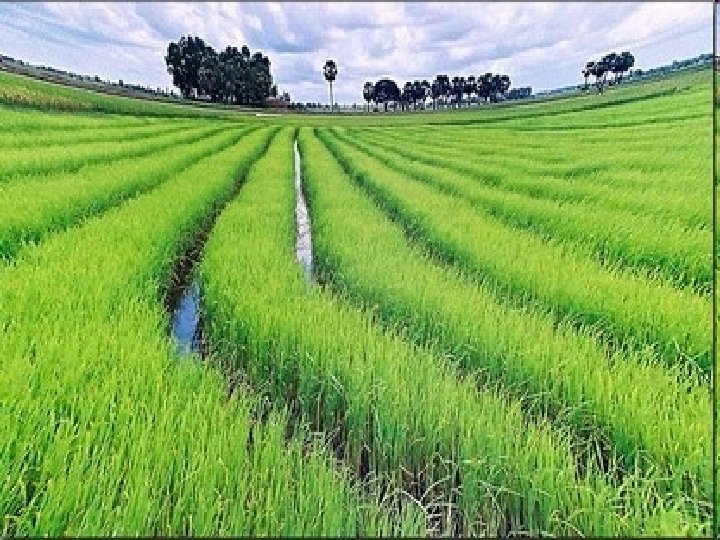
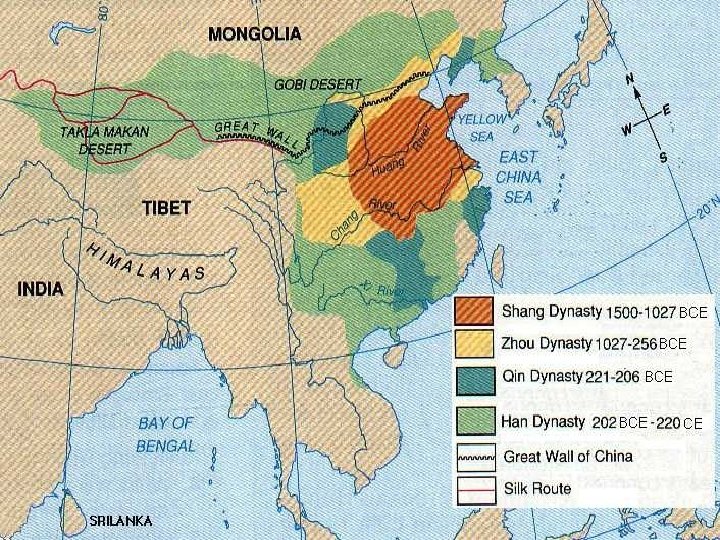
The Shang Dynasty (1766 B. C. – 1122 B. C. ) § First Chinese Dynasty. § Formed between the Huang and Chang rivers. § Fertile farming regions supported large populations. § The Huang and Chang rivers served as transportation highways, as well as providing water for irrigation.
Shang Government § Capital City contained large palaces and rich tombs. § Shang leaders drove off the nomads to gain control of surrounding regions. § Shang kings most likely controlled only a small area of land. § Loyal princes and local nobles, who were heads of important clans, governed most of the land.
Social Classes § Upper class § Royal family and a class of noble warriors. § Middle class § Artisans and merchants § Artisans made bronze weapons, silk robes, and jade jewelry. § Merchants exchanged food and crafts made by artisans, for salt, shells, and other goods not found in northeastern China.
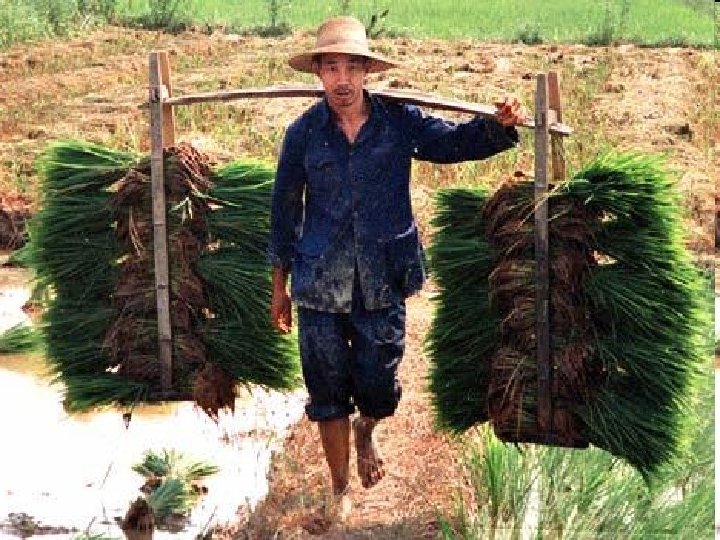
§ Lower class § Majority of people in Shang China. § Peasants who lived very rough lives in farming villages. § All family members worked in the fields § when they weren’t in the fields they were repairing dikes § when war broke out between noble families, the men were required to fight alongside their lords.
The Zhou Dynasty (1122 B. C. – 256 B. C. )
Advances during the Zhou Dynasty. § Iron age reaches China (600’s B. C. ) § Ox drawn iron plows and iron axes lead to more food production. § Large scale irrigation projects. § First money system in China. § Copper coins with holes in the middle for string. § Made trade easier. § Population boom led to expansion of farming into new regions.
Early Chinese Religion § Polytheistic § Believed gods controlled everything from good harvests, to victories in war. § Believed gods only listened to important people § ancestors of the king and nobles § prayers of rulers and nobles were thought to serve all. § This is why many Chinese pray to ancestors to intercede for them.
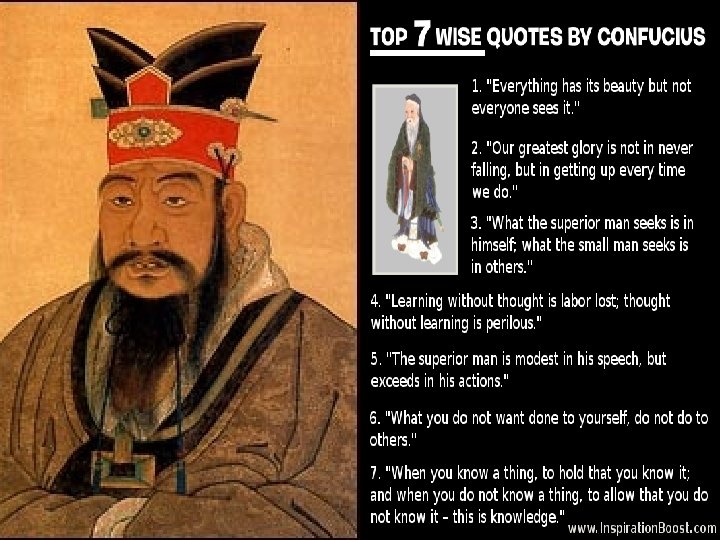
Confucius § § Born in 551 B. C. during the Zhou dynasty. Brilliant scholar. Studied ancient texts on rules of conduct. Became known for his wisdom, especially in the areas of social order and good government. § Taught high standards of conduct which brought him into conflict with corrupt leaders. § Confucius taught that harmony results when people accept their place in society.
§ Quote Confucius’ student Mencius § “Now when food meant for human beings is so plentiful as to be thrown to dogs and pigs, you fail to realize that it is time for garnering, and when men drop dead from starvation by the wayside, you fail to realize that it is time for distribution. When people die, you simply say, It is none of my doing. It is the fault of the Harvest. In what way is that different from killing a man by running him through, while saying all the time, It is none of my doing. It is the fault of the weapon. Stop putting the blame on the harvest and the people of the whole Empire will come to you'' § (Mencius, Book 1 Part A, 3).
Five Key Relationships 1. 2. 3. 4. 5. § Ruler to subject Parent to child Husband to wife Elder brother to younger brother Friend to friend Confucius believed that none of these relationships were equal, but that they all involved duties and responsibilities.
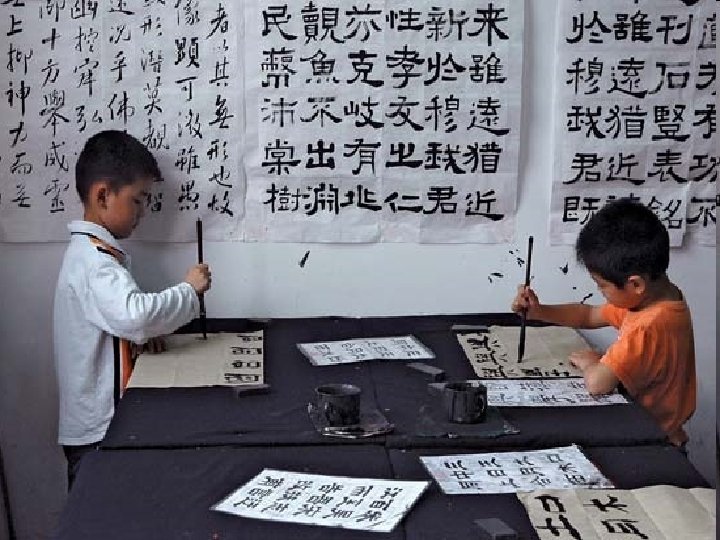
Cultural Achievements of Shang and Zhou China. § studied planetary movements § recorded eclipses. Developed 365 ¼ days, calendar. § Improved bronze technology (weapons, artwork, etc. ) § Calligraphy § Complex system of writing which developed at least 4, 000 years ago. § Tens of thousands of characters which represent a whole word or idea. § One of the most difficult languages to learn to read or write. § helped unify China.
Strong Rulers Unite Chinese Empires
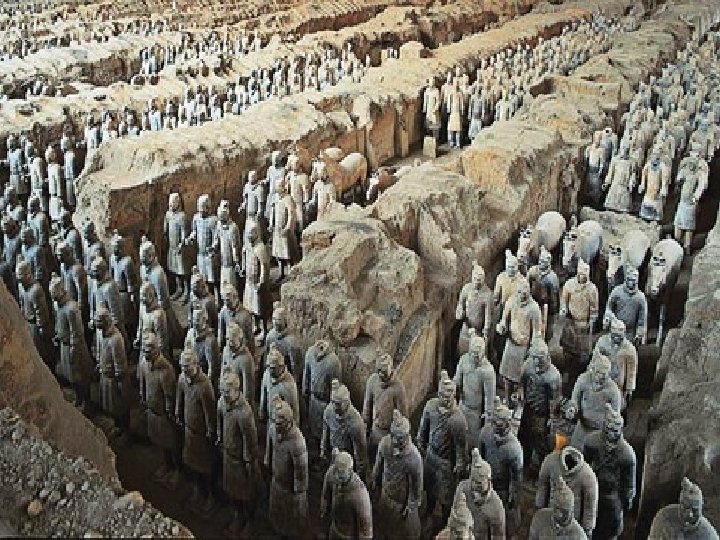
The Qin Dynasty (221 B. C. – 206 B. C. ) § In 221 B. C. , Zheng, the leader of the state of Qin, rose up and crushed the feudal lords of the Zhou dynasty. § Zheng proclaimed himself Shi Huangdi, “First Emperor”.
Unity in China § Shi Huangdi centralized his power § Imposed a system of strict laws and harsh punishments for crimes. § Tortured, killed, or enslaved those who opposed him. § Ordered a campaign of book burning to control opposing ideas. § Abolished feudalism which had led to regional leaders having too much power. § Gave nobles’ lands to peasants, but then forced them to pay high taxes to support his army and building projects.
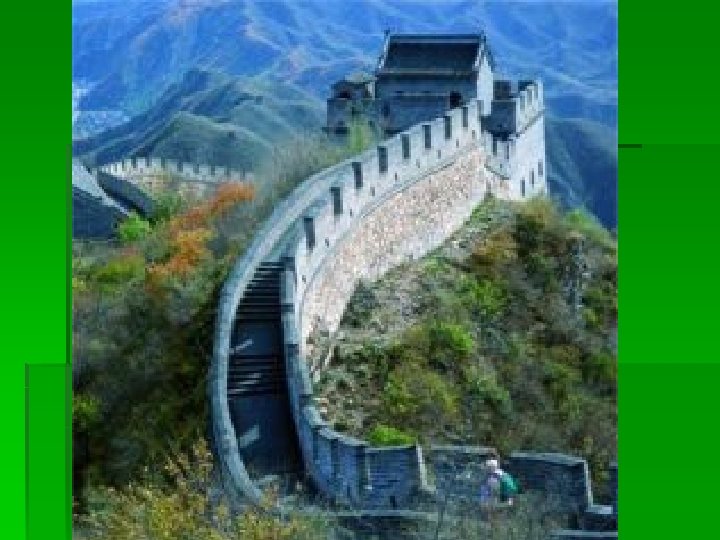
Positives from the Qin Dynasty. § § § Unified the coinage (money) system. Standardized weights and measures. Repaired and expanded roads and canals. § Built the Great Wall for protection from nomadic invaders.
The Fall of Qin § Shi Huangdi died in 210 B. C. § With his death, anger over his taxes and cruelty explodes into revolts. § Qin Dynasty collapses in 206 B. C. .
The Han Dynasty (202 B. C. – A. D. 220) § Founded by Gao Zu, an illiterate peasant leader who defeated his rival armies. § Gao Zu lowered taxes and eased strict government policies. § Appointed Confucian scholars as advisors. § This gave the Han Dynasty a strong foundation with the people due to their respect for Confucius.
Emperor Wudi (141 B. C. – 87 B. C. ) § Most famous Han Emperor. § Brought China to new heights.
His achievements § Improved canals and roads for trade and travel. § Built granaries across the empire so the government could buy grain when there was surplus, and sell it at stable prices when it was scarce. § Established a government monopoly on iron and salt. § Selling these gave the government a steady income other than taxing peasants.
§ Wudi followed an expansionist policy, fighting many battles to expand China’s borders, and to push nomadic people beyond the Great Wall. § Soldiers, traders, and settlers slowly spread Chinese influence across the newly connected regions.
Silk and the Silk Road
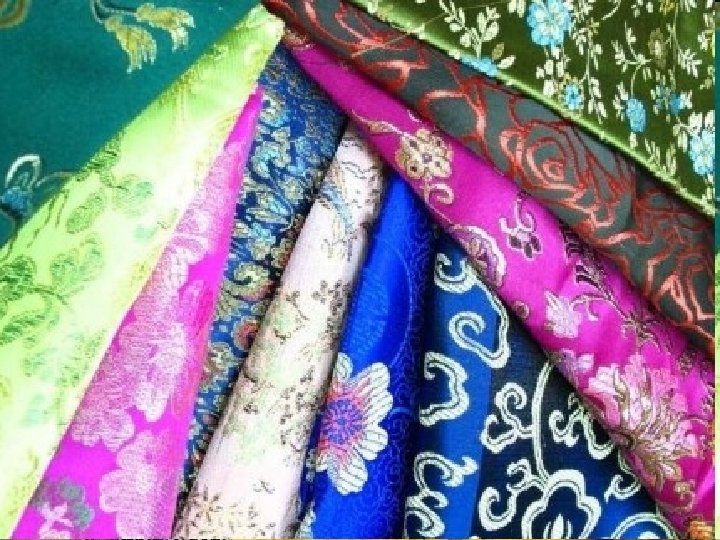
Silk § Early Chinese discovered the art of making silk out of silk worm cocoons. § Began raising silkworms § women would tend worms and then make silk thread out of their cocoons. § § This thread was used to weave silk cloth. Only royalty and nobles could afford silk robes. Silk eventually became China’s most valuable export. The silk making process was kept secret for hundreds of years to protect their profitable trade.
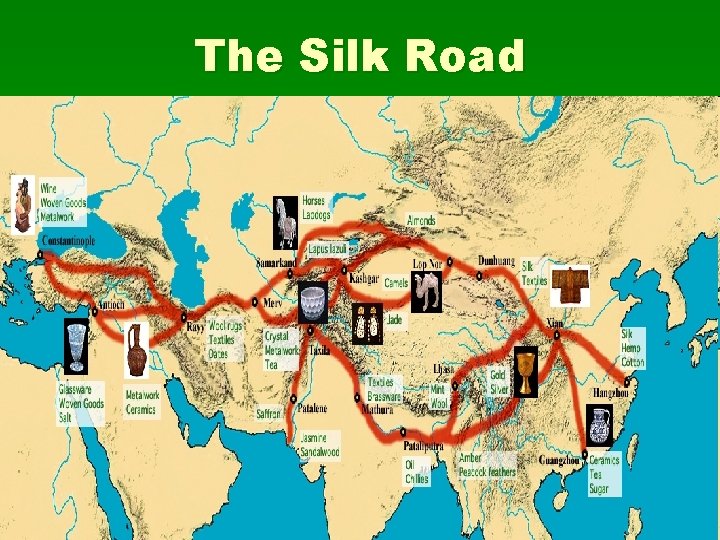
The Silk Road § Emperor Wudi opened up a network of trade routes which would become the famous Silk Road linking China to the west. § Goods were relayed from one trader to another across the Silk Road. § (a single trader didn’t make the whole trip) § Silk was sent west, and new foods, furs, glass, and other goods and ideas returned east to China.
The Silk Road
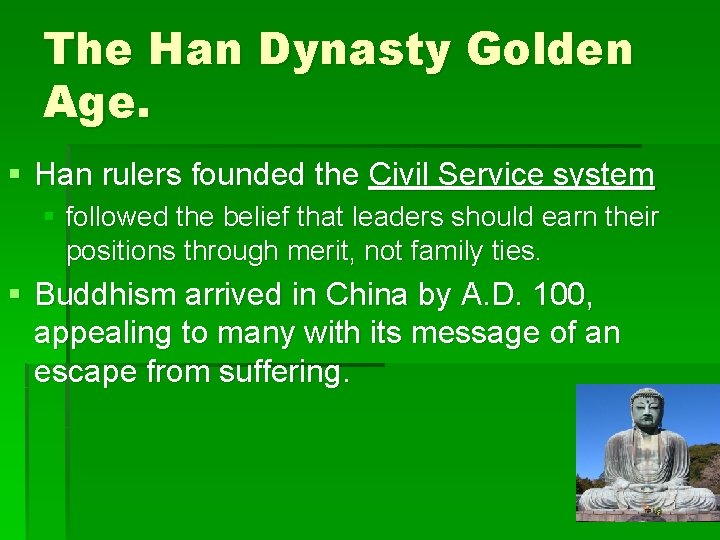
The Han Dynasty Golden Age. § Han rulers founded the Civil Service system § followed the belief that leaders should earn their positions through merit, not family ties. § Buddhism arrived in China by A. D. 100, appealing to many with its message of an escape from suffering.
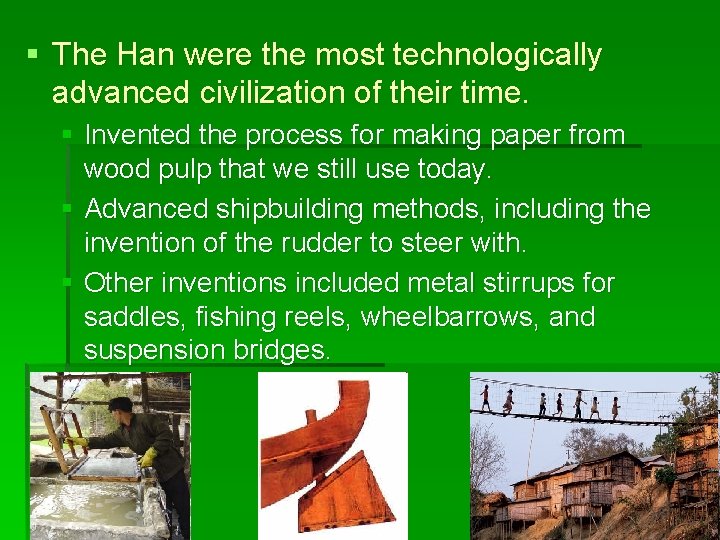
§ The Han were the most technologically advanced civilization of their time. § Invented the process for making paper from wood pulp that we still use today. § Advanced shipbuilding methods, including the invention of the rudder to steer with. § Other inventions included metal stirrups for saddles, fishing reels, wheelbarrows, and suspension bridges.
The Fall of the Han Dynasty. § Unable to control powerful warlords (local military leaders), the Han emperors soon began to lose power. § Weak emperors let canals and roads fall into disrepair. § Peasants who were burdened with heavy taxes and crushing debt, began to revolt. § In A. D. 220, ambitious warlords overthrew the last Han ruler, breaking the once unified China into several kingdoms.
Overarching Question? ? § How did the Silk Road increase cultural diffusion? § The silk road linked the once isolated civilization of China, to every other major civilization in the eastern hemisphere. This connection led to the greatest exchange of goods, ideas, technologies, and beliefs to date.