
Early Civilizations in Asia The Indus River Valley
- Slides: 30
Early Civilizations in Asia The Indus River Valley And China
The Indus River Valley Civilization Ancient India
Environmental Challenges n Flooding n Monsoons n Mountains invasion n Indus as barriers from River a link to the sea
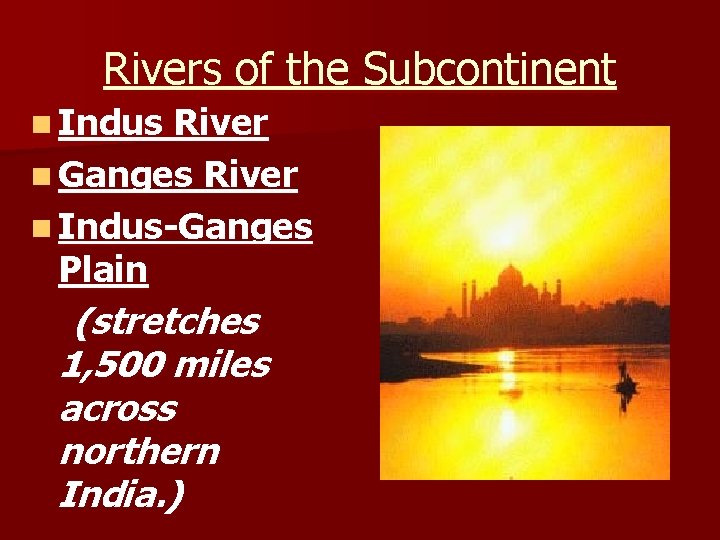
Rivers of the Subcontinent n Indus River n Ganges River n Indus-Ganges Plain (stretches 1, 500 miles across northern India. )
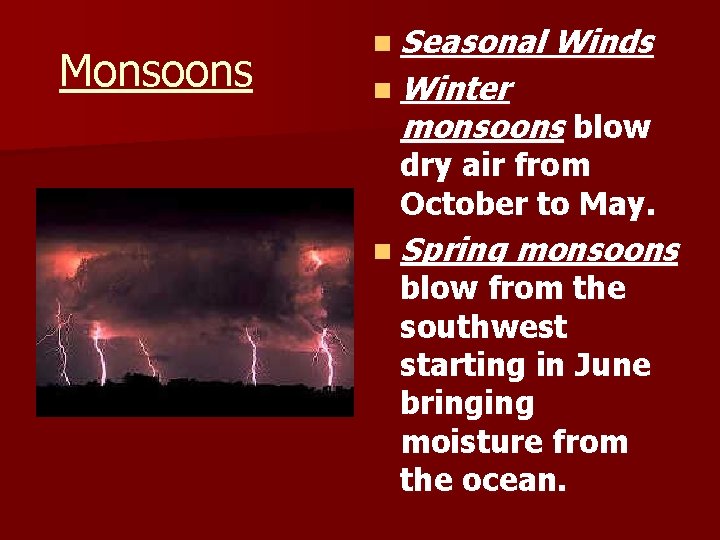
Monsoons n Seasonal Winds n Winter monsoons blow dry air from October to May. n Spring monsoons blow from the southwest starting in June bringing moisture from the ocean.
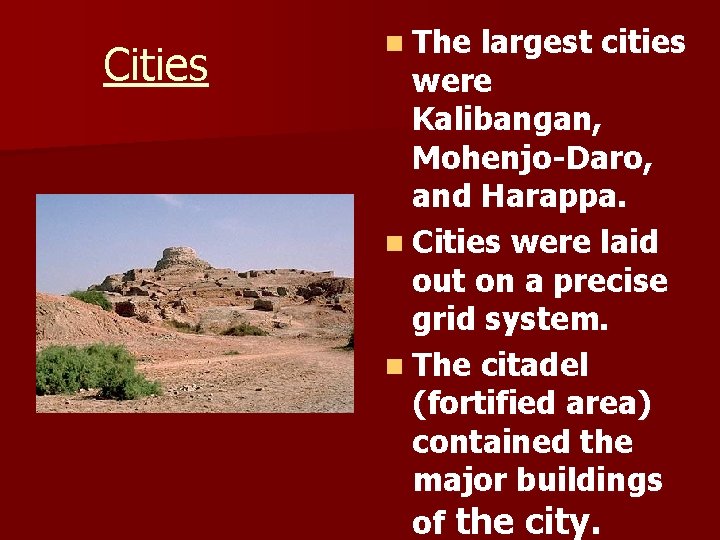
Cities n The largest cities were Kalibangan, Mohenjo-Daro, and Harappa. n Cities were laid out on a precise grid system. n The citadel (fortified area) contained the major buildings of the city.
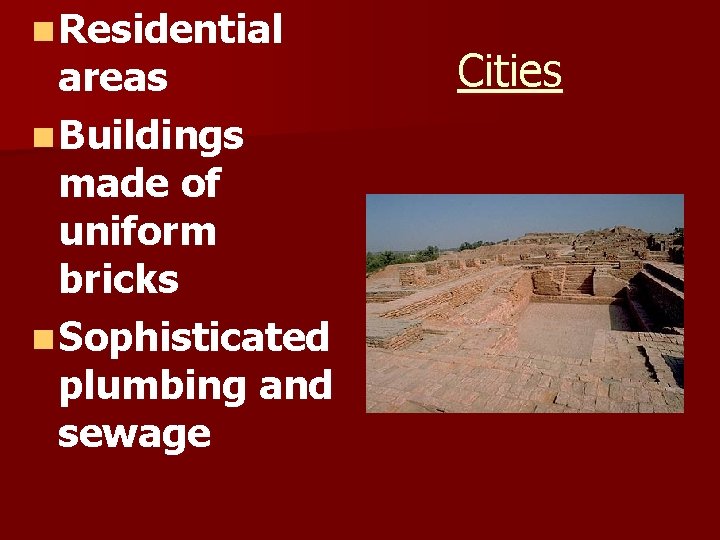
n Residential areas n Buildings made of uniform bricks n Sophisticated plumbing and sewage Cities
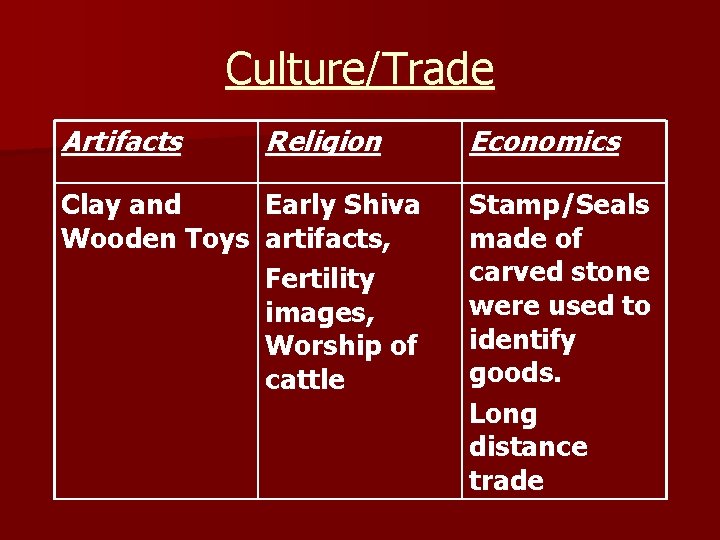
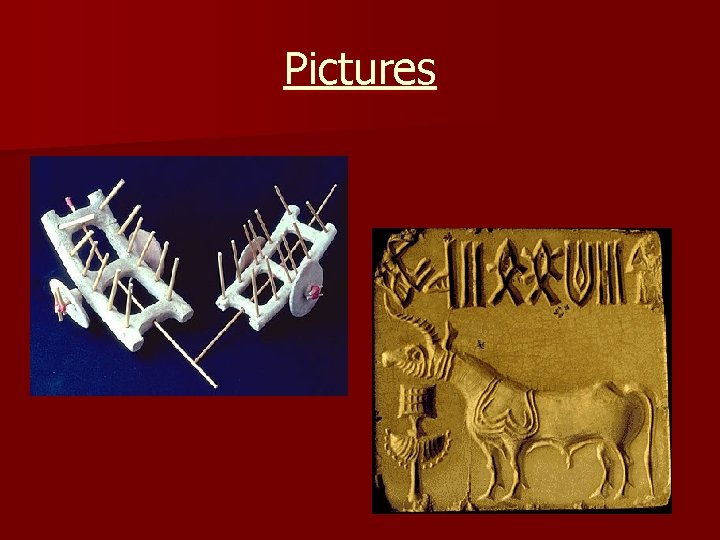
Culture/Trade Artifacts Religion Clay and Early Shiva Wooden Toys artifacts, Fertility images, Worship of cattle Economics Stamp/Seals made of carved stone were used to identify goods. Long distance trade
Pictures
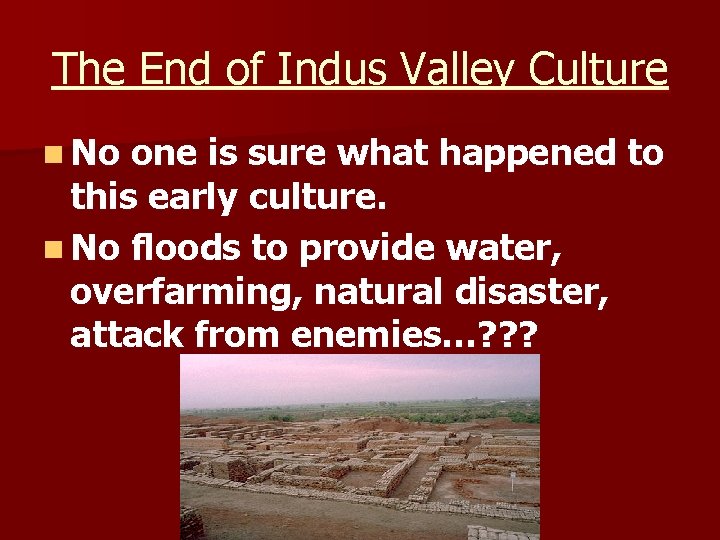
The End of Indus Valley Culture n No one is sure what happened to this early culture. n No floods to provide water, overfarming, natural disaster, attack from enemies…? ? ?
River Dynasties in China
Geography n China has many natural barriers n Pacific Ocean n Taklimakan Desert n Plateau of Tibet n Himalaya Mountains n Gobi Desert n Mongolian Plateau.
Major Rivers n. Huang He in the North (Yellow River) n. Yangtze in the central area of China
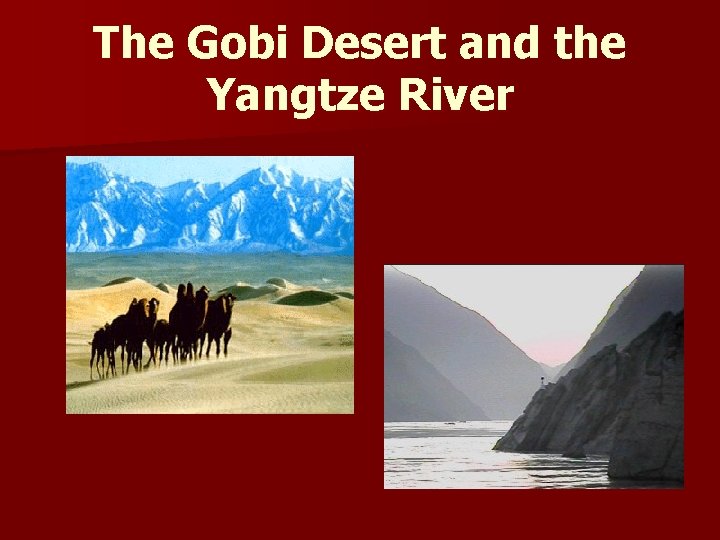
The Gobi Desert and the Yangtze River
Challenges n. Flooding (Huang He/ “China’s Sorrow” n. Geographic n. Invasions isolation
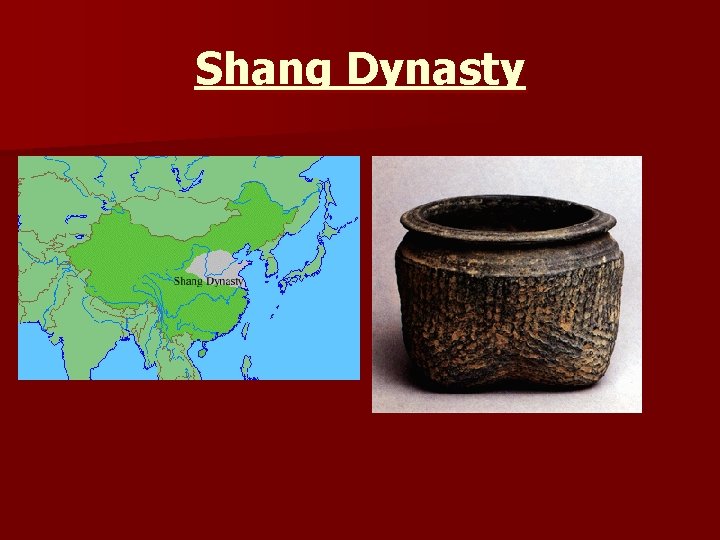
n Anyang capital n Massive earth walls for protection n Elaborate palaces n Tombs Shang Dynasty
Shang Dynasty
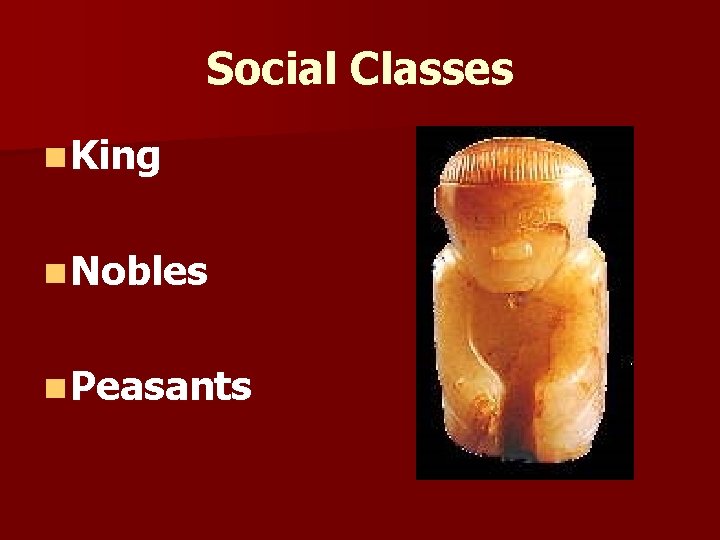
Social Classes n King n Nobles n Peasants
Family and Society n Family was very important. n The most important virtue was respect for one’s parents. n Fathers made decisions; mothers were inferior. n Marriages were arranged between the ages of 13 and 16. Women hoped to have sons to improve their station in life.
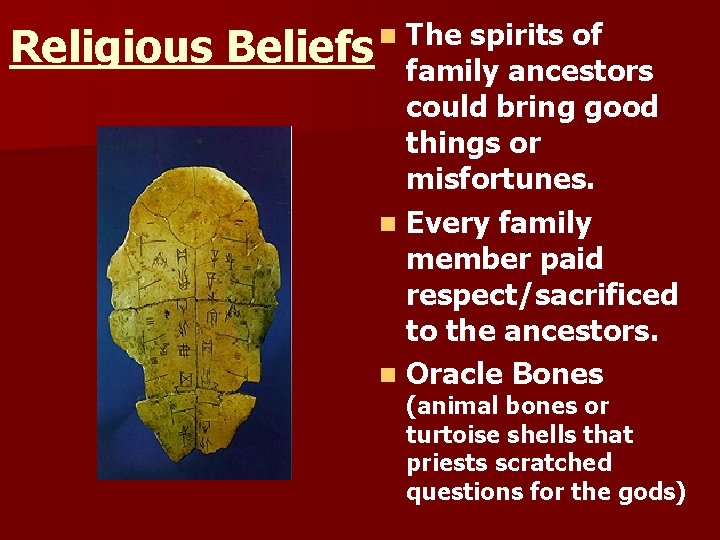
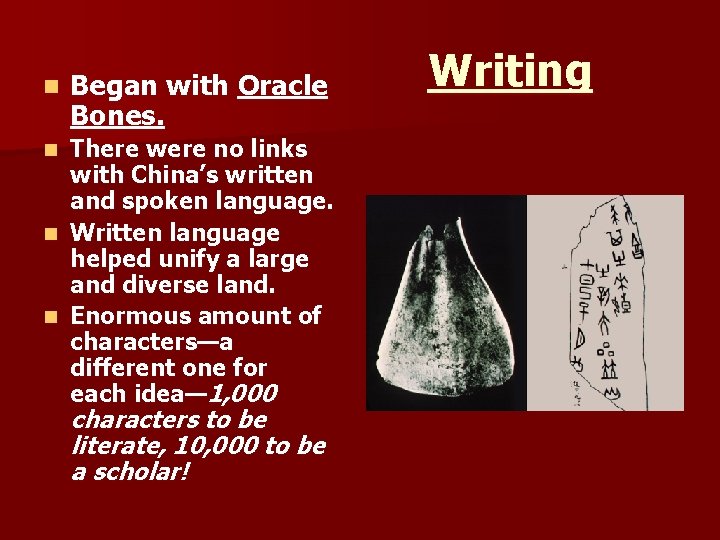
Religious The spirits of Beliefs family ancestors could bring good things or misfortunes. n Every family member paid respect/sacrificed to the ancestors. n Oracle Bones n (animal bones or turtoise shells that priests scratched questions for the gods)
n Began with Oracle Bones. There were no links with China’s written and spoken language. n Written language helped unify a large and diverse land. n Enormous amount of characters—a different one for each idea— 1, 000 n characters to be literate, 10, 000 to be a scholar! Writing
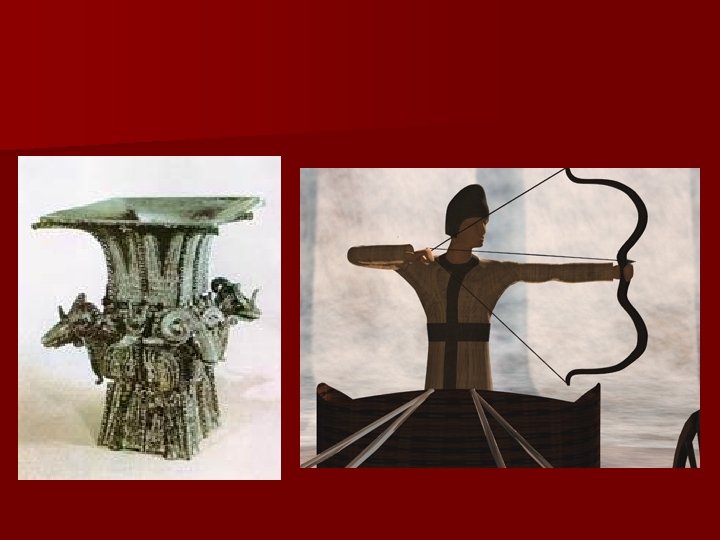
Artistry and Technology n. Bronzeworking- used in religious rituals or as symbols of power n. Silk Production- silk shoes were a symbol of civilization n. Weapons, jewelry, and religious items…
Zhou Overthrows Shang n Declared that the Shang were such bad rulers that the gods had taken over away their rule n Justification came from the Mandate of Heaven
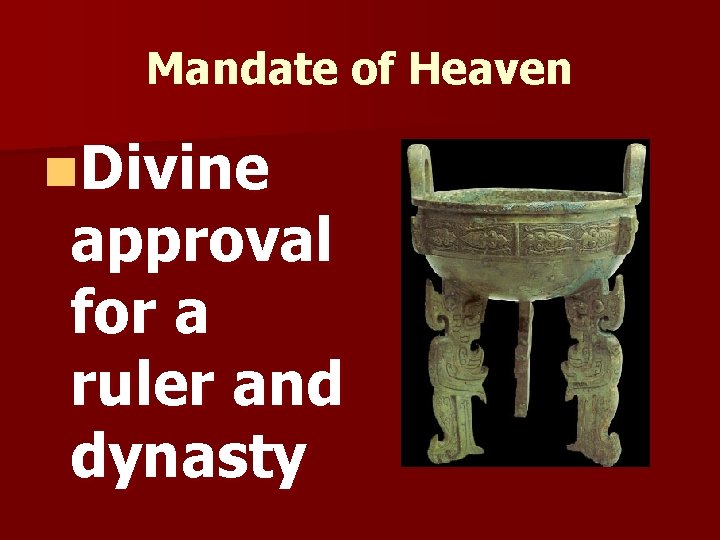
Mandate of Heaven n. Divine approval for a ruler and dynasty
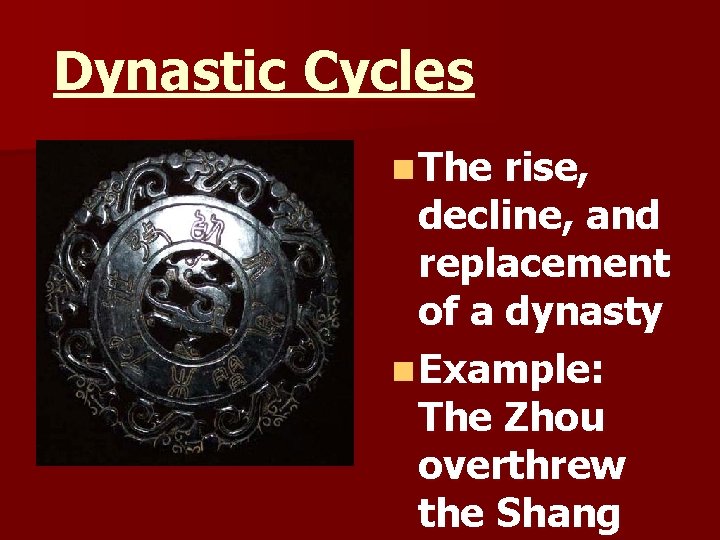
Dynastic Cycles n The rise, decline, and replacement of a dynasty n Example: The Zhou overthrew the Shang
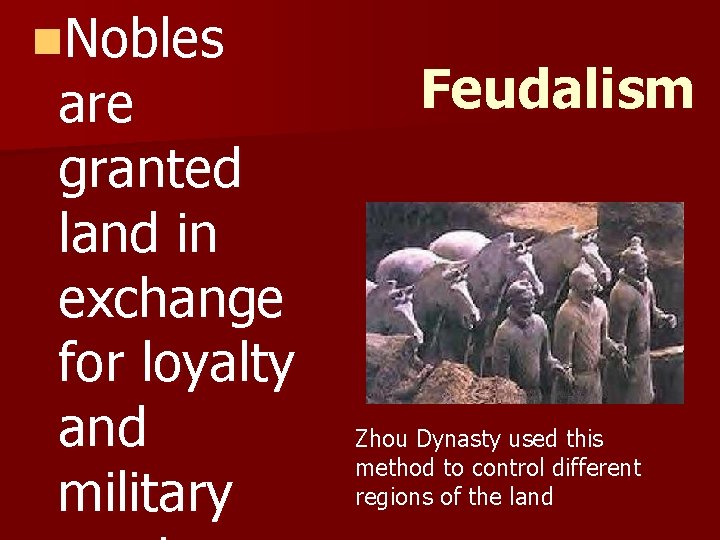
n. Nobles are granted land in exchange for loyalty and military Feudalism Zhou Dynasty used this method to control different regions of the land
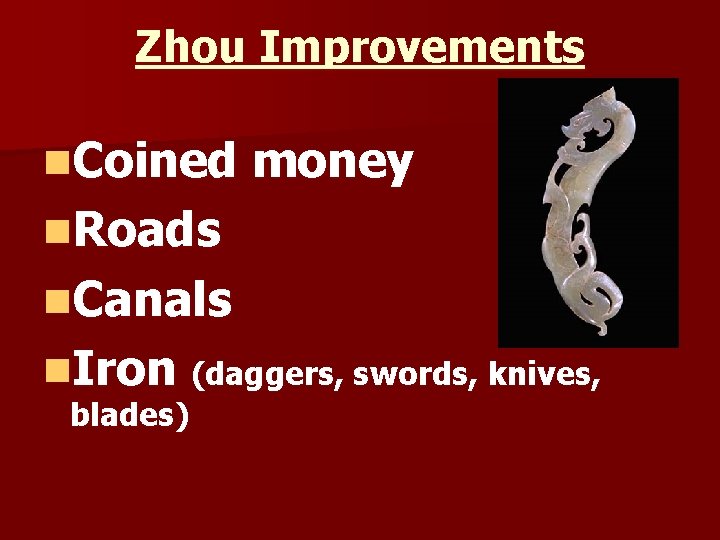
Zhou Improvements n. Coined money n. Roads n. Canals n. Iron (daggers, swords, knives, blades)
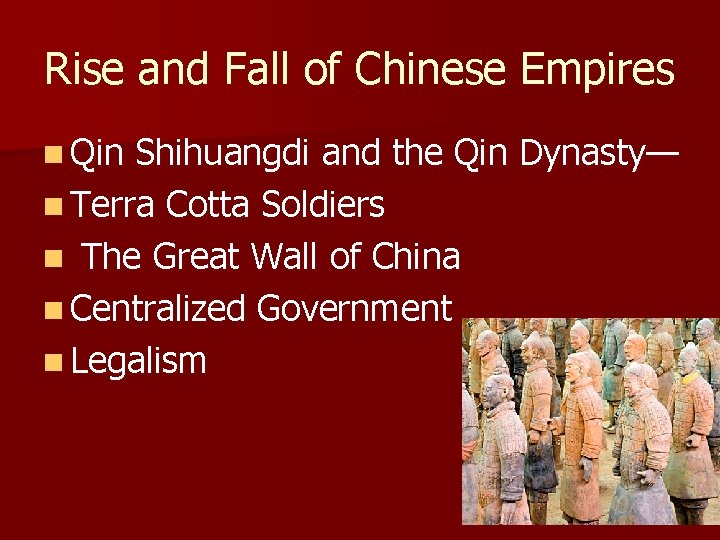
Rise and Fall of Chinese Empires n Qin Shihuangdi and the Qin Dynasty— n Terra Cotta Soldiers n The Great Wall of China n Centralized Government n Legalism
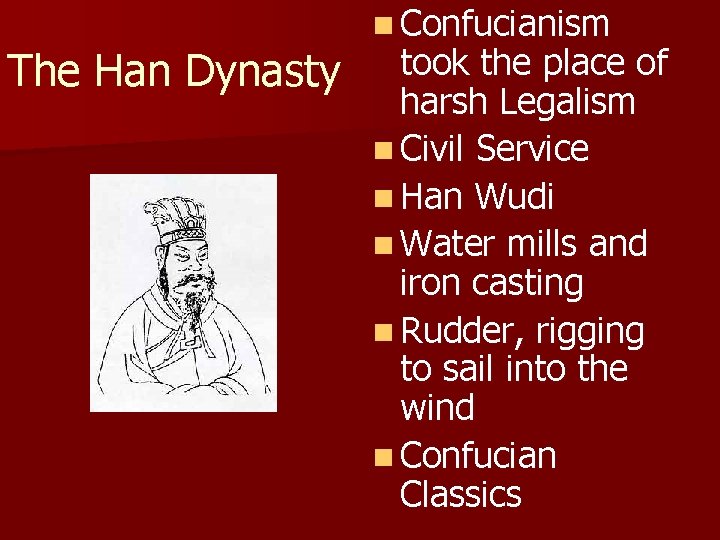
The Han Dynasty n Confucianism took the place of harsh Legalism n Civil Service n Han Wudi n Water mills and iron casting n Rudder, rigging to sail into the wind n Confucian Classics