
Early Christian Ireland The Plan In this chapter
![Round Towers • Some monasteries [Glendalough and Clonmacnoise] • 25 -40 m tall (12](https://slidetodoc.com/presentation_image_h2/4664bc795d8249d3f7e7c32f5045a468/image-19.jpg "Round Towers • Some monasteries [Glendalough and Clonmacnoise] • 25 -40 m tall (12")
- Slides: 32
Early Christian Ireland
The Plan • In this chapter, we are going to look at the arrival of Christianity in Ireland. As well as that, we will study: • The Coming of Christianity + St Patrick • Early Christian monasteries and their buildings • The work and jobs of early Christian monks • The influence of Irish monks abroad
Today’s Objectives – 20 th Jan • After today’s class, you will be able to tell your friends all about: v. St. Patrick and the arrival of Christianity v. The arrival of Christian monasteries and some of the rules and jobs at these monasteries.
Before We Begin • What is Christianity? • What do we know about St. Patrick? Is he an important figure in Ireland? • What was a monk? Can you describe what they looked like? • What was a monastery? Do you know of any famous or local ones? • Who do you think lived in a monastery and what do you think their jobs were?
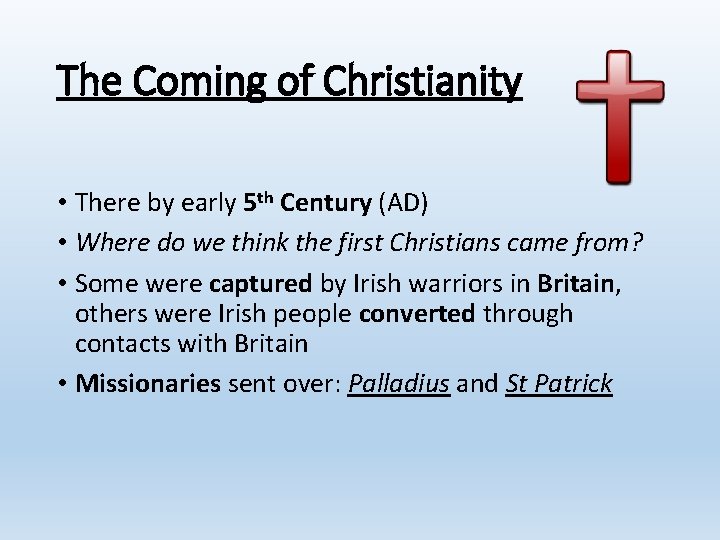
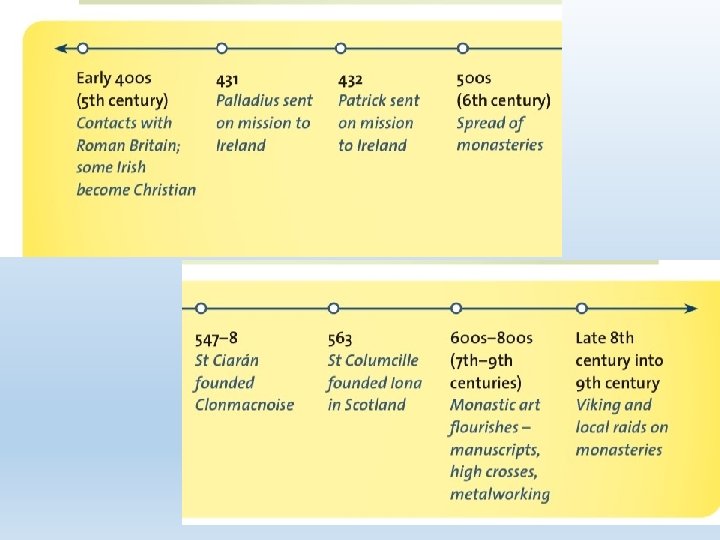
The Coming of Christianity • There by early 5 th Century (AD) • Where do we think the first Christians came from? • Some were captured by Irish warriors in Britain, others were Irish people converted through contacts with Britain • Missionaries sent over: Palladius and St Patrick
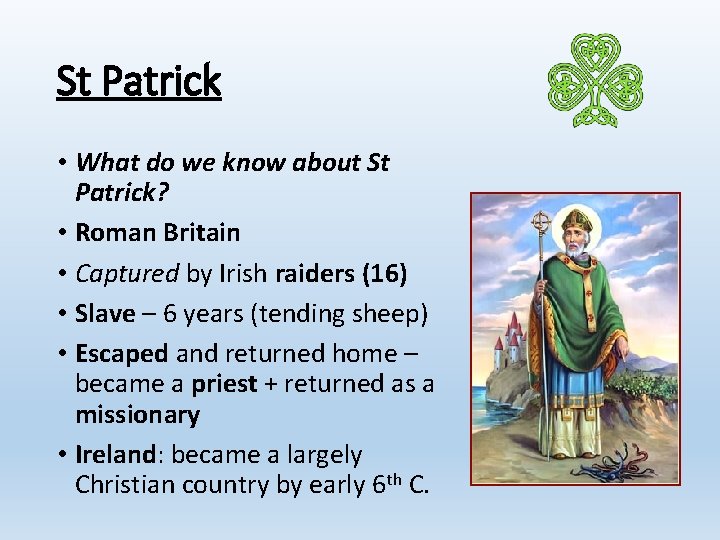
St Patrick • What do we know about St Patrick? • Roman Britain • Captured by Irish raiders (16) • Slave – 6 years (tending sheep) • Escaped and returned home – became a priest + returned as a missionary • Ireland: became a largely Christian country by early 6 th C.
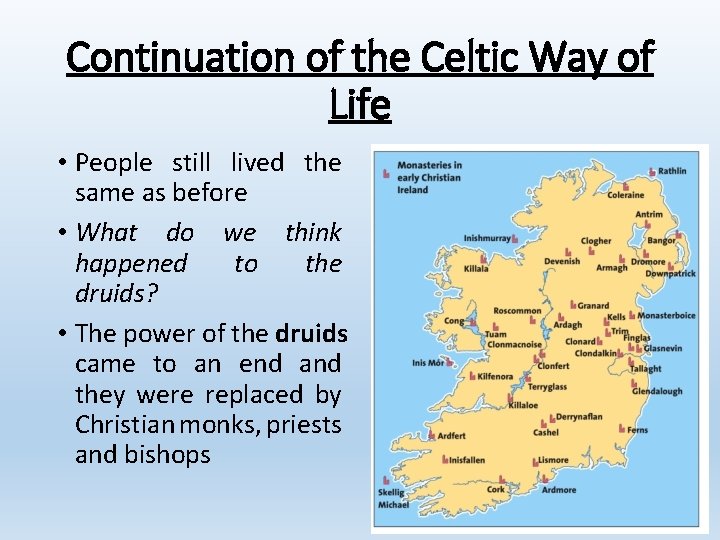
Continuation of the Celtic Way of Life • People still lived the same as before • What do we think happened to the druids? • The power of the druids came to an end and they were replaced by Christian monks, priests and bishops
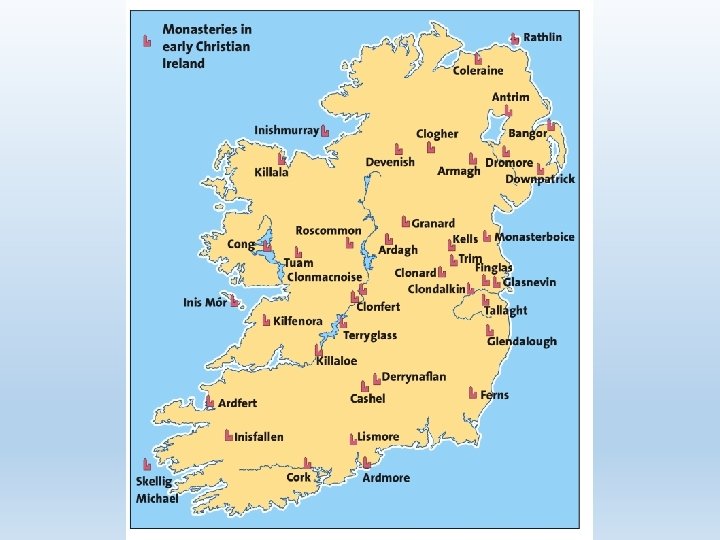
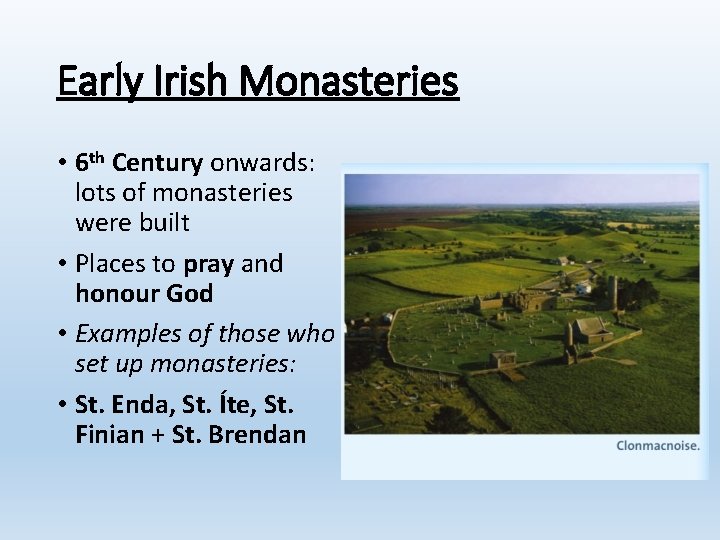
Early Irish Monasteries • 6 th Century onwards: lots of monasteries were built • Places to pray and honour God • Examples of those who set up monasteries: • St. Enda, St. Íte, St. Finian + St. Brendan
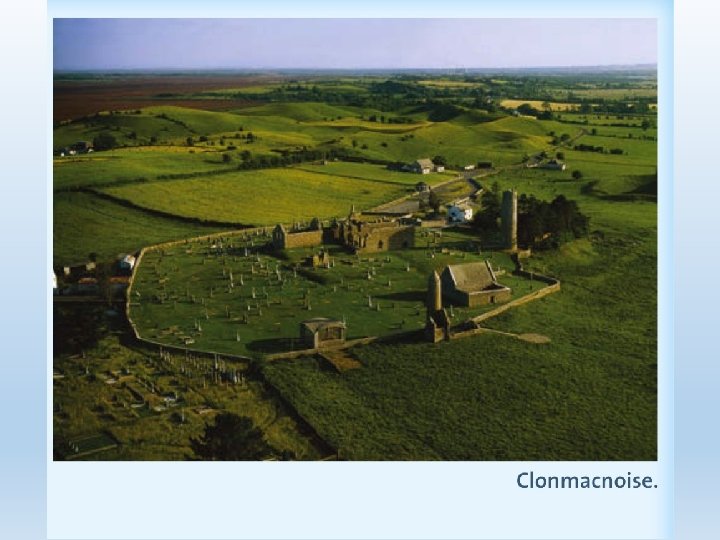
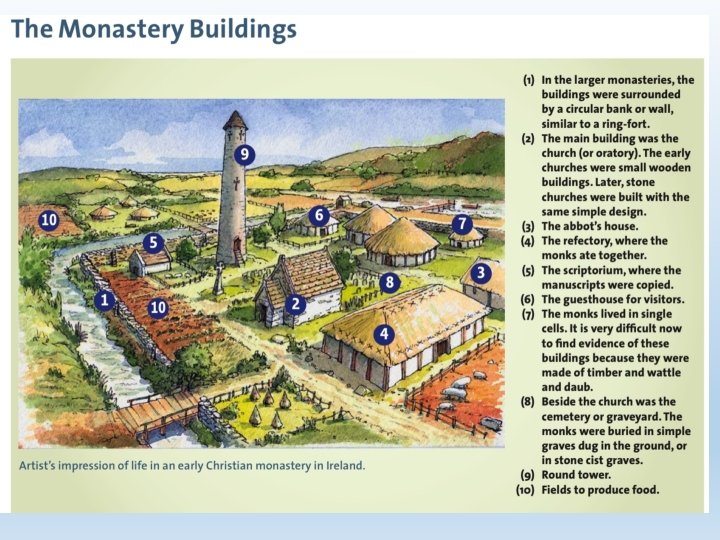
Exercise • Try and identify the different buildings in the monastery from the picture on the previous slide and write down what you think the function/uses of these buildings were.
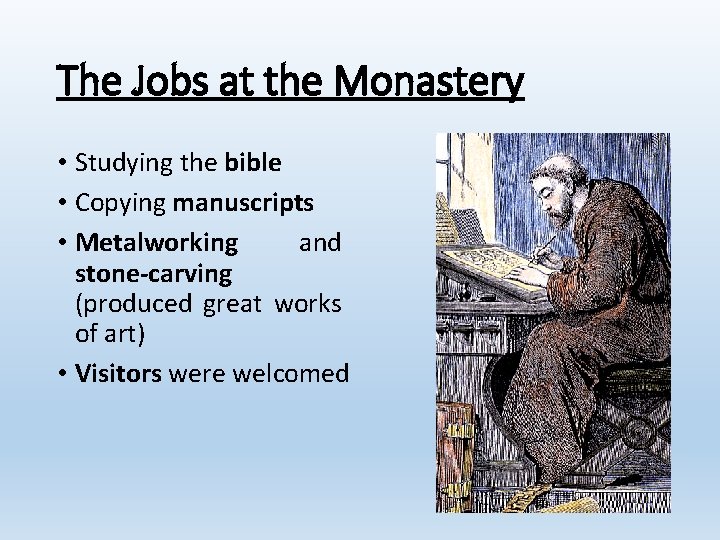
The Jobs at the Monastery • Studying the bible • Copying manuscripts • Metalworking and stone-carving (produced great works of art) • Visitors were welcomed
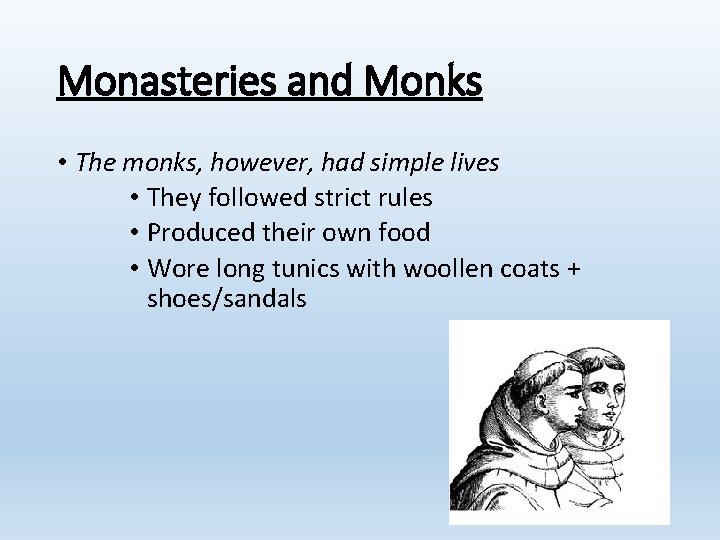
Monasteries and Monks • The monks, however, had simple lives • They followed strict rules • Produced their own food • Wore long tunics with woollen coats + shoes/sandals
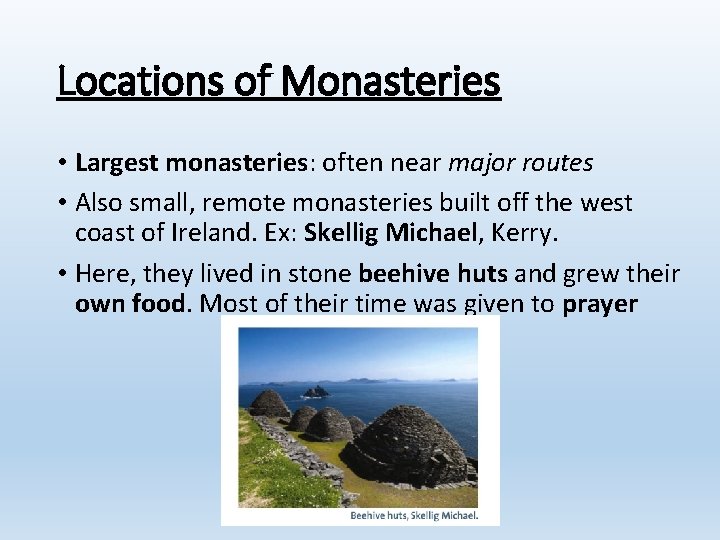
Locations of Monasteries • Largest monasteries: often near major routes • Also small, remote monasteries built off the west coast of Ireland. Ex: Skellig Michael, Kerry. • Here, they lived in stone beehive huts and grew their own food. Most of their time was given to prayer
• Revise 1 st section of notes (as far as Monastery Buildings) • Research an early Irish monastery (either local or further away) and write a small biography on it, giving information about its founder, buildings, artwork, etc. [Examples in your notes!] FOR MONDAY!
Today’s Objectives – 23 rd Jan • After today’s class, you will be able to tell your friends all about: v. The various buildings in the monastery and their functions/uses.
The Monastery Buildings
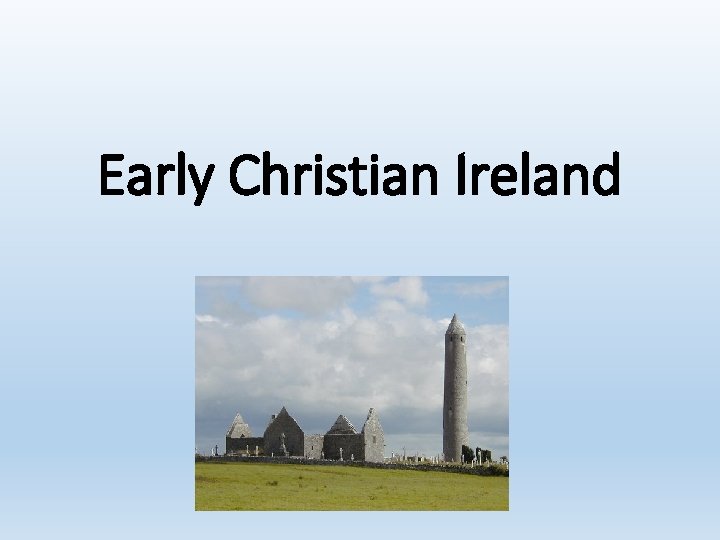
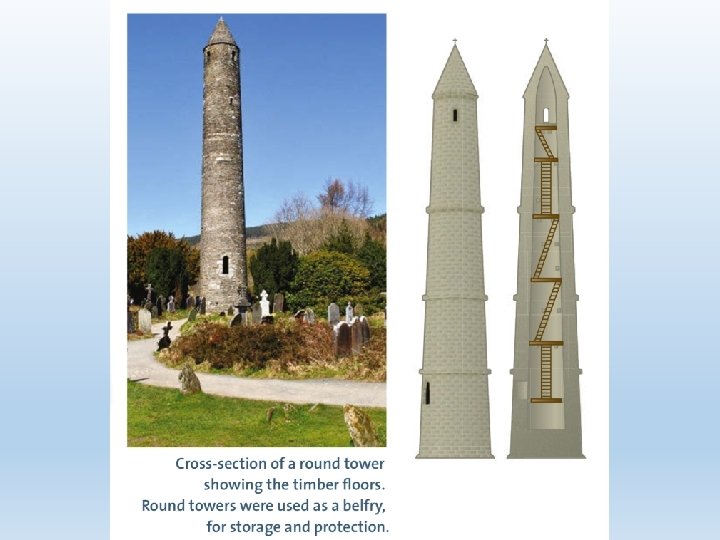
Round Towers • Some monasteries [Glendalough and Clonmacnoise] • 25 -40 m tall (12 storeys!) • Wider at bottom + tapered towards the top • 4+ wooden floors • 4 windows at the top (why? ) • Faced north, south, east and west. • Used as belfies: called monks to service and warned of raids • Also used for storage and safety from Viking raiders.
• Revise 1 st notes on The Monastery Buildings and Round Towers • Revision Q’s 1 -3 FOR FRIDAY!
Today’s Objectives – 27 th Jan • After today’s class, you will be able to tell your friends all about: o The stone-working, metalworking and art that was completed by the monks.
The Work of the Monks • What kind of work do you think was completed in the monastery? Remember the different buildings and their functions! • Prayer: the monks had 6 -8 services per day • Farm: what kind of work do you think the monks did on their farm? • Growing crops: ploughing, milking, harvesting, grinding corn.
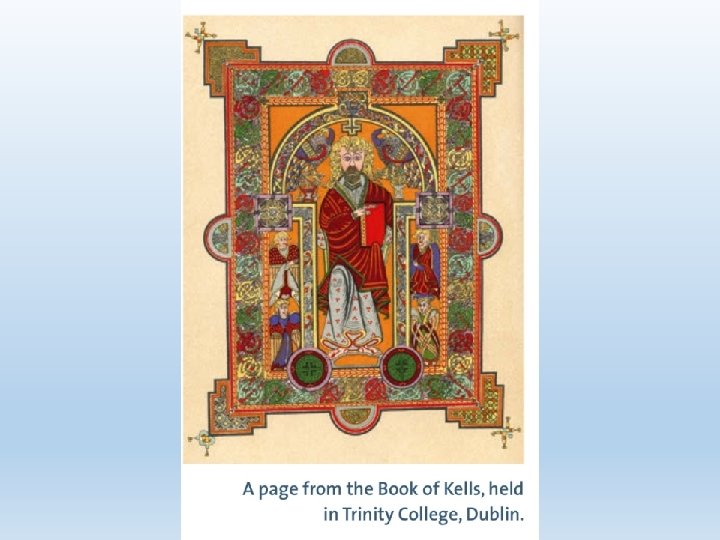
Monastic Artwork • Christianity brought reading and writing to Ireland (what kind of writing did we have beforehand? ) • Monasteries began making manuscript books • These were hand written – what do you think was in them? • Gospels, psalms, lives of saints and Celtic sagas • What language were there written in? Latin!
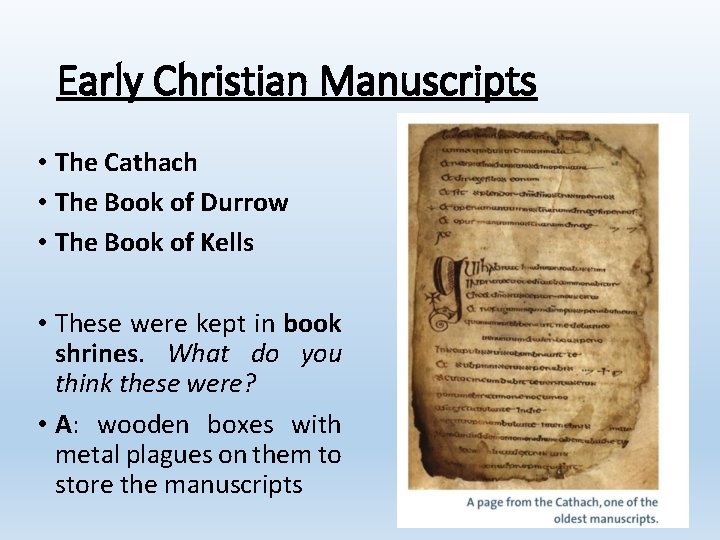
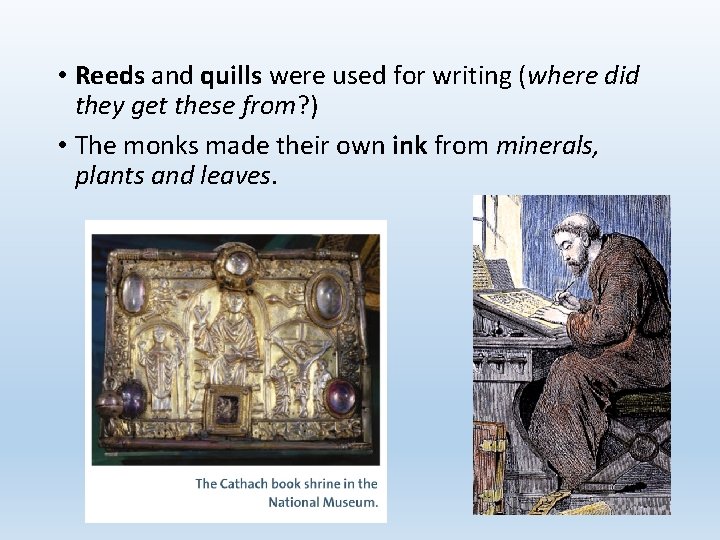
Early Christian Manuscripts • The Cathach • The Book of Durrow • The Book of Kells • These were kept in book shrines. What do you think these were? • A: wooden boxes with metal plagues on them to store the manuscripts
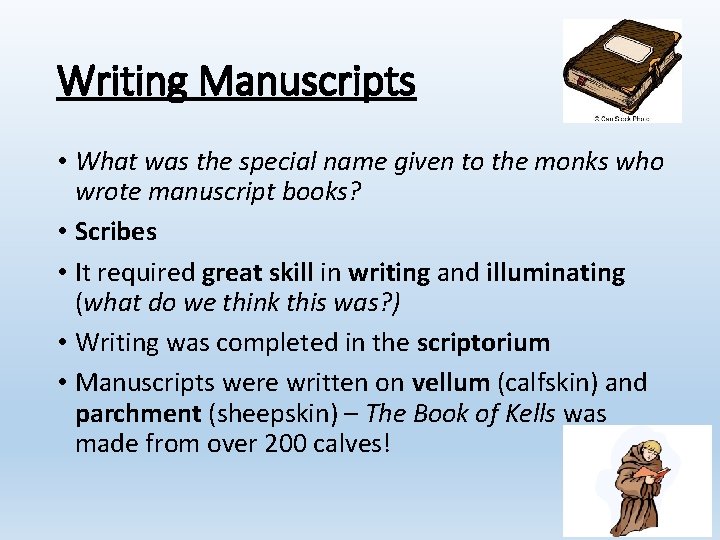
Writing Manuscripts • What was the special name given to the monks who wrote manuscript books? • Scribes • It required great skill in writing and illuminating (what do we think this was? ) • Writing was completed in the scriptorium • Manuscripts were written on vellum (calfskin) and parchment (sheepskin) – The Book of Kells was made from over 200 calves!
• Reeds and quills were used for writing (where did they get these from? ) • The monks made their own ink from minerals, plants and leaves.
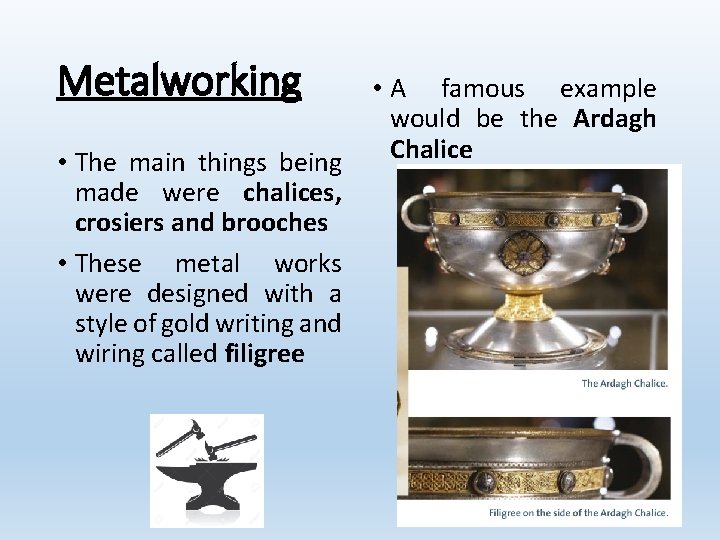
Metalworking • The main things being made were chalices, crosiers and brooches • These metal works were designed with a style of gold writing and wiring called filigree • A famous example would be the Ardagh Chalice
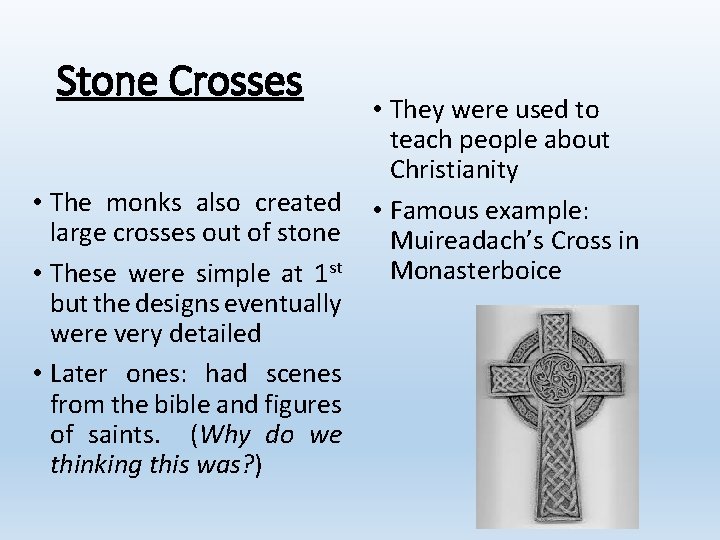
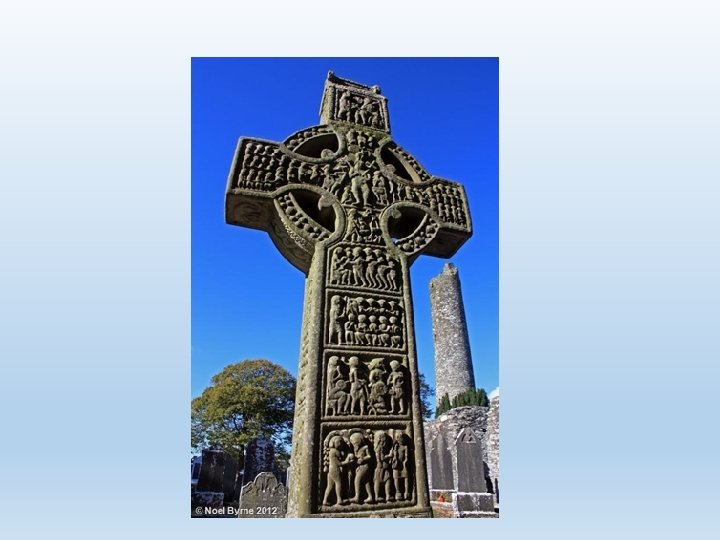
Stone Crosses • The monks also created large crosses out of stone • These were simple at 1 st but the designs eventually were very detailed • Later ones: had scenes from the bible and figures of saints. (Why do we thinking this was? ) • They were used to teach people about Christianity • Famous example: Muireadach’s Cross in Monasterboice
• Revise notes on the entire second sheet: Work; Art; Metalworking; Stone Crosses. • Revision Q’s 4 -7 For Monday!