
EARLY CHRISTIAN ART http study comacademylessonearlychristianartarchitecture html v
- Slides: 23
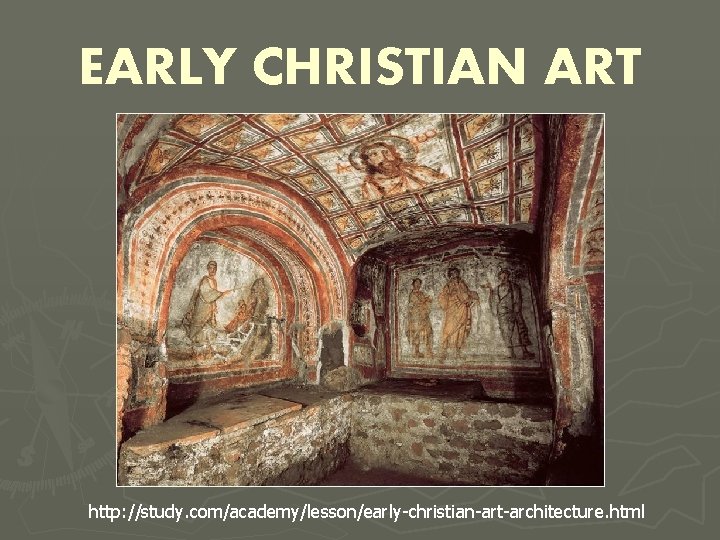
EARLY CHRISTIAN ART http: //study. com/academy/lesson/early-christian-art-architecture. html
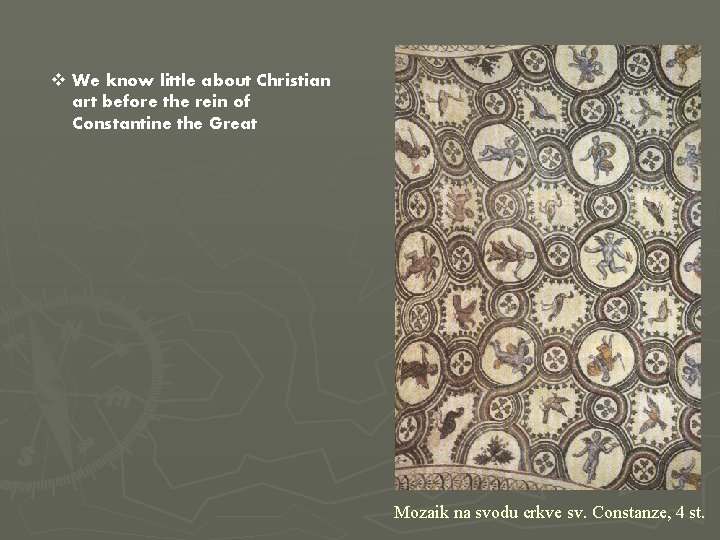
v We know little about Christian art before the rein of Constantine the Great Mozaik na svodu crkve sv. Constanze, 4 st.
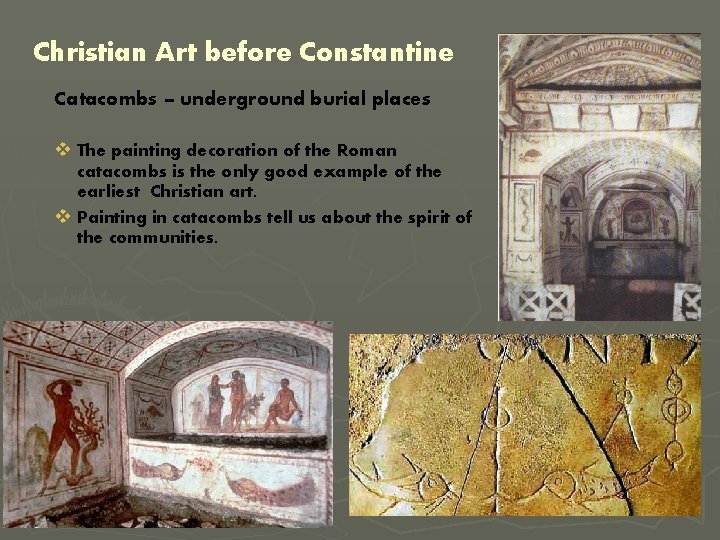
Christian Art before Constantine Catacombs – underground burial places v The painting decoration of the Roman catacombs is the only good example of the earliest Christian art. v Painting in catacombs tell us about the spirit of the communities.
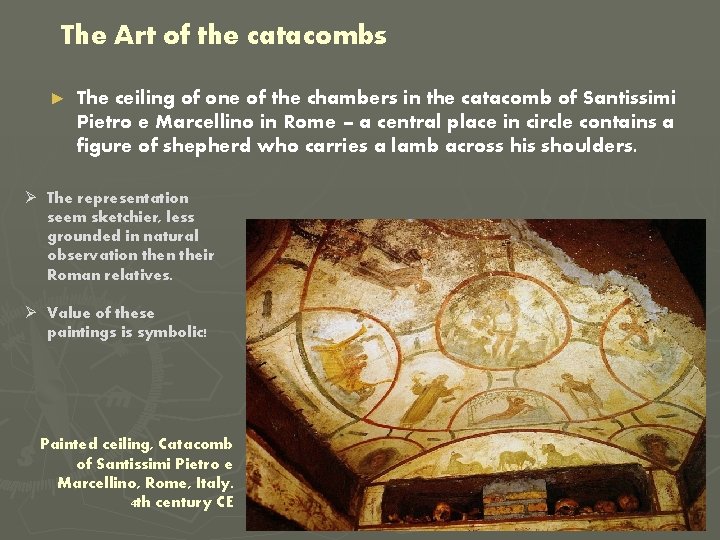
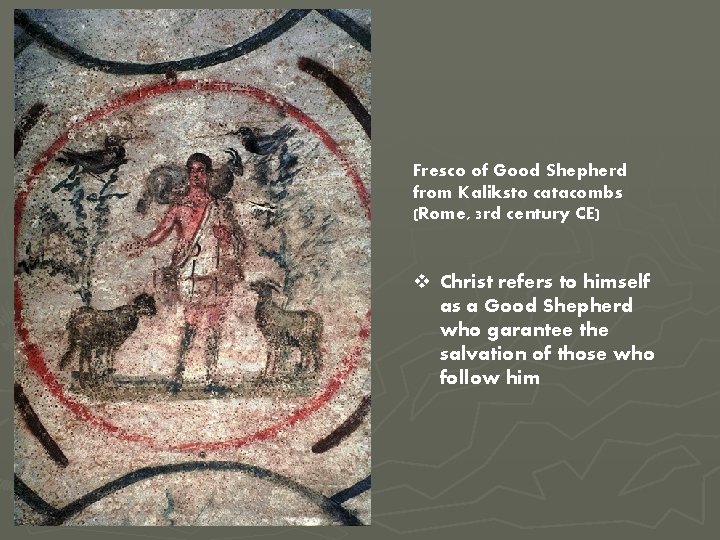
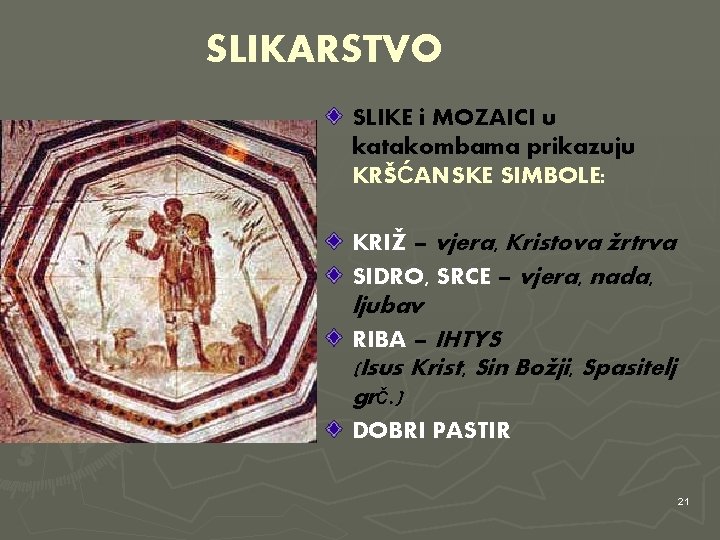
The Art of the catacombs ► The ceiling of one of the chambers in the catacomb of Santissimi Pietro e Marcellino in Rome – a central place in circle contains a figure of shepherd who carries a lamb across his shoulders. Ø The representation seem sketchier, less grounded in natural observation their Roman relatives. Ø Value of these paintings is symbolic! Painted ceiling, Catacomb of Santissimi Pietro e Marcellino, Rome, Italy. 4 th century CE
Fresco of Good Shepherd from Kaliksto catacombs (Rome, 3 rd century CE) v Christ refers to himself as a Good Shepherd who garantee the salvation of those who follow him
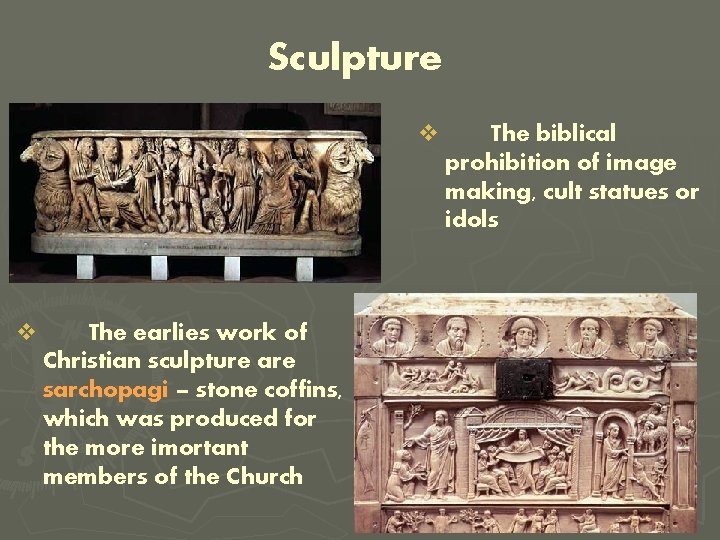
Sculpture v v The biblical prohibition of image making, cult statues or idols The earlies work of Christian sculpture are sarchopagi – stone coffins, which was produced for the more imortant members of the Church 6
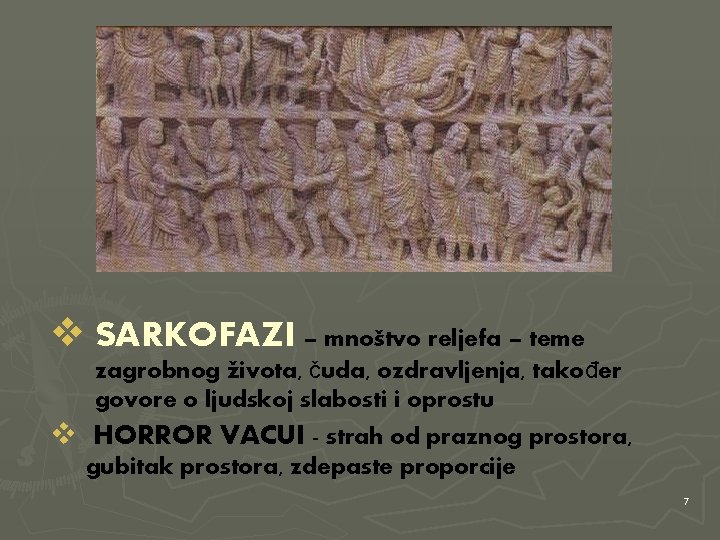
v SARKOFAZI – mnoštvo reljefa – teme zagrobnog života, čuda, ozdravljenja, također govore o ljudskoj slabosti i oprostu v HORROR VACUI - strah od praznog prostora, gubitak prostora, zdepaste proporcije 7
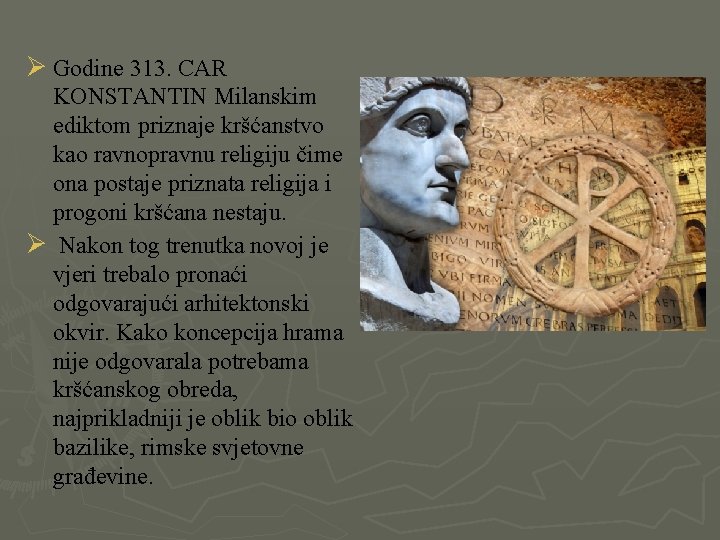
Ø Godine 313. CAR KONSTANTIN Milanskim ediktom priznaje kršćanstvo kao ravnopravnu religiju čime ona postaje priznata religija i progoni kršćana nestaju. Ø Nakon tog trenutka novoj je vjeri trebalo pronaći odgovarajući arhitektonski okvir. Kako koncepcija hrama nije odgovarala potrebama kršćanskog obreda, najprikladniji je oblik bio oblik bazilike, rimske svjetovne građevine.
Christian Art after Official Recognition of Christianity ü Almost overnight, an impressive architectural setting had to be created for the new official faith, so that the Church might be visible to all. 9
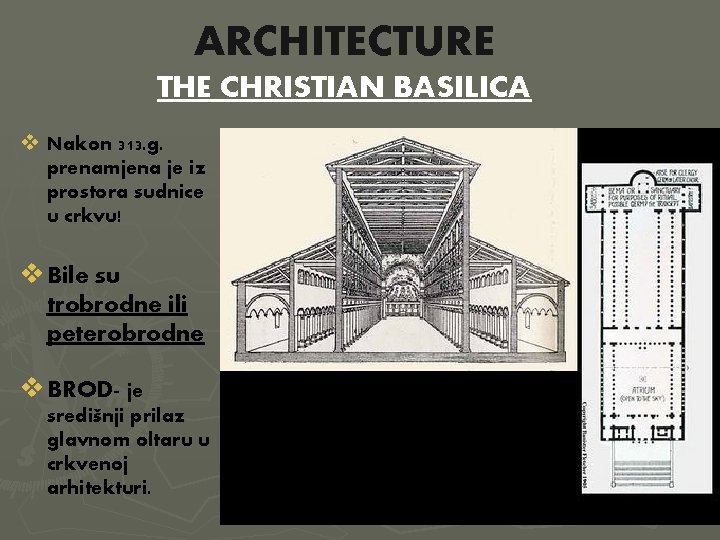
ARCHITECTURE THE CHRISTIAN BASILICA v Nakon 313. g. prenamjena je iz prostora sudnice u crkvu! v Bile su trobrodne ili peterobrodne v BROD- je središnji prilaz glavnom oltaru u crkvenoj arhitekturi.
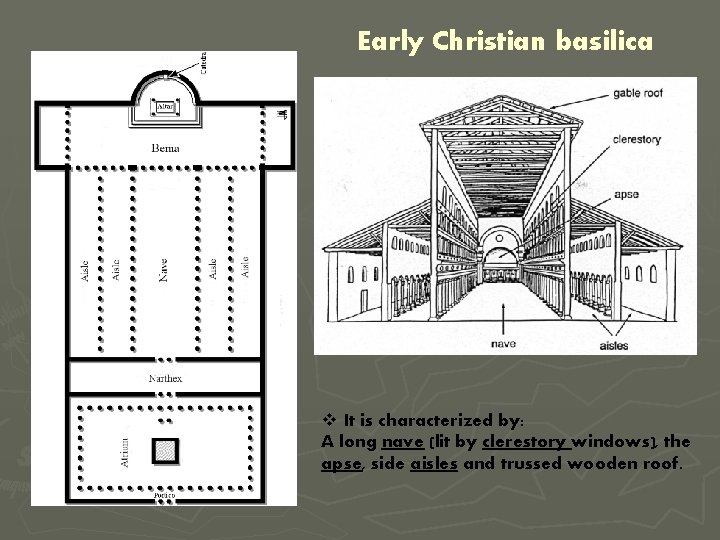
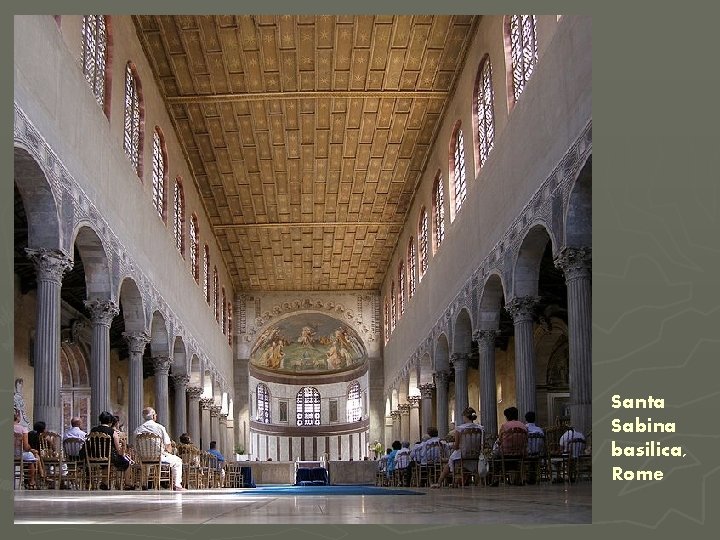
Early Christian basilica v It is characterized by: A long nave (lit by clerestory windows), the apse, side aisles and trussed wooden roof.
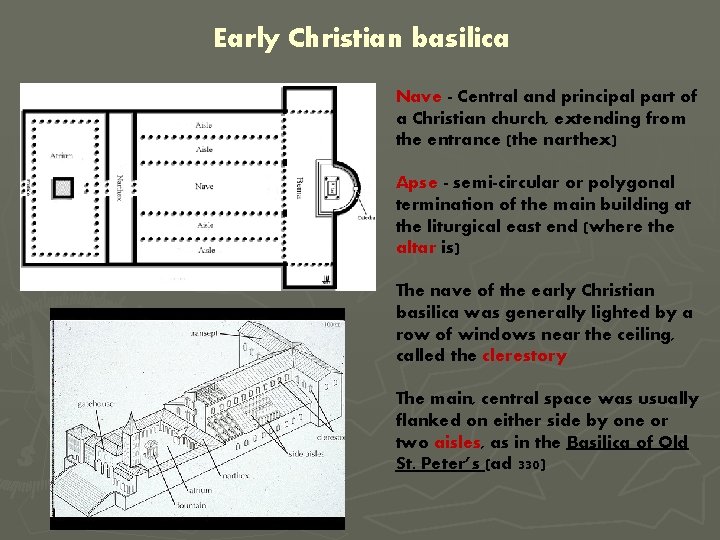
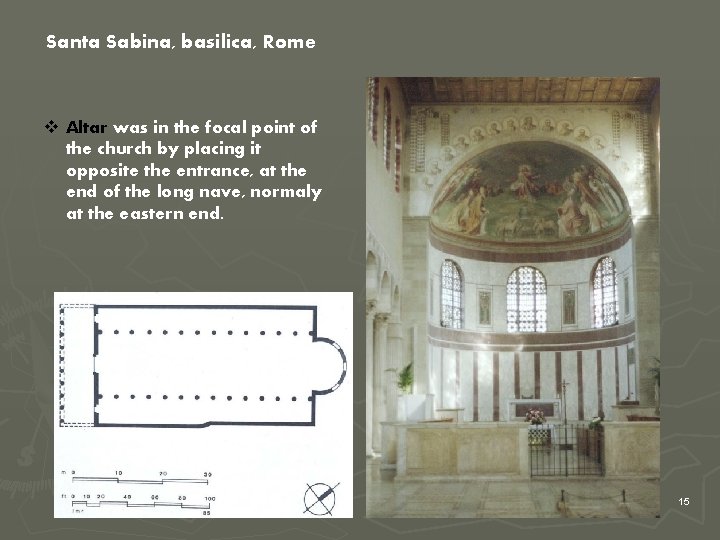
Early Christian basilica Nave - Central and principal part of a Christian church, extending from the entrance (the narthex) Apse - semi-circular or polygonal termination of the main building at the liturgical east end (where the altar is) The nave of the early Christian basilica was generally lighted by a row of windows near the ceiling, called the clerestory The main, central space was usually flanked on either side by one or two aisles, as in the Basilica of Old St. Peter’s (ad 330)
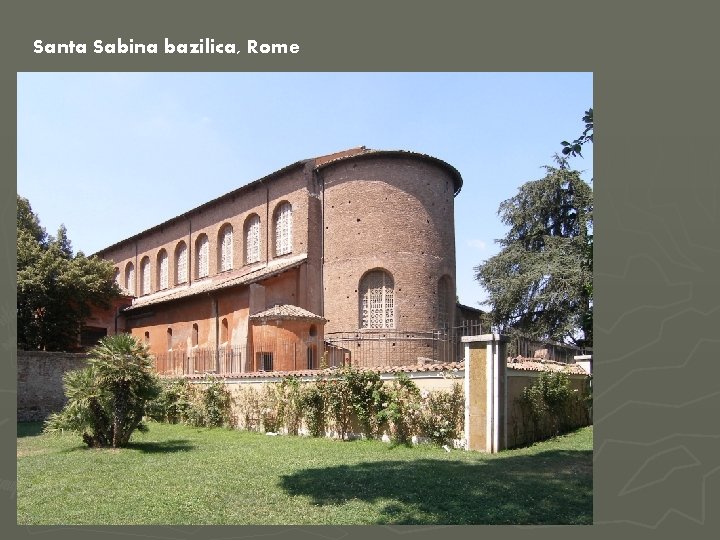
Santa Sabina basilica, Rome
Santa Sabina bazilica, Rome
Santa Sabina, basilica, Rome v Altar was in the focal point of the church by placing it opposite the entrance, at the end of the long nave, normaly at the eastern end. 15
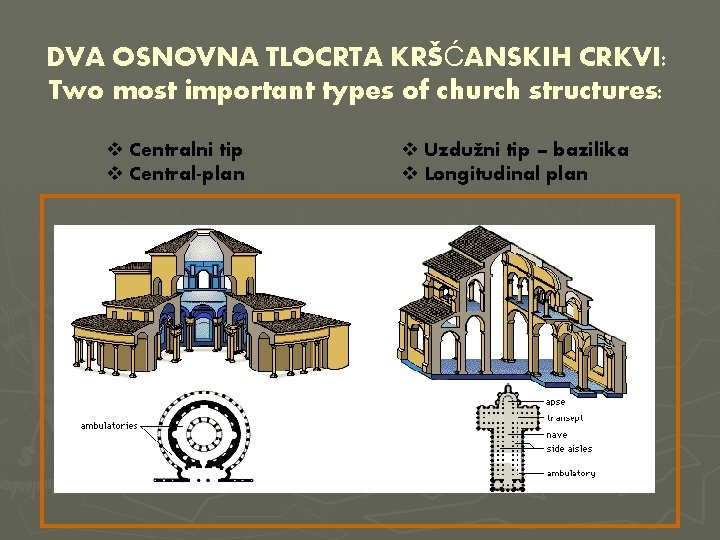
DVA OSNOVNA TLOCRTA KRŠĆANSKIH CRKVI: Two most important types of church structures: v Centralni tip v Central-plan v Uzdužni tip – bazilika v Longitudinal plan
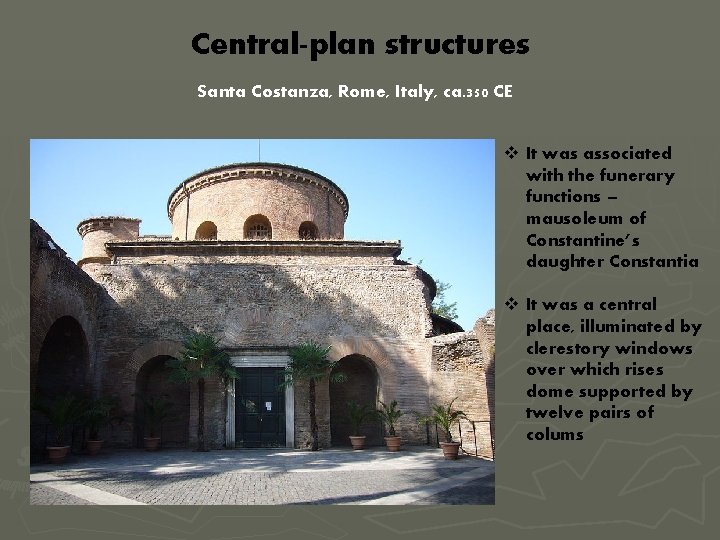
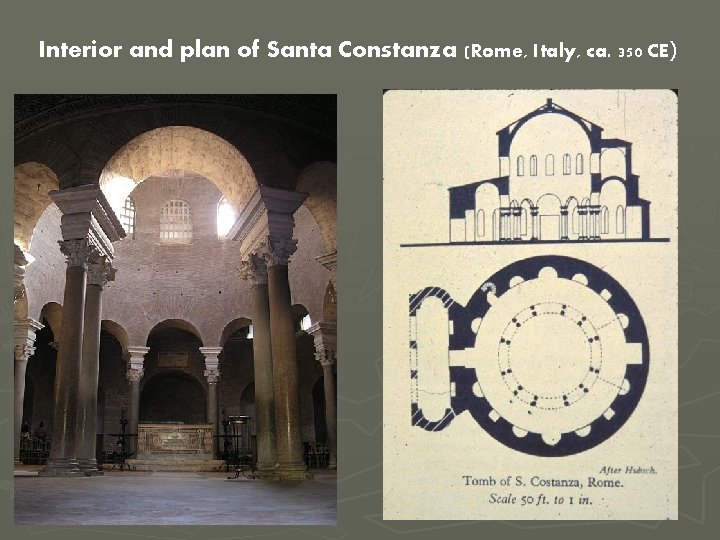
Central-plan structures Santa Costanza, Rome, Italy, ca. 350 CE v It was associated with the funerary functions – mausoleum of Constantine’s daughter Constantia v It was a central place, illuminated by clerestory windows over which rises dome supported by twelve pairs of colums
Interior and plan of Santa Constanza (Rome, Italy, ca. 350 CE)
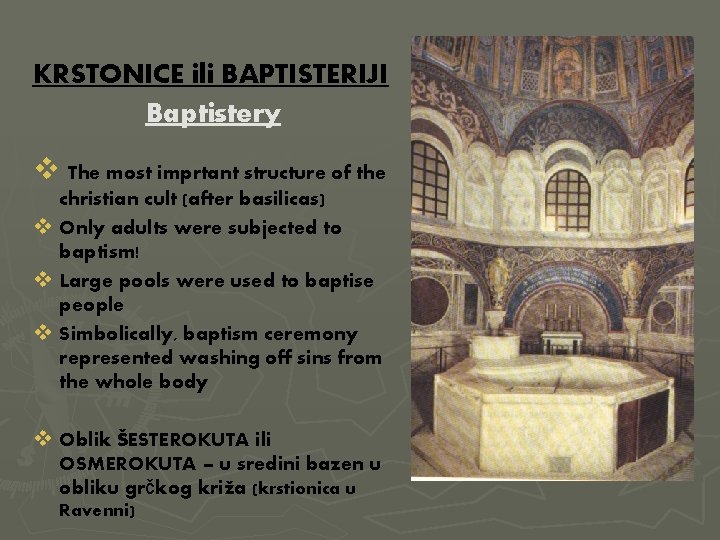
KRSTONICE ili BAPTISTERIJI Baptistery v The most imprtant structure of the christian cult (after basilicas) v Only adults were subjected to baptism! v Large pools were used to baptise people v Simbolically, baptism ceremony represented washing off sins from the whole body v Oblik ŠESTEROKUTA ili OSMEROKUTA – u sredini bazen u obliku grčkog križa (krstionica u Ravenni)
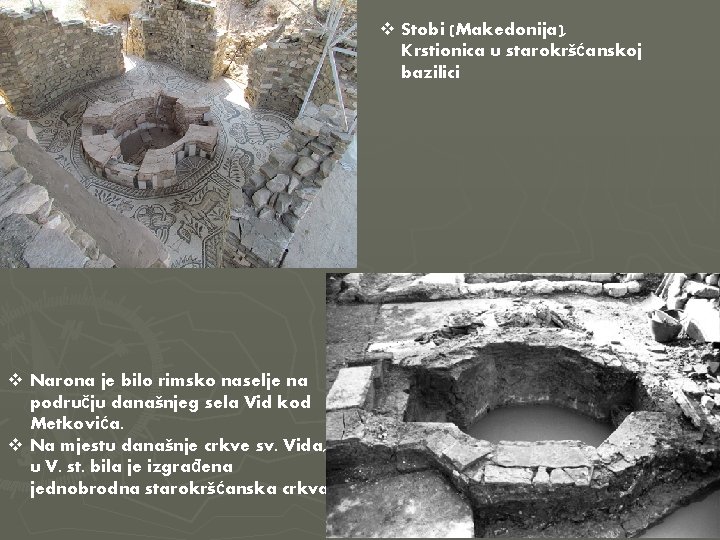
v Stobi (Makedonija), Krstionica u starokršćanskoj bazilici v Narona je bilo rimsko naselje na području današnjeg sela Vid kod Metkovića. v Na mjestu današnje crkve sv. Vida, u V. st. bila je izgrađena jednobrodna starokršćanska crkva
SLIKARSTVO SLIKE i MOZAICI u katakombama prikazuju KRŠĆANSKE SIMBOLE: KRIŽ – vjera, Kristova žrtrva SIDRO, SRCE – vjera, nada, ljubav RIBA – IHTYS (Isus Krist, Sin Božji, Spasitelj grč. ) DOBRI PASTIR 21
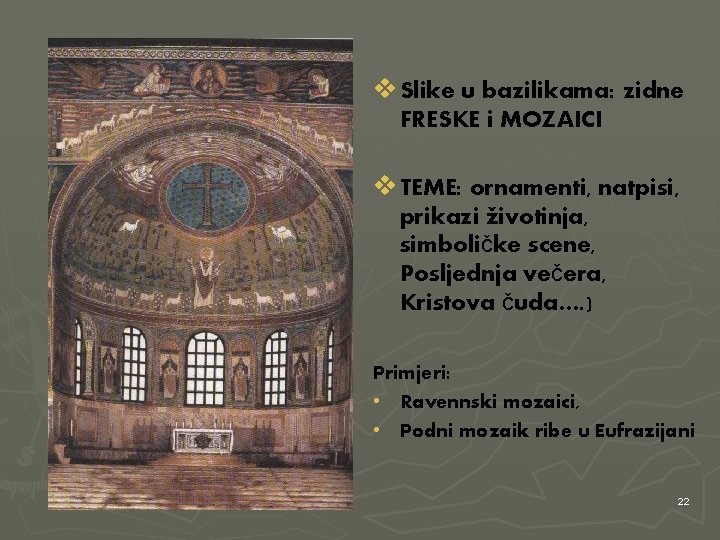
v Slike u bazilikama: zidne FRESKE i MOZAICI v TEME: ornamenti, natpisi, prikazi životinja, simboličke scene, Posljednja večera, Kristova čuda…. ) Primjeri: • Ravennski mozaici, • Podni mozaik ribe u Eufrazijani 22
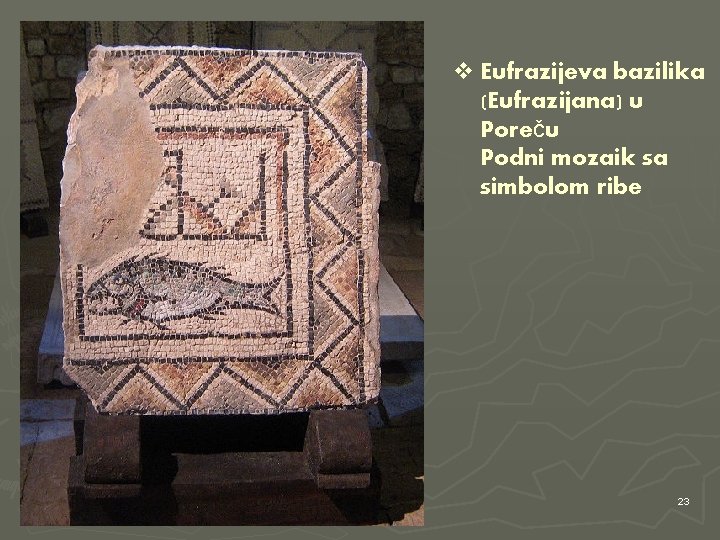
v Eufrazijeva bazilika (Eufrazijana) u Poreču Podni mozaik sa simbolom ribe 23