
Early Chinese Civilization Geography of China China was

- Slides: 12
Early Chinese Civilization
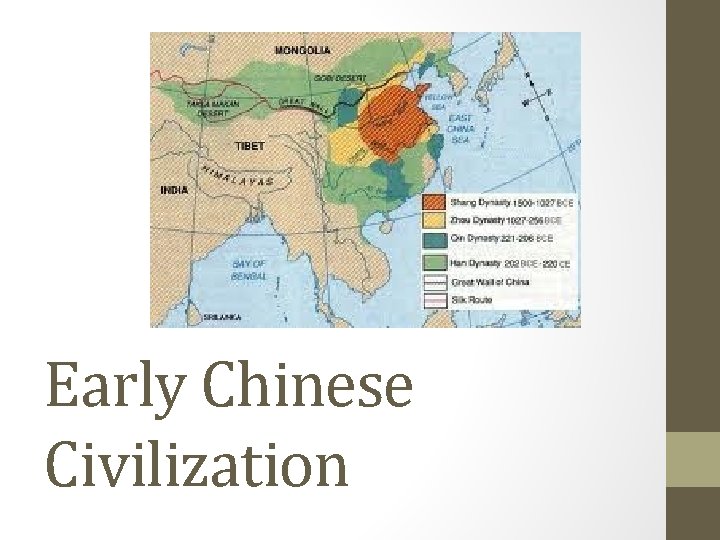
Geography of China • China was much more geographically isolated than the other early river valley civilizations. It had: • • High mountain ranges in the west and southwest Thick Jungles to the southeast The Gobi desert to the North The vast Pacific Ocean to the East • This geographic isolation helped lead China to believe they were the center of the world. • The Chinese did make some trade & contact with the outside world, but the outsiders were generally invading nomads, whom the Chinese viewed as Barbarians.
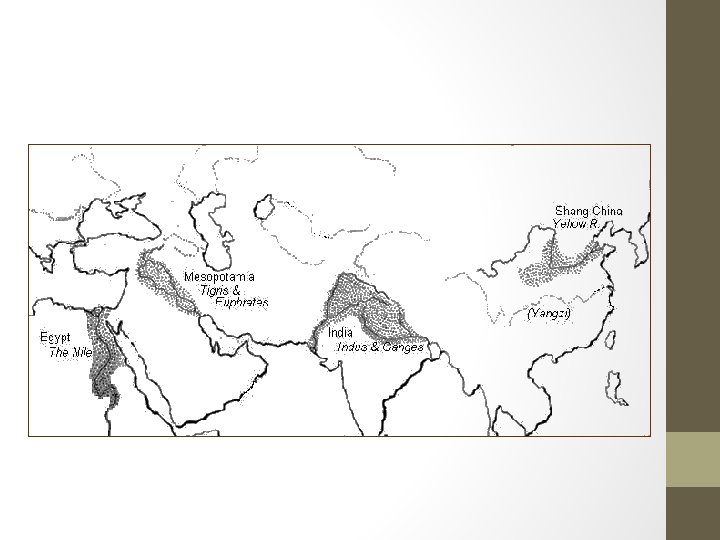
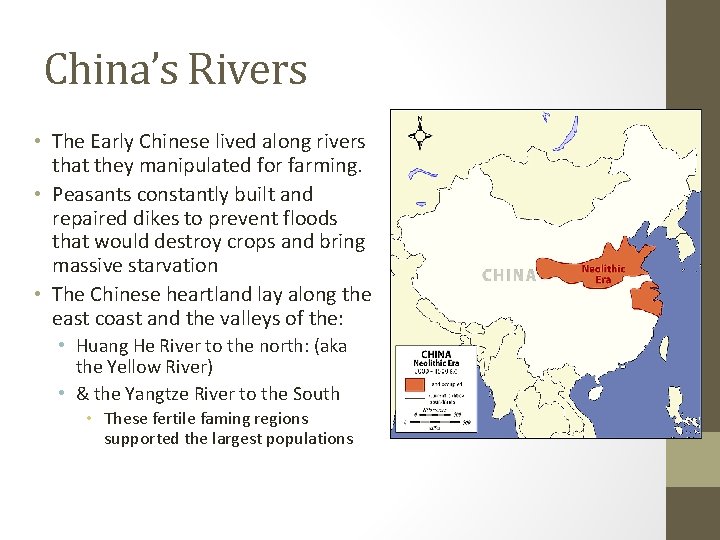
China’s Rivers • The Early Chinese lived along rivers that they manipulated for farming. • Peasants constantly built and repaired dikes to prevent floods that would destroy crops and bring massive starvation • The Chinese heartland lay along the east coast and the valleys of the: • Huang He River to the north: (aka the Yellow River) • & the Yangtze River to the South • These fertile faming regions supported the largest populations
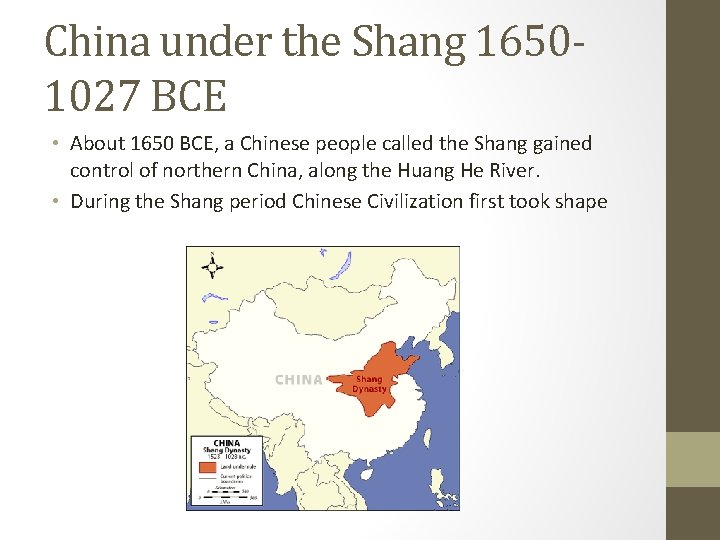
China under the Shang 16501027 BCE • About 1650 BCE, a Chinese people called the Shang gained control of northern China, along the Huang He River. • During the Shang period Chinese Civilization first took shape
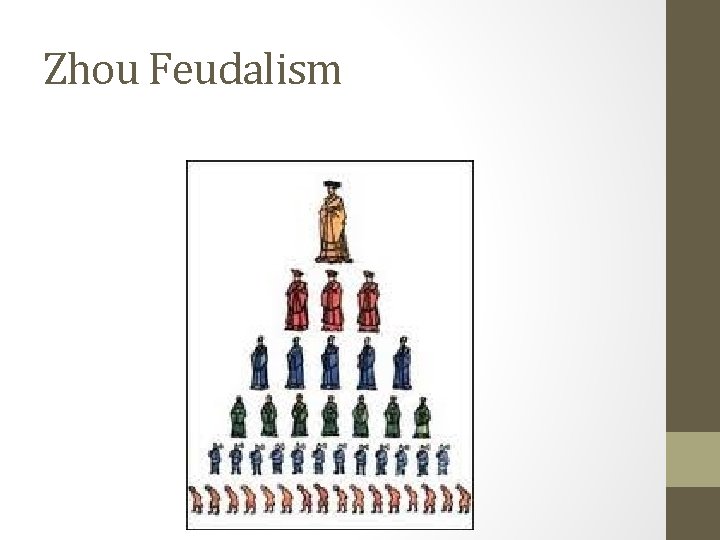
Life under the Shang • Kings controlled only a small area, while loyal princes and nobles governed most of the land • The Social Hierarchy was similar to most ancient civilizations • Royal Family & Class of Nobles • Merchants & Artisans • Peasants/Farmers • Most people were peasants that clustered in farming villages • Peasants led tough lives where everyone worked in the field, repaired dikes constantly, and was ready to fight wars if called upon by their local prince
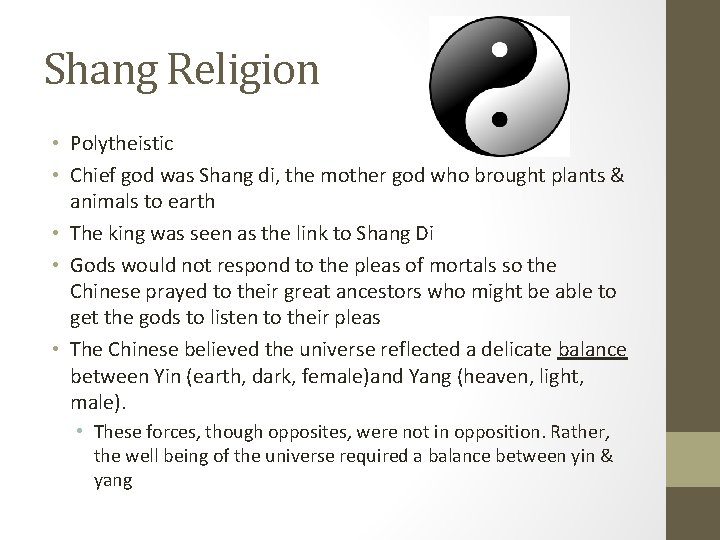
Shang Religion • Polytheistic • Chief god was Shang di, the mother god who brought plants & animals to earth • The king was seen as the link to Shang Di • Gods would not respond to the pleas of mortals so the Chinese prayed to their great ancestors who might be able to get the gods to listen to their pleas • The Chinese believed the universe reflected a delicate balance between Yin (earth, dark, female)and Yang (heaven, light, male). • These forces, though opposites, were not in opposition. Rather, the well being of the universe required a balance between yin & yang
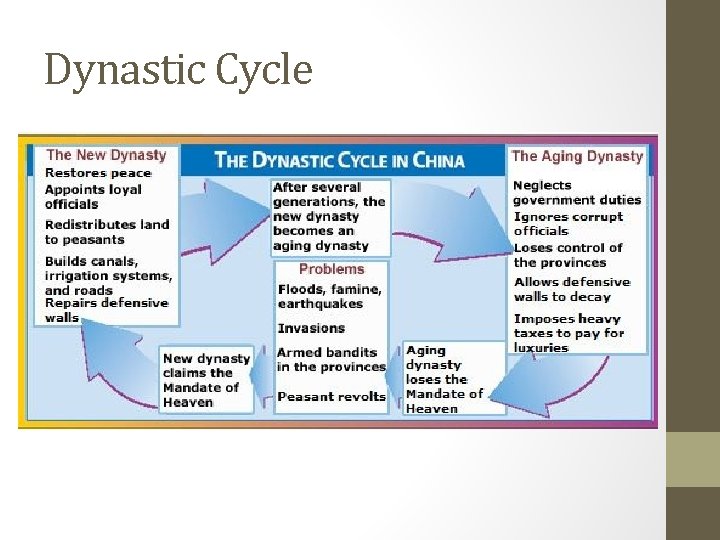
Zhou Dynasty • In 1027 BC, the battle-hardened Zhou marched out of the west to overthrow the Shang and establish the Zhou Dynasty • The Zhou Dynasty lasted until 256 BC • To Justify this rebellion, the Zhou invented the idea of the Mandate of Heaven, or divine right to rule • The cruelty of the last Shang king, the claimed, had so outraged the gods that they had sent ruin on him. • The gods then passed the Mandate of Heaven to the Zhou • The Mandate of Heaven would be a primary driver of Chinese History for thousands of years after this. • The Chinese would expand this idea to explain the Dynastic Cycle, or rise and fall of dynasties.
Dynastic Cycle
Zhou Feudalism
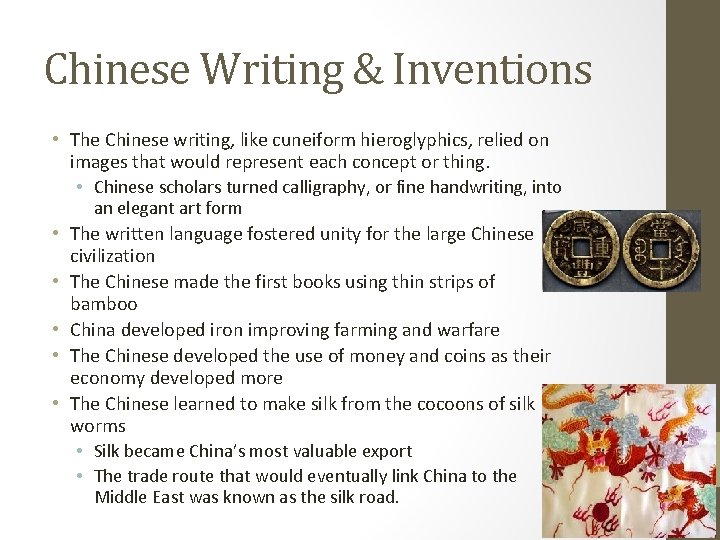
Chinese Writing & Inventions • The Chinese writing, like cuneiform hieroglyphics, relied on images that would represent each concept or thing. • Chinese scholars turned calligraphy, or fine handwriting, into an elegant art form • The written language fostered unity for the large Chinese civilization • The Chinese made the first books using thin strips of bamboo • China developed iron improving farming and warfare • The Chinese developed the use of money and coins as their economy developed more • The Chinese learned to make silk from the cocoons of silk worms • Silk became China’s most valuable export • The trade route that would eventually link China to the Middle East was known as the silk road.
• Dynastic Cycle Activity