
Early Childhood Social Emotional Development Chapter 10 Overview


- Slides: 20
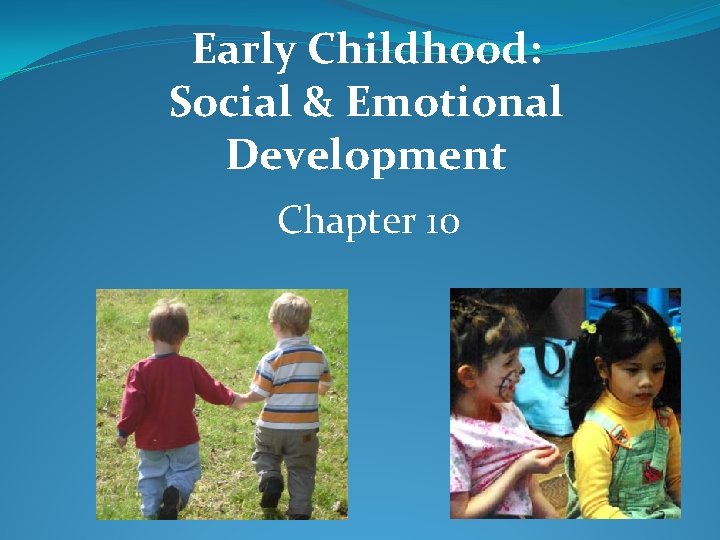
Early Childhood: Social & Emotional Development Chapter 10
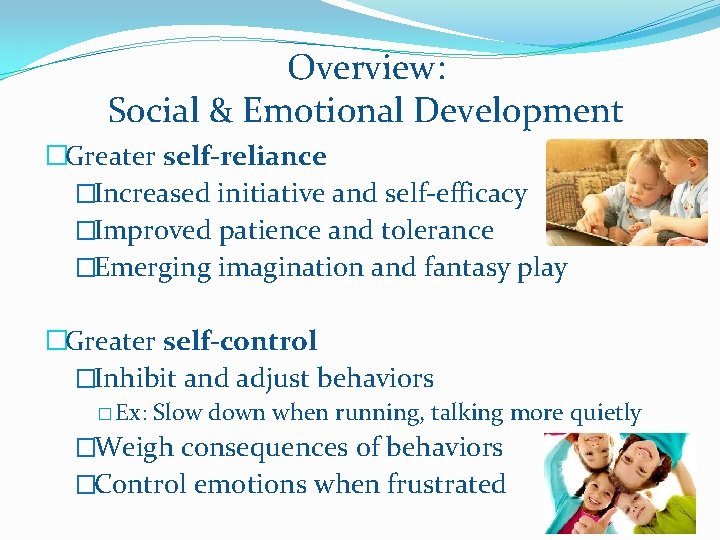
Overview: Social & Emotional Development �Greater self-reliance �Increased initiative and self-efficacy �Improved patience and tolerance �Emerging imagination and fantasy play �Greater self-control �Inhibit and adjust behaviors � Ex: Slow down when running, talking more quietly �Weigh consequences of behaviors �Control emotions when frustrated
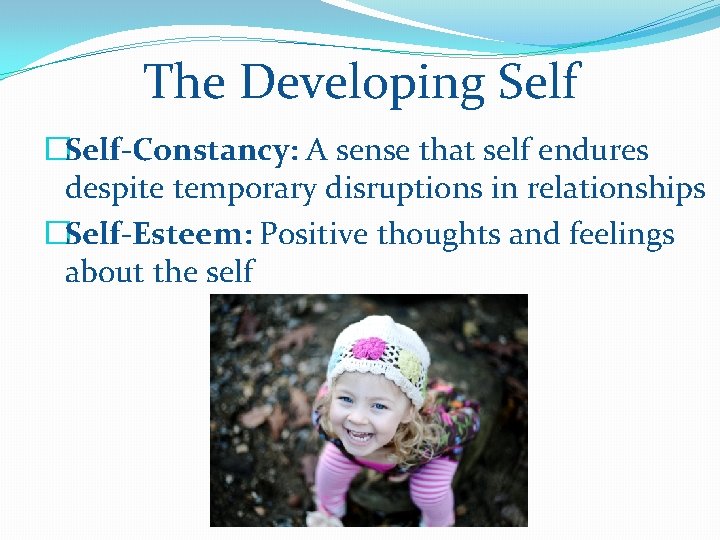
The Developing Self �Self-Constancy: A sense that self endures despite temporary disruptions in relationships �Self-Esteem: Positive thoughts and feelings about the self
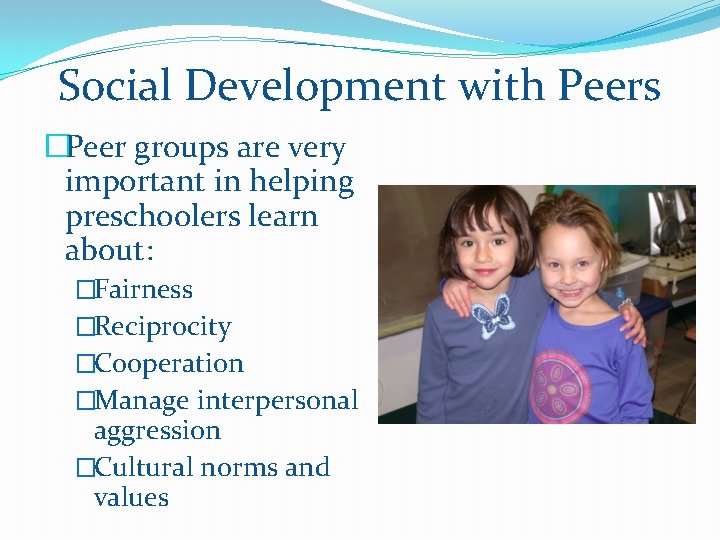
Social Development with Peers �Peer groups are very important in helping preschoolers learn about: �Fairness �Reciprocity �Cooperation �Manage interpersonal aggression �Cultural norms and values
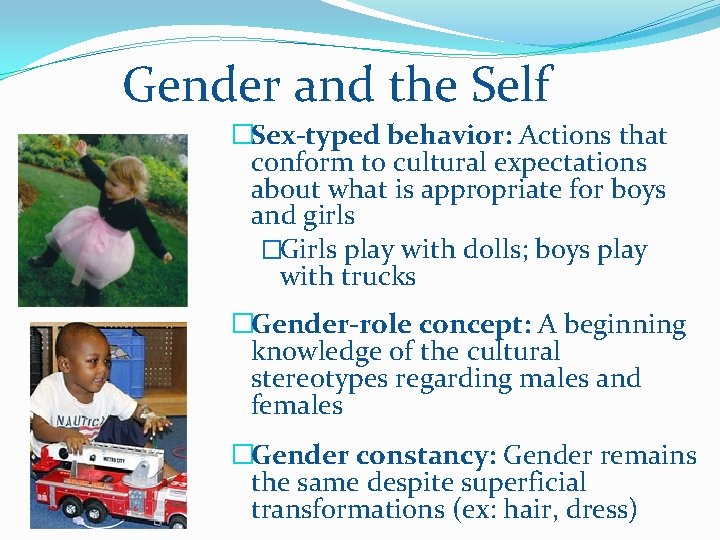
Gender and the Self �Sex-typed behavior: Actions that conform to cultural expectations about what is appropriate for boys and girls �Girls play with dolls; boys play with trucks �Gender-role concept: A beginning knowledge of the cultural stereotypes regarding males and females �Gender constancy: Gender remains the same despite superficial transformations (ex: hair, dress)
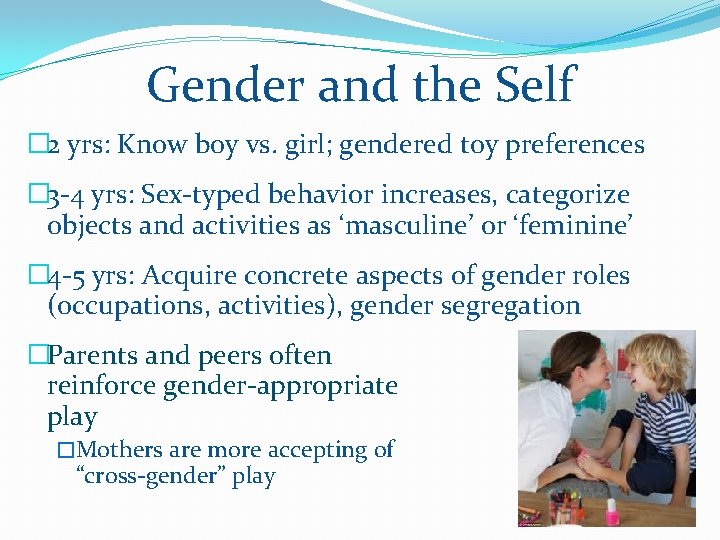
Gender and the Self � 2 yrs: Know boy vs. girl; gendered toy preferences � 3 -4 yrs: Sex-typed behavior increases, categorize objects and activities as ‘masculine’ or ‘feminine’ � 4 -5 yrs: Acquire concrete aspects of gender roles (occupations, activities), gender segregation �Parents and peers often reinforce gender-appropriate play �Mothers are more accepting of “cross-gender” play
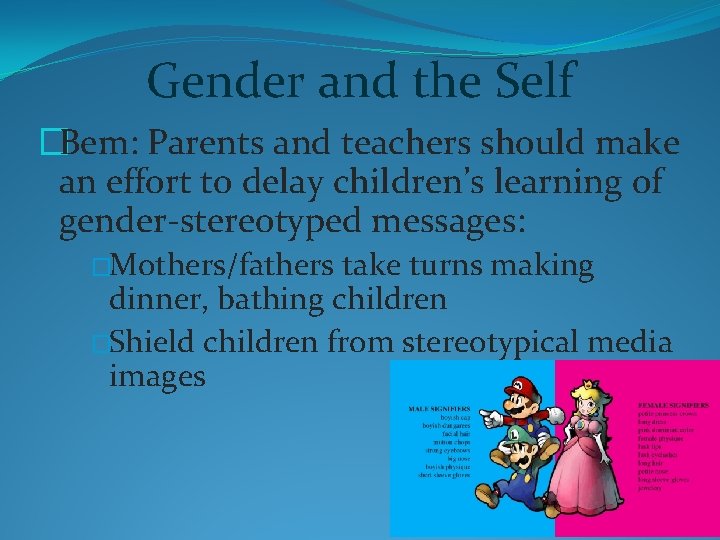
Gender and the Self �Bem: Parents and teachers should make an effort to delay children’s learning of gender-stereotyped messages: �Mothers/fathers take turns making dinner, bathing children �Shield children from stereotypical media images
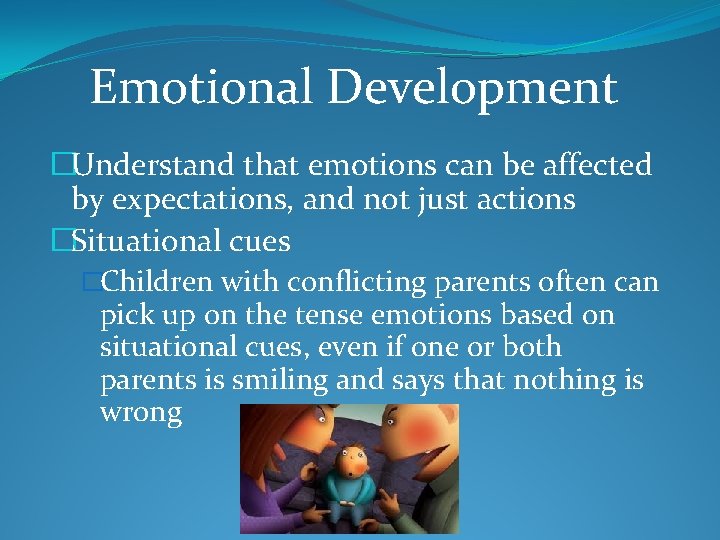
Emotional Development �Understand that emotions can be affected by expectations, and not just actions �Situational cues �Children with conflicting parents often can pick up on the tense emotions based on situational cues, even if one or both parents is smiling and says that nothing is wrong
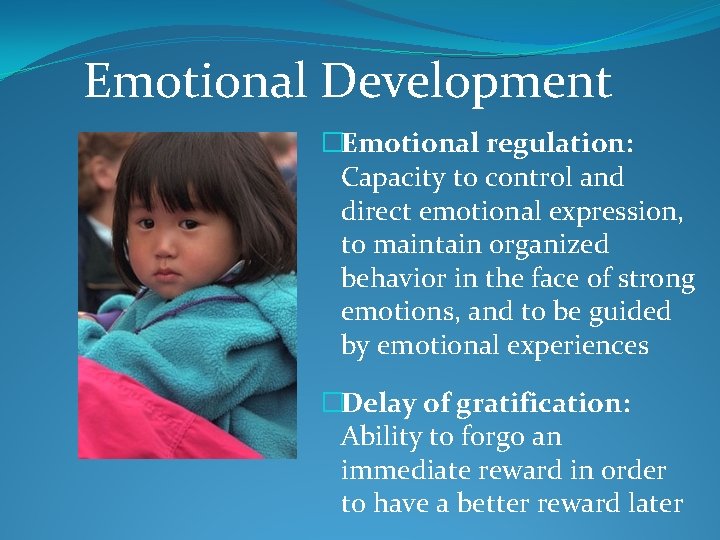
Emotional Development �Emotional regulation: Capacity to control and direct emotional expression, to maintain organized behavior in the face of strong emotions, and to be guided by emotional experiences �Delay of gratification: Ability to forgo an immediate reward in order to have a better reward later
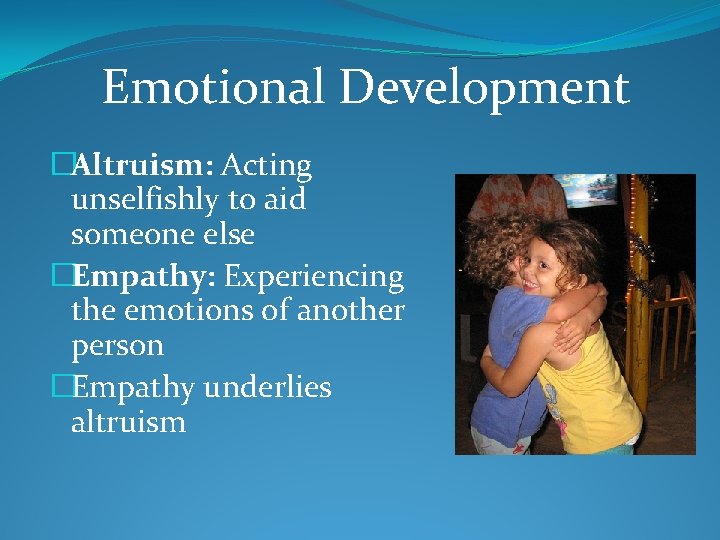
Emotional Development �Altruism: Acting unselfishly to aid someone else �Empathy: Experiencing the emotions of another person �Empathy underlies altruism
Empathy
Emotional Development �Aggression �Instrumental aggression: Use of aggression as a means to get something (early preschool) �Hostile aggression: Aimed solely at hurting someone else, more verbal and less physical (early childhood) �At this time, overall level of physical aggression declines because of a drop in instrumental aggression
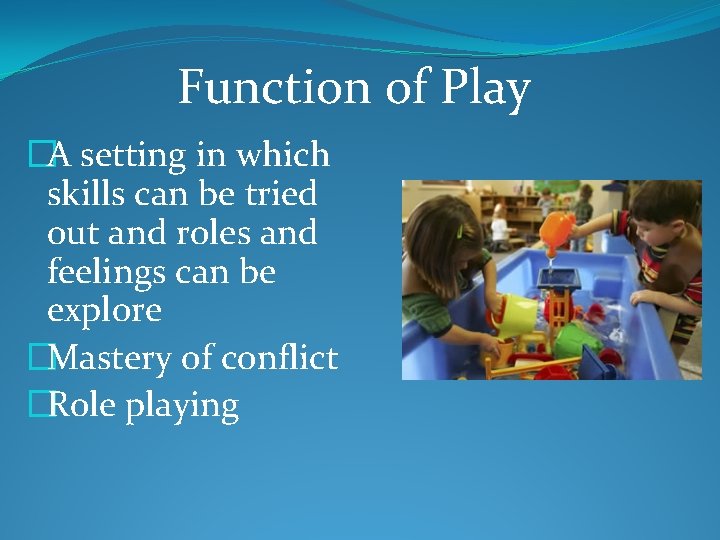
Function of Play �A setting in which skills can be tried out and roles and feelings can be explore �Mastery of conflict �Role playing
Play Therapy
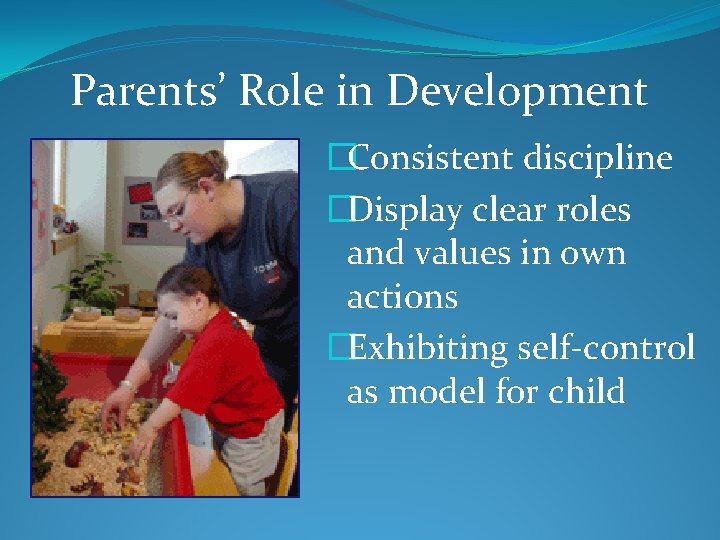
Parents’ Role in Development �Consistent discipline �Display clear roles and values in own actions �Exhibiting self-control as model for child
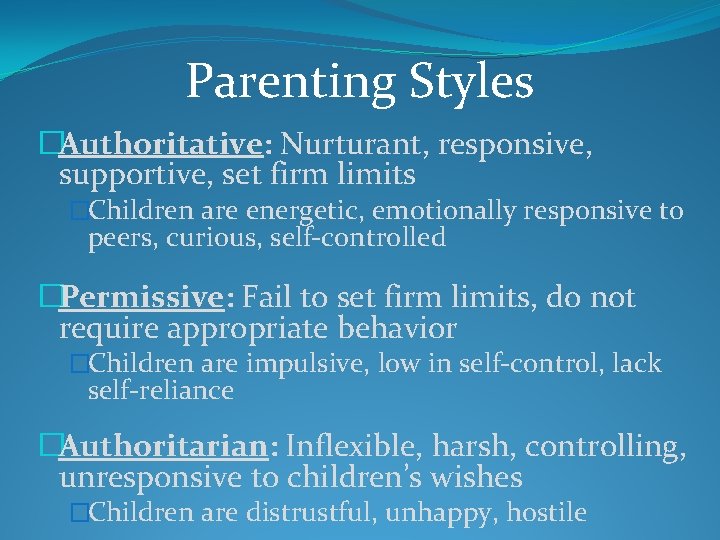
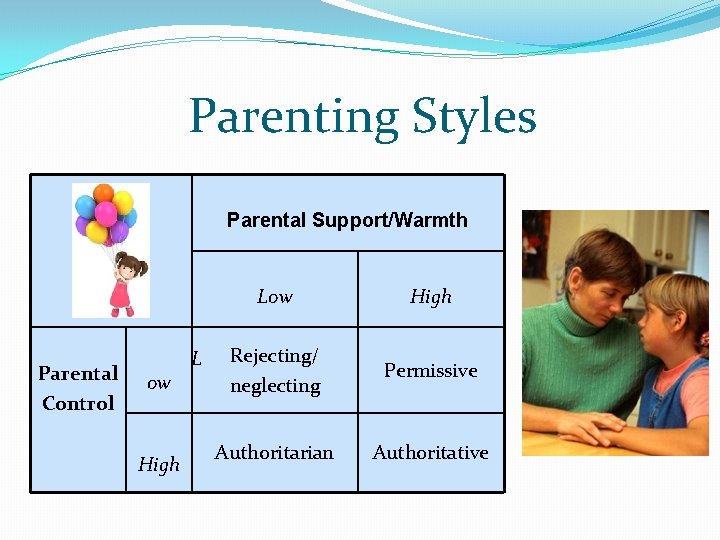
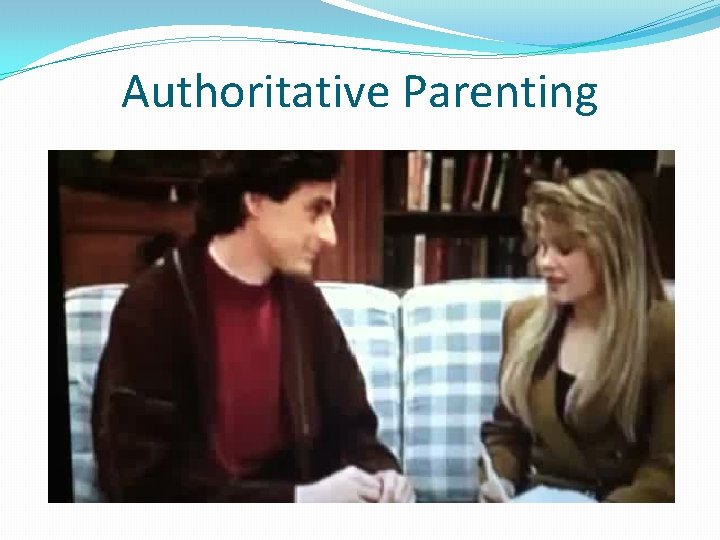
Parenting Styles �Authoritative: Nurturant, responsive, supportive, set firm limits �Children are energetic, emotionally responsive to peers, curious, self-controlled �Permissive: Fail to set firm limits, do not require appropriate behavior �Children are impulsive, low in self-control, lack self-reliance �Authoritarian: Inflexible, harsh, controlling, unresponsive to children’s wishes �Children are distrustful, unhappy, hostile
Parenting Styles Parental Support/Warmth Low Parental Control ow High L Rejecting/ neglecting Authoritarian High Permissive Authoritative
Permissive Parenting
Authoritarian Parenting
Authoritative Parenting