
Early Childhood Comprehensive System YOUNG CHILDREN TRAUMA TOXIC

- Slides: 38
Early Childhood Comprehensive System YOUNG CHILDREN, TRAUMA & TOXIC STRESS
Building Health Through Integration: Great Start Trauma Informed System Goal - Integrate a trauma informed approach into our Great Start system Education regarding trauma & toxic stress Expand screening Improve access to intervention services
Today’s Objectives �Review key ideas about early brain development �Understand the effect of trauma & toxic stress on young children �Discuss ideas for preventing & lessening the effect of toxic stress & trauma
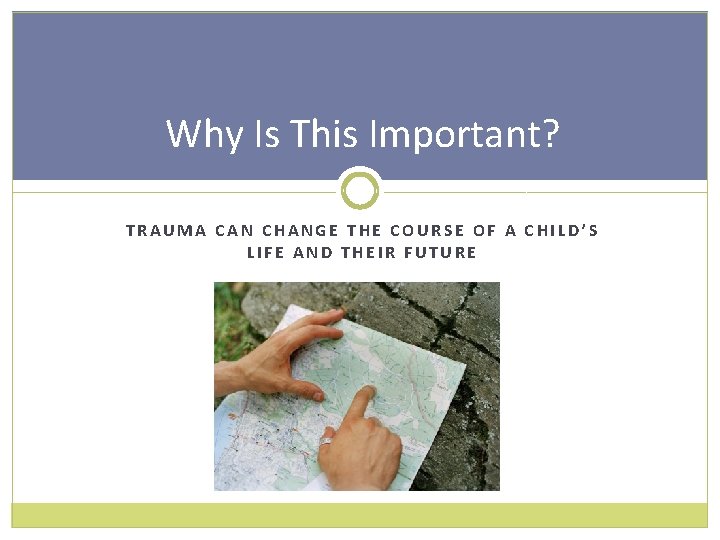
Why Is This Important? TRAUMA CAN CHANGE THE COURSE OF A CHILD’S LIFE AND THEIR FUTURE
Important Terms �Trauma – an intense event that threatens safety or security of an individual �Toxic Stress – re-occurring negative experiences that threaten safety or security �Traumatic Stress- event, the experience and the effect
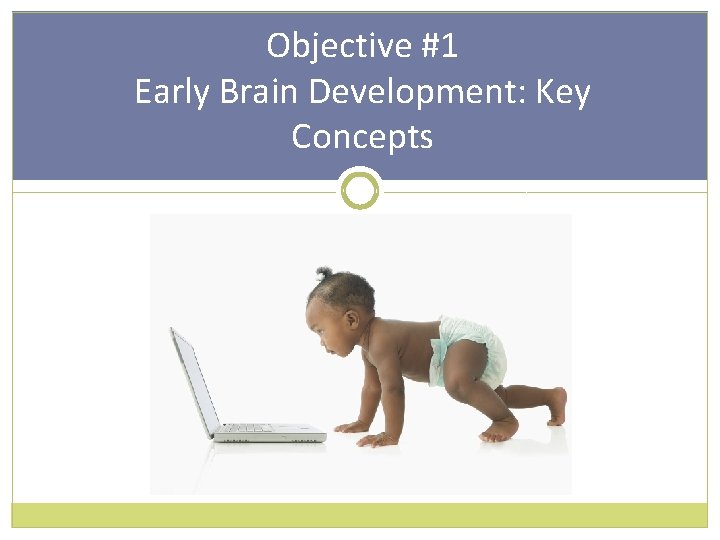
Objective #1 Early Brain Development: Key Concepts
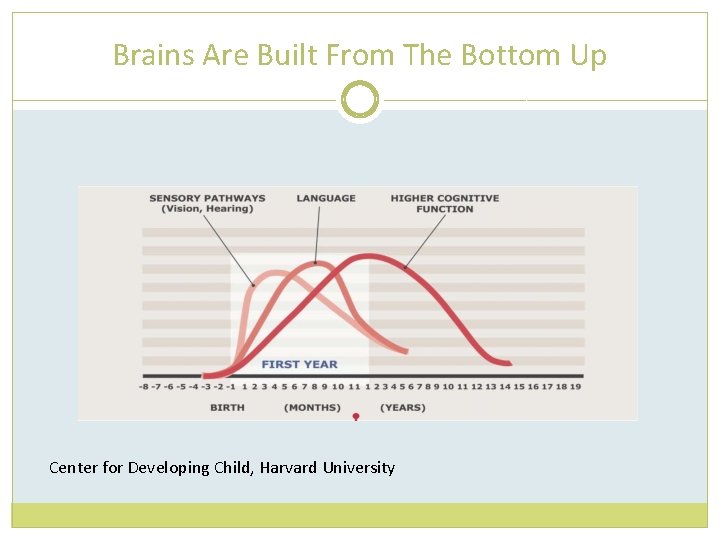
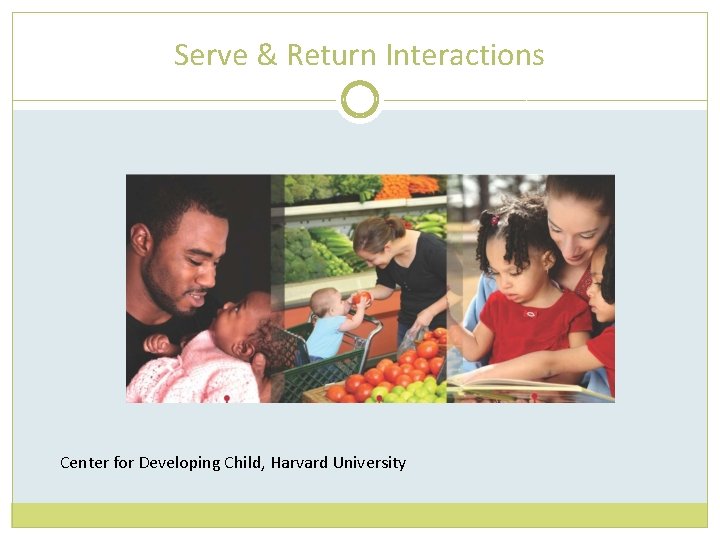
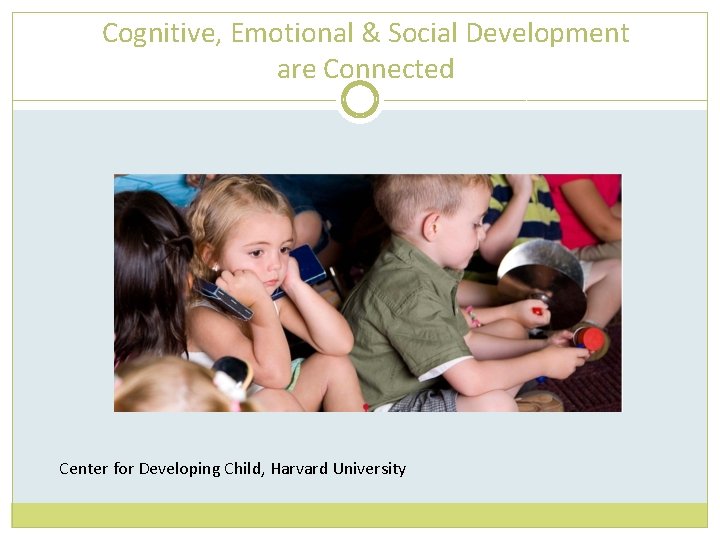
Early Brain Development: Key Concepts 1. Experience shapes brain architecture 2. Brains are built from the bottom up 3. Serve and return 4. Cognitive, emotional & social development are connected 5. Experience alters how are genes are expressed
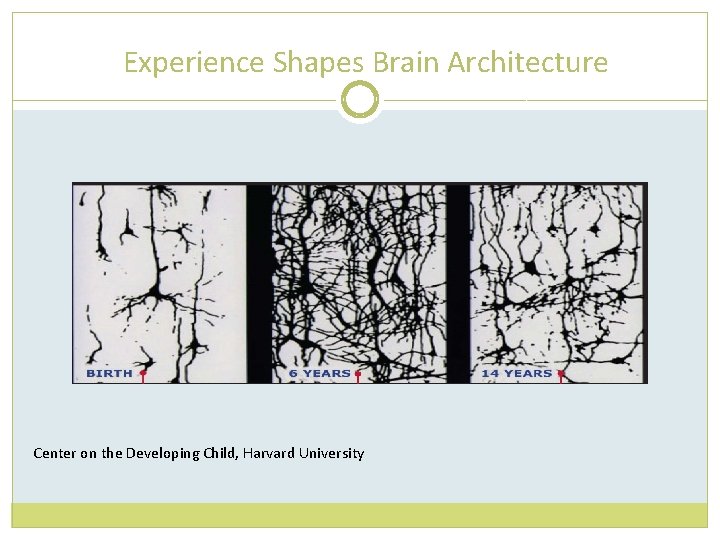
Experience Shapes Brain Architecture Center on the Developing Child, Harvard University
Brains Are Built From The Bottom Up Center for Developing Child, Harvard University
Serve & Return Interactions Center for Developing Child, Harvard University
Cognitive, Emotional & Social Development are Connected Center for Developing Child, Harvard University
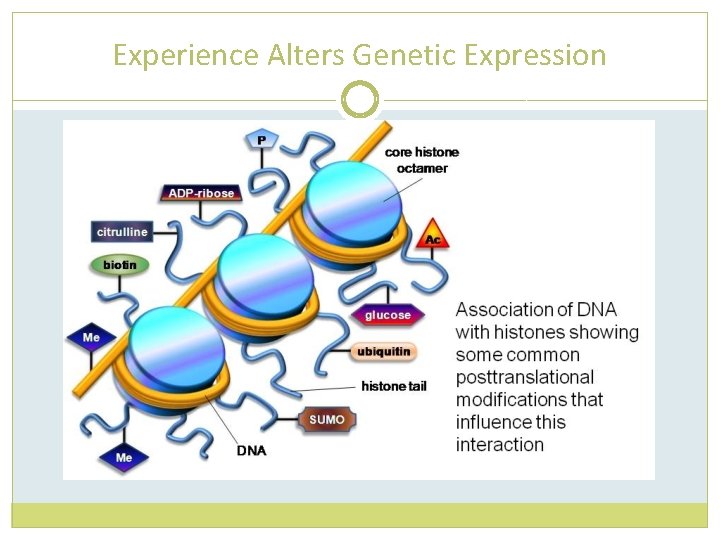
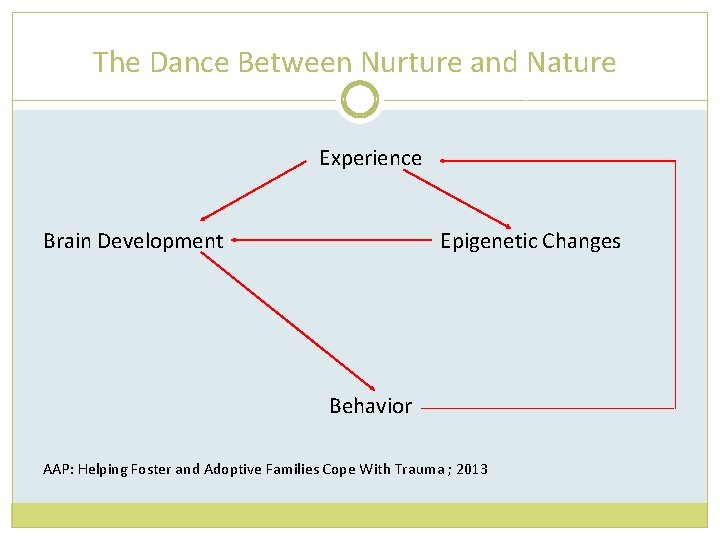
Experience Alters Genetic Expression
The Dance Between Nurture and Nature Experience Brain Development Epigenetic Changes Behavior AAP: Helping Foster and Adoptive Families Cope With Trauma ; 2013
Experience Build Brain Architecture �http: //developingchild. harvard. edu/resources/multimedi a/videos/three_core_concepts/brain_architecture/
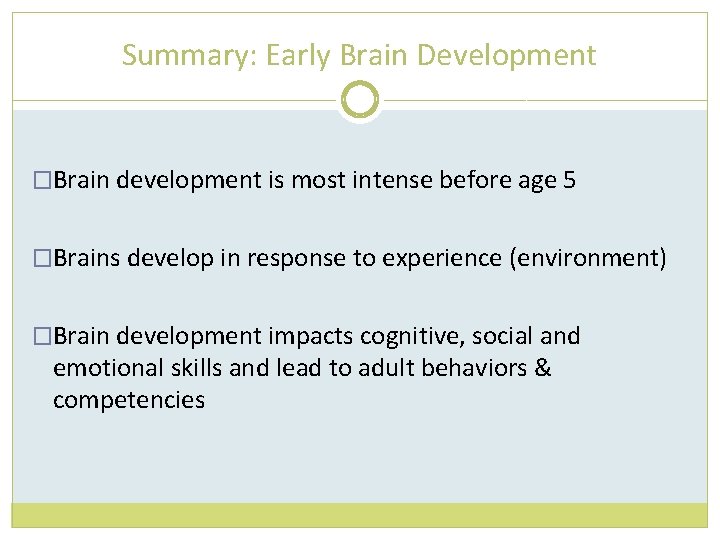
Summary: Early Brain Development �Brain development is most intense before age 5 �Brains develop in response to experience (environment) �Brain development impacts cognitive, social and emotional skills and lead to adult behaviors & competencies
Objective #2 Stress, Trauma & Toxic Stress
How Does Stress Work? �Stress is a normal & necessary part of life �Stress disrupts our sense of well being �Stress causes physiological reactions �Stress causes behavioral reactions
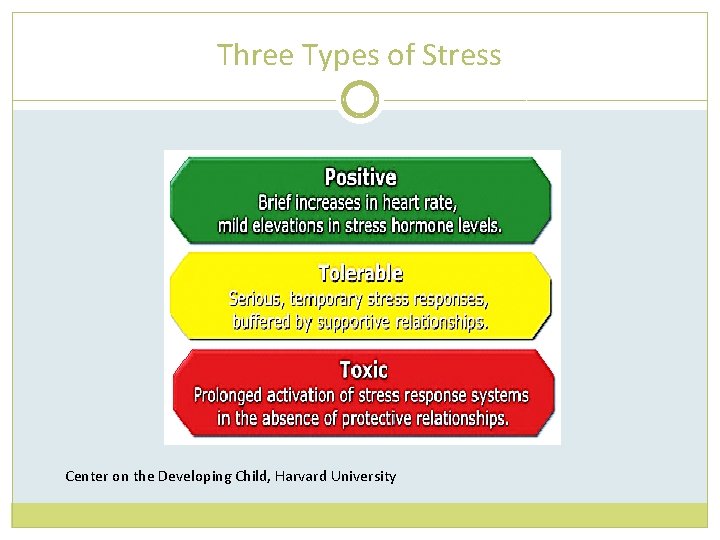
Three Types of Stress Center on the Developing Child, Harvard University
What Are Trauma & Toxic Stress? �Trauma – an intense event that threatens safety or security of an individual �Toxic Stress – re-occurring negative experiences that threaten safety or security �Traumatic Stress-event, the experience, and the effect
How Does Trauma Affect Young Children? �Young children experience trauma differently than older children or adults �Primarily a sensory experience �Not as able to anticipate danger and protect self �Limited ability to express thoughts & feelings �Different understanding of causation - the power of thoughts, wishes, fears Source: National Child Traumatic Stress Network
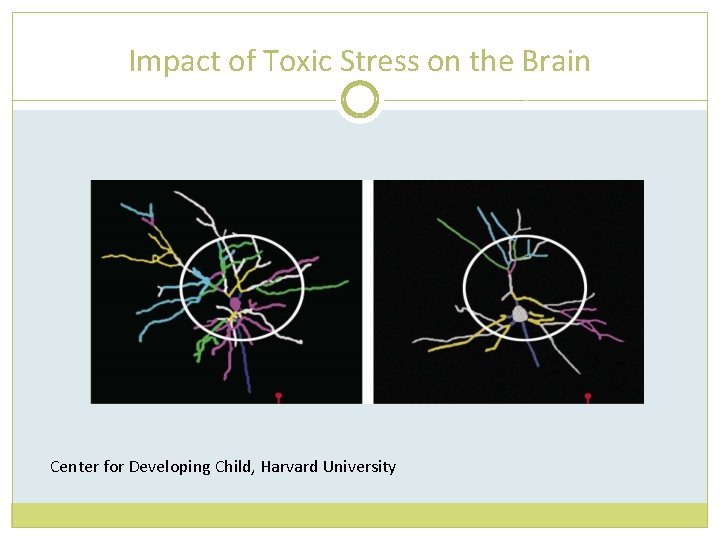
Impact of Toxic Stress on the Brain Center for Developing Child, Harvard University
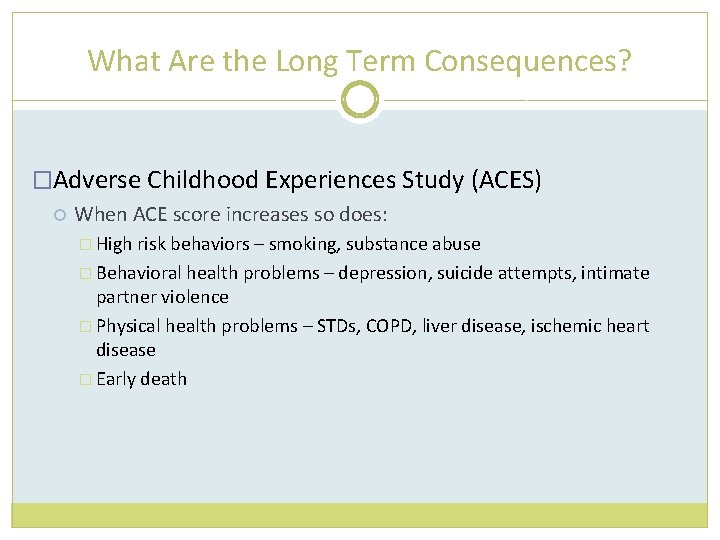
What Are the Long Term Consequences? �Adverse Childhood Experiences Study (ACES) When ACE score increases so does: � High risk behaviors – smoking, substance abuse � Behavioral health problems – depression, suicide attempts, intimate partner violence � Physical health problems – STDs, COPD, liver disease, ischemic heart disease � Early death
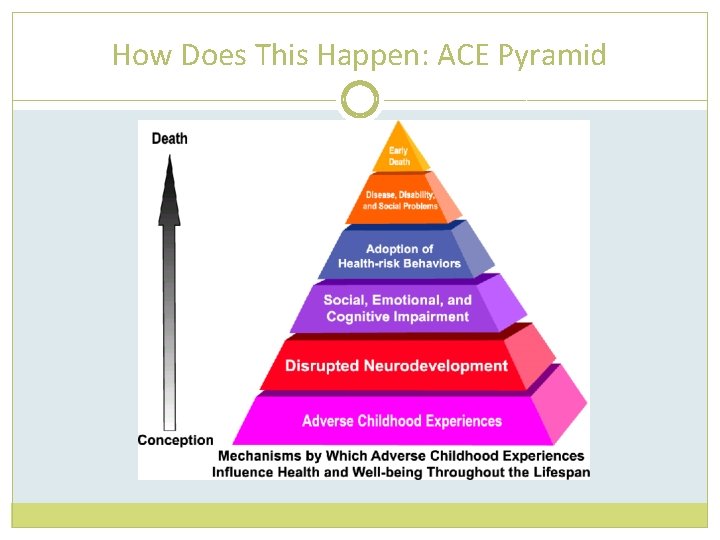
How Does This Happen: ACE Pyramid
Summary: The Impact of Trauma & Toxic Stress �Changes in physiology �Changes in brain architecture �Changes in skills, abilities and behavior �Changes in health and mental health
The Impact of Early Adversity on Children’s Development �http: //developingchild. harvard. edu/index. php/resources /multimedia/videos/inbrief_series/inbrief_impact_of_ad versity/
Objective #3 What’s the Good News?
Supportive relationships buffer/protect young children from the effects of trauma/toxic stress
Components of Trauma Informed Care and Prevention �Understand impact of trauma for adults & children �Screen for trauma exposure/toxic stress �Teach strategies for preventing & mitigating stress/trauma �Refer for treatment/services as appropriate
Trauma Screening �Ask what happened rather than what’s wrong �Unresolved trauma in parents may lead to toxic stress for children �An opportunity to support & educate parents/caregivers �Data base of trauma screening tools www. nctsn. org
Strategies for Preventing/Mitigating Trauma/Toxic Stress �Emphasize What Young Children Need �Teach Coping Skills �Enhance Protective Factors
Strategies for Preventing/Mitigating Trauma/Toxic Stress What Young Children Need Safety Security Nurturing
Strategies for Preventing/Mitigating Trauma/Toxic Stress �Encourage development of social emotional skills Form relationships Communicate needs Regulate emotions Explore their world �Enable child’s own abilities
Strategies for Preventing/Mitigating Trauma/Toxic Stress �Support Caregivers & Teach Coping Skills Self care �Nutrition, sleep, exercise Stress management �Support, stress relievers Problem solving �Address stressors (safety, income, health access)
Strategies for Preventing/Mitigating Trauma/Toxic Stress �Enhance Protective Factors Family Functioning/ Resiliency Social Support Concrete Support Child Development/Knowledge of Parenting Nurturing and Attachment
Strategies for Preventing/Mitigating Trauma/Toxic Stress �Refer for Services School completion & job training Mental health treatment (adult or child) Substance abuse treatment Intimate partner violence services
In Summary �Trauma & toxic stress change a child’s experience of the world �Which leads to changes in biology & brain architecture �As a result, children act differently (defensively) �Which impacts how they learn, get along with others, and take care of themselves �Supportive relationships protect children from the impact of trauma & toxic stress
How Can I Learn More? �Website: www. michigan. gov/traumatoxicstress �Trauma Informed System Coordinator Mary Mueller, LMSW (517) 373 -4190 Mueller. M 1@michigan. gov
QUESTIONS ?