
Early childhood caries ECC etiology prevention treatment L

- Slides: 60
Early childhood caries (ECC) etiology, prevention, treatment L. Papagiannoulis, D. D. S. M. Sc. , Ph. D Prof. and Head, Dep. Paediatric Dentistry Dental School, University of Athens Odessa, October 2016
University of Athens
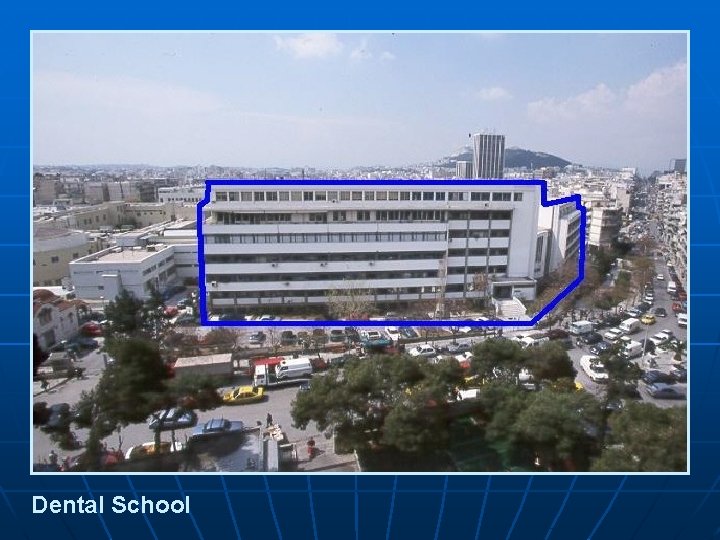
Dental School
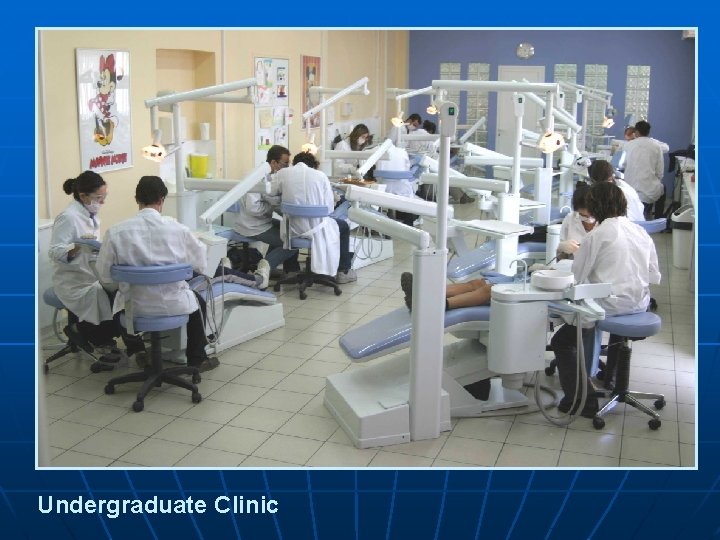
Undergraduate Clinic
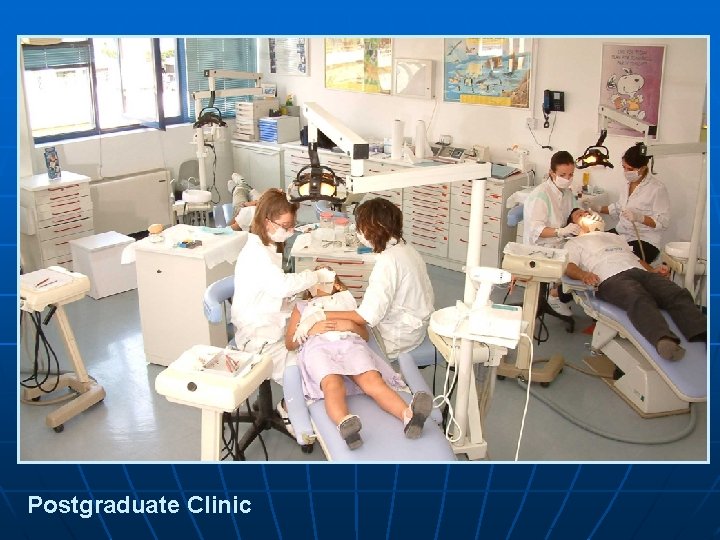
Postgraduate Clinic
Definition of ECC n n The presence of 1 or more decayed (noncavitated or cavitated lesions), missing (due to caries), or filled tooth surfaces in any primary tooth in a child 71 months of age or younger. In children younger than 3 years of age, any sign of smooth-surface caries is indicative of severe early childhood caries
Terminology n n Baby bottle syndrome Nursing caries ( bottle or breast feeding) Caries related to pacifier use Rampant caries
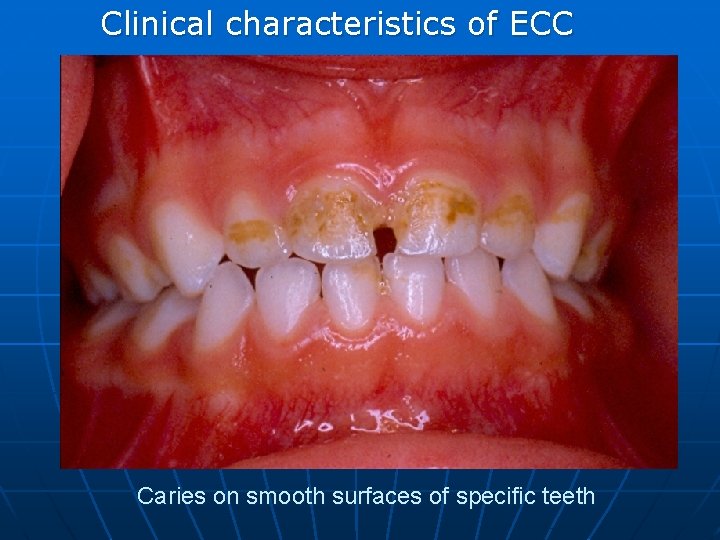
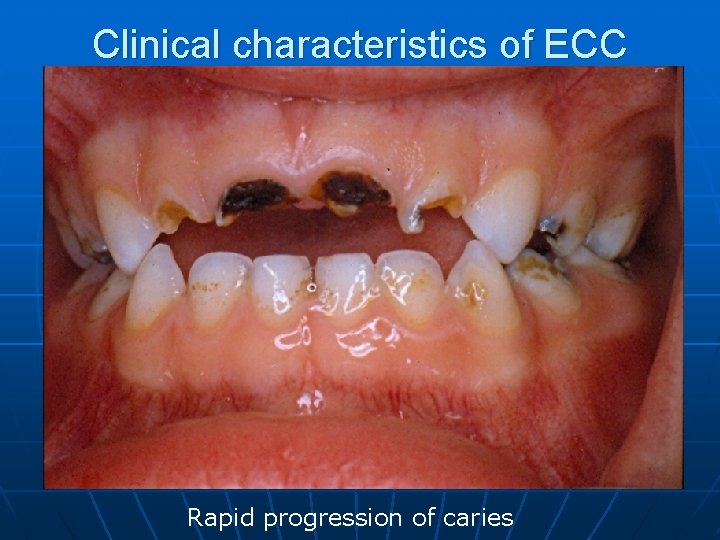
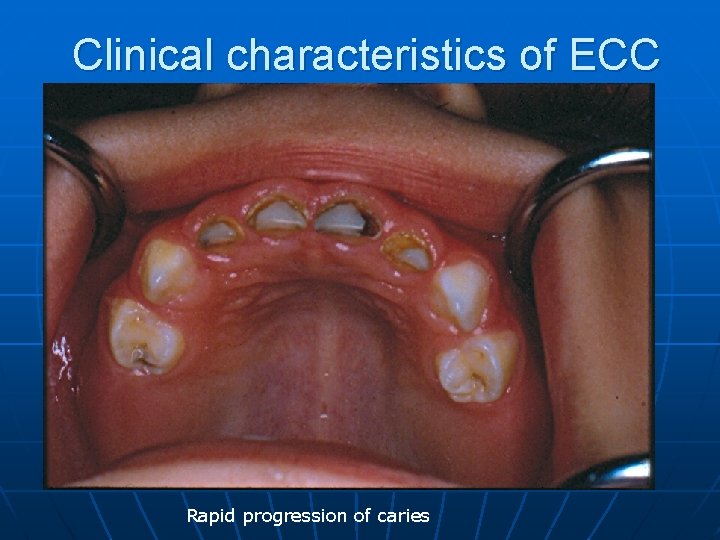
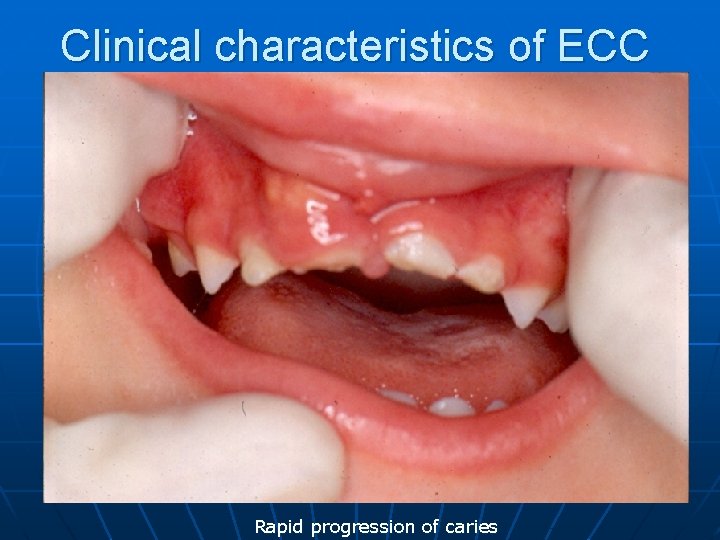
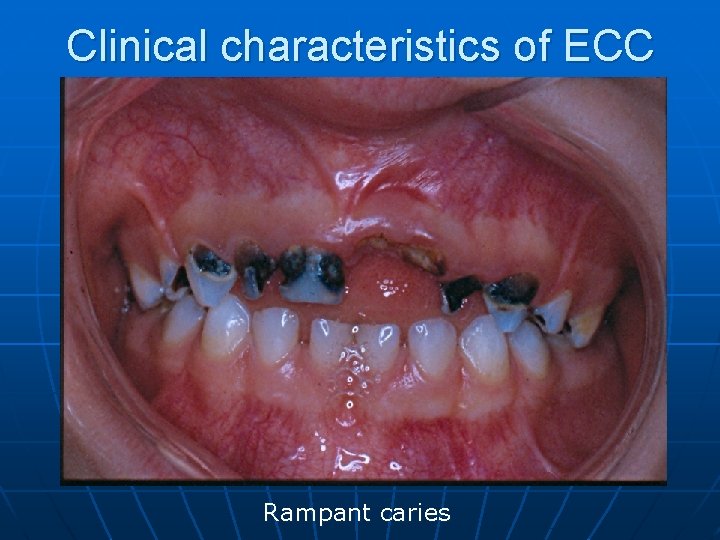
Characteristics of ECC n n n Early caries in smooth surfaces of specific teeth usually Rapid progression Caries in many teeth early in life
Clinical characteristics of ECC Caries on smooth surfaces of specific teeth
Clinical characteristics of ECC Rapid progression of caries
Clinical characteristics of ECC Rapid progression of caries
Clinical characteristics of ECC Rapid progression of caries
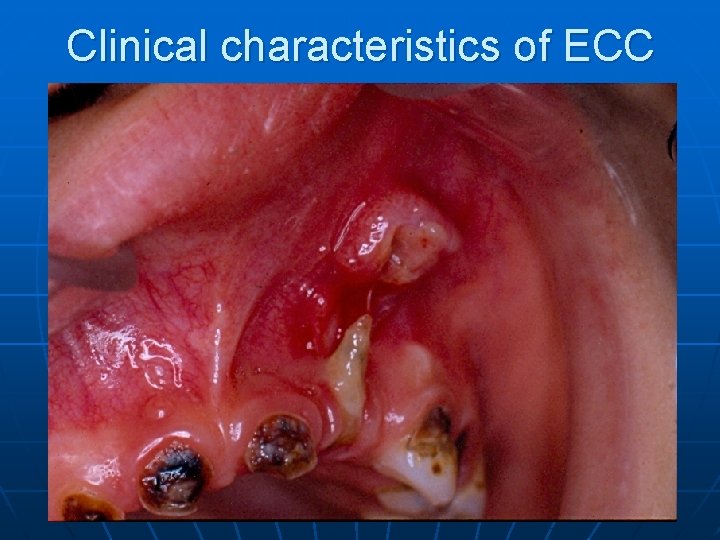
Clinical characteristics of ECC
Clinical characteristics of ECC Rampant caries
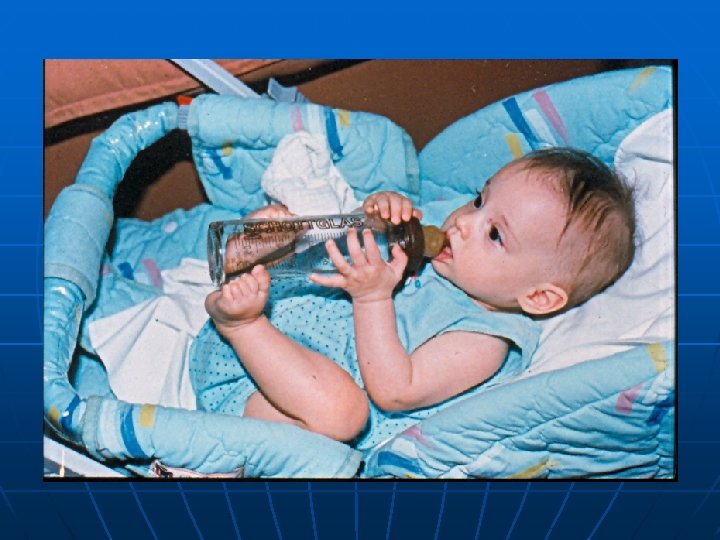
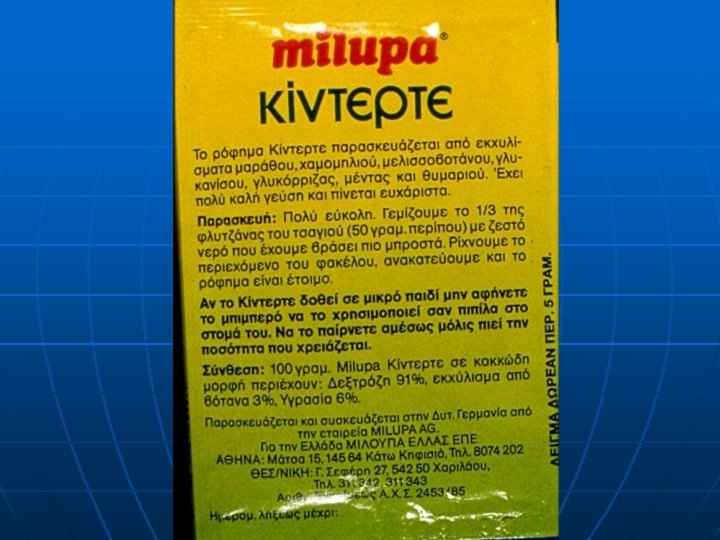
Factors related to ECC n n n Frequent consumption of liquids containing fermentable carbohydrates (juice, milk, formula, soda) increase the risk of caries Frequent use of the baby bottle, especially during the night sleep and breast feeding on demand are associated but not consistently implicated Use of pacifier with honey
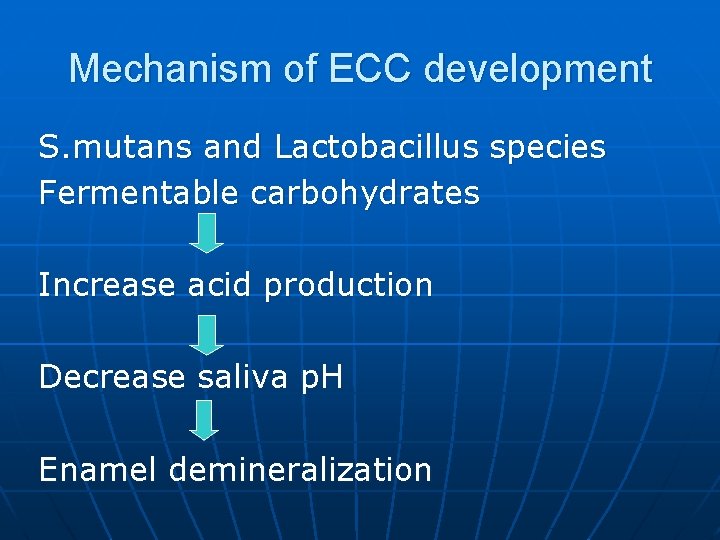
Mechanism of ECC development S. mutans and Lactobacillus species Fermentable carbohydrates Increase acid production Decrease saliva p. H Enamel demineralization
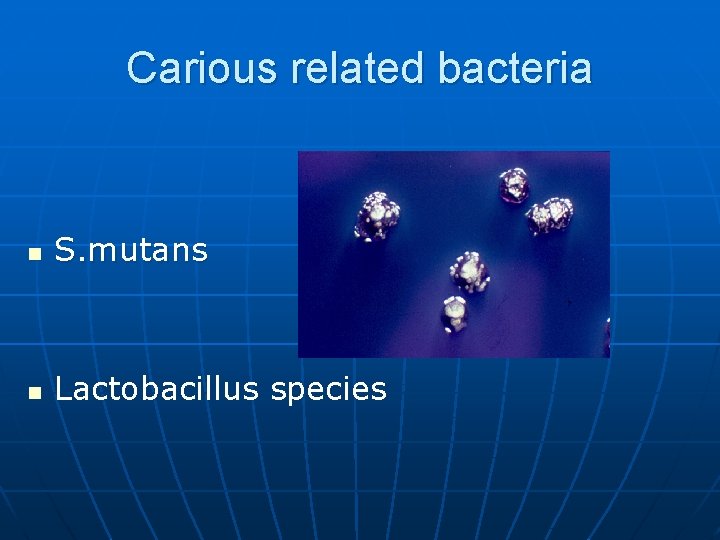
Carious related bacteria n S. mutans n Lactobacillus species
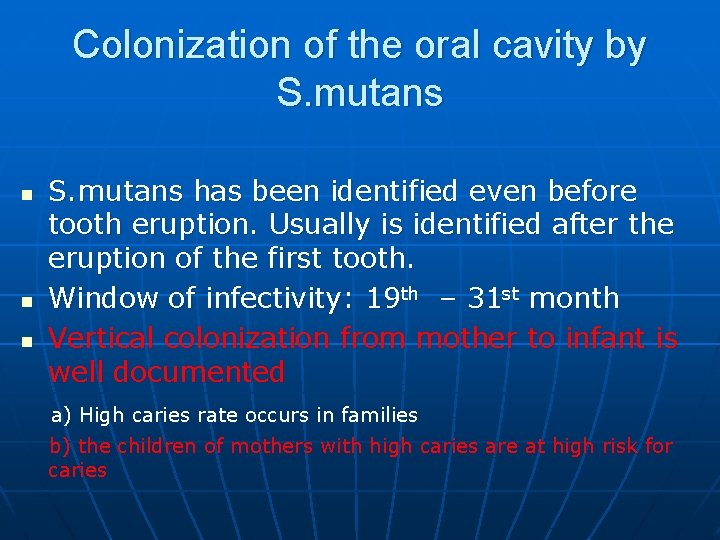
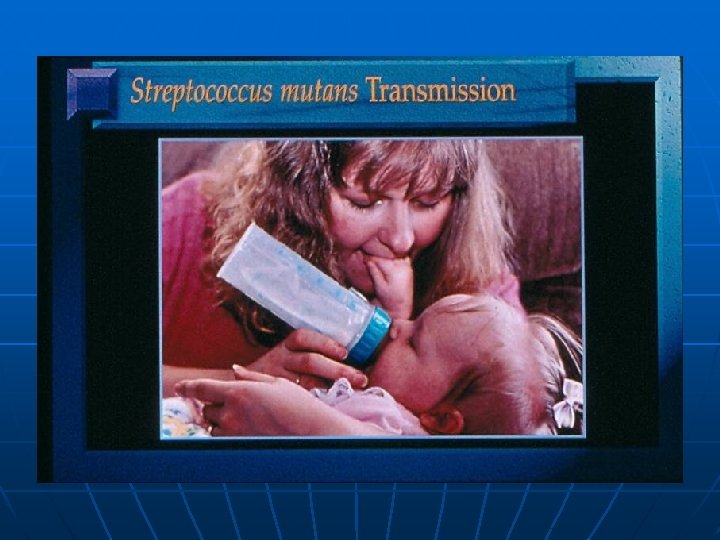
Colonization of the oral cavity by S. mutans n n n S. mutans has been identified even before tooth eruption. Usually is identified after the eruption of the first tooth. Window of infectivity: 19 th – 31 st month Vertical colonization from mother to infant is well documented a) High caries rate occurs in families b) the children of mothers with high caries are at high risk for caries
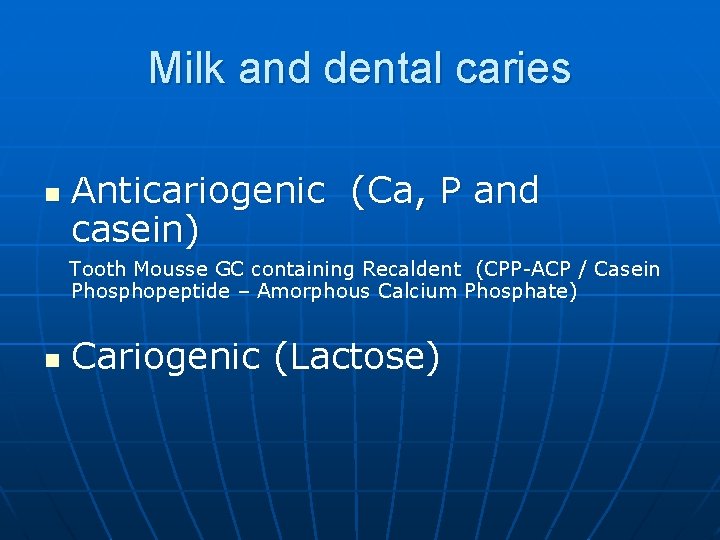
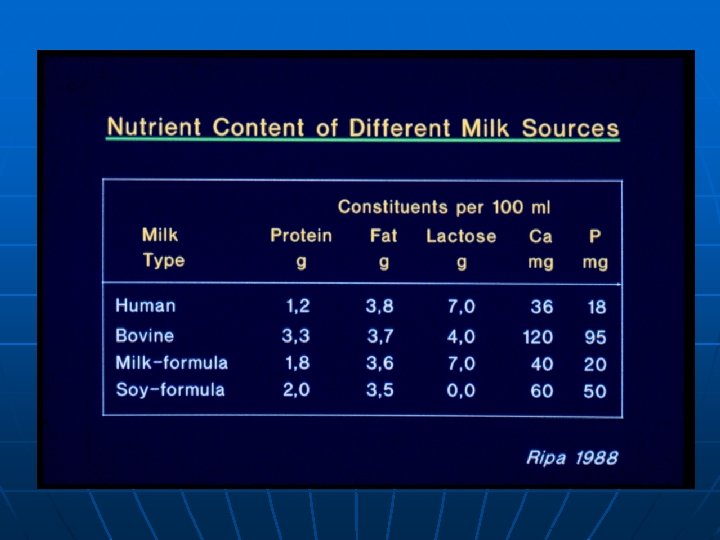
Milk and dental caries n Anticariogenic (Ca, P and casein) Tooth Mousse GC containing Recaldent (CPP-ACP / Casein Phosphopeptide – Amorphous Calcium Phosphate) n Cariogenic (Lactose)
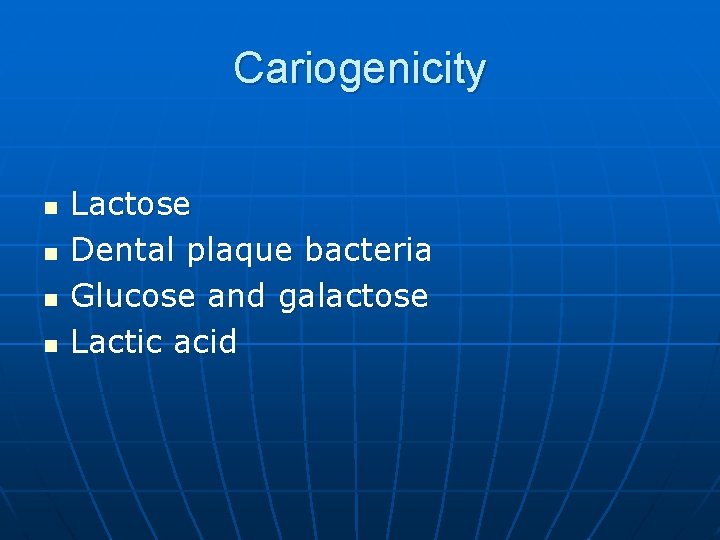
Cariogenicity n n Lactose Dental plaque bacteria Glucose and galactose Lactic acid
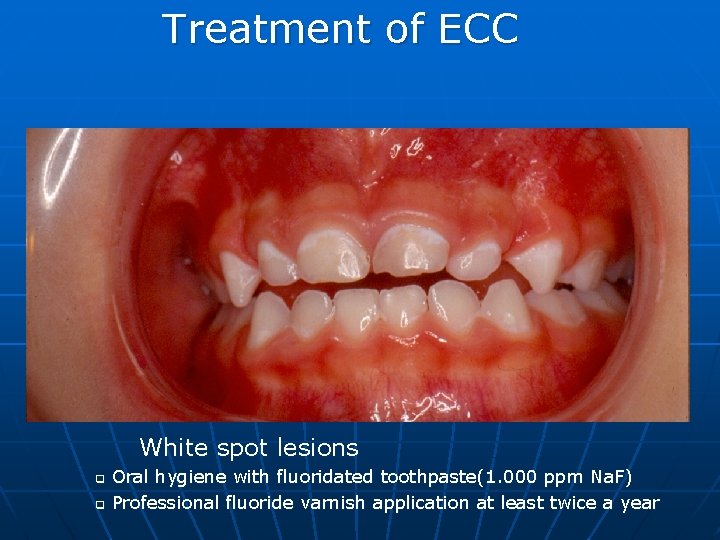
Treatment of ECC White spot lesions q q Oral hygiene with fluoridated toothpaste(1. 000 ppm Na. F) Professional fluoride varnish application at least twice a year
EAPD and AAPD Policy for ECC prevention n n n Maternal dental care to decrease the transmission of cariogenic bacteria Infants should not sleep with a bottle Ad libitum nocturnal breast feeding should be avoided after the first primary tooth eruption Avoidance of repetitive consumption of liquid fermentable carbohydrates Visit to the dentist within 6 months of the first tooth eruption and no later than 12 months Oral hygiene by the time of the first tooth eruption with fluoridated toothpaste Professional fluoride varnish application
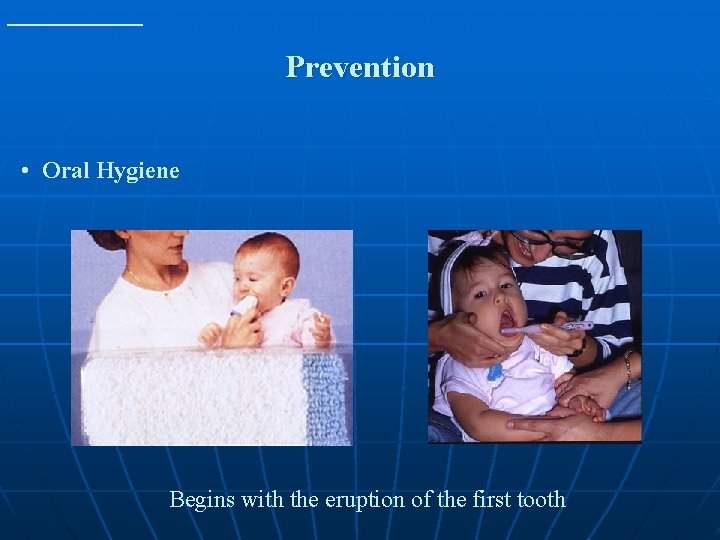
Prevention • Oral Hygiene Begins with the eruption of the first tooth
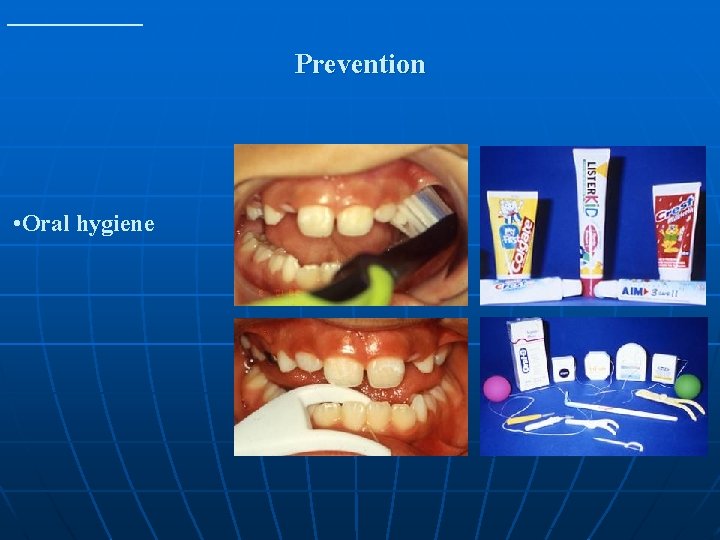
Prevention • Oral hygiene
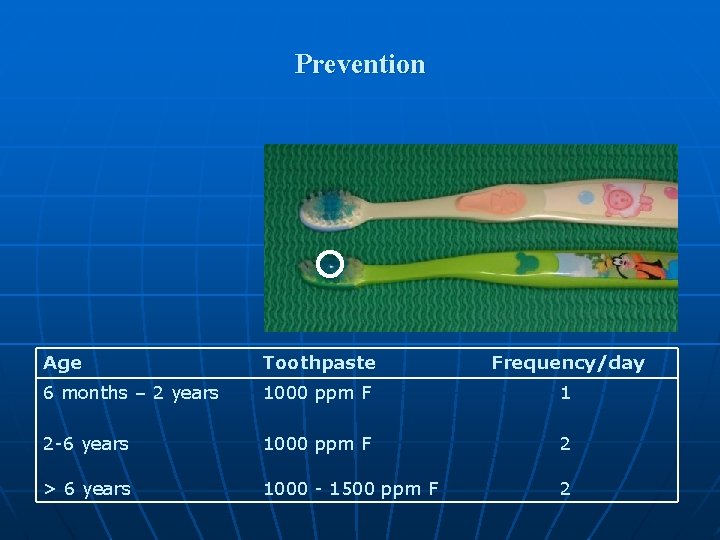
Prevention Age Toothpaste Frequency/day 6 months – 2 years 1000 ppm F 1 2 -6 years 1000 ppm F 2 > 6 years 1000 - 1500 ppm F 2
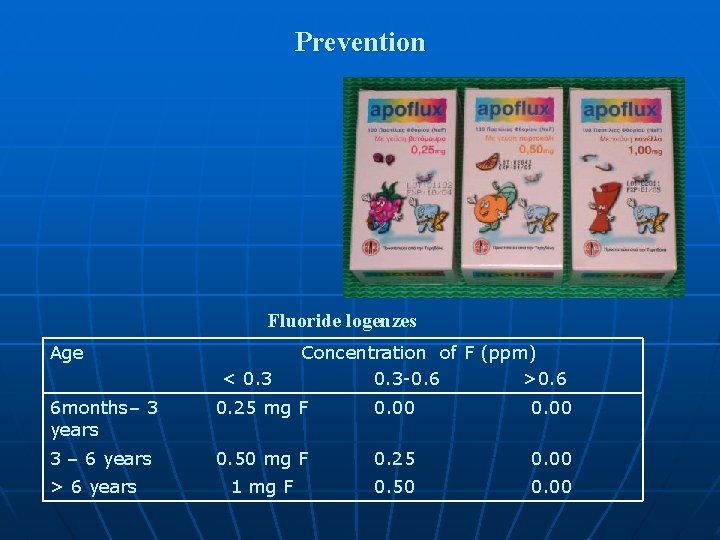
Prevention Fluoride logenzes Age < 0. 3 Concentration of F (ppm) 0. 3 -0. 6 >0. 6 6 months– 3 years 0. 25 mg F 0. 00 3 – 6 years 0. 50 mg F 0. 25 0. 00 1 mg F 0. 50 0. 00 > 6 years
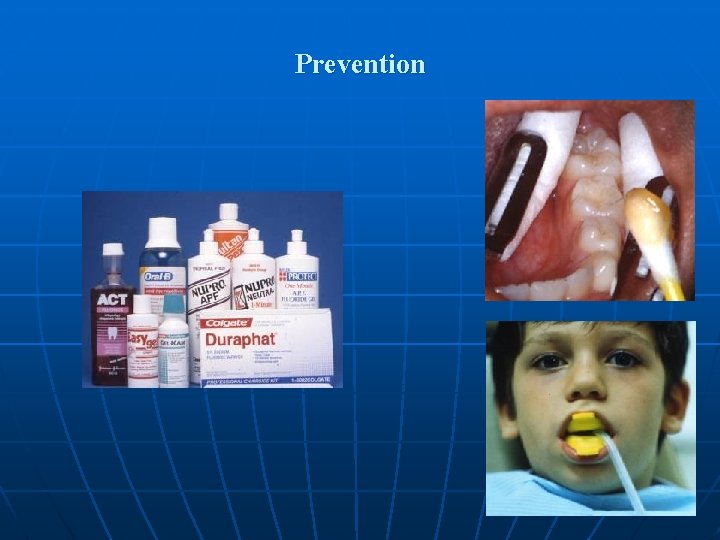
Prevention
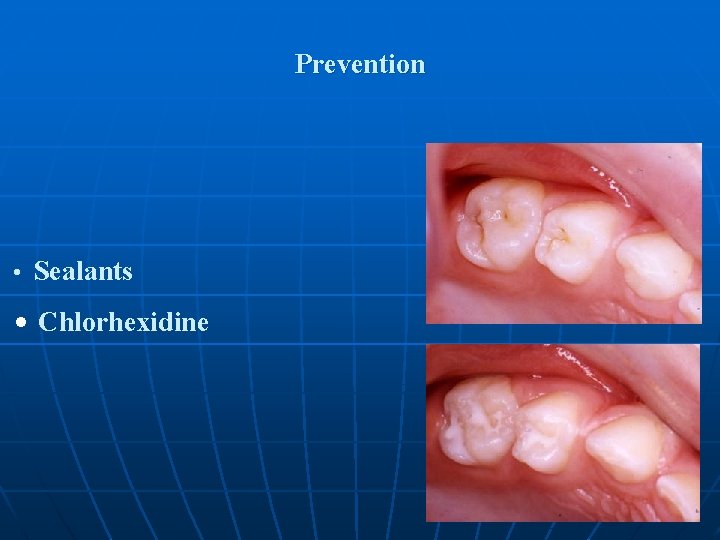
Prevention • Sealants • Chlorhexidine
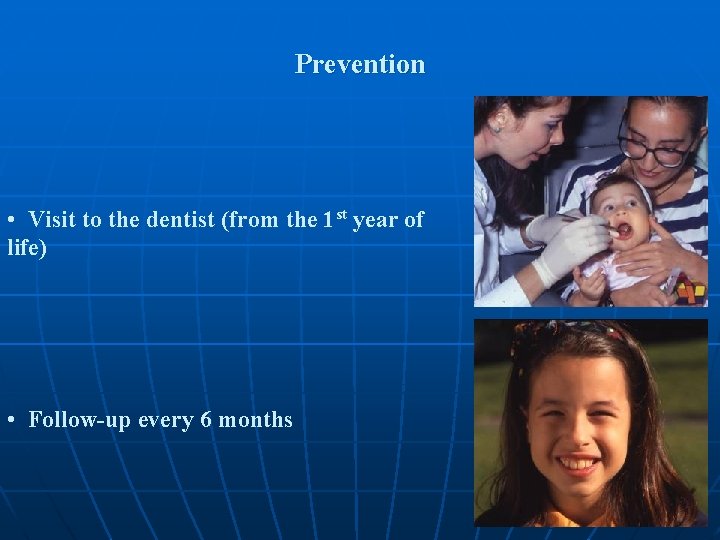
Prevention • Visit to the dentist (from the 1 st year of life) • Follow-up every 6 months
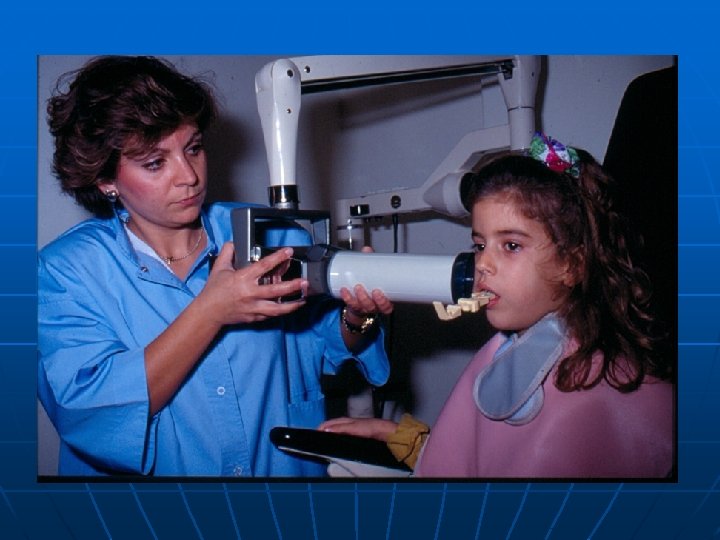
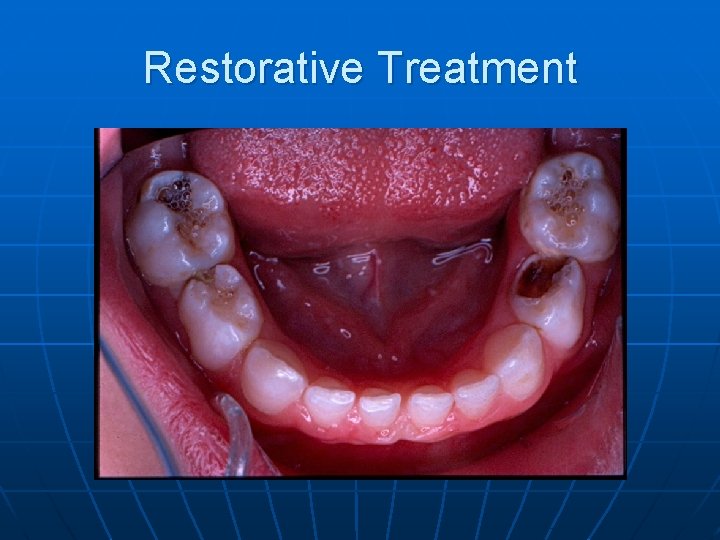
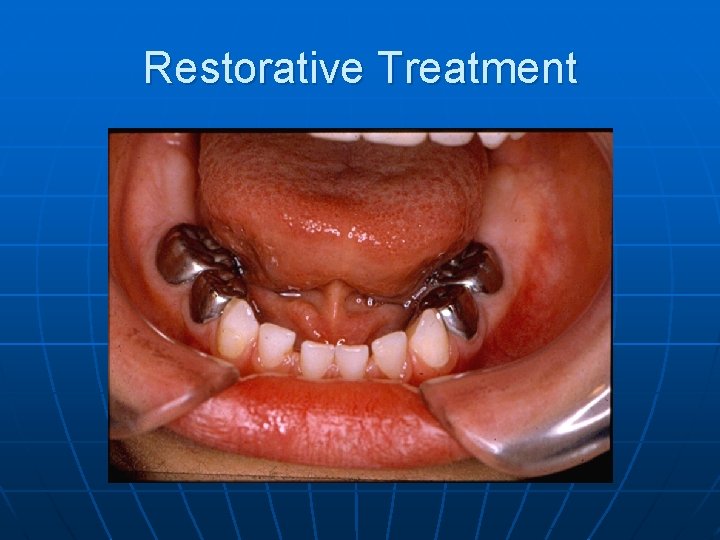
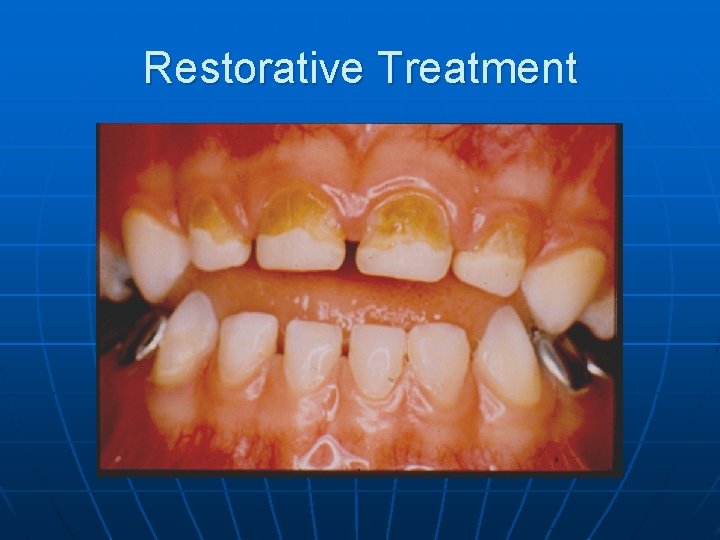
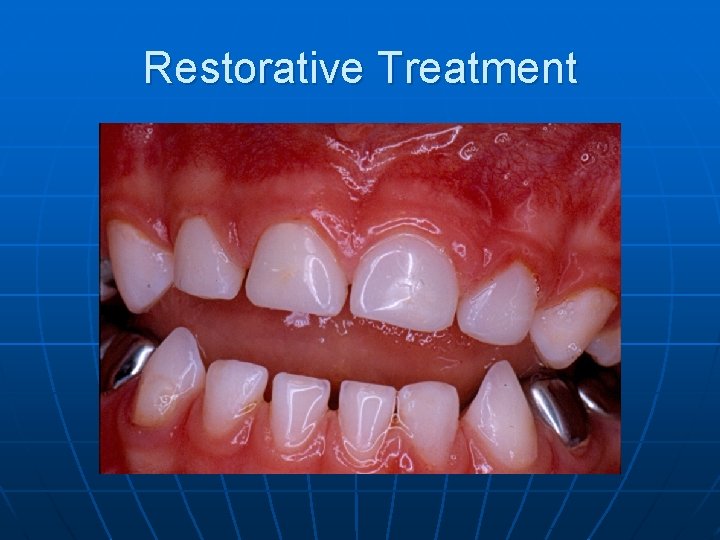
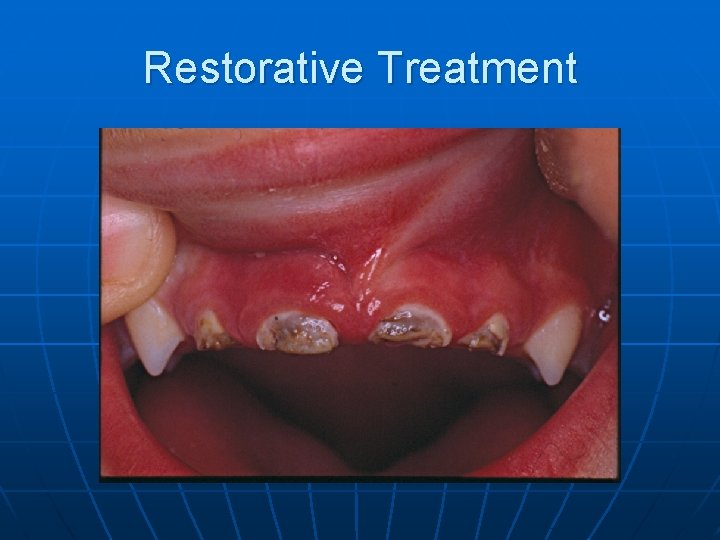
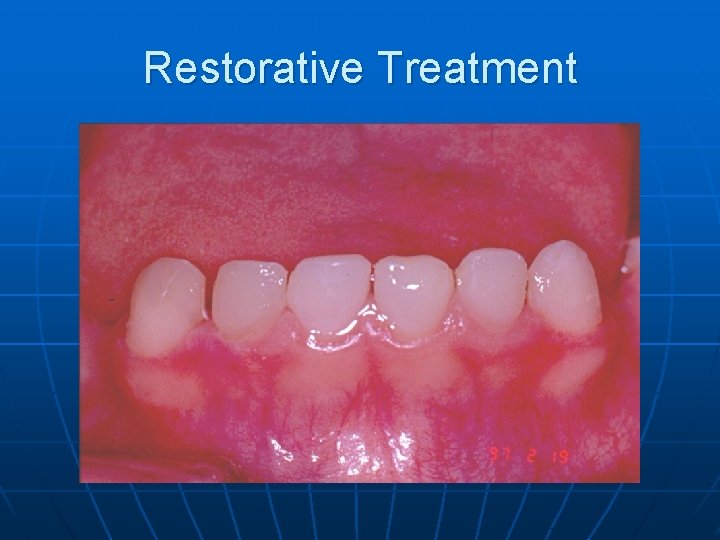
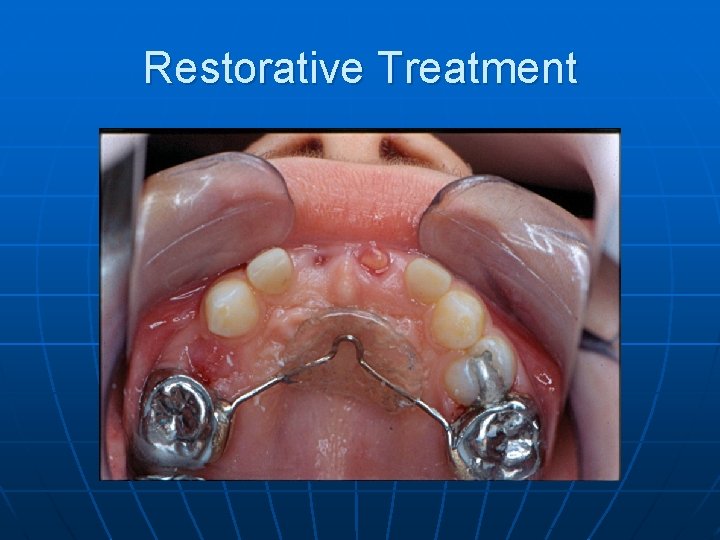
ECC Restorative Treatment
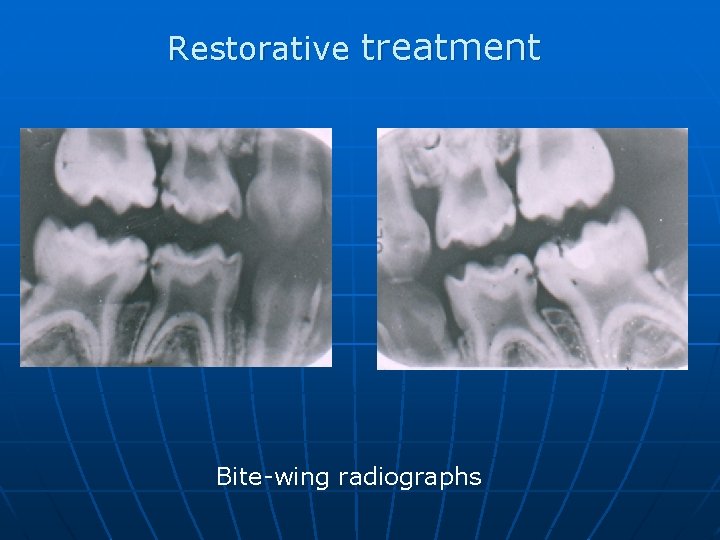
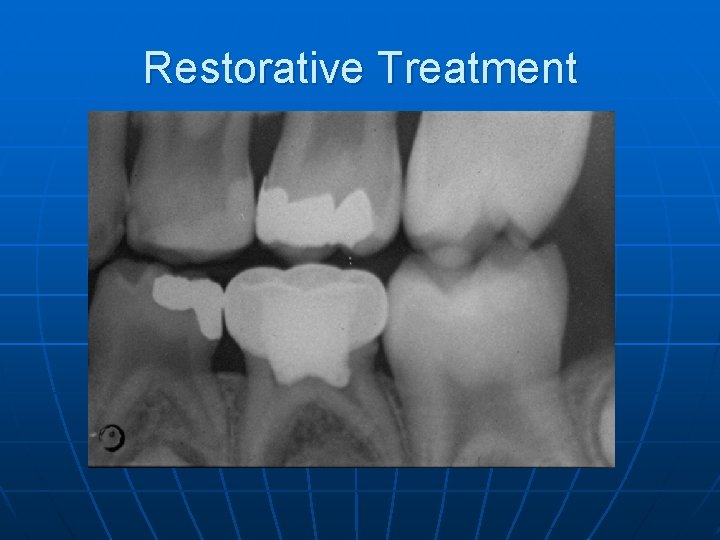
Restorative treatment Bite-wing radiographs
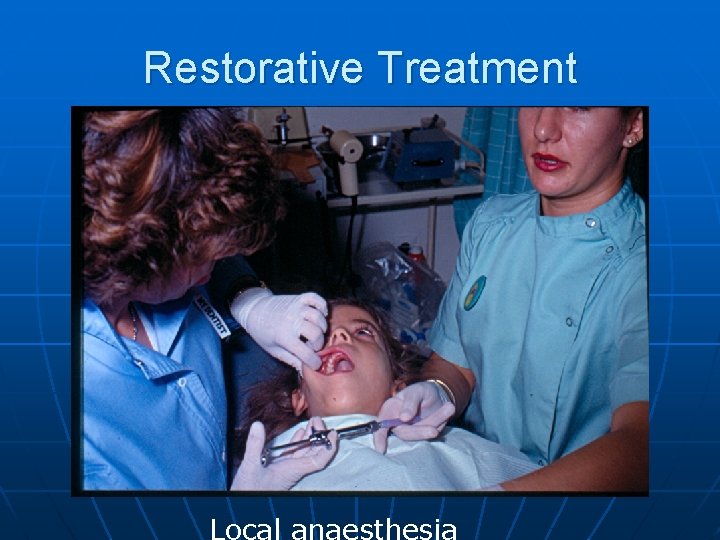
Restorative Treatment Local anaesthesia
Restorative Treatment
Restorative Treatment
Restorative Treatment
Restorative Treatment
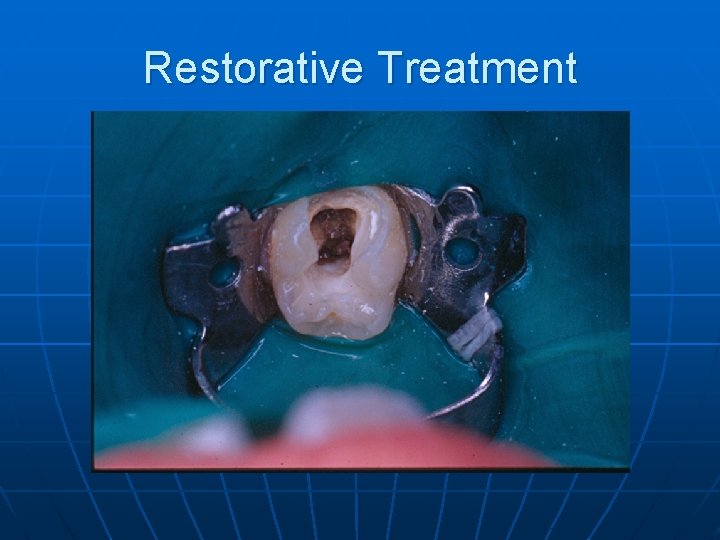
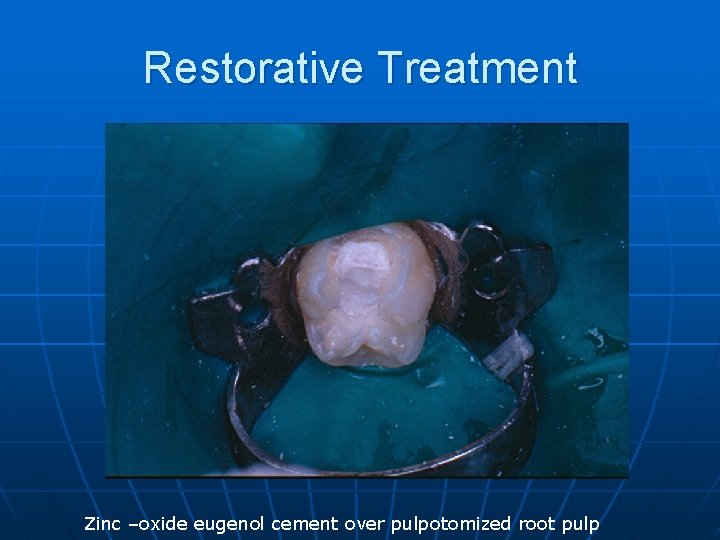
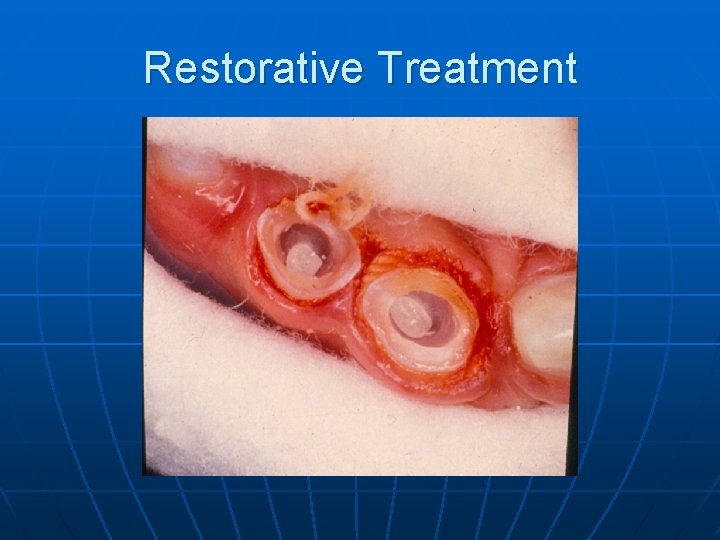
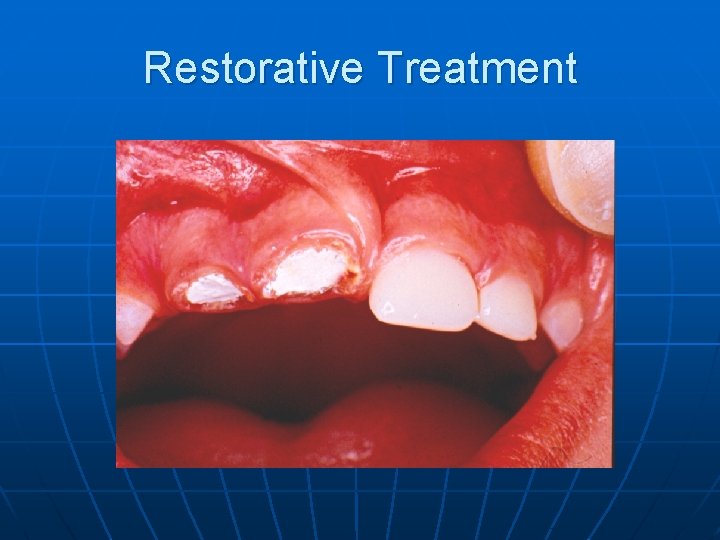
Restorative Treatment Zinc –oxide eugenol cement over pulpotomized root pulp
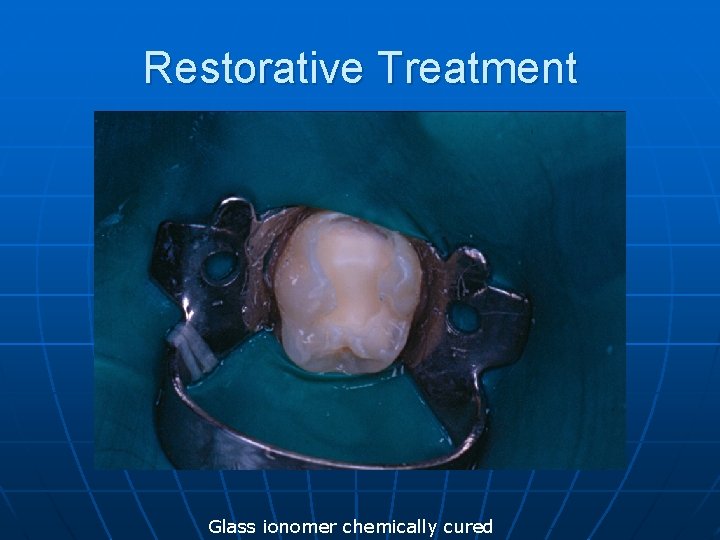
Restorative Treatment Glass ionomer chemically cured
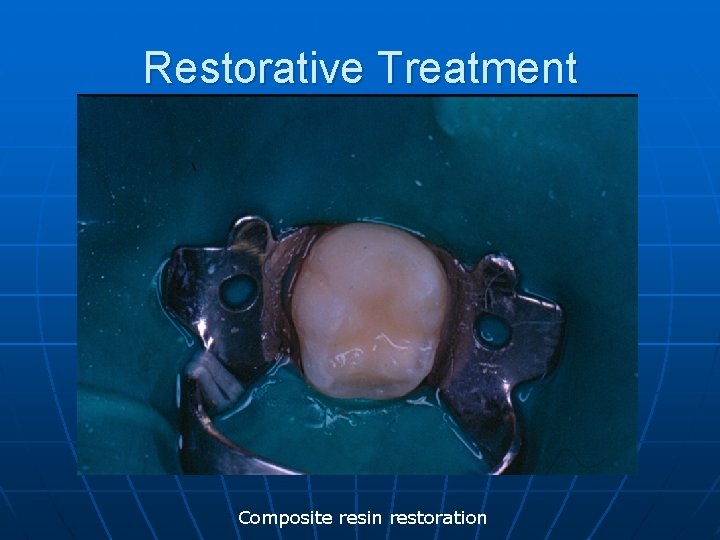
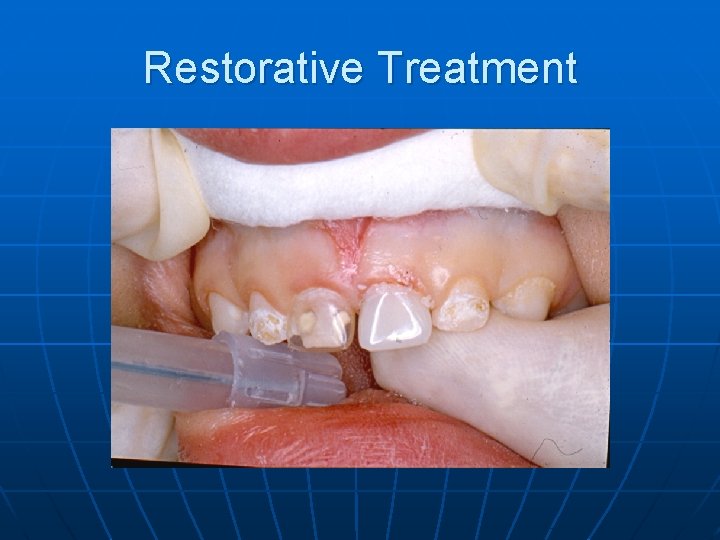
Restorative Treatment Composite resin restoration
Restorative Treatment
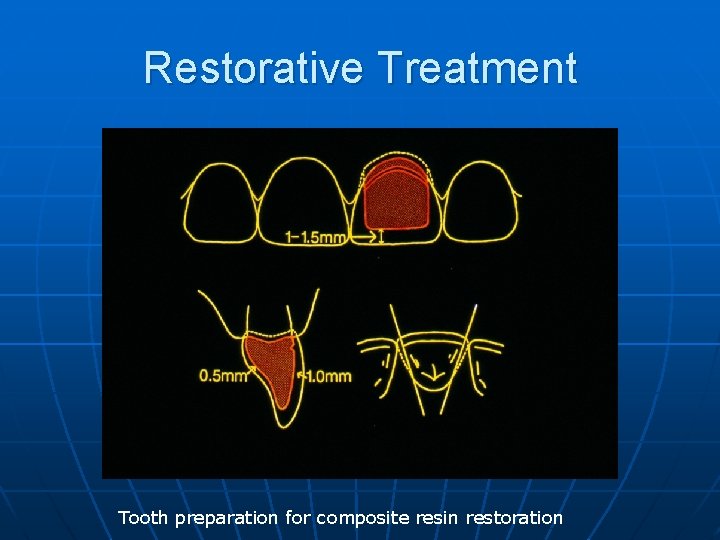
Restorative Treatment Tooth preparation for composite resin restoration
Restorative Treatment
Restorative Treatment
Restorative Treatment
Restorative Treatment
Restorative Treatment
Restorative Treatment
Restorative Treatment
Restorative Treatment
Restorative Treatment
Restorative Treatment
Restorative Treatment
Restorative Treatment
ECC restorative treatment Follow up visits every 3 months for the first year post treatment Quality of restorations Oral hygiene Dietary habits Professional tooth cleaning and topical fluoride application Mother’s oral health care