
Early Battles of WWII Chapter 25 section 2
Early Battles of WWII Chapter 25, section 2
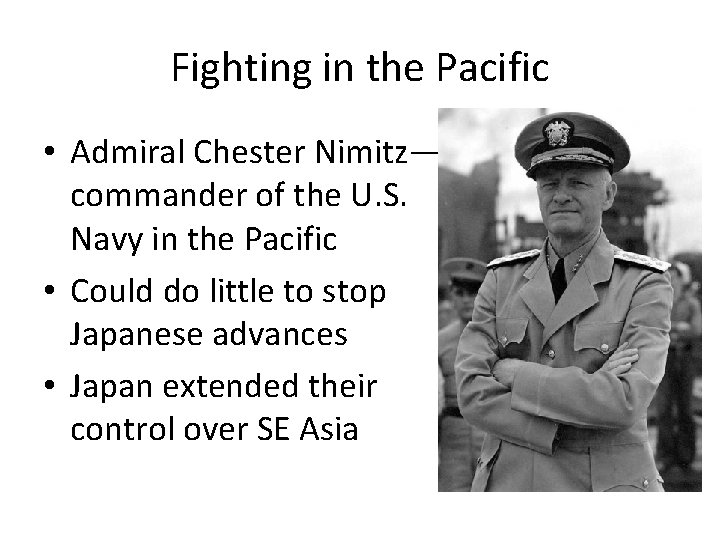
Fighting in the Pacific • Admiral Chester Nimitz— commander of the U. S. Navy in the Pacific • Could do little to stop Japanese advances • Japan extended their control over SE Asia
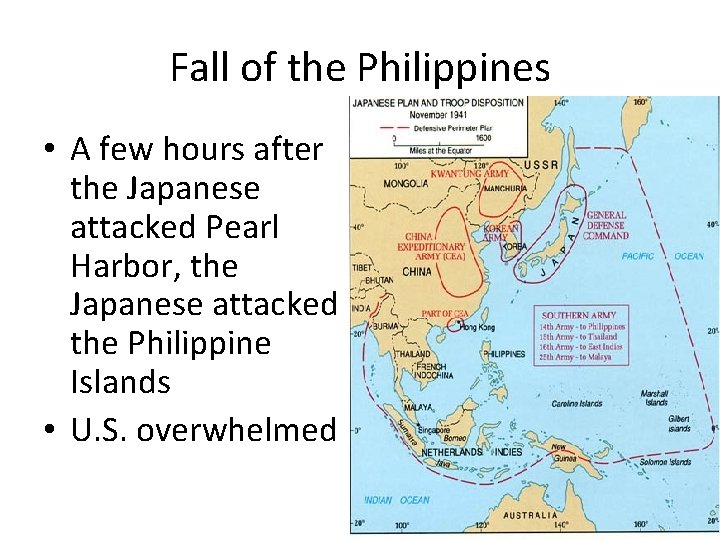
Fall of the Philippines • A few hours after the Japanese attacked Pearl Harbor, the Japanese attacked the Philippine Islands • U. S. overwhelmed
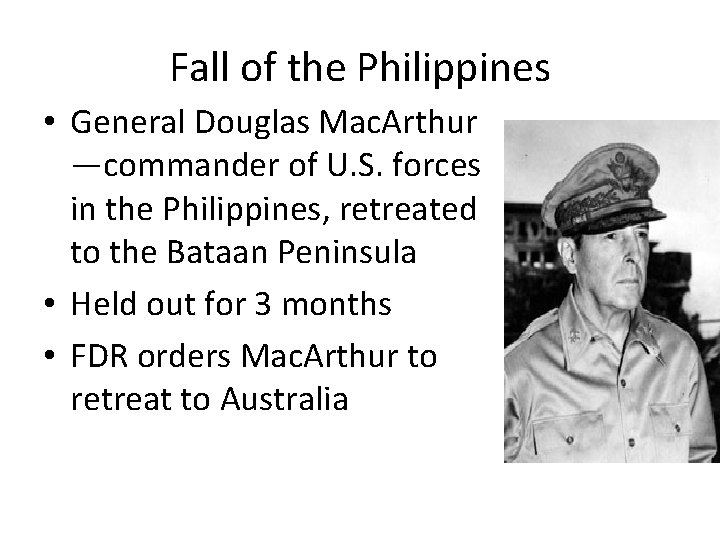
Fall of the Philippines • General Douglas Mac. Arthur —commander of U. S. forces in the Philippines, retreated to the Bataan Peninsula • Held out for 3 months • FDR orders Mac. Arthur to retreat to Australia
Fall of the Philippines • 78, 000 men forced to surrender • Japanese forced the POWS to march 65 miles to a prison camp • Thousands died on this march due to conditions and executions • Remembered as the “Bataan Death March”
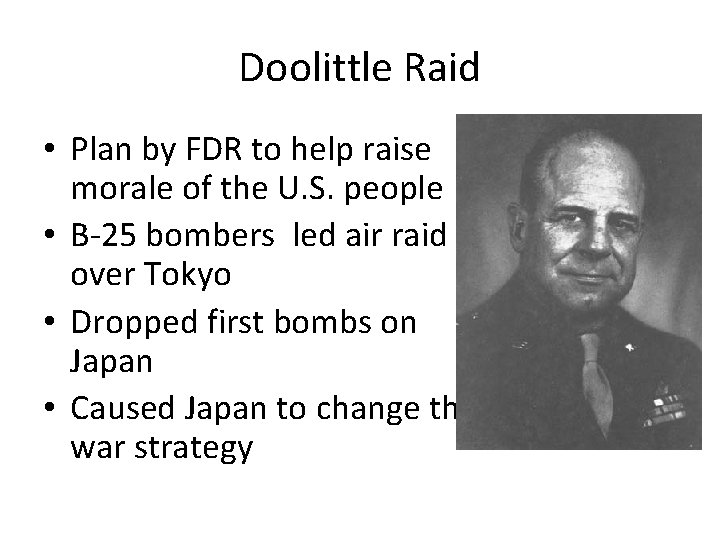
Doolittle Raid • Plan by FDR to help raise morale of the U. S. people • B-25 bombers led air raid over Tokyo • Dropped first bombs on Japan • Caused Japan to change their war strategy
Battle of the Coral Sea • Japanese goal: cut the American supply line into Australia and then invade Australia
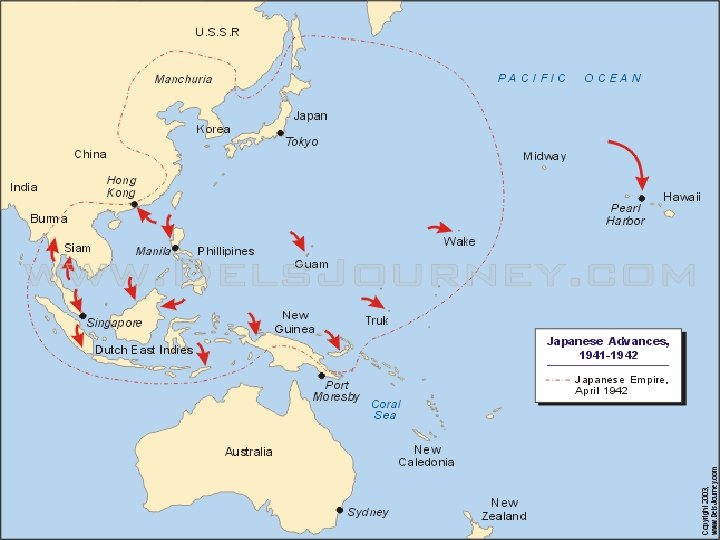
Battle of the Coral Sea • Militarily was a draw • U. S. did prevent Japan from landing on New Guinea • American supply lines stayed open to Australia • 1 st time in naval history that naval battle was fought entirely in the air
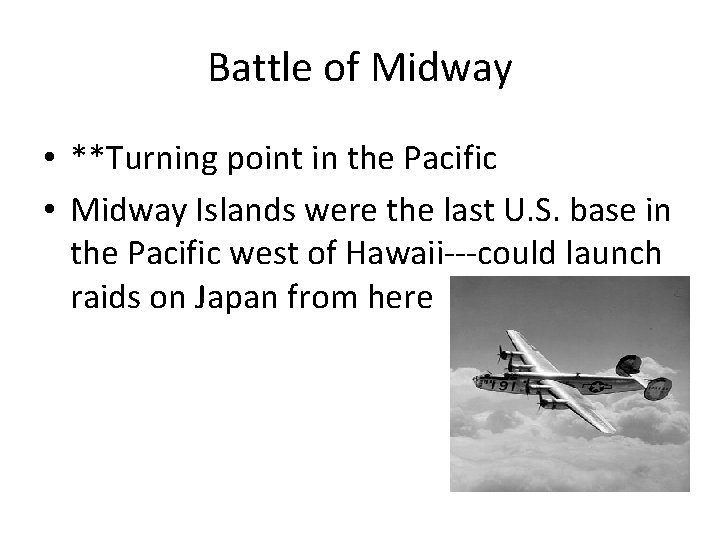
Battle of Midway • **Turning point in the Pacific • Midway Islands were the last U. S. base in the Pacific west of Hawaii---could launch raids on Japan from here
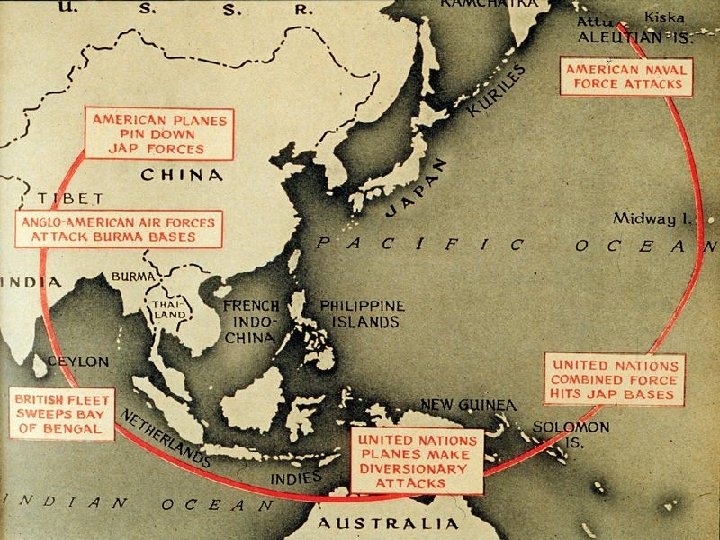
Battle of Midway • Japan hoped to lure U. S. fleet into battle and destroy it • Believed numbers were in their favor • June 4, 1942 Japan sent large fleet to attack

Battle of Midway • U. S. code-breaking team broke Japanese code and learned of attack • U. S. ambushed the Japanese fleet • Japan lost its four largest carriers—heart of its navy • 362 Americans killed • 3, 057 Japanese killed
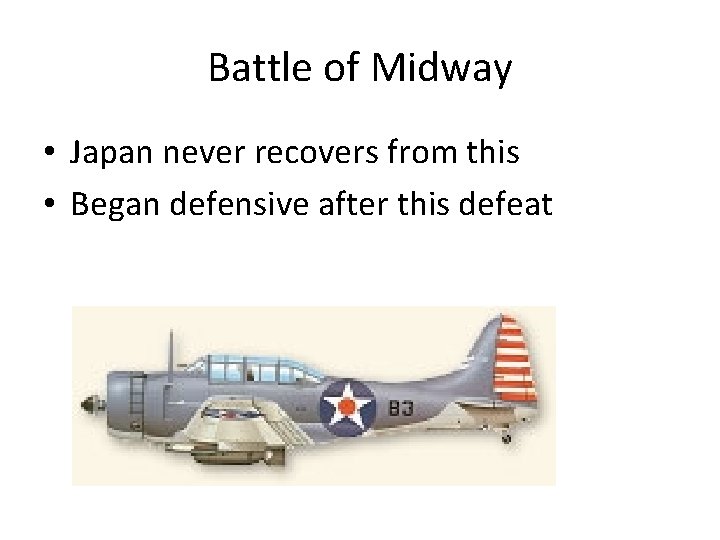
Battle of Midway • Japan never recovers from this • Began defensive after this defeat
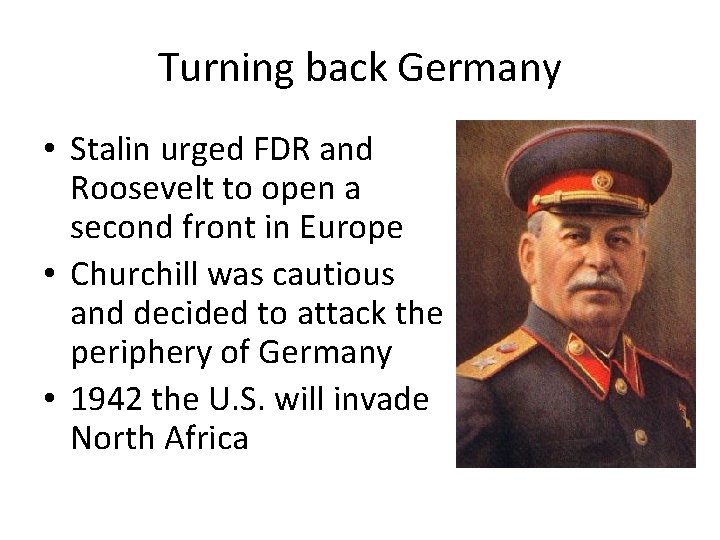
Turning back Germany • Stalin urged FDR and Roosevelt to open a second front in Europe • Churchill was cautious and decided to attack the periphery of Germany • 1942 the U. S. will invade North Africa
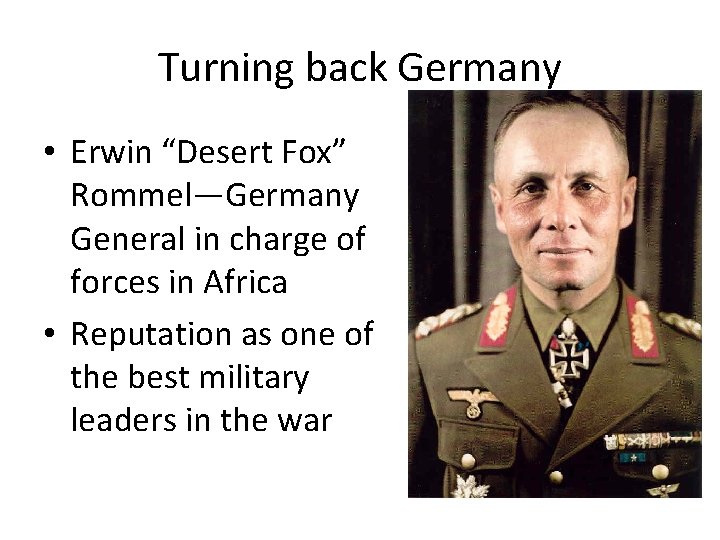
Turning back Germany • Erwin “Desert Fox” Rommel—Germany General in charge of forces in Africa • Reputation as one of the best military leaders in the war
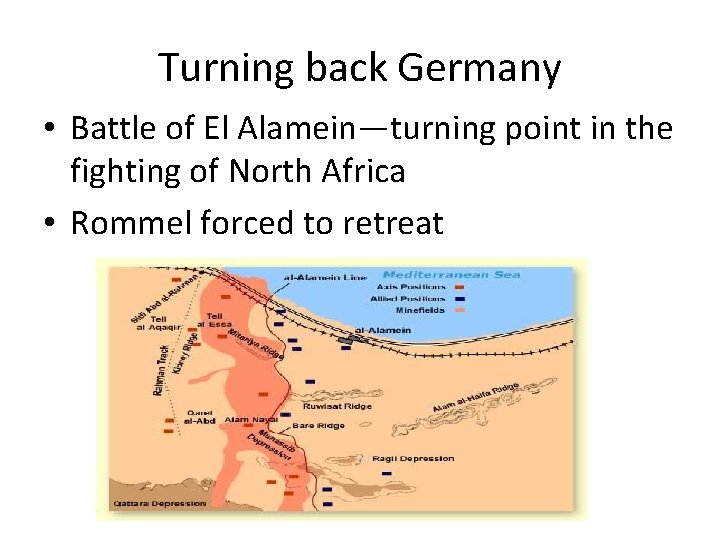
Turning back Germany • Battle of El Alamein—turning point in the fighting of North Africa • Rommel forced to retreat
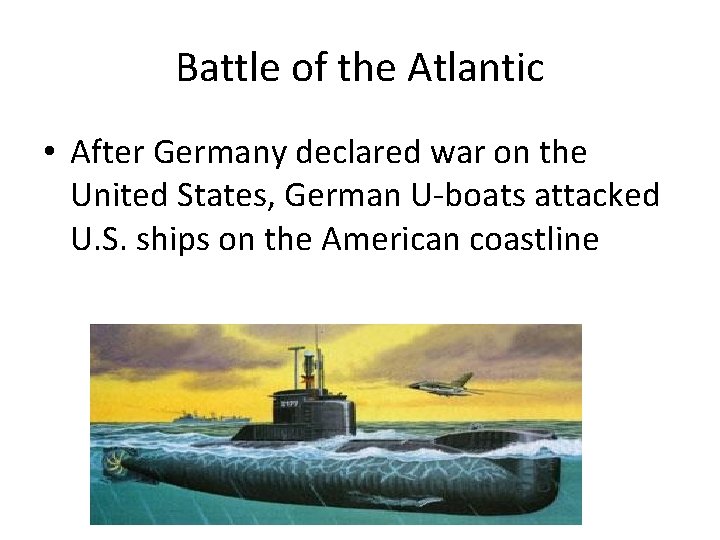
Battle of the Atlantic • After Germany declared war on the United States, German U-boats attacked U. S. ships on the American coastline
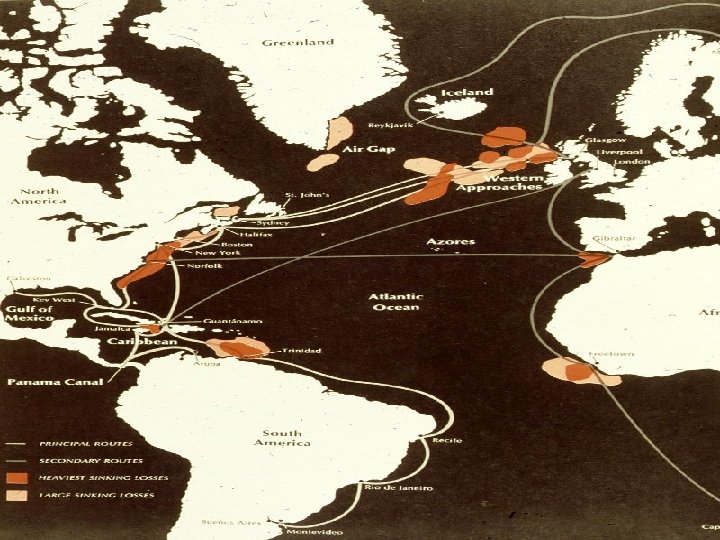
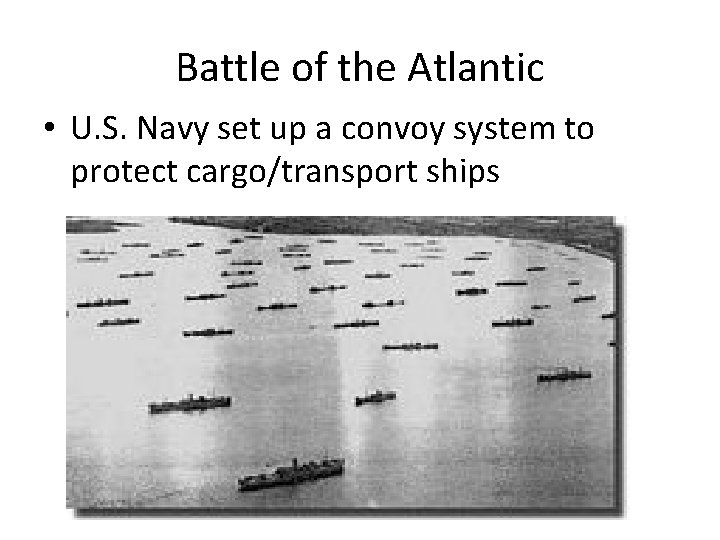
Battle of the Atlantic • U. S. Navy set up a convoy system to protect cargo/transport ships
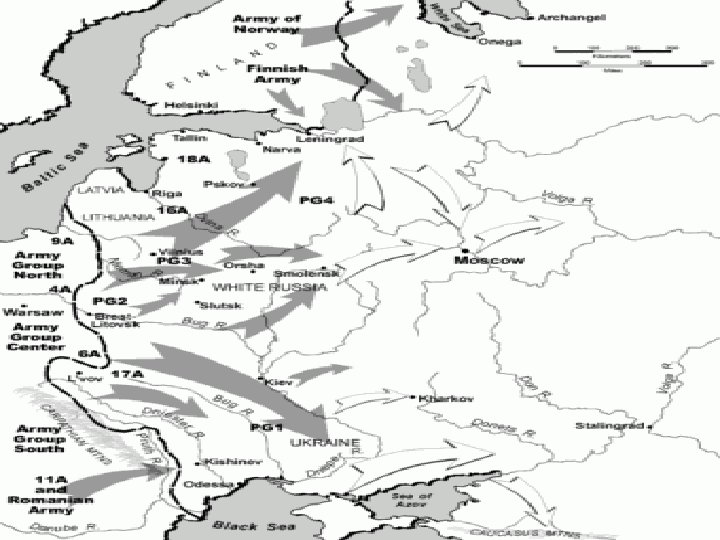
Battle of Stalingrad • Operation Barbarossa—German codename for invasion of S. U. • Hitler wanted to defeat the Soviets by destroying their economy • German army captured oil fields, industries. . etc
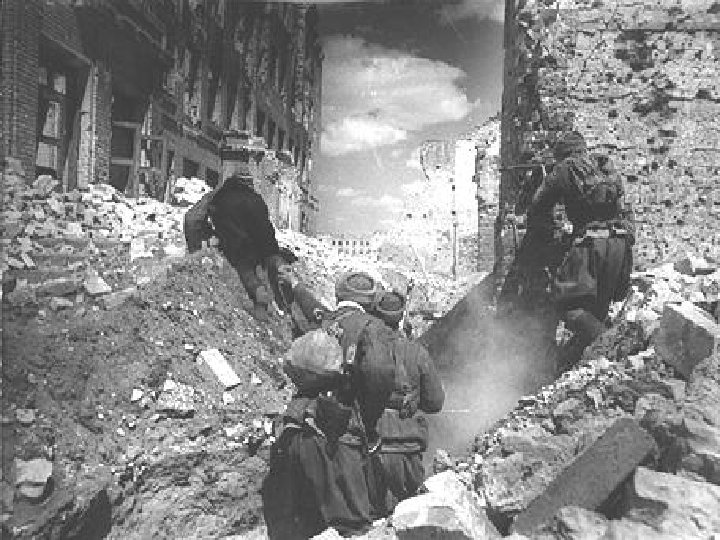
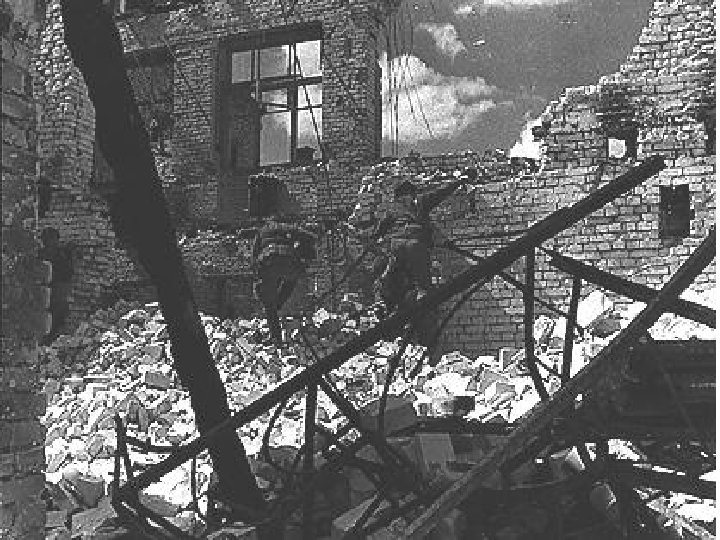
Battle of Stalingrad • Germans tried to capture city of Stalingrad, but the Soviets held their ground • Fighting took place in the streets • Germans forced to take one building at a time • Stalin sends reinforcements and surrounds Germans in the city, sets seige
Battle of Stalingrad • Germans forced to surrender • Battle of Stalingrad will be the turning point of the fighting in the Soviet Union • Battle will put the Germans on the defensive
- Slides: 26