
Early Assessment The First Step in Planning Process





- Slides: 25
Early Assessment The First Step in Planning
Process of Instruction Planning Delivery Assessment
Early Assessment Conditions Students Self
Conditions
Teacher Controlled Classroom arrangement Rules/Routines Leadership/Communication Activities Assessment
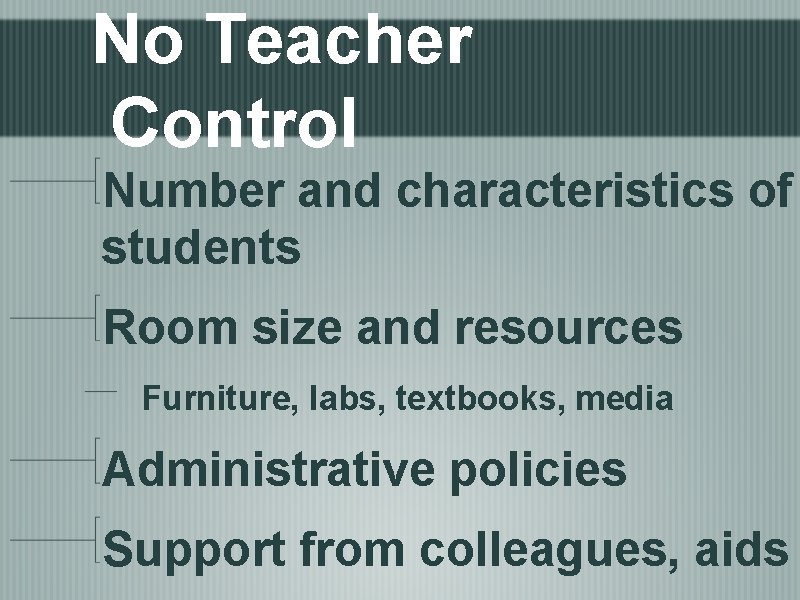
No Teacher Control Number and characteristics of students Room size and resources Furniture, labs, textbooks, media Administrative policies Support from colleagues, aids
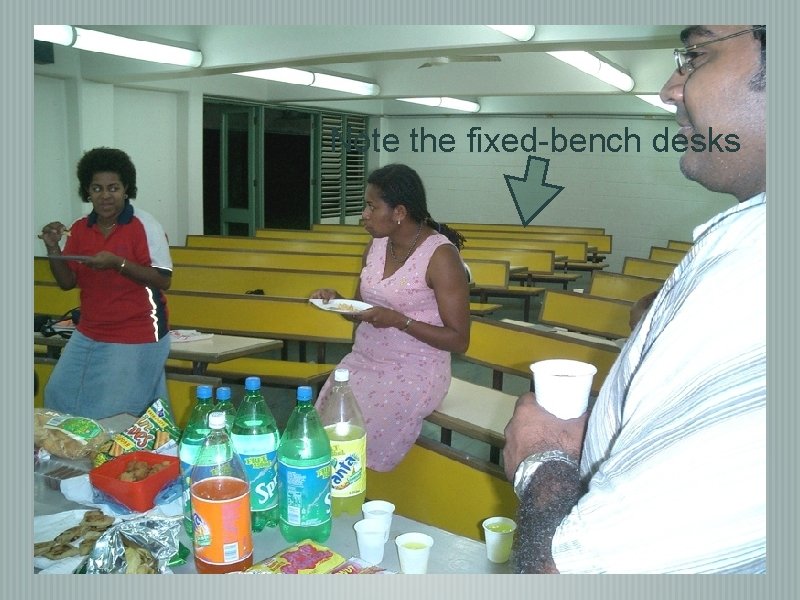
Note the fixed-bench desks
Conditions How shall I allocate time? Length of units, number of lessons What activities shall I select? How shall I link my plans to the overall curriculum State standards
Conditions How shall I sequence activities? What shall be the pace of my instruction? What assignments/homework? How shall I assess my
Students
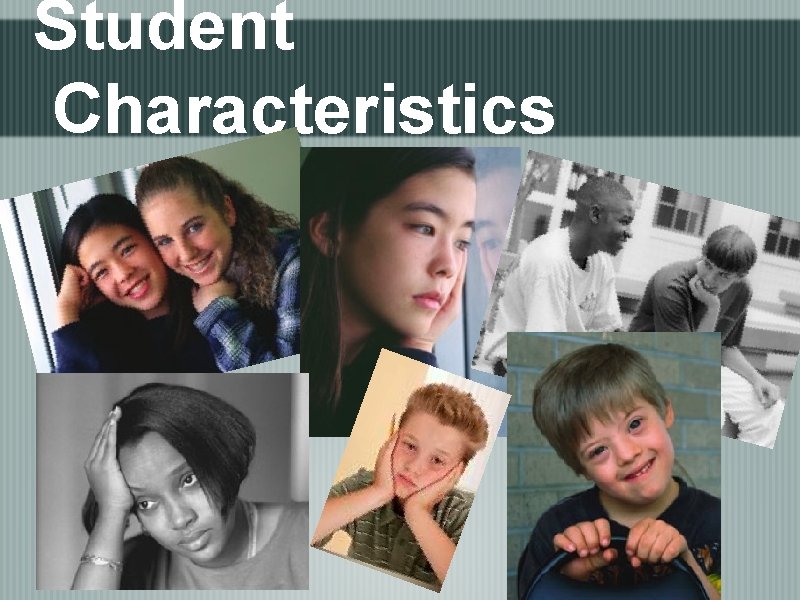
Student Characteristics
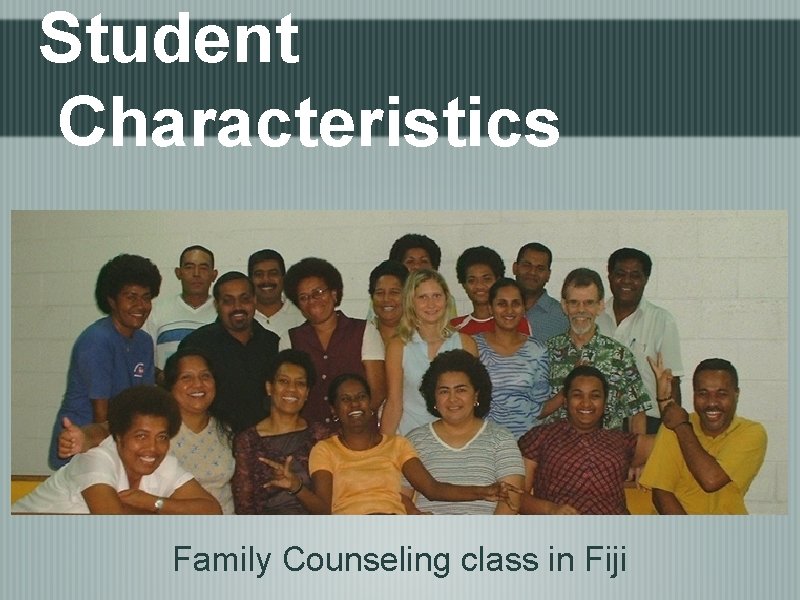
Student Characteristics Family Counseling class in Fiji
Early Assessment of Students Formal Assessments Paper and Pencil Tests Informal Assessments Observation Oral questioning
Students “It is the person’s present knowledge that supplies the power for new knowledge to be acquired. . . thus the problem of learning can be stated simply: to make connections between what is to be learned. . . and what is already known” (Gowin, 1981) What do my students already know?
Self
Teacher Characteristics Knowledge of subject
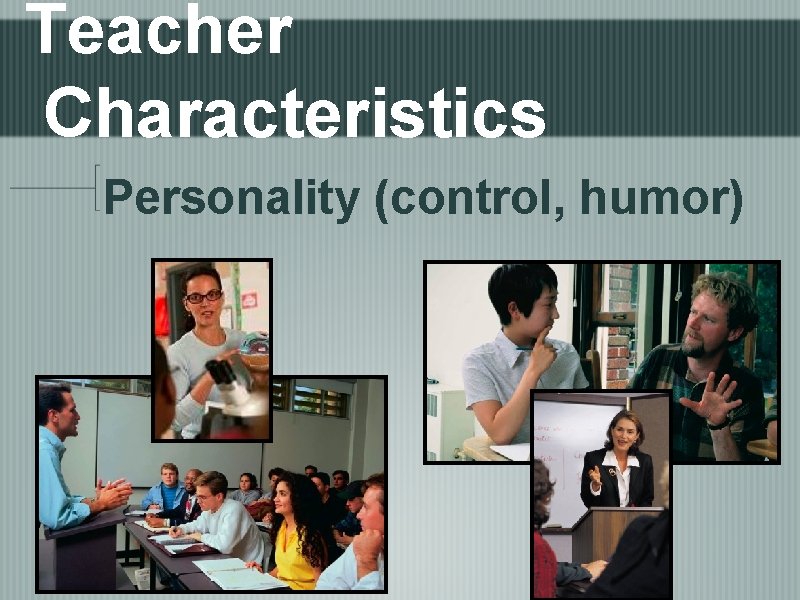
Teacher Characteristics Personality (control, humor)
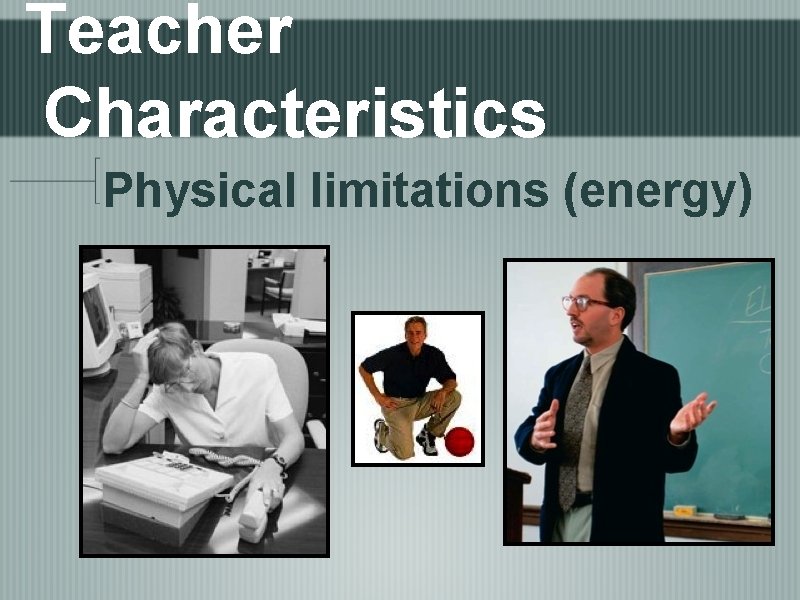
Teacher Characteristics Physical limitations (energy)
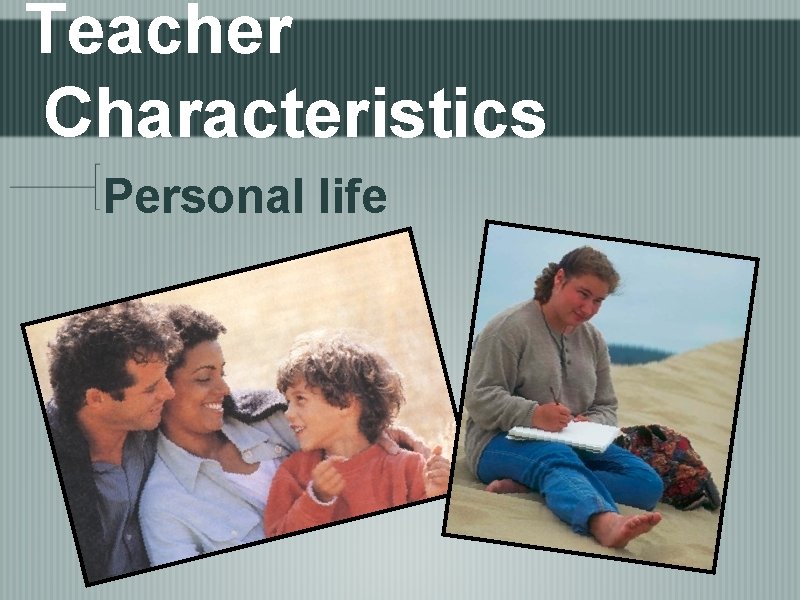
Teacher Characteristics Personal life
Setting Goals The Next Step in Planning
Educative Events 1. Year, Semester (entire course) 2. Unit of Study (days, weeks) 3. Day’s Lesson (one class period)
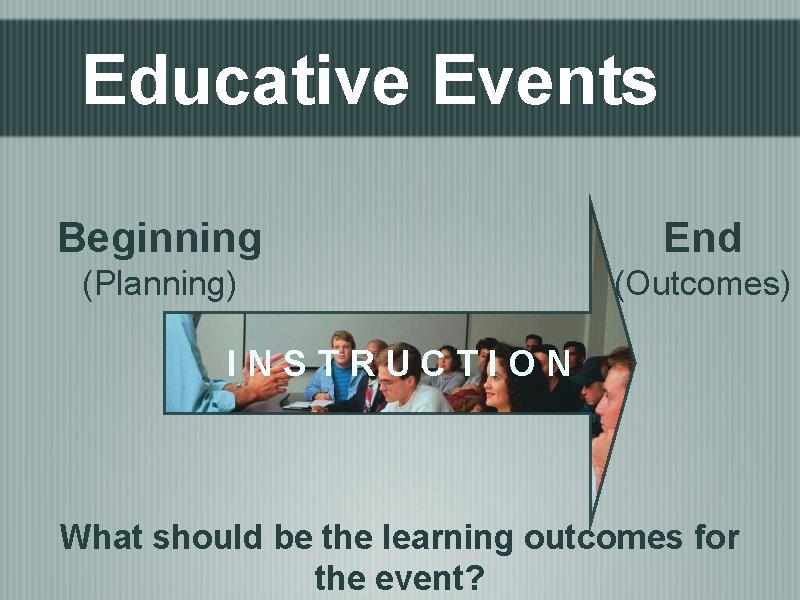
Educative Events Beginning End (Planning) (Outcomes) INSTRUCTION What should be the learning outcomes for the event?
Begin At The End Outcomes, Targets, Objectives 3 synonyms for the same concept
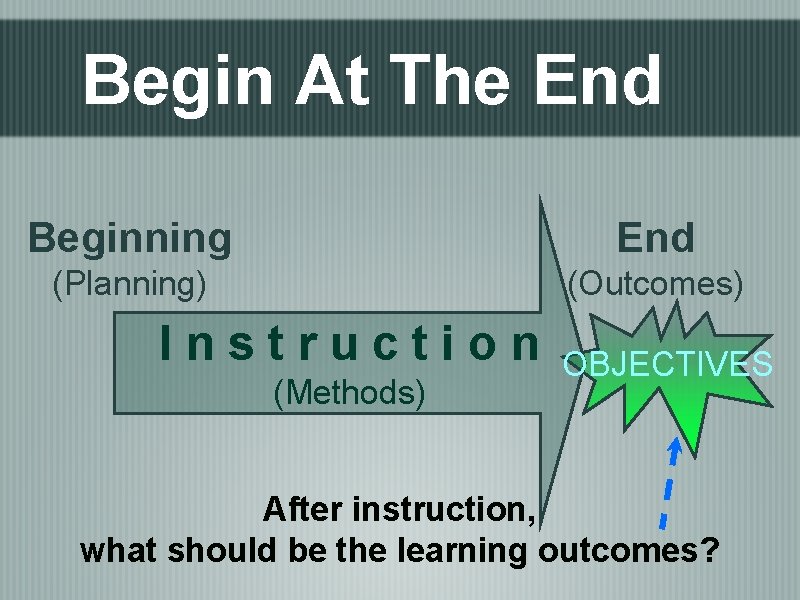
Begin At The End Beginning End (Planning) (Outcomes) Instruction (Methods) OBJECTIVES After instruction, what should be the learning outcomes?