
Early Andean Civilizations Mr Millicans Humanities Class Nazca
- Slides: 11
Early Andean Civilizations Mr. Millican’s Humanities Class
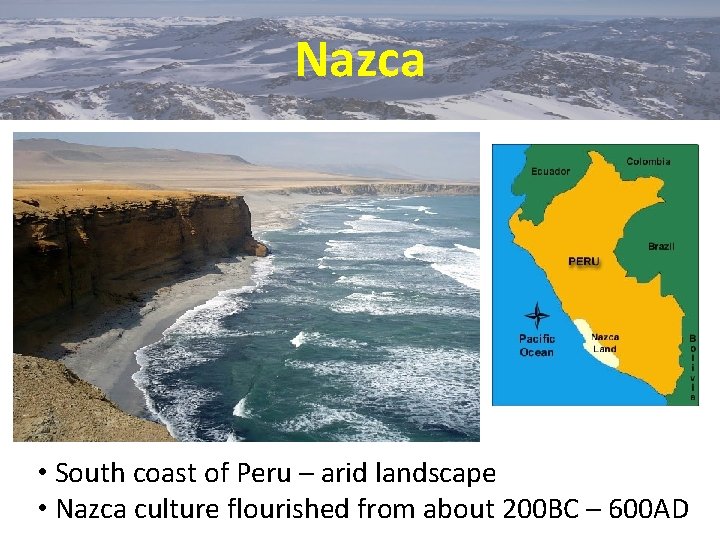
Nazca • South coast of Peru – arid landscape • Nazca culture flourished from about 200 BC – 600 AD
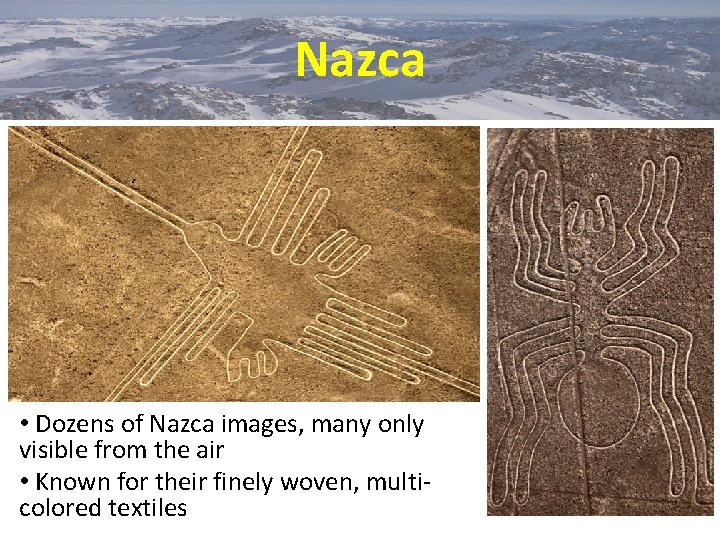
Nazca • Dozens of Nazca images, many only visible from the air • Known for their finely woven, multicolored textiles
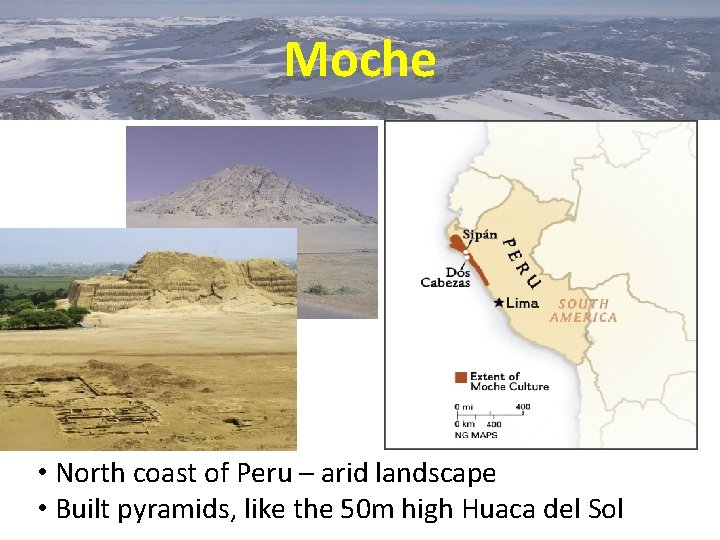
Moche • North coast of Peru – arid landscape • Built pyramids, like the 50 m high Huaca del Sol
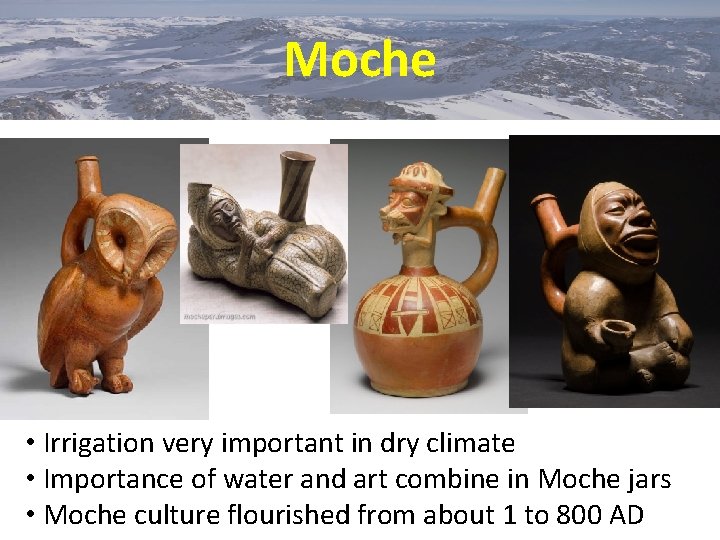
Moche • Irrigation very important in dry climate • Importance of water and art combine in Moche jars • Moche culture flourished from about 1 to 800 AD
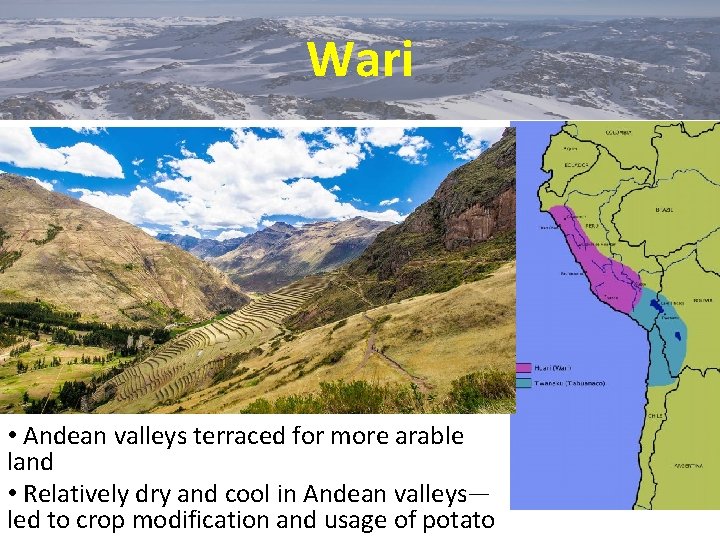
Wari • Andean valleys terraced for more arable land • Relatively dry and cool in Andean valleys— led to crop modification and usage of potato
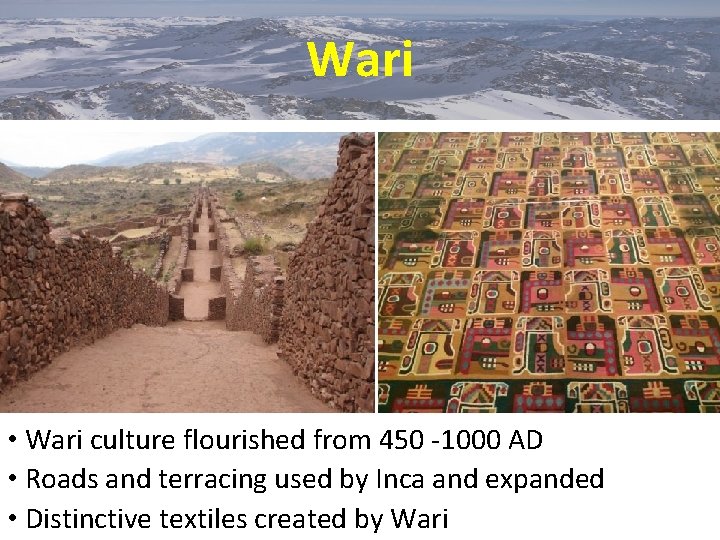
Wari • Wari culture flourished from 450 -1000 AD • Roads and terracing used by Inca and expanded • Distinctive textiles created by Wari
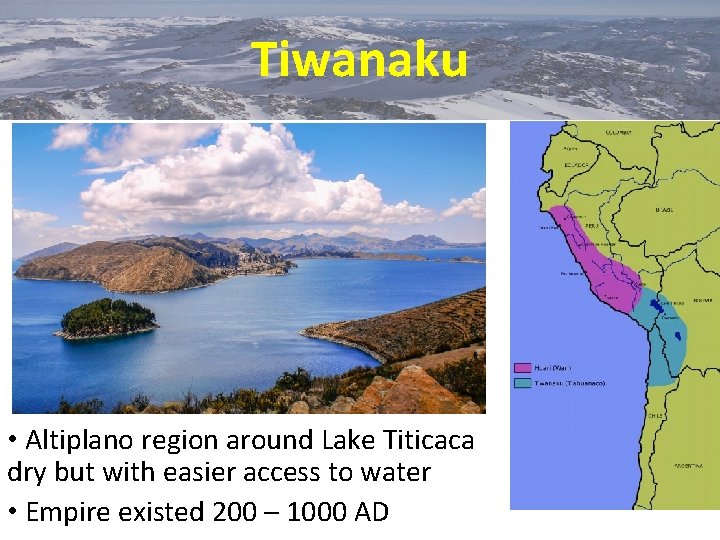
Tiwanaku • Altiplano region around Lake Titicaca dry but with easier access to water • Empire existed 200 – 1000 AD
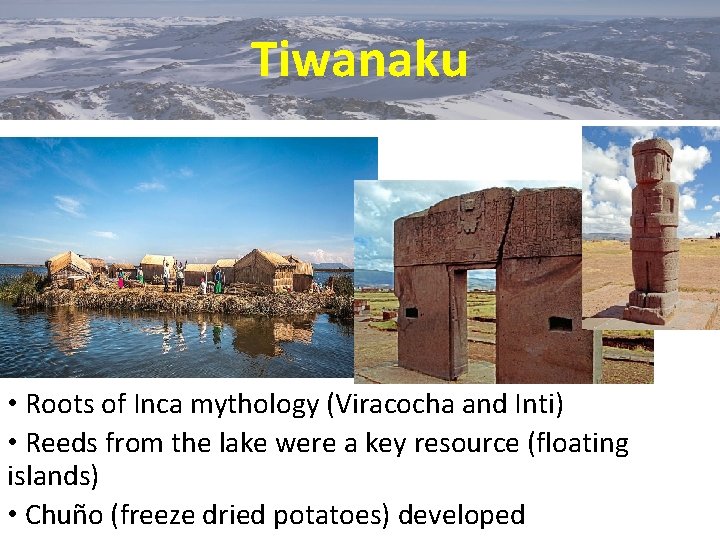
Tiwanaku • Roots of Inca mythology (Viracocha and Inti) • Reeds from the lake were a key resource (floating islands) • Chuño (freeze dried potatoes) developed
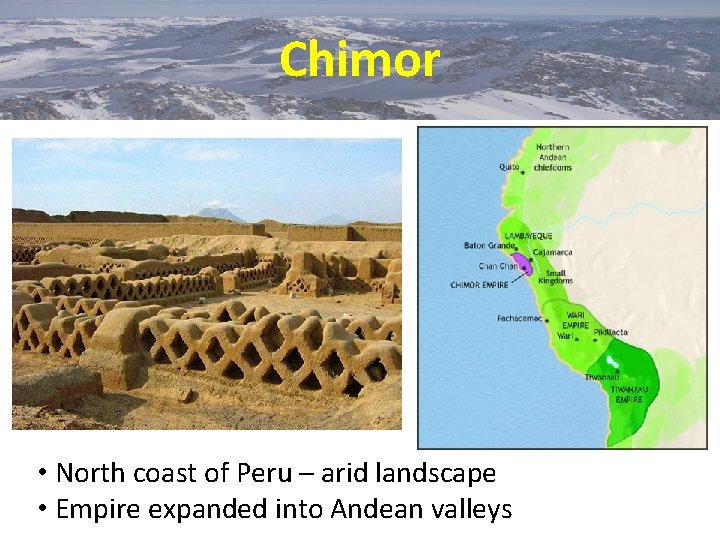
Chimor • North coast of Peru – arid landscape • Empire expanded into Andean valleys
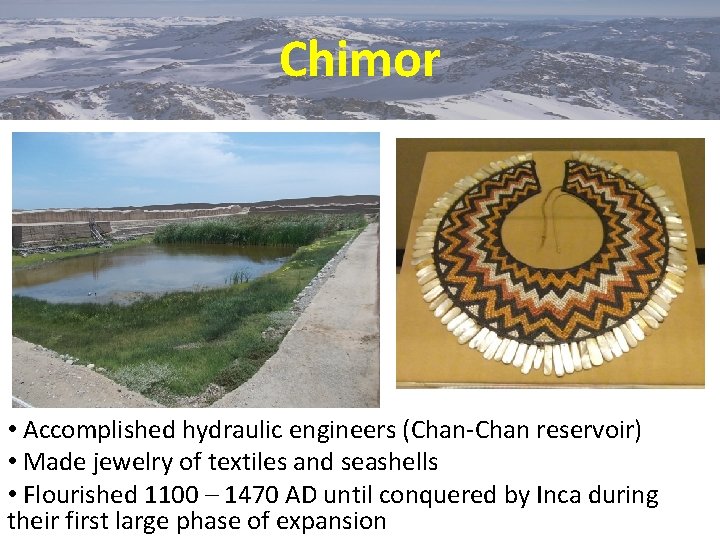
Chimor • Accomplished hydraulic engineers (Chan-Chan reservoir) • Made jewelry of textiles and seashells • Flourished 1100 – 1470 AD until conquered by Inca during their first large phase of expansion