
Early America The Puritans 1620 1800 Who were
- Slides: 10
Early America: The Puritans 1620 -1800
Who were the Puritans? Wrote mostly diaries and histories, which expressed the connections between God and their everyday lives Sought to “purify” the Church of England by reforming the simpler forms of worship and church organization described in the New Testament Saw religion as a personal, inner experience Believed in original sin and “elect” who would be saved; did not know who “elect” were
What were the core beliefs? “We are a society of the damned” God presented as malevolent: Believed God hated them; FEARED falling from grace Society of punishment Believed women were inferior; they were one of Satan’s chief ways to tempt men Land belonged to the people Theocracy: Blend of religion and government
Puritan Literature Read the Bible as a narrative tale “Read” their own lives the way a literary critic reads a book Used writing to explore inner and outer lives for signs of God Diaries and histories most common
Puritan Plain Style (1) Characterized by short words (2) Direct statements (3) References to everyday objects and experiences
What influences did the Puritans leave? Work ethic: Believed material success/self-improvement was good Individualism and hard work Performance of “god-given” task: Implicit intolerance of those who don’t pull their weight Strong sense of right and wrong Idea of Sabbath Sunday is kept a little bit “holier” – no mail, businesses close earlier, etc.
Ann Bradstreet Came to America w/ her husband in 1630 She wrote poems for herself, not publication Poetry reflects the Puritans’ knowledge of the stories and language of the Bible AND the concern for the relationship between earthly and heavenly life She is the first American poet
Jonathan Edwards Sermons of “Fire and brimstone” Religious zealot and believer in science/reason Grew up in Connecticut in atmosphere of discipline
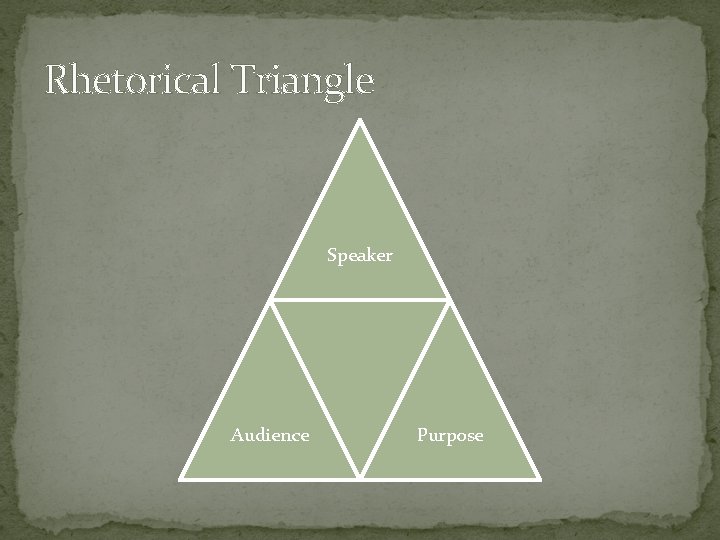
Rhetorical Triangle Speaker Audience Purpose
Elements of Triangle Speaker/Author Who is the author? What do you know about her? Is she credible? Why? Audience Who is the audience? How do they feel about the subject? How does the speaker/author want them to respond? Purpose Does the speaker propose something? Does the author try to convince you of something?