
EARLY AFRICAN CIVILIZATIONS 300 1500 AD GEOGRAPHY AND
- Slides: 33
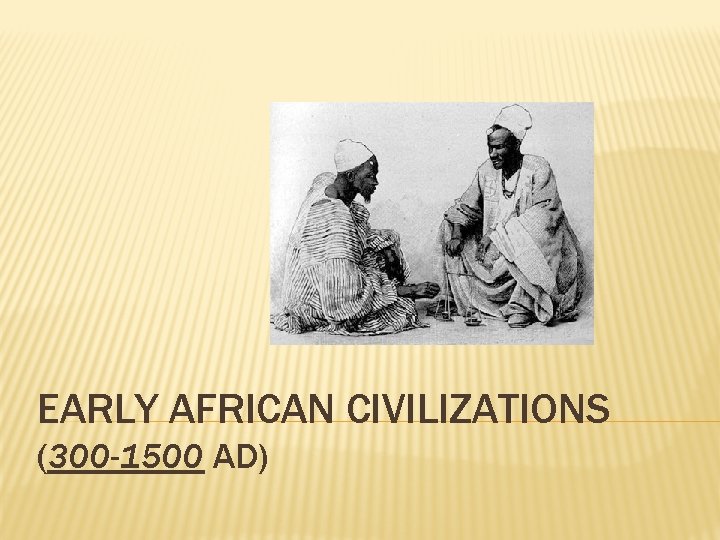
EARLY AFRICAN CIVILIZATIONS (300 -1500 AD)
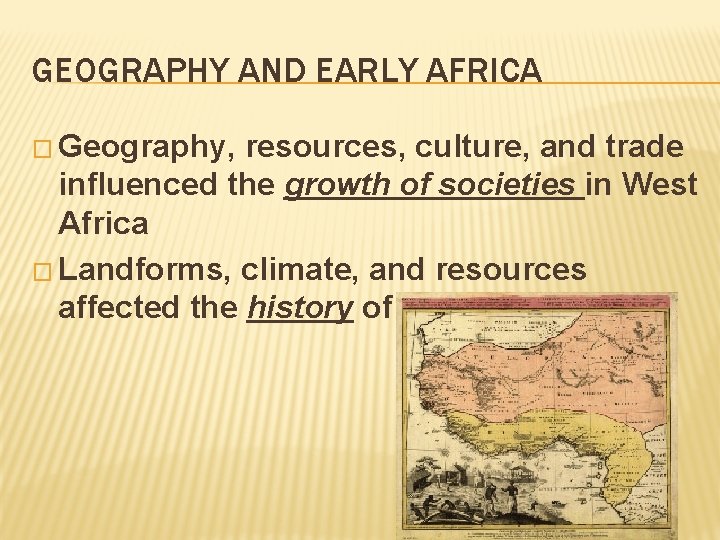
GEOGRAPHY AND EARLY AFRICA � Geography, resources, culture, and trade influenced the growth of societies in West Africa � Landforms, climate, and resources affected the history of West Africa
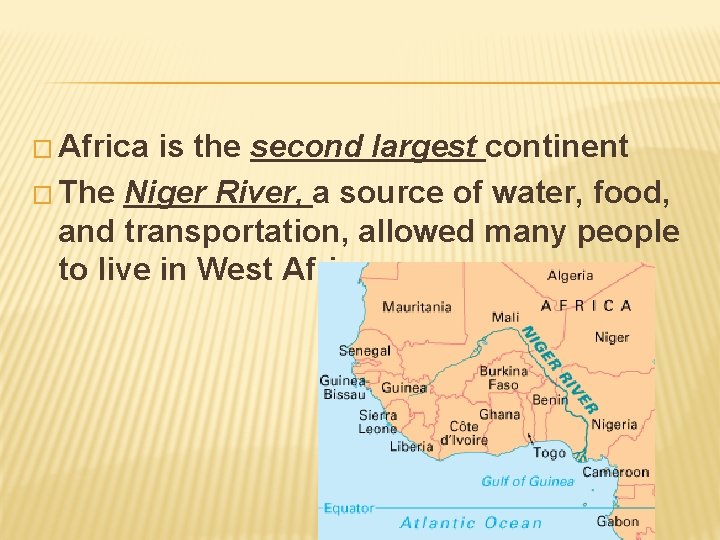
� Africa is the second largest continent � The Niger River, a source of water, food, and transportation, allowed many people to live in West Africa
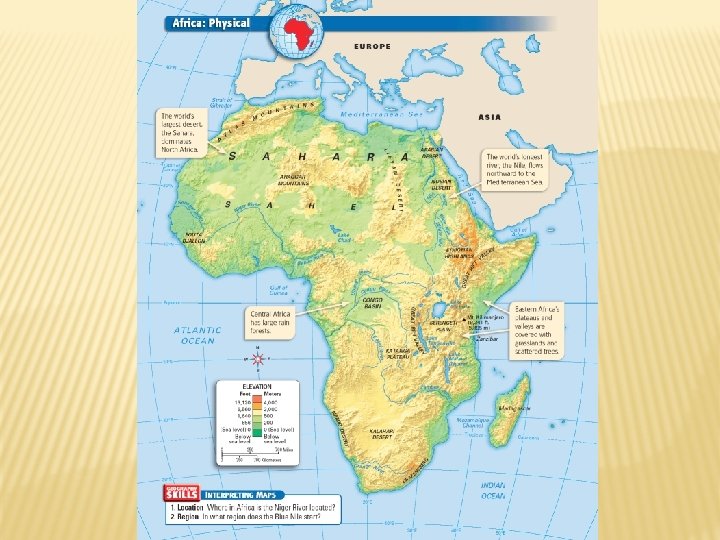
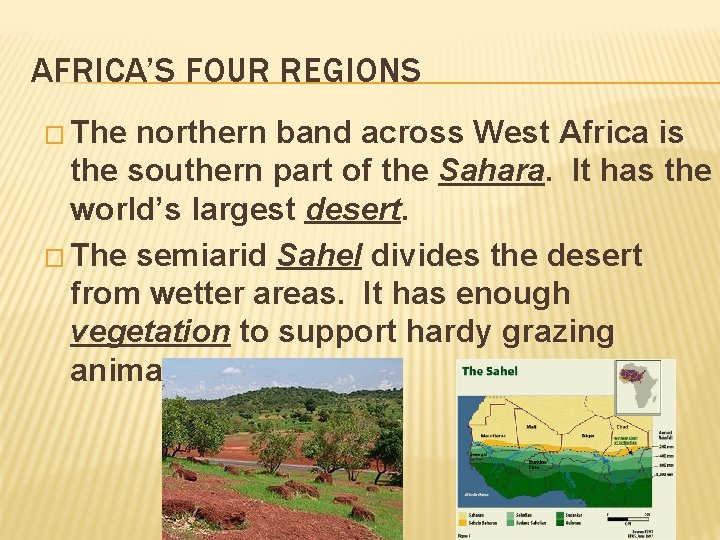
AFRICA’S FOUR REGIONS � The northern band across West Africa is the southern part of the Sahara. It has the world’s largest desert. � The semiarid Sahel divides the desert from wetter areas. It has enough vegetation to support hardy grazing animals.
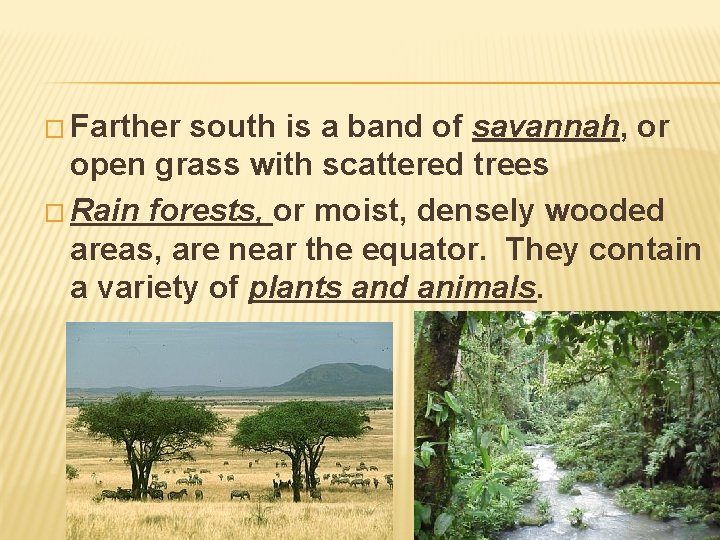
� Farther south is a band of savannah, or open grass with scattered trees � Rain forests, or moist, densely wooded areas, are near the equator. They contain a variety of plants and animals.
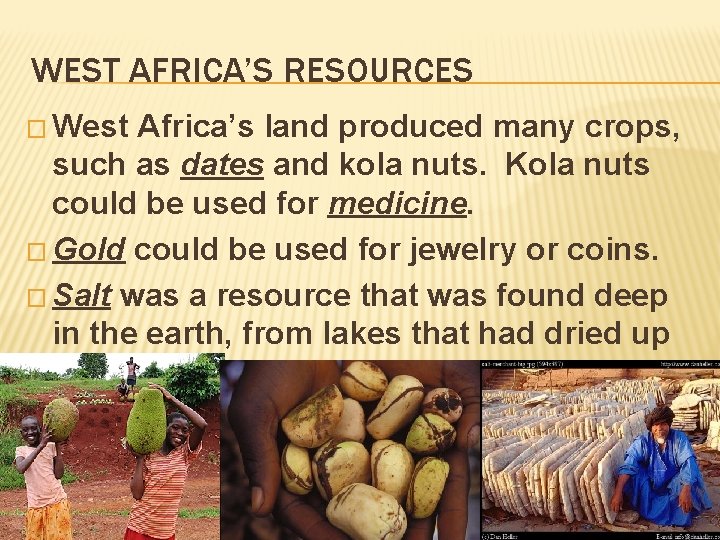
WEST AFRICA’S RESOURCES � West Africa’s land produced many crops, such as dates and kola nuts. Kola nuts could be used for medicine. � Gold could be used for jewelry or coins. � Salt was a resource that was found deep in the earth, from lakes that had dried up
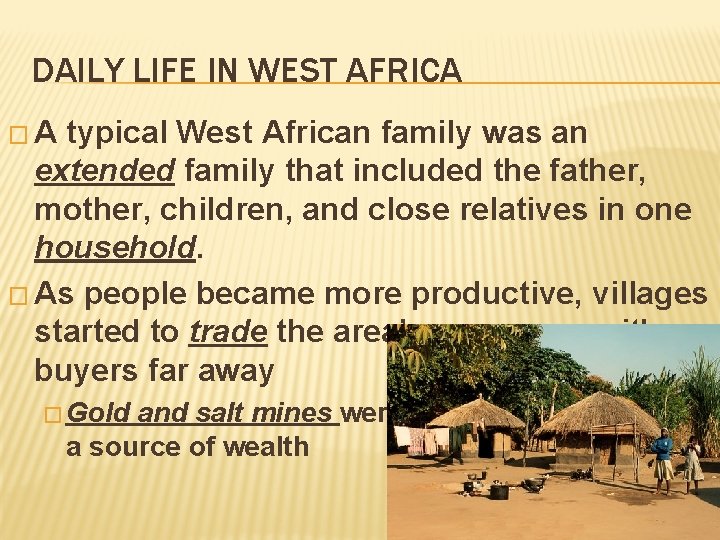
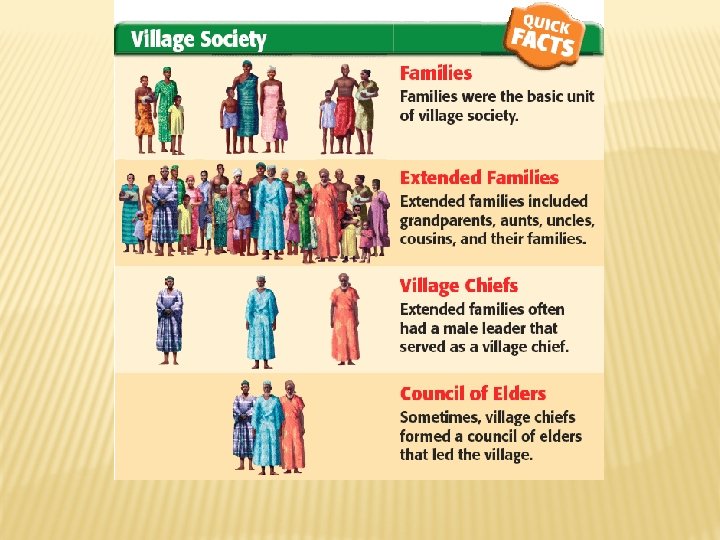
DAILY LIFE IN WEST AFRICA �A typical West African family was an extended family that included the father, mother, children, and close relatives in one household. � As people became more productive, villages started to trade the area’s resources with buyers far away � Gold and salt mines were a source of wealth
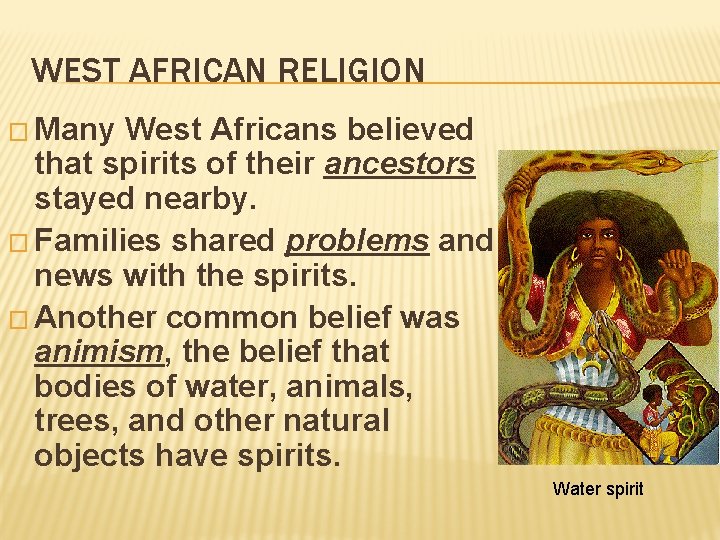
WEST AFRICAN RELIGION � Many West Africans believed that spirits of their ancestors stayed nearby. � Families shared problems and news with the spirits. � Another common belief was animism, the belief that bodies of water, animals, trees, and other natural objects have spirits. Water spirit
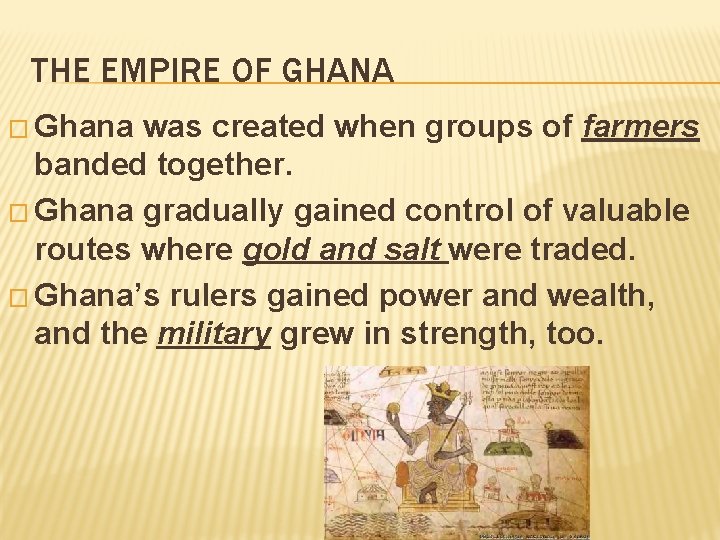
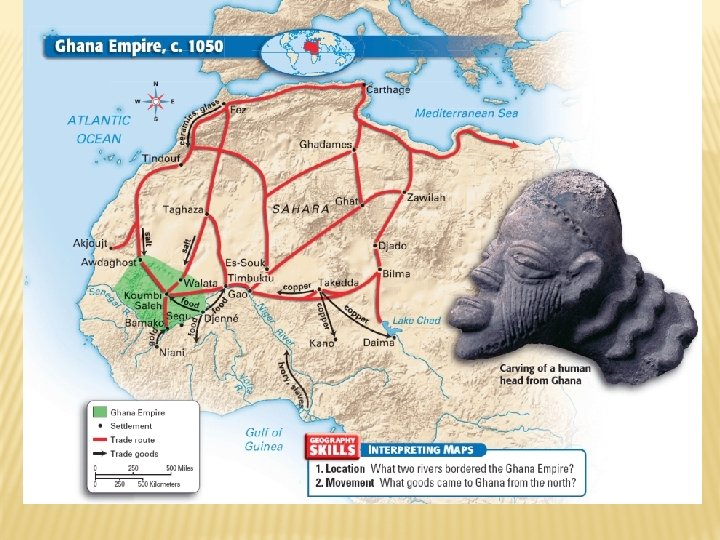
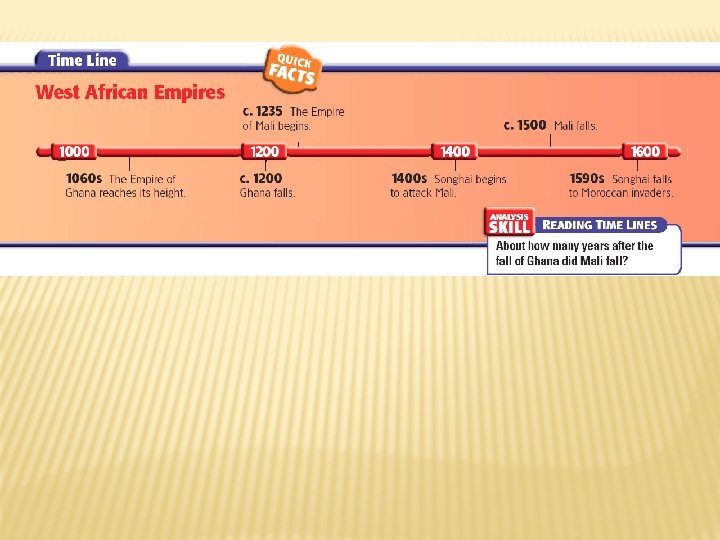
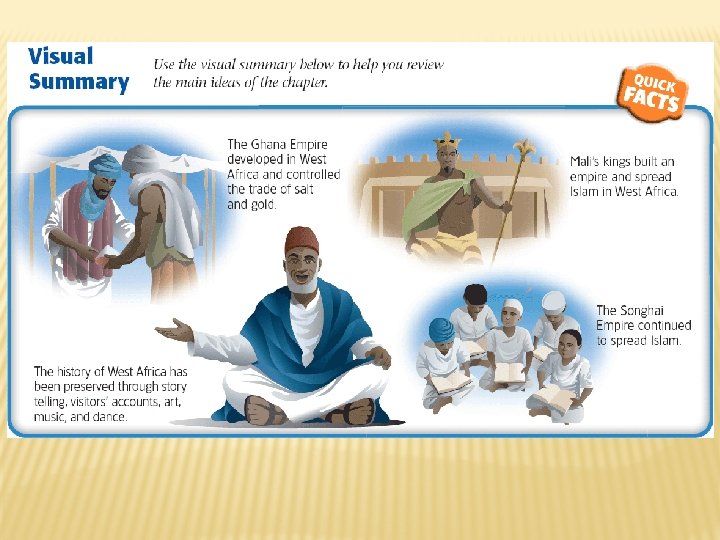
THE EMPIRE OF GHANA � Ghana was created when groups of farmers banded together. � Ghana gradually gained control of valuable routes where gold and salt were traded. � Ghana’s rulers gained power and wealth, and the military grew in strength, too.
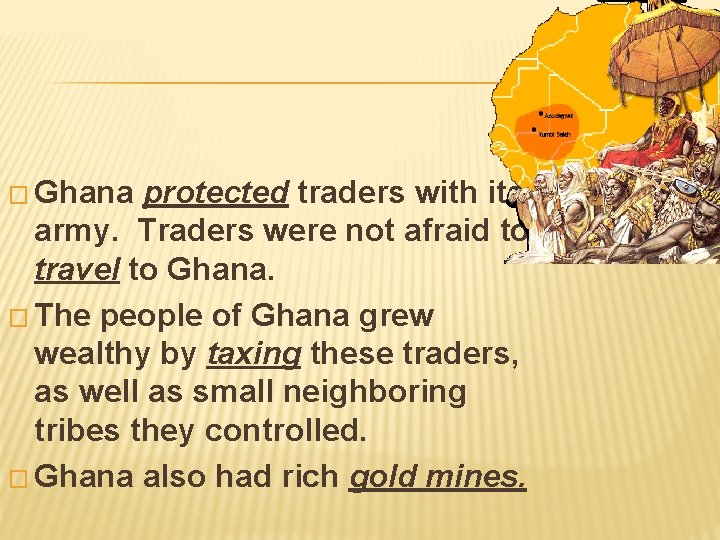
� Ghana protected traders with its army. Traders were not afraid to travel to Ghana. � The people of Ghana grew wealthy by taxing these traders, as well as small neighboring tribes they controlled. � Ghana also had rich gold mines.
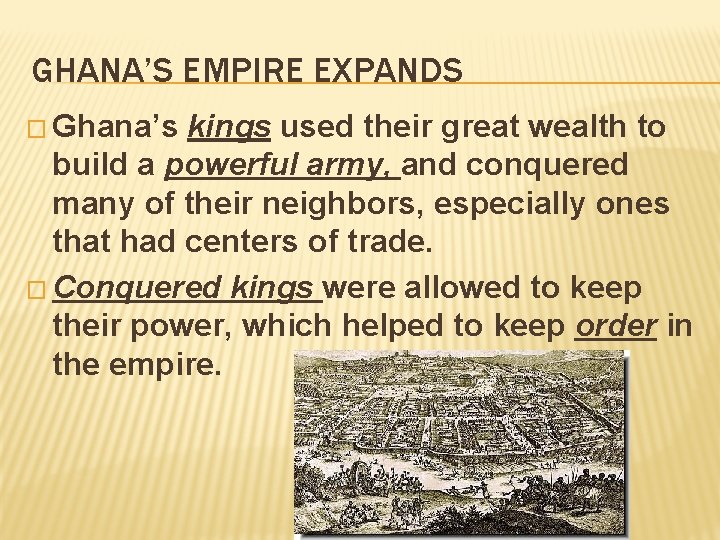
GHANA’S EMPIRE EXPANDS � Ghana’s kings used their great wealth to build a powerful army, and conquered many of their neighbors, especially ones that had centers of trade. � Conquered kings were allowed to keep their power, which helped to keep order in the empire.
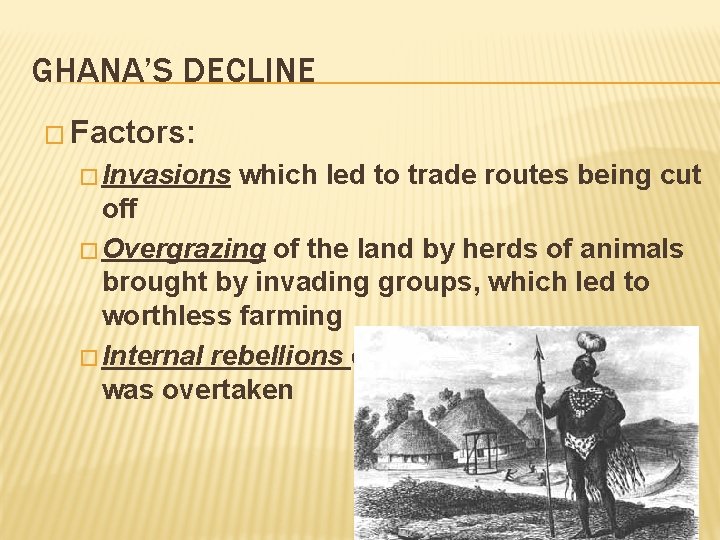
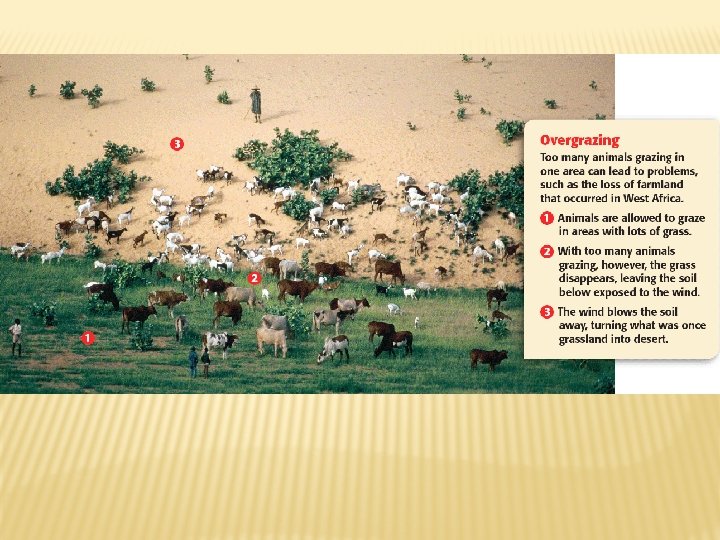
GHANA’S DECLINE � Factors: � Invasions which led to trade routes being cut off � Overgrazing of the land by herds of animals brought by invading groups, which led to worthless farming � Internal rebellions erupted, and the empire was overtaken
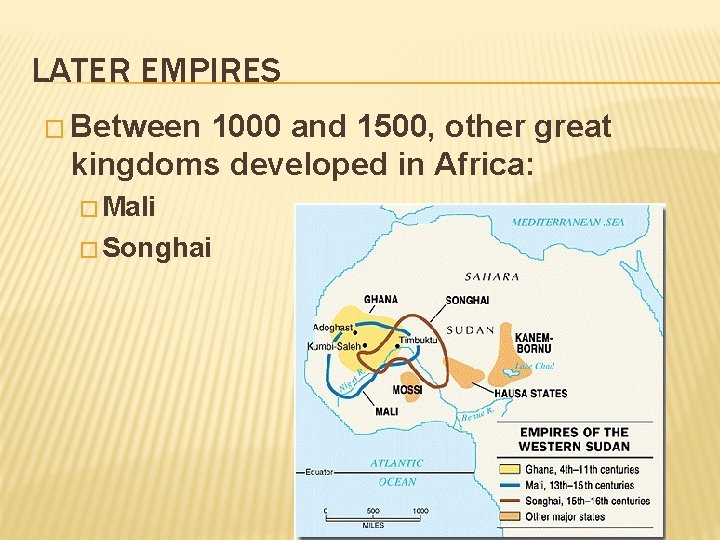
LATER EMPIRES � Between 1000 and 1500, other great kingdoms developed in Africa: � Mali � Songhai
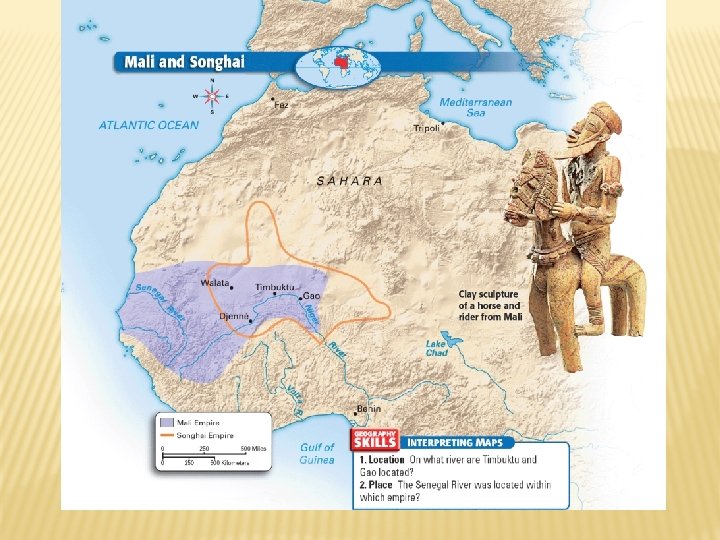
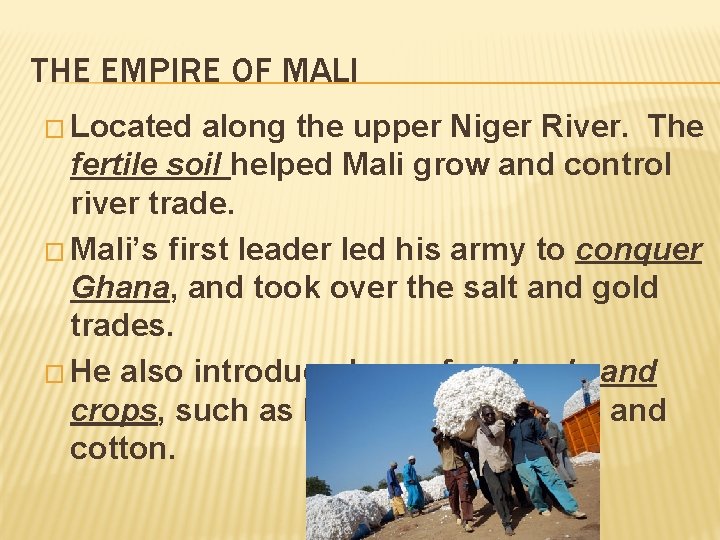
THE EMPIRE OF MALI � Located along the upper Niger River. The fertile soil helped Mali grow and control river trade. � Mali’s first leader led his army to conquer Ghana, and took over the salt and gold trades. � He also introduced new farmlands and crops, such as beans, onions, rice, and cotton.
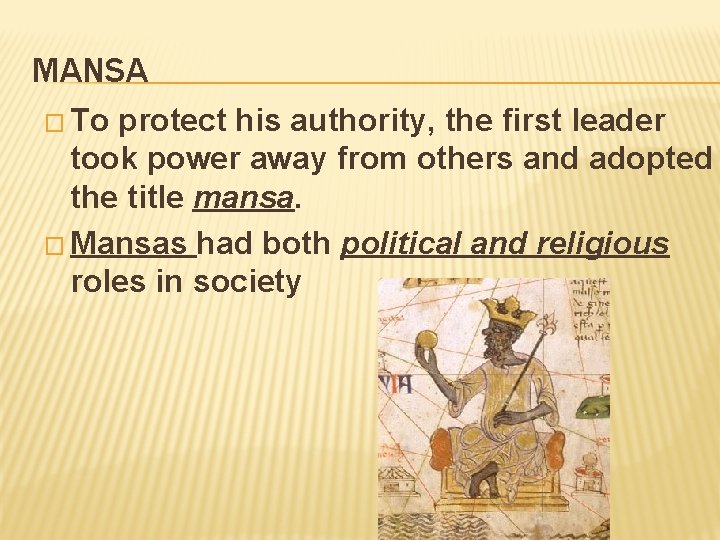
MANSA � To protect his authority, the first leader took power away from others and adopted the title mansa. � Mansas had both political and religious roles in society
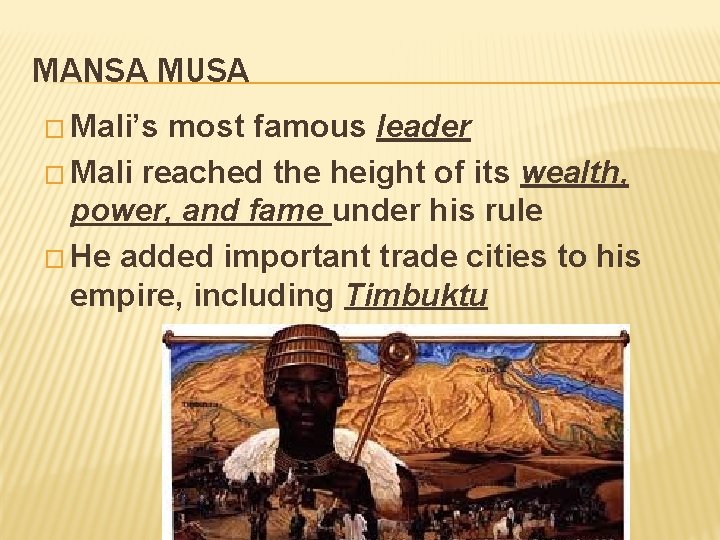
MANSA MUSA � Mali’s most famous leader � Mali reached the height of its wealth, power, and fame under his rule � He added important trade cities to his empire, including Timbuktu
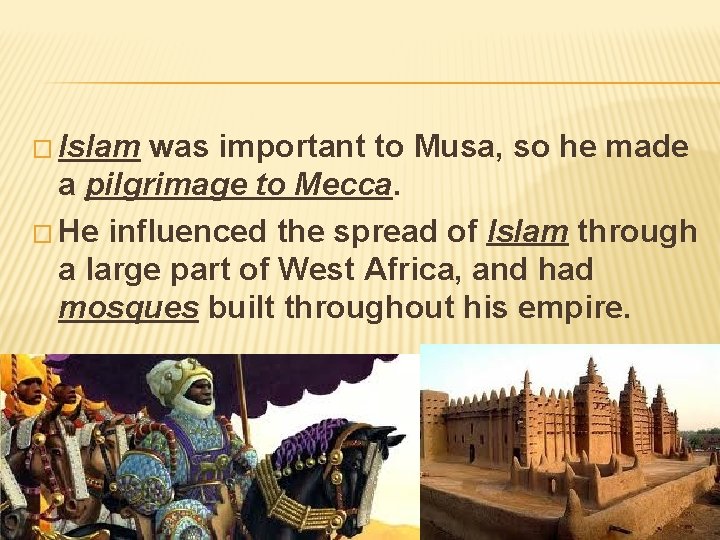
� Islam was important to Musa, so he made a pilgrimage to Mecca. � He influenced the spread of Islam through a large part of West Africa, and had mosques built throughout his empire.
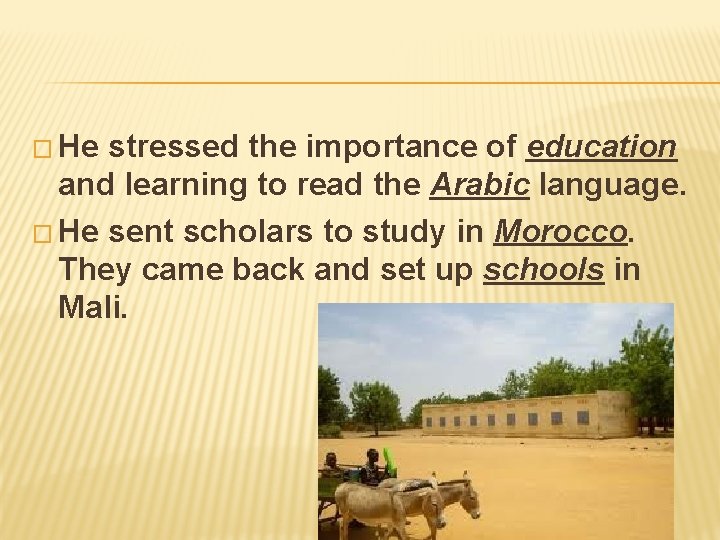
� He stressed the importance of education and learning to read the Arabic language. � He sent scholars to study in Morocco. They came back and set up schools in Mali.
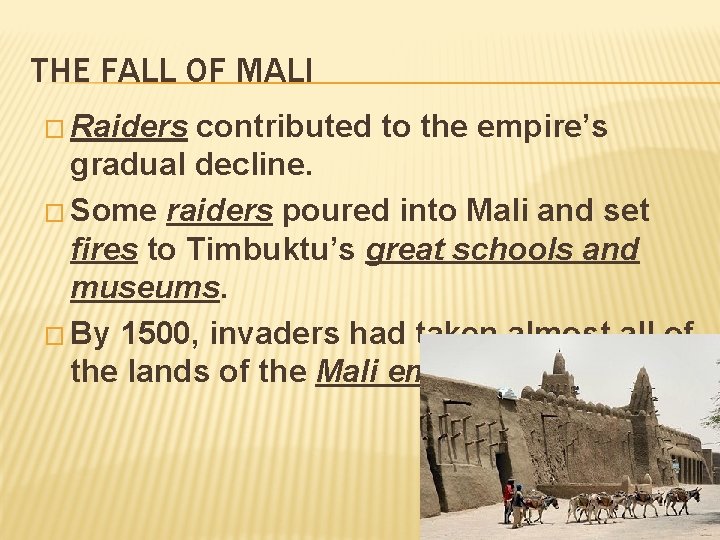
THE FALL OF MALI � Raiders contributed to the empire’s gradual decline. � Some raiders poured into Mali and set fires to Timbuktu’s great schools and museums. � By 1500, invaders had taken almost all of the lands of the Mali empire.
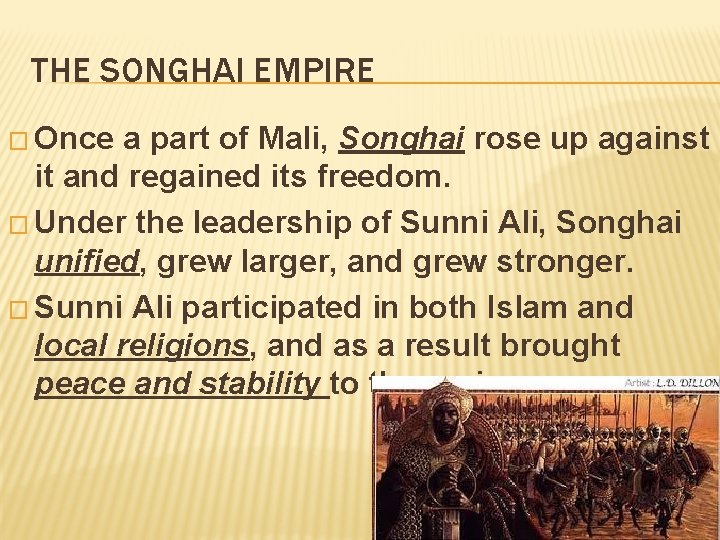
THE SONGHAI EMPIRE � Once a part of Mali, Songhai rose up against it and regained its freedom. � Under the leadership of Sunni Ali, Songhai unified, grew larger, and grew stronger. � Sunni Ali participated in both Islam and local religions, and as a result brought peace and stability to the region.
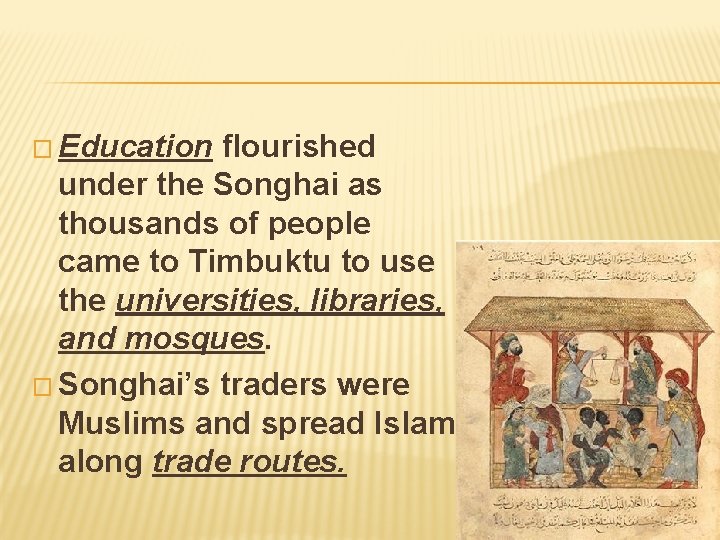
� Education flourished under the Songhai as thousands of people came to Timbuktu to use the universities, libraries, and mosques. � Songhai’s traders were Muslims and spread Islam along trade routes.
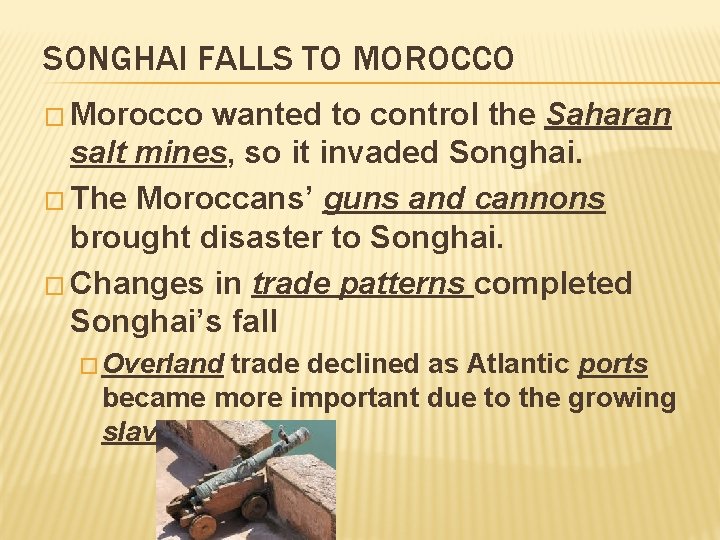
SONGHAI FALLS TO MOROCCO � Morocco wanted to control the Saharan salt mines, so it invaded Songhai. � The Moroccans’ guns and cannons brought disaster to Songhai. � Changes in trade patterns completed Songhai’s fall � Overland trade declined as Atlantic ports became more important due to the growing slave trade
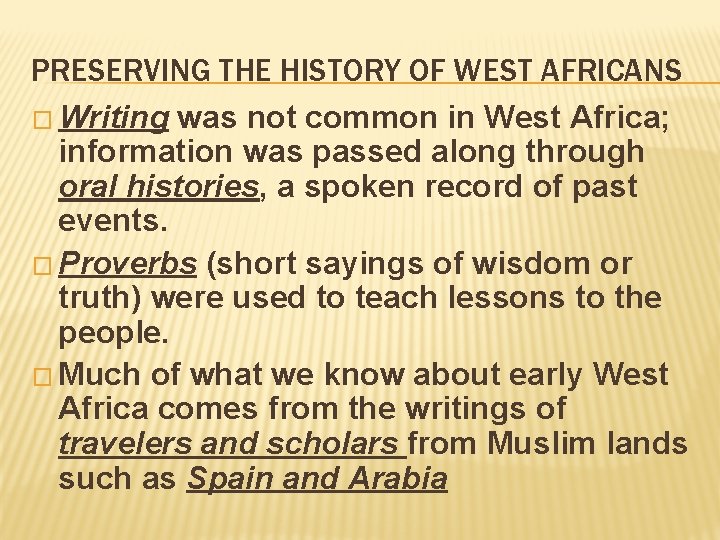
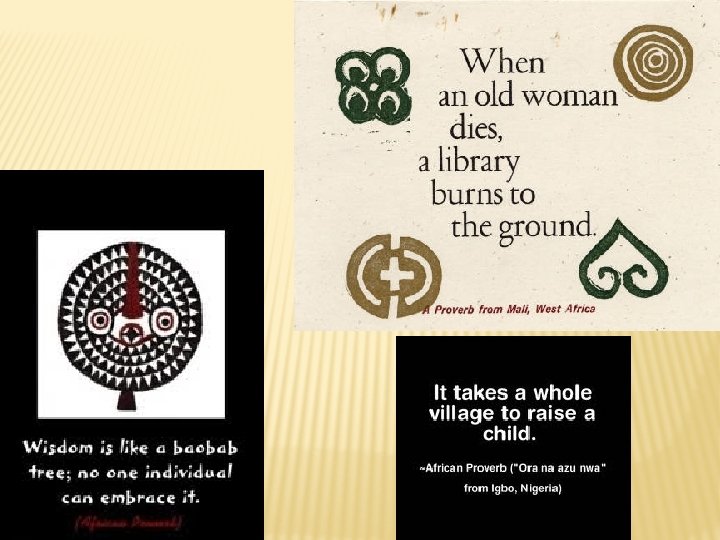
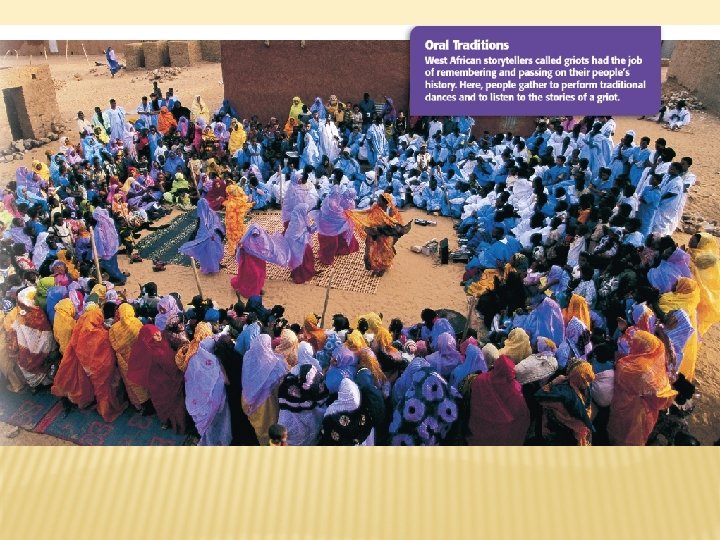
PRESERVING THE HISTORY OF WEST AFRICANS � Writing was not common in West Africa; information was passed along through oral histories, a spoken record of past events. � Proverbs (short sayings of wisdom or truth) were used to teach lessons to the people. � Much of what we know about early West Africa comes from the writings of travelers and scholars from Muslim lands such as Spain and Arabia
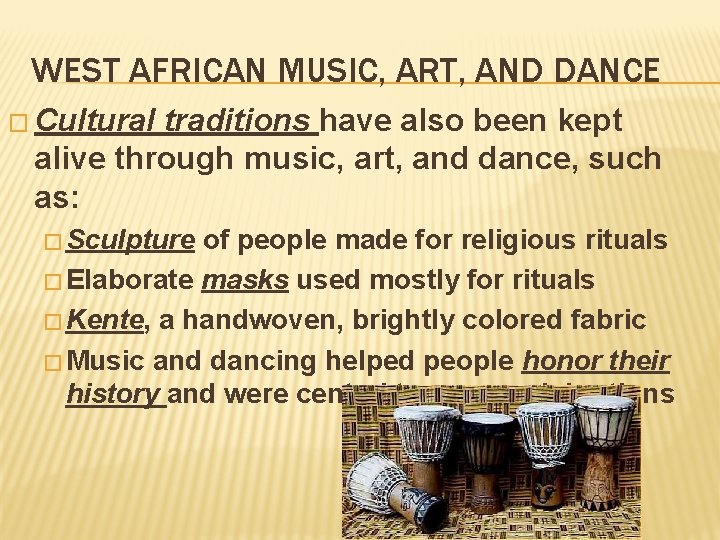
WEST AFRICAN MUSIC, ART, AND DANCE � Cultural traditions have also been kept alive through music, art, and dance, such as: � Sculpture of people made for religious rituals � Elaborate masks used mostly for rituals � Kente, a handwoven, brightly colored fabric � Music and dancing helped people honor their history and were central to many celebrations