
EARCOS Conference on Personalized Learning Allison Zmuda Facilitator
- Slides: 42
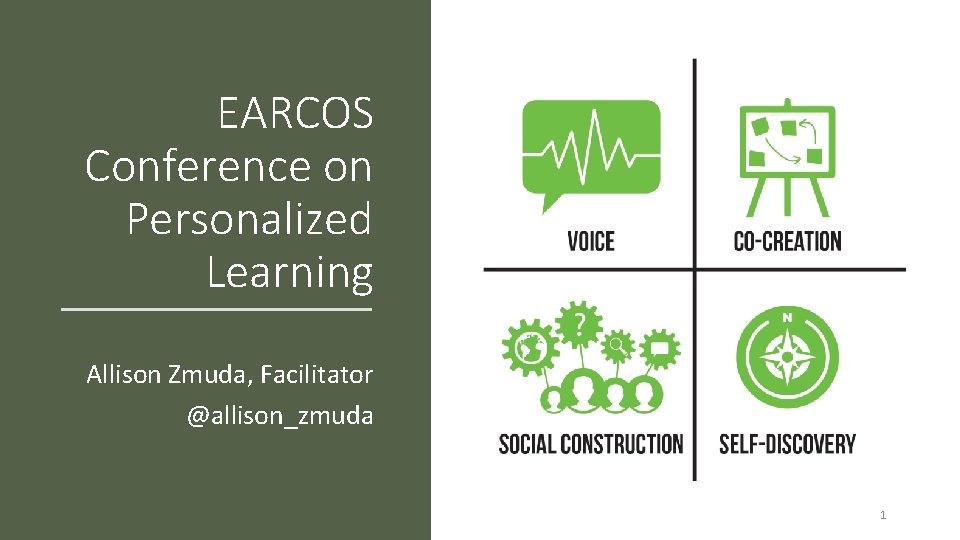
EARCOS Conference on Personalized Learning Allison Zmuda, Facilitator @allison_zmuda 1
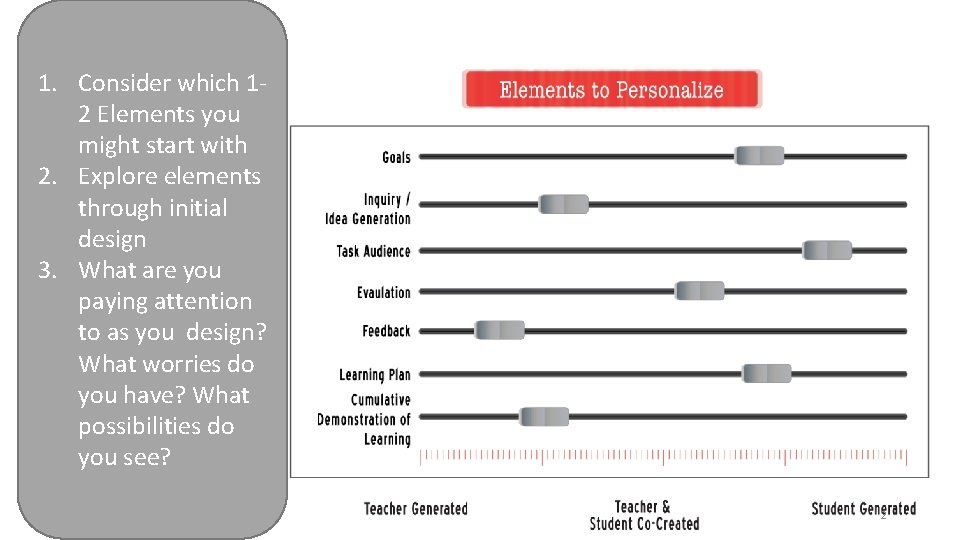
1. Consider which 12 Elements you might start with 2. Explore elements through initial design 3. What are you paying attention to as you design? What worries do you have? What possibilities do you see? 2
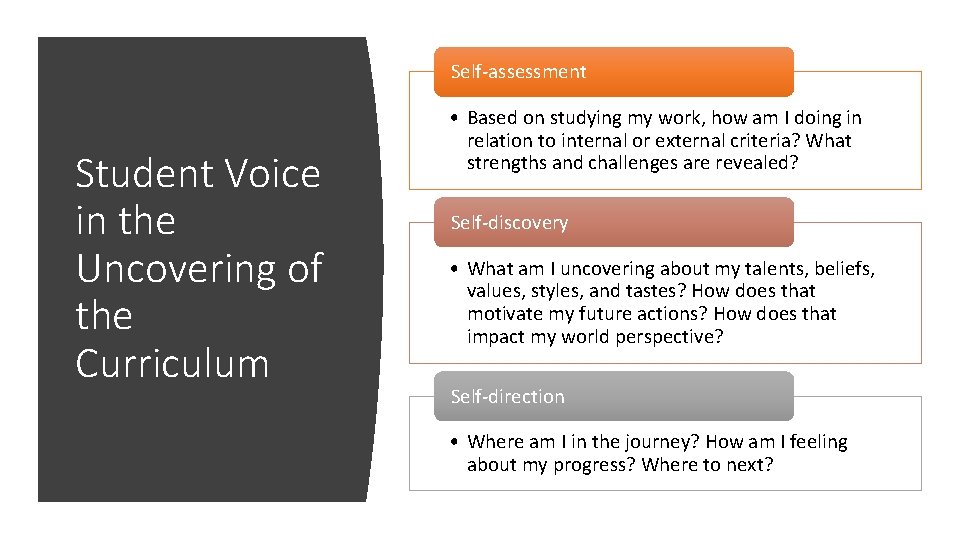
Self-assessment Student Voice in the Uncovering of the Curriculum • Based on studying my work, how am I doing in relation to internal or external criteria? What strengths and challenges are revealed? Self-discovery • What am I uncovering about my talents, beliefs, values, styles, and tastes? How does that motivate my future actions? How does that impact my world perspective? Self-direction • Where am I in the journey? How am I feeling about my progress? Where to next?
4
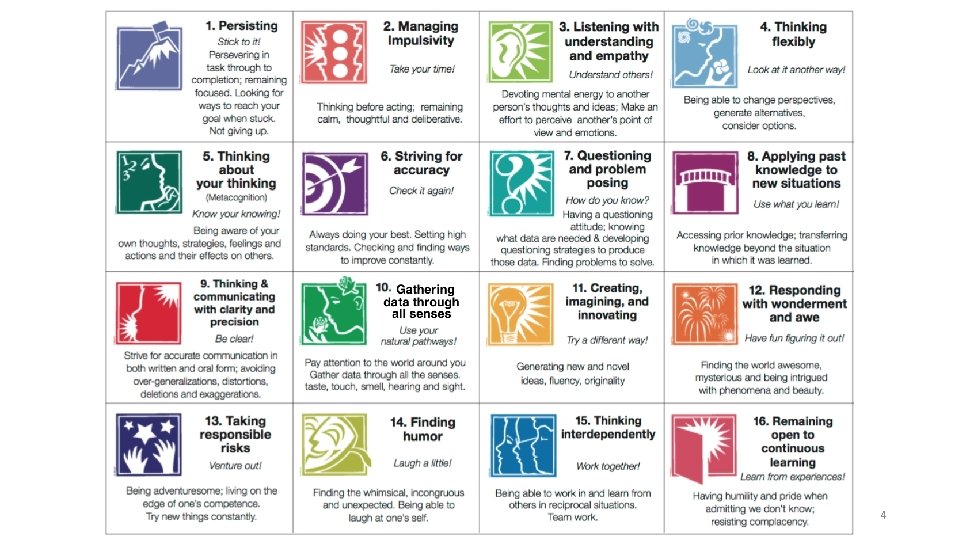
How Personalizing Learning and Habits of Mind Fit Together Describe actionable patterns of capacities and behaviors that can be learned and assessed Transdisciplinary and transferrable — focused on enduring, essential learnings for the world we live in right now As good for adults as they are for students 5
Agenda Areas of Focus for Me: Areas of Focus for You: • Interrelated Roles of a • Design Time to Teacher Personalize • Instructional Moves • Explanation of Focus and • Examining Unit of Inquiry Desired Impact and Routines 6
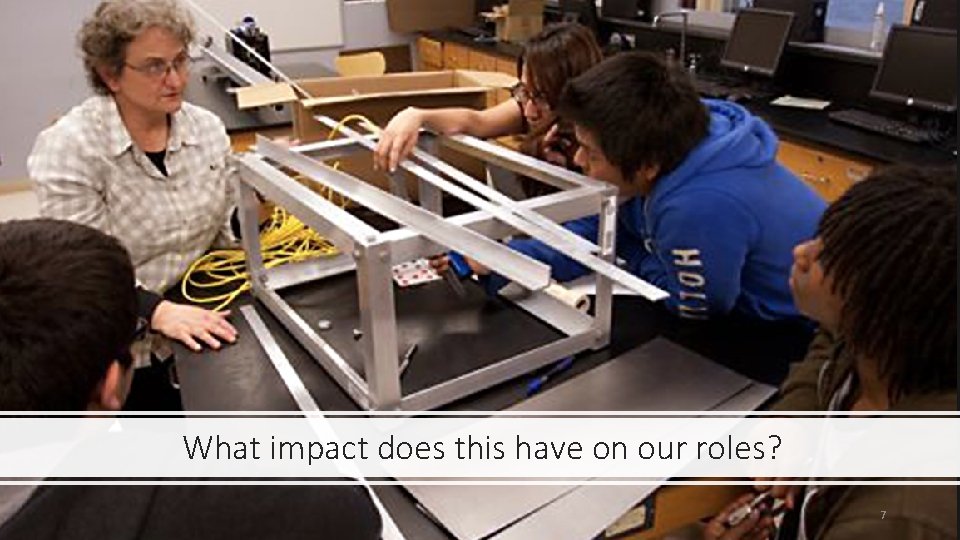
What impact does this have on our roles? 7
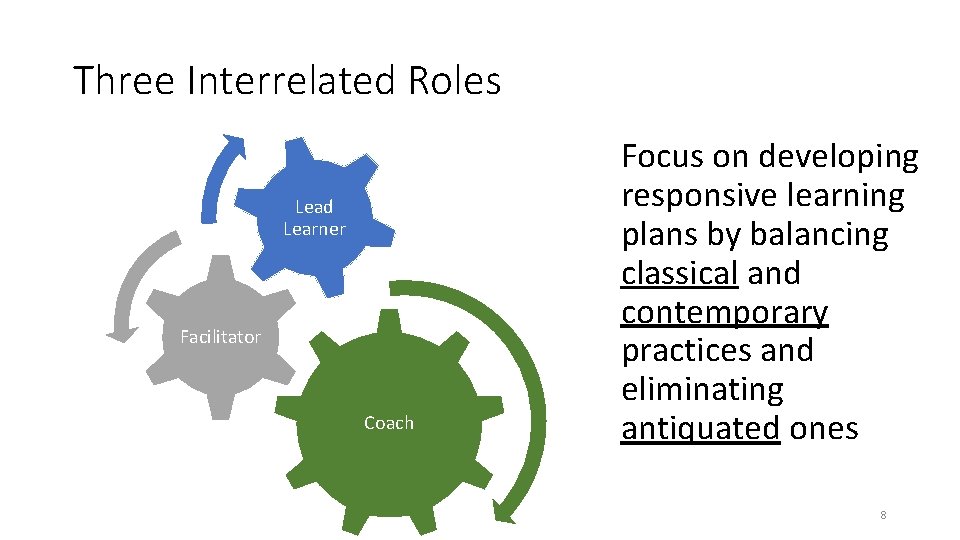
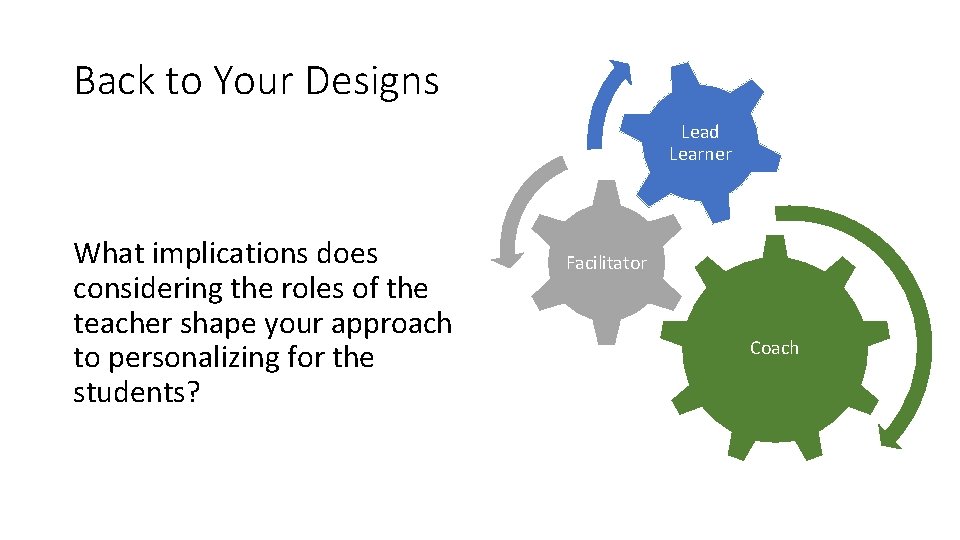
Three Interrelated Roles Lead Learner Facilitator Coach Focus on developing responsive learning plans by balancing classical and contemporary practices and eliminating antiquated ones 8
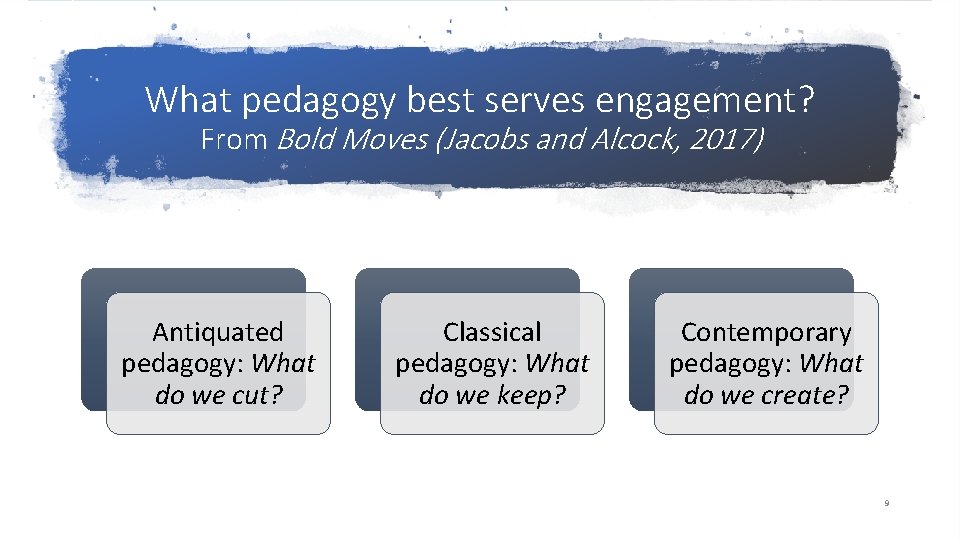
What pedagogy best serves engagement? From Bold Moves (Jacobs and Alcock, 2017) Antiquated pedagogy: What do we cut? Classical pedagogy: What do we keep? Contemporary pedagogy: What do we create? 9
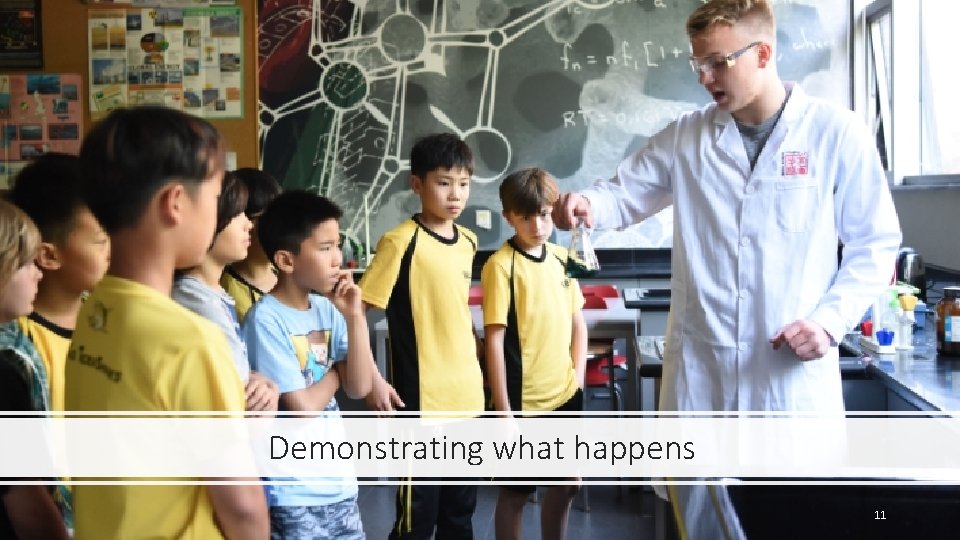
• • • Identifies and provides models for what to learn, how to learn, and how to demonstrate learning Uses direct instruction and modeling as primary teaching mode Provides immediate intervention to point out errors and redirect the learning Teacher as Lead Learner 10
Demonstrating what happens 11
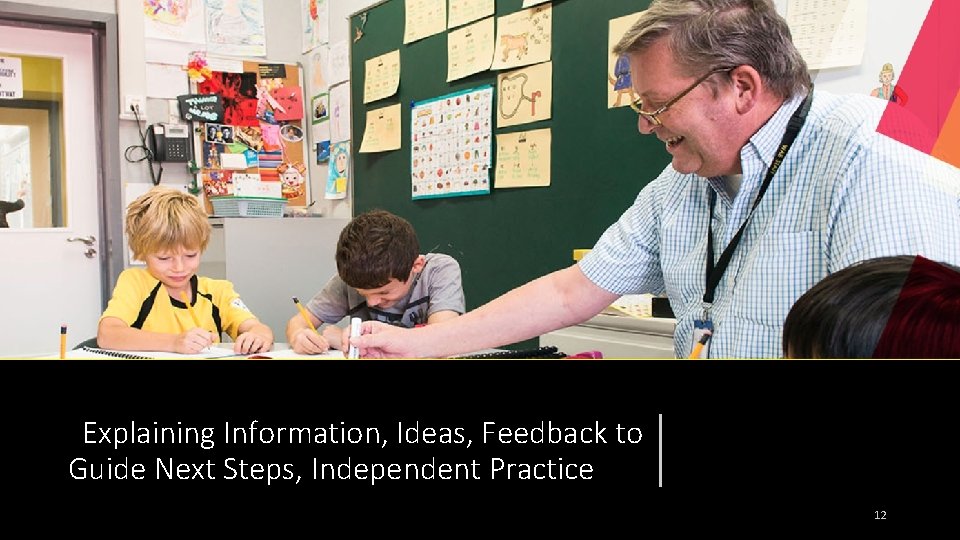
Explaining Information, Ideas, Feedback to Guide Next Steps, Independent Practice 12
Pause and Reflect: Teacher as Lead Learner v What are some of the strategies you use as a lead learner? v How do you make certain that you are leading students to their own thinking as they engage with the material? A Lead Learner… • Identifies and provides models for what to learn, how to learn, and how to demonstrate learning • Uses direct instruction and modeling as primary teaching mode • Encourages participation and values contributions 13
● ● ● Designs tasks that invite inquiry, analysis, and/or revision Invites students to engage in conversation to facilitate connections, prior knowledge, areas of interest Probes students to deepen thinking Teacher as Facilitator 14
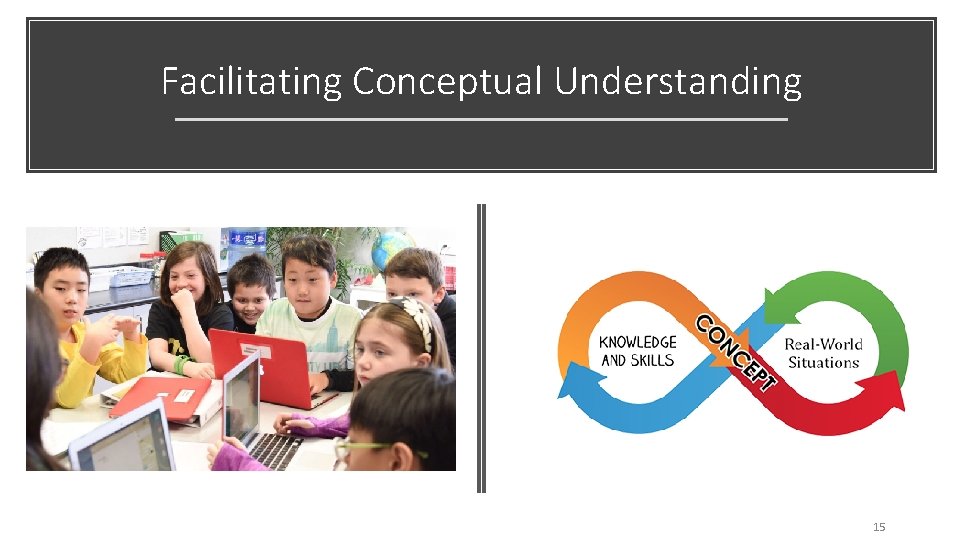
Facilitating Conceptual Understanding 15
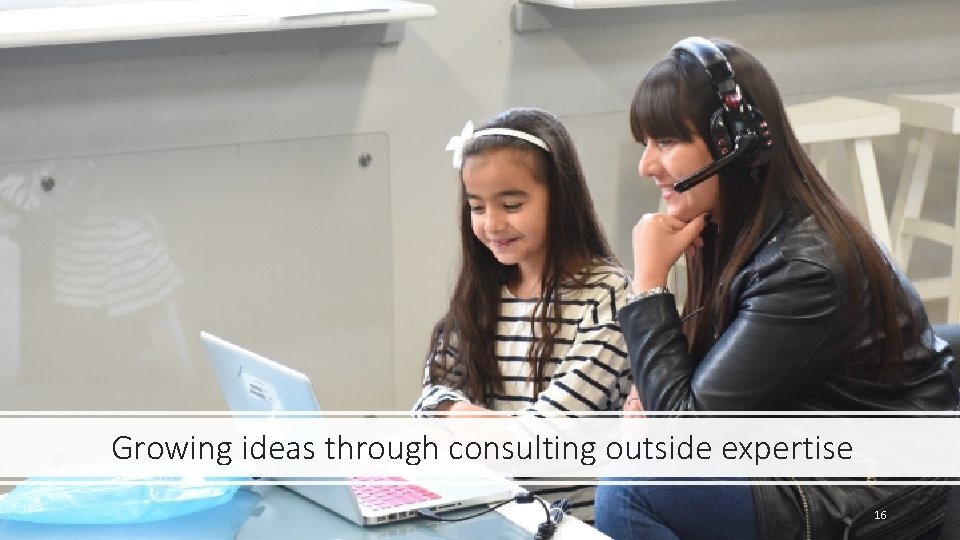
Growing ideas through consulting outside expertise 16
Pause and Reflect: Teacher as Facilitator v. As you consider ways you open A Facilitator… conversations about the material • Designs tasks that invite under consideration, how are inquiry, analysis, and/or you creating a safe space in revision • Invites students to engage in which all students can voice conversation to facilitate their perspectives? connections, prior knowledge, areas of interest v. How can you make certain that • Probes students to deepen students are thinking flexibly? thinking 17
• • Actively coaches thinking with learners through modeling, strategic use of teaching strategies, and observing Provides feedback and guidance to improve performance Troubleshoots with learners by identifying areas of growth and creates next steps Uses assessment information to improve learning Teacher as Teacher Coach as Coach 18
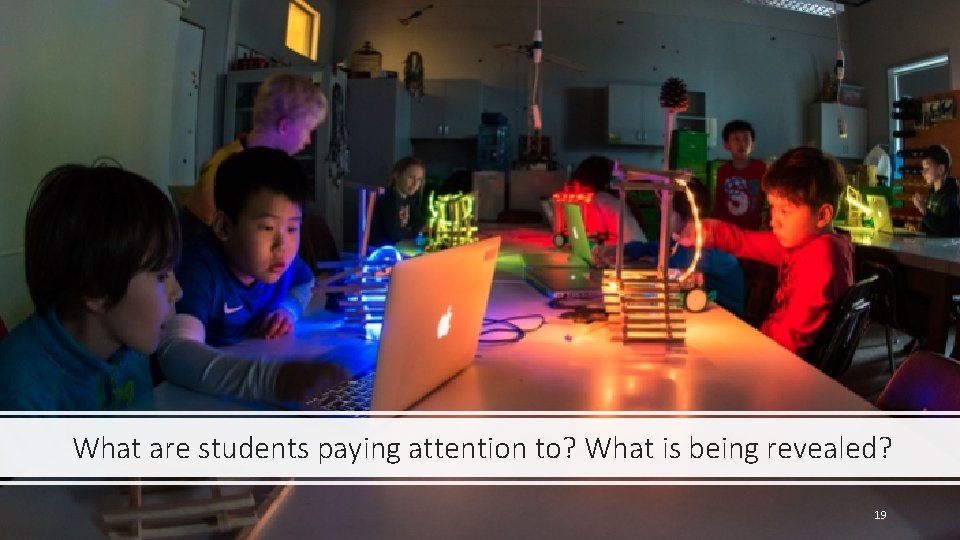
What are students paying attention to? What is being revealed? 19
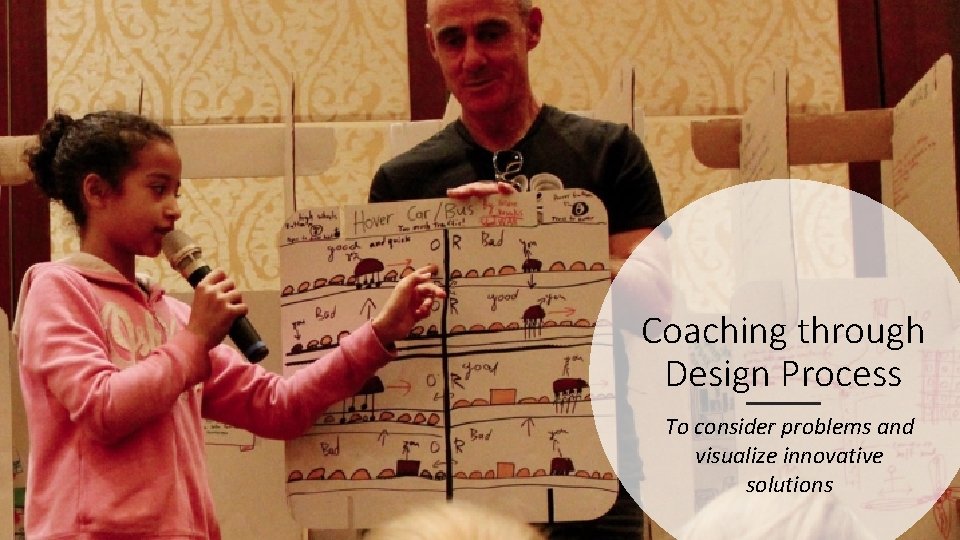
Coaching through Design Process To consider problems and visualize innovative solutions
Pause and Reflect: Teacher as Coach v v When you move around to A Coach… check in with the learning, • Actively coaches thinking with what are some of the moves learners through modeling, you make to push for their strategic use of teaching own thinking? strategies, and observing When you pause a learning experience, how do you coach students to examine the work and determine next moves? • • • Provides feedback and guidance to improve performance Troubleshoots with learners by identifying areas of growth and creates next steps Uses assessment information to improve learning 21
Roles of the Teacher: Through Lens of Cumulative Demonstration of Learning
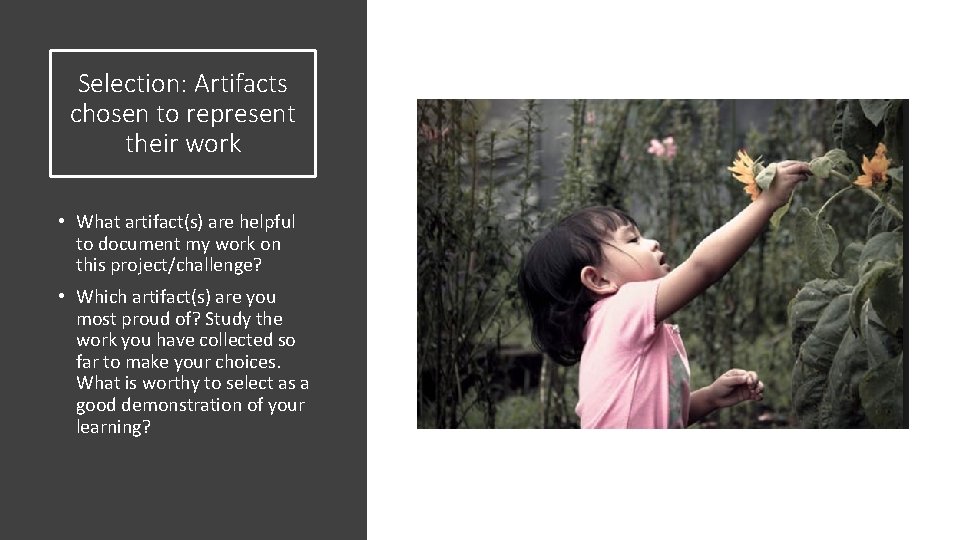
Selection: Artifacts chosen to represent their work • What artifact(s) are helpful to document my work on this project/challenge? • Which artifact(s) are you most proud of? Study the work you have collected so far to make your choices. What is worthy to select as a good demonstration of your learning?
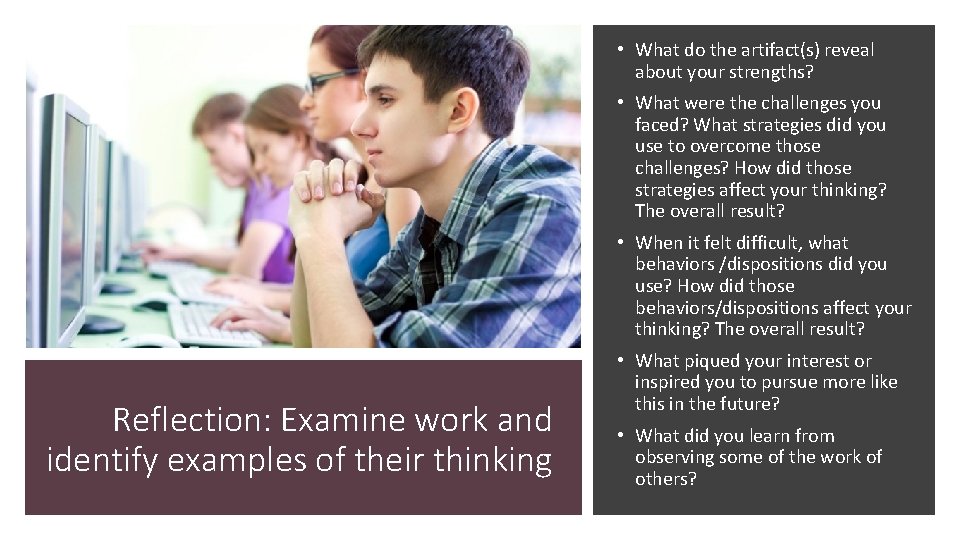
• What do the artifact(s) reveal about your strengths? • What were the challenges you faced? What strategies did you use to overcome those challenges? How did those strategies affect your thinking? The overall result? • When it felt difficult, what behaviors /dispositions did you use? How did those behaviors/dispositions affect your thinking? The overall result? Reflection: Examine work and identify examples of their thinking • What piqued your interest or inspired you to pursue more like this in the future? • What did you learn from observing some of the work of others?
Direction: Identify actionable next steps What 1 -2 goals would help me to become better? • What are actions or next steps that will be helpful? • What actions could I take to ask for help or resources so that I can achieve my goals?
Reflect • Why is it worth the effort? • What might be revealed in student thinking? • Where might it be used as part of my regular practice? • How might I use this approach to grow student’s self-direction?
Back to Your Designs Lead Learner What implications does considering the roles of the teacher shape your approach to personalizing for the students? Facilitator Coach
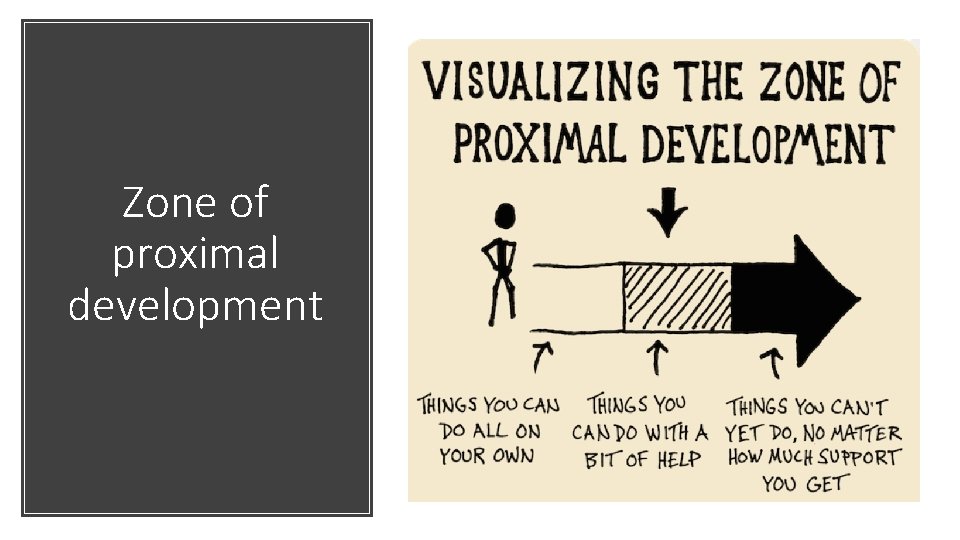
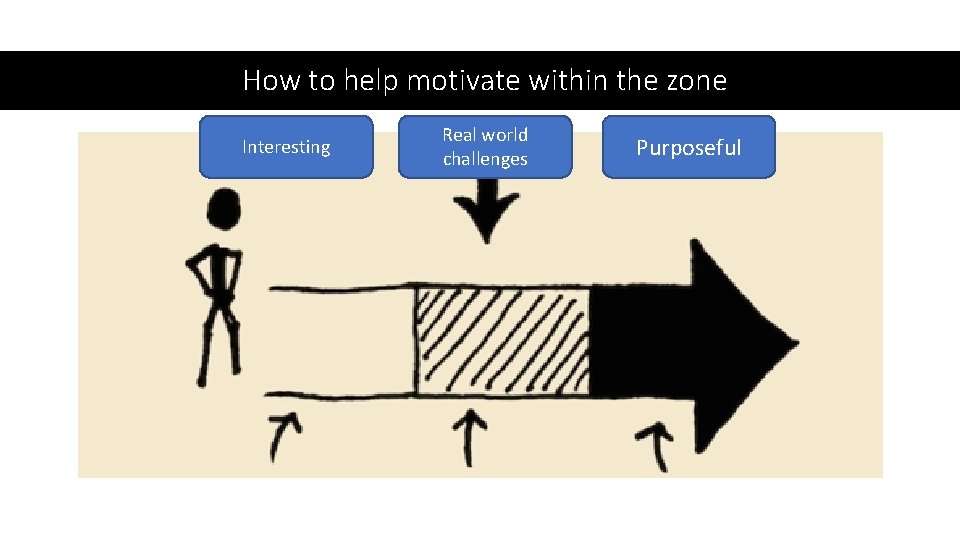
Zone of proximal development
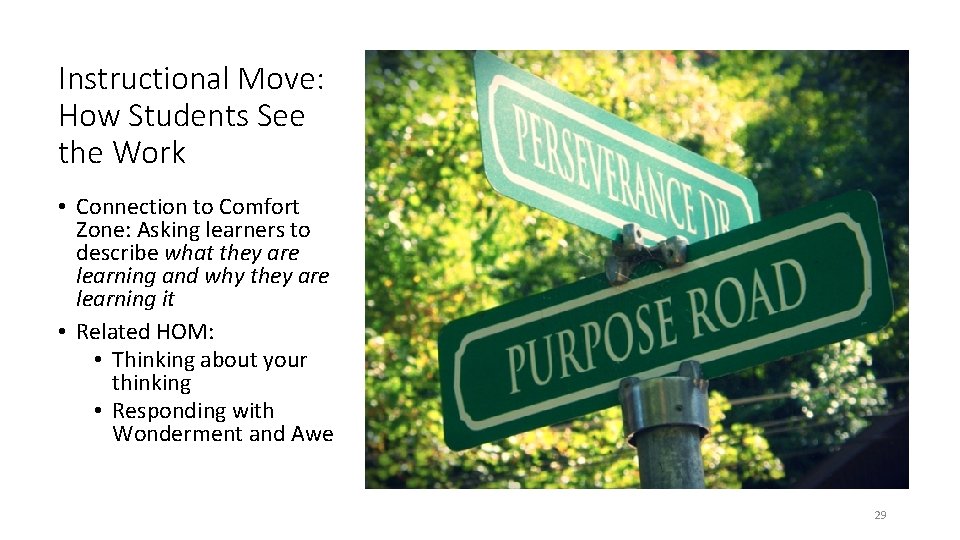
Instructional Move: How Students See the Work • Connection to Comfort Zone: Asking learners to describe what they are learning and why they are learning it • Related HOM: • Thinking about your thinking • Responding with Wonderment and Awe 29
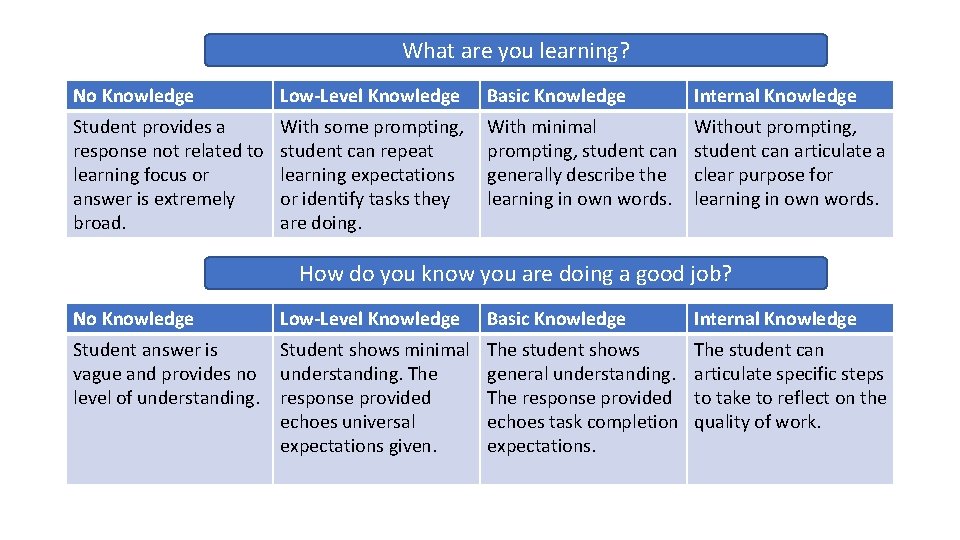
What are you learning? No Knowledge Low-Level Knowledge Basic Knowledge Internal Knowledge Student provides a response not related to learning focus or answer is extremely broad. With some prompting, student can repeat learning expectations or identify tasks they are doing. With minimal prompting, student can generally describe the learning in own words. Without prompting, student can articulate a clear purpose for learning in own words. How do you know you are doing a good job? No Knowledge Low-Level Knowledge Basic Knowledge Internal Knowledge Student answer is vague and provides no level of understanding. Student shows minimal understanding. The response provided echoes universal expectations given. The student shows general understanding. The response provided echoes task completion expectations. The student can articulate specific steps to take to reflect on the quality of work.
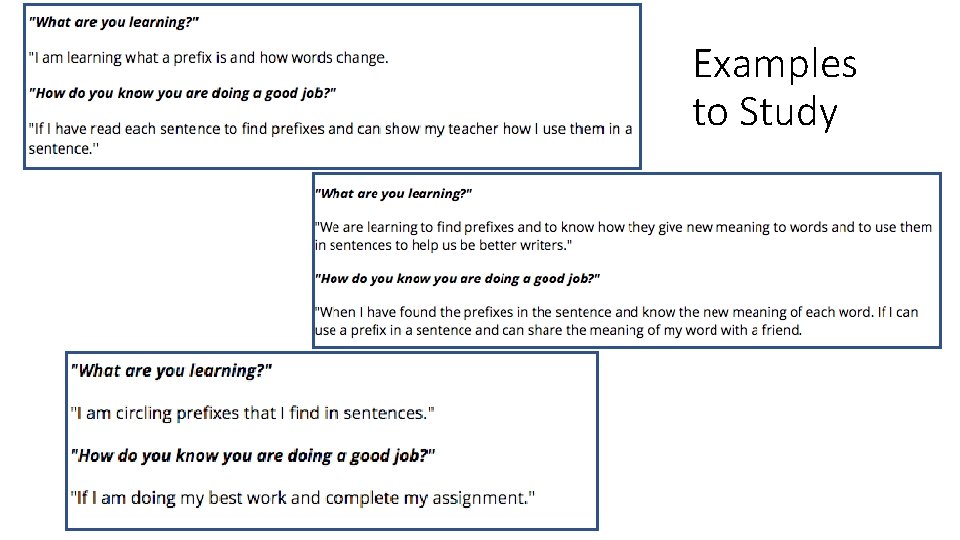
Examples to Study
Reflect • Where might you use this instructional move? • What might be revealed in student thinking when using this instructional move?
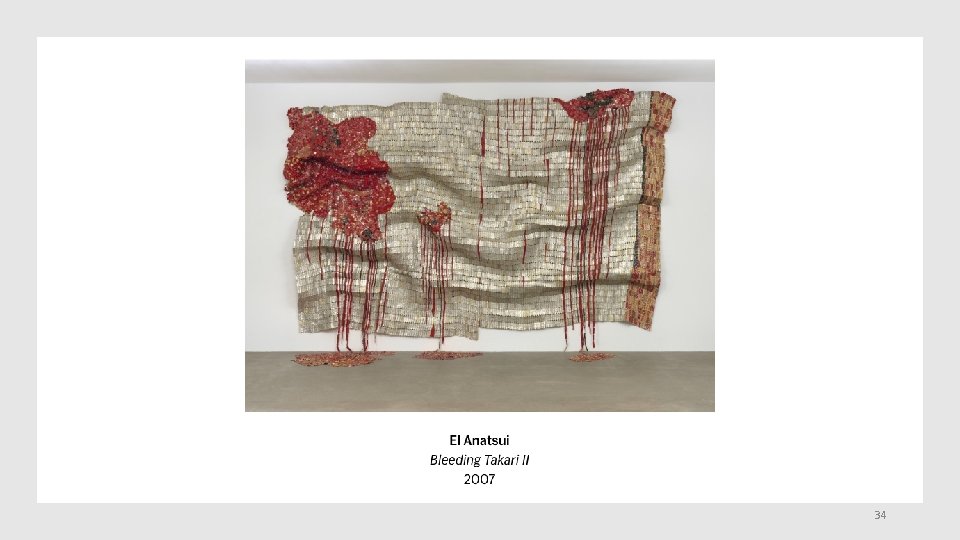
Instructional Move: Slow Looking • Connection to Comfort Zone: Leveraging thoughtful observation as basis for critical thinking • Related HOM: Gathering data through all senses; Remaining open to continuous learning • Examine the artifact carefully. • Turn to your partner and describe what you see (do not interpret or judge)
34
Reflect • Where might you use this instructional move? • What might be revealed in student thinking when using this instructional move?
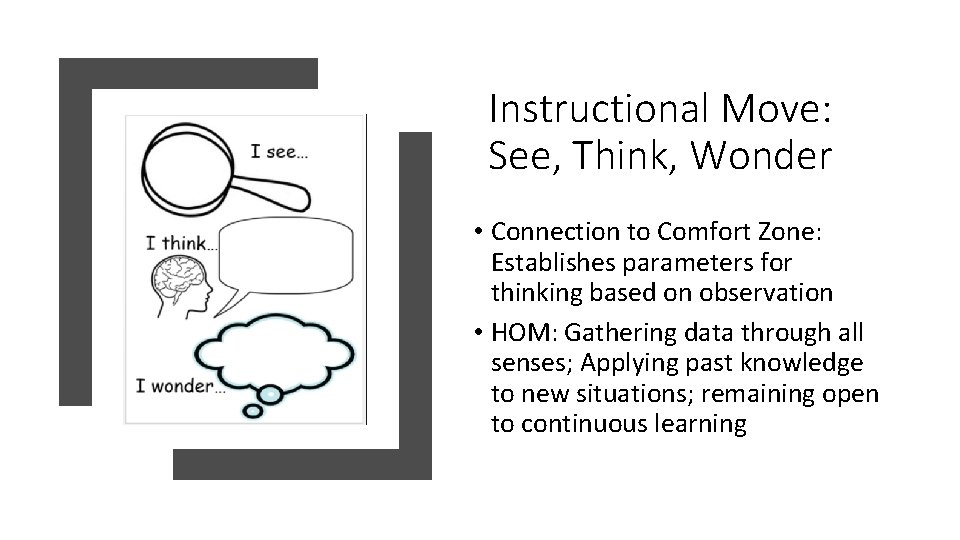
Instructional Move: See, Think, Wonder • Connection to Comfort Zone: Establishes parameters for thinking based on observation • HOM: Gathering data through all senses; Applying past knowledge to new situations; remaining open to continuous learning
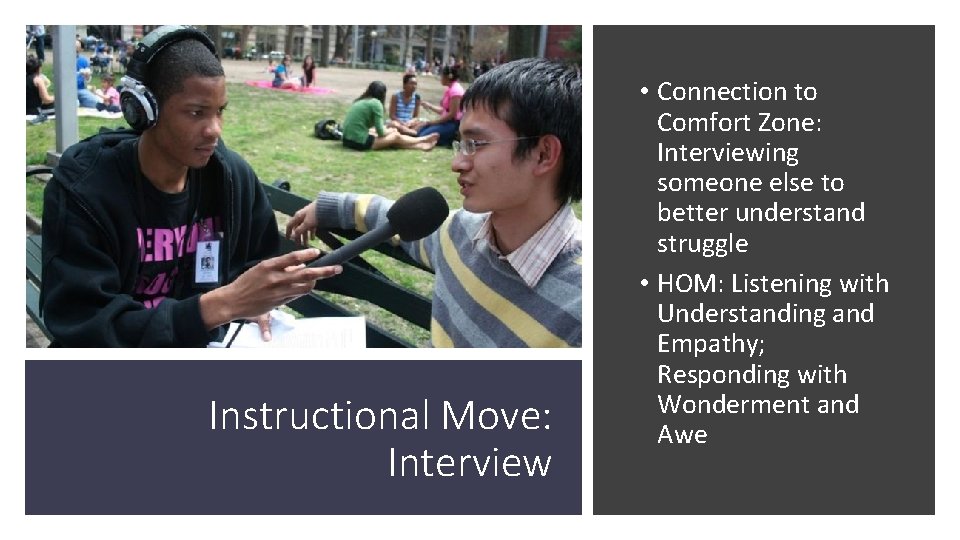
Instructional Move: Interview • Connection to Comfort Zone: Interviewing someone else to better understand struggle • HOM: Listening with Understanding and Empathy; Responding with Wonderment and Awe
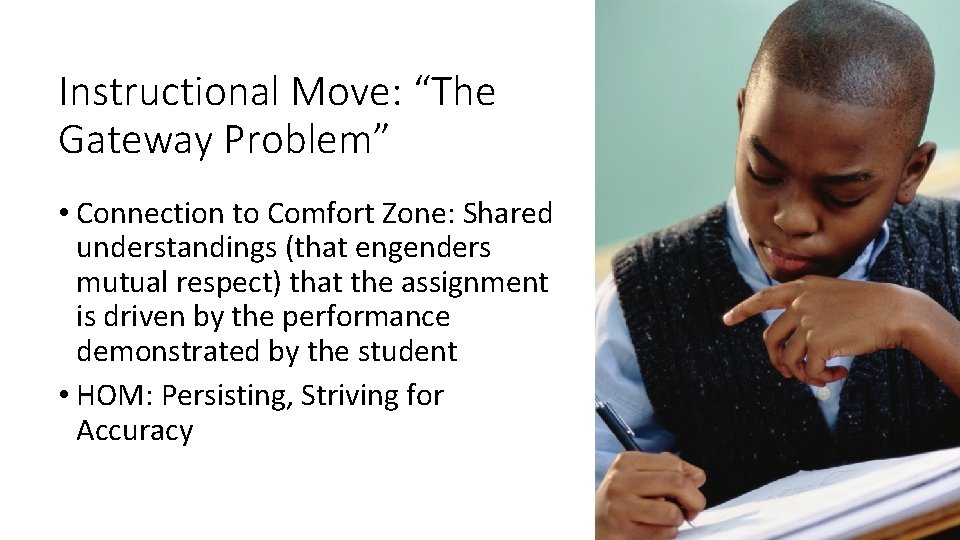
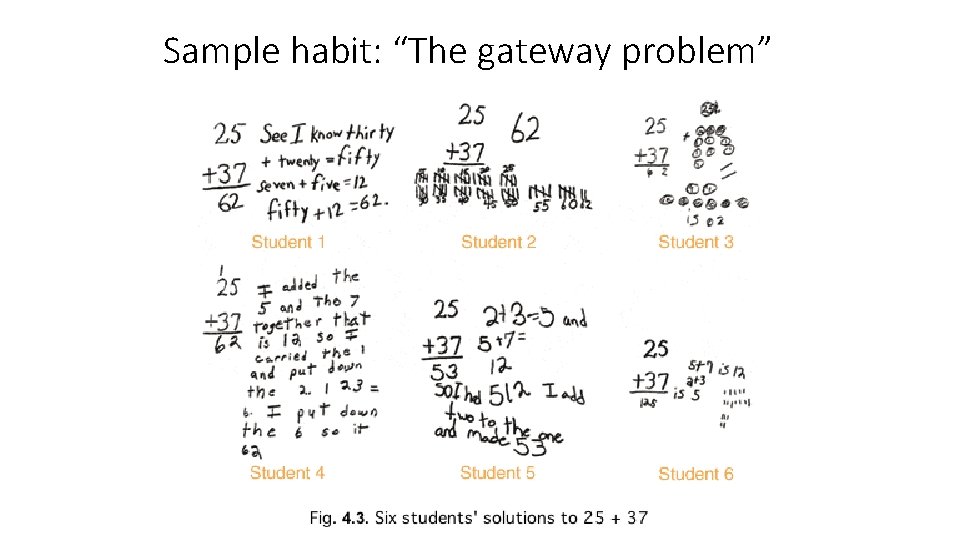
Instructional Move: “The Gateway Problem” • Connection to Comfort Zone: Shared understandings (that engenders mutual respect) that the assignment is driven by the performance demonstrated by the student • HOM: Persisting, Striving for Accuracy
Sample habit: “The gateway problem”
Helpful context for the “gateway problem” • Train students on the students role and teachers role on the gateway problem • Use existing sets of assignments to “cherry pick” one or two items for the gateway problem(s) • Use existing sets of problems to create tiered sets of assignments • Provide the teacher with immediate information on current performance level of students so that the very next assignment is based on what they need right now. • Provides students with illustrative problems that they should be comfortable with solving to prepare for larger assessment
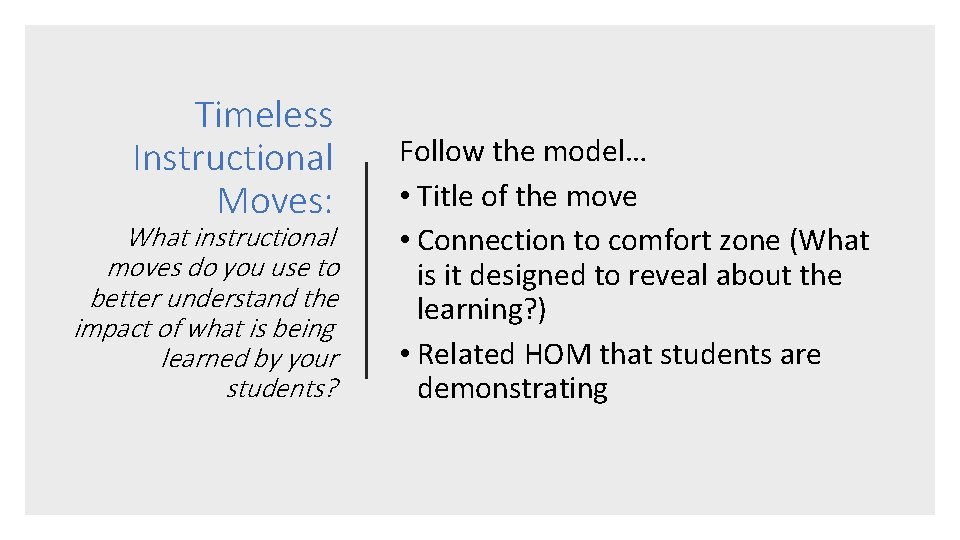
Timeless Instructional Moves: What instructional moves do you use to better understand the impact of what is being learned by your students? Follow the model… • Title of the move • Connection to comfort zone (What is it designed to reveal about the learning? ) • Related HOM that students are demonstrating
How to help motivate within the zone Interesting Real world challenges Purposeful