
Ear Examination TFT ET Patency Tests Dr Sheetal
- Slides: 31
Ear Examination, TFT, ET Patency Tests Dr. Sheetal Rai
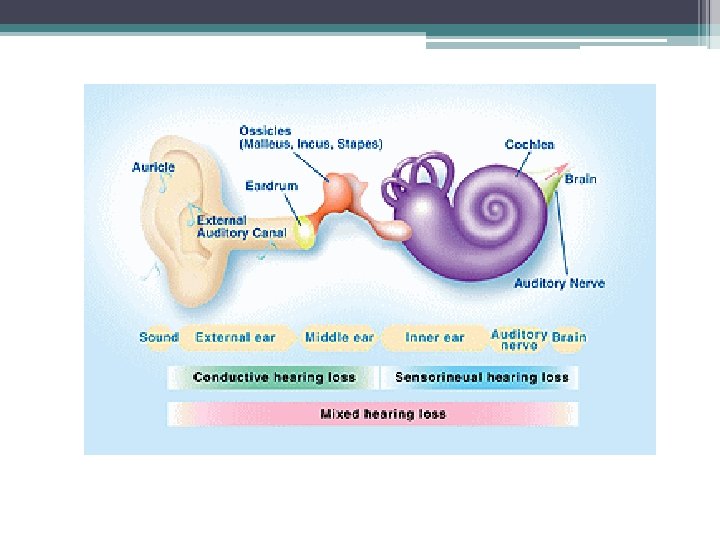
Symptoms • • Hearing loss Tinnitus Ear discharge Earache Vertigo Itching Swelling around the ear Deformity of the ear
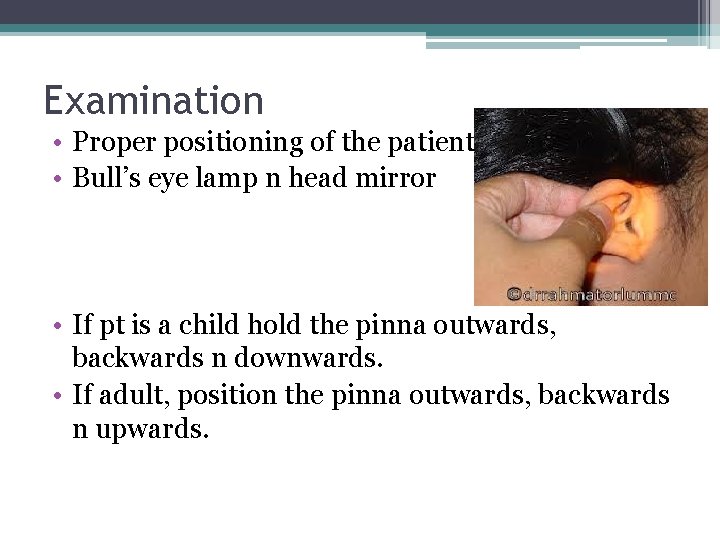
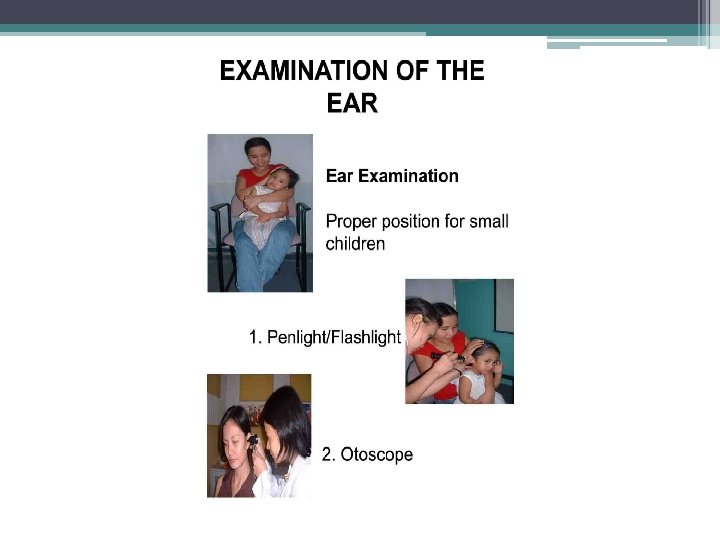
Examination • Proper positioning of the patient • Bull’s eye lamp n head mirror • If pt is a child hold the pinna outwards, backwards n downwards. • If adult, position the pinna outwards, backwards n upwards.
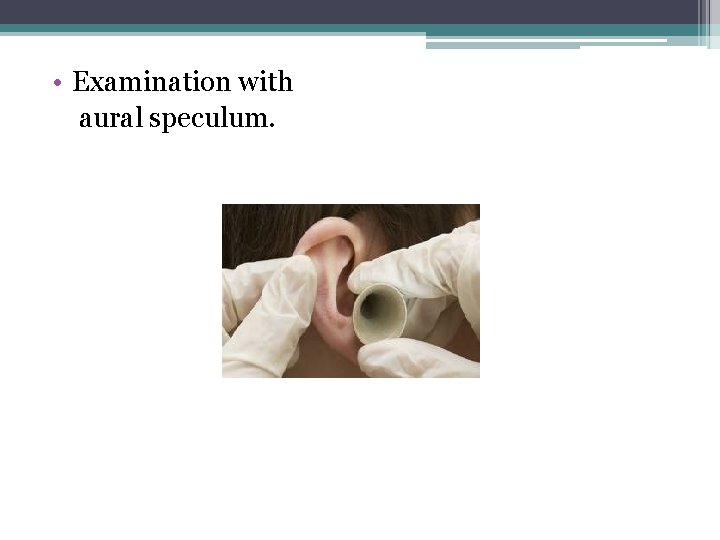
• Examination with aural speculum.
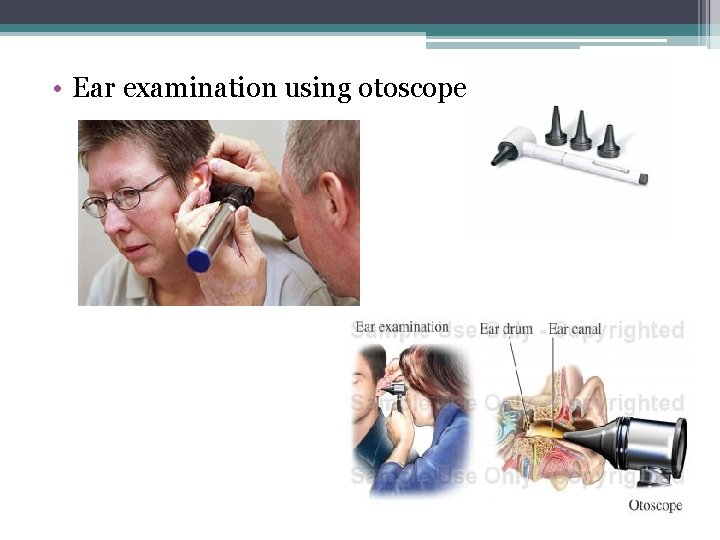
• Ear examination using otoscope
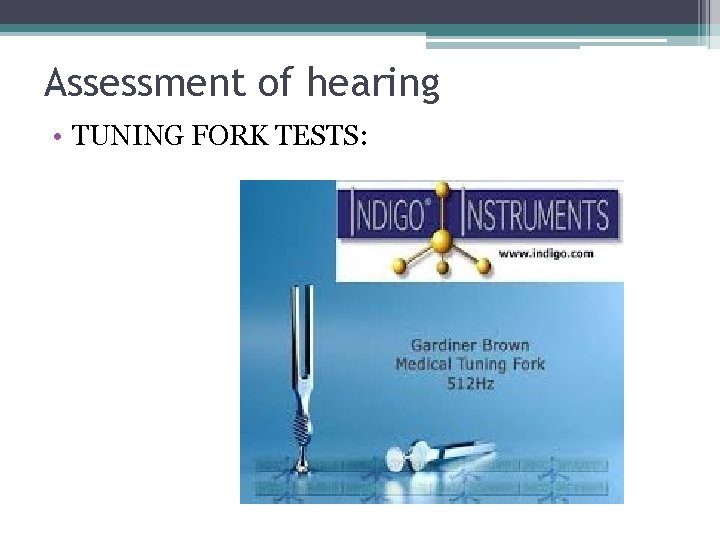
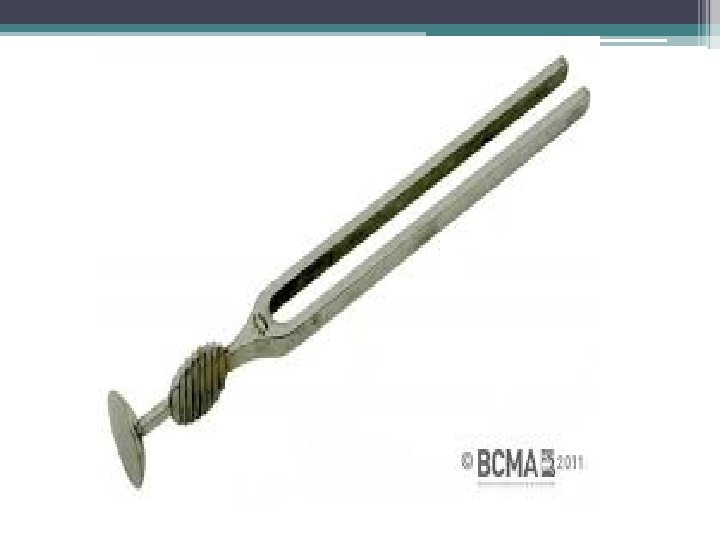
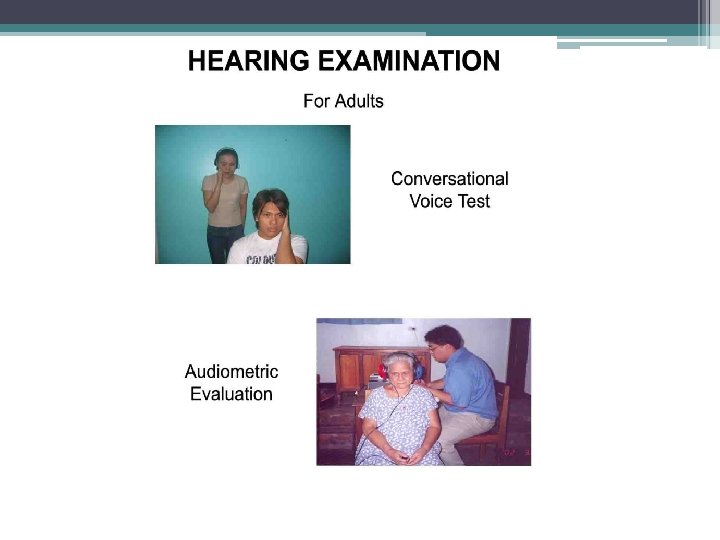
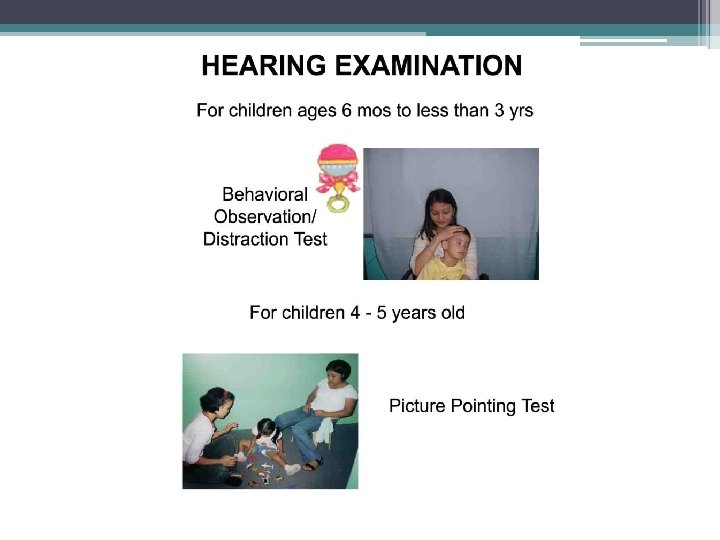
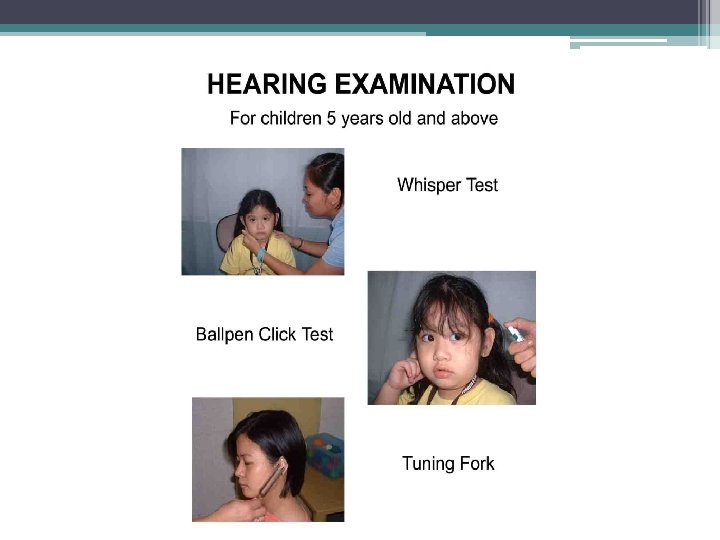
Assessment of hearing • TUNING FORK TESTS:
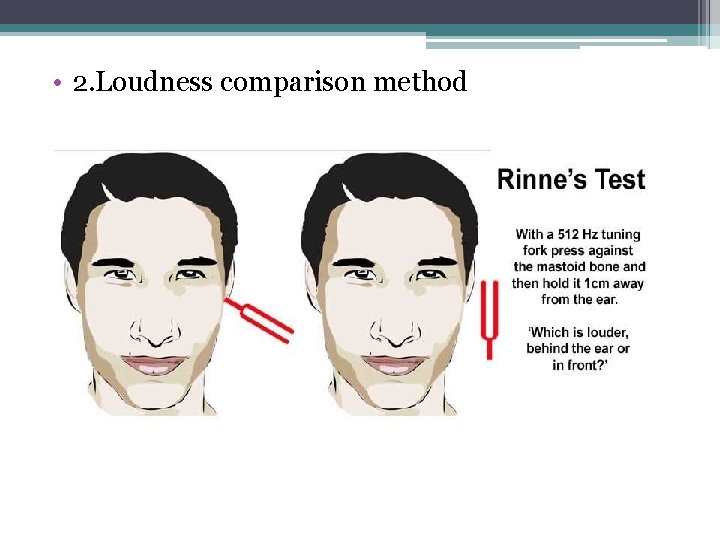
Rinne’s Test • Done using TF of three different frequencies. • 256 Hz, 512 Hz n 1024 Hz. Two methods: • 1. Threshold comparison method
• 2. Loudness comparison method
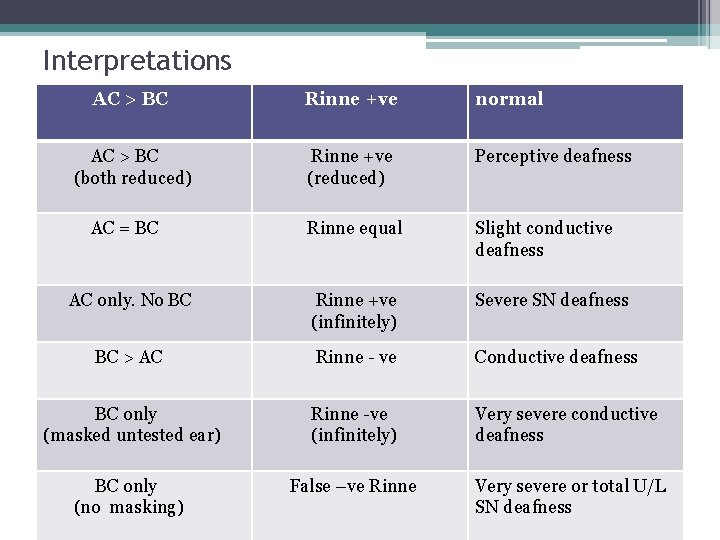
Interpretations AC > BC Rinne +ve normal AC > BC (both reduced) Rinne +ve (reduced) Perceptive deafness Rinne equal Slight conductive deafness AC only. No BC Rinne +ve (infinitely) Severe SN deafness BC > AC Rinne - ve Conductive deafness BC only (masked untested ear) Rinne -ve (infinitely) Very severe conductive deafness BC only (no masking) False –ve Rinne Very severe or total U/L SN deafness AC = BC
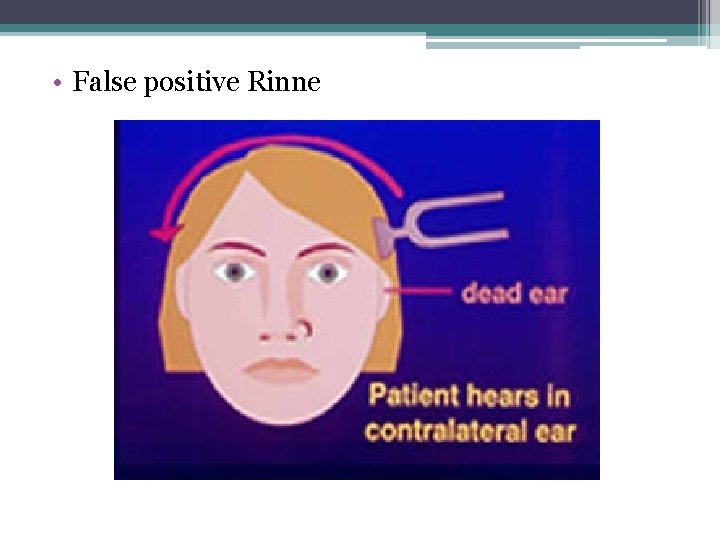
• False positive Rinne
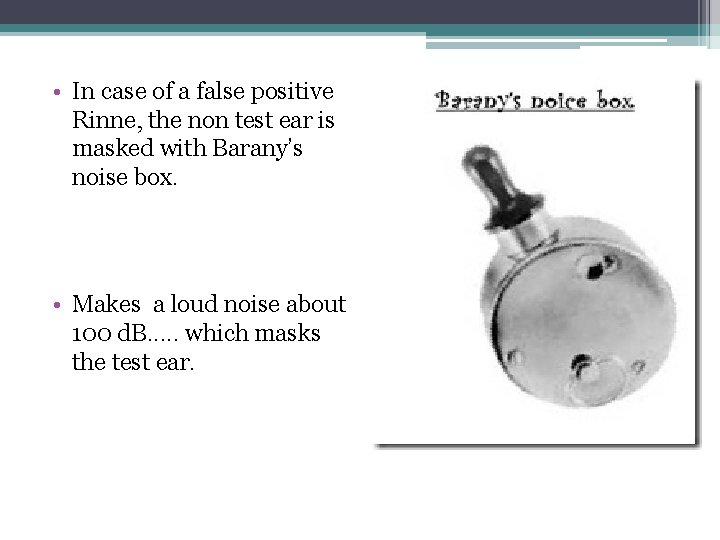
• In case of a false positive Rinne, the non test ear is masked with Barany’s noise box. • Makes a loud noise about 100 d. B. . . which masks the test ear.
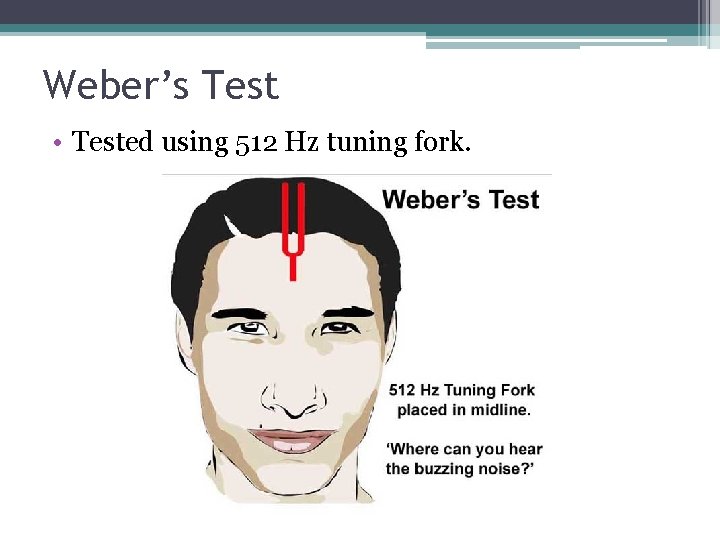
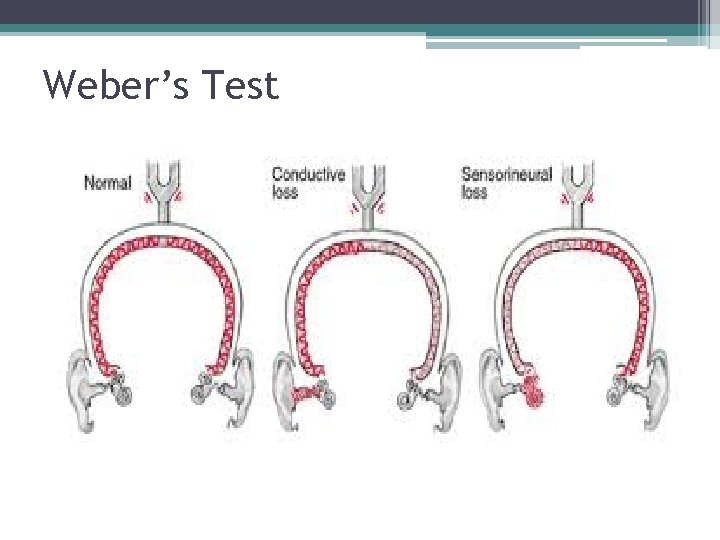
Weber’s Test • Tested using 512 Hz tuning fork.
Weber’s Test
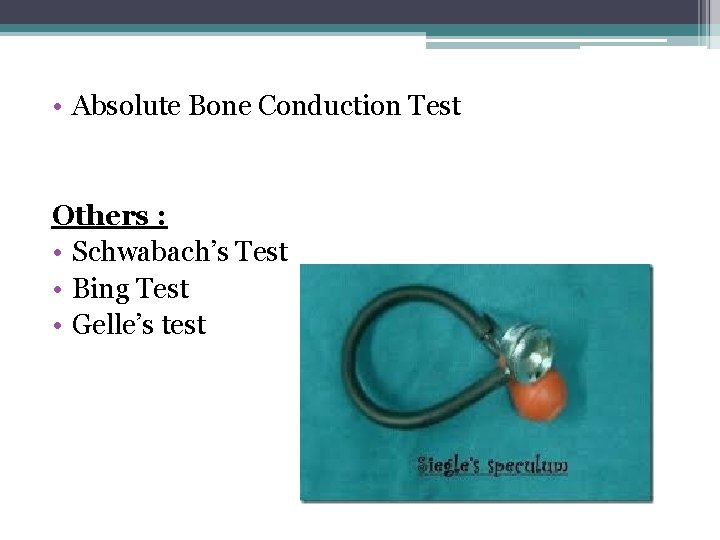
• Absolute Bone Conduction Test Others : • Schwabach’s Test • Bing Test • Gelle’s test
ET PATENCY TESTS
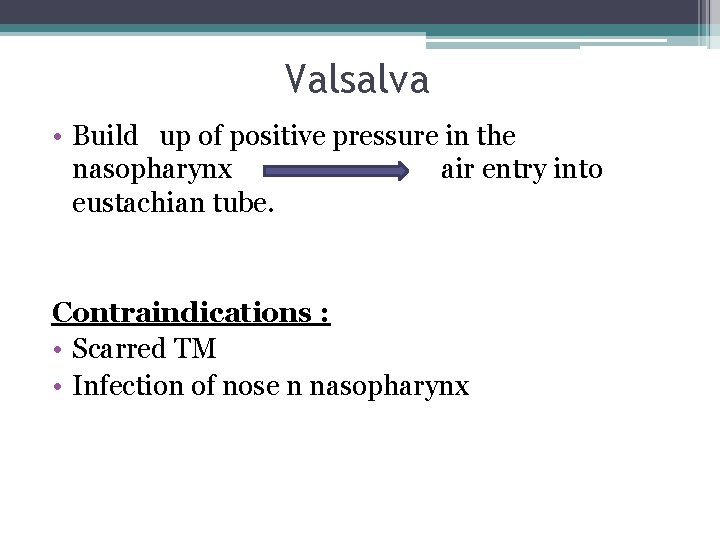
Valsalva • Build up of positive pressure in the nasopharynx air entry into eustachian tube. Contraindications : • Scarred TM • Infection of nose n nasopharynx
Politzer Test
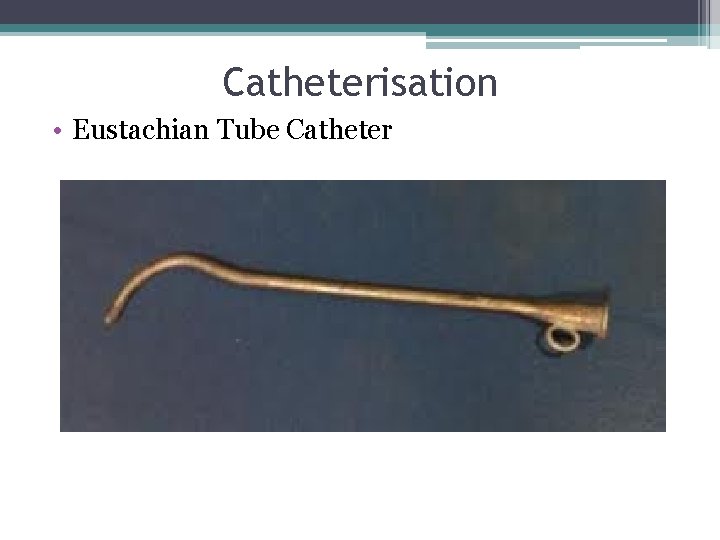
Catheterisation • Eustachian Tube Catheter
Toynbee’s Test
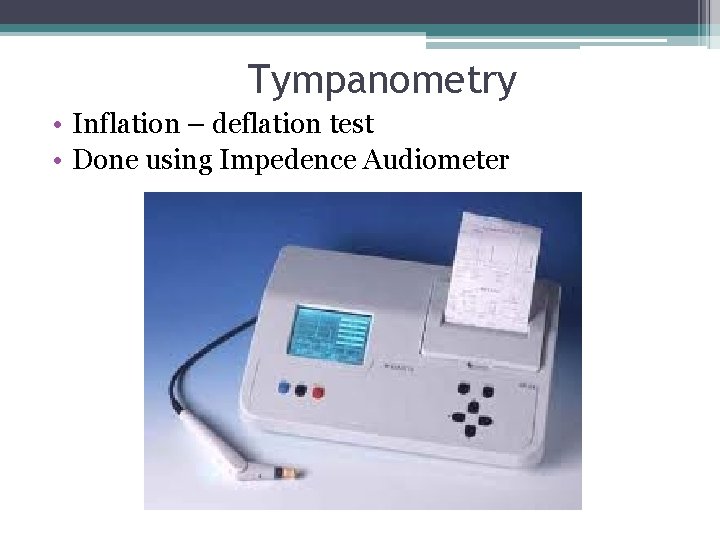
Tympanometry • Inflation – deflation test • Done using Impedence Audiometer
Radiological Test
Sacharine or Methylene Blue Test
Sonotubometry
Thank You