
EAP Practice and Second Language Research Dr Dina

- Slides: 26
EAP Practice and Second Language Research Dr Dina Awad
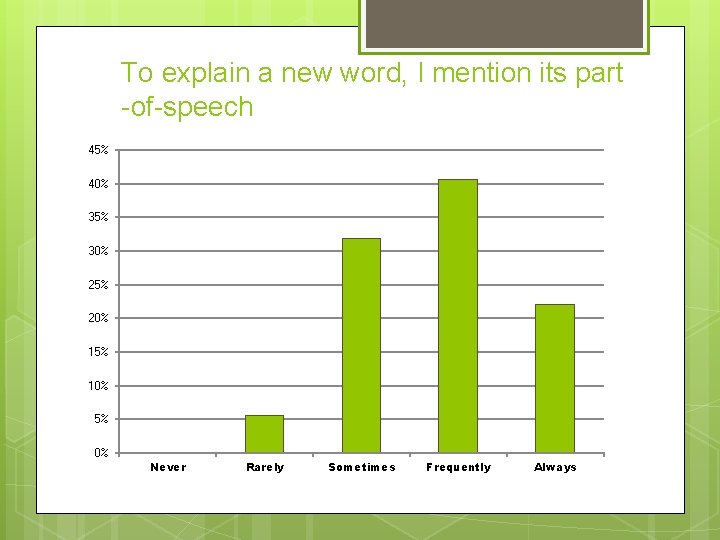
To explain a new word, I mention its part -of-speech 45% 40% 35% 30% 25% 20% 15% 10% 5% 0% Never Rarely Sometimes Frequently Always
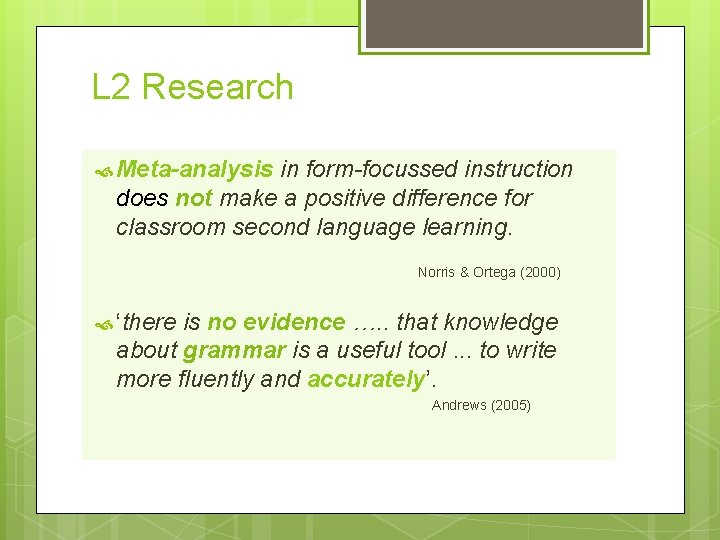
L 2 Research Meta-analysis in form-focussed instruction does not make a positive difference for classroom second language learning. Norris & Ortega (2000) ‘there is no evidence …. . that knowledge about grammar is a useful tool. . . to write more fluently and accurately’. Andrews (2005)
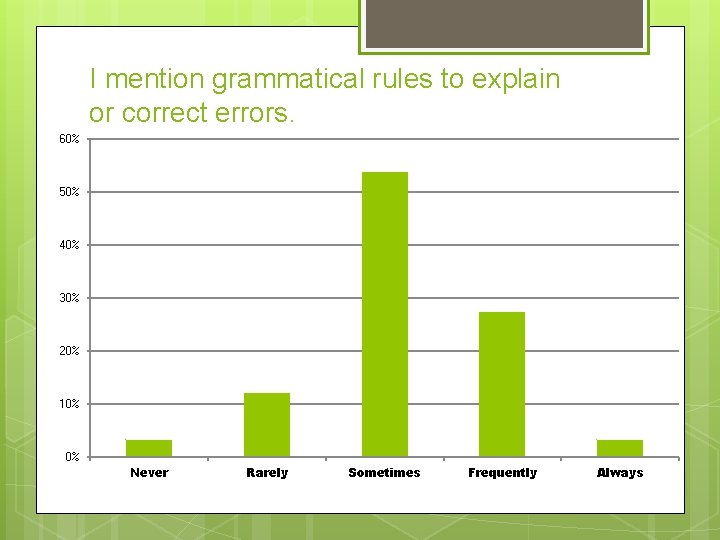
I mention grammatical rules to explain or correct errors. 60% 50% 40% 30% 20% 10% 0% Never Rarely Sometimes Frequently Always
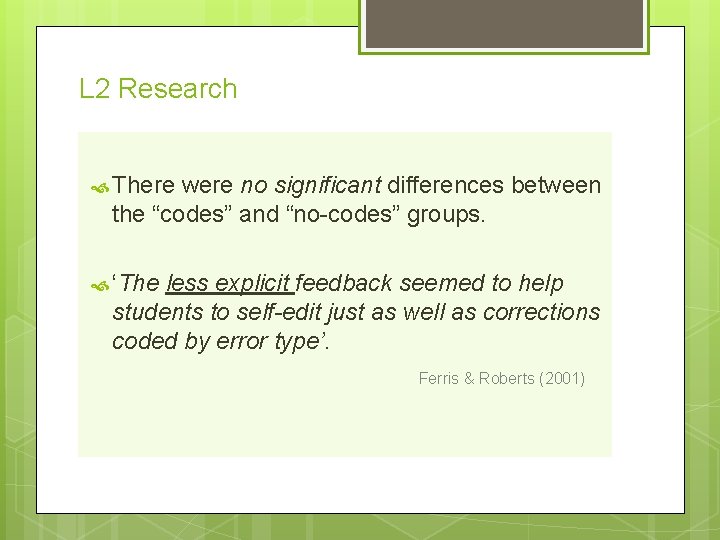
L 2 Research There were no significant differences between the “codes” and “no-codes” groups. ‘The less explicit feedback seemed to help students to self-edit just as well as corrections coded by error type’. Ferris & Roberts (2001)
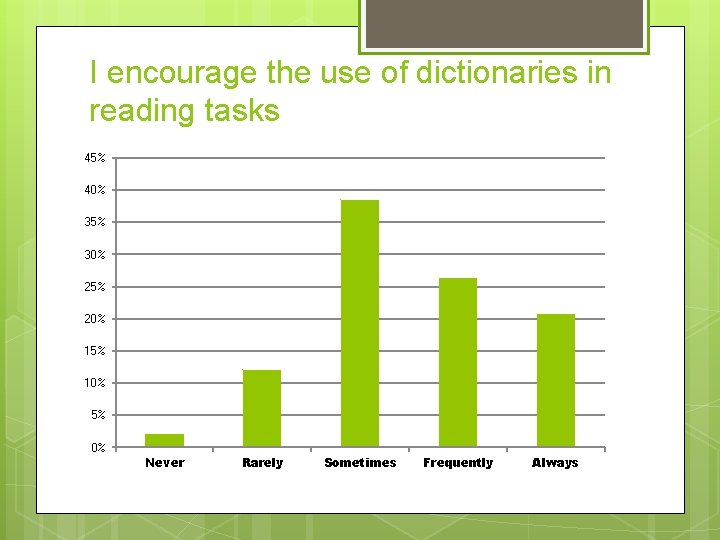
I encourage the use of dictionaries in reading tasks 45% 40% 35% 30% 25% 20% 15% 10% 5% 0% Never Rarely Sometimes Frequently Always
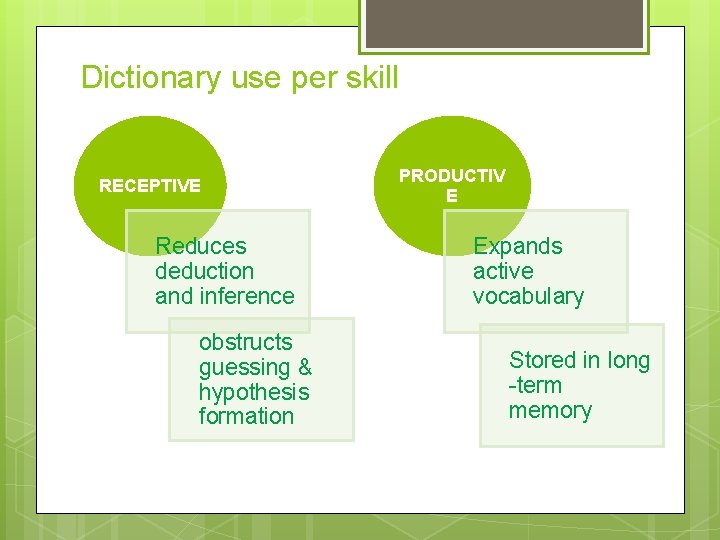
Dictionary use per skill RECEPTIVE Reduces deduction and inference obstructs guessing & hypothesis formation PRODUCTIV E Expands active vocabulary Stored in long -term memory
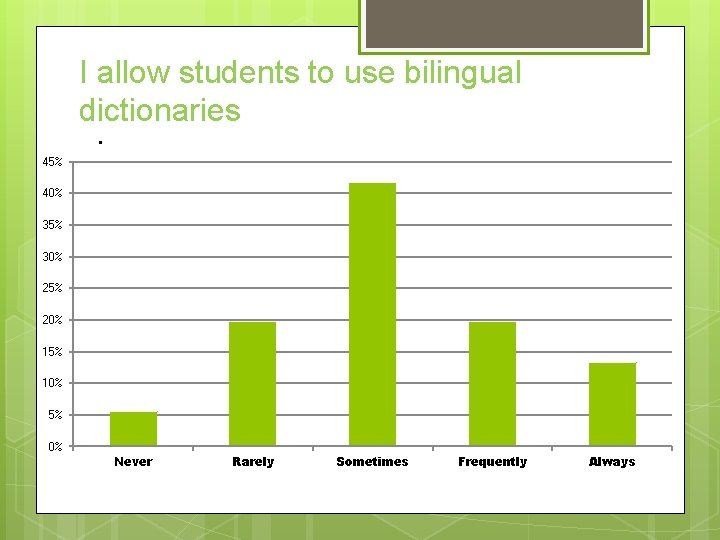
I allow students to use bilingual dictionaries. 45% 40% 35% 30% 25% 20% 15% 10% 5% 0% Never Rarely Sometimes Frequently Always
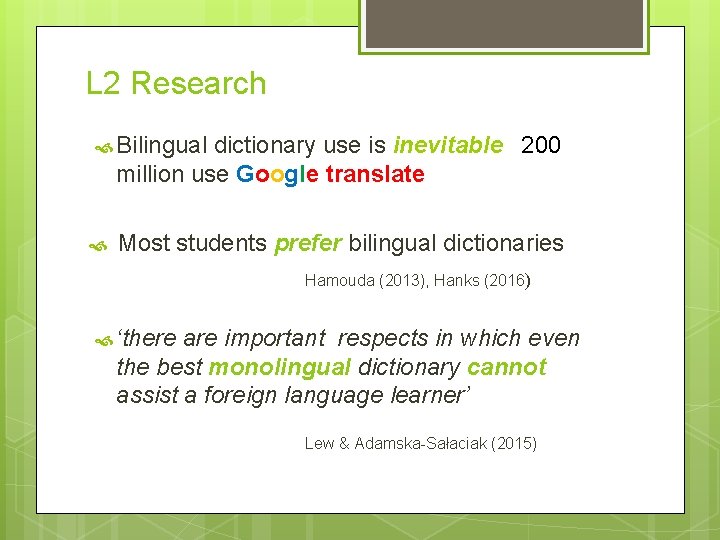
L 2 Research Bilingual dictionary use is inevitable 200 million use Google translate Most students prefer bilingual dictionaries Hamouda (2013), Hanks (2016) ‘there are important respects in which even the best monolingual dictionary cannot assist a foreign language learner’ Lew & Adamska-Sałaciak (2015)
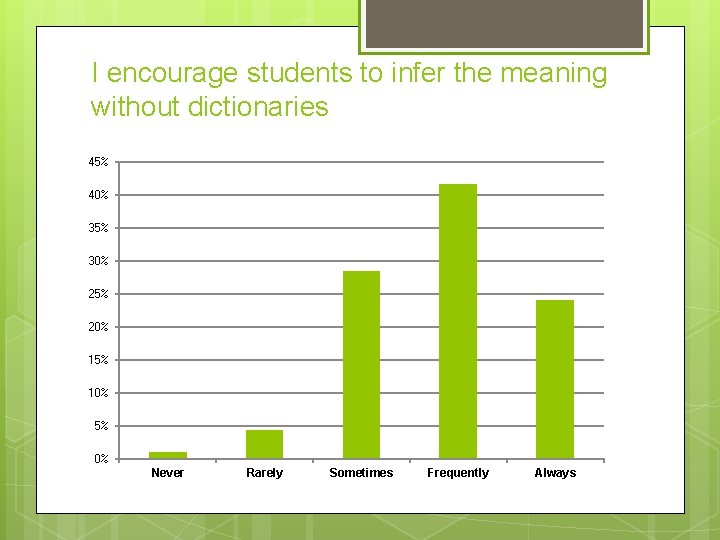
I encourage students to infer the meaning without dictionaries 45% 40% 35% 30% 25% 20% 15% 10% 5% 0% Never Rarely Sometimes Frequently Always
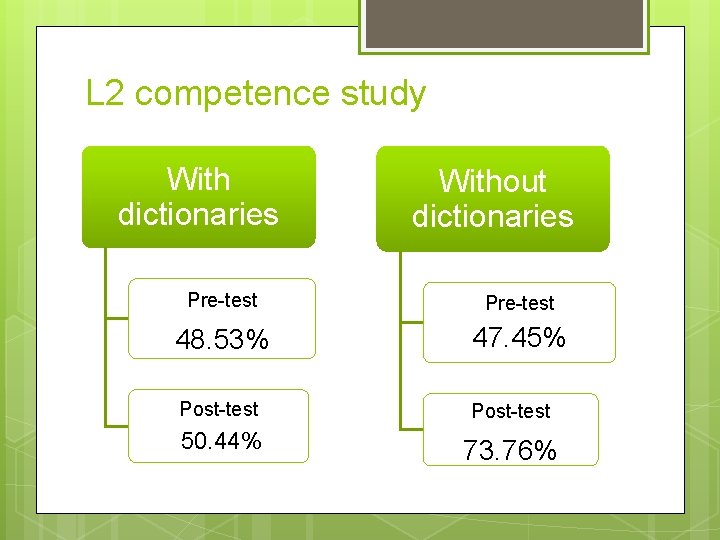
L 2 competence study With dictionaries Without dictionaries Pre-test 48. 53% 47. 45% Post-test 50. 44% 73. 76%
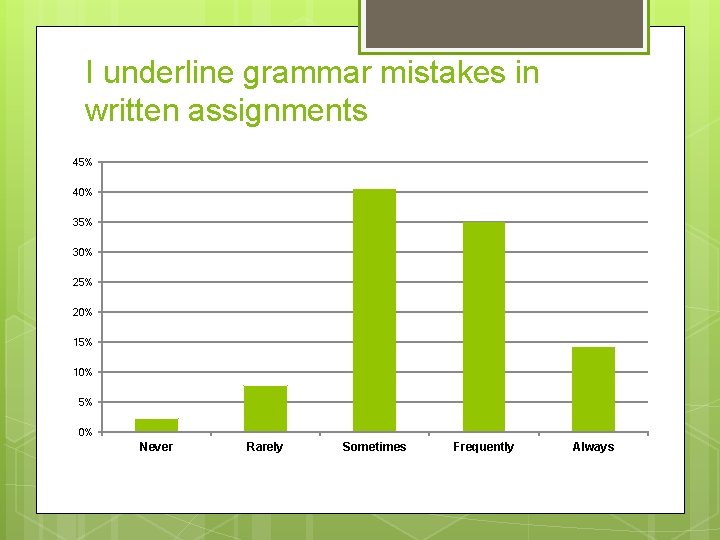
I underline grammar mistakes in written assignments 45% 40% 35% 30% 25% 20% 15% 10% 5% 0% Never Rarely Sometimes Frequently Always
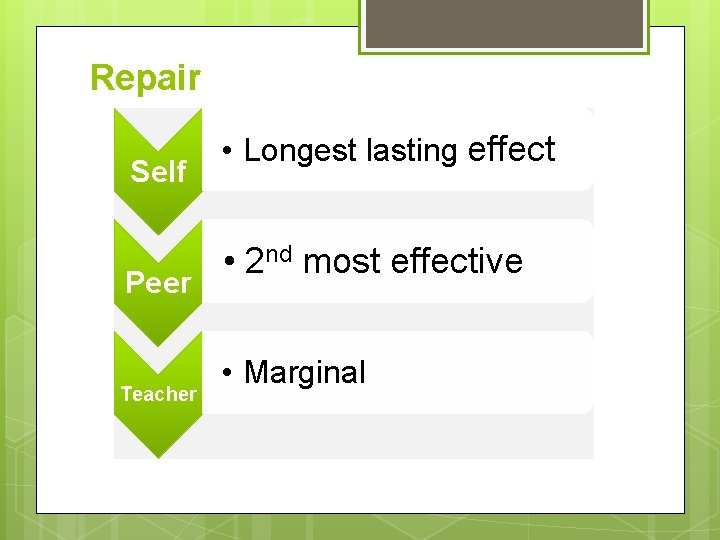
Repair Self Peer Teacher • Longest lasting effect • 2 nd most effective • Marginal
L 2 Research Teachers should consider Correction-free teaching Trustcott (1999)
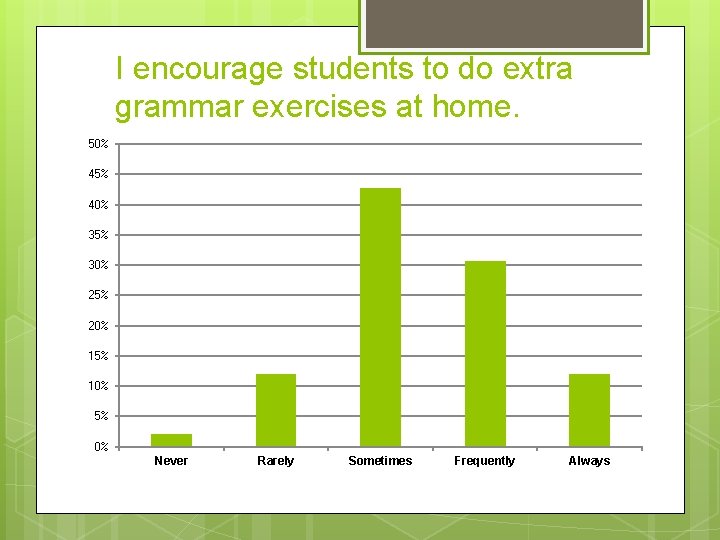
I encourage students to do extra grammar exercises at home. 50% 45% 40% 35% 30% 25% 20% 15% 10% 5% 0% Never Rarely Sometimes Frequently Always
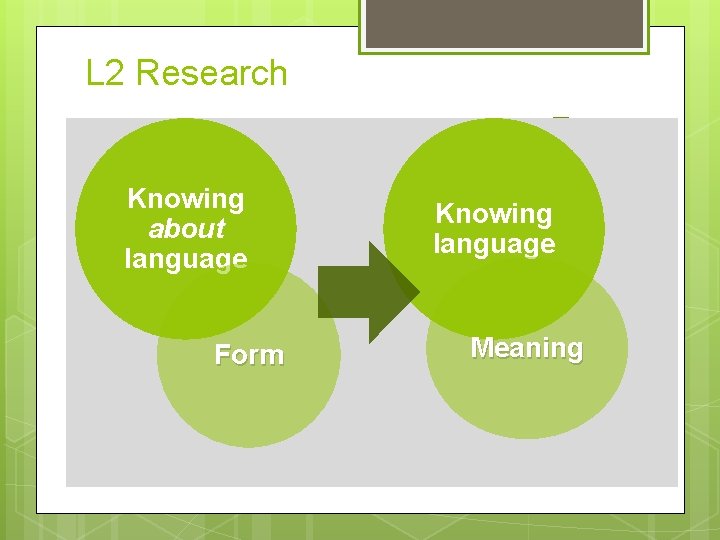
L 2 Research Knowing about language Form Knowing language Meaning
L 2 Research Knowledge about Grammar improves performance ………. in grammar tests Awareness of grammatical rules helps corrections in process writing Explicit information may not necessarily facilitate second language acquisition Sanz & Morgan-Short (2004)
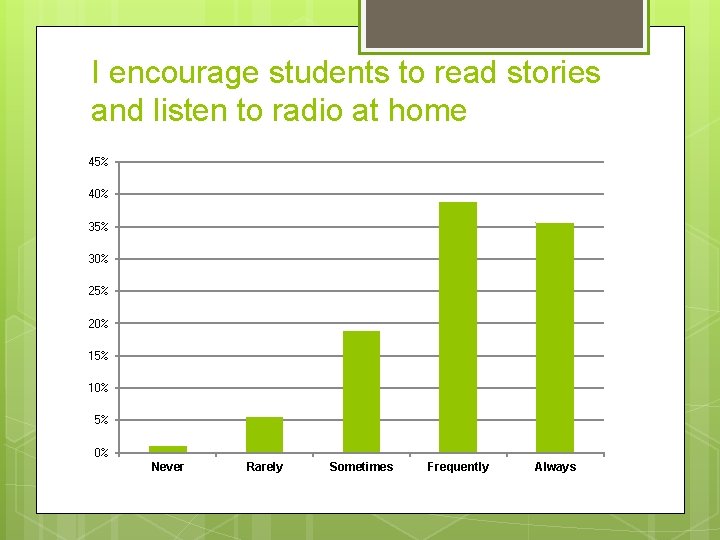
I encourage students to read stories and listen to radio at home 45% 40% 35% 30% 25% 20% 15% 10% 5% 0% Never Rarely Sometimes Frequently Always
L 2 Research Vocabulary is more memorable in meaningful contexts when reader/listener is fully engaged Automated synthesis of information closes the gap between known and unknown items
L 2 Research xxxxx. Axxxxx. Bxxxxxxxx. Cxxxxxxx. Bxxxxxxxxx Axxxxx. Dxxxxx. Cxxxxxxxx. Axxxxxx. Bx xxxxxxxxxxxxxxxx. Dxxxxxxxxxx. Axxxxxxxxxxx. Cxxxxx. Bxxxxxxxxx. D
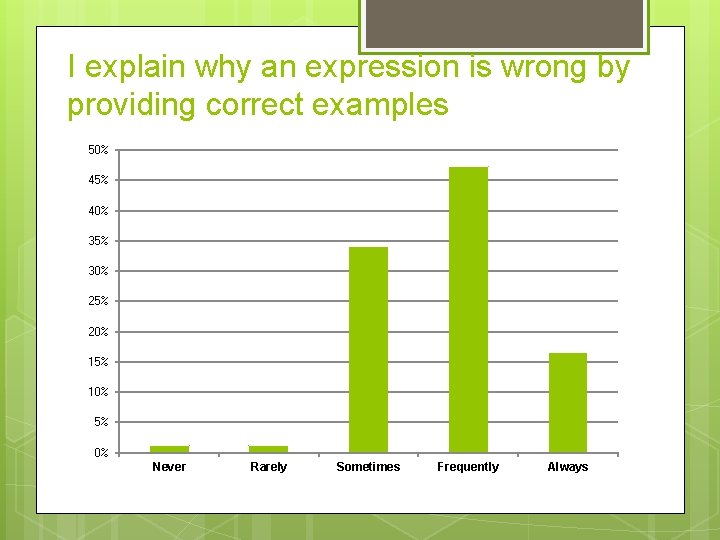
I explain why an expression is wrong by providing correct examples 50% 45% 40% 35% 30% 25% 20% 15% 10% 5% 0% Never Rarely Sometimes Frequently Always
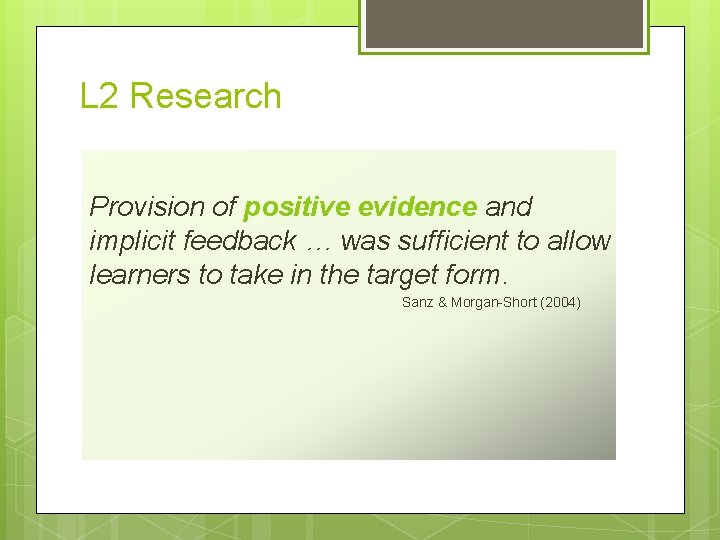
L 2 Research Provision of positive evidence and implicit feedback … was sufficient to allow learners to take in the target form. Sanz & Morgan-Short (2004)
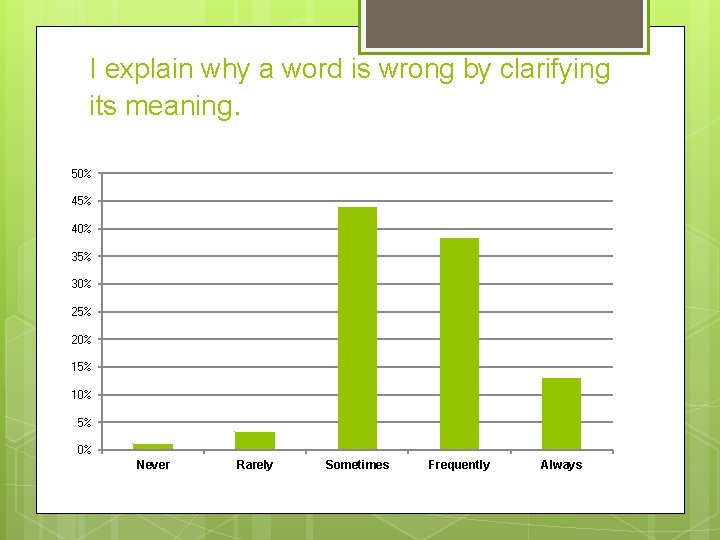
I explain why a word is wrong by clarifying its meaning. 50% 45% 40% 35% 30% 25% 20% 15% 10% 5% 0% Never Rarely Sometimes Frequently Always
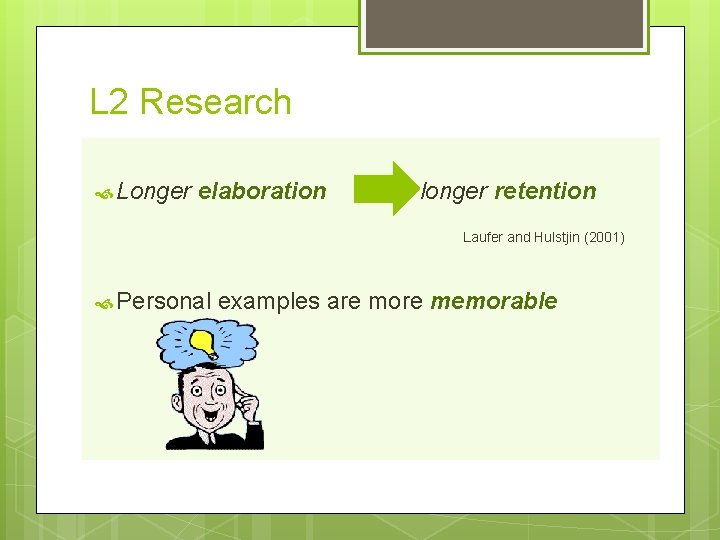
L 2 Research Longer elaboration longer retention Laufer and Hulstjin (2001) Personal examples are more memorable
Recommendations Knowledge of parts of speech is not conducive to error-free production Corrective feedback from teachers has marginal influence Bilingual dictionaries are more effective in writing and speaking tasks Exposure to non-academic discourse is equally important for EAP learners
Thank you