
EAL Units AME 2 005 AUEC 2 004
- Slides: 19
EAL Units AME 2 005 AUEC 2 004 Business Improvement Techniques 1. 4 Three Categories of work
Aims & objectives 1. 4 • Understand what is meant by continuous improvement • 1. 4 Using guided research and work activities to understand what are three categories of work
Research • Using Moodle. • AME 2 Machining pathway • Unit AME 2 004 • Week 4 Continuous improvements Benefits • Download and save the document into a folder you have made. • Folder name- AME 2 004 Business improvement • Document name: 1. 4 Define three categories of work
Re cap, what are the 4 stages of PDCA? • Define the 4 stages.
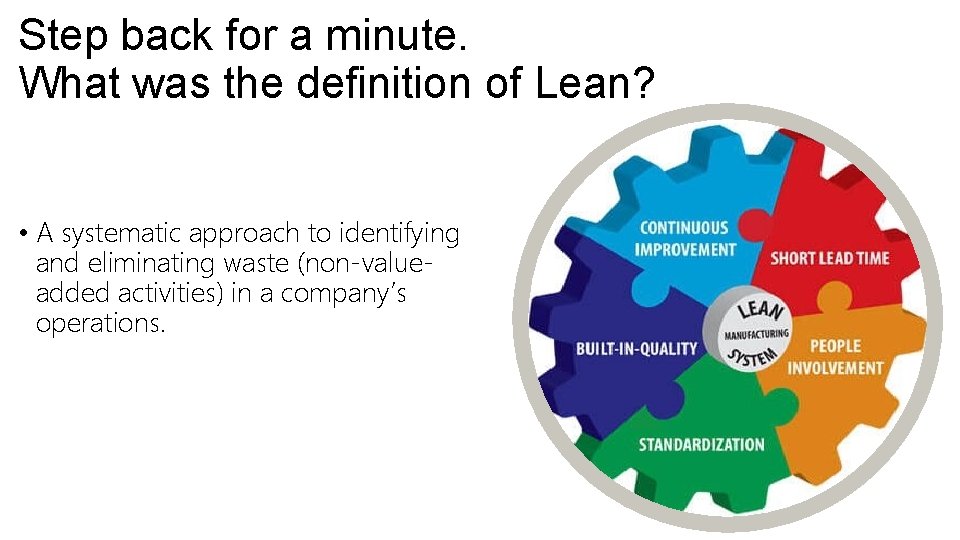
Step back for a minute. What was the definition of Lean? • A systematic approach to identifying and eliminating waste (non-valueadded activities) in a company’s operations.
Is Your Work Adding Value? • You’ve heard the old saying. • Time is money. • But how much of our time at work is really spent engaging in activities that add value to the organisation?
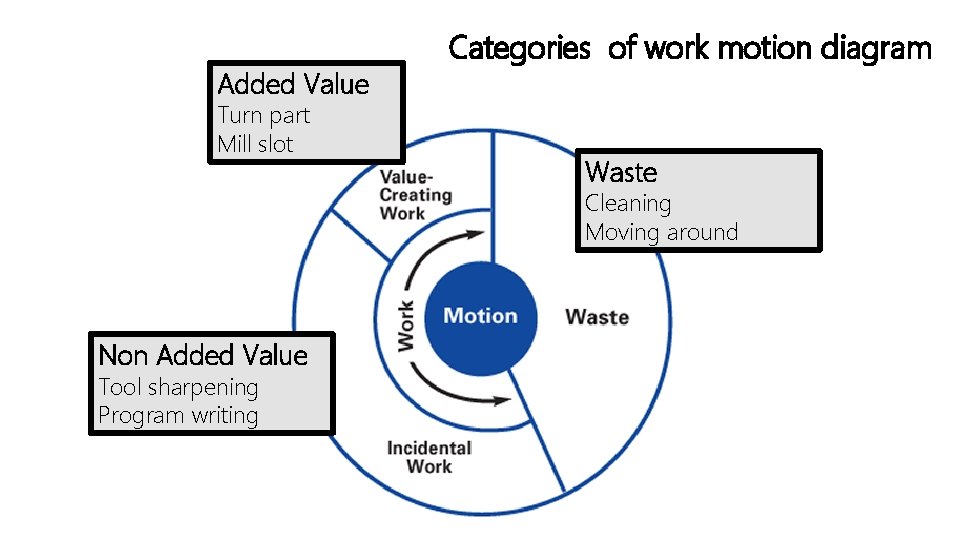
Added Value Turn part Mill slot Categories of work motion diagram Waste Cleaning Moving around Non Added Value Tool sharpening Program writing
Is Your Work Adding Value? • We tend to assume that every task we perform is essential in sustaining operations. • But after analysation from a Lean perspective, we might be surprised to discover that many of our activities are actually costing the organisation time and money. https: //www. the-center. org/Blog/February-2019/What-is-Value. Added-vs-Non-Value-Added-Work
Is Your Work Adding Value? • At its core, Lean is a methodology that aims to eliminate waste in all areas of an organisation, resulting in shorter lead times, improved quality and reduced cost. • As we have previously looked at. • One activities that Lean specialists use to eliminate waste is to break down workplace processes into categories of Value Added, Non-Value Added and waste
Is Your Work Adding Value? • Completing this step allows manufacturers to identify which activities are actually necessary to satisfy the needs of customers, and which are simply wasting valuable resources. • Once these distinctions have been made, manufacturers can then work to eliminate Non-Value Added activities so that waste can be minimised, while maximising value added. • In order to separate your activities into these three categories, you must first understand what each entails? ?
Value Added Activities • Value Added Activities must satisfy the following three criteria: • Work that the customer is willing to pay for • Work that physically transforms the product • Work that is done right the first time • Away to remember this is to use the acronym CPR, which stands for: Customer pays for it, Physically transforms the product, Right the first time. • Typical valued added activities include assembling a product, fabricating a part, painting, grinding, cutting, coating, and a host of other activities necessary to complete a product.
Non-Value Added Activities • Non-Value Added Activities involve work that consumes resources, but does not add value to the product or service. • Not all manufacturing activities in a factory add value to the product. • These activities are referred to as waste because they do not directly enhance the value of the product. • Even if these activities are necessary, they do not directly add any value to the product. • In the production of turned parts, machining the part to the right size directly adds value to the finished product while sharpening the tool or changing inserts is non-value added. • Sharpening the tool maybe necessary for efficient machining it does not directly enhance the value of the finished product. • Can you give an example of non value added activity's in you work? • non value
Non-Value Added Activities • Typical non-value added activities include: • scheduling • moving work-in-process from point to point BOEING • setting up equipment • recording time spent on a particular job • inspecting a part • billing a customer.
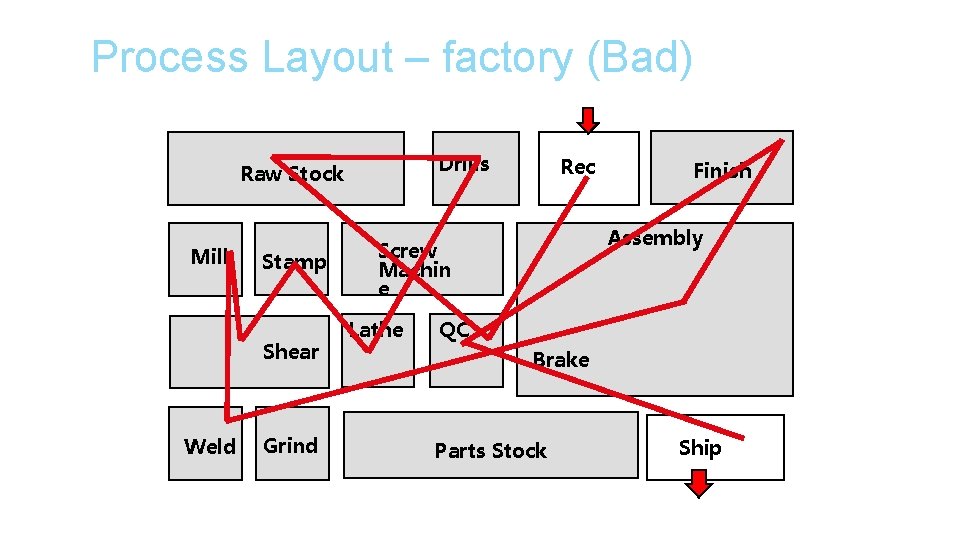
Process Layout – factory (Bad) Drills Raw Stock Mill Stamp Shear Weld Grind Rec Assembly Screw Machin e Lathe Finish QC Brake Parts Stock Ship
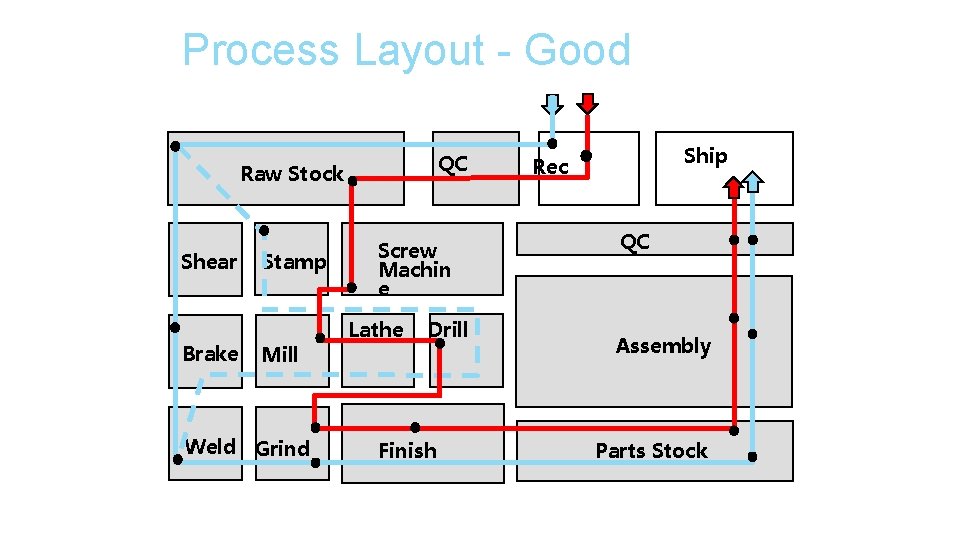
Process Layout - Good QC Raw Stock Shear Brake Stamp Mill Weld Grind Screw Machin e Lathe Drill Finish Ship Rec QC Assembly Parts Stock
Activity 30 min • Use your own work place and produce you manufacture • Improve your workplace layout • Use a Power. Point slide and the insert shapes tool to make your efficient work place layout • Label each process. • Each learner will show there improved work place
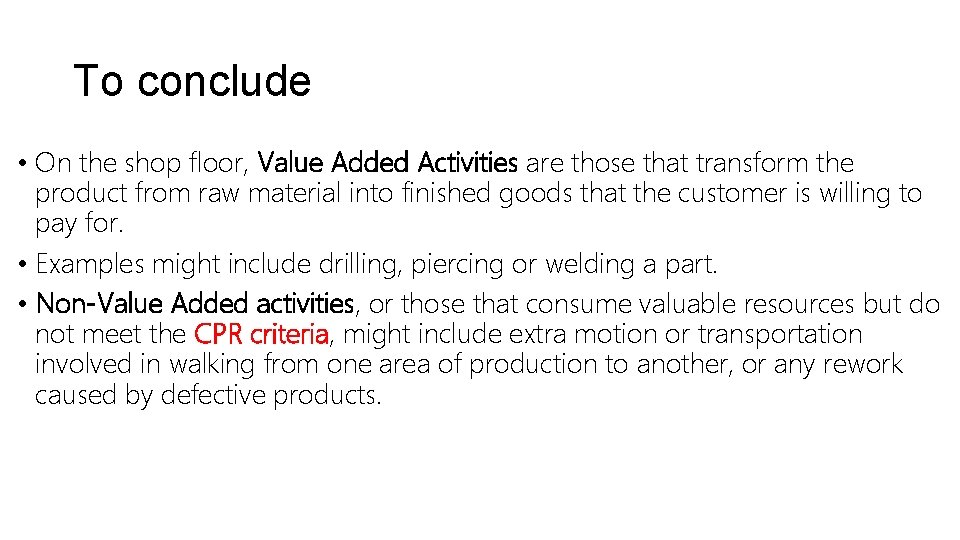
To conclude • On the shop floor, Value Added Activities are those that transform the product from raw material into finished goods that the customer is willing to pay for. • Examples might include drilling, piercing or welding a part. • Non-Value Added activities, or those that consume valuable resources but do not meet the CPR criteria, might include extra motion or transportation involved in walking from one area of production to another, or any rework caused by defective products.
To conclude • Analysing all the process steps involved in your operations, no matter how big or small, can put your company on a path to saving money while boosting efficiency, increasing customer satisfaction and even heightening employee morale. • All it takes is asking the question, Is my work adding value?
Thank You