
EA 2 Unit 1 Example and Format Introduction

- Slides: 4
EA 2 Unit 1 Example and Format
Introduction: Format Hook Explain how hook relates to prompt Thesis Body Paragraphs: Topic sentence: State argument Give reason behind argument’s validity Give evidence 1 Back up/explain evidence 1 Give evident 2 Back up/Explain evidence 2 Transition sentence Conclusion: Restate thesis/position Summarize main points of paper Close paper with a final thought, question, or call to action/plan
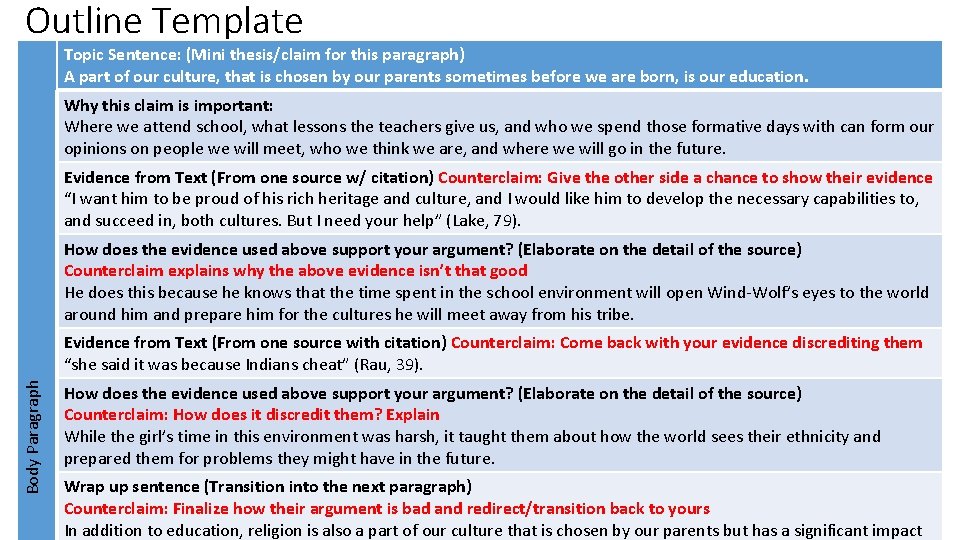
Outline Template Topic Sentence: (Mini thesis/claim for this paragraph) A part of our culture, that is chosen by our parents sometimes before we are born, is our education. Why this claim is important: Where we attend school, what lessons the teachers give us, and who we spend those formative days with can form our opinions on people we will meet, who we think we are, and where we will go in the future. Evidence from Text (From one source w/ citation) Counterclaim: Give the other side a chance to show their evidence “I want him to be proud of his rich heritage and culture, and I would like him to develop the necessary capabilities to, and succeed in, both cultures. But I need your help” (Lake, 79). How does the evidence used above support your argument? (Elaborate on the detail of the source) Counterclaim explains why the above evidence isn’t that good He does this because he knows that the time spent in the school environment will open Wind-Wolf’s eyes to the world around him and prepare him for the cultures he will meet away from his tribe. Body Paragraph Evidence from Text (From one source with citation) Counterclaim: Come back with your evidence discrediting them “she said it was because Indians cheat” (Rau, 39). How does the evidence used above support your argument? (Elaborate on the detail of the source) Counterclaim: How does it discredit them? Explain While the girl’s time in this environment was harsh, it taught them about how the world sees their ethnicity and prepared them for problems they might have in the future. Wrap up sentence (Transition into the next paragraph) Counterclaim: Finalize how their argument is bad and redirect/transition back to yours In addition to education, religion is also a part of our culture that is chosen by our parents but has a significant impact
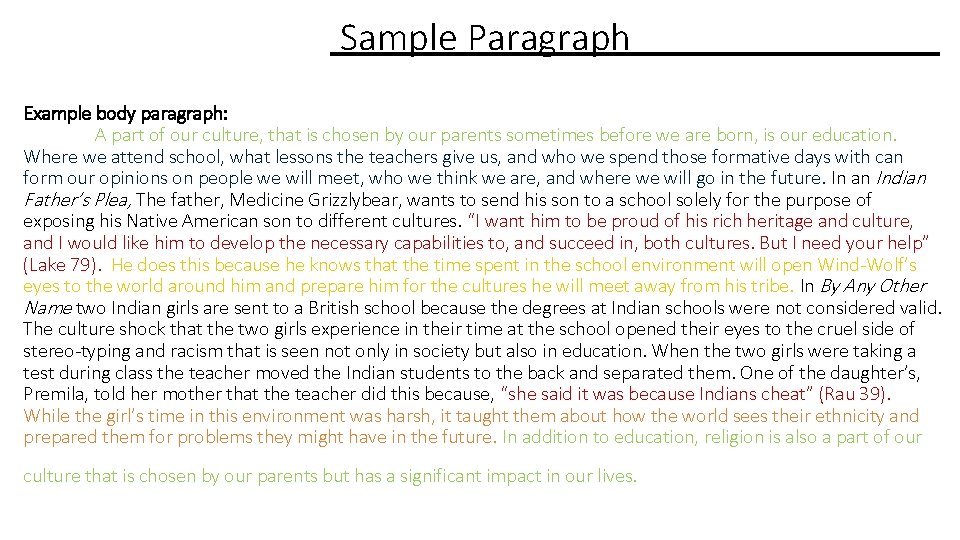
Sample Paragraph Example body paragraph: A part of our culture, that is chosen by our parents sometimes before we are born, is our education. Where we attend school, what lessons the teachers give us, and who we spend those formative days with can form our opinions on people we will meet, who we think we are, and where we will go in the future. In an Indian Father’s Plea, The father, Medicine Grizzlybear, wants to send his son to a school solely for the purpose of exposing his Native American son to different cultures. “I want him to be proud of his rich heritage and culture, and I would like him to develop the necessary capabilities to, and succeed in, both cultures. But I need your help” (Lake 79). He does this because he knows that the time spent in the school environment will open Wind-Wolf’s eyes to the world around him and prepare him for the cultures he will meet away from his tribe. In By Any Other Name two Indian girls are sent to a British school because the degrees at Indian schools were not considered valid. The culture shock that the two girls experience in their time at the school opened their eyes to the cruel side of stereo-typing and racism that is seen not only in society but also in education. When the two girls were taking a test during class the teacher moved the Indian students to the back and separated them. One of the daughter’s, Premila, told her mother that the teacher did this because, “she said it was because Indians cheat” (Rau 39). While the girl’s time in this environment was harsh, it taught them about how the world sees their ethnicity and prepared them for problems they might have in the future. In addition to education, religion is also a part of our culture that is chosen by our parents but has a significant impact in our lives.