
e Prove Basics q The e Prove platform
e. Prove Basics q. The e. Prove platform, which has replaced ASSIST for all continuous improvement work, opened August 1. q. Serves as a content library for districts and schools when reporting continuous improvement efforts 1
Perks of e. Prove q. Districts control all users. q Districts which have not established an administrative e. Prove user can do so by contacting brandon. quick@education. ky. gov. q. Work is automatically saved. q No concept of a submit button qpromotes continuous improvement q. Easily allows schools/districts to re-visit diagnostics and tasks throughout year 2
Key Changes q. More streamlined and concise q. Consolidation of certain diagnostics q. Conducted in 4 distinct phases 3
Timeline of Phases PHASE ONE: August 1 – October 1 PHASE TWO: October 1 – November 1 q Continuous Improvement Diagnostic q Needs Assessment q Title I Annual Review q School & District Safety Report q School/District Equitable Access Diagnostic (open) PHASE THREE: November 1 – January 1 PHASE FOUR: January 1 – June 1 q Development of Goals & Objectives q Closing the Achievement Gap Plan q Development of Strategies & Activities q School/District Equitable Access (ongoing) q Executive Summary q Progress Monitoring 4
Phase I: August 1 – October 1 Actions within Phase I: q. Assembly of Data Review Teams q. Completion of KDE Continuous Improvement Diagnostic Key Questions: q. Who is involved? q. What are our current processes, practices and conditions? 5
Phase II: October 1 – November 1 (Assessing Need) Actions with Phase II: q Begin the Equitable Access Diagnostic q Completion of the Title I Evaluation (if applicable) q Completion of the School/District Safety Report q Completion of the Needs Assessment Key Questions: q What is our current state? (as revealed by multiple sources of data) q What are our priorities and concerns? q Which processes, practices or conditions can be addressed? 6
Phase III: November 1 – January 1 (Plotting the Course) Actions with Phase III: q Development of Executive Summary q Development of Goals/Objectives q Development of Strategies/Activities q Development of Closing the Achievement Gap Plan (previously Oct. 1) q Completion of the Equitable Access Diagnostic Key Questions: q How can we go from our current state to the desired state? q How are we addressing critical needs specified in the Needs Assessment? q Are strategies/activities aligned with needs? 7
Phase IV: January 1 -End of the year (Progress Monitoring) Actions with Phase IV: q. Allows schools to choose a flexible and customized approach to monitor and implement plan q 30 -60 -90 Day or Quarterly Monitoring is best practice Key Questions: q. How do we know if our strategies and activities are meeting the needs of learners? q. Will we adjust or stay the course? 8
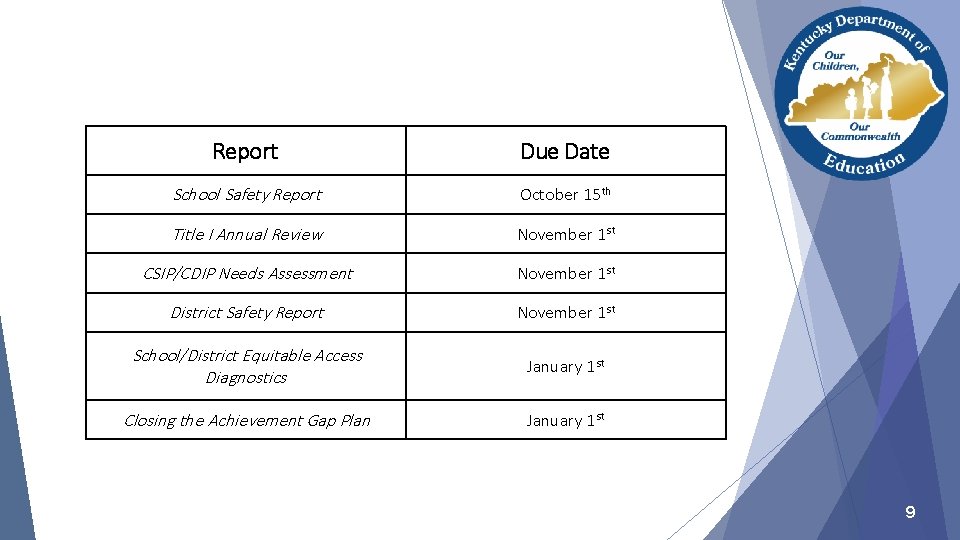
Report Due Date School Safety Report October 15 th Title I Annual Review November 1 st CSIP/CDIP Needs Assessment November 1 st District Safety Report November 1 st School/District Equitable Access Diagnostics January 1 st Closing the Achievement Gap Plan January 1 st 9
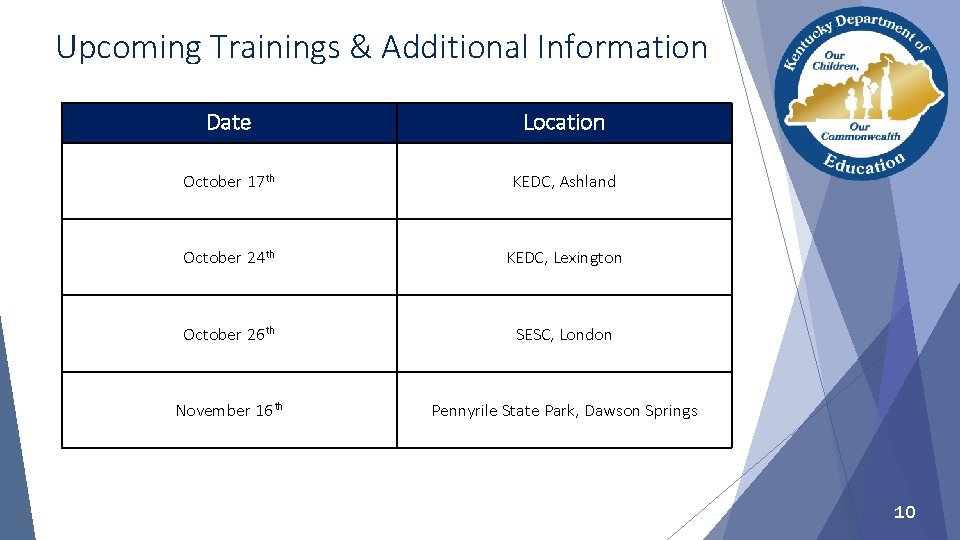
Upcoming Trainings & Additional Information Date Location October 17 th KEDC, Ashland October 24 th KEDC, Lexington October 26 th SESC, London November 16 th Pennyrile State Park, Dawson Springs 10
Registration q. To register for a training, please go to the Continuous Improvement/e. Prove Training Registration Site. 11
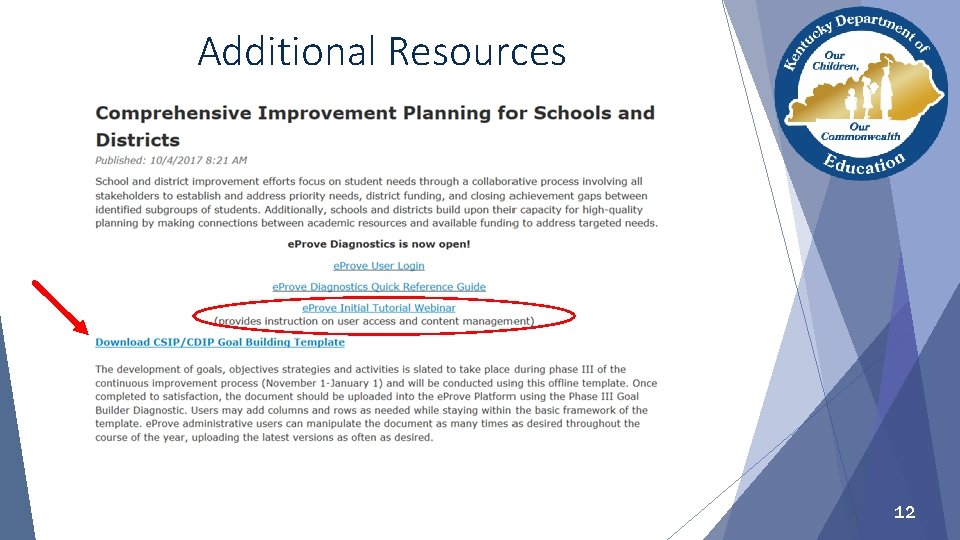
Additional Resources 12
KDE e. Prove Contact brandon. quick@education. ky. gov 13
- Slides: 13