
E P C I O V I E

- Slides: 18
E P C I O V I E I V I T S R S A PA
DA SE PODSETIMO. . . • PROMENA REČENICE IZ AKTIVA U PASIV Potrebna nam je aktivna rečenica: I make a cake. Ja mesim kolač. Napomena: samo prelazni glagoli mogu da prave pasiv. 1. Tražimo objekat. Ovde je to kolač, objekat postaje subjekat i ide na prvo mesto u rečenici. - A cake
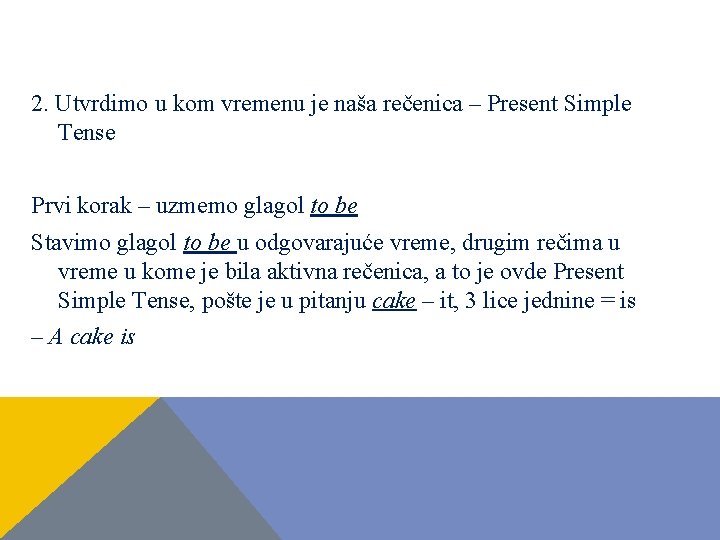
2. Utvrdimo u kom vremenu je naša rečenica – Present Simple Tense Prvi korak – uzmemo glagol to be Stavimo glagol to be u odgovarajuće vreme, drugim rečima u vreme u kome je bila aktivna rečenica, a to je ovde Present Simple Tense, pošte je u pitanju cake – it, 3 lice jednine = is – A cake is
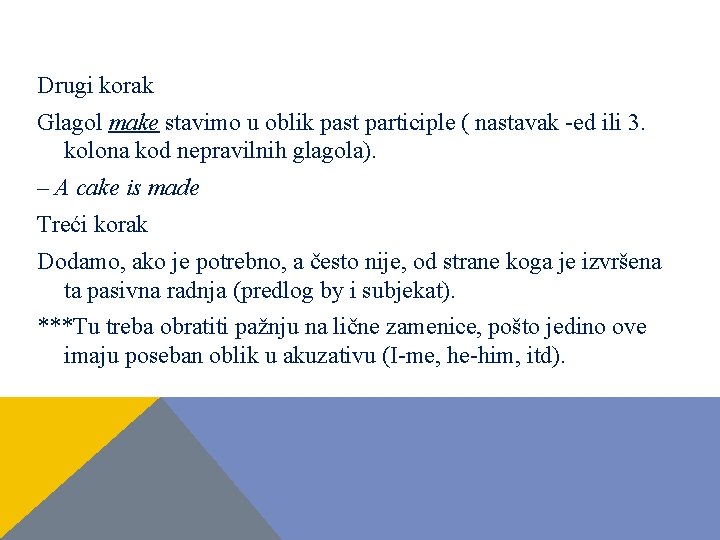
Drugi korak Glagol make stavimo u oblik past participle ( nastavak -ed ili 3. kolona kod nepravilnih glagola). – A cake is made Treći korak Dodamo, ako je potrebno, a često nije, od strane koga je izvršena ta pasivna radnja (predlog by i subjekat). ***Tu treba obratiti pažnju na lične zamenice, pošto jedino ove imaju poseban oblik u akuzativu (I-me, he-him, itd).
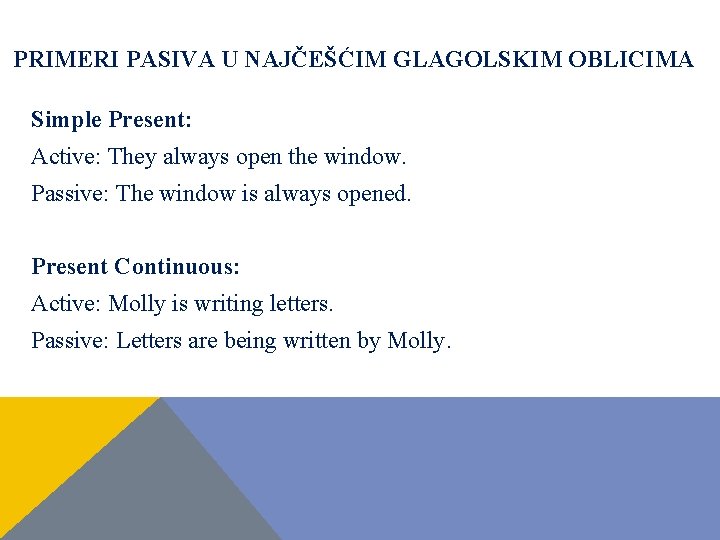
PRIMERI PASIVA U NAJČEŠĆIM GLAGOLSKIM OBLICIMA Simple Present: Active: They always open the window. Passive: The window is always opened. Present Continuous: Active: Molly is writing letters. Passive: Letters are being written by Molly.
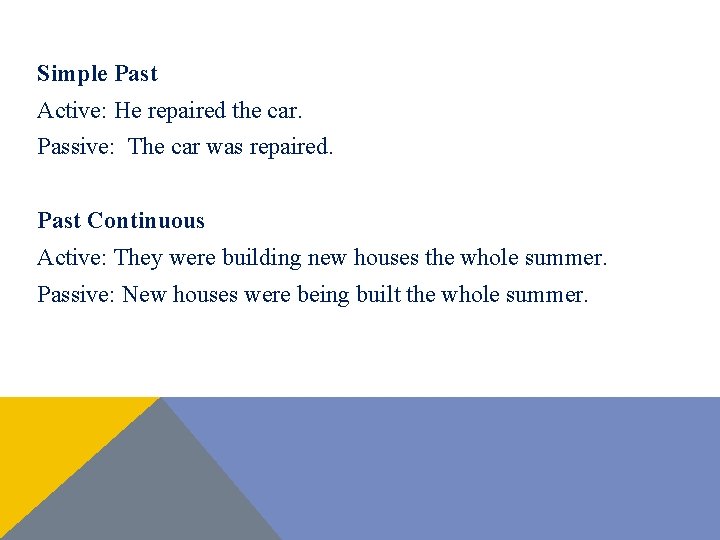
Simple Past Active: He repaired the car. Passive: The car was repaired. Past Continuous Active: They were building new houses the whole summer. Passive: New houses were being built the whole summer.
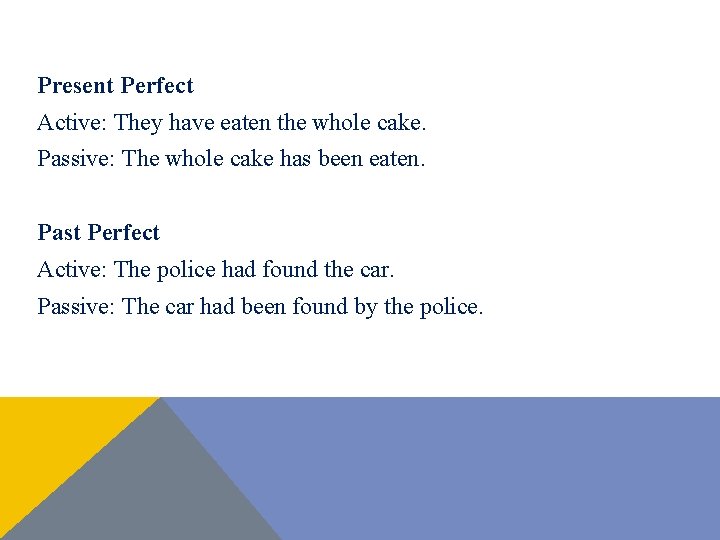
Present Perfect Active: They have eaten the whole cake. Passive: The whole cake has been eaten. Past Perfect Active: The police had found the car. Passive: The car had been found by the police.
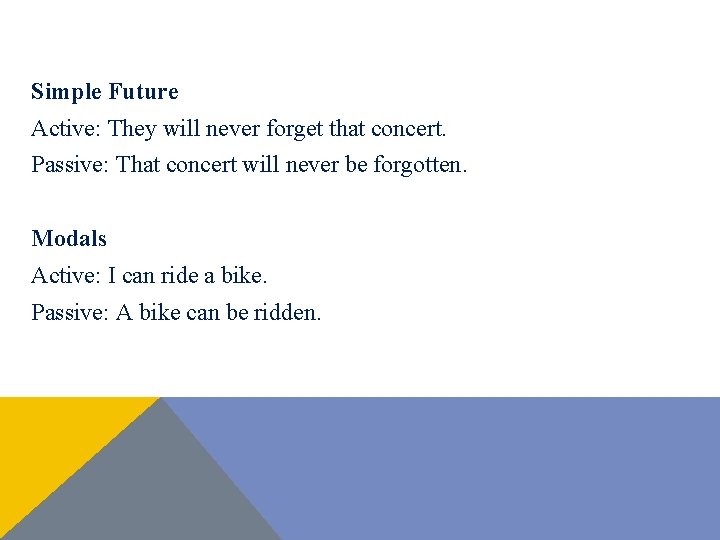
Simple Future Active: They will never forget that concert. Passive: That concert will never be forgotten. Modals Active: I can ride a bike. Passive: A bike can be ridden.
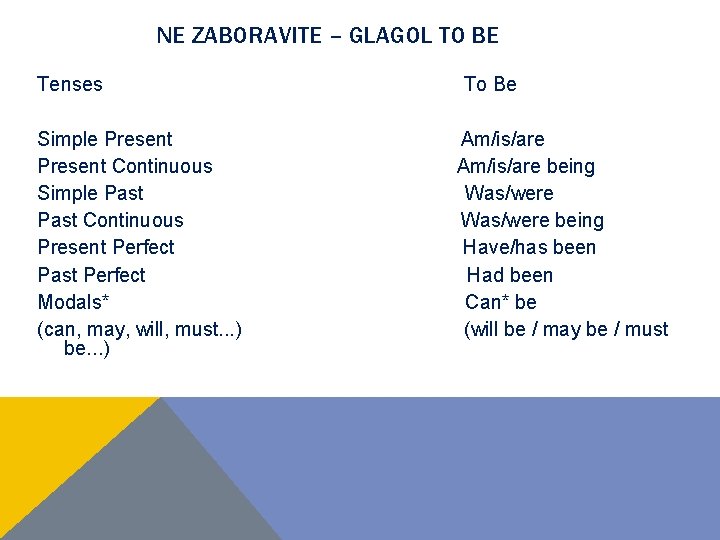
NE ZABORAVITE – GLAGOL TO BE Tenses Simple Present Continuous Simple Past Continuous Present Perfect Past Perfect Modals* (can, may, will, must. . . ) be. . . ) To Be Am/is/are being Was/were being Have/has been Had been Can* be (will be / may be / must
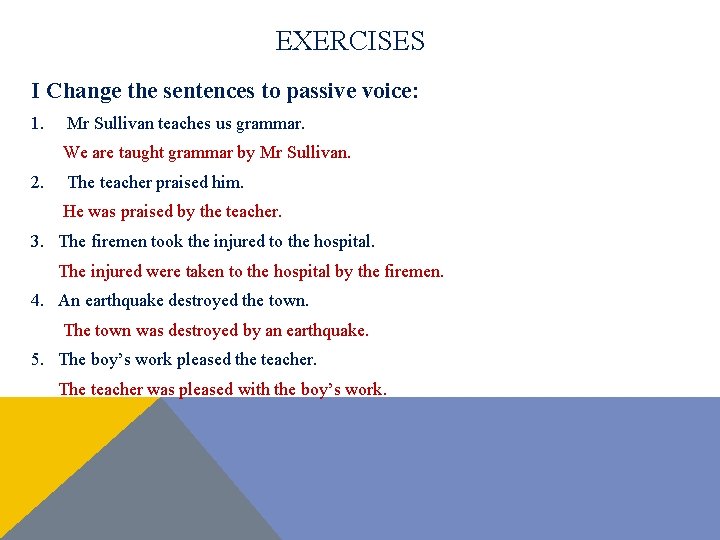
EXERCISES I Change the sentences to passive voice: 1. Mr Sullivan teaches us grammar. We are taught grammar by Mr Sullivan. 2. The teacher praised him. He was praised by the teacher. 3. The firemen took the injured to the hospital. The injured were taken to the hospital by the firemen. 4. An earthquake destroyed the town. The town was destroyed by an earthquake. 5. The boy’s work pleased the teacher. The teacher was pleased with the boy’s work.
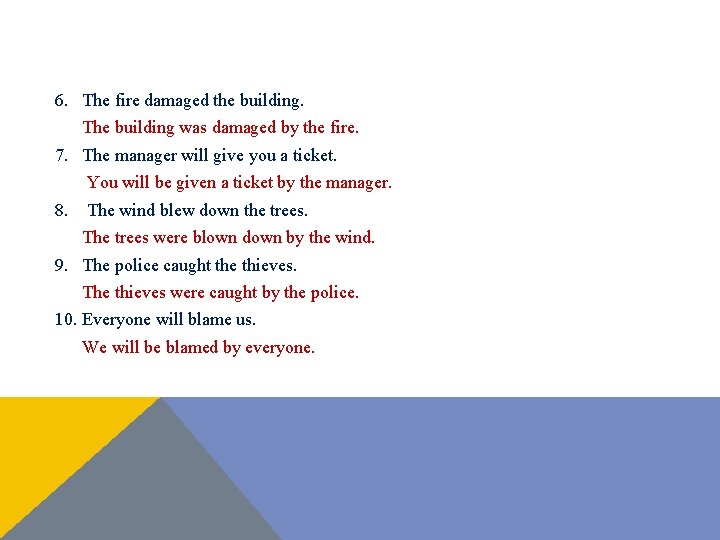
6. The fire damaged the building. The building was damaged by the fire. 7. The manager will give you a ticket. You will be given a ticket by the manager. 8. The wind blew down the trees. The trees were blown down by the wind. 9. The police caught the thieves. The thieves were caught by the police. 10. Everyone will blame us. We will be blamed by everyone.
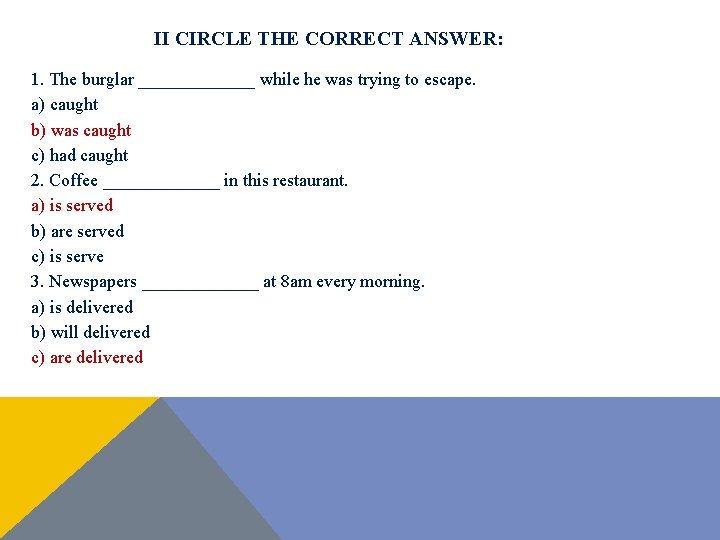
II CIRCLE THE CORRECT ANSWER: 1. The burglar _______ while he was trying to escape. a) caught b) was caught c) had caught 2. Coffee _______ in this restaurant. a) is served b) are served c) is serve 3. Newspapers _______ at 8 am every morning. a) is delivered b) will delivered c) are delivered
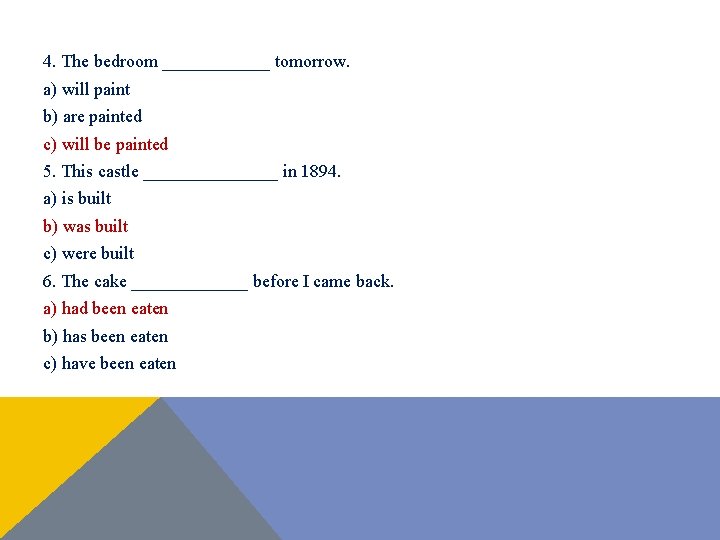
4. The bedroom ______ tomorrow. a) will paint b) are painted c) will be painted 5. This castle ________ in 1894. a) is built b) was built c) were built 6. The cake _______ before I came back. a) had been eaten b) has been eaten c) have been eaten
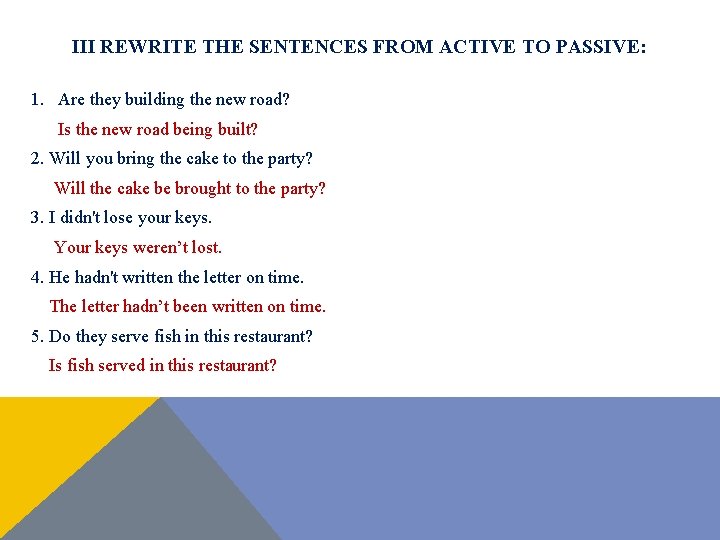
III REWRITE THE SENTENCES FROM ACTIVE TO PASSIVE: 1. Are they building the new road? Is the new road being built? 2. Will you bring the cake to the party? Will the cake be brought to the party? 3. I didn't lose your keys. Your keys weren’t lost. 4. He hadn't written the letter on time. The letter hadn’t been written on time. 5. Do they serve fish in this restaurant? Is fish served in this restaurant?
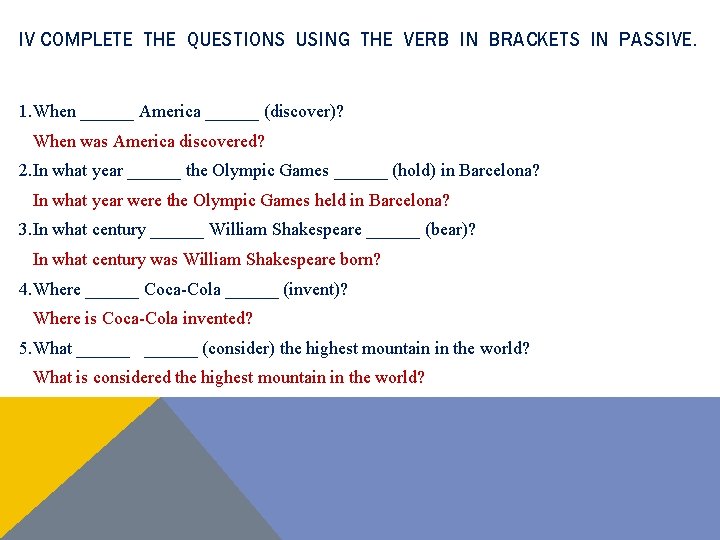
IV COMPLETE THE QUESTIONS USING THE VERB IN BRACKETS IN PASSIVE. 1. When ______ America ______ (discover)? When was America discovered? 2. In what year ______ the Olympic Games ______ (hold) in Barcelona? In what year were the Olympic Games held in Barcelona? 3. In what century ______ William Shakespeare ______ (bear)? In what century was William Shakespeare born? 4. Where ______ Coca-Cola ______ (invent)? Where is Coca-Cola invented? 5. What ______ (consider) the highest mountain in the world? What is considered the highest mountain in the world?
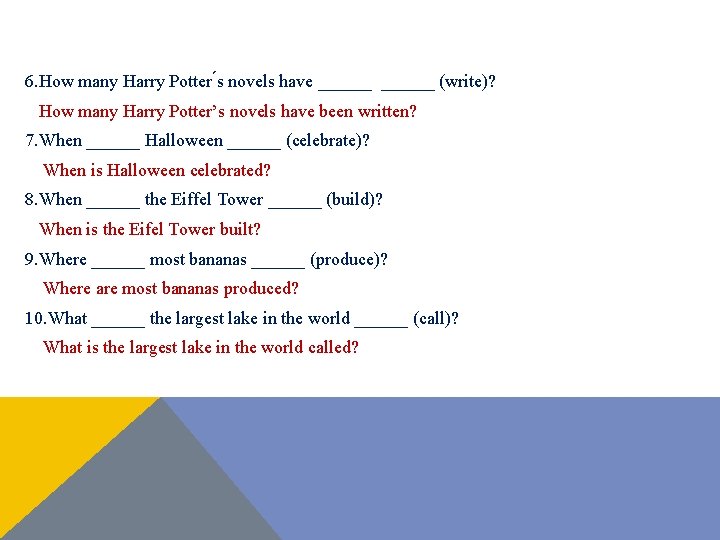
6. How many Harry Potter s novels have ______ (write)? How many Harry Potter’s novels have been written? 7. When ______ Halloween ______ (celebrate)? When is Halloween celebrated? 8. When ______ the Eiffel Tower ______ (build)? When is the Eifel Tower built? 9. Where ______ most bananas ______ (produce)? Where are most bananas produced? 10. What ______ the largest lake in the world ______ (call)? What is the largest lake in the world called?
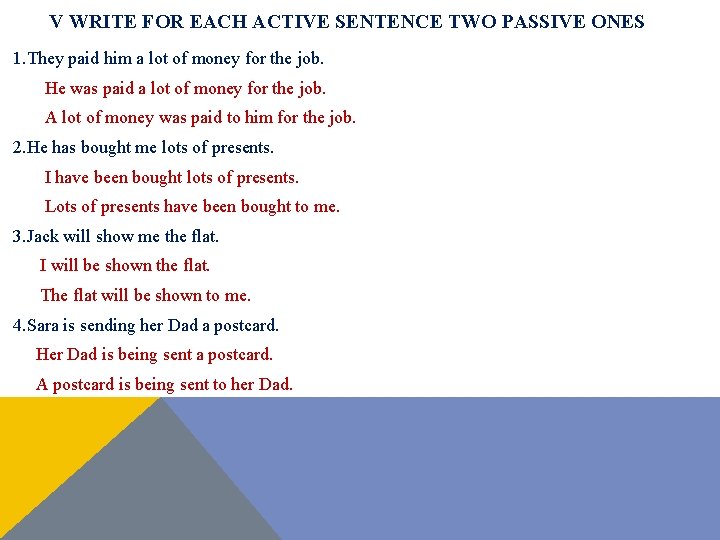
V WRITE FOR EACH ACTIVE SENTENCE TWO PASSIVE ONES 1. They paid him a lot of money for the job. He was paid a lot of money for the job. A lot of money was paid to him for the job. 2. He has bought me lots of presents. I have been bought lots of presents. Lots of presents have been bought to me. 3. Jack will show me the flat. I will be shown the flat. The flat will be shown to me. 4. Sara is sending her Dad a postcard. Her Dad is being sent a postcard. A postcard is being sent to her Dad.
5. The waiter has not brought us the coffee. We haven’t been brought the coffee. The coffee hasn’t been brought to us. 6. They did not offer her a seat. She wasn’t offered a seat. A seat wasn’t offered to her. 7. He has lent her the umbrella. She has been lent the umbrella. The umbrella has been lent to her. 9. Rachel will give you some advice. You will be given some advice. Some advice will be given to you.