
e m o lc e W ack B
e m o lc ! e W ack B PUSD Math Leadership September 16, 2014 Facilitator: Andrea Barraugh abarraugh@powayusd. com
Goals Extend your Mathematical Knowledge for Teaching (MKT: content and pedagogy). Deepen your understanding of how children learn mathematics. Build on your understanding of the Common Core content and practice standards. Further develop your leadership toolkit.
Reflecting Life can only be understood backwards; but it must be lived forwards. -Kierkegaard
August 14 PD Day Quickwrite: What went well? What did you learn about yourself? What did you learn about your colleagues?
Table Talk Share your reflections. What are the common themes?
Moving On Life is like riding a bicycle. To keep your balance you must keep moving. -Albert Einstein
District Instructional Leader in TK-5 Math • ESSENTIAL JOB RESPONSIBILITIES Work with Math TOSA to create/revise core grade level resources which may include: performance tasks, trimester assessments, math scope and sequence, modules of professional learning, Progress Report, and units of study which include scope and sequence and web based/print resources • Participate in regularly scheduled monthly release days • Work with principal, coach and Professional Learning Facilitator to communicate, facilitate professional learning and support implementation of the resources • Other duties as needed
Site Professional Learning Facilitator in TK-5 Math ESSENTIAL JOB RESPONSIBILITIES • Contribute to a learning community conducive to the best teaching practices and success of every student • Provide input to site principal and coach to come to consensus to develop a professional development plan/calendar • Assist grade level teams in planning and facilitating units of study with support of math coach and site principal • Participate in regularly scheduled monthly release days • Share knowledge and instructional strategies gained from monthly release days with staff. • Other duties as needed
Agenda Morning Afternoon 8: 00 OPENING 12: 15 Transforming Tasks Investigating Math Structure BREAK Regional Collaboration Procedural Fluency 11: 30 LUNCH Personal Reflections 3: 00 END
A Math Investigation Please sit in groups of 3 -4 with: all different grade levels all different schools a mix of regions
Session Goals Engage in a rich mathematical task as learners Explore a possible school-wide “Problem of the Month” Deepen our understanding of: Practice Standard #1: Make sense of problems and persevere in solving them Practice Standard #4: Model with mathematics Practice Standard #7: Look for and make use of structure
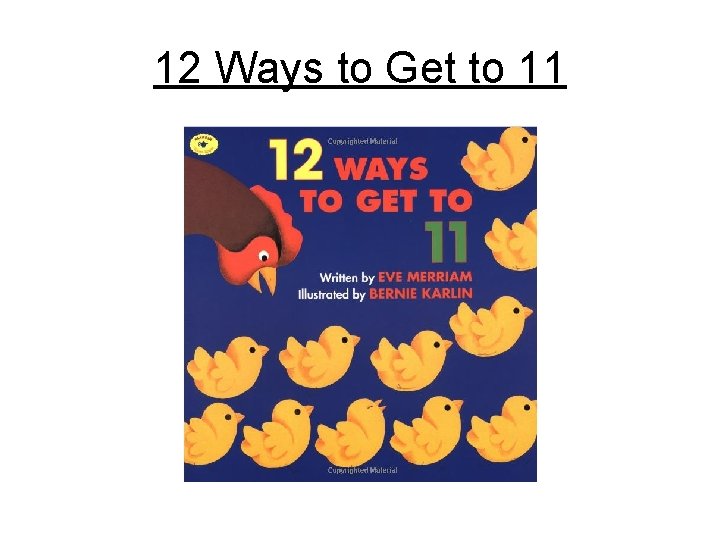
12 Ways to Get to 11
Table Talk How might you use this book as a springboard to a rich math task? What might the tasks look like at different grade levels?
How many ways to get to 4? • How are your organizing your work so you know you have found all the ways? • What tools might be useful to help you keep track or to discover structure? Addition only More than 2 addends is okay Do not use zero. (4 is just “ 4”, not 4 + 0)
12 Ways? How many ways do you think there are to get to 11? What questions do you have?
The Investigation (Individual think time first, then partner work) Your Job Find all the possible ways to make 11 Addition only Counting numbers only More than 2 addends is okay Do not use zero. As you work, consider. . . How will you organize your work? What underlying structure can you find? How might structure help you find patterns and simplify the problem?
Processing the Experience What did you discover? How did finding patterns and underlying structure help you? How did you model with mathematics?
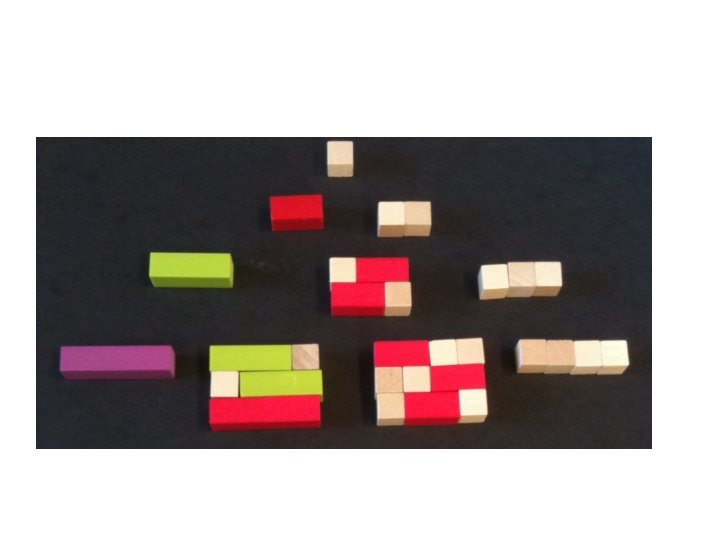
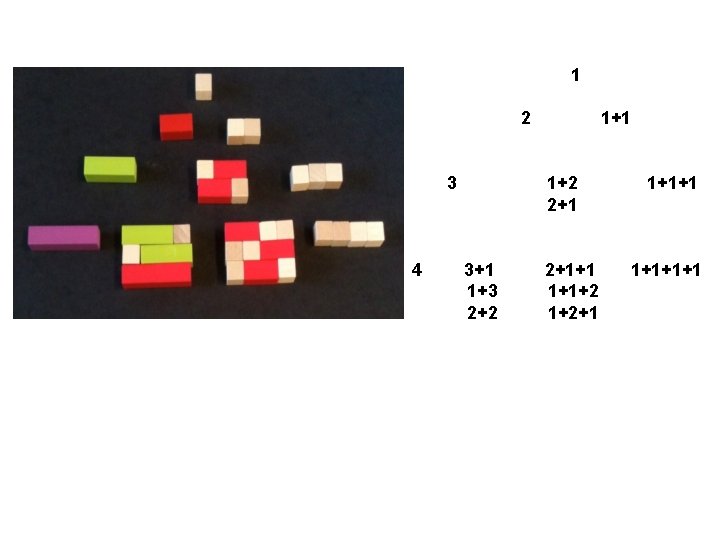
1 2 1+1 3 1+2 1+1+1 2+1 4 3+1 2+1+1 1+1+1+1 1+3 1+1+2 2+2 1+2+1
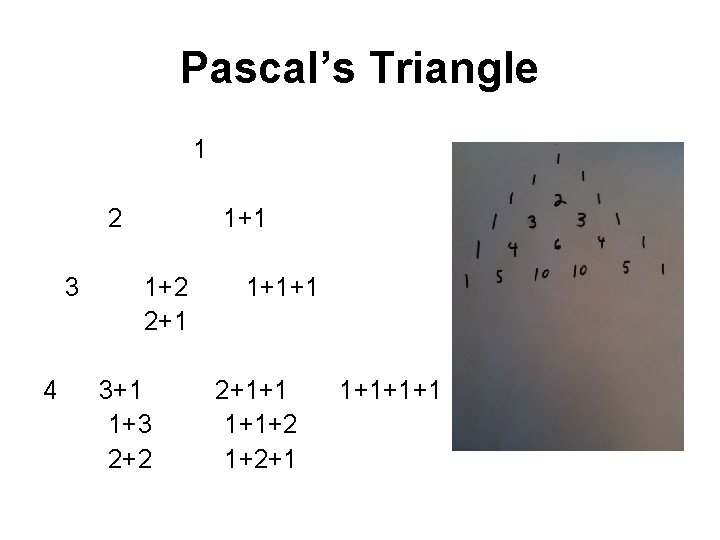
Pascal’s Triangle 1 2 1+1 3 1+2 1+1+1 2+1 4 3+1 2+1+1 1+1+1+1 1+3 1+1+2 2+2 1+2+1
Problem of the Month? How might this problem look at different grade levels? In what ways can we provide a rich task and ask questions that help students discover structure? What types of student work could we collect and share?
Break
Common Core Standards: Procedural Fluency Session Focus Questions: What does it mean for someone to be procedurally fluent? How can we help students develop procedural fluency?
Procedural Fluency Refers to. . . • Knowledge of multiple procedures, • Knowledge of when and how to use them appropriately (strategic thinking), • Skill in performing them flexibly, accurately, and efficiently. Adding It Up: Helping Children Learn Mathematics, National Research Council (2001)
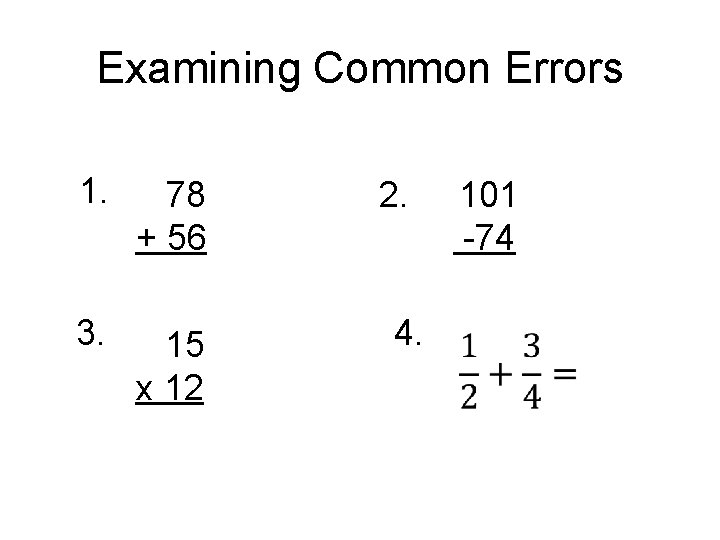
Examining Common Errors 1. 78 + 56 3. 15 x 12 2. 4. 101 -74
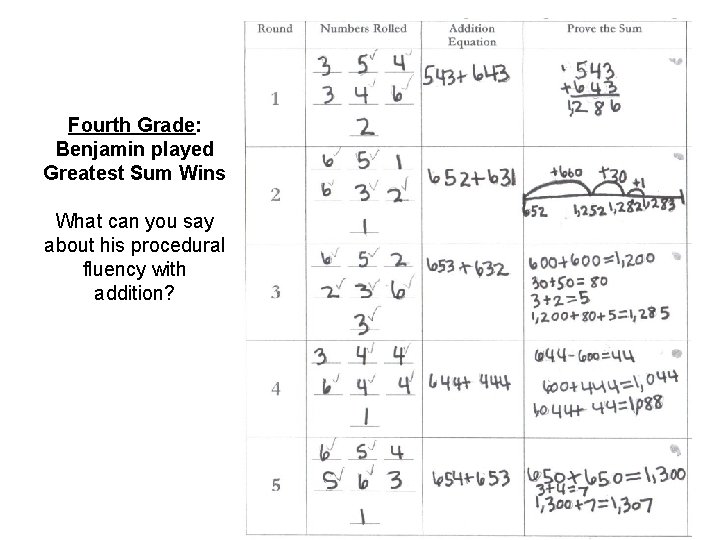
Fourth Grade: Benjamin played Greatest Sum Wins What can you say about his procedural fluency with addition?
The Role of Mental Math
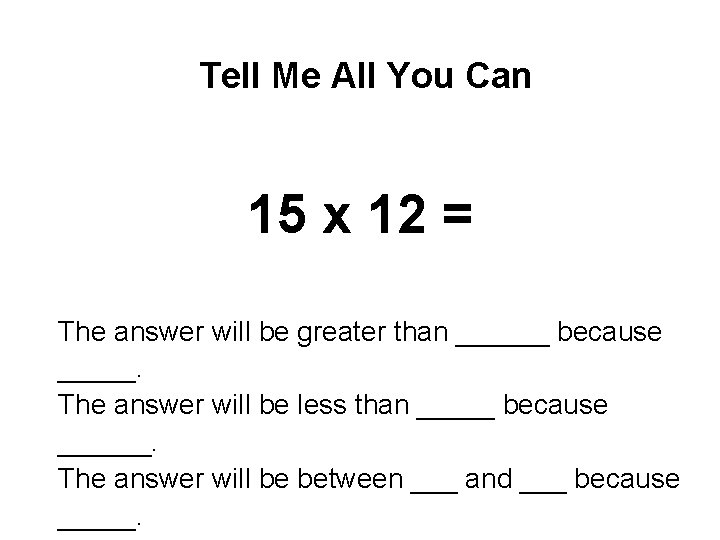
Tell Me All You Can 15 x 12 = The answer will be greater than ______ because _____. The answer will be less than _____ because ______. The answer will be between ___ and ___ because _____.
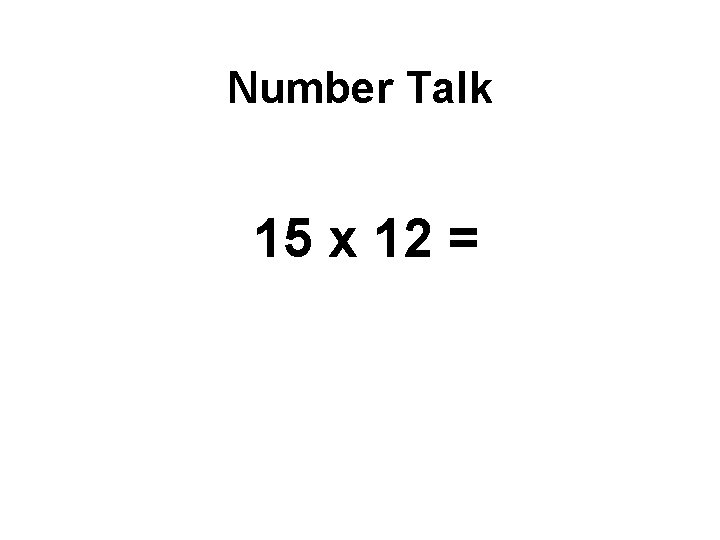
Number Talk 15 x 12 =
How do Number Talks look in the primary grades?
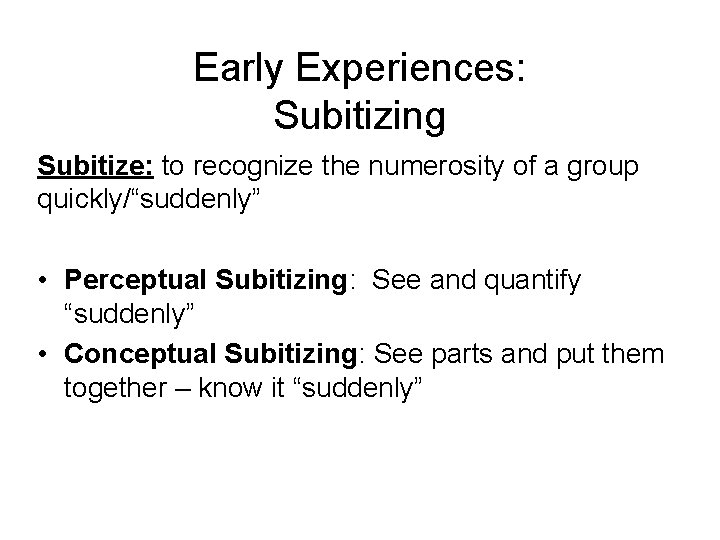
Early Experiences: Subitizing Subitize: to recognize the numerosity of a group quickly/“suddenly” • Perceptual Subitizing: See and quantify “suddenly” • Conceptual Subitizing: See parts and put them together – know it “suddenly”
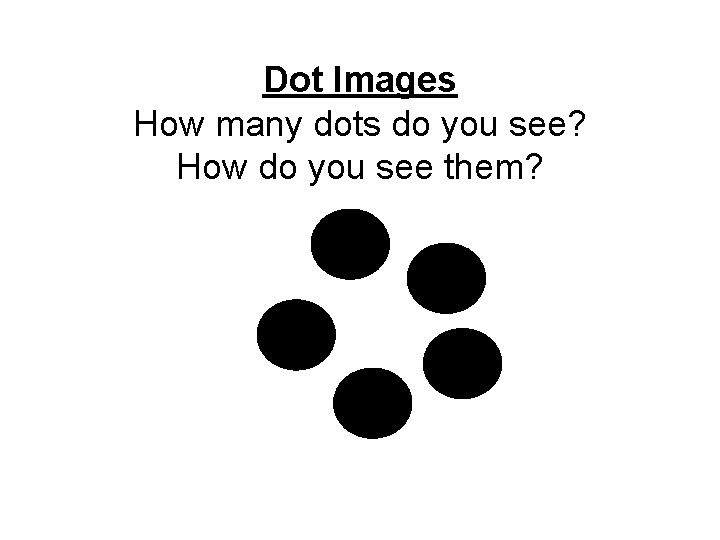
Dot Images How many dots do you see? How do you see them?
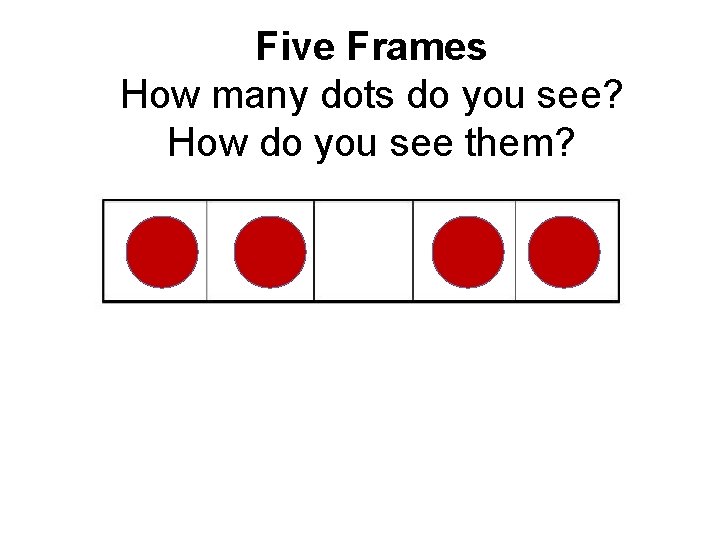
Five Frames How many dots do you see? How do you see them?
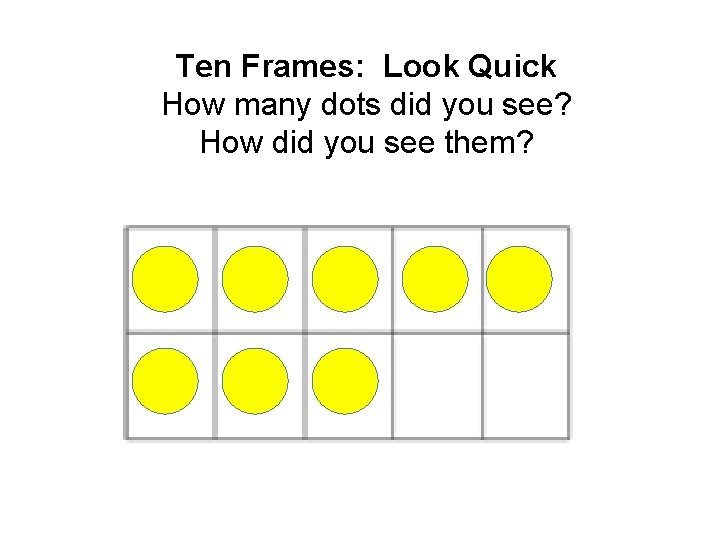
Ten Frames: Look Quick How many dots did you see? How did you see them?
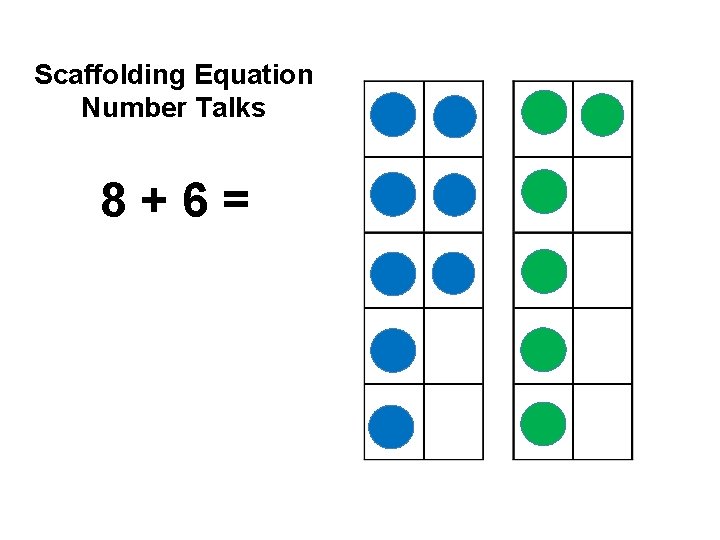
Scaffolding Equation Number Talks 8 + 6 =
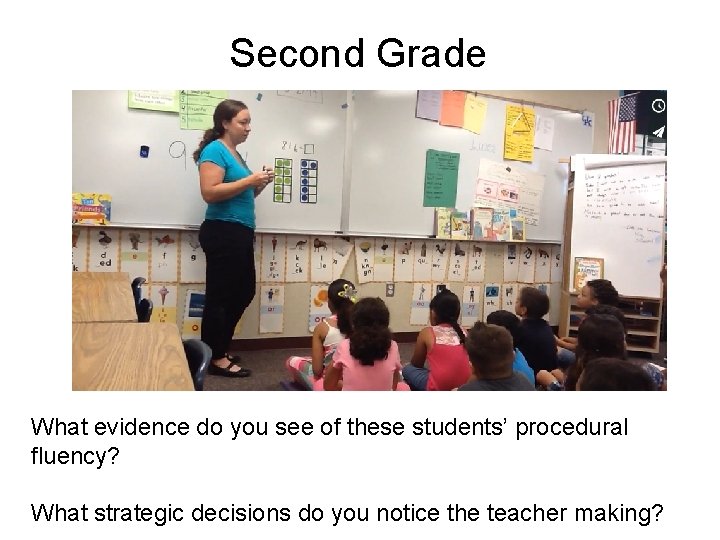
Second Grade What evidence do you see of these students’ procedural fluency? What strategic decisions do you notice the teacher making?
In Table Groups. . . Practice a Number Talk Decide who will be the teacher and who will be the students. Choose an equation from the “Number Talk Choices. ” Lead a number talk with your tablemates and record their thinking. Switch roles and repeat.
Processing What aspect/s of leading a number talk are you confident with? What was challenging? What number talk would be appropriate for your students tomorrow?
Connecting Procedural Fluency and Conceptual Understanding By understanding underlying concepts, students learn, remember, and apply basic skills more easily. By the same token, developing strong procedural skills can strengthen students’ understanding.
Follow-Up for Everyone Try some Number Talks in your classroom. Reflect on the experiences and be prepared to share at our next meeting.
Lunch 11: 30 – 12: 15
Modifying Tasks: Looking for Mathematical Structure Please sit in grade level groups.
Session Goals Develop a critical eye for math tasks with potential to allow students to look for structure. Transform a task with potential into a rich math task with an emphasis on finding structure. Consider what it might look like to turn the transformed task into the focus of the lesson.
Principles Underlying the Common Core State Standards for Math Teach at the speed of learning Not faster More time per concept More time per problem More time per student talking Less problems per lesson Less topics per year -- Phil Daro (Author, CCSS)
Mathematical tasks provide a foundation for instruction that is critical. How students spend their time is determined by the tasks that they are asked to complete. The tasks make all the difference. –James Hiebert et al. , Making Sense: Teaching and Learning Mathematics with Understanding, Heinemann, 1997
What are the characteristics of a rich math task? • • • Mathematically intriguing Leaves math residue Multiple ways to solve it Possibly more than one answer. Allows students to uncover important mathematical content • Engages students in the CC mathematical practices
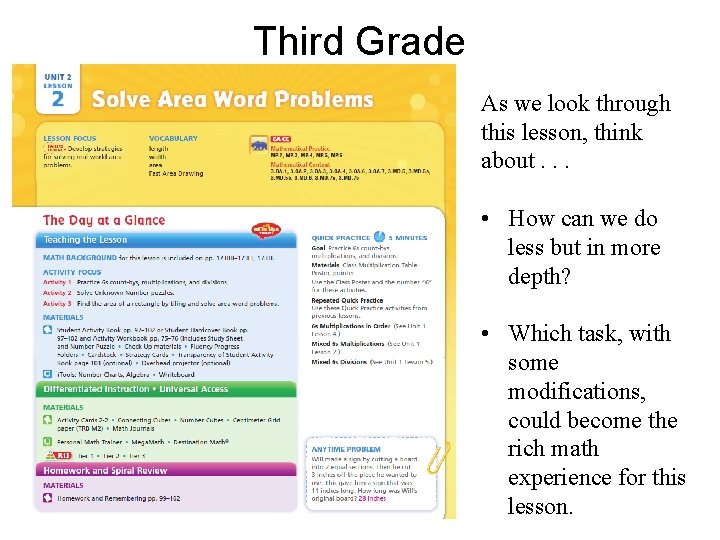
Third Grade As we look through this lesson, think about. . . • How can we do less but in more depth? • Which task, with some modifications, could become the rich math experience for this lesson.
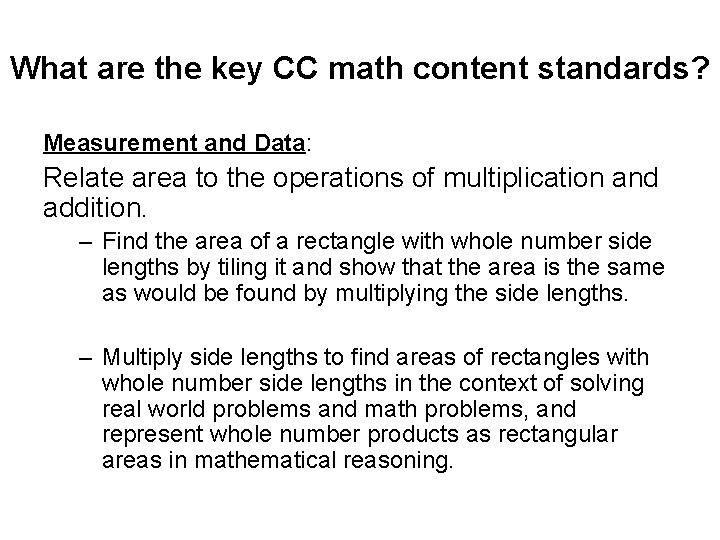
What are the key CC math content standards? Measurement and Data: Relate area to the operations of multiplication and addition. – Find the area of a rectangle with whole number side lengths by tiling it and show that the area is the same as would be found by multiplying the side lengths. – Multiply side lengths to find areas of rectangles with whole number side lengths in the context of solving real world problems and math problems, and represent whole number products as rectangular areas in mathematical reasoning.
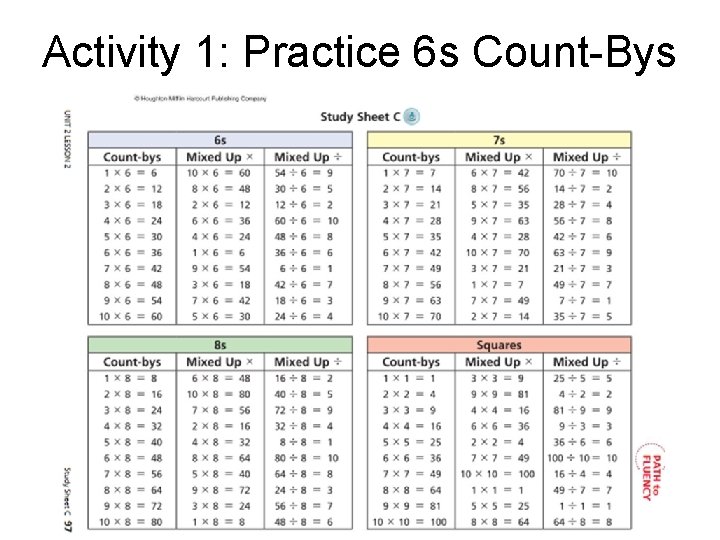
Activity 1: Practice 6 s Count-Bys
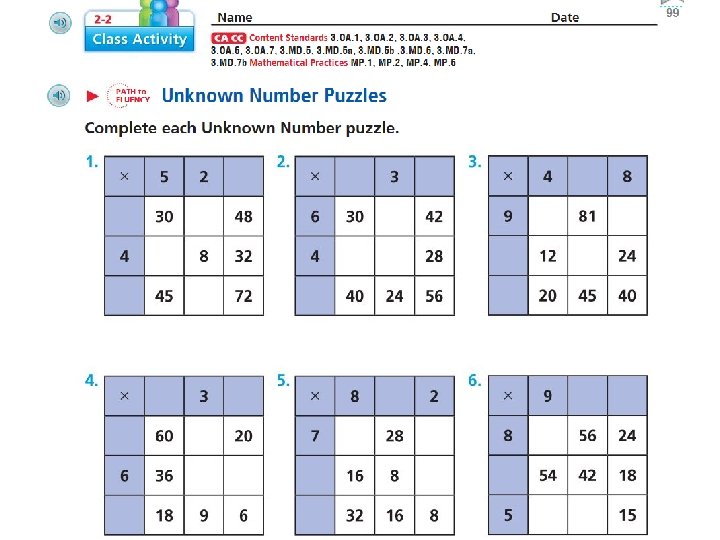
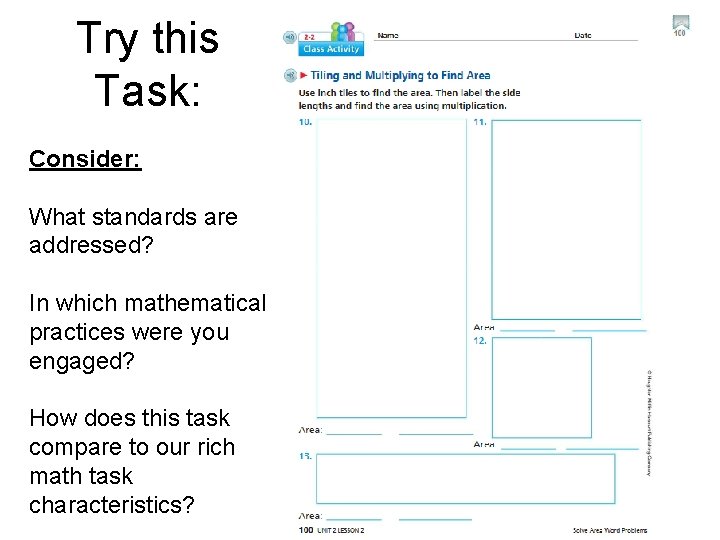
Try this Task: Consider: What standards are addressed? In which mathematical practices were you engaged? How does this task compare to our rich math task characteristics?
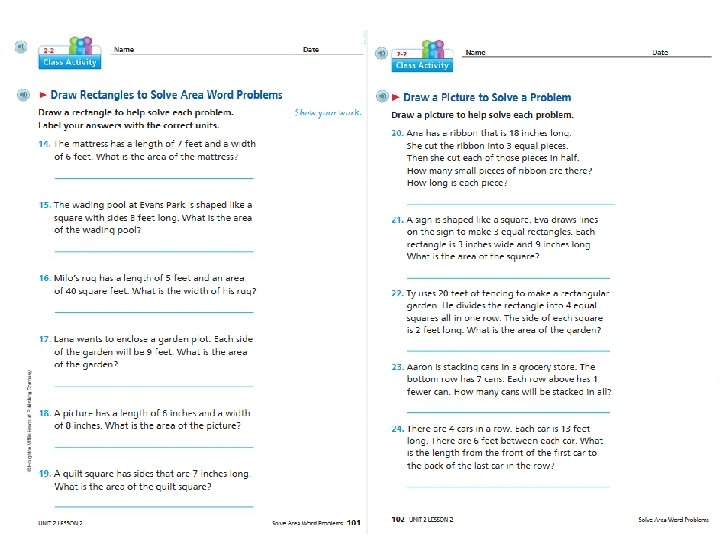
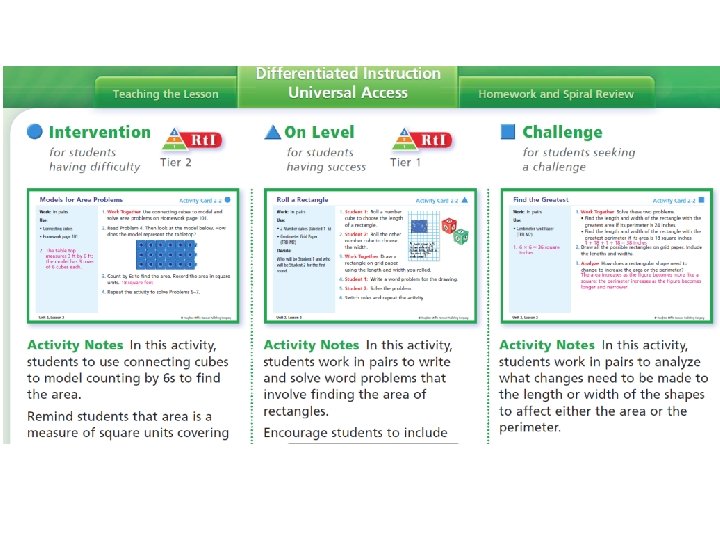
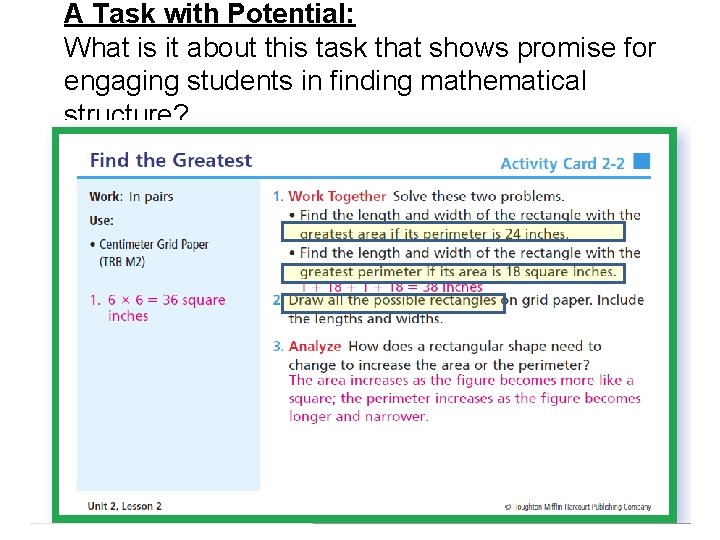
A Task with Potential: What is it about this task that shows promise for engaging students in finding mathematical structure?
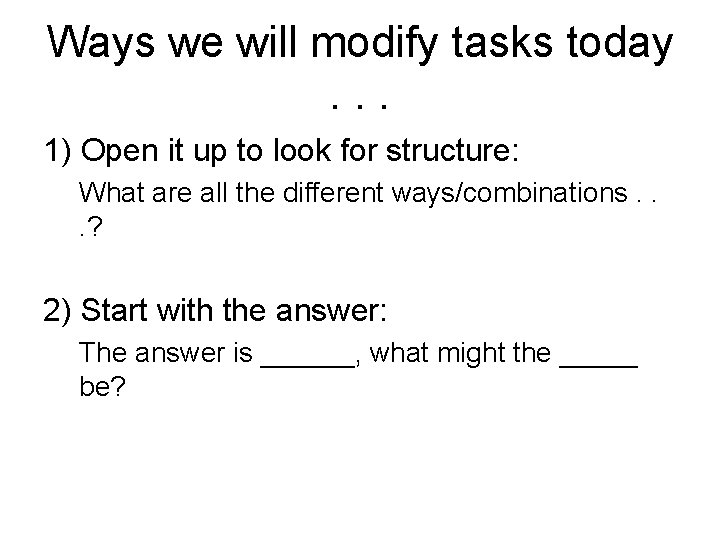
Ways we will modify tasks today . . . 1) Open it up to look for structure: What are all the different ways/combinations. . . ? 2) Start with the answer: The answer is ______, what might the _____ be?
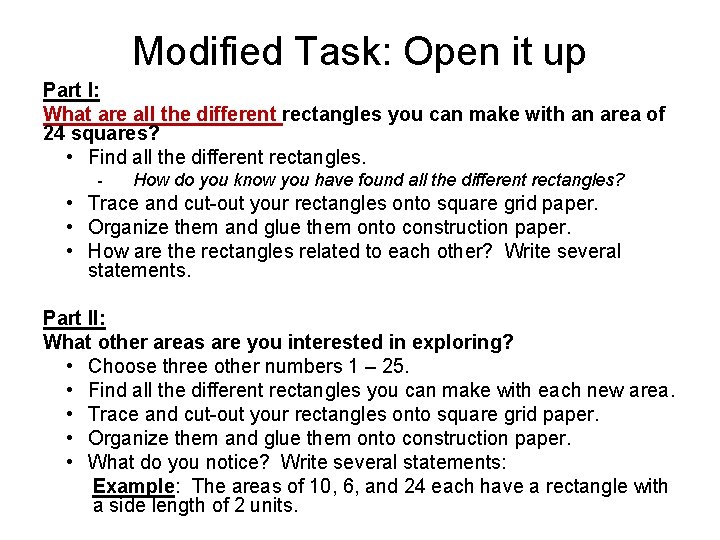
Modified Task: Open it up Part I: What are all the different rectangles you can make with an area of 24 squares? • Find all the different rectangles. - How do you know you have found all the different rectangles? • Trace and cut-out your rectangles onto square grid paper. • Organize them and glue them onto construction paper. • How are the rectangles related to each other? Write several statements. Part II: What other areas are you interested in exploring? • Choose three other numbers 1 – 25. • Find all the different rectangles you can make with each new area. • Trace and cut-out your rectangles onto square grid paper. • Organize them and glue them onto construction paper. • What do you notice? Write several statements: Example: The areas of 10, 6, and 24 each have a rectangle with a side length of 2 units.
Table Talk How does this task compare to our characteristics of rich math tasks chart? How is it different and or similar to the tiling tasks on Practice Book page 100? How can students find mathematical structure while doing this task? In what other mathematical practices might students engage? What CC content standards does this task address? Using this task as the focus of the lesson, how could we restructure the ME lesson and apply the “less is more” principle?
With a Partner, Modify a Task from your Curricular Materials Stems. . . What are all the different. . . The answer is _____, what might the _______ be? Directions: 1) Identify a task with potential (see handout of possibilities) 2) Discuss the important mathematics within the lesson, the standards, and the task. Use the “Guiding Questions. ” 3) Transform the task using a stem. 4) Type or write up your task and email it to abarraugh@powayusd. com. Be ready for a gallery walk at ______
Gallery Walk (in partners) Visit at least 2 tasks. . . By each modified task, leave a sticky note from you and your partner with at least one statement using a stem: We appreciate. . . We wonder. . . We think students will learn. . . The students will be engaged in the practices #, #. . . Other?
Processing • How can/will you support your grade level teammates in modifying tasks? • What challenges do you anticipate?
Suggested Leadership Activities . . . Professional Learning Facilitators: Guide your grade level team to analyze several math tasks in the current unit you are teaching. Collaboratively modify 1 task and have everyone on the team try it with students. Meet afterward analyze student work samples. District Instructional Leaders: Begin to identify and modify Math Expressions tasks that could be incorporated into the next unit you develop.
Regional Check In and Planning Please: – Sit in regional teams (combine tables) – Sit next to the leader from your school site.
Goals for this Session Connect Site Math Leaders across a region Share resources and ideas for regional connections and collaboration Check in about district curriculum work
School Site Haikus Situating ourselves within our own school sites . . . With your site leader partner, write a haiku describing the current state of math instruction at your site. Example: A student talks. . . Another questions, Seeking mathematical truth 3 unrhymed lines 17 syllables total professional and descriptive
Regional Haiku Read Around
Haiku Processing Why haiku? What did you learn about your region?
Regional Collaboration Table Discussion: Current School or Intra-Region Activity: (1 minute per school Go Around) What current math activities or plans are underway at your school or with other schools in your region? Planning for Collaboration: How can you build on those plans to support each other with: – – Grade level number talks in classrooms? Identifying and transforming textbook math activities? Trying the 12 Ways to Count to 11 activity? Connecting pockets of expertise with areas of interest? Coaches record ideas. What graphic organizer will help you all synthesize the ideas in a usable format?
Reflecting and Planning Ahead What are the take-aways you will leave with today? What is one idea you would like to try with your students right away? What are your next steps for working with teachers at your sites?
- Slides: 69