
e Learning Design ANALYSIS DESIGN Presenter Melisa Achoko

- Slides: 26
e. Learning Design ANALYSIS + DESIGN Presenter: Melisa Achoko Allela
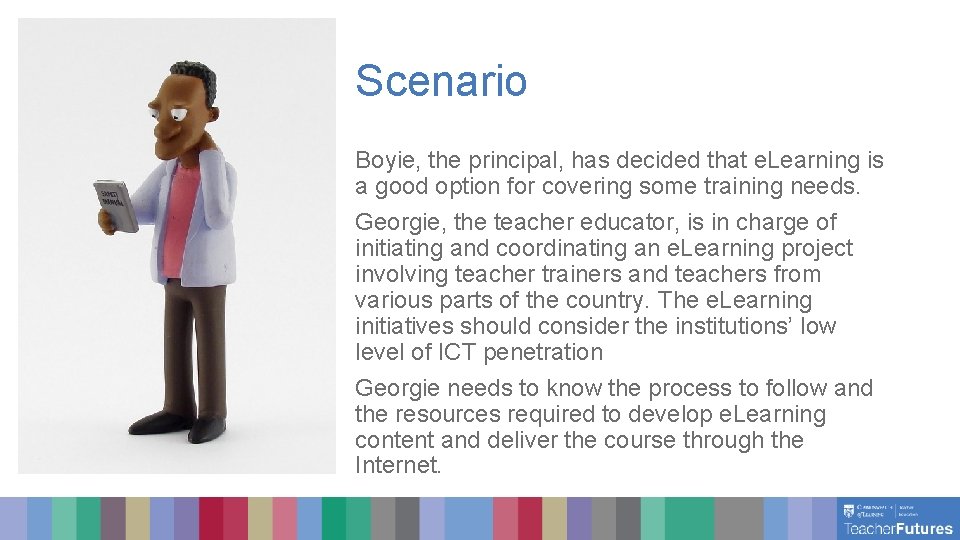
Scenario Boyie, the principal, has decided that e. Learning is a good option for covering some training needs. Georgie, the teacher educator, is in charge of initiating and coordinating an e. Learning project involving teacher trainers and teachers from various parts of the country. The e. Learning initiatives should consider the institutions’ low level of ICT penetration Georgie needs to know the process to follow and the resources required to develop e. Learning content and deliver the course through the Internet.
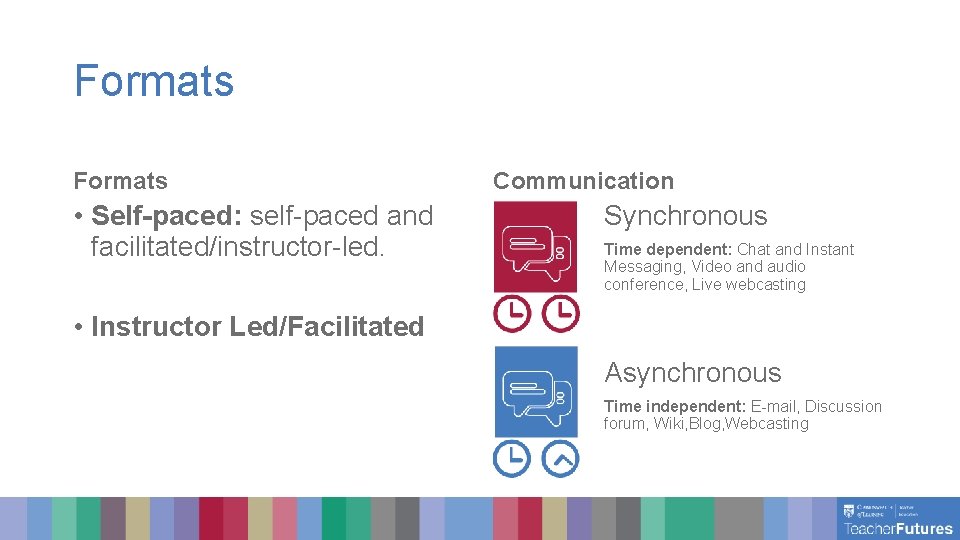
Formats • Self-paced: self-paced and facilitated/instructor-led. Communication Synchronous Time dependent: Chat and Instant Messaging, Video and audio conference, Live webcasting • Instructor Led/Facilitated Asynchronous Time independent: E-mail, Discussion forum, Wiki, Blog, Webcasting
Components • e. Learning content • Collaborative learning • Virtual learning environment • Digital resources e. g. interactive e-lessons, videos, simulations
Instructional Design ‘Learning is facilitated when: 1. Learners are engaged in solving real-world problems. 2. Existing knowledge is activated as a foundation for new knowledge. 3. New knowledge is demonstrated to the learner. 4. New knowledge is applied. 5. New knowledge is integrated into the learner’s world Merrill, D. (2002). First principles of instruction. Educational Technology Research and Development 50, 3, pp. 43– 59
Instructional design Systematic development of specifications using learning and instructional theory to ‘Learning is facilitated when: 1. Learners are engaged in solving real-world problems. 2. Existing knowledge is activated as a foundation for new knowledge. 3. New knowledge is demonstrated to the learner. 4. New knowledge is applied. 5. New knowledge is integrated into the learner’s world Merrill, D. (2002). First principles of instruction. Educational Technology Research and Development 50, 3, pp. 43– 59
Instructional Design • Good design and planning is critical for successful e-learning projects • carefully crafting learning objectives at a level appropriate for the knowledge and skills that are being developed. • Aligning learning objectives to learning activities and assessment. • designing learning activities that help learners to develop their understanding of the content and to develop the skills that are being taught • Re-use
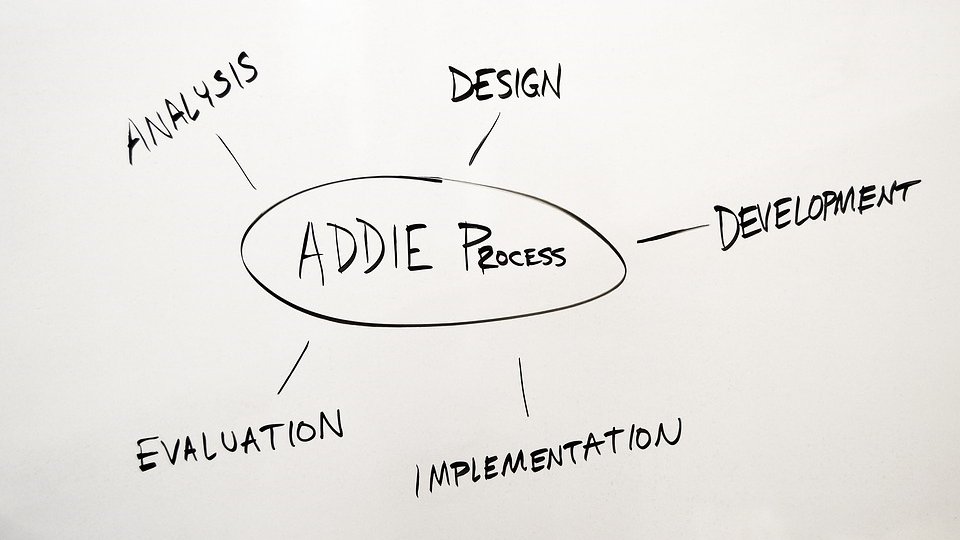
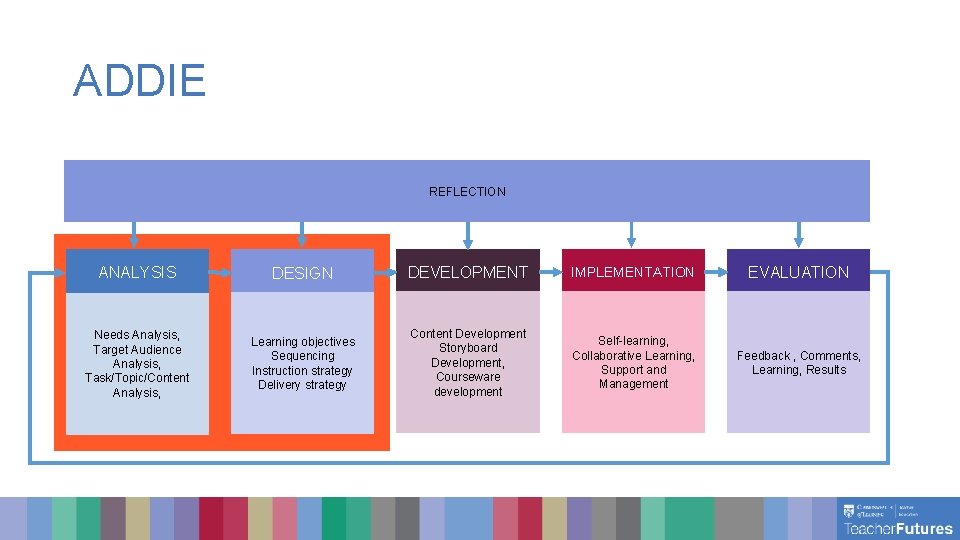
ADDIE REFLECTION ANALYSIS DESIGN DEVELOPMENT IMPLEMENTATION EVALUATION Needs Analysis, Target Audience Analysis, Task/Topic/Content Analysis, Learning objectives Sequencing Instruction strategy Delivery strategy Content Development Storyboard Development, Courseware development Self-learning, Collaborative Learning, Support and Management Feedback , Comments, Learning, Results
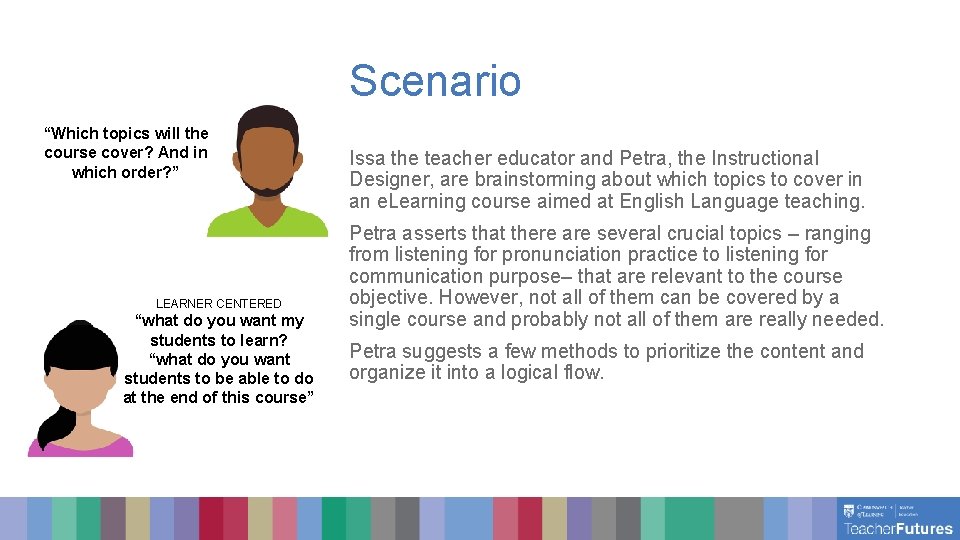
Scenario “Which topics will the course cover? And in which order? ” LEARNER CENTERED “what do you want my students to learn? “what do you want students to be able to do at the end of this course” Issa the teacher educator and Petra, the Instructional Designer, are brainstorming about which topics to cover in an e. Learning course aimed at English Language teaching. Petra asserts that there are several crucial topics – ranging from listening for pronunciation practice to listening for communication purpose– that are relevant to the course objective. However, not all of them can be covered by a single course and probably not all of them are really needed. Petra suggests a few methods to prioritize the content and organize it into a logical flow.
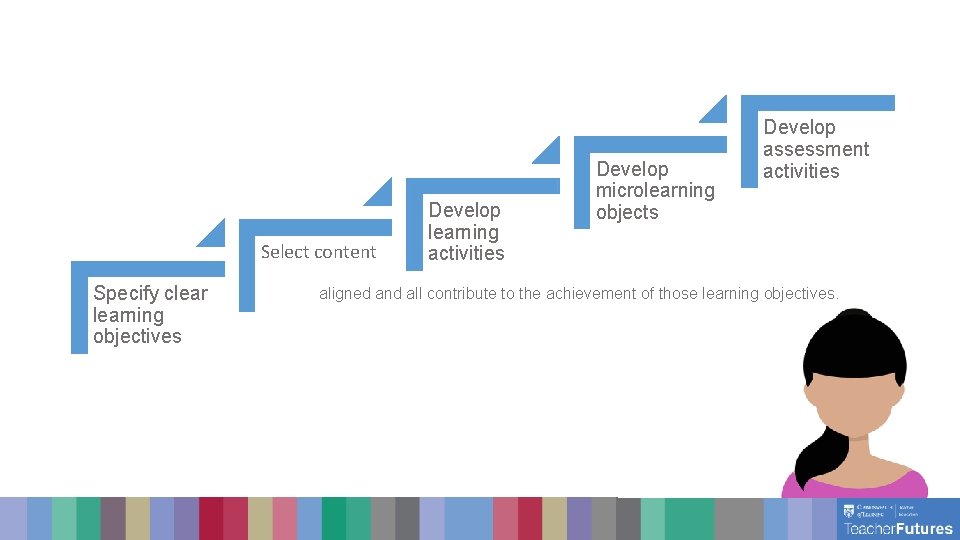
Select content Specify clearning objectives Develop learning activities Develop microlearning objects Develop assessment activities aligned and all contribute to the achievement of those learning objectives.
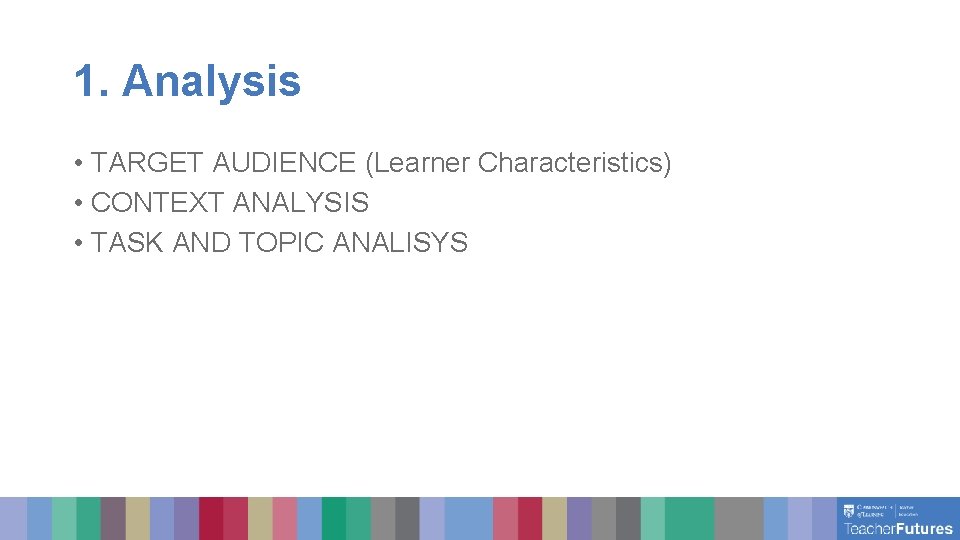
1. Analysis • TARGET AUDIENCE (Learner Characteristics) • CONTEXT ANALYSIS • TASK AND TOPIC ANALISYS
Prior knowledge Motivation Expectations Group characteristics Background Level of self regulated learning …
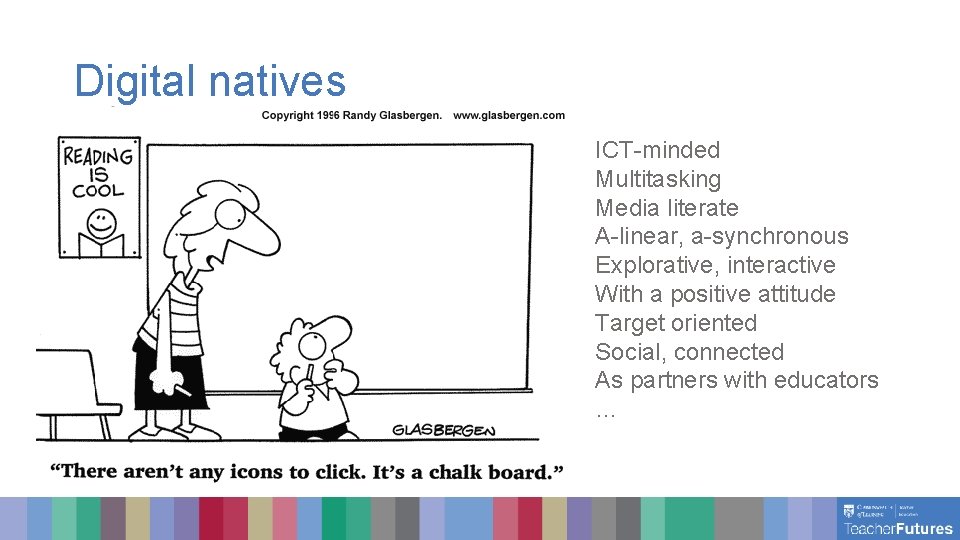
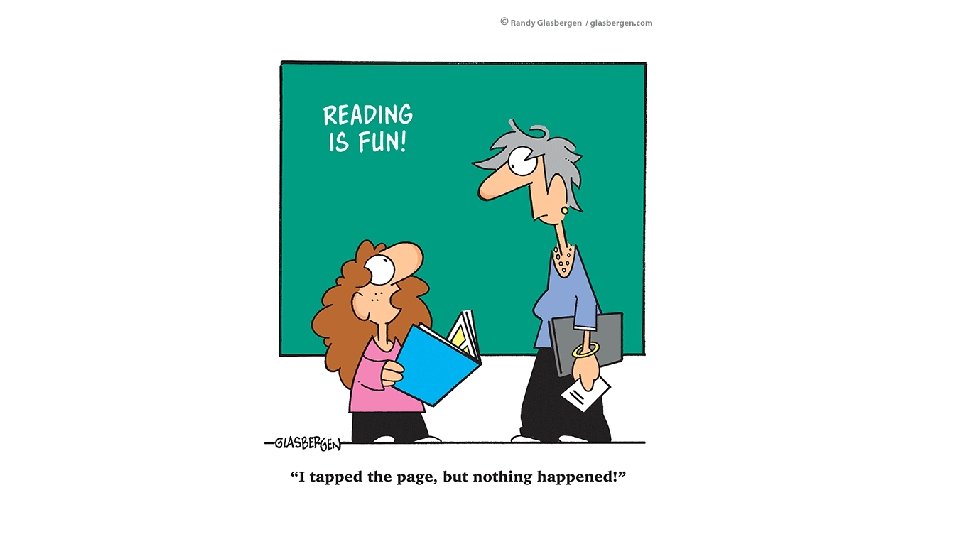
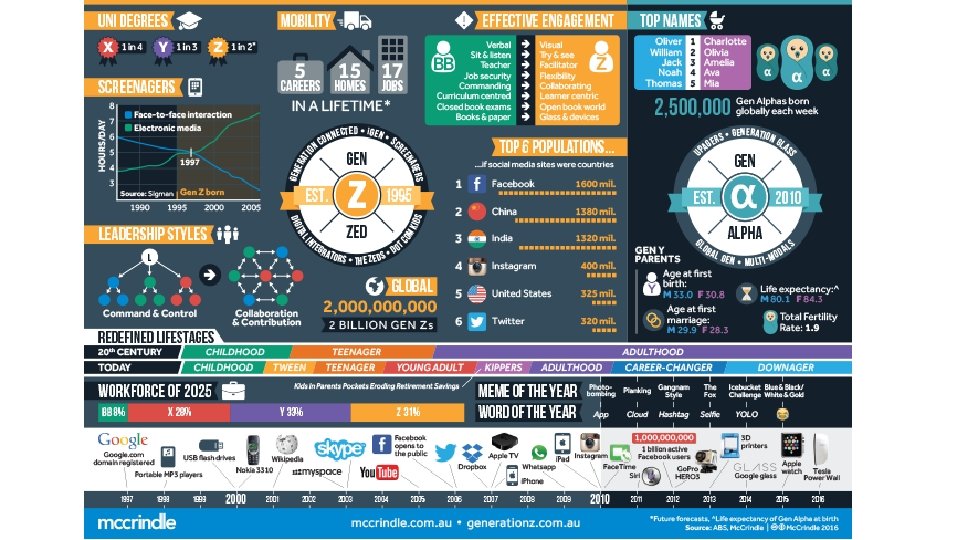
Digital natives ICT-minded Multitasking Media literate A-linear, a-synchronous Explorative, interactive With a positive attitude Target oriented Social, connected As partners with educators …
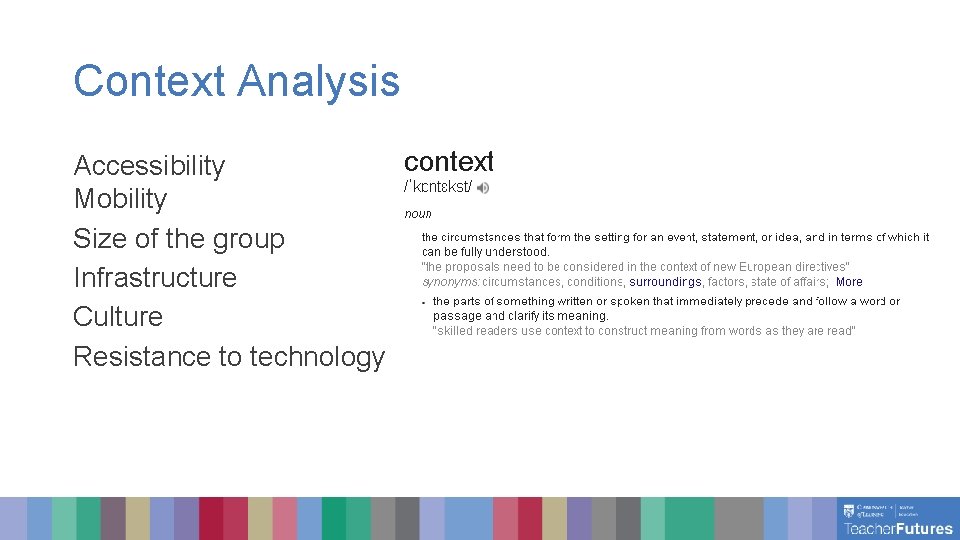
Context Analysis Accessibility Mobility Size of the group Infrastructure Culture Resistance to technology
SWOT Relevance of the content and course objectives for the learner Do they meet existing needs? Type of learning activities offered by the course are they interesting, inspiring and well-matched to the level of the participants? Course duration, timing and number of hours to be invested do they fit with the participants’ availability? Technical aspects is the technical solution appropriate to learners? Are the technical elements (e. g. the learning platform and its functions) clear and understandable to participants?
2. Design • Teaching Methods • Learning Activities
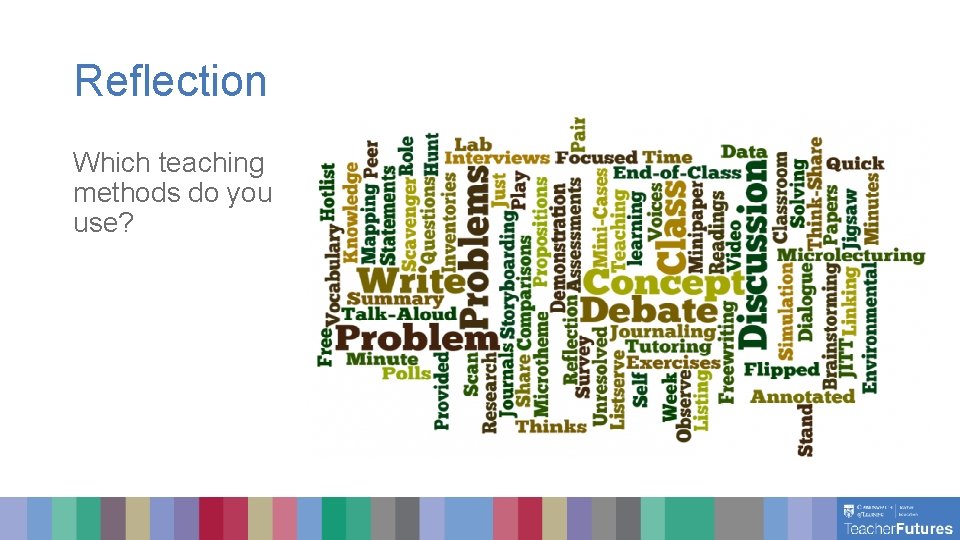
Reflection Which teaching methods do you use?
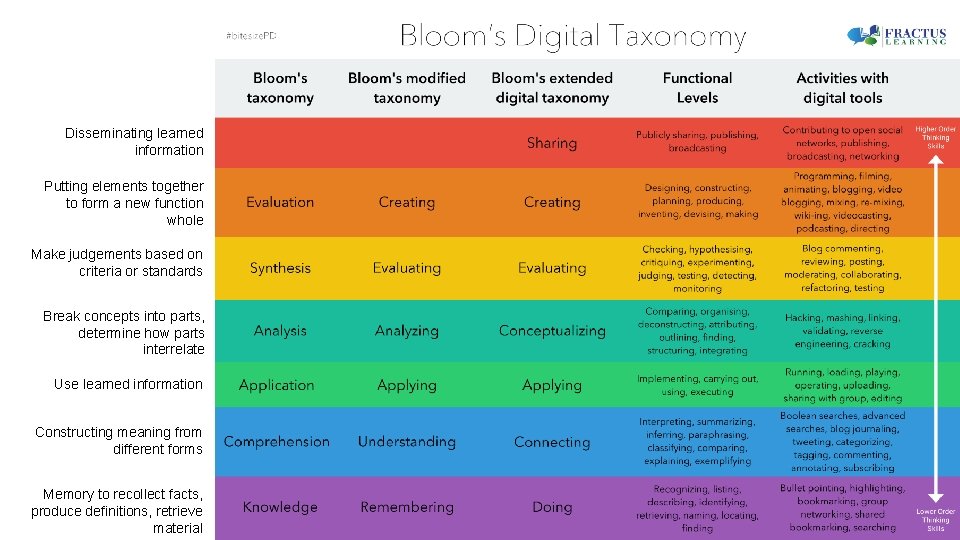
Disseminating learned information Putting elements together to form a new function whole Make judgements based on criteria or standards Break concepts into parts, determine how parts interrelate Use learned information Constructing meaning from different forms Memory to recollect facts, produce definitions, retrieve material
Reflection (Journal entry) 1. Which teaching methods are you using in your course? 2. Which teaching methods do you want to use in your project/course? 3. Can you imagine an appropriate teaching method for each level in the Bloom’s digital taxonomy?
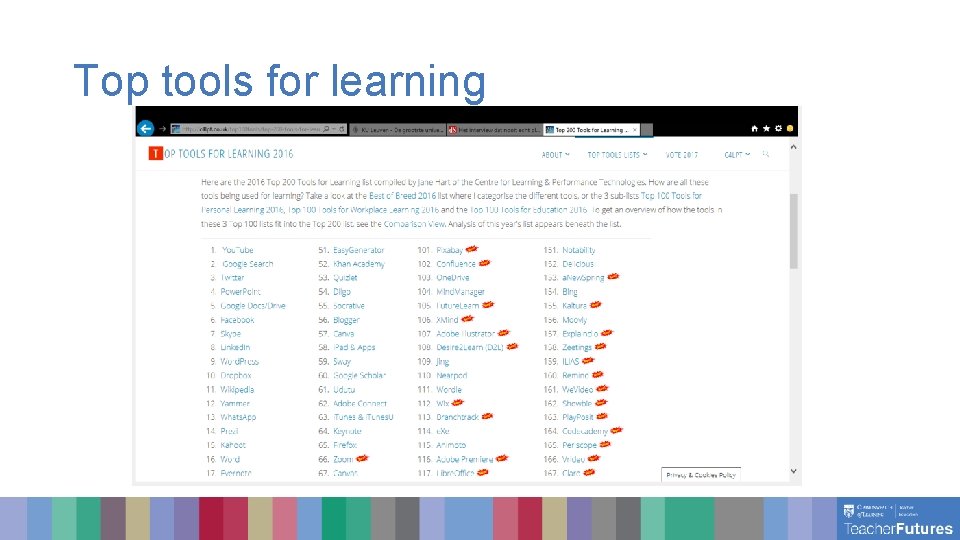
Top tools for learning
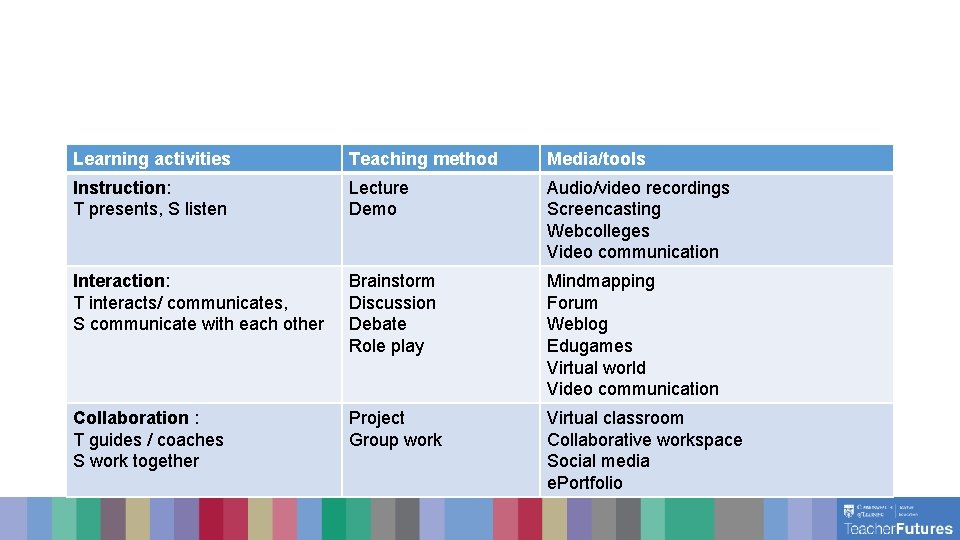
Learning activities Teaching method Media/tools Instruction: T presents, S listen Lecture Demo Audio/video recordings Screencasting Webcolleges Video communication Interaction: T interacts/ communicates, S communicate with each other Brainstorm Discussion Debate Role play Mindmapping Forum Weblog Edugames Virtual world Video communication Collaboration : T guides / coaches S work together Project Group work Virtual classroom Collaborative workspace Social media e. Portfolio
Questions? Suggestions?