
E L C T E H L E

- Slides: 27
E L C T E H L E C Y C L D AN M O T I S
EUKARYOTIC CELLS SOMATIC CELLS SEX CELLS Cells that make your organs and tissues The ONLY cells that are not somatic – sperm and egg (Gametes)
CELL DIVISION In eukaryotes, cell division occurs in two major stages. The first stage, division of the cell nucleus, is called mitosis. The second stage, division of the cell cytoplasm, is called cytokinesis.
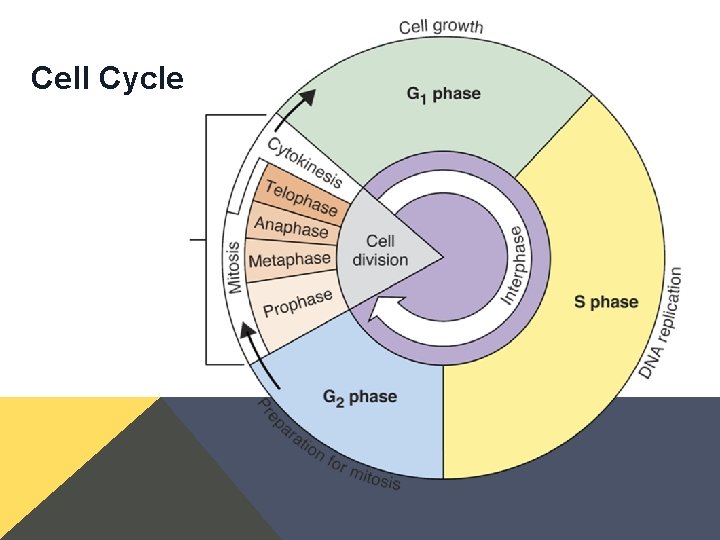
CELL CYCLE The cell cycle is the series of events that cells go through as they grow and divide. Interphase is the period of growth that occurs between cell divisions. Cell spends most of its life in this phase.
CELL CYCLE During the cell cycle: 1. a cell grows 2. prepares for division 3. divides to form two daughter cells, each of which begins the cycle again
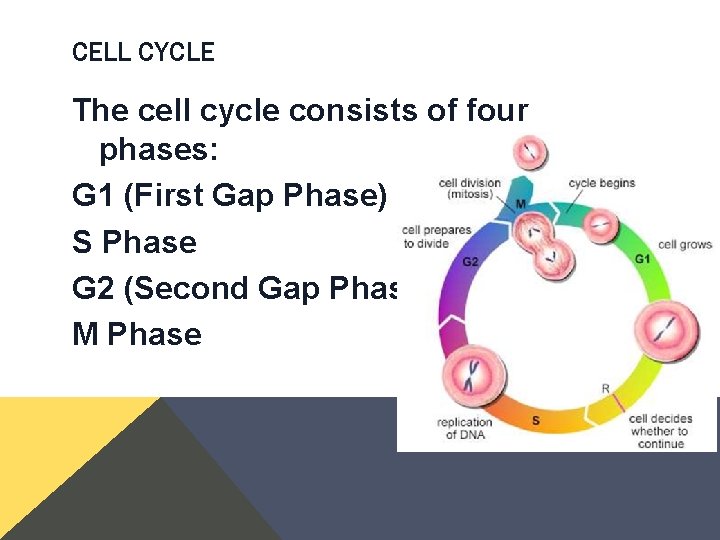
CELL CYCLE The cell cycle consists of four phases: G 1 (First Gap Phase) S Phase G 2 (Second Gap Phase) M Phase
EVENTS OF THE CELL CYCLE During G 1, G 1 the cell • increases in size (cell grows) • synthesizes new proteins and organelles (cell develops)
EVENTS OF THE CELL CYCLE During the S phase, phase (DNA replication) • chromosomes are replicated • DNA synthesis takes place Once a cell enters the S phase, it usually completes the rest of the cell cycle
EVENTS OF THE CELL CYCLE The G 2 Phase (Second Gap Phase) • organelles and molecules required for cell division are produced • Once G 2 is complete, the cell is ready to start the M phase—Mitosis
Cell Cycle
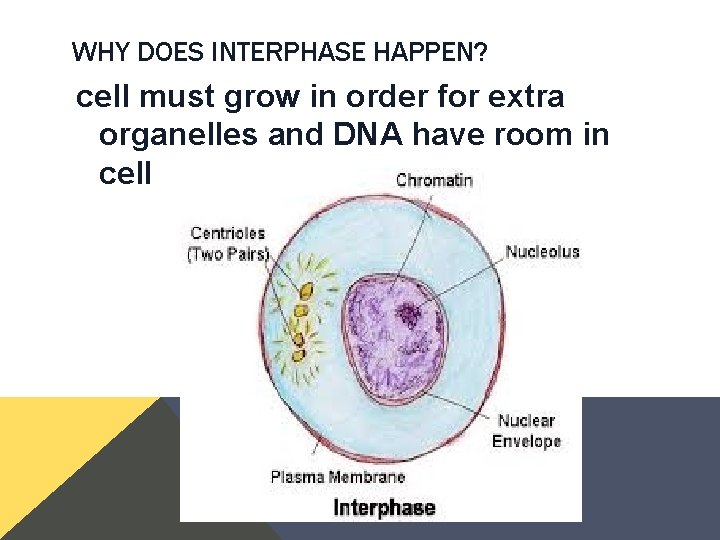
WHY DOES INTERPHASE HAPPEN? cell must grow in order for extra organelles and DNA have room in cell
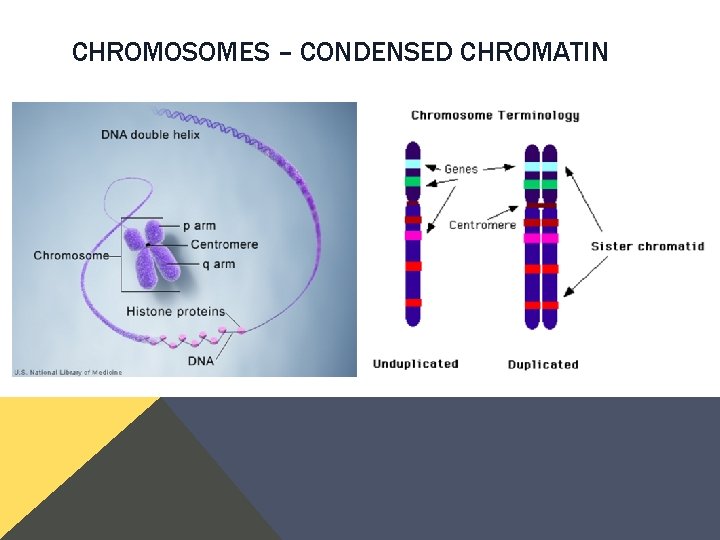
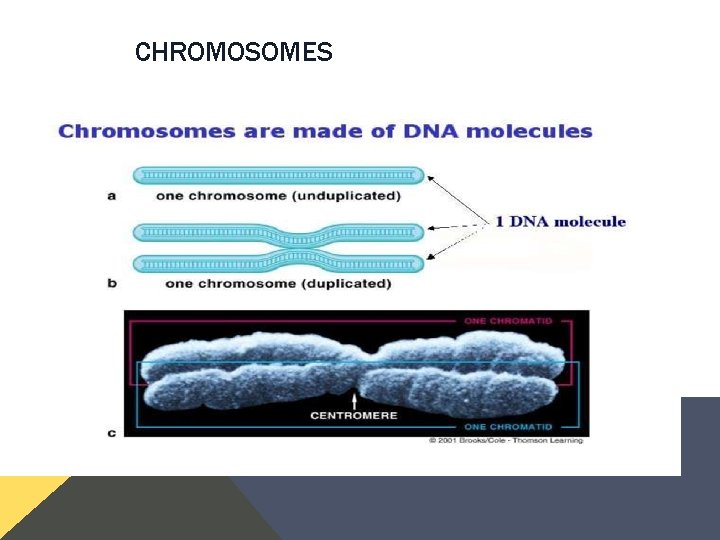
DNA Chromatin – long, thin strands made up of DNA and protein. The protein helps the DNA to stay together when chromosomes form. Chromosomes Genetic information is passed from one generation to the next on chromosomes. Before cell division, each chromosome is duplicated, or copied.
CHROMOSOMES – CONDENSED CHROMATIN
CHROMOSOMES
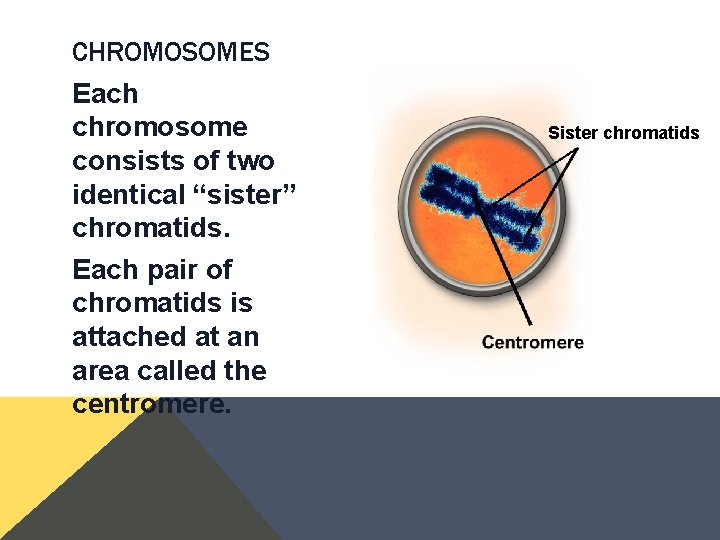
CHROMOSOMES Each chromosome consists of two identical “sister” chromatids. Each pair of chromatids is attached at an area called the centromere. Sister chromatids
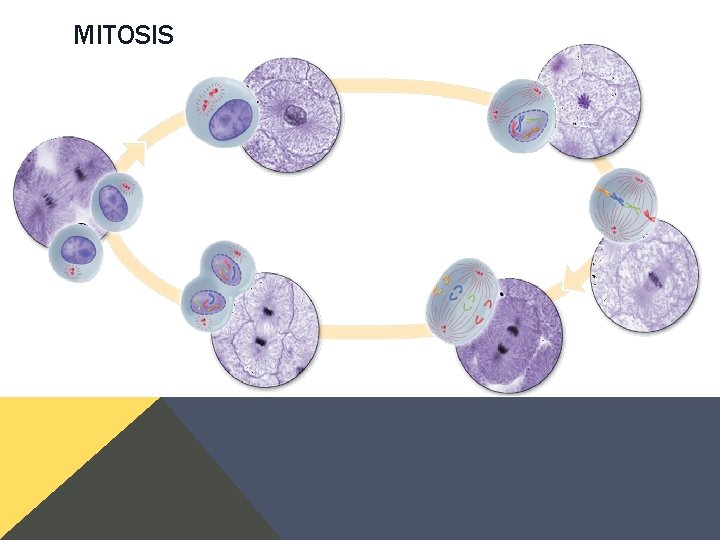
MITOSIS – CELL DIVISION Occurs in body cells – somatic cells Forms two identical daughter cells – exactly like the original Biologists divide the events of mitosis into four phases: (PMAT) §Prophase §Metaphase §Anaphase §Telophase
MITOSIS
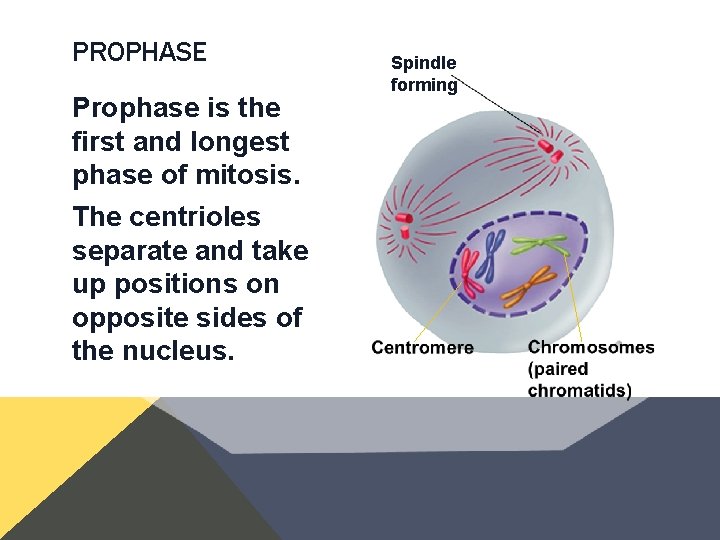
PROPHASE Prophase is the first and longest phase of mitosis. The centrioles separate and take up positions on opposite sides of the nucleus. Spindle forming
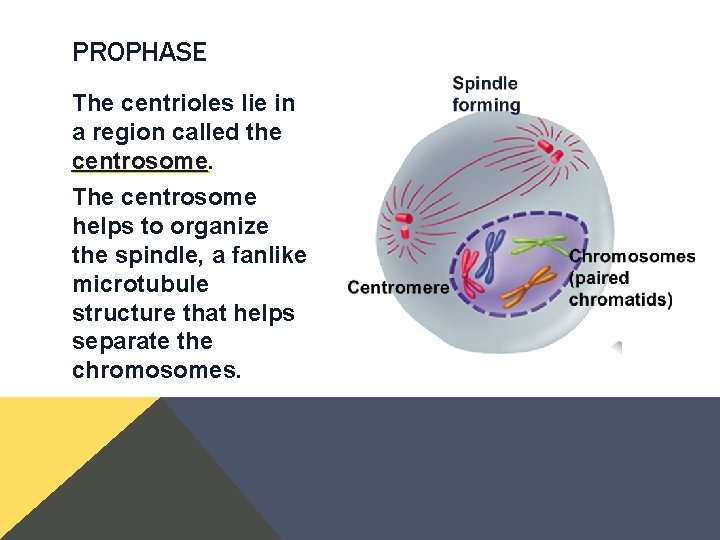
PROPHASE The centrioles lie in a region called the centrosome The centrosome helps to organize the spindle, a fanlike microtubule structure that helps separate the chromosomes.
SUMMARY OF PROPHASE First phase of MITOSIS Longest Phase Chromosomes become visible Centrioles separate and move to opposite poles (ends) Spindle fibers appear Nucleolus and nuclear membrane (envelope) disappear
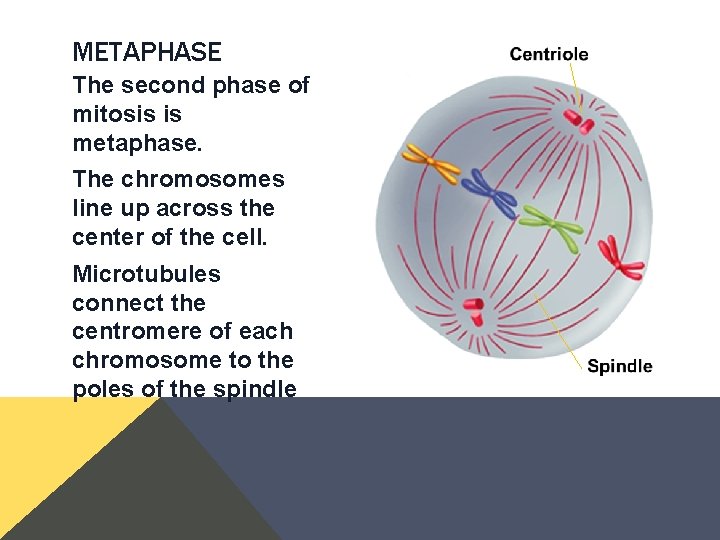
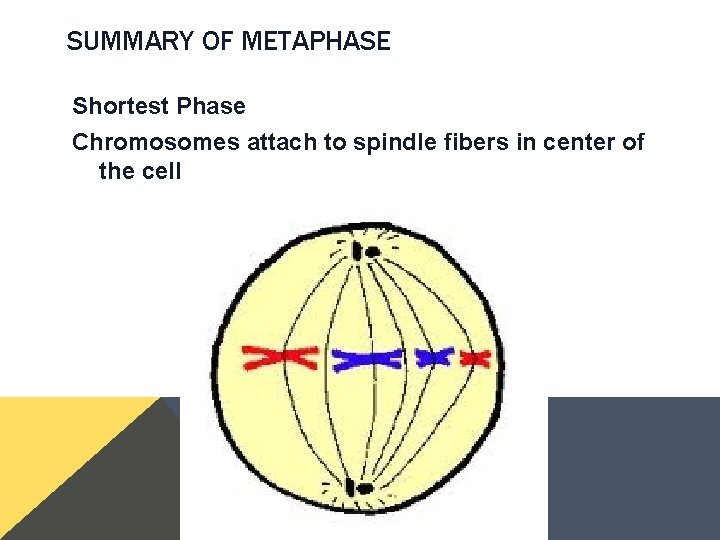
METAPHASE The second phase of mitosis is metaphase. The chromosomes line up across the center of the cell. Microtubules connect the centromere of each chromosome to the poles of the spindle
SUMMARY OF METAPHASE Shortest Phase Chromosomes attach to spindle fibers in center of the cell
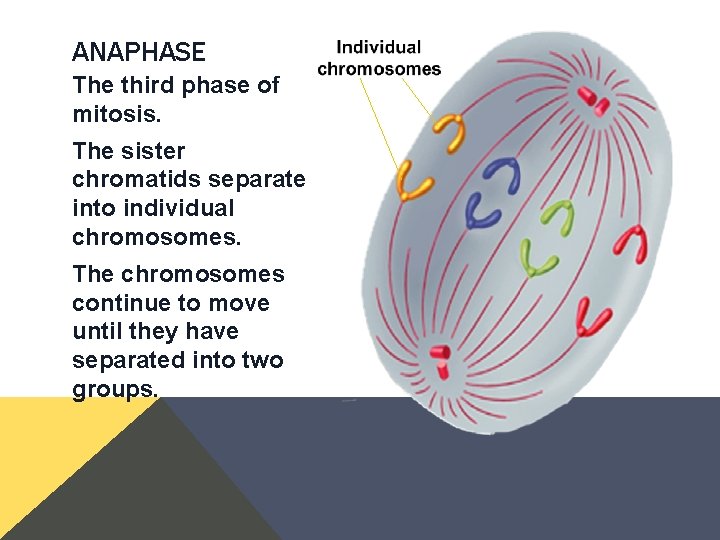
ANAPHASE The third phase of mitosis. The sister chromatids separate into individual chromosomes. The chromosomes continue to move until they have separated into two groups.
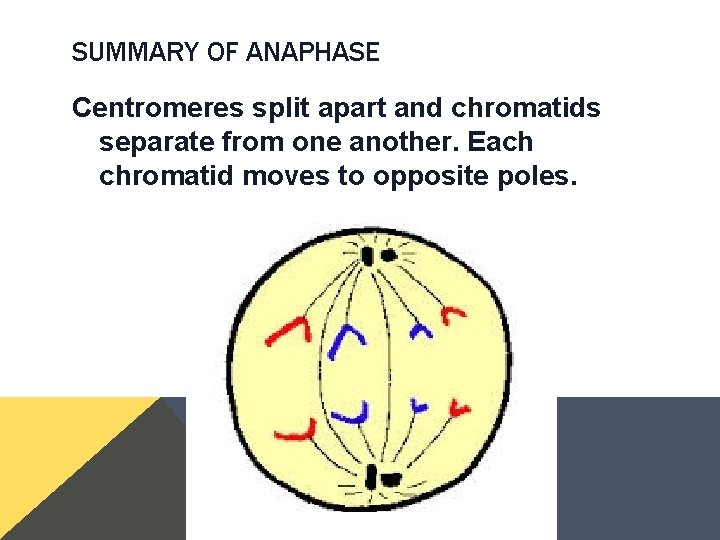
SUMMARY OF ANAPHASE Centromeres split apart and chromatids separate from one another. Each chromatid moves to opposite poles.
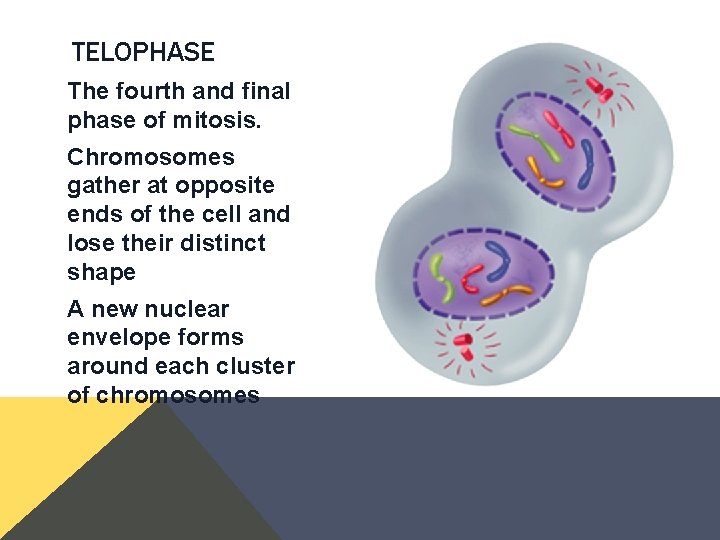
TELOPHASE The fourth and final phase of mitosis. Chromosomes gather at opposite ends of the cell and lose their distinct shape A new nuclear envelope forms around each cluster of chromosomes
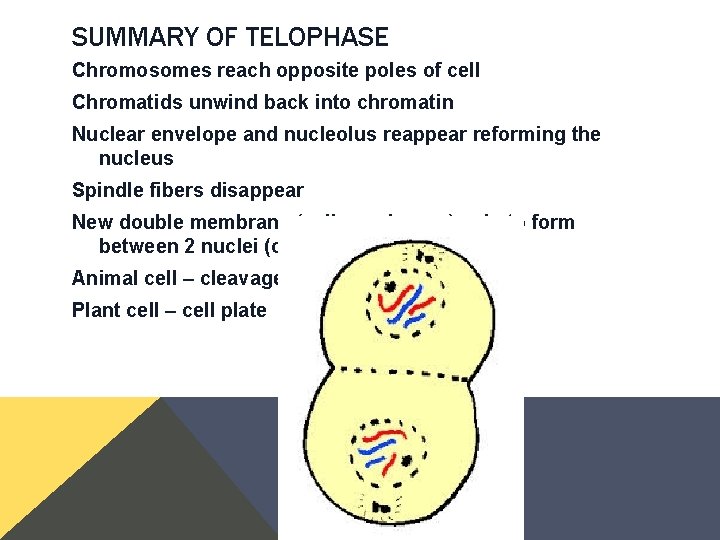
SUMMARY OF TELOPHASE Chromosomes reach opposite poles of cell Chromatids unwind back into chromatin Nuclear envelope and nucleolus reappear reforming the nucleus Spindle fibers disappear New double membrane (cell membrane ) gain to form between 2 nuclei (cell pinches) Animal cell – cleavage Plant cell – cell plate
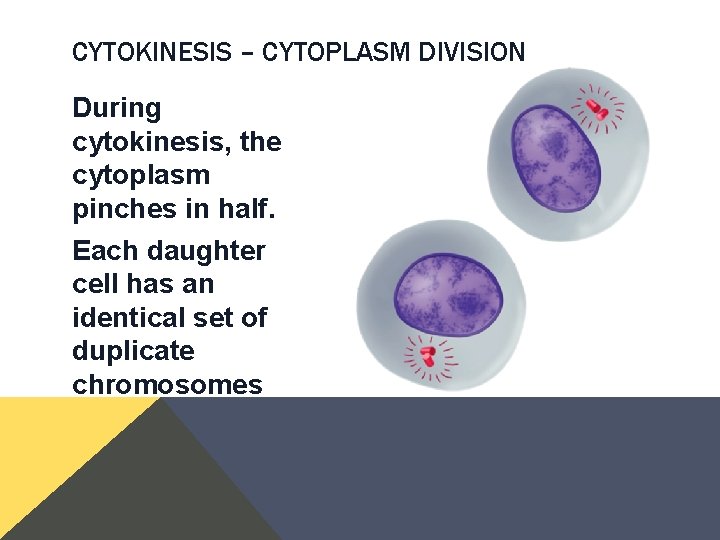
CYTOKINESIS – CYTOPLASM DIVISION During cytokinesis, the cytoplasm pinches in half. Each daughter cell has an identical set of duplicate chromosomes