
e HVAC Wireless Modular MultiZone HVAC Controller Group




- Slides: 50
e. HVAC: Wireless Modular Multi-Zone HVAC Controller Group 14 Michael Trampler EE Javier Arias EE Ryan Kastovich EE Genaro Moore EE
Overview Ø Heating Ø Ventilation Ø Air Conditioning Ø Some provide advanced features such as humidity control and CO 2 monitoring/control Ø Scheduling and adaptive set-points will allow the user to reduce the systems run time. Ø Run time data logging will give the user a better understanding of the systems activities
Motivation ØIncreased cost of electricity ØGreat cost of commercially available HVAC controllers ØLimited feature set of commercially available HVAC controllers, especially web enabled controllers
Objectives Ø Accurately read temperature and relative humidity both inside and outside building. Ø System management through web app Ø Scheduling capabilities Ø CO 2 monitoring for a gauge of air quality Ø Zone control Ø Expandable to multiple zones Ø Wireless connectivity to RSM Ø Reduction of energy consumption due to scheduling and set-point control Ø Simple and easy installation with minimal wiring.
Project Specifications Ø Main Controller Ø Control up to 8 zones Ø Wireless connectivity to RSM at a minimum of 50 ft Ø Web Interface Ø Host at least 5 users simultaneously Ø Manage week long schedules for each zone Ø Track duty cycle of heat pump to an accuracy of 0. 1% Ø Display status of up to 8 zones simultaneously Ø RSM Ø Temperature ± 0. 125°C Ø Humidity ± 5% relative Ø CO 2 At least ± 500 ppm Ø 1. 5 month battery life
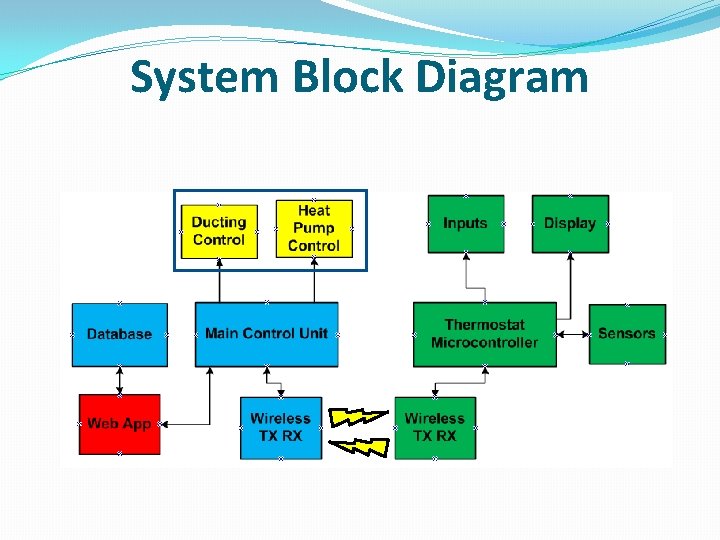
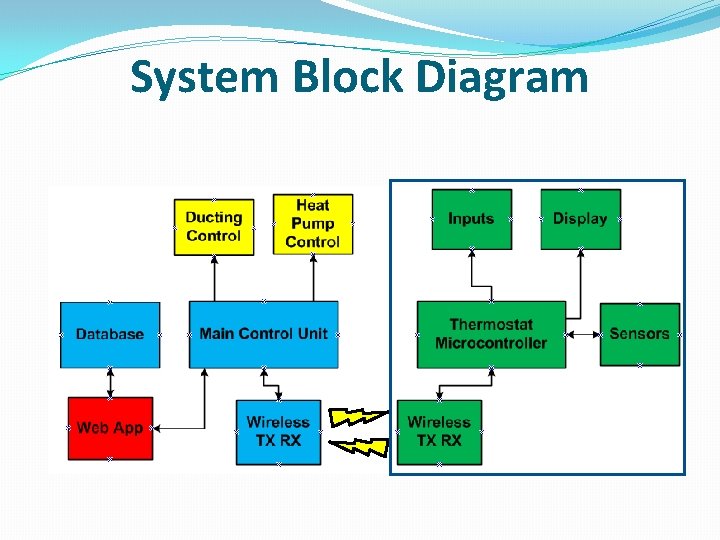
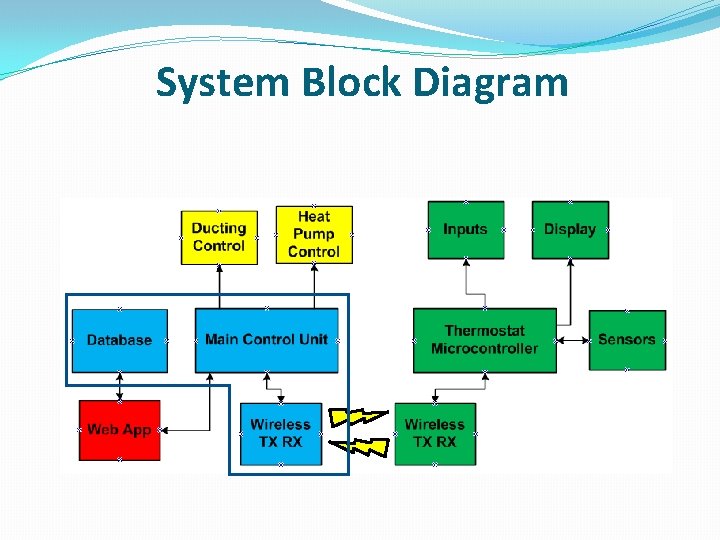
System Block Diagram
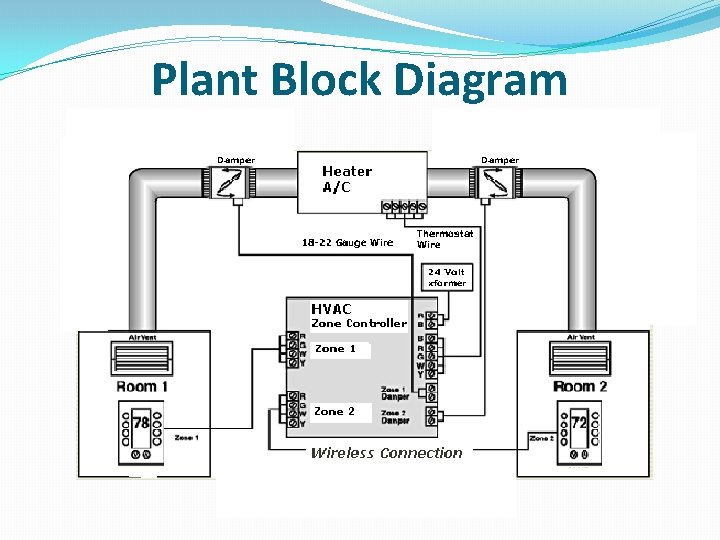
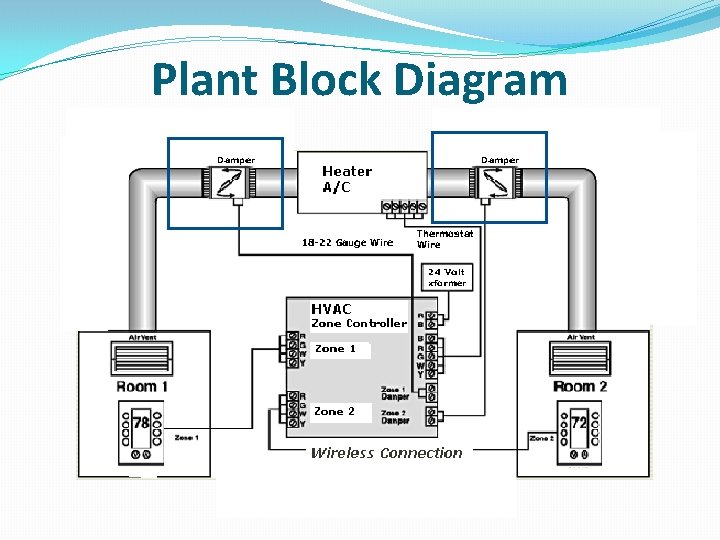
Plant Block Diagram 00 00
Plant Specifications Ø Need to supply 24 VAC to drive the different components Ø Be able to support up to 8 zones Ø Continuous uptime for 2 months
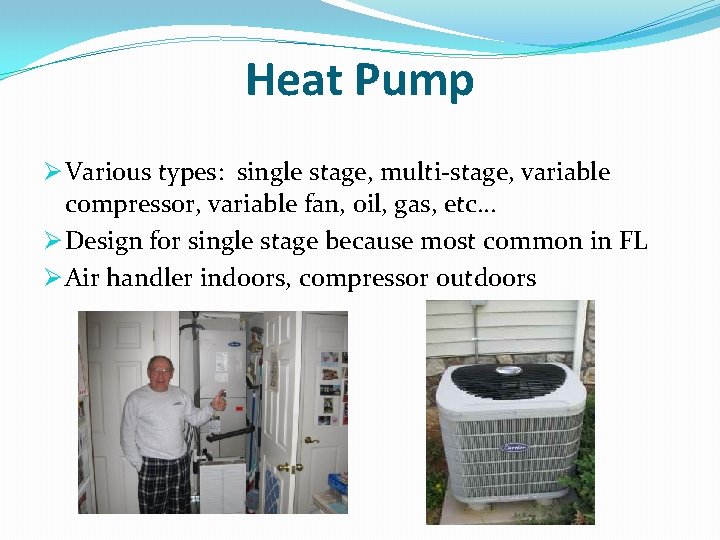
Heat Pump Ø Various types: single stage, multi-stage, variable compressor, variable fan, oil, gas, etc… Ø Design for single stage because most common in FL Ø Air handler indoors, compressor outdoors
Heat Pump Components Ø Reversing Valve (changeover) Ø Controls heating/cooling mode Ø Compressor Ø Supplementary heat Ø Electric heating coils Ø Fan (Air Handler) Ø Automatic – turns on when ever the whole unit is on Ø ON (continuous) – on regardless of the state of the unit
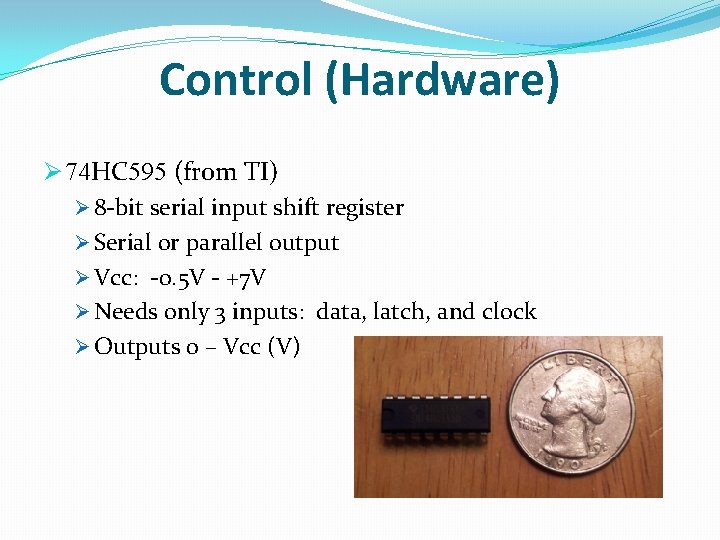
Control (Hardware) Ø 74 HC 595 (from TI) Ø 8 -bit serial input shift register Ø Serial or parallel output Ø Vcc: -0. 5 V - +7 V Ø Needs only 3 inputs: data, latch, and clock Ø Outputs 0 – Vcc (V)
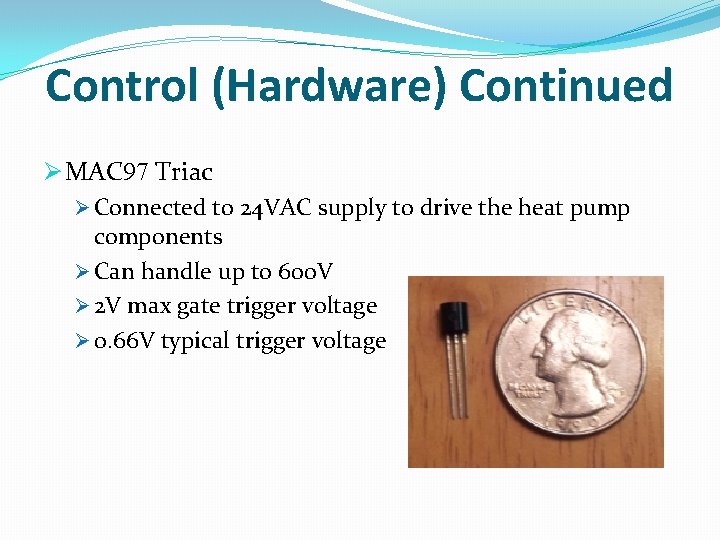
Control (Hardware) Continued Ø MAC 97 Triac Ø Connected to 24 VAC supply to drive the heat pump components Ø Can handle up to 600 V Ø 2 V max gate trigger voltage Ø 0. 66 V typical trigger voltage
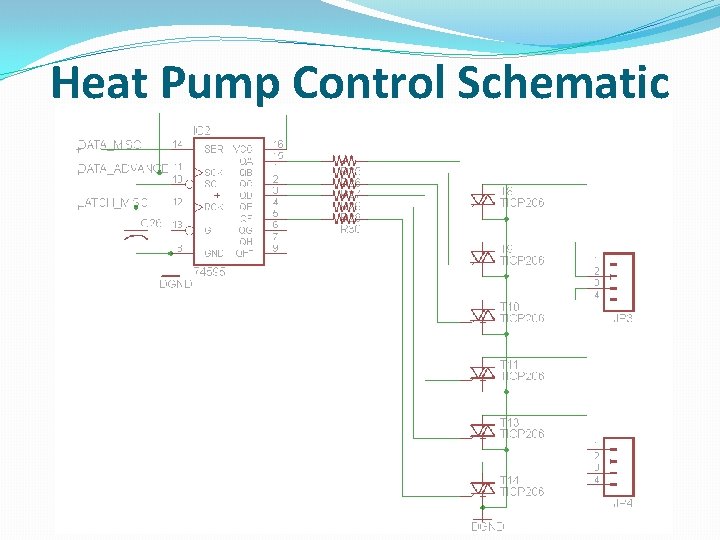
Heat Pump Control Schematic
Plant Block Diagram 00 00
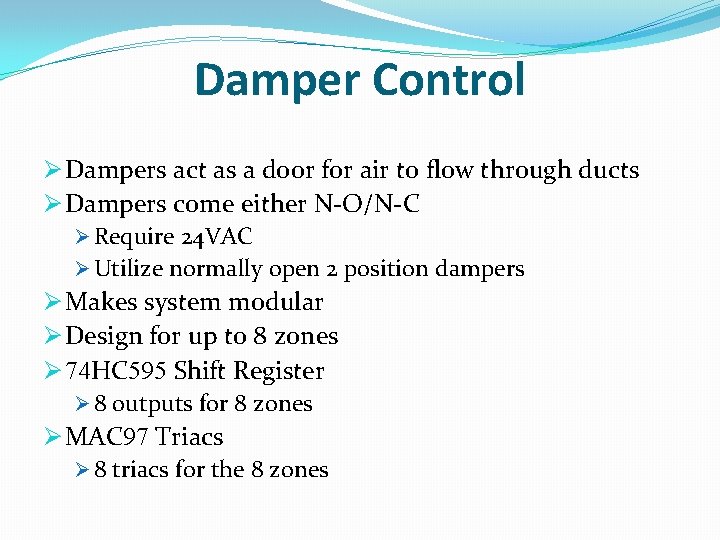
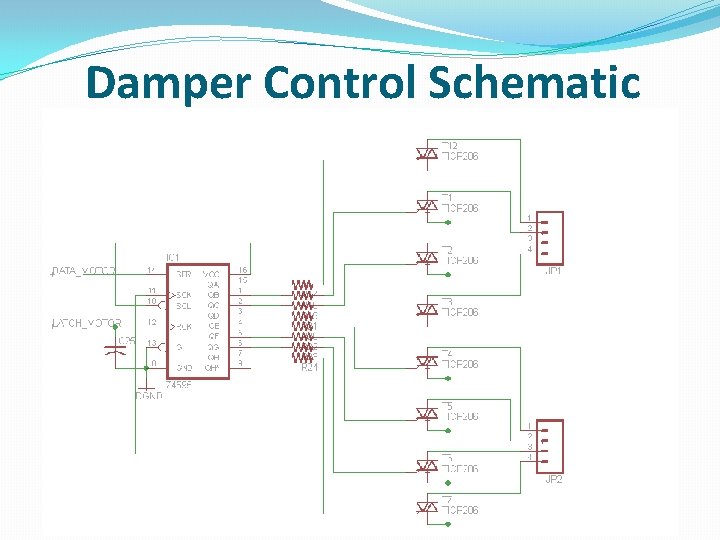
Damper Control Ø Dampers act as a door for air to flow through ducts Ø Dampers come either N-O/N-C Ø Require 24 VAC Ø Utilize normally open 2 position dampers Ø Makes system modular Ø Design for up to 8 zones Ø 74 HC 595 Shift Register Ø 8 outputs for 8 zones Ø MAC 97 Triacs Ø 8 triacs for the 8 zones
Damper Control Schematic
Output Board Ø The plant control will be implemented onto a PCB separate from the Main Control Unit Ø Responsible for shift register and triac control Ø It will communicate wirelessly between the output board and the Main Control Unit Ø 1 MSP 430 will be utilized to drive the shift registers
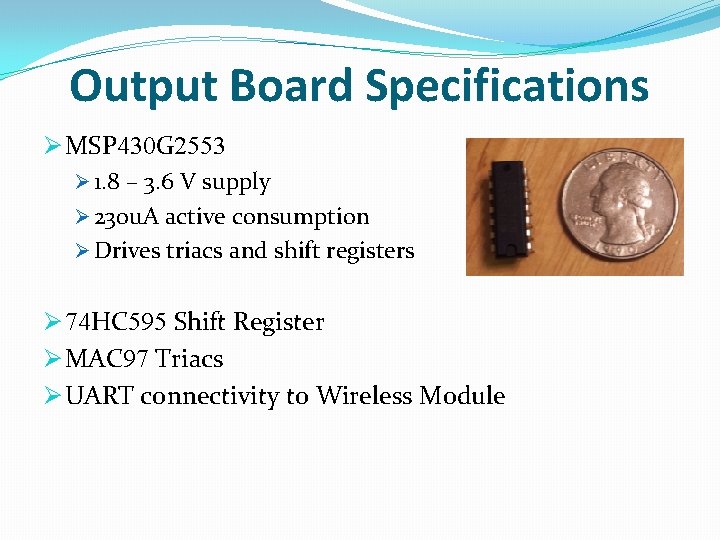
Output Board Specifications Ø MSP 430 G 2553 Ø 1. 8 – 3. 6 V supply Ø 230 u. A active consumption Ø Drives triacs and shift registers Ø 74 HC 595 Shift Register Ø MAC 97 Triacs Ø UART connectivity to Wireless Module
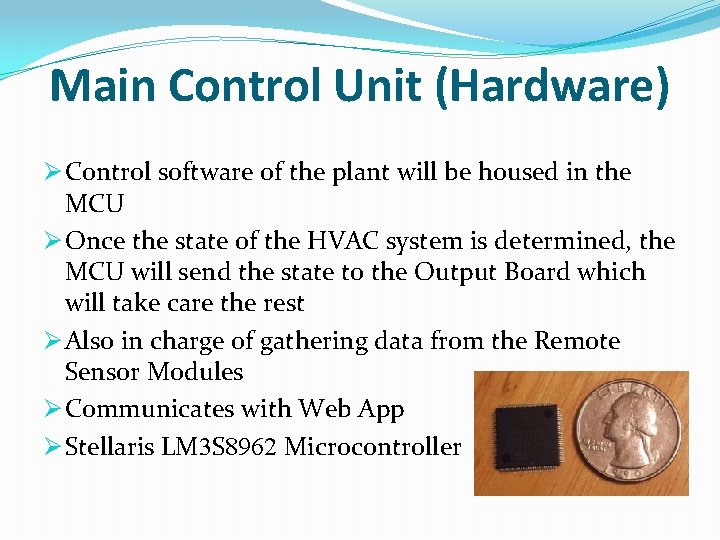
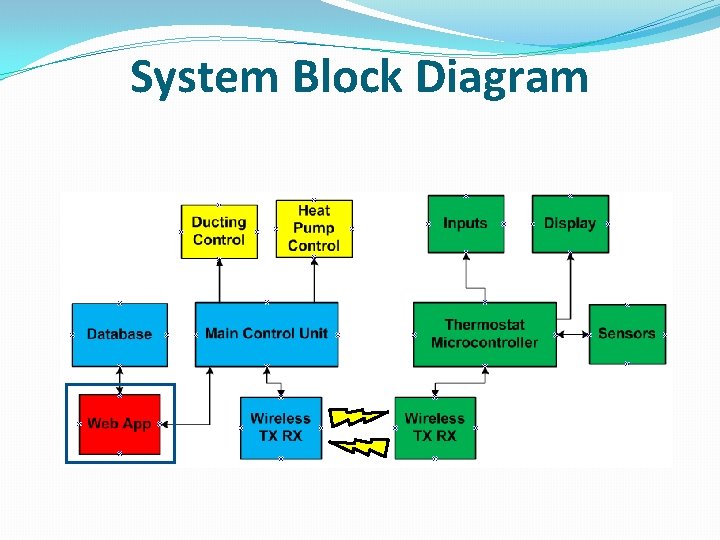
Main Control Unit (Hardware) Ø Control software of the plant will be housed in the MCU Ø Once the state of the HVAC system is determined, the MCU will send the state to the Output Board which will take care the rest Ø Also in charge of gathering data from the Remote Sensor Modules Ø Communicates with Web App Ø Stellaris LM 3 S 8962 Microcontroller
System Block Diagram
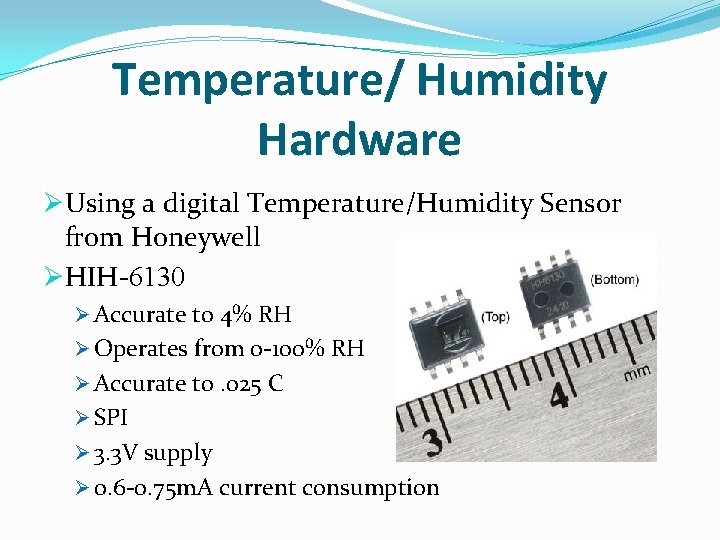
Temperature/ Humidity Hardware ØUsing a digital Temperature/Humidity Sensor from Honeywell ØHIH-6130 Ø Accurate to 4% RH Ø Operates from 0 -100% RH Ø Accurate to. 025 C Ø SPI Ø 3. 3 V supply Ø 0. 6 -0. 75 m. A current consumption
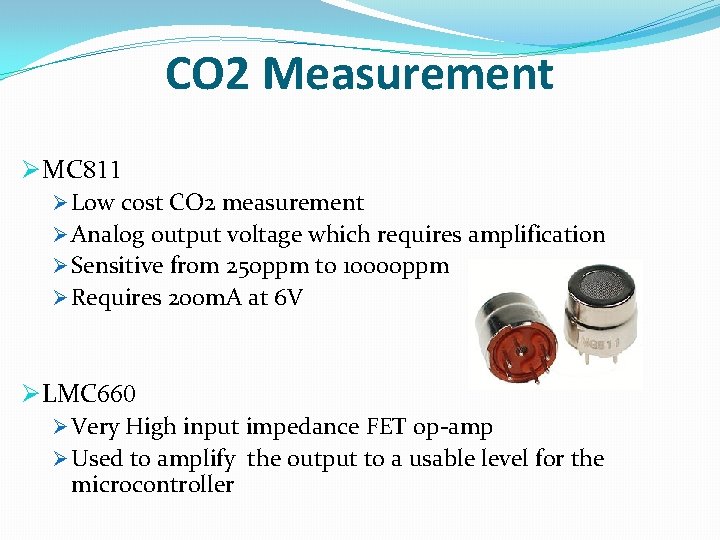
CO 2 Measurement Ø MC 811 Ø Low cost CO 2 measurement Ø Analog output voltage which requires amplification Ø Sensitive from 250 ppm to 10000 ppm Ø Requires 200 m. A at 6 V Ø LMC 660 Ø Very High input impedance FET op-amp Ø Used to amplify the output to a usable level for the microcontroller
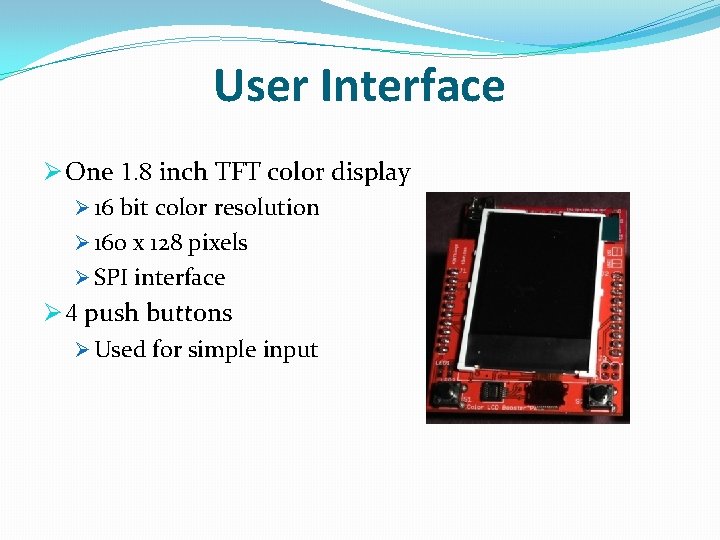
User Interface Ø One 1. 8 inch TFT color display Ø 16 bit color resolution Ø 160 x 128 pixels Ø SPI interface Ø 4 push buttons Ø Used for simple input
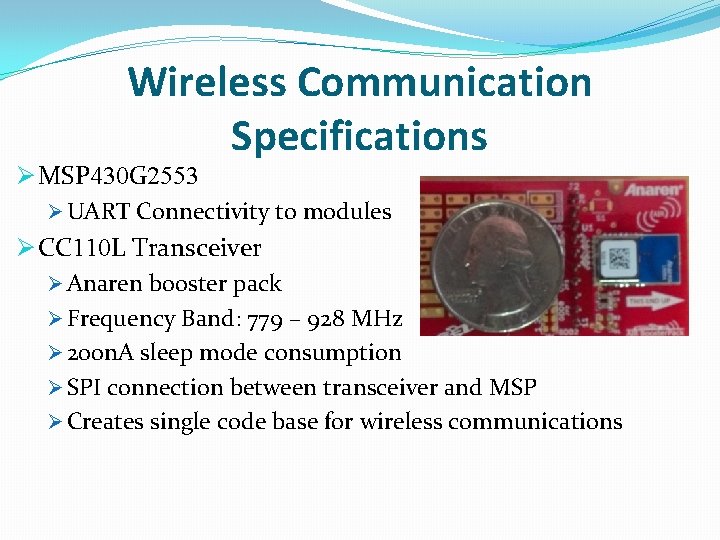
Wireless Communication Specifications Ø MSP 430 G 2553 Ø UART Connectivity to modules Ø CC 110 L Transceiver Ø Anaren booster pack Ø Frequency Band: 779 – 928 MHz Ø 200 n. A sleep mode consumption Ø SPI connection between transceiver and MSP Ø Creates single code base for wireless communications
System Block Diagram
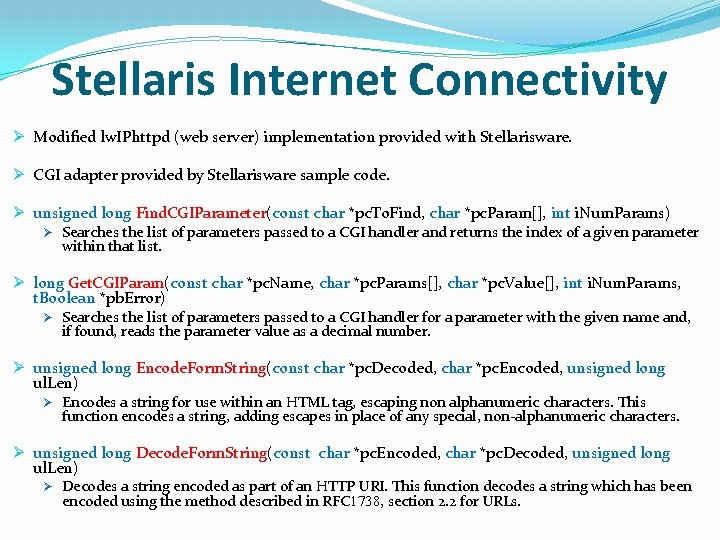
Stellaris Internet Connectivity Ø Modified lw. IPhttpd (web server) implementation provided with Stellarisware. Ø CGI adapter provided by Stellarisware sample code. Ø unsigned long Find. CGIParameter(const char *pc. To. Find, char *pc. Param[], int i. Num. Params) Ø Searches the list of parameters passed to a CGI handler and returns the index of a given parameter within that list. Ø long Get. CGIParam(const char *pc. Name, char *pc. Params[], char *pc. Value[], int i. Num. Params, t. Boolean *pb. Error) Ø Searches the list of parameters passed to a CGI handler for a parameter with the given name and, if found, reads the parameter value as a decimal number. Ø unsigned long Encode. Form. String(const char *pc. Decoded, char *pc. Encoded, unsigned long ul. Len) Ø Encodes a string for use within an HTML tag, escaping non alphanumeric characters. This function encodes a string, adding escapes in place of any special, non-alphanumeric characters. Ø unsigned long Decode. Form. String(const char *pc. Encoded, char *pc. Decoded, unsigned long ul. Len) Ø Decodes a string encoded as part of an HTTP URI. This function decodes a string which has been encoded using the method described in RFC 1738, section 2. 2 for URLs.
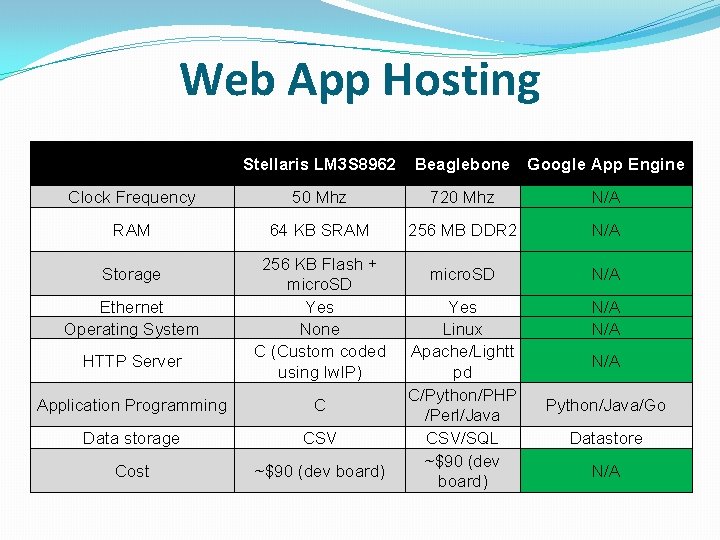
Web App Hosting Stellaris LM 3 S 8962 Beaglebone Google App Engine Clock Frequency 50 Mhz 720 Mhz N/A RAM 64 KB SRAM 256 MB DDR 2 N/A micro. SD N/A Yes Linux Apache/Lightt pd C/Python/PHP /Perl/Java CSV/SQL ~$90 (dev board) N/A Storage Ethernet Operating System HTTP Server 256 KB Flash + micro. SD Yes None C (Custom coded using lw. IP) Application Programming C Data storage CSV Cost ~$90 (dev board) N/A Python/Java/Go Datastore N/A
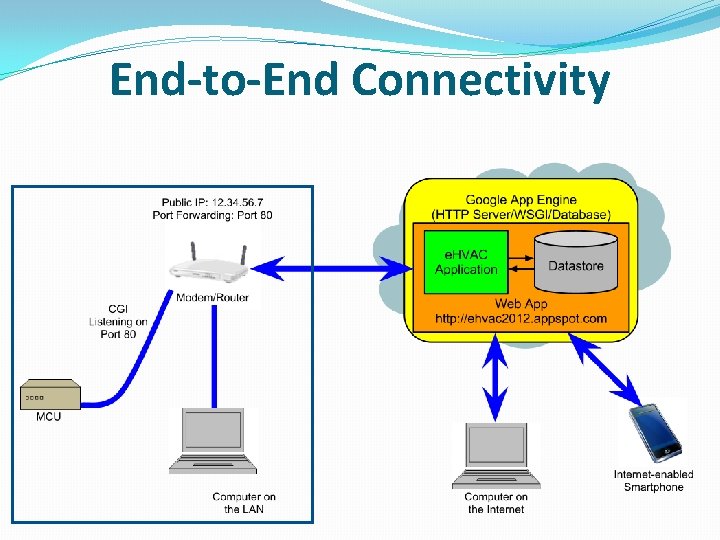
End-to-End Connectivity
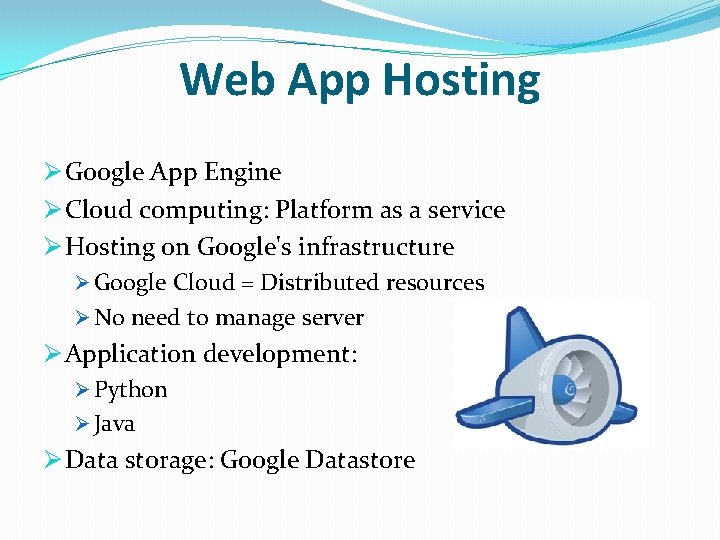
Web App Hosting Ø Google App Engine Ø Cloud computing: Platform as a service Ø Hosting on Google's infrastructure Ø Google Cloud = Distributed resources Ø No need to manage server Ø Application development: Ø Python Ø Java Ø Data storage: Google Datastore
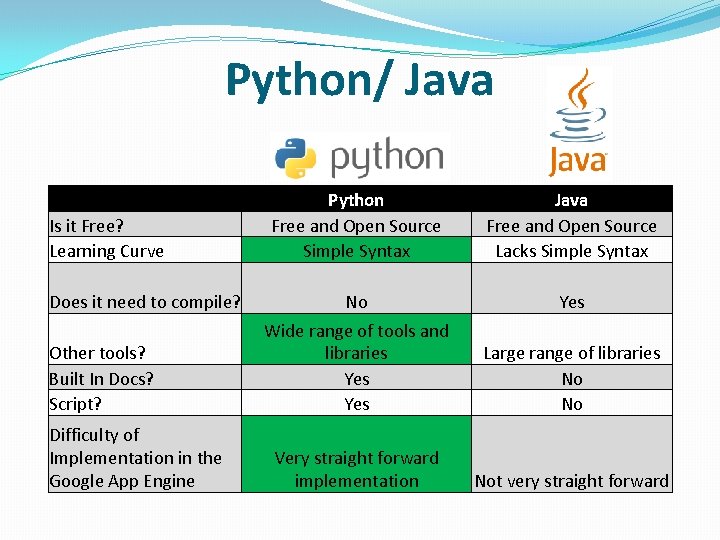
Python/ Java Is it Free? Learning Curve Does it need to compile? Other tools? Built In Docs? Script? Difficulty of Implementation in the Google App Engine Python Free and Open Source Simple Syntax Java Free and Open Source Lacks Simple Syntax No Wide range of tools and libraries Yes Yes Large range of libraries No No Very straight forward implementation Not very straight forward
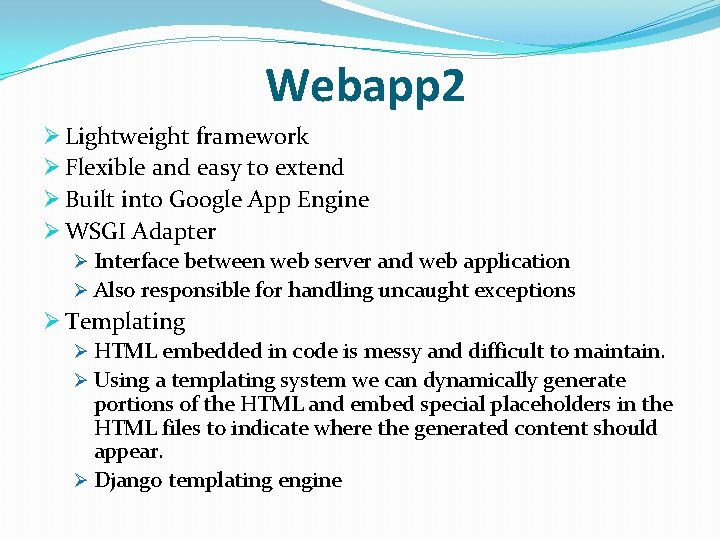
Webapp 2 Ø Lightweight framework Ø Flexible and easy to extend Ø Built into Google App Engine Ø WSGI Adapter Ø Interface between web server and web application Ø Also responsible for handling uncaught exceptions Ø Templating Ø HTML embedded in code is messy and difficult to maintain. Ø Using a templating system we can dynamically generate portions of the HTML and embed special placeholders in the HTML files to indicate where the generated content should appear. Ø Django templating engine
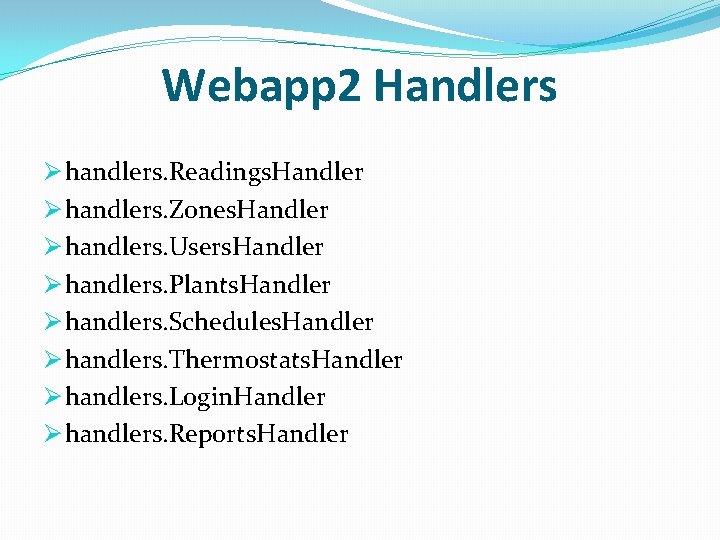
Webapp 2 Handlers Ø handlers. Readings. Handler Ø handlers. Zones. Handler Ø handlers. Users. Handler Ø handlers. Plants. Handler Ø handlers. Schedules. Handler Ø handlers. Thermostats. Handler Ø handlers. Login. Handler Ø handlers. Reports. Handler
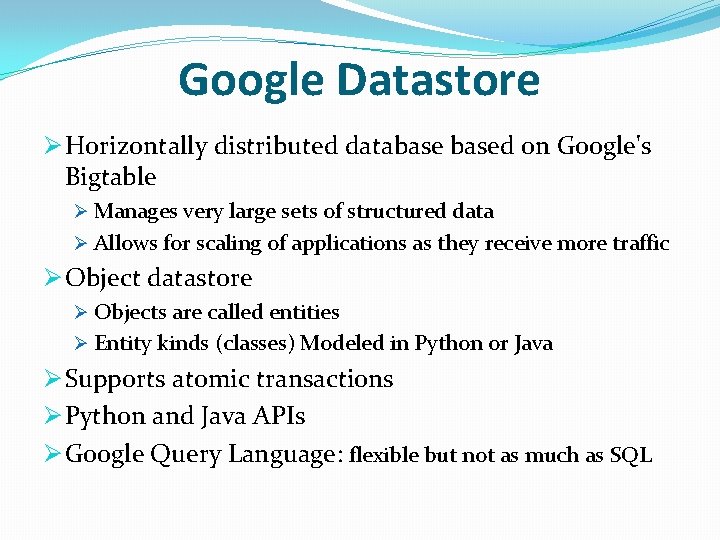
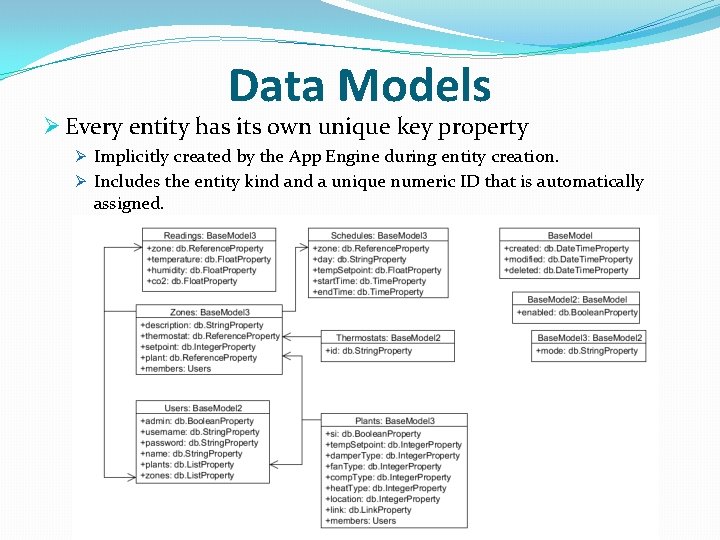
Google Datastore Ø Horizontally distributed databased on Google's Bigtable Ø Manages very large sets of structured data Ø Allows for scaling of applications as they receive more traffic Ø Object datastore Ø Objects are called entities Ø Entity kinds (classes) Modeled in Python or Java Ø Supports atomic transactions Ø Python and Java APIs Ø Google Query Language: flexible but not as much as SQL
Data Models Ø Every entity has its own unique key property Ø Implicitly created by the App Engine during entity creation. Ø Includes the entity kind a unique numeric ID that is automatically assigned.
System Block Diagram
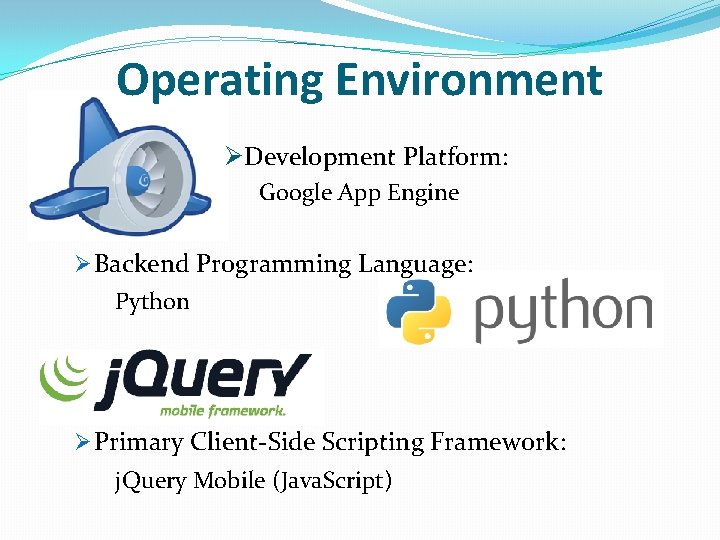
Operating Environment ØDevelopment Platform: Google App Engine Ø Backend Programming Language: Python Ø Primary Client-Side Scripting Framework: j. Query Mobile (Java. Script)
Why j. Query Mobile? Ø HTML 5 and CSS 3 Compatibility Ø Works on both Android and i. OS Ø Professional Layout for PC, Tablet and Mobile Devices Ø Compatibility with Firefox, Chrome, Safari and others Ø Allows for rich touch screen interfaces for mobile devices
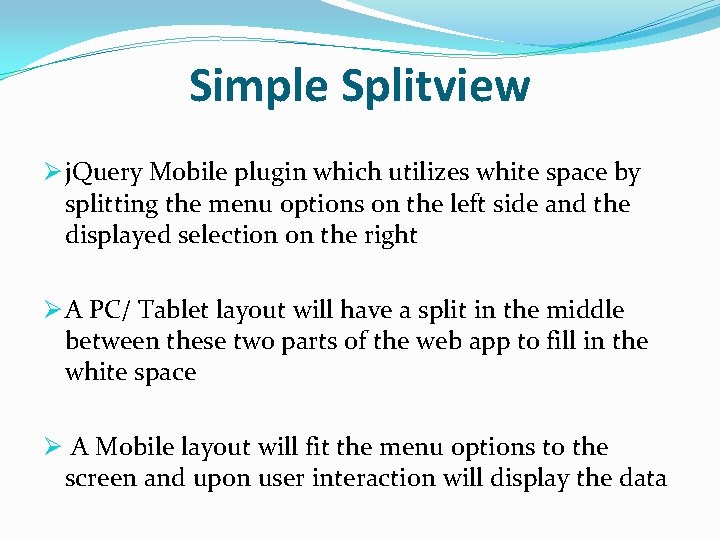
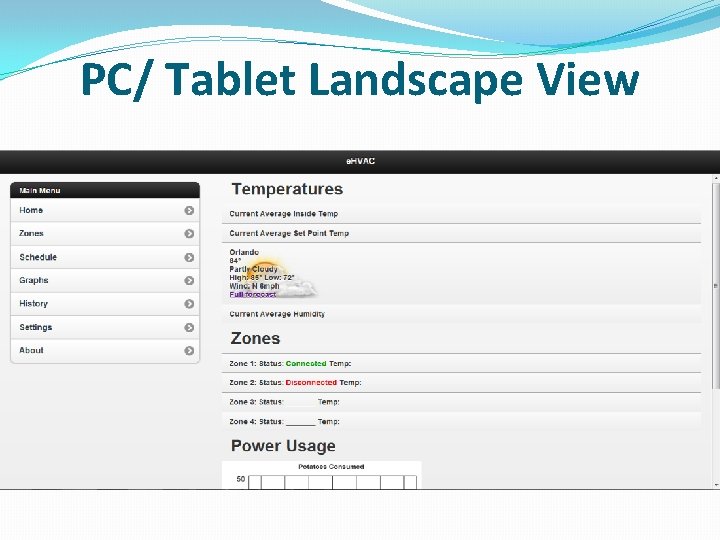
Simple Splitview Ø j. Query Mobile plugin which utilizes white space by splitting the menu options on the left side and the displayed selection on the right Ø A PC/ Tablet layout will have a split in the middle between these two parts of the web app to fill in the white space Ø A Mobile layout will fit the menu options to the screen and upon user interaction will display the data
PC/ Tablet Landscape View
Mobile View
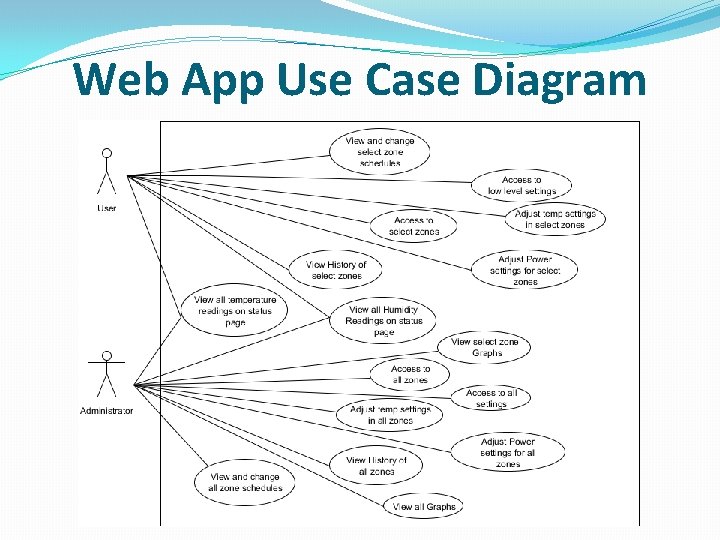
Web App Use Case Diagram
Scheduler Ø Standard HVAC systems typically do not include embedded schedulers for their users Ø User will be able to adjust Set times, Humidity and Temperatures for specific zones in the system Ø Users will be able to adjust their scheduler for a week at a time Ø Coded using Python and Java. Script
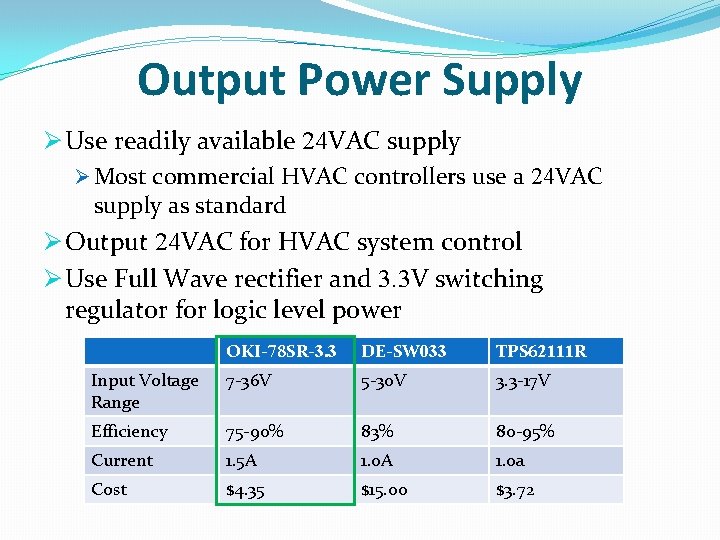
Output Power Supply Ø Use readily available 24 VAC supply Ø Most commercial HVAC controllers use a 24 VAC supply as standard Ø Output 24 VAC for HVAC system control Ø Use Full Wave rectifier and 3. 3 V switching regulator for logic level power OKI-78 SR-3. 3 DE-SW 033 TPS 62111 R Input Voltage Range 7 -36 V 5 -30 V 3. 3 -17 V Efficiency 75 -90% 83% 80 -95% Current 1. 5 A 1. 0 a Cost $4. 35 $15. 00 $3. 72
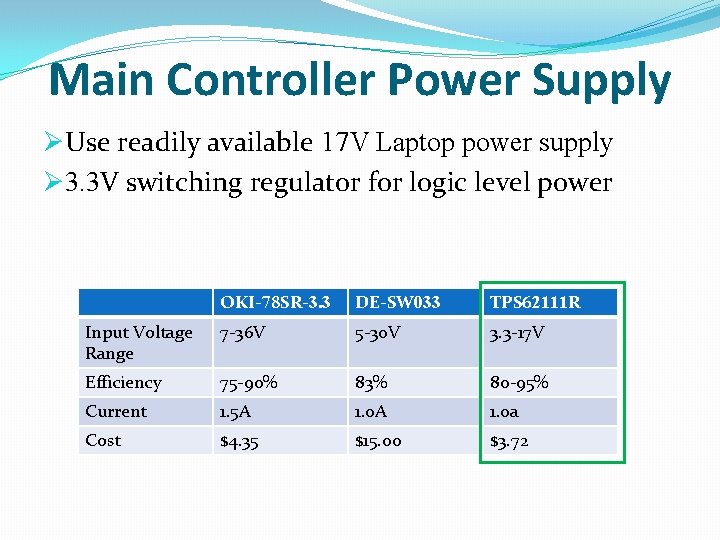
Main Controller Power Supply ØUse readily available 17 V Laptop power supply Ø 3. 3 V switching regulator for logic level power OKI-78 SR-3. 3 DE-SW 033 TPS 62111 R Input Voltage Range 7 -36 V 5 -30 V 3. 3 -17 V Efficiency 75 -90% 83% 80 -95% Current 1. 5 A 1. 0 a Cost $4. 35 $15. 00 $3. 72
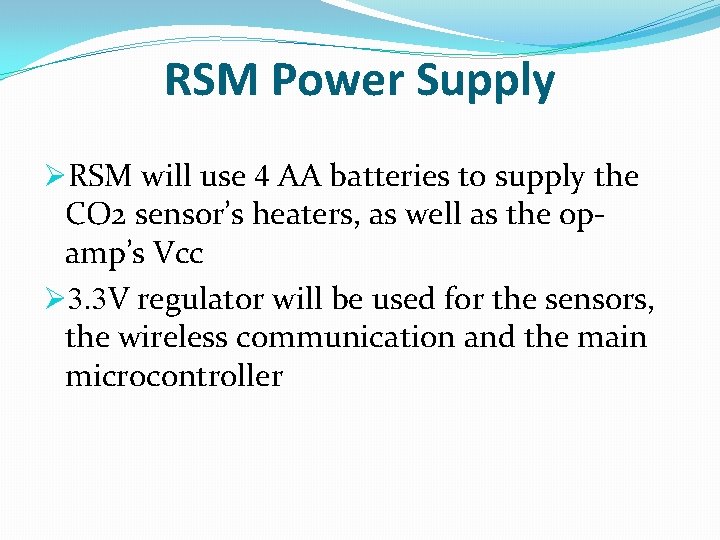
RSM Power Supply ØRSM will use 4 AA batteries to supply the CO 2 sensor’s heaters, as well as the opamp’s Vcc Ø 3. 3 V regulator will be used for the sensors, the wireless communication and the main microcontroller
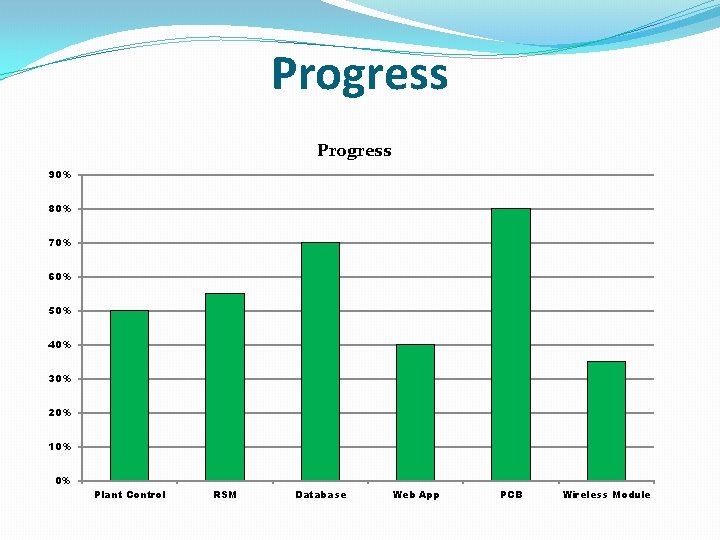
Progress 90% 80% 70% 60% 50% 40% 30% 20% 10% 0% Plant Control RSM Database Web App PCB Wireless Module
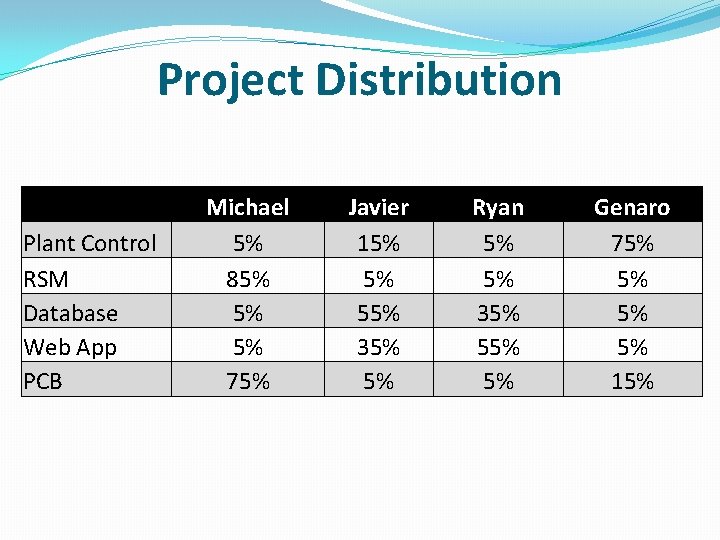
Project Distribution Plant Control RSM Database Web App PCB Michael 5% 85% 5% 5% 75% Javier 15% 5% 55% 35% 5% Ryan 5% 5% 35% 5% Genaro 75% 5% 15%
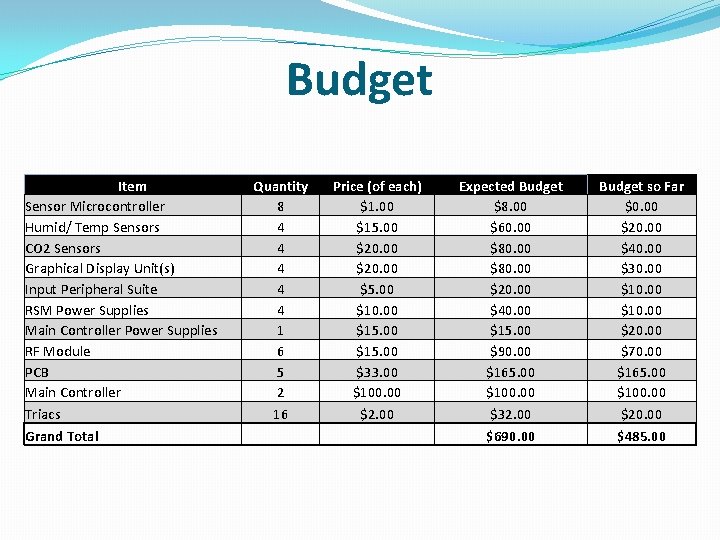
Budget Item Sensor Microcontroller Humid/ Temp Sensors CO 2 Sensors Graphical Display Unit(s) Input Peripheral Suite RSM Power Supplies Main Controller Power Supplies RF Module PCB Main Controller Triacs Grand Total Quantity 8 4 4 4 1 6 5 2 16 Price (of each) $1. 00 $15. 00 $20. 00 $5. 00 $10. 00 $15. 00 $33. 00 $100. 00 $2. 00 Expected Budget $8. 00 $60. 00 $80. 00 $20. 00 $40. 00 $15. 00 $90. 00 $165. 00 $100. 00 $32. 00 $690. 00 Budget so Far $0. 00 $20. 00 $40. 00 $30. 00 $10. 00 $20. 00 $70. 00 $165. 00 $100. 00 $20. 00 $485. 00
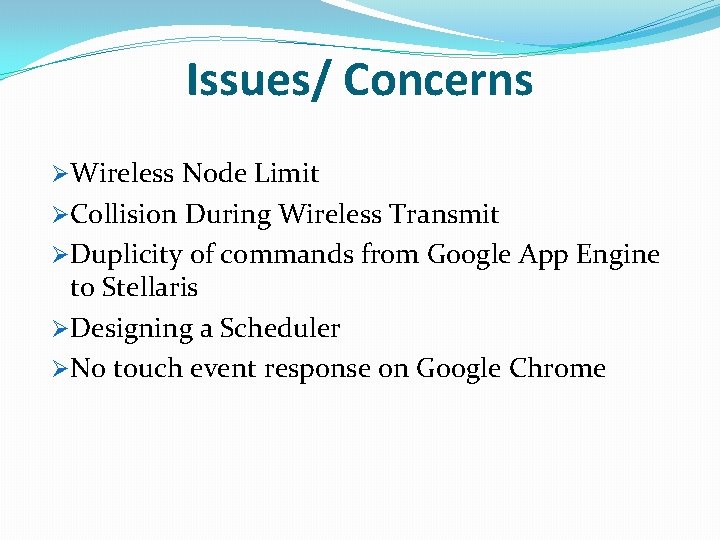
Issues/ Concerns ØWireless Node Limit ØCollision During Wireless Transmit ØDuplicity of commands from Google App Engine to Stellaris ØDesigning a Scheduler ØNo touch event response on Google Chrome
Questions?