
E E 2315 Lecture 05 Mesh Current Analysis
- Slides: 20
E E 2315 Lecture 05 -Mesh Current Analysis
Introduction to Mesh Current Method • More direct than branch equations • Fewer equations to solve • Express all variables in terms of mesh currents • Solution is set of mesh currents • Solution completely defines the circuit • Most Convenient Method to Model Magnetic Coupling (E E 2446 Topic)
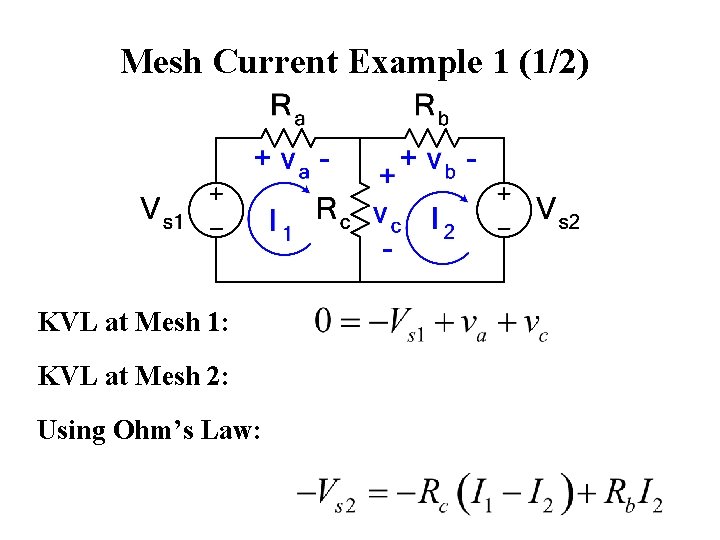
Mesh Current Example 1 (1/2) KVL at Mesh 1: KVL at Mesh 2: Using Ohm’s Law:
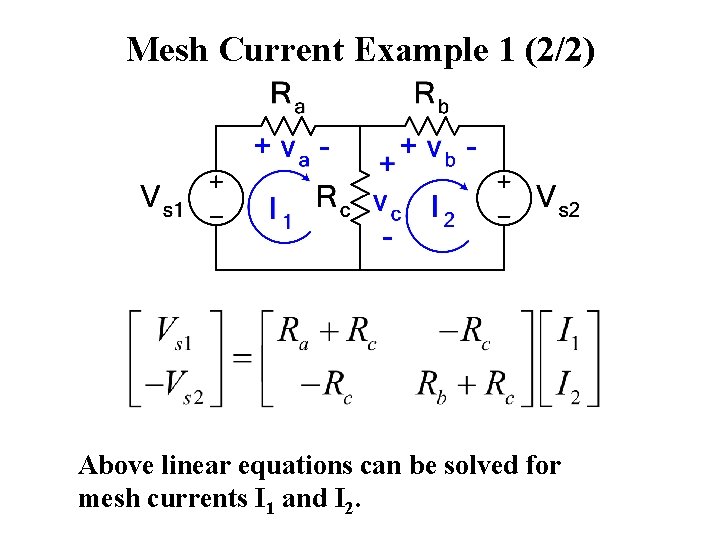
Mesh Current Example 1 (2/2) Above linear equations can be solved for mesh currents I 1 and I 2.
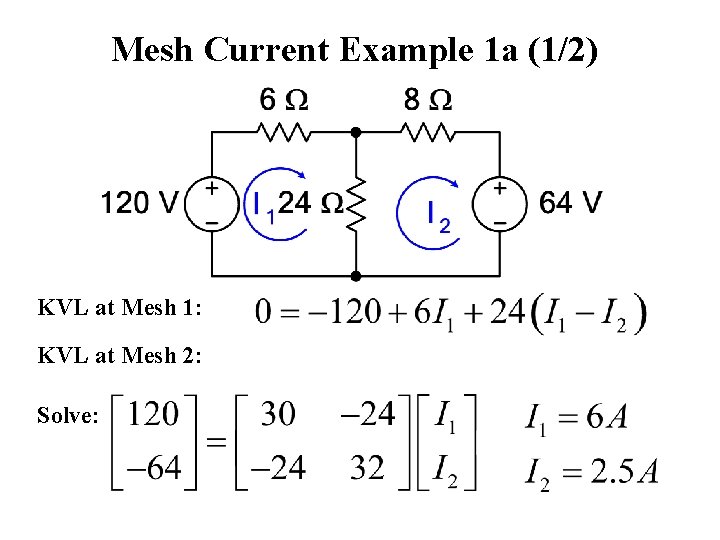
Mesh Current Example 1 a (1/2) KVL at Mesh 1: KVL at Mesh 2: Solve:
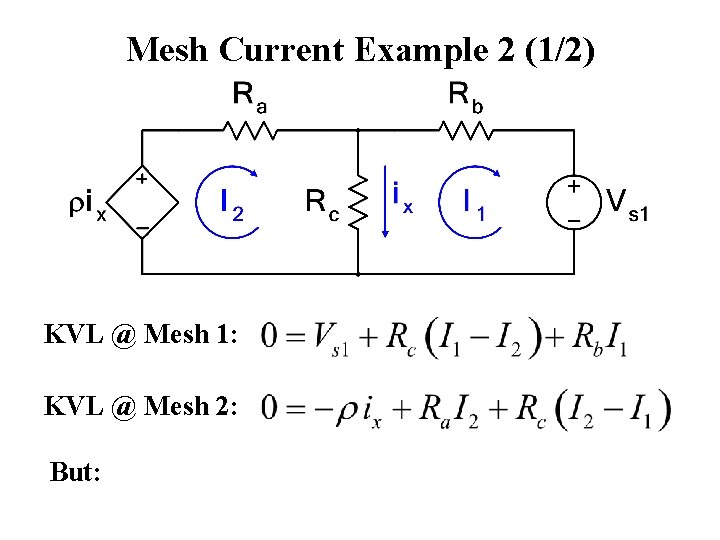
Mesh Current Example 2 (1/2) KVL @ Mesh 1: KVL @ Mesh 2: But:
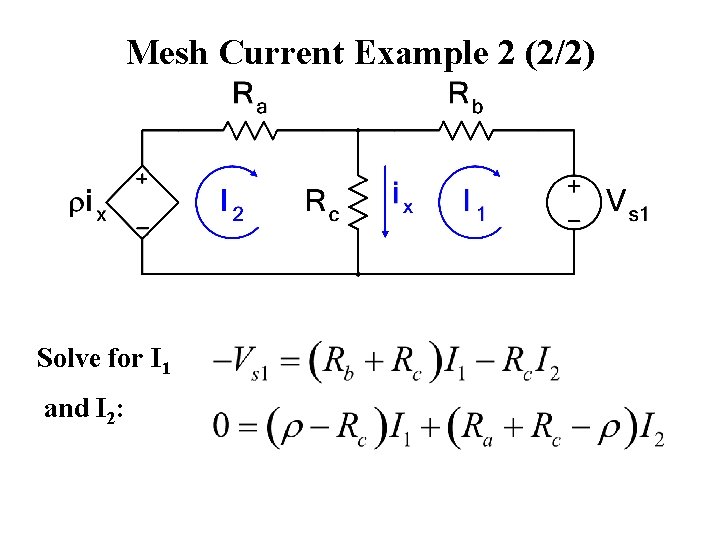
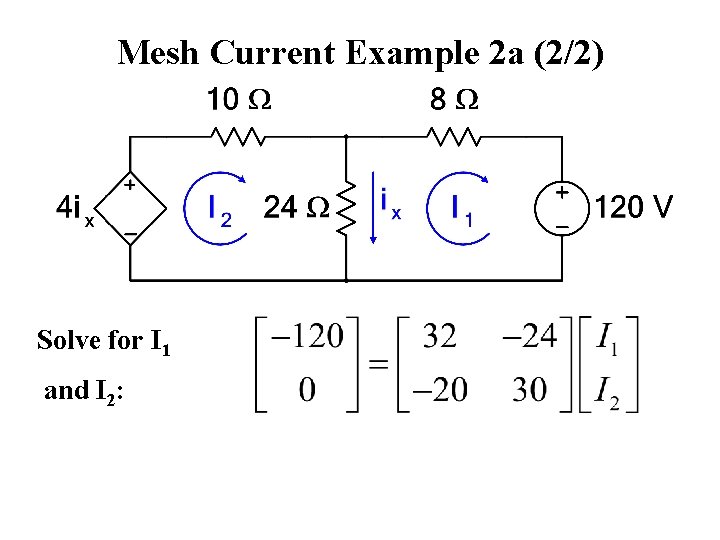
Mesh Current Example 2 (2/2) Solve for I 1 and I 2:
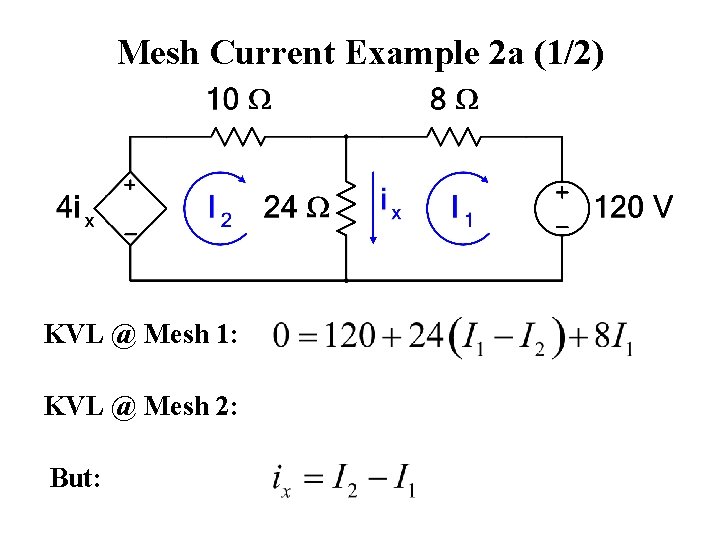
Mesh Current Example 2 a (1/2) KVL @ Mesh 1: KVL @ Mesh 2: But:
Mesh Current Example 2 a (2/2) Solve for I 1 and I 2:
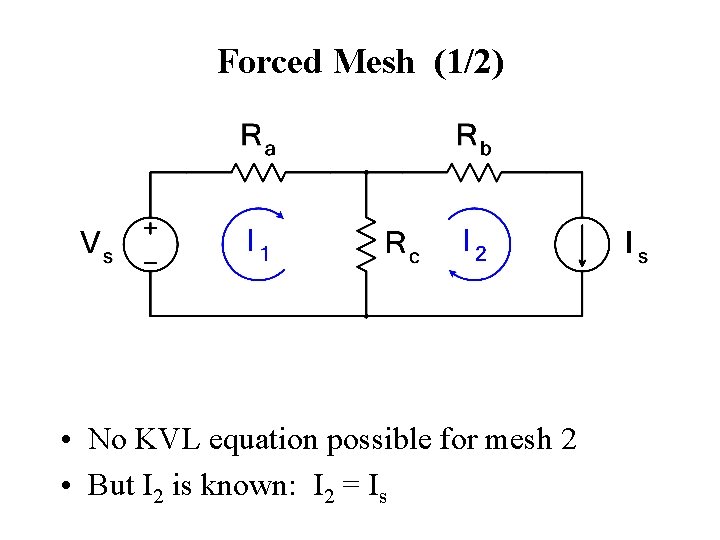
Forced Mesh (1/2) • No KVL equation possible for mesh 2 • But I 2 is known: I 2 = Is
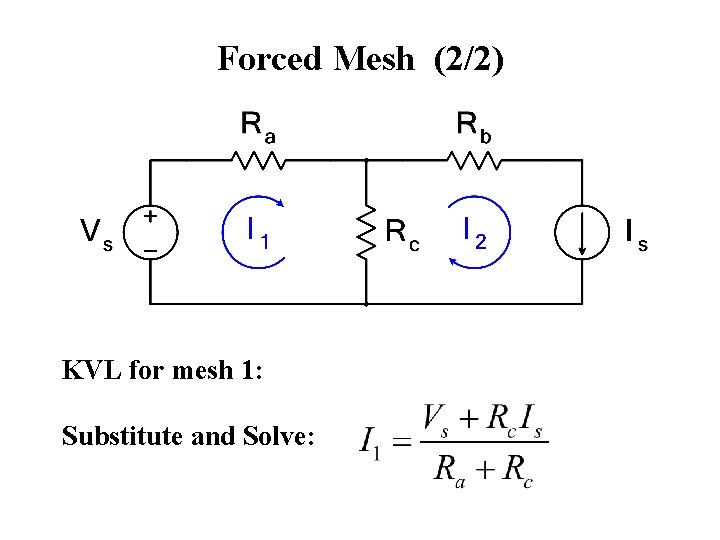
Forced Mesh (2/2) KVL for mesh 1: Substitute and Solve:
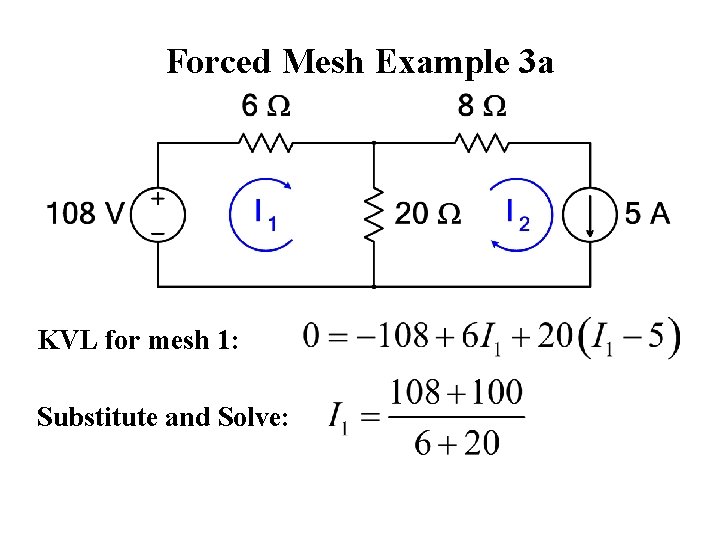
Forced Mesh Example 3 a KVL for mesh 1: Substitute and Solve:
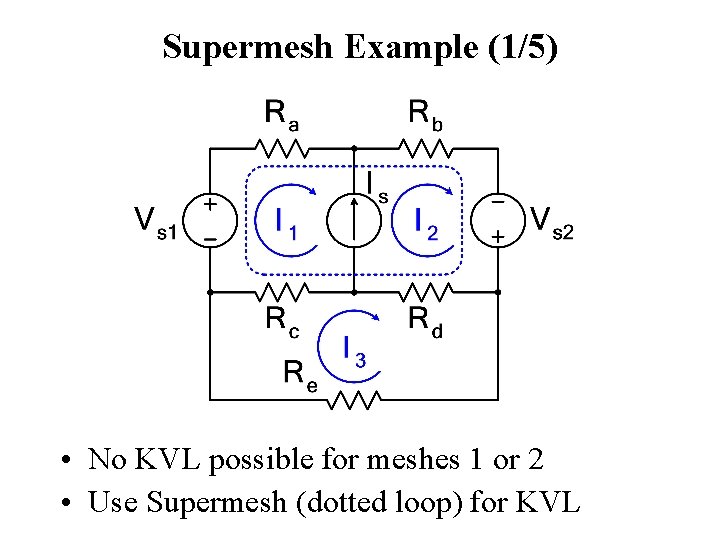
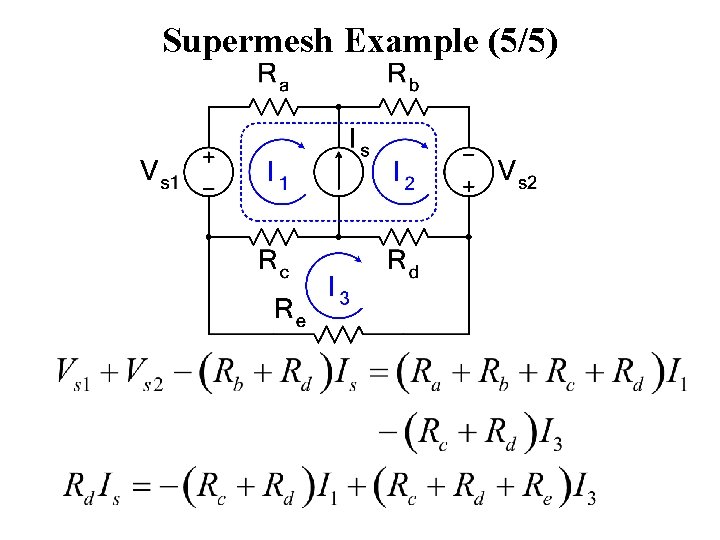
Supermesh Example (1/5) • No KVL possible for meshes 1 or 2 • Use Supermesh (dotted loop) for KVL
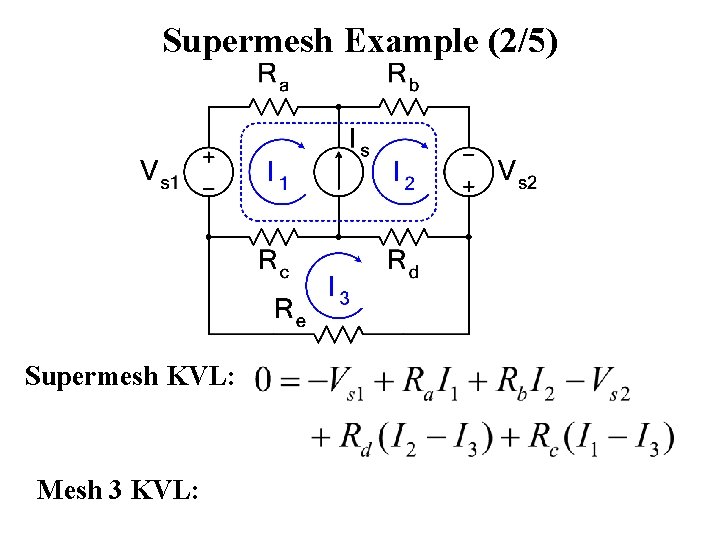
Supermesh Example (2/5) Supermesh KVL: Mesh 3 KVL:
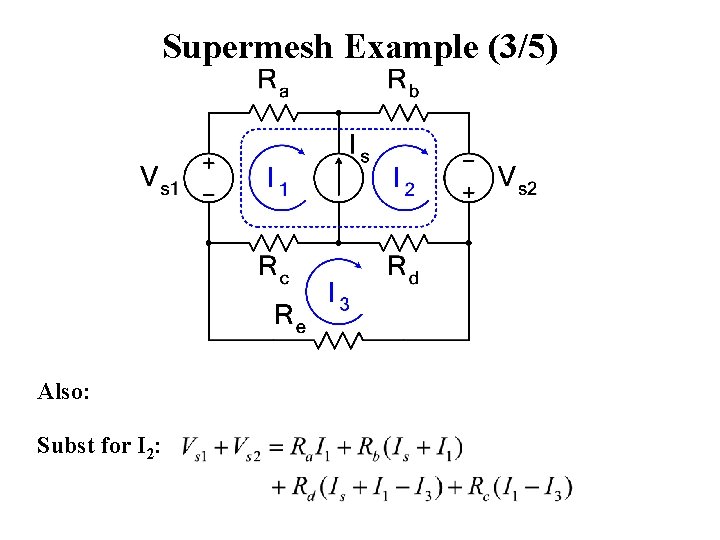
Supermesh Example (3/5) Also: Subst for I 2:
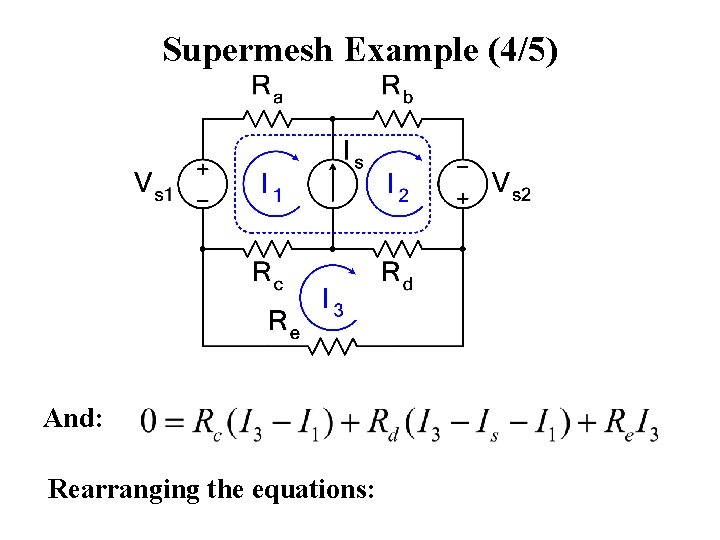
Supermesh Example (4/5) And: Rearranging the equations:
Supermesh Example (5/5)
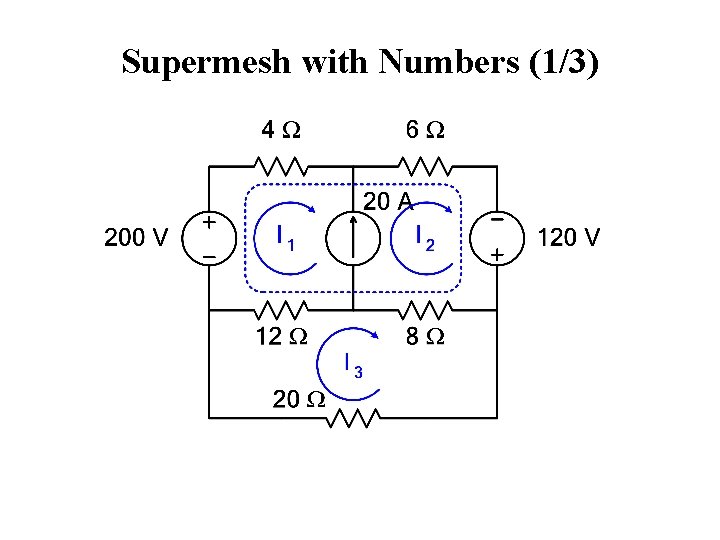
Supermesh with Numbers (1/3)
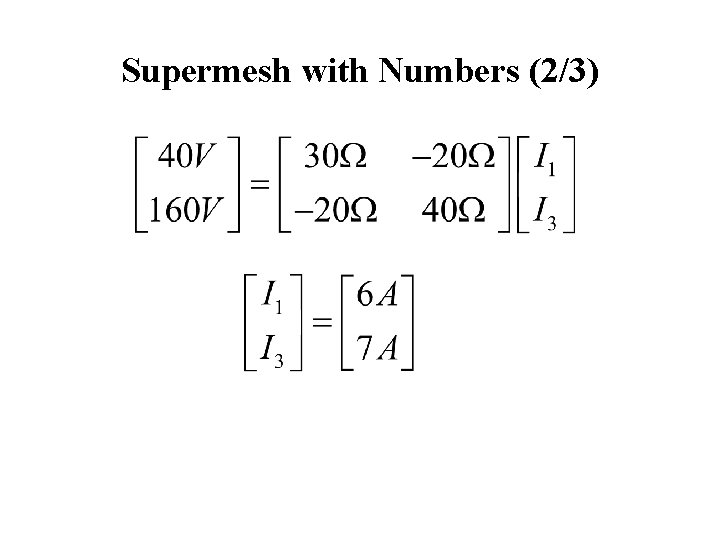
Supermesh with Numbers (2/3)
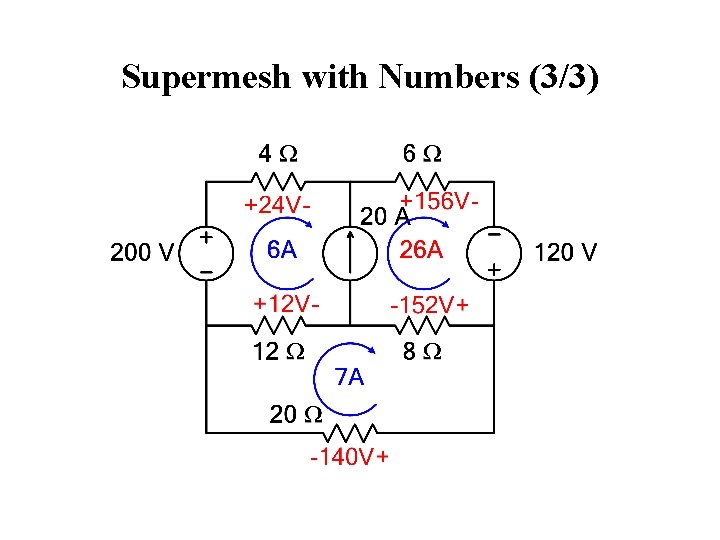
Supermesh with Numbers (3/3)