Dystopian Literature All in all were just another

- Slides: 11
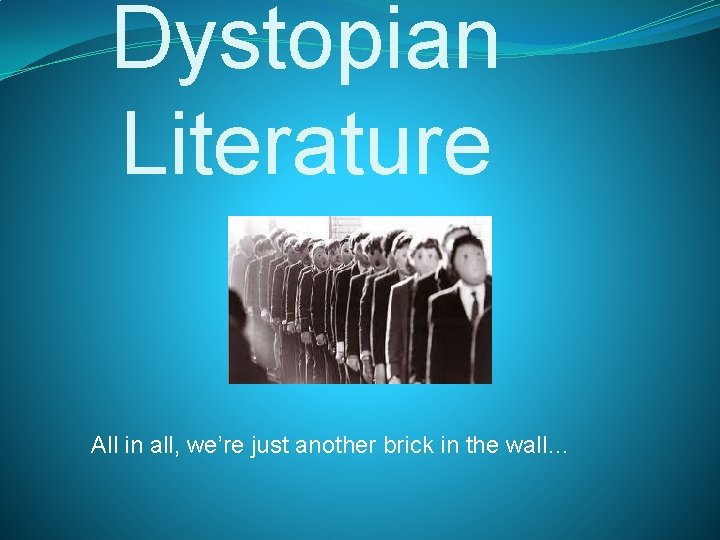
Dystopian Literature All in all, we’re just another brick in the wall…
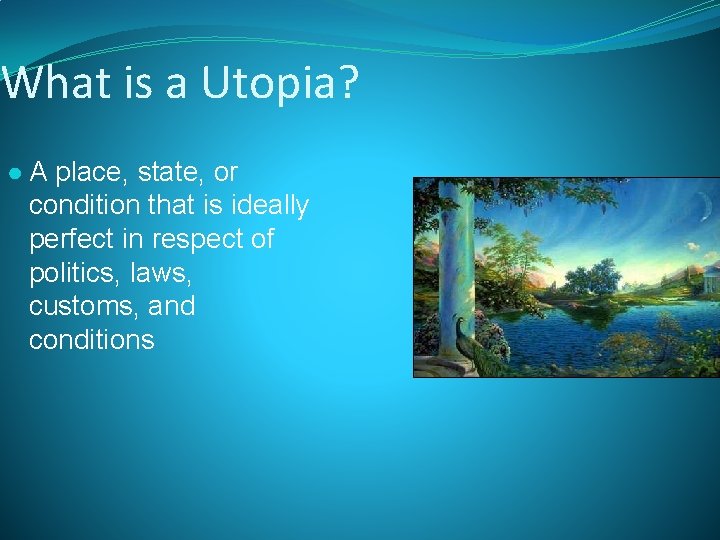
What is a Utopia? ● A place, state, or condition that is ideally perfect in respect of politics, laws, customs, and conditions
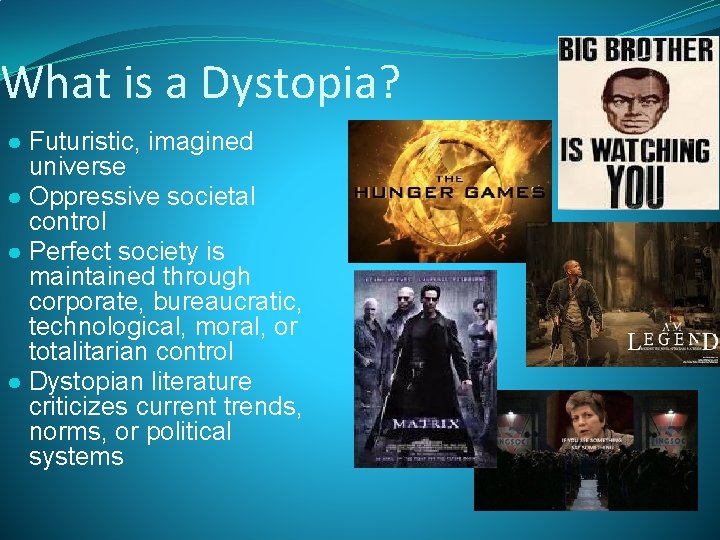
What is a Dystopia? ● Futuristic, imagined universe ● Oppressive societal control ● Perfect society is maintained through corporate, bureaucratic, technological, moral, or totalitarian control ● Dystopian literature criticizes current trends, norms, or political systems
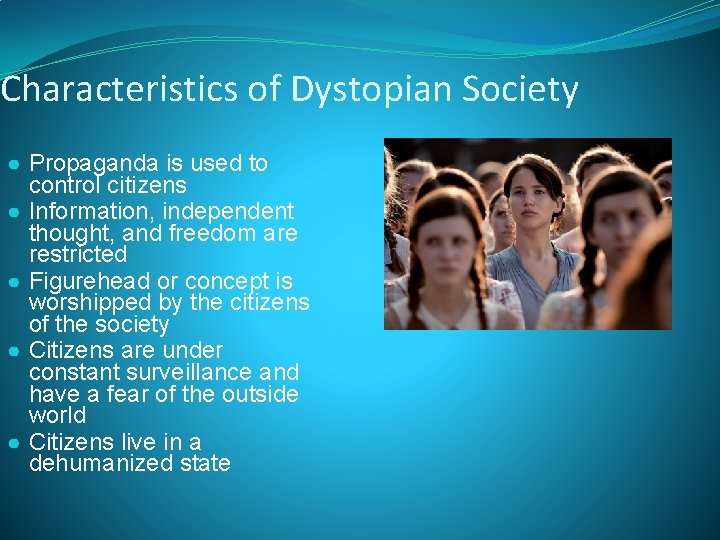
Characteristics of Dystopian Society ● Propaganda is used to control citizens ● Information, independent thought, and freedom are restricted ● Figurehead or concept is worshipped by the citizens of the society ● Citizens are under constant surveillance and have a fear of the outside world ● Citizens live in a dehumanized state
Characteristics of Dystopian Society ● The natural world is banished and distrusted ● Citizens conform to uniform expectations ● Individuality and dissent are bad ● Society is an illusion of a perfect utopian world
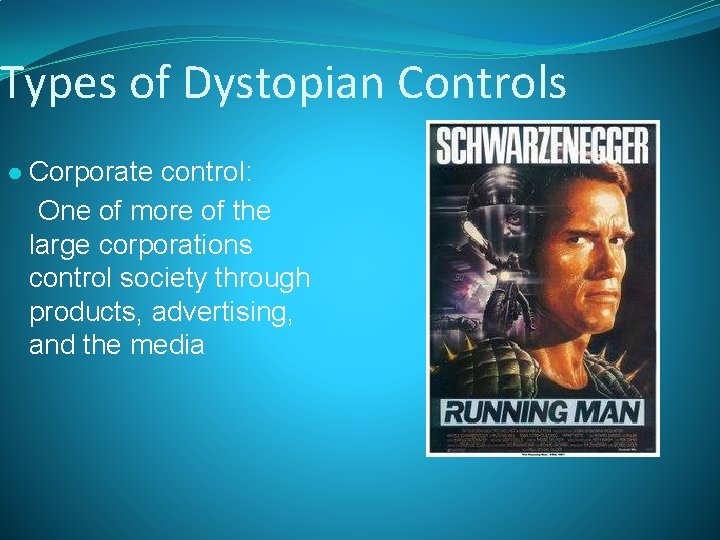
Types of Dystopian Controls ● Corporate control: One of more of the large corporations control society through products, advertising, and the media
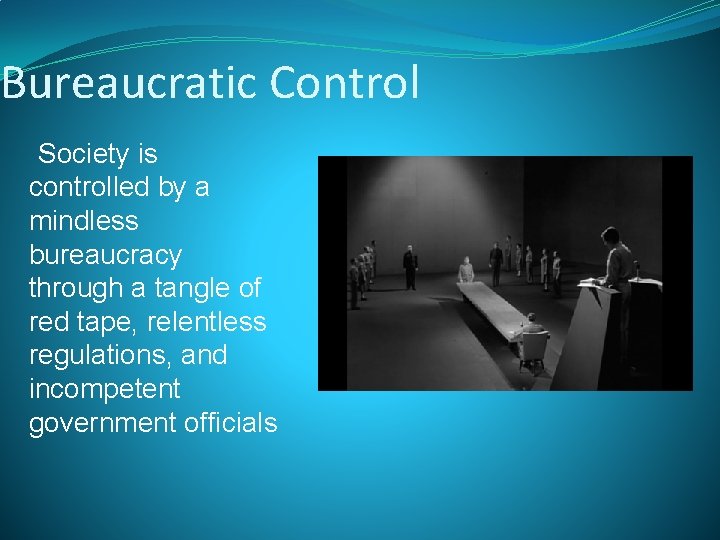
Bureaucratic Control Society is controlled by a mindless bureaucracy through a tangle of red tape, relentless regulations, and incompetent government officials
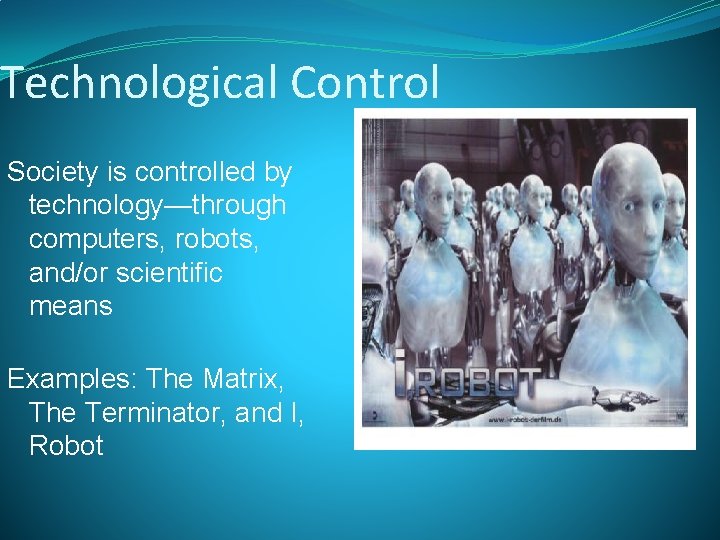
Technological Control Society is controlled by technology—through computers, robots, and/or scientific means Examples: The Matrix, The Terminator, and I, Robot
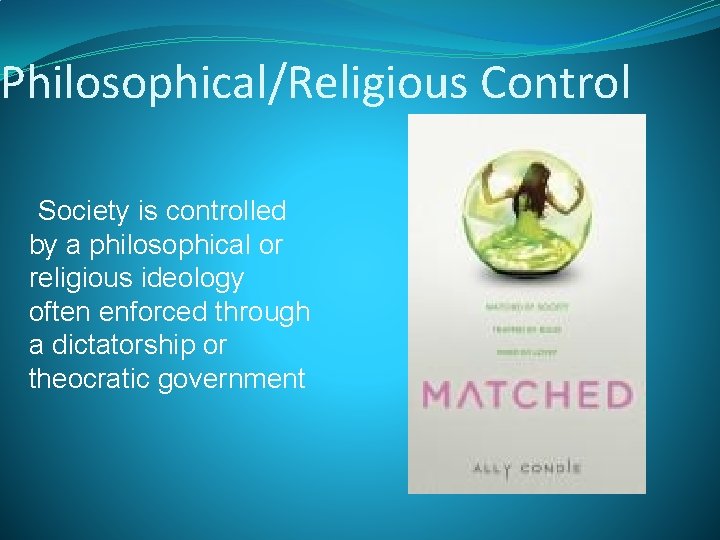
Philosophical/Religious Control Society is controlled by a philosophical or religious ideology often enforced through a dictatorship or theocratic government
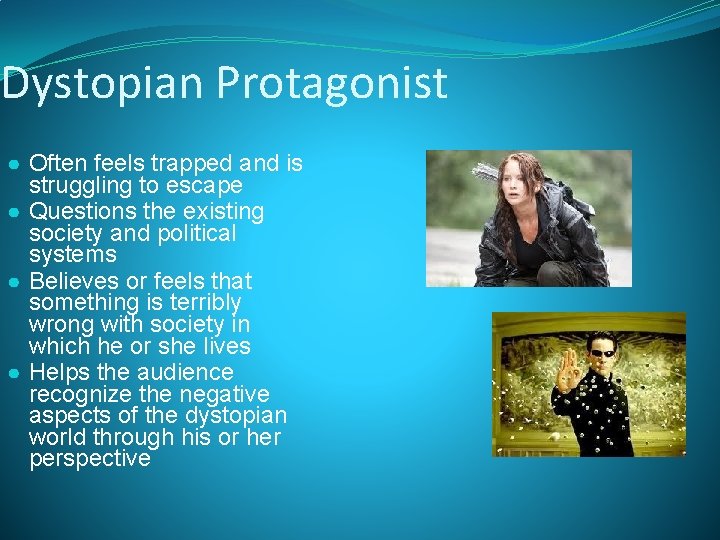
Dystopian Protagonist ● Often feels trapped and is struggling to escape ● Questions the existing society and political systems ● Believes or feels that something is terribly wrong with society in which he or she lives ● Helps the audience recognize the negative aspects of the dystopian world through his or her perspective
Optional discussion questions 1. Why would an author choose to write a novel about a futuristic society with serious and sometimes dangerous faults? 2. What current trends, or ideas, exist in our world today that the author might be thinking of when writing this type of story? 3. What benefits do dystopian stories lend to you and your world?