
Dysphagia Dr Megangela Christi Amores Dysphagia a sensation
- Slides: 11
Dysphagia Dr. Meg-angela Christi Amores
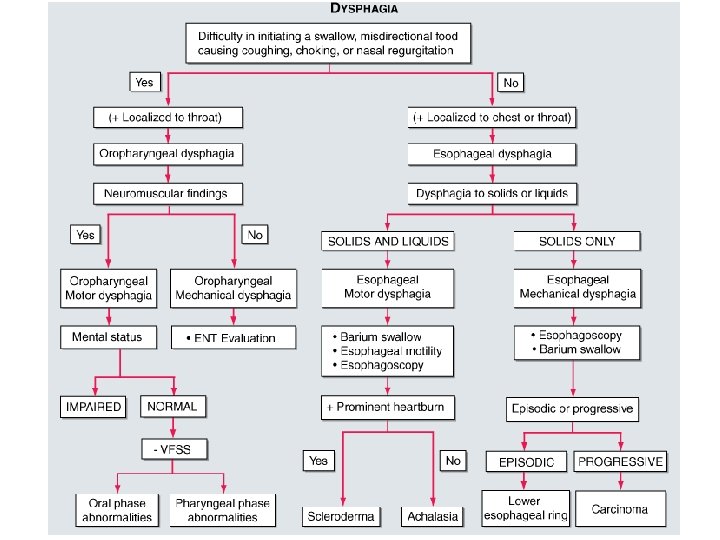
Dysphagia • a sensation of "sticking" or obstruction of the passage of food through the mouth, pharynx, or esophagus • often used as an umbrella term to include other symptoms related to swallowing difficulty
Definition of terms • Aphagia – signifies complete esophageal obstruction • Odynophagia – painful swallowing • Globus pharyngeus – is the sensation of a lump lodged in the throat • Phagophobia – meaning fear of swallowing
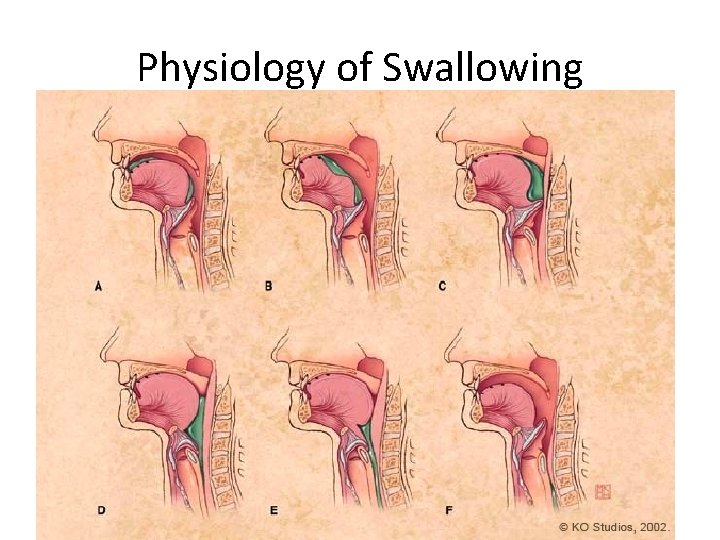
Physiology of Swallowing
Pathophysiology of Dysphagia • oral, pharyngeal, and esophageal • mechanical dysphagia - caused by a large bolus or a narrow lumen is called • motor dysphagia - due to weakness of peristaltic contractions or to impaired deglutitive inhibition causing nonperistaltic contractions and impaired sphincter relaxation
Oral phase dysphagia • associated with poor bolus formation and control • food may either drool out of the mouth or overstay in the mouth • patient may experience difficulty in initiating the swallowing reflex • premature spillage of food into the pharynx and aspiration into the unguarded larynx and/or nasal cavity
Pharyngeal phase Dysphagia • associated with stasis of food in the pharynx due to poor pharyngeal propulsion and obstruction at the UES • leads to nasal regurgitation and laryngeal aspiration during or after a swallow • Nasal regurgitation and laryngeal aspiration during the process of swallowing are hallmarks
Esophageal Dysphagia • the esophageal lumen can distend up to 4 cm – When the esophagus cannot dilate beyond 2. 5 cm in diameter, dysphagia to normal solid food can occur – when the esophagus can’t distend beyond 1. 3 cm, dysphagia ALWAYS occurs
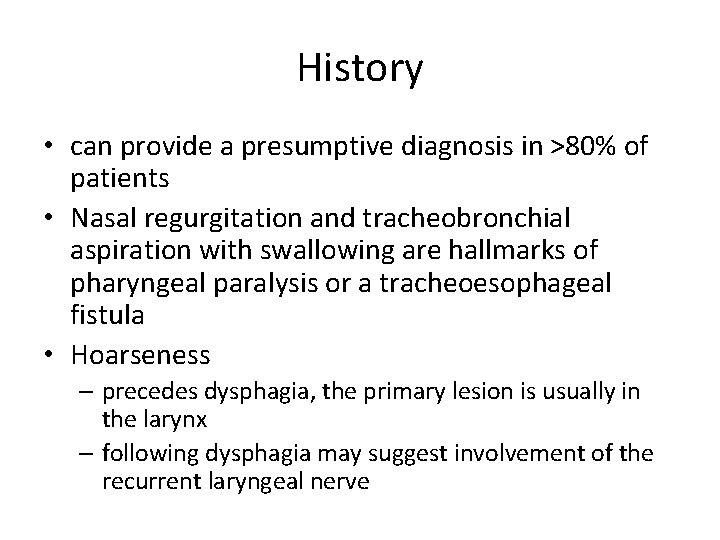
History • can provide a presumptive diagnosis in >80% of patients • Nasal regurgitation and tracheobronchial aspiration with swallowing are hallmarks of pharyngeal paralysis or a tracheoesophageal fistula • Hoarseness – precedes dysphagia, the primary lesion is usually in the larynx – following dysphagia may suggest involvement of the recurrent laryngeal nerve
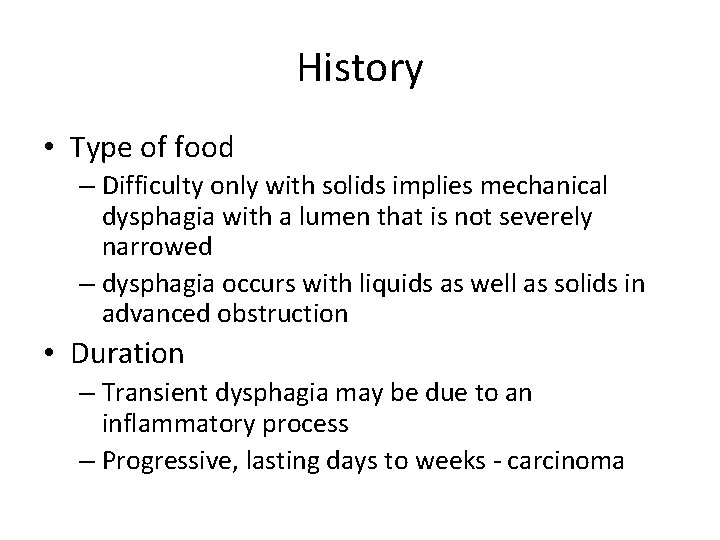
History • Type of food – Difficulty only with solids implies mechanical dysphagia with a lumen that is not severely narrowed – dysphagia occurs with liquids as well as solids in advanced obstruction • Duration – Transient dysphagia may be due to an inflammatory process – Progressive, lasting days to weeks - carcinoma