
Dyslipidemia DR DUAA HIASAT Objectives Know the clinical
Dyslipidemia DR, DUAA HIASAT
Objectives : � Know the clinical terminology for dyslipidemia and systemic approach to patient with dyslipidemia. �Identify the most current recommendations for dyslipidemia. � Describe the process of arriving at a lipid lowering goal for a given patient. �discuss the different lipid lowering agents and their major side effects. � compare the new ATP 4 guidelines to ATP 3 guidelines.

Dyslipidemia �A condition characterized by abnormal function and/or levels of plasma lipoproteins. �Dyslipidemias are of extreme clinical importance due to their association with atherosclerosis and rates of heart attack and stroke.
§ VLDL Carries triglycerides to peripheral cells High levels may be associated with increased CHD risk § LDL Carries cholesterol to cells High levels linked to increased CHD risk Primary target of cholesterol-reducing therapy § HDL Removes cholesterol from cells High HDL considered protective against CHD HDL >60 mg/d. L decreases CHD risk § Lipoprotein(a) A complex of LDL and apolipoprotein(a) Prevents LDL from being taken up by the Liver Elevated Lp(a) is an independent risk factor for premature CHD § Triglycerides A neutral fat stored in adipose cells Positively correlated with risk for CHD
EPIDEMIOLOGY �Prevalenc e is increasing worldwide due to westren lifestyle. �In cross sectional study 2010 performed on a random sample of jordanian adults 25 yrs and older : � 75% had at least one abnormal lipid level � 49% had high TC � 41% had high LDL � 40% had low HDL
Causes of Hyperlipidemia Ø Primary (genetic) Ø Secondary
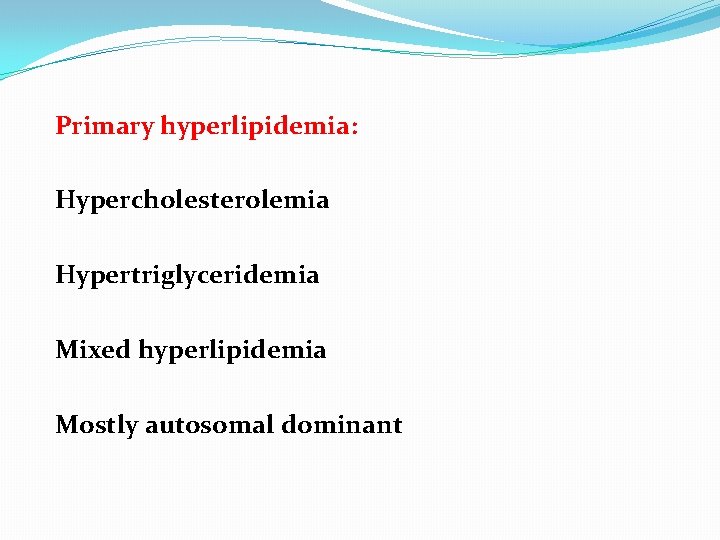
Primary hyperlipidemia: Hypercholesterolemia Hypertriglyceridemia Mixed hyperlipidemia Mostly autosomal dominant
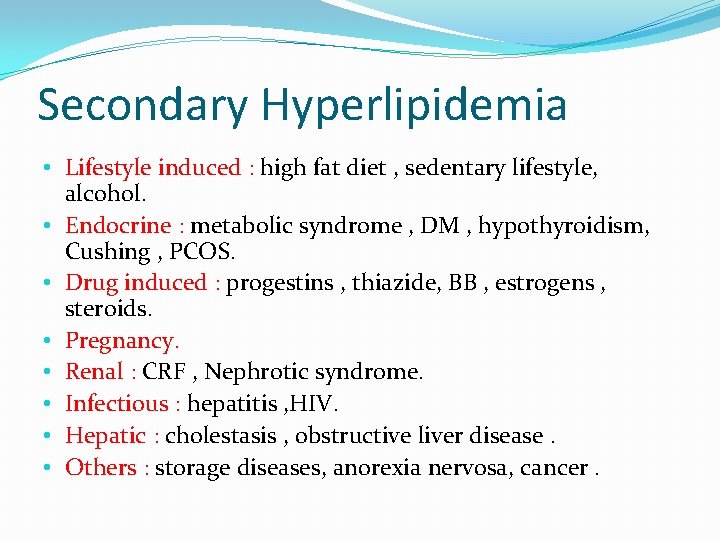
Secondary Hyperlipidemia • Lifestyle induced : high fat diet , sedentary lifestyle, alcohol. • Endocrine : metabolic syndrome , DM , hypothyroidism, Cushing , PCOS. • Drug induced : progestins , thiazide, BB , estrogens , steroids. • Pregnancy. • Renal : CRF , Nephrotic syndrome. • Infectious : hepatitis , HIV. • Hepatic : cholestasis , obstructive liver disease. • Others : storage diseases, anorexia nervosa, cancer.

Screening �According to USPSTF : �Screening All men age >= 35 (grade A) and women age >= 45. �Men age 25 and women 35 if at increased risk for CHD. (grade B ) �Evidence is insufficient to recommend for or against screening in children and young adults up to age 20. �Interval of screening every 5 years. �An age to stop screening has not been established.
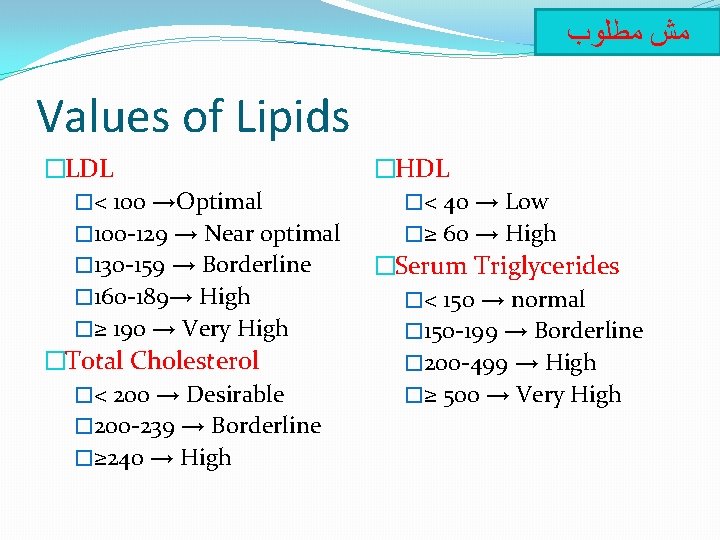
ﻣﻄﻠﻮﺏ ﻣﺶ Values of Lipids �LDL �< 100 →Optimal � 100 -129 → Near optimal � 130 -159 → Borderline � 160 -189→ High �≥ 190 → Very High �Total Cholesterol �< 200 → Desirable � 200 -239 → Borderline �≥ 240 → High �HDL �< 40 → Low �≥ 60 → High �Serum Triglycerides �< 150 → normal � 150 -199 → Borderline � 200 -499 → High �≥ 500 → Very High
Approach to patient with dyslipidemia
History : �Symptoms of atherosclerosis ( hx of abnormal ECG or stress test, intermittent claudication, erectile dysfunction, diagnosed CAD or stroke). �Hx of recurrent pancreatitis. �Dietry habits , smoking , alcohol, exercise. �Medication or dietry supplement. �Infants with faliure to thrive , steatorrhea and developmental delay (hypo and Abetalipoprotenimia). �Recurrent achilles tendonitis in achild or adolescent. �Family hx of premature ASCVD or early death. �Family hx of known lipid disorder.
Identify presence of clinical atherosclerotic disease that confers high risk for coronary heart disease (CHD) events (CHD risk equivalent): 1) Clinical CHD 2) Symptomatic carotid artery disease. 3) Peripheral arterial disease. 4) Abdominal aortic aneurysm. 5) Diabetes.
Determine presence of major risk factors (other than LDL) That Modify LDL Goals : �Smoking �Hypertension (or on antihypertensive medication) �Low HDL cholesterol (<40 mg/d. L in males and < 50 mg/dl in females) �Family history of premature CHD (CHD in first degree male relative <55 years, or 1 st degree female <65 years) �Age (male >45 years; female>55 years) * HDL cholesterol >60 mg/d. L counts as a “negative” risk factor; its presence removes one risk factor from the total count.
Physical examination : �Xanthelasma (close to eyelids , often famelial , never related to TG elevation) �Xanthomas ( larger , tendons ) �Eruptive xanthoma (TG deposits in small papules ) �Arcus senilis ( corneal margin, if < 40 yrs age associated with dyslipidemia ) �Fish eye disease ( clouding of the entire cornea from cholesterol deposits) �Hepatosplenomegaly ( type I or type V dyslipidemia)
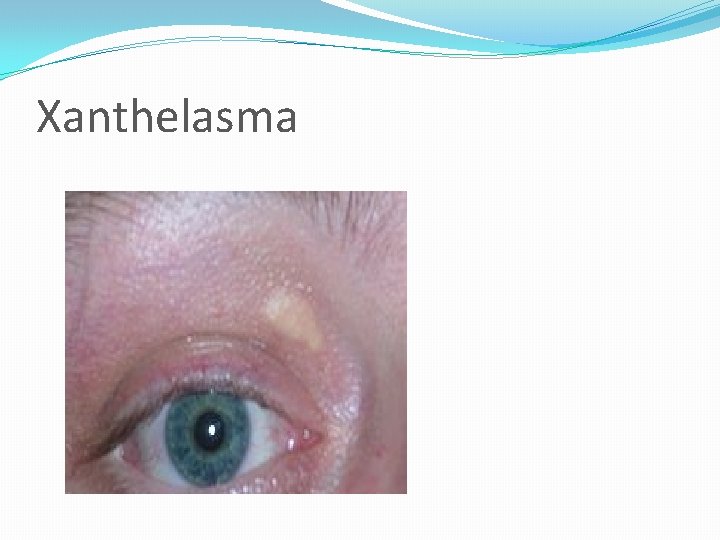
Xanthelasma

Tendon xanthomas

Corneal Archus
ﻧﻮﻉ ﺑﻜﻞ ﺩﻭﺍ ﻛﻞ ﺑﻘﻠﻠﻬﺎ ﺍﻟﻲ ﺍﻟﻨﺴﺐ ﻣﻄﻠﻮﺏ ﻣﺶ ﺍﻧﻪ ﺣﻜﺖ ﺍﻟﺪﻛﺘﻮﺭﺓ cholesterol and lipid ﻧﺴﺐ ﺩﻭﻥ ﺩﻭﺍ ﻛﻞ ﻋﻠﻴﻪ ﺑﺸﺘﻐﻞ ﺍﻟﻲ ﺍﻟﺮﺋﻴﺴﻲ ﺍﻟﻨﻮﻉ ﺗﻌﺮﻑ ﻣﻄﻠﻮﺏ ﺑﺲ Management of Dyslipidemia �The goal of treatment is to prevent future CHD, so before start management we should do assessment for risk of developing CHD. �Assessment by ATP III Guidelines (Adult Treatment Panel (ATP III) of the National Cholesterol Education Program (NCEP) and by Framingham Risk Score, Or ATP IV
Statins q Hydroxy methylglutaryl coenzyme (HMG Co. A) reductase inhibitors (lipitor , zocor) q Reduces LDL 18 -55% & triglycerides (TG) 7 -30%, raise HDL 5 -15%. q Side effects - constipation, myopathy at higher doses of statins (40 – 80 mg), elevated liver enzymes. q Contraindications �absolute - liver disease (acute or chronic) �Relative – accompanying use of cyclosporine, macrolides, various antifungals, cytochrome p-450 inhibitors. 20
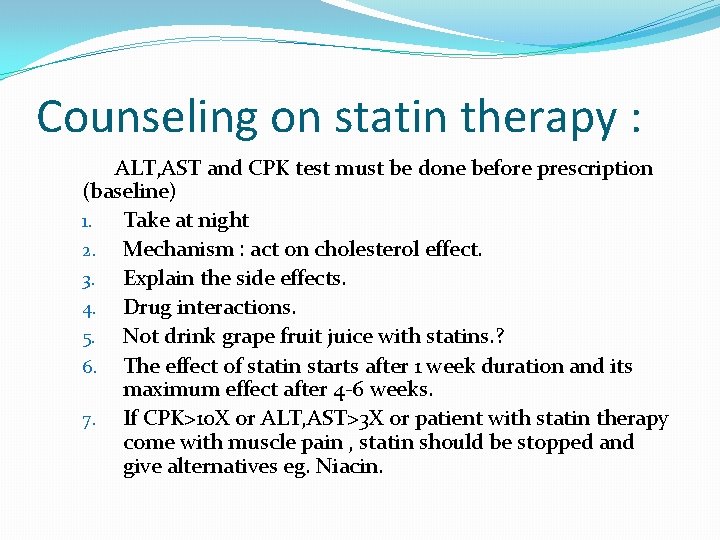
Counseling on statin therapy : ALT, AST and CPK test must be done before prescription (baseline) 1. Take at night 2. Mechanism : act on cholesterol effect. 3. Explain the side effects. 4. Drug interactions. 5. Not drink grape fruit juice with statins. ? 6. The effect of statin starts after 1 week duration and its maximum effect after 4 -6 weeks. 7. If CPK>10 X or ALT, AST>3 X or patient with statin therapy come with muscle pain , statin should be stopped and give alternatives eg. Niacin.
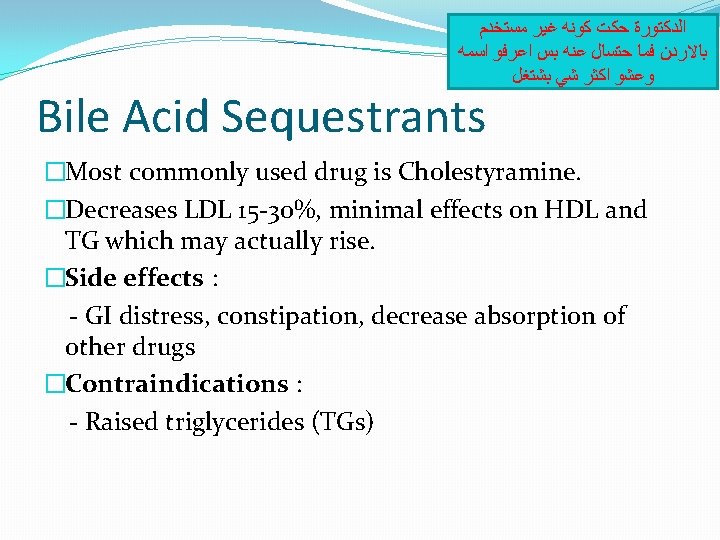
ﻣﺴﺘﺨﺪﻡ ﻏﻴﺮ ﻛﻮﻧﻪ ﺣﻜﺖ ﺍﻟﺪﻛﺘﻮﺭﺓ ﺍﺳﻤﻪ ﺍﻋﺮﻓﻮ ﺑﺲ ﻋﻨﻪ ﺣﺘﺴﺎﻝ ﻓﻤﺎ ﺑﺎﻻﺭﺩﻥ ﺑﺸﺘﻐﻞ ﺷﻲ ﺍﻛﺜﺮ ﻭﻋﺸﻮ Bile Acid Sequestrants �Most commonly used drug is Cholestyramine. �Decreases LDL 15 -30%, minimal effects on HDL and TG which may actually rise. �Side effects : - GI distress, constipation, decrease absorption of other drugs �Contraindications : - Raised triglycerides (TGs)
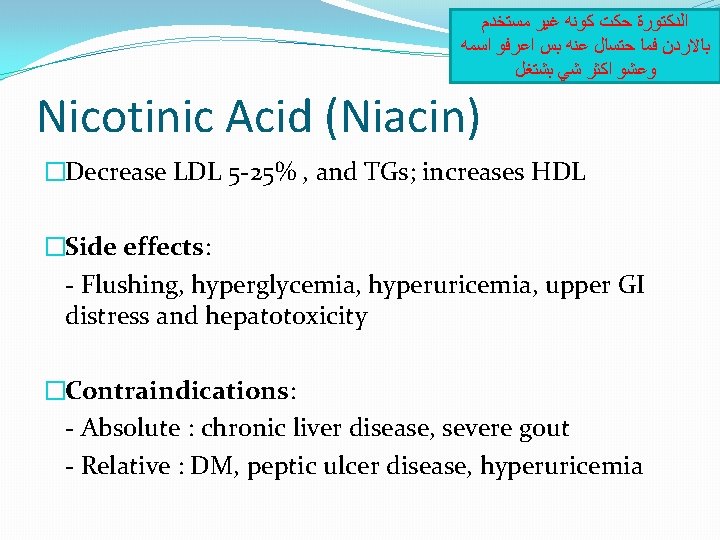
ﻣﺴﺘﺨﺪﻡ ﻏﻴﺮ ﻛﻮﻧﻪ ﺣﻜﺖ ﺍﻟﺪﻛﺘﻮﺭﺓ ﺍﺳﻤﻪ ﺍﻋﺮﻓﻮ ﺑﺲ ﻋﻨﻪ ﺣﺘﺴﺎﻝ ﻓﻤﺎ ﺑﺎﻻﺭﺩﻥ ﺑﺸﺘﻐﻞ ﺷﻲ ﺍﻛﺜﺮ ﻭﻋﺸﻮ Nicotinic Acid (Niacin) �Decrease LDL 5 -25% , and TGs; increases HDL �Side effects: - Flushing, hyperglycemia, hyperuricemia, upper GI distress and hepatotoxicity �Contraindications: - Absolute : chronic liver disease, severe gout - Relative : DM, peptic ulcer disease, hyperuricemia
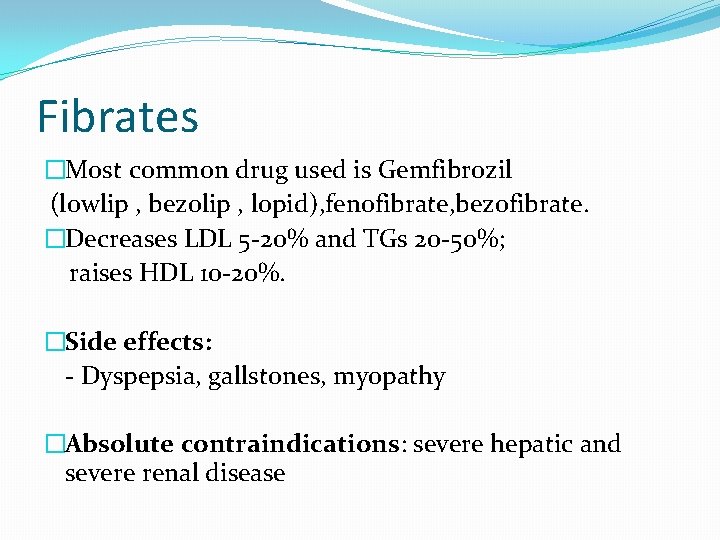
Fibrates �Most common drug used is Gemfibrozil (lowlip , bezolip , lopid), fenofibrate, bezofibrate. �Decreases LDL 5 -20% and TGs 20 -50%; raises HDL 10 -20%. �Side effects: - Dyspepsia, gallstones, myopathy �Absolute contraindications: severe hepatic and severe renal disease
Notes for pharmacological treatment �Before giving drug ALT, AST & CPK should be done. �The most effective drug in lowering LDL is statin. �The most effective drug in lowering TG is fibric acid or niacin. �The most effective drug in increasing HDL is niacin. �Follow up every 12 weeks to allow drug to take its effect.
Treatment Low HDL Cholesterol �Strong independent predictor of CHD �Several possible causes e. g. : obesity, physical inactivity, metabolic syndrome, cigarette smoking and drugs (e. g. beta blockers and steroids) �First reach LDL goal, then �Encourage weight management and increase physical activity.
ATP 4 Guidelines step 1: �Determine the goal for dyslipidemia treatment : �Primary prevention Vs secondary prevention
Primary prevention for: � 1) individuals with LDL > 190. � 2) individuals with DM , 40 -75 year old with LDL 70189 and without clinical ASCVD. � 3) individuals without clinical ASCVD or DM with LDL 70 -189 and estimated 10 year ASCVD risk >= 10% .
Secondary prevention for: � 1) patients with known CHD ( MI , Angina and prior coronary revascularization ). � 2)other CVD disease (stroke , TIA, peripheral arterial disease). � 3)combination of RFs that result in 10 year risk of ASCVD events of >20% � 4) chronic kidney disease with estimated GFR<45 � 5)Diabetic patients with risk equivalent for CVD.
Step 2: �Life style modification for primary and secondary prevention : �Wt loss for over weight patients. �Aerobic exercise. �Smoking cessation.

Step 3: �Pharmacological therapy for primary and secondary prevention.
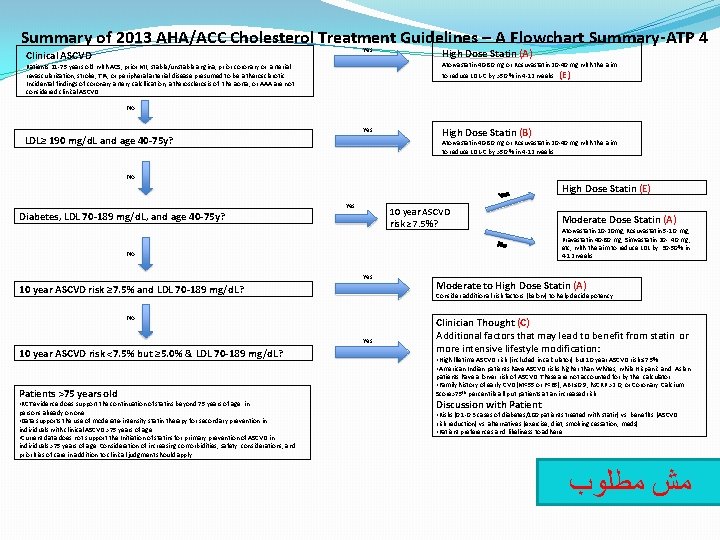
Summary of 2013 AHA/ACC Cholesterol Treatment Guidelines – A Flowchart Summary-ATP 4 Yes Clinical ASCVD High Dose Statin (A) Atorvastatin 40 -80 mg or Rosuvastatin 20 -40 mg with the aim Patients 21 -75 years old with ACS, prior MI, stable/unstable angina, prior coronary or arterial revascularization, stroke, TIA, or peripheral arterial disease presumed to be atherosclerotic. Incidental findings of coronary artery calcification, atherosclerosis of the aorta, or AAA are not considered clinical ASCVD. to reduce LDL-C by >50 % in 4 -12 weeks (E) No Yes LDL≥ 190 mg/d. L and age 40 -75 y? High Dose Statin (B) Atorvastatin 40 -80 mg or Rosuvastatin 20 -40 mg with the aim to reduce LDL-C by >50 % in 4 -12 weeks No Diabetes, LDL 70 -189 mg/d. L, and age 40 -75 y? High Dose Statin (E) Yes 10 year ASCVD risk ≥ 7. 5%? No Yes 10 year ASCVD risk ≥ 7. 5% and LDL 70 -189 mg/d. L? Yes Patients >75 years old • RCT evidence does support the continuation of statins beyond 75 years of age in persons already on one • Data supports the use of moderate-intensity statin therapy for secondary prevention in individuals with clinical ASCVD >75 years of age • Current data does not support the Initiation of statins for primary prevention of ASCVD in individuals >75 years of age. Consideration of increasing comorbidities, safety considerations, and priorities of care in addition to clinical judgment should apply. Atorvastatin 10 -20 mg, Rosuvastatin 5 -10 mg, Pravastatin 40 -80 mg, Simvastatin 20 - 40 mg, etc, with the aim to reduce LDL by 30 -50% in 4 -12 weeks Moderate to High Dose Statin (A) Consider additional risk factors (below) to help decide potency No 10 year ASCVD risk <7. 5% but ≥ 5. 0% & LDL 70 -189 mg/d. L? Moderate Dose Statin (A) Clinician Thought (C) Additional factors that may lead to benefit from statin or more intensive lifestyle modification: • High lifetime ASCVD risk (included in calculator) but 10 year ASCVD risk ≤ 7. 5% • American Indian patients have ASCVD risks higher than Whites, while Hispanic and Asian patients have a lower risk of ASCVD. These are not accounted for by the calculator • Family history of early CVD (M<55 or F<65), ABI ≤ 0. 9, hs. CRP >2. 0, or Coronary Calcium Score>75 th percentile all put patients at an increased risk Discussion with Patient • Risks (0. 1 -0. 3 cases of diabetes/100 patients treated with statin) vs. benefits (ASCVD risk reduction) vs. alternatives (exercise, diet, smoking cessation, meds) • Patient preferences and likeliness to adhere ﻣﻄﻠﻮﺏ ﻣﺶ
�Cardiovascular risk should be calculated by pooled cohort equation CV risk Calculator. �The calculator includes the following parameters: ( gender , age, race, HDL, T. cholesterol, diabetes, treatment of HTN , systolic BP , smoking )
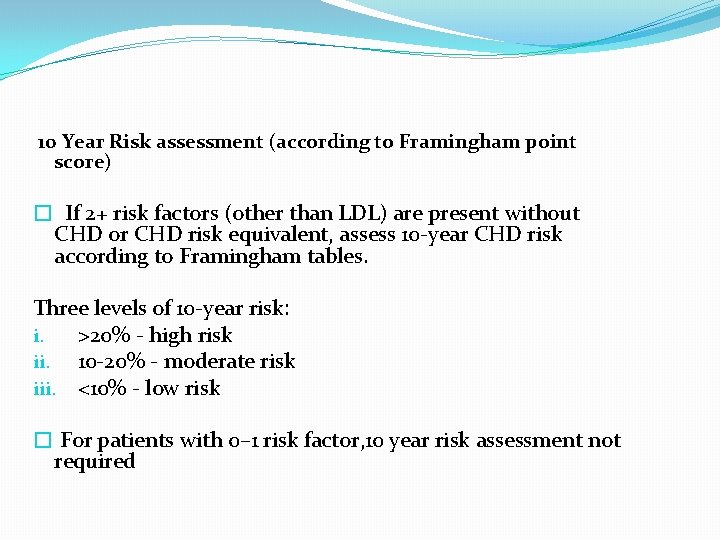
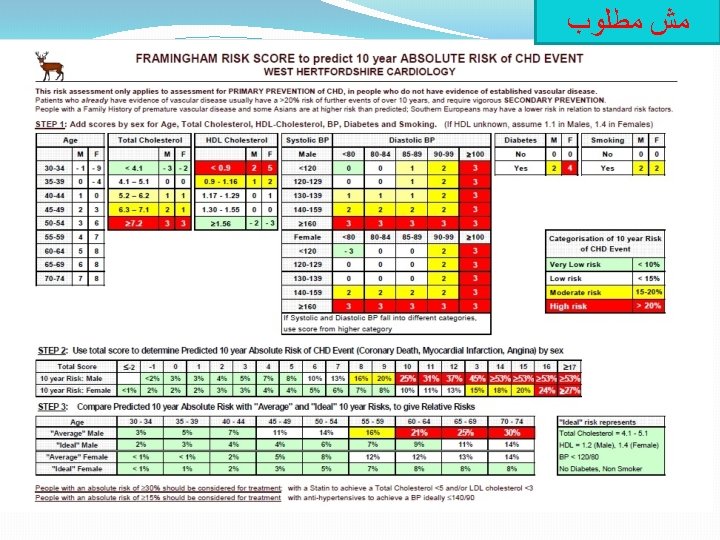
10 Year Risk assessment (according to Framingham point score) � If 2+ risk factors (other than LDL) are present without CHD or CHD risk equivalent, assess 10 -year CHD risk according to Framingham tables. Three levels of 10 -year risk: i. >20% - high risk ii. 10 -20% - moderate risk iii. <10% - low risk � For patients with 0– 1 risk factor, 10 year risk assessment not required

ﻣﻄﻠﻮﺏ ﻣﺶ Statins therapy intensities : low-intensity statin �Low-intensity statins: (<30% reduction in LDL cholesterol) �fluvastatin 20 mg per day �Fluvastatin 40 mg per day �Pravastatin 10 mg per day �Pravastatin 20 mg per day �Simvastatin 10 mg per day.
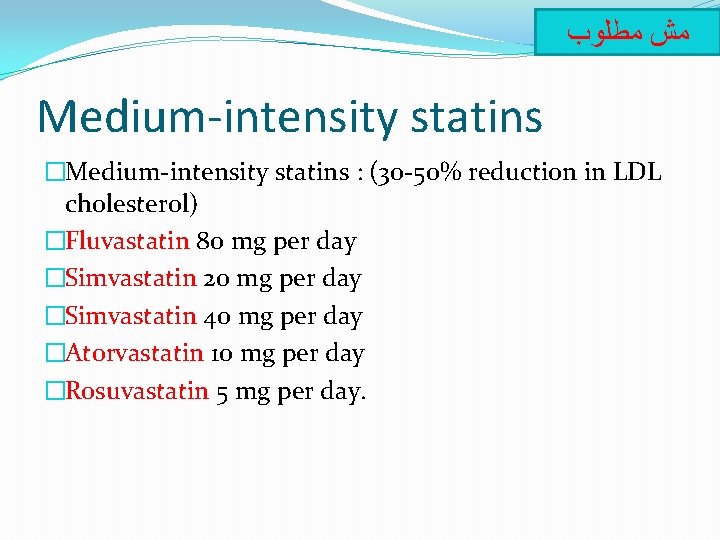
ﻣﻄﻠﻮﺏ ﻣﺶ Medium-intensity statins �Medium-intensity statins : (30 -50% reduction in LDL cholesterol) �Fluvastatin 80 mg per day �Simvastatin 20 mg per day �Simvastatin 40 mg per day �Atorvastatin 10 mg per day �Rosuvastatin 5 mg per day.
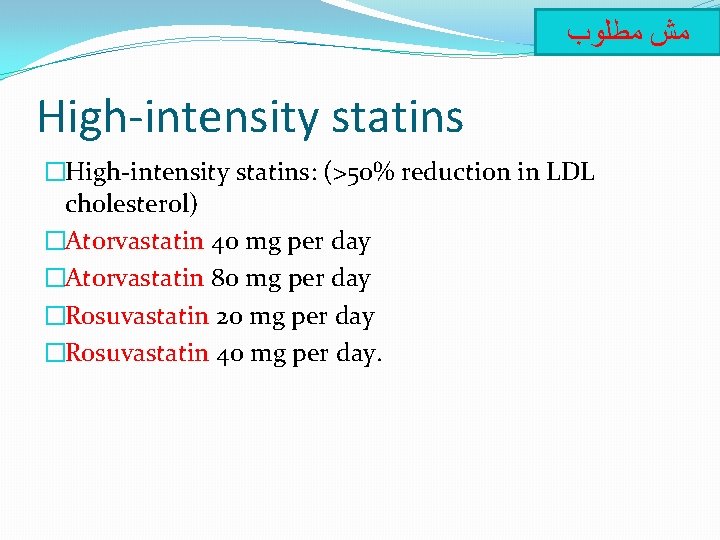
ﻣﻄﻠﻮﺏ ﻣﺶ High-intensity statins �High-intensity statins: (>50% reduction in LDL cholesterol) �Atorvastatin 40 mg per day �Atorvastatin 80 mg per day �Rosuvastatin 20 mg per day �Rosuvastatin 40 mg per day.
What has changed compared to ATP 3 guidline ? �Initiate either moderate intinsity or high intensity therapy for patients who fall into the four categories. �Unlike ATP 3 , don’t titrate to a specific LDL cholesterol target. �Measure lipids during follow ups to assess adherence to treatment , not to achieve a specific LDL target.

Thank you
- Slides: 40