
Dyskinesias in ChildrenAdolescents CPT Timothy L Switaj MC
- Slides: 43
Dyskinesias in Children/Adolescents CPT Timothy L. Switaj, MC, FS, USA Neurology (Child) Intern
Objectives • To demonstrate the basic abnormal movements in children/adolescents • To begin to think about a differential for each type of movement • Brief discussion of the most likely etiologies of the abnormal movements
Basic Movement Types • * Chorea/Athetosis – Ballismus • Dystonia • Hemifacial Spasm • Mirror Movements • * Myoclonus • Stereotypies • * Tics • * Tremor • Fasciculations • Myokymia • Seizures
Things to ask yourself when seeing patient • What does the movement look like? – Is it rhythmical, jerky or “dancelike”? • Can it be suppressed? • What medications is the patient taking? • Any Family History of similar movements?
General Characteristics (1) • Chorea/Athetosis – usually seen together – Chorea – rapid movement affecting body part that is incorporated into voluntary movement to hide it, NO FIXED FORM • Constant movement (restlessness) • Movements flow from side to side and limb to limb – Athetosis – slow, writhing movement of the limbs • Can occur alone but usually associated with chorea – athetosis without chorea is due to perinatal brain injury (most likely perinatal asphyxia) – Ballismus – high-amplitude, violent flinging of a limb (an extreme form of chorea) – Tardive Dyskinesia – uncommon in children
General Characteristics (2) • Dystonia – sustained muscle contractions – Can be focal, segmental, hemi or generalized • Hemifacial spasm – involuntary, irregular contraction of muscles innervated by one facial nerve – Very rare in children • Mirror movements – involuntary movements of one side of body that are mirror reversals of intended movements on the other side – Normal during infancy and disappear before age 10 – persistence can be familial trait – Obligatory movements are abnormal at any age
General Characteristics (3) • Myoclonus – involuntary movements characterized by rapid muscle jerks – Can be rhythmic, nonrhythmic; focal, multifocal or generalized; spontaneous, action or reflex • Stereotypies – repeated, purposeless movements – Can be simple or complex
General Characteristics (4) • Tics – “habit spasms”; complex, stereotyped movements or utterances that are sudden, brief and purposeless – As opposed to chorea, are stereotyped – Can be suppressed for short periods, with some discomfort and are never part of a voluntary movement
General Characteristics (5) • Tremor – involuntary oscillating movement with a fixed frequency – Product of frequency and amplitude are constant • Frequency decreases with age, amplitude increases – Shuddering, ataxia and dysmetria are not tremor because they lack rhythm
General Characteristics (6) • Fasciculations – Rippling movements of a small group of muscles, benign with low amplitude common in young • Myokymia – Slow, worm-like, undulating movements usually in the face but also in the large limb muscles • Seizures
Chorea - Differential • Neurodegenerative diseases (Huntington’s) • Lesions of the basal ganglia • Drugs (Dopamine agonists, stimulants, opiates, antiepileptics, estrogens) • Metabolic conditions (Wilson’s, hyperthyroid, hyperglycemia, hypoglycemia, electrolyte disorders) • Systemic disorders (Syndenham’s, lupus, chorea gravidarum) • Essential chorea syndromes • Paroxysmal chorea • Cardiopulmonary bypass (1 to 10%)
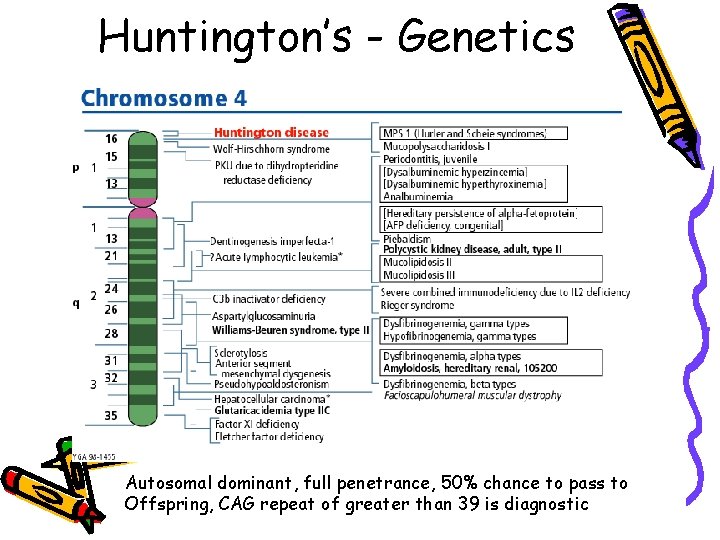
Huntington’s - Genetics Autosomal dominant, full penetrance, 50% chance to pass to Offspring, CAG repeat of greater than 39 is diagnostic
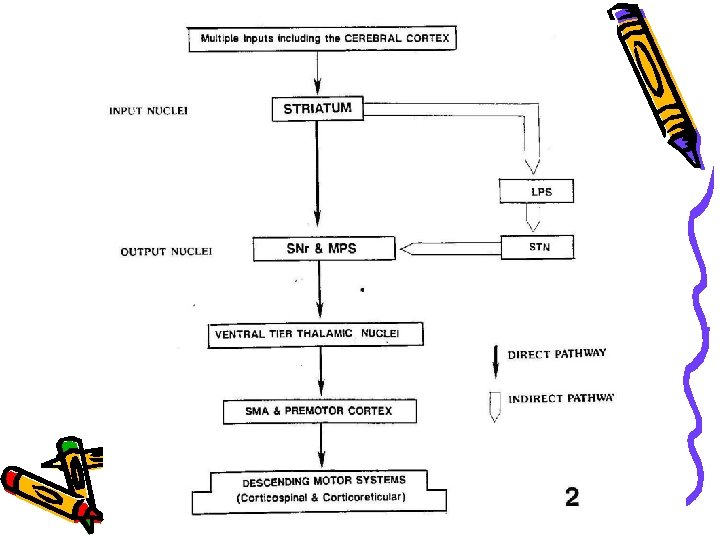
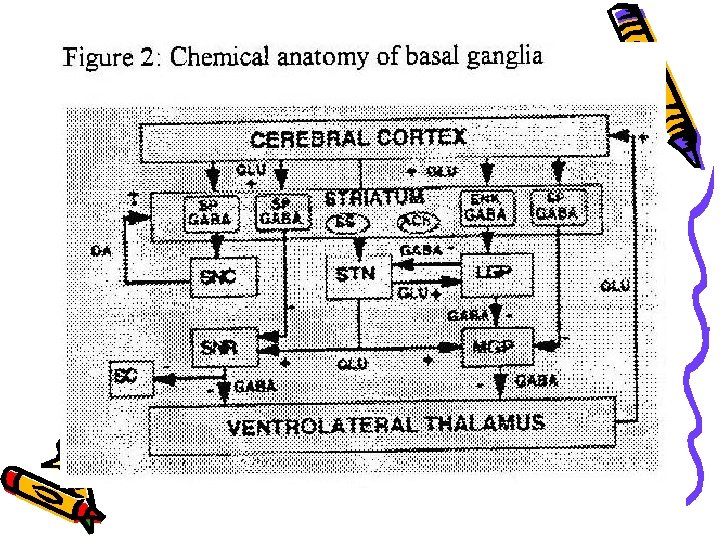
Huntington’s - Features • Age of onset typically 35 -45, but childhood to >80 has occurred • Chronic, progressive, generalized chorea • Failure of indirect pathway • Can have other movement disorders present (parkinsonism, dystonia and tic) • Dementia late in disease
Syndenham’s - Features • A. K. A. Rheumatic Chorea • 10 to 30% of cases of rheumatic fever • Symptoms appear 1 to 6 months after infection and last 5 to 15 weeks • Recurs in 20% of patients • Can cause mental status changes • Most cases in ages 5 to 15 • Migratory chorea of limbs and face • Cardinal features of chorea, hypotonia, dysarthria and emotional lability • Treatment with steroids and treatment for infection
Chorea Gravidarum • Due to antiphospholipid antibody syndrome, with or without SLE • Usually during 2 nd to 5 th month, sometimes postpartum • Cognitive changes may be present • Symptoms resolve spontaneously in weeks to months
Chorea – workup/treatment • Neuroimaging, glucose, electrolytes, thyroid studies, CBC with smear, copper studies, genetic studies • Treat underlying cause • Can use clonazepam as first line • Neuroleptics are second line • Follow-up important because chorea tends to evolve
Myoclonus - Evaluation • Distribution – Generalized, focal, multifocal, segmental • Temporal profile – Continuous, intermittent • Activation – Rest, voluntary, stimulus
Myoclonus - classification • First – determine major category • Second – match clinical and lab/radiology findings with diagnosis within major category
Myoclonus - Categories • • Physiological Essential Epileptic Symptomatic
Myoclonus - Physiologic • • • Neurologically normal persons Sleep jerking – most common Also be anxiety or exercise related Diagnosis based on history alone NO TREATMENT NEEDED
Myoclonus - Essential • Clinically significant jerking occuring at any time • Usually most prominent or only finding • Differs from physiologic because of social or physical disability • Condition progresses slowly or not at all • Hereditary (Autosomal dominant) or sporadic • Face, trunk and proximal muscles • Clinical features and family history make diagnosis • Clonazepam drug of choice is treatment needed
Myoclonus - Epileptic • In persons with chronic seizure disorder and epileptiform activity on EEG • Juvenile Myoclonic Epilepsy – Myoclonic seizures with generalized tonicclonic or absence – Onset in adolescence with peak between 12 and 18 – Abnormality on chromosome 6
Myoclonus - symptomatic • • Neurodegenerative syndromes Infection/Postinfection Drugs, toxins, metabolic disorders Hypoxia Focal or segmental Paraneoplastic Post-CNS injury
Myoclonus – workup/treatment • Electrolytes, glucose, renal and hepatic function testing, drug and toxin screening, brain imaging, EEG • Genetic studies, tissue biopsy and CSF studies as clinically indicated • Treatment is clonazepam • Valproic acid for JME
Tics • Can be suppressed for short periods of time • Simple or complex • Transient tics occur in 20% of children under 10 years of age • Gilles de la Tourette syndrome
Tourette’s • • • 10 cases per 10, 000 population Onset between 2 and 15 (mean 6. 5) Vocal tics begin 1 to 2 years after motor tics 75% are tic free by 18 years old Increase in severity with stress, caffeine, stimulants, fatigue, heat, steroids Decrease with THC, alcohol, nicotine and decrease in mental activity Disability usually social but may be physical injury 50% also with ADHD, 30 to 50% with OCD Multiple other behavioral problems
Tourette’s • Diagnosis: – – Multiple motor and one or more vocal tics Onset before age 18 Tics occur many times a day, nearly every day Variation in location, frequency and complexity over time – Not related to toxins or CNS disease – Symptoms cause impairment
Tourette’s • Genetic factors in 75% with bilineal transmission in 25% • Radiologic/Laboratory workup not needed • Treatment – Clonidine, benzodiazepines, haldol, risperdal, clozapine, reserpine • Surgery for drug-resistant tics, but not shown effective in Tourette’s
Tremor • All people have a physiologic tremor inherent in movement that cannot be normally noticed unless measured • Fine or coarse • Resting, postural, action
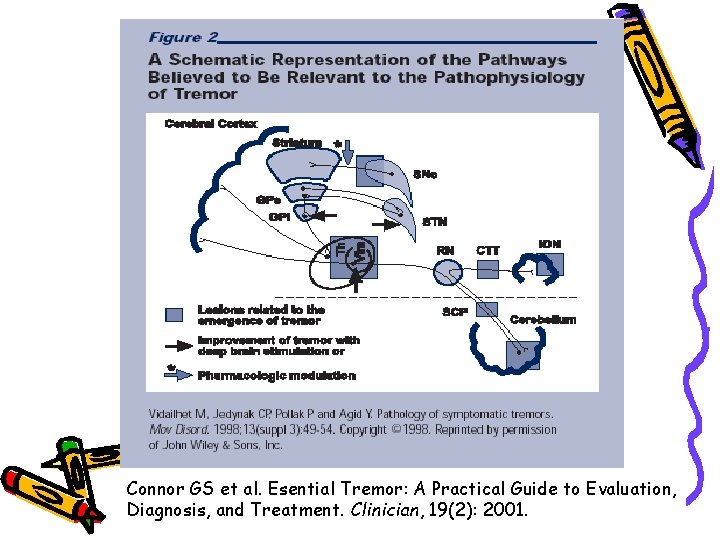
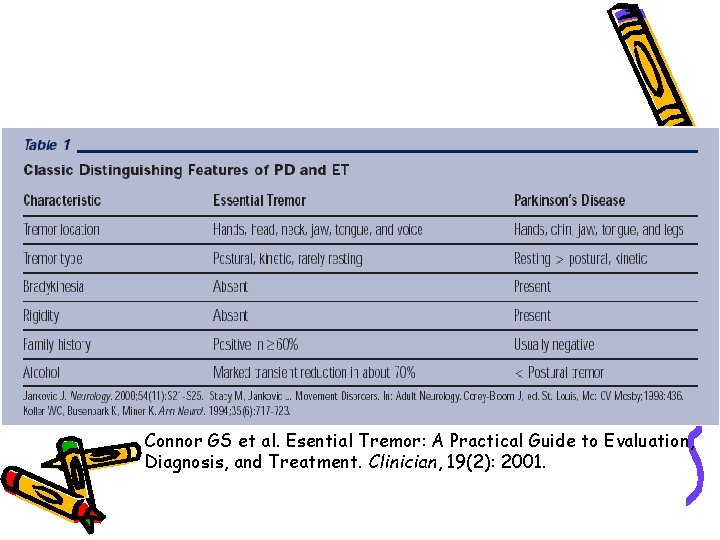
Connor GS et al. Esential Tremor: A Practical Guide to Evaluation, Diagnosis, and Treatment. Clinician, 19(2): 2001.
Tremor - differential • Drug induced (Anticonvulsants, antidepressants, caffeine, steroids) • Hyperthyroidism • Juvenile Parkison’s disease (Not common) • Paroxysmal Dystonic Head Tremor • Essential tremor
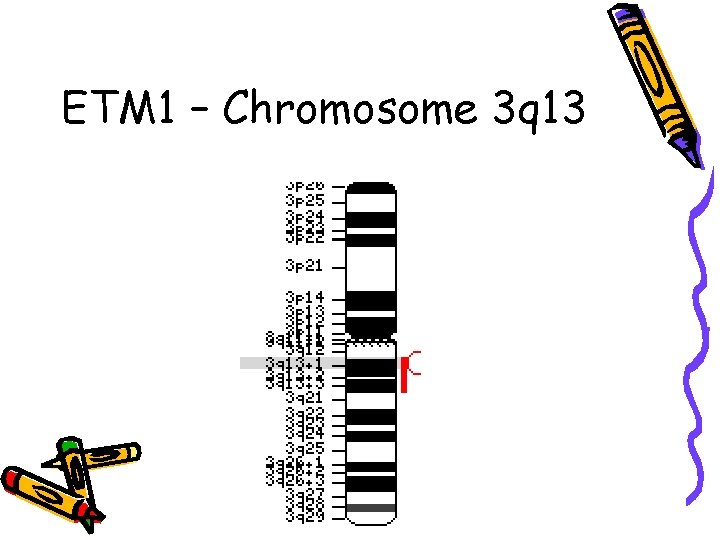
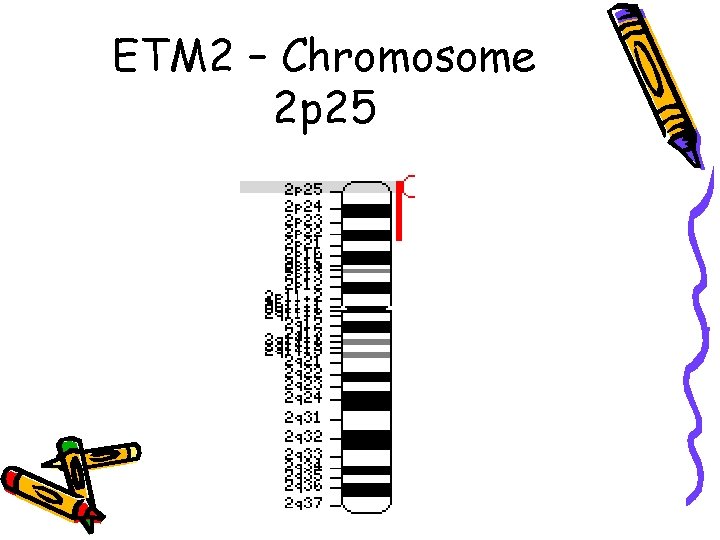
Essential tremor • • 1 in 20 arise in childhood 70% of pediatric cases in males Not associated with other neurologic disturbances Genetics – ETM 1 on 3 q 13, ETM 2 on 2 p 25, complete penetrance, autosomal dominant • Most common movement disorder • Prevalence of 0. 1 to 22% worldwide • 20 times more common than Parkinson’s
ETM 1 – Chromosome 3 q 13
ETM 2 – Chromosome 2 p 25
Essential tremor Features • 4 to 8 hertz • Usually in limbs, occassionally head and face • Appears first in hands because it is enhanced by greater precision movements • Can be postural (early) and action (later) • Generally life-long • Can impact writing and other functions • Worsening due to enhanced physiologic tremor • Enhanced by anxiety, attempts to suppress, fatigue • Tremor can become severe with significant disability
Connor GS et al. Esential Tremor: A Practical Guide to Evaluation, Diagnosis, and Treatment. Clinician, 19(2): 2001.
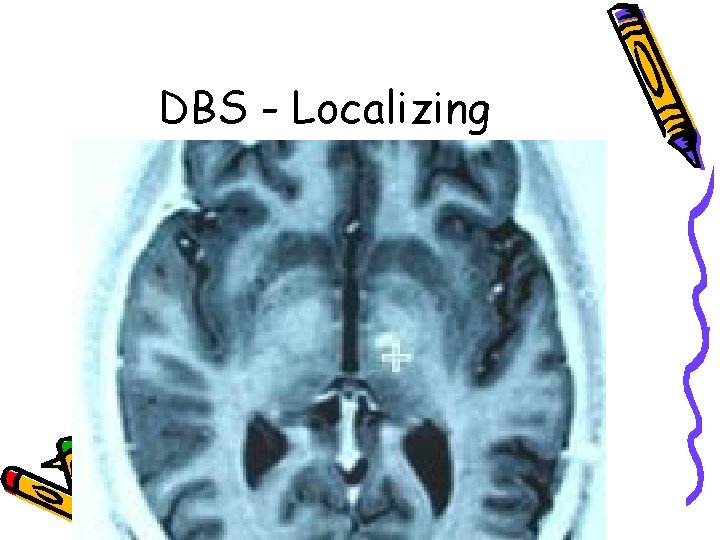
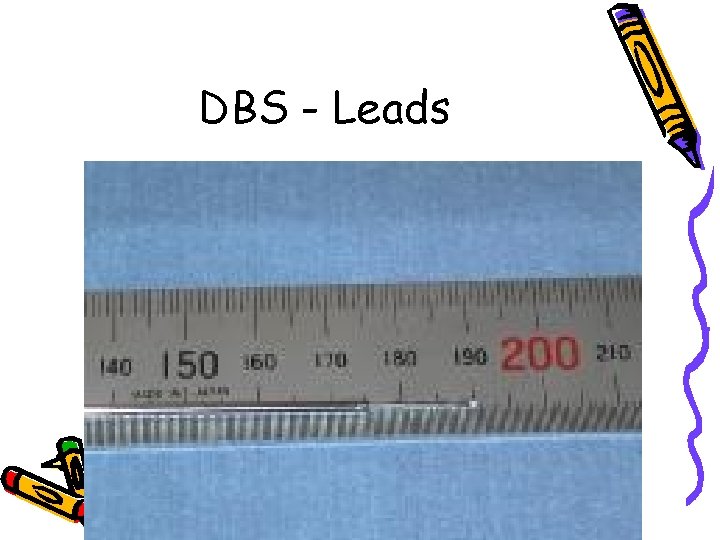
Essential Tremor – workup/treatment • Neuroimaging normal, pathology not indicated, genetic research possible if familial • Treatment usually not needed • If needed use beta-blockers first – Then anticonvulsants, benzos, calcium channel blockers, botox • If severe tremor, drug-resistant, deep brain stimulation
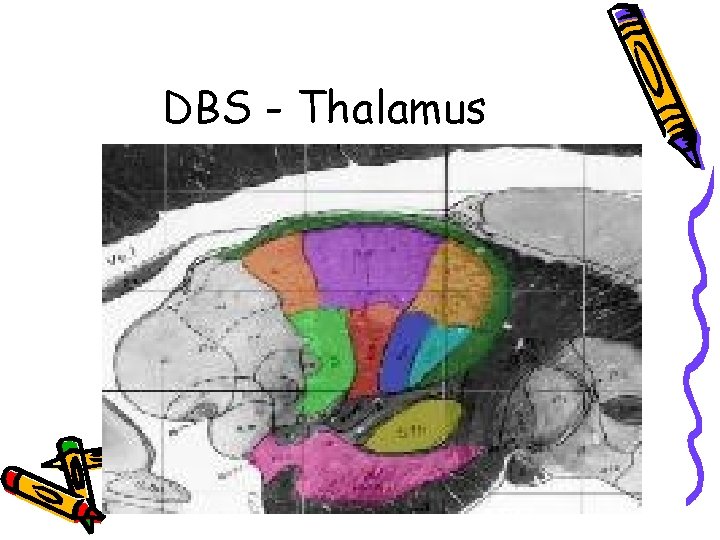
DBS - Thalamus
DBS - Localizing
DBS - Leads
References • Postgraduate Medicine, 108(5), Oct 2000. • Pranzatelli MR. Movement Disorders in Childhood. Ped Rev, 17(11): 1996. • Gerald M. Fenichel. Clinical Pediatric Neurology, 4 th Edition. 2001. • All videos courtesy of Dr. Difazio