
Dynamics of Domestic Violence Definition Domestic violence refers

- Slides: 22
Dynamics of Domestic Violence
Definition Domestic violence refers to abuse in an intimate relationship Intimate relationship – 2 people, dating, living together, married or separated Abuse – not only behavior, but meaning, intent and effect
Red Flags Experiences fear with their partner Feels unsafe at home Physically injured Actions, speech and relationships are controlled
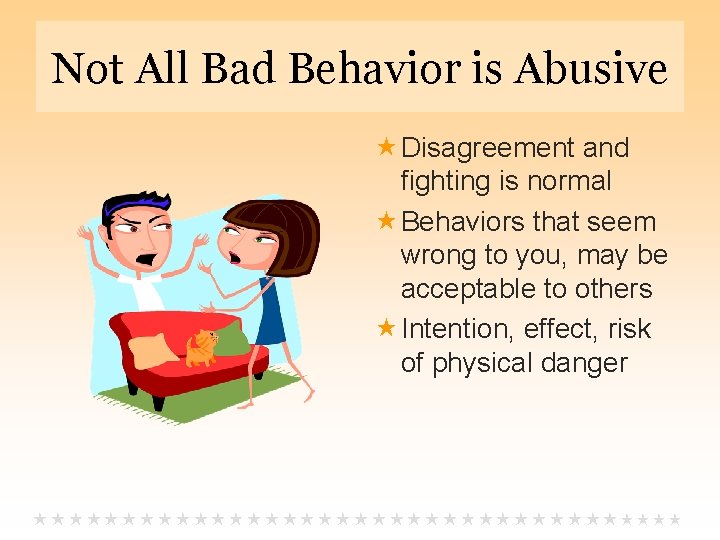
Not All Bad Behavior is Abusive Disagreement and fighting is normal Behaviors that seem wrong to you, may be acceptable to others Intention, effect, risk of physical danger
It Depends Intention of perpetrator – To control by frightening or harming Effect on the victim – Frightened or harmed Pattern or repetitive nature – Incident is not unique in the relationship, but a pattern
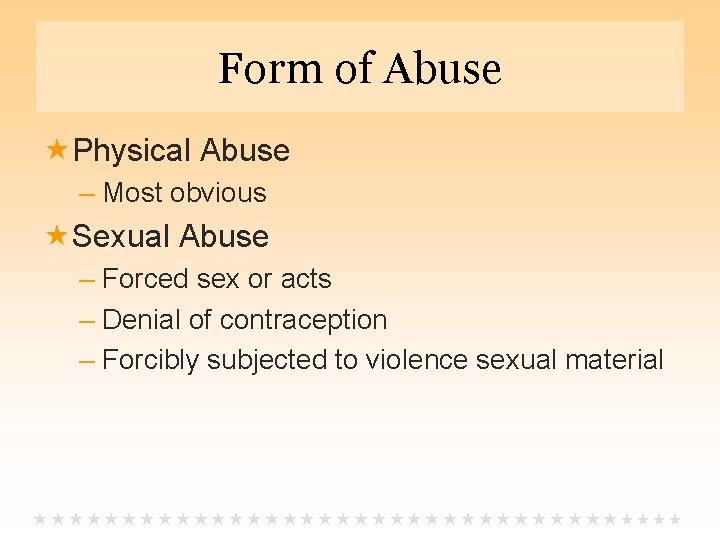
Form of Abuse Physical Abuse – Most obvious Sexual Abuse – Forced sex or acts – Denial of contraception – Forcibly subjected to violence sexual material
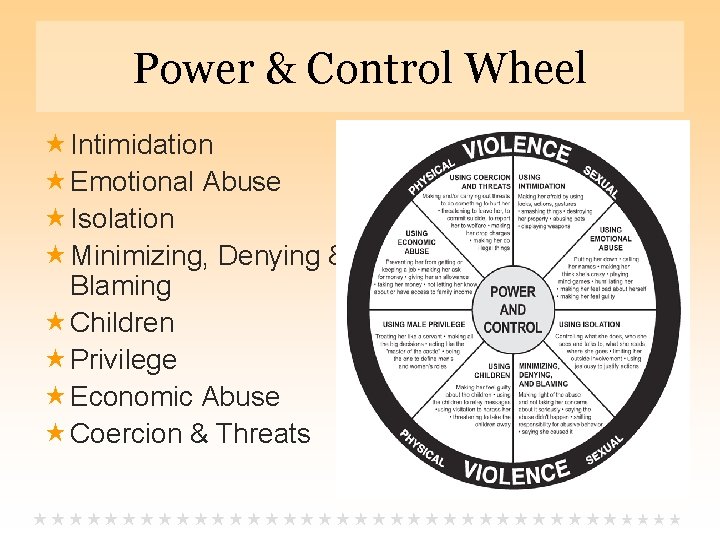
Power & Control Wheel Intimidation Emotional Abuse Isolation Minimizing, Denying & Blaming Children Privilege Economic Abuse Coercion & Threats
Leaving vs. Staying Leaving does not always equal safety Leaving or having left is often the most dangerous time Sometimes staying is the safest option
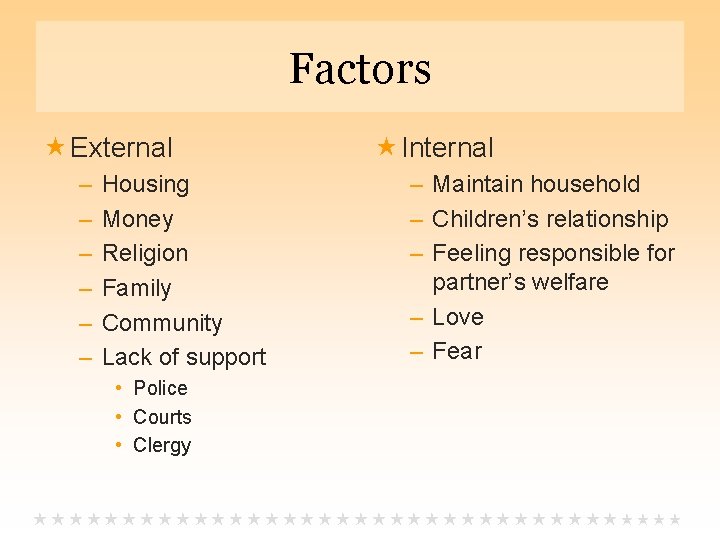
Factors External – – – Housing Money Religion Family Community Lack of support Internal – Maintain household – Children’s relationship – Feeling responsible for partner’s welfare – Love – Fear • Police • Courts • Clergy
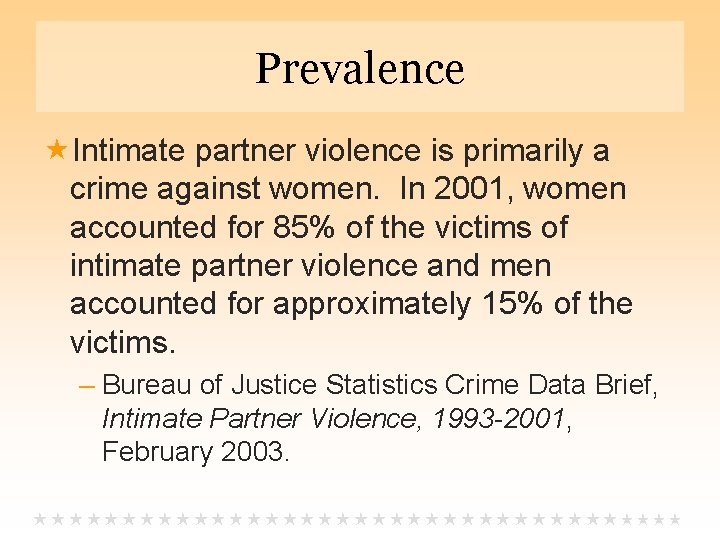
Prevalence Intimate partner violence is primarily a crime against women. In 2001, women accounted for 85% of the victims of intimate partner violence and men accounted for approximately 15% of the victims. – Bureau of Justice Statistics Crime Data Brief, Intimate Partner Violence, 1993 -2001, February 2003.
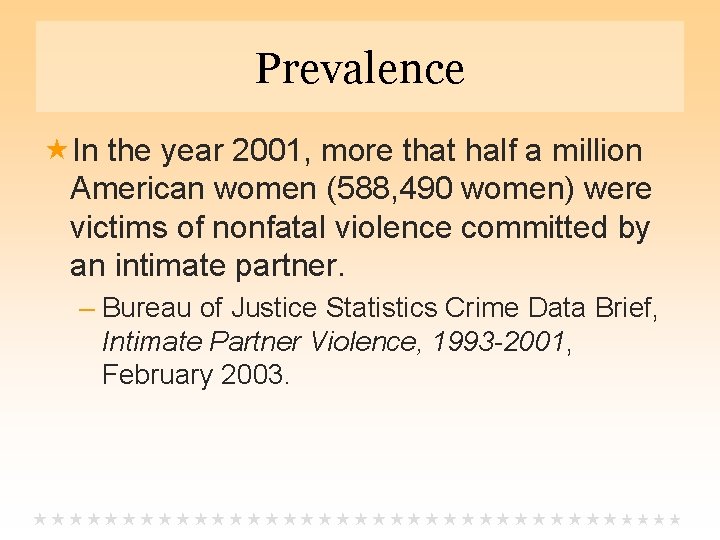
Prevalence In the year 2001, more that half a million American women (588, 490 women) were victims of nonfatal violence committed by an intimate partner. – Bureau of Justice Statistics Crime Data Brief, Intimate Partner Violence, 1993 -2001, February 2003.
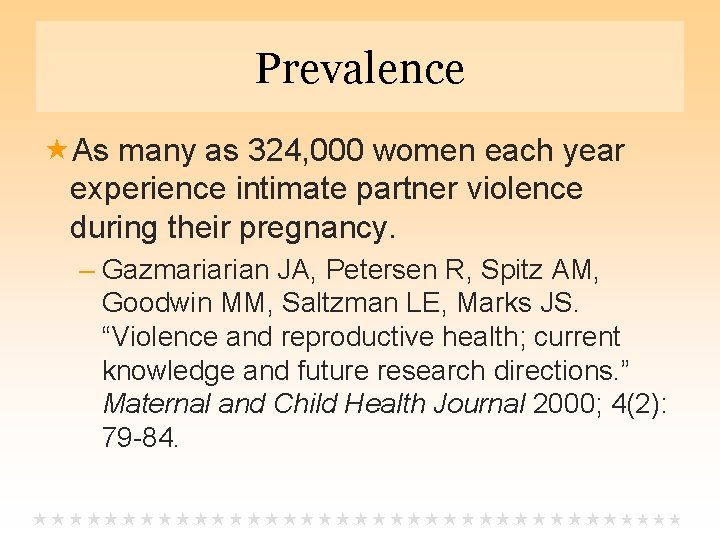
Prevalence As many as 324, 000 women each year experience intimate partner violence during their pregnancy. – Gazmariarian JA, Petersen R, Spitz AM, Goodwin MM, Saltzman LE, Marks JS. “Violence and reproductive health; current knowledge and future research directions. ” Maternal and Child Health Journal 2000; 4(2): 79 -84.
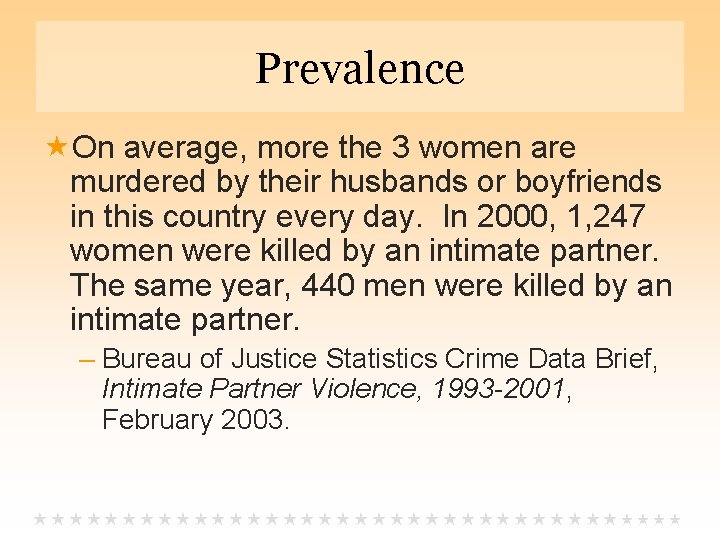
Prevalence On average, more the 3 women are murdered by their husbands or boyfriends in this country every day. In 2000, 1, 247 women were killed by an intimate partner. The same year, 440 men were killed by an intimate partner. – Bureau of Justice Statistics Crime Data Brief, Intimate Partner Violence, 1993 -2001, February 2003.
Implications Abuse in intimate relationships is common enough that somebody you know or work with, will be affected by it. Therefore, it is important that you can recognize it and respond sensitively.
The Helper’s Role Give LIFE –Listen –Inform –Facilitate –Empower
Screening Make it standard – “Because this issue is so prevalent, we ask everybody these questions. “ It’s okay to ask about safety
Questions Avoid loaded questions or words – “abused” or “domestic violence” “What happens when you and your partner have a disagreement? ” “Have you ever been afraid of your partner? ” “Is there anyone in your life that is harming you? ”
DON’T Avoid “why” – Implies victim responsibility – The batterer is the one who is responsible for the violence.
DO Know your local referrals Make meaningful referrals
Safety Planning Purpose of safety planning is to reduce risk Good safety plans are personalized and flexible
Financial Safety Planning After leaving – Shred all bills so abuser cannot steal new account numbers from trash – Gain a copy of credit report and dispute errors – Change all PIN codes – Ensure abuser’s name is off utility accounts – Workplace safety
Financial Safety Planning In the relationship – Discover assets – Access to cash and account numbers – Locating important documents – Budgeting When considering leaving – Consider workplace safety – Safely store documents and cash