
Dynamics of Complex Networks II The Percolation problem
Dynamics of Complex Networks II: The Percolation problem Panos Argyrakis Department of Physics University of Thessaloniki
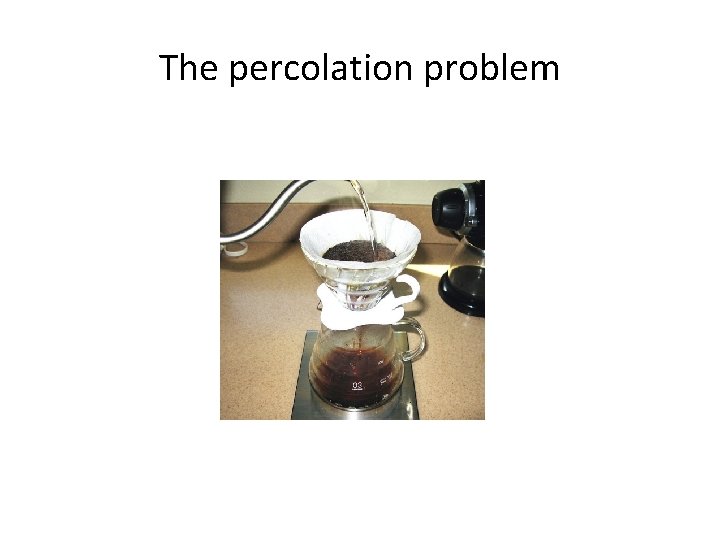
The percolation problem
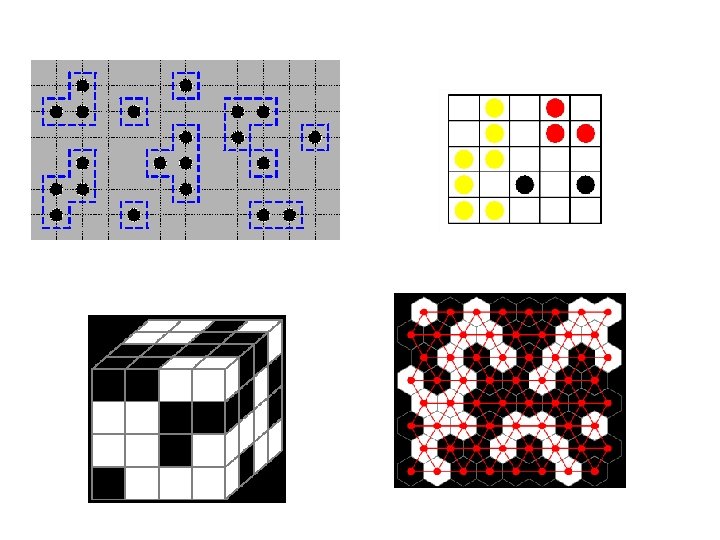
What is the problem? • • system made of 2 types of entities open/closed, true/false, conducting/insulating randomly mixed fixed ratio of open/closed, called “p” p in the range 0<p<1 adjacent entities of same type form clusters depend on topology can be on lattice sites or on lattice bonds
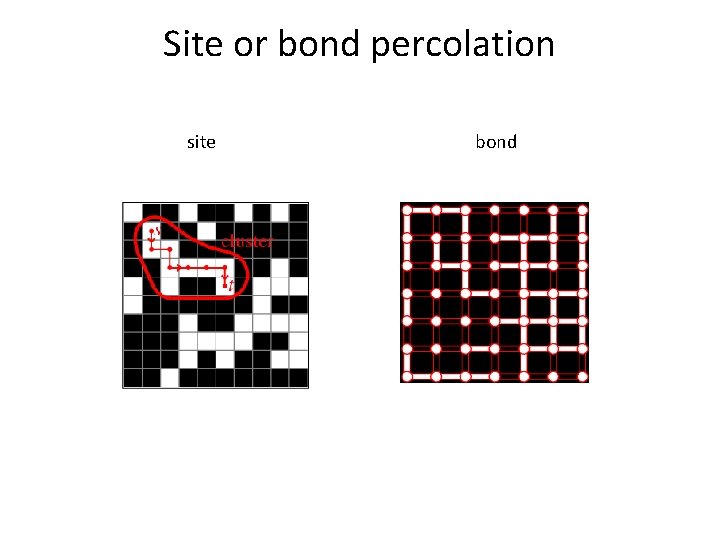
Site or bond percolation site bond
Percolation phase transition • focus on largest cluster only • size increases abruptly at the critical point • system goes through a phase transition from “insulating” to “conducting” • 2 nd order phase transition, DH=0
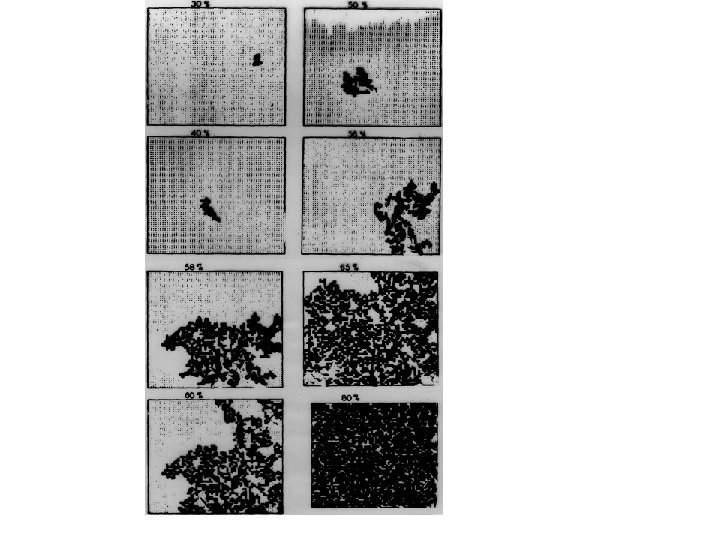
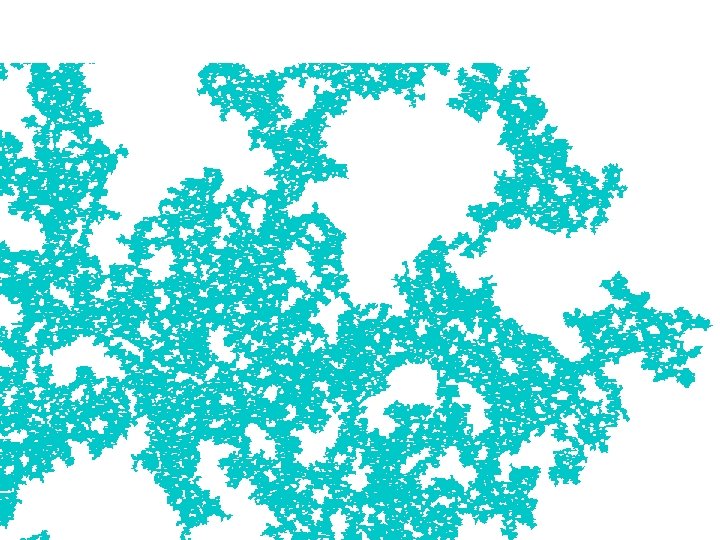
Percolation simulation
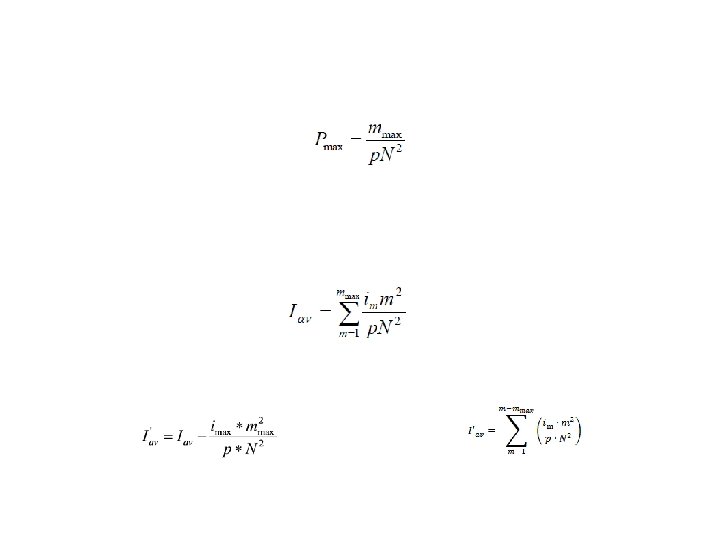
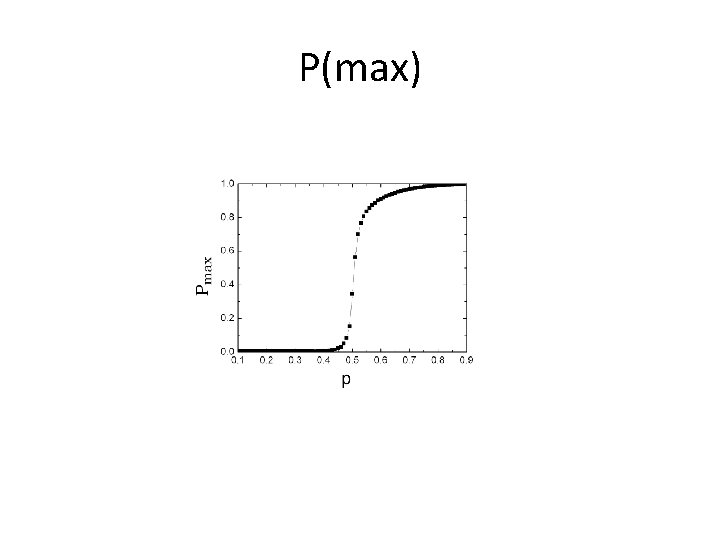
P(max)
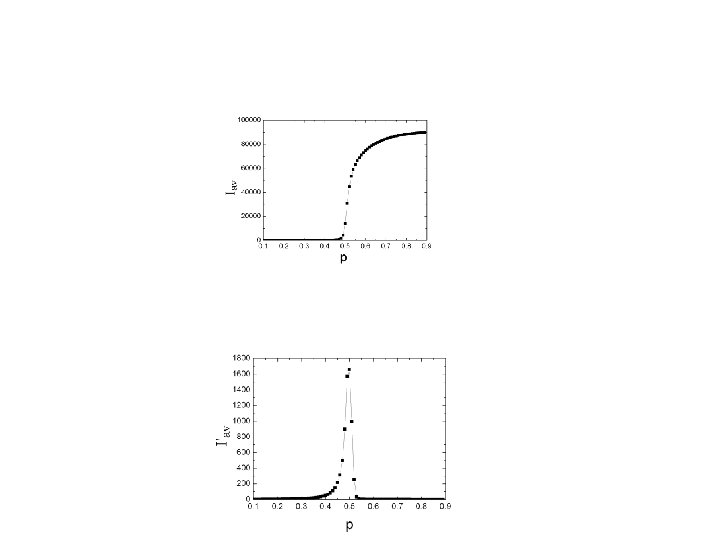
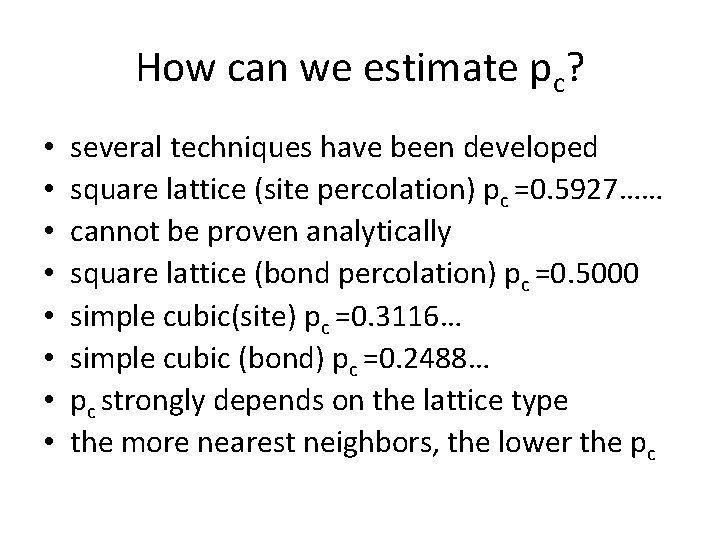
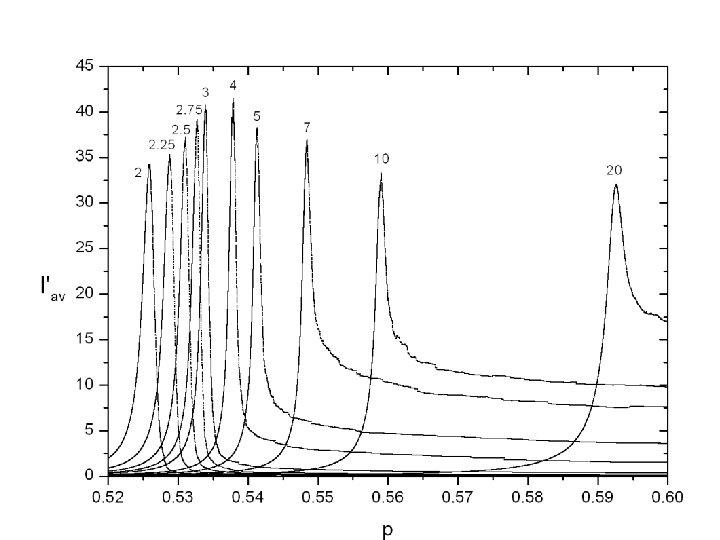
How can we estimate pc? • • several techniques have been developed square lattice (site percolation) pc =0. 5927…… cannot be proven analytically square lattice (bond percolation) pc =0. 5000 simple cubic(site) pc =0. 3116… simple cubic (bond) pc =0. 2488… pc strongly depends on the lattice type the more nearest neighbors, the lower the pc
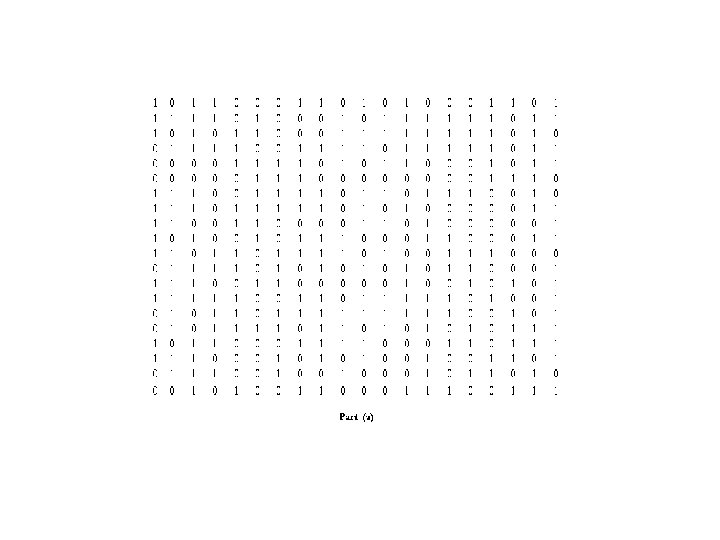
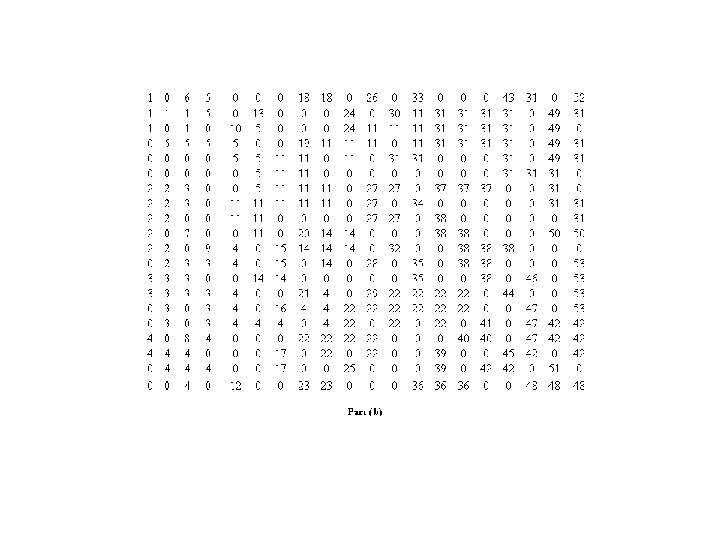
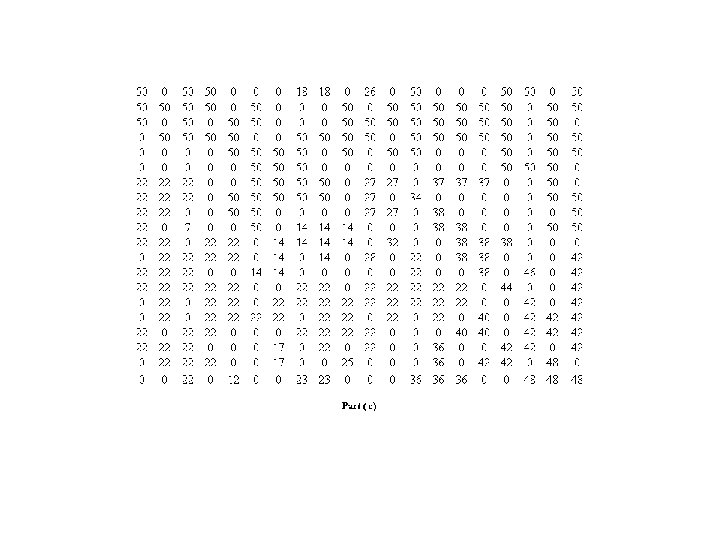
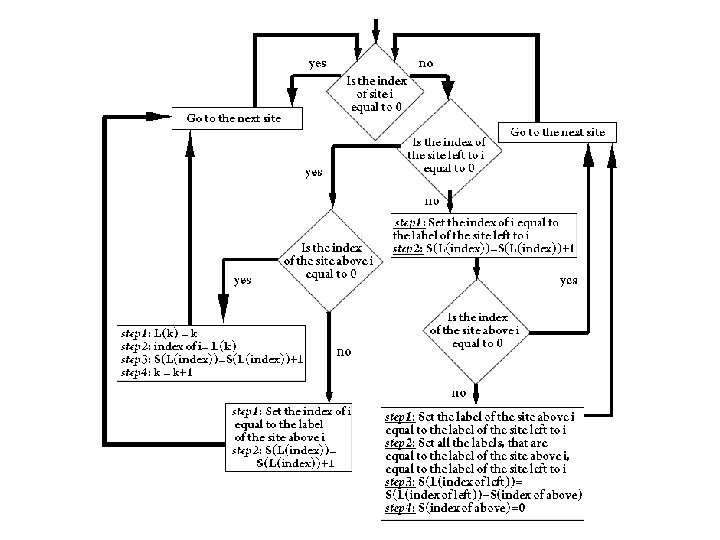
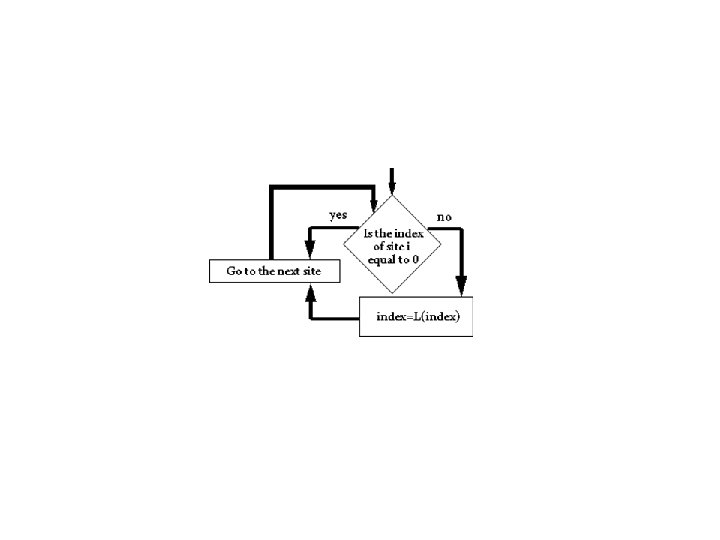
Cluster Multiple Labeling Technique (CMLT) sweep the lattice from one end to the other for every cluster that appears give a different index number everytime 2 clusters join, they become one cluster “brute force” method: go back and merge the index numbers of the 2 clusters into 1 index number only. Need to sweep entire lattice • CMLT method: need only a single sweep for the same job • Invented by Hoshen (1976) • •
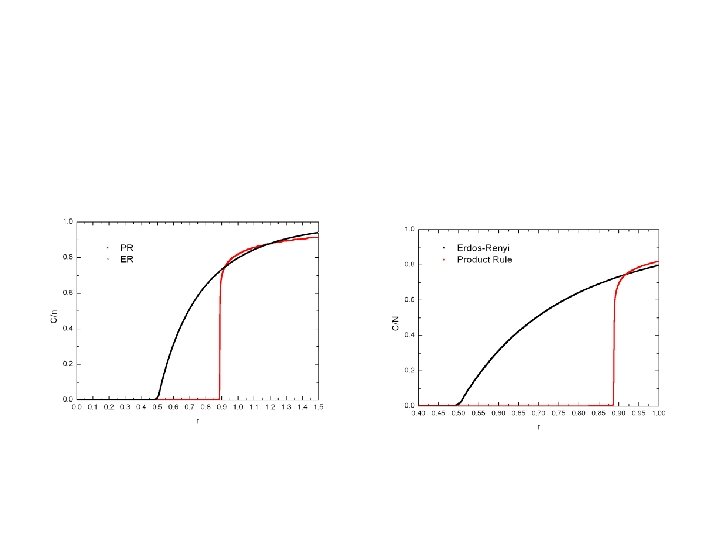
Achlioptas process • developed in 2010 • new method of preparing the system • use probe sites and fill lattice in such a way as to delay the criticality
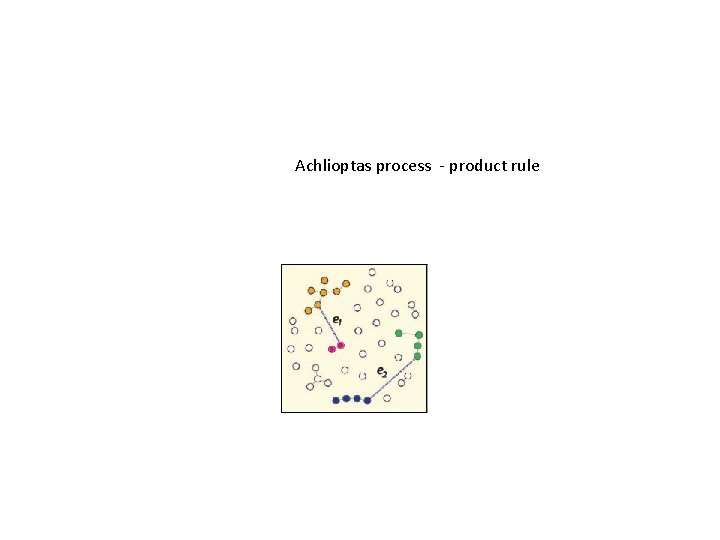
Achlioptas process - product rule
- Slides: 25