
Dynamics I Forces Newtons First Law 4 Natural
- Slides: 10
Dynamics I Forces & Newton’s First Law
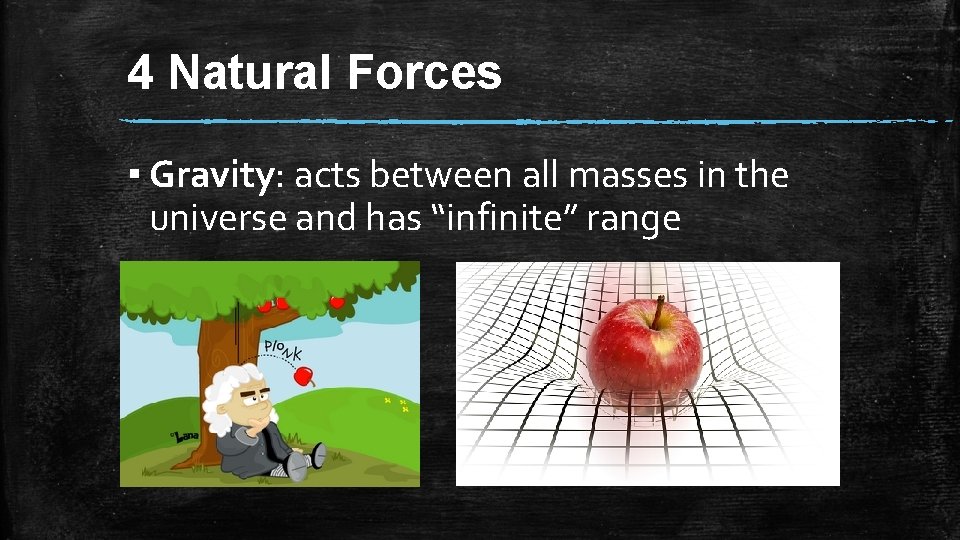
4 Natural Forces ▪ Gravity: acts between all masses in the universe and has “infinite” range
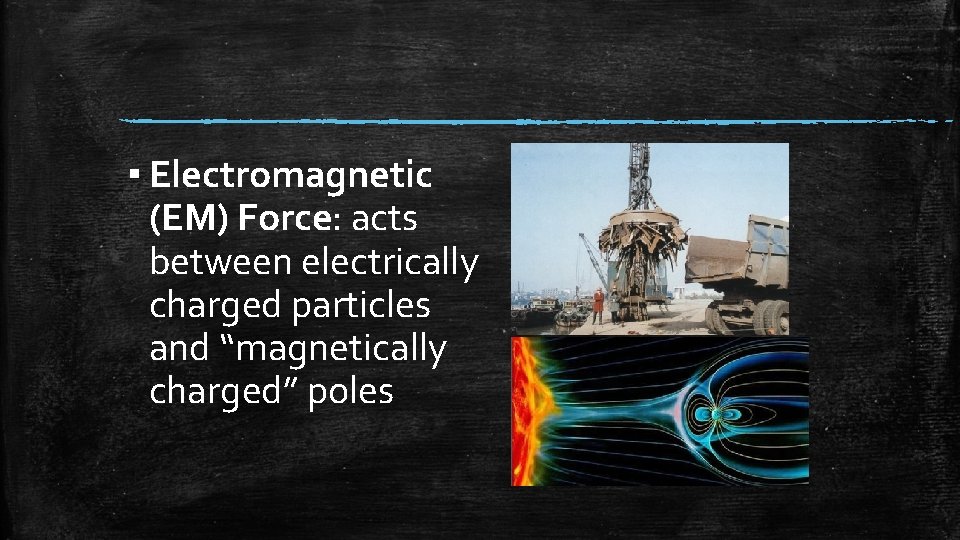
▪ Electromagnetic (EM) Force: acts between electrically charged particles and “magnetically charged” poles
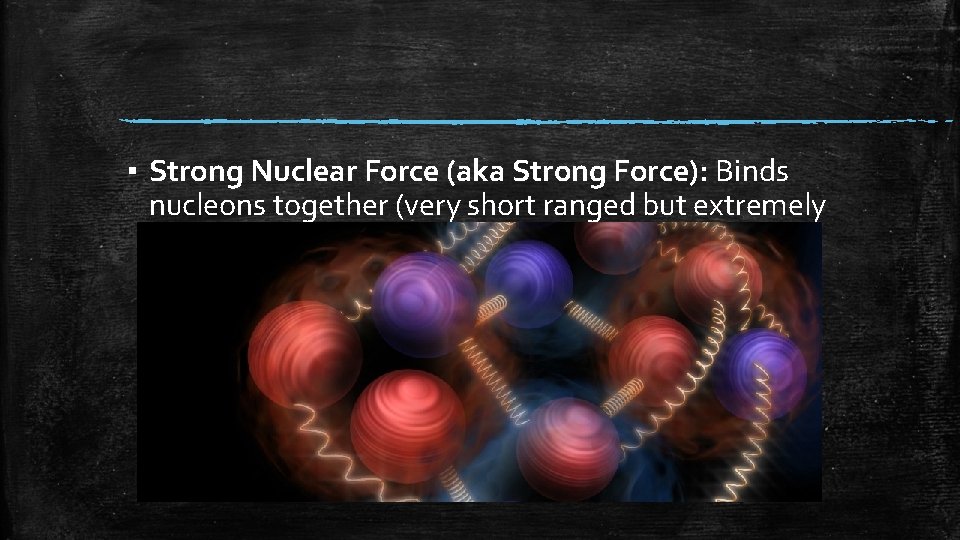
▪ Strong Nuclear Force (aka Strong Force): Binds nucleons together (very short ranged but extremely strong)
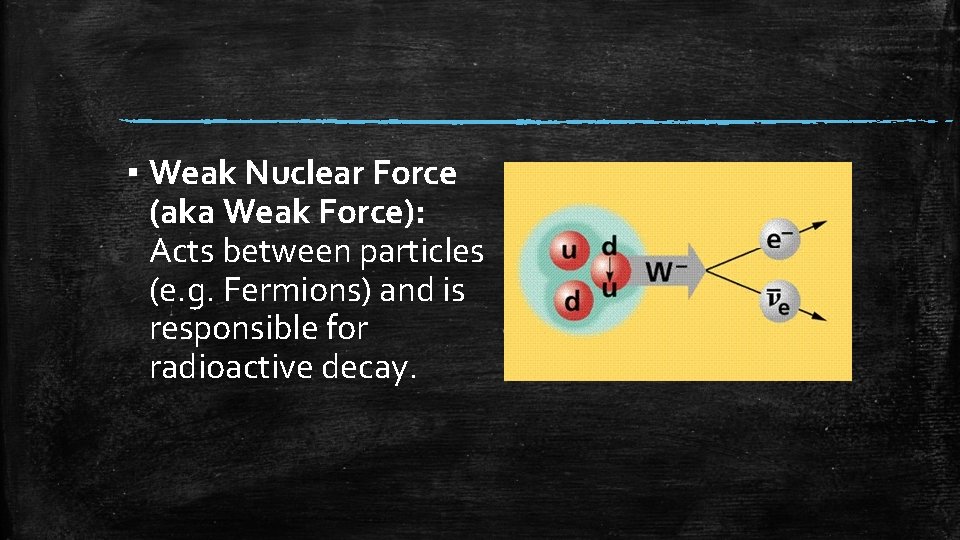
▪ Weak Nuclear Force (aka Weak Force): Acts between particles (e. g. Fermions) and is responsible for radioactive decay.
What is a force? ▪ A force is a push or a pull on an object ▪ An object’s motion will change with time if the forces acting on it are unbalanced – Change in motion change in velocity – Change in velocity acceleration ▪ If the forces are balanced the object’s motion will not change – No change in motion velocity is constant – Velocity is constant acceleration is zero
Field Forces vs. Contact Forces ▪ Contact forces happen when objects touch ▪ Field forces act at a distance – Gravity – Electrostatic forces – Magnetic forces
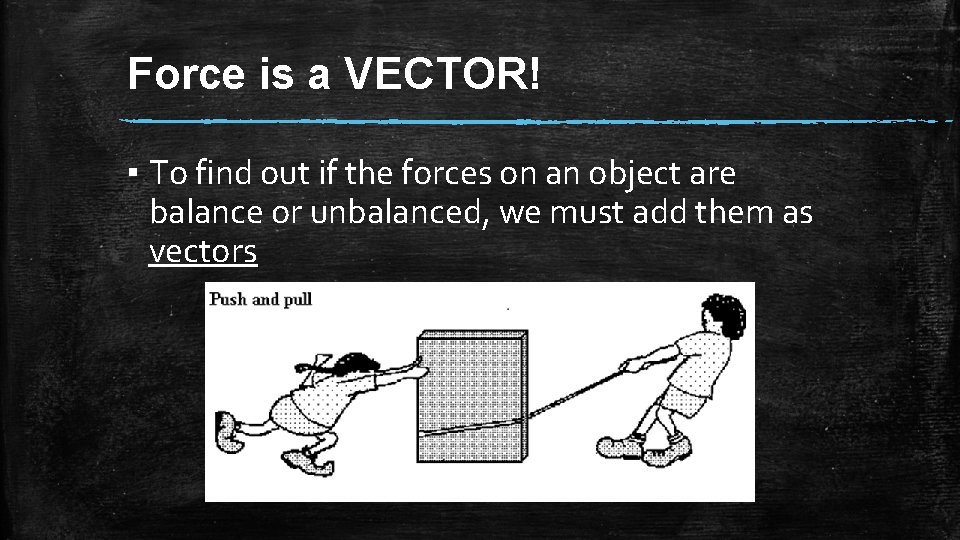
Force is a VECTOR! ▪ To find out if the forces on an object are balance or unbalanced, we must add them as vectors
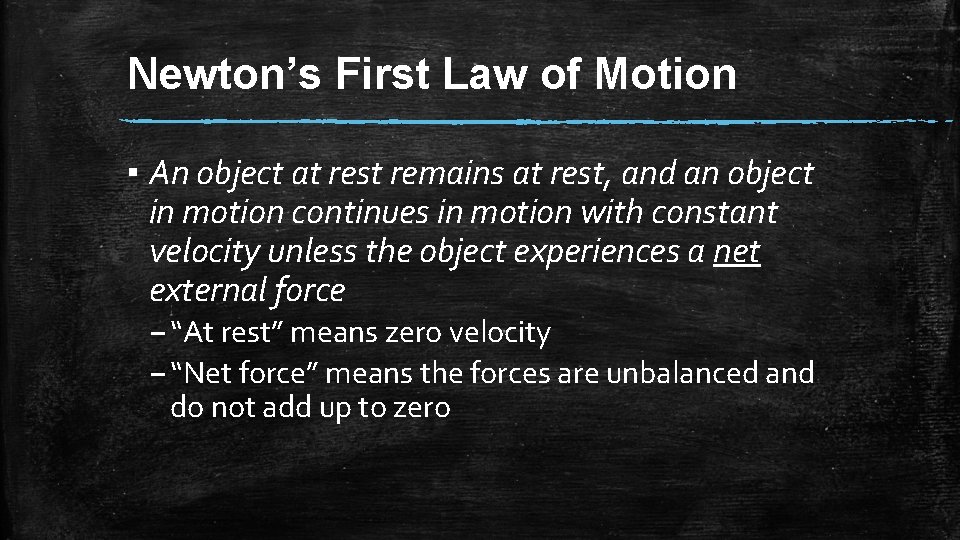
Newton’s First Law of Motion ▪ An object at rest remains at rest, and an object in motion continues in motion with constant velocity unless the object experiences a net external force – “At rest” means zero velocity – “Net force” means the forces are unbalanced and do not add up to zero
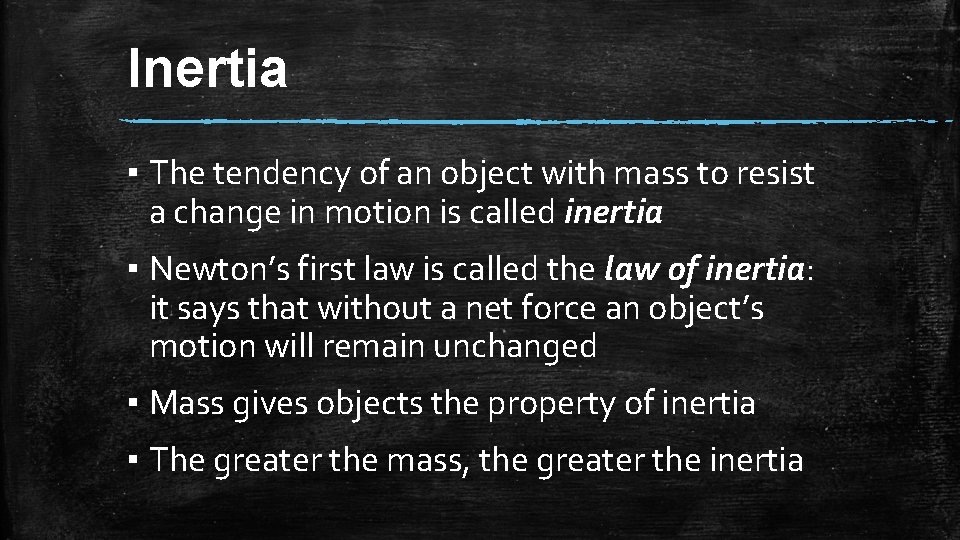
Inertia ▪ The tendency of an object with mass to resist a change in motion is called inertia ▪ Newton’s first law is called the law of inertia: it says that without a net force an object’s motion will remain unchanged ▪ Mass gives objects the property of inertia ▪ The greater the mass, the greater the inertia