
Dynamic Systems Initiative DSI Model and PolicyBased Systems
Dynamic Systems Initiative (DSI) Model- and Policy-Based Systems Management Kirill Tatarinov Kirill. Tatarinov@microsoft. com Corporate Vice President Server and Tools Business
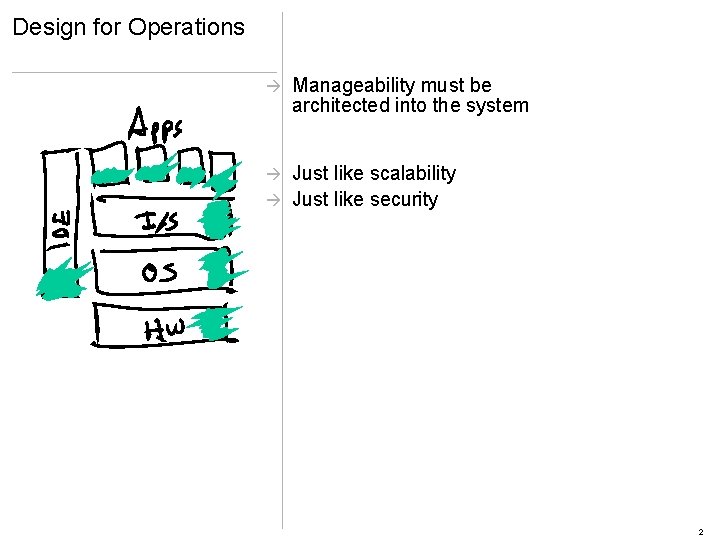
Design for Operations à Manageability must be architected into the system Just like scalability à Just like security à 2
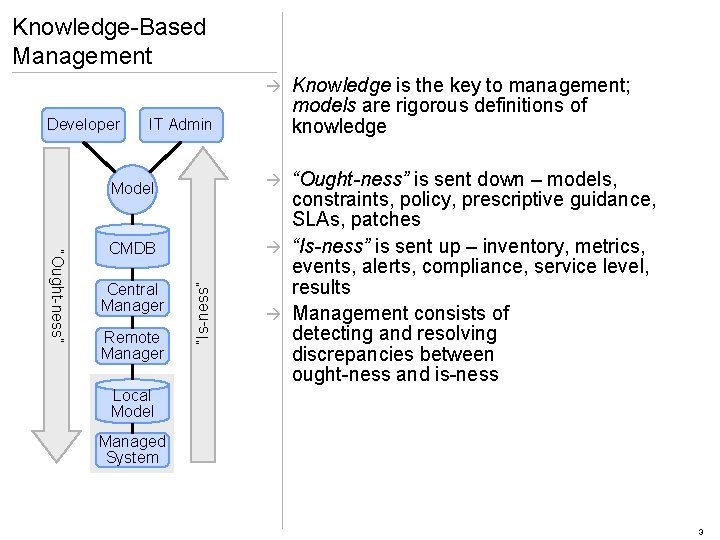
Knowledge-Based Management à Developer IT Admin “Is-ness” “Ought-ness” CMDB Remote Manager “Ought-ness” is sent down – models, constraints, policy, prescriptive guidance, SLAs, patches à “Is-ness” is sent up – inventory, metrics, events, alerts, compliance, service level, results à Management consists of detecting and resolving discrepancies between ought-ness and is-ness à Model Central Manager Knowledge is the key to management; models are rigorous definitions of knowledge Local Model Managed System 3
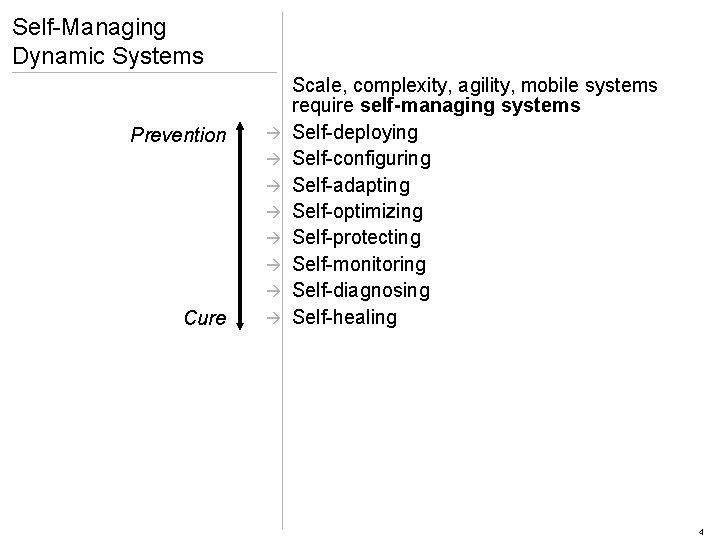
Self-Managing Dynamic Systems Prevention à à à à Cure à Scale, complexity, agility, mobile systems require self-managing systems Self-deploying Self-configuring Self-adapting Self-optimizing Self-protecting Self-monitoring Self-diagnosing Self-healing 4
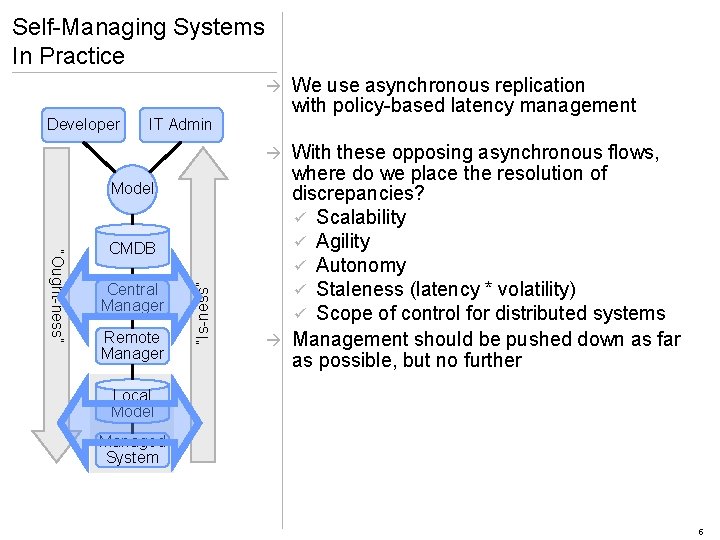
Self-Managing Systems In Practice à Developer IT Admin We use asynchronous replication with policy-based latency management With these opposing asynchronous flows, where do we place the resolution of discrepancies? ü Scalability ü Agility ü Autonomy ü Staleness (latency * volatility) ü Scope of control for distributed systems à Management should be pushed down as far as possible, but no further à Model Central Manager Remote Manager “Is-ness” “Ought-ness” CMDB Local Model Managed System 5
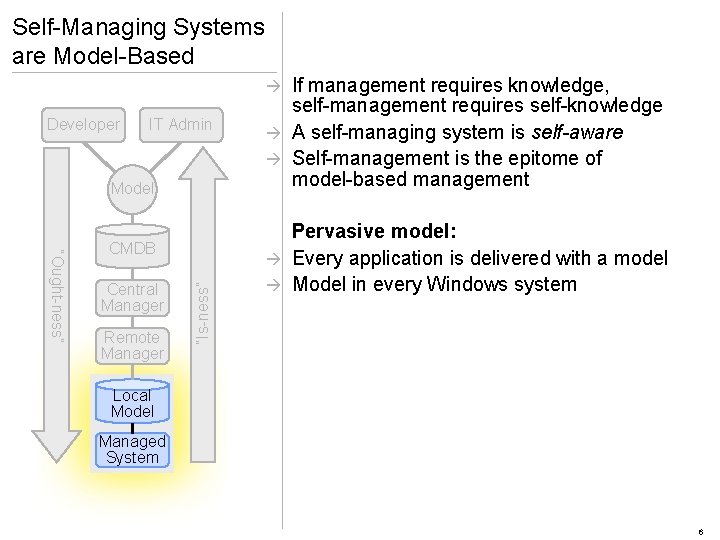
Self-Managing Systems are Model-Based If management requires knowledge, self-management requires self-knowledge à A self-managing system is self-aware à Self-management is the epitome of model-based management à Developer IT Admin Model Central Manager Remote Manager “Is-ness” “Ought-ness” CMDB Pervasive model: à Every application is delivered with a model à Model in every Windows system Local Model Managed System 6

Model-Based Management System Definition Model à An XML-based modeling language that is used to capture a formal model of a system à Model contains “all information pertinent to deployment and operations” ü System topology ü Developer constraints ü IT policy ü Installation directives ü Health model ü Monitoring rules ü Service Level Agreements ü Reports à Extensible models 7

Dynamic Systems Initiative – Implemented à Visual Studio 2005 à System Center Capacity Planner 2006 à System Center Operations Manager 2007 à System Center Configuration Manager 2007 à Windows Server Codename “Longhorn” à System Center VM Manager à System Center “Service Desk” authoring and validation capacity planning service monitoring desired configuration management role and workload configuration VM and workload management MOF/ITIL-based workflow and change manager 8
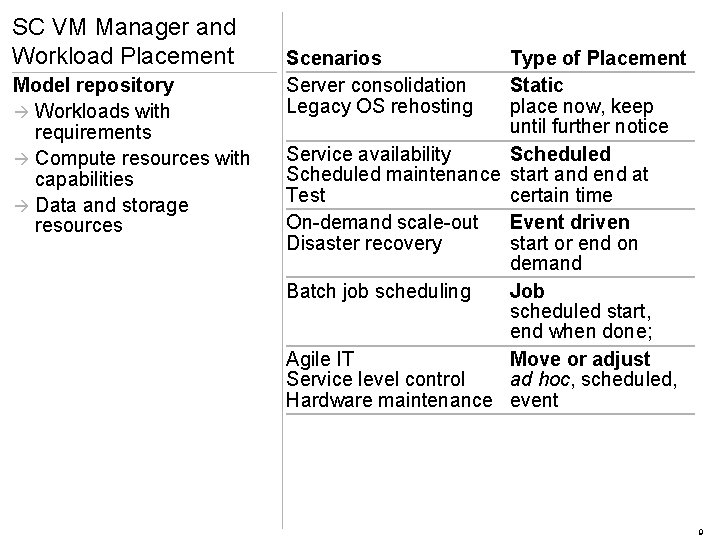
SC VM Manager and Workload Placement Model repository à Workloads with requirements à Compute resources with capabilities à Data and storage resources Scenarios Server consolidation Legacy OS rehosting Type of Placement Static place now, keep until further notice Service availability Scheduled maintenance start and end at Test certain time On-demand scale-out Event driven Disaster recovery start or end on demand Batch job scheduling Job scheduled start, end when done; Agile IT Move or adjust Service level control ad hoc, scheduled, Hardware maintenance event 9
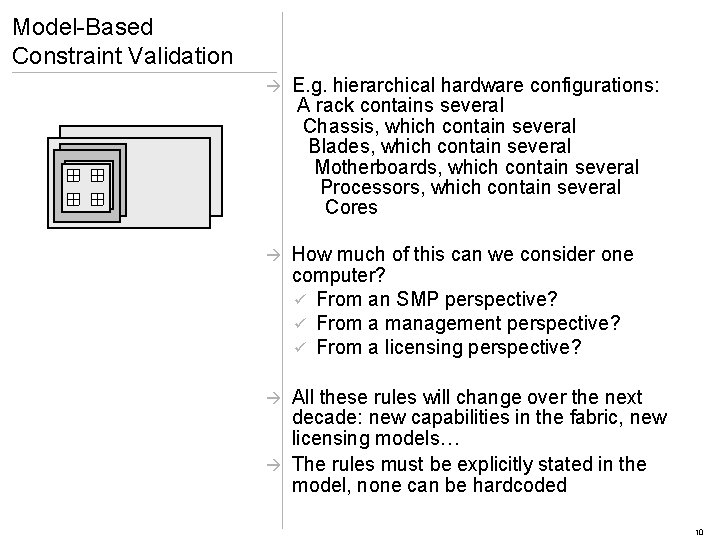
Model-Based Constraint Validation à E. g. hierarchical hardware configurations: A rack contains several Chassis, which contain several Blades, which contain several Motherboards, which contain several Processors, which contain several Cores à How much of this can we consider one computer? ü From an SMP perspective? ü From a management perspective? ü From a licensing perspective? All these rules will change over the next decade: new capabilities in the fabric, new licensing models… à The rules must be explicitly stated in the model, none can be hardcoded à 10
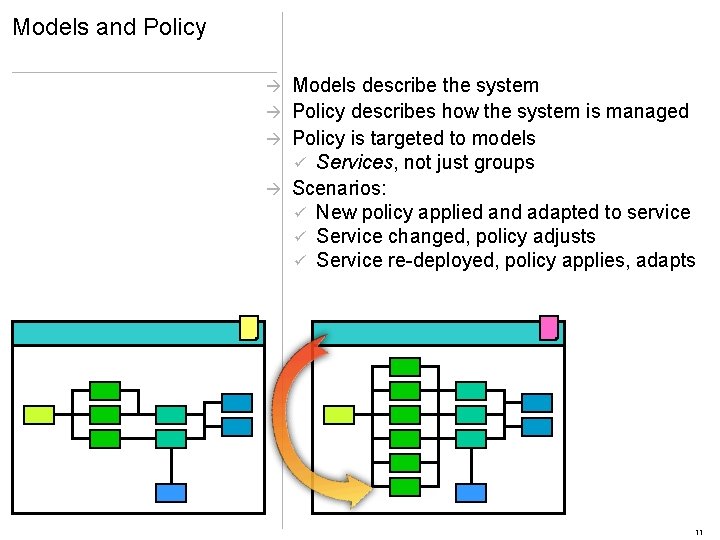
Models and Policy Models describe the system à Policy describes how the system is managed à Policy is targeted to models ü Services, not just groups à Scenarios: ü New policy applied and adapted to service ü Service changed, policy adjusts ü Service re-deployed, policy applies, adapts à 11
A Management Revolution à DSI is about changing the industry’s mindset à A very ambitious, long-range initiative à Lead with Microsoft adoption © 2002 Microsoft Corporation. All rights reserved. This presentation is for informational purposes only. Microsoft makes no warranties, express or implied, in this summary. 12
Thank you Kirill. Tatarinov@microsoft. com
- Slides: 13