
Dynamic Structure Factor and Diffusion Outline FDynamic structure

- Slides: 19
Dynamic Structure Factor and Diffusion
Outline FDynamic structure factor FDiffusion coefficient FHydrodynamic radius FDiffusion of rodlike molecules FConcentration effects
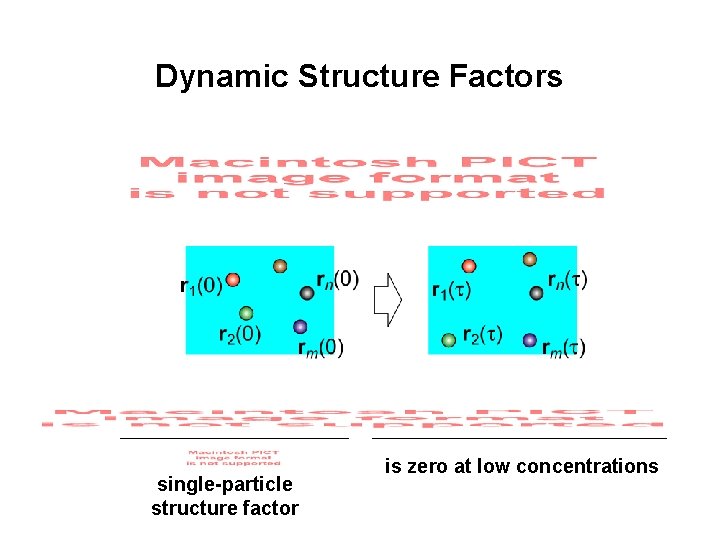
Dynamic Structure Factors single-particle structure factor is zero at low concentrations
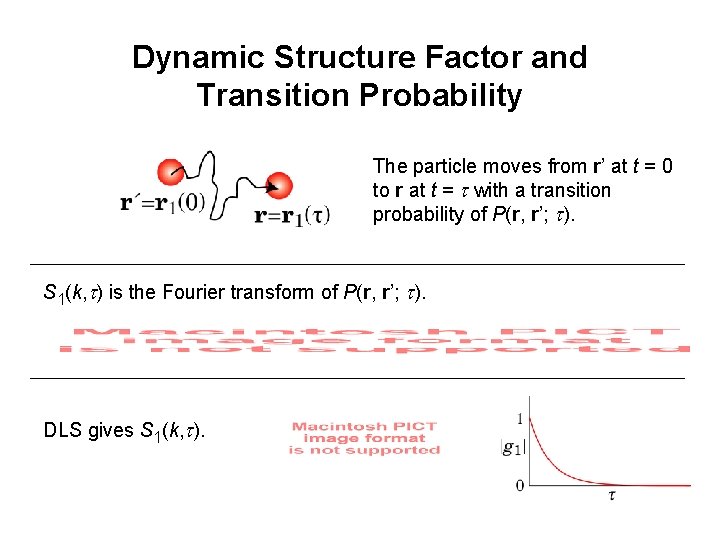
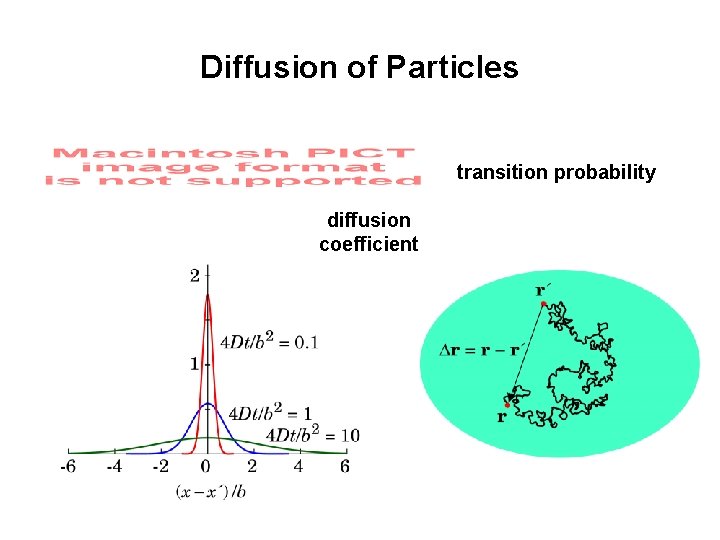
Dynamic Structure Factor and Transition Probability The particle moves from r’ at t = 0 to r at t = t with a transition probability of P(r, r’; t). S 1(k, t) is the Fourier transform of P(r, r’; t). DLS gives S 1(k, t).
Diffusion of Particles transition probability diffusion coefficient
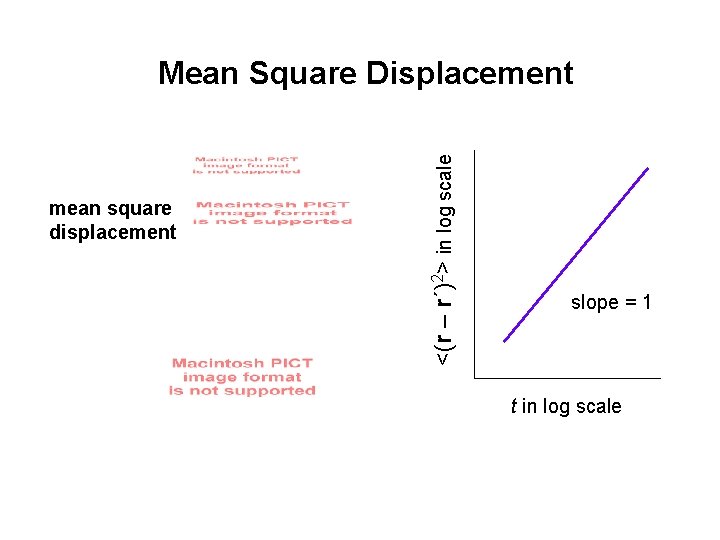
mean square displacement <(r – r´)2> in log scale Mean Square Displacement slope = 1 t in log scale
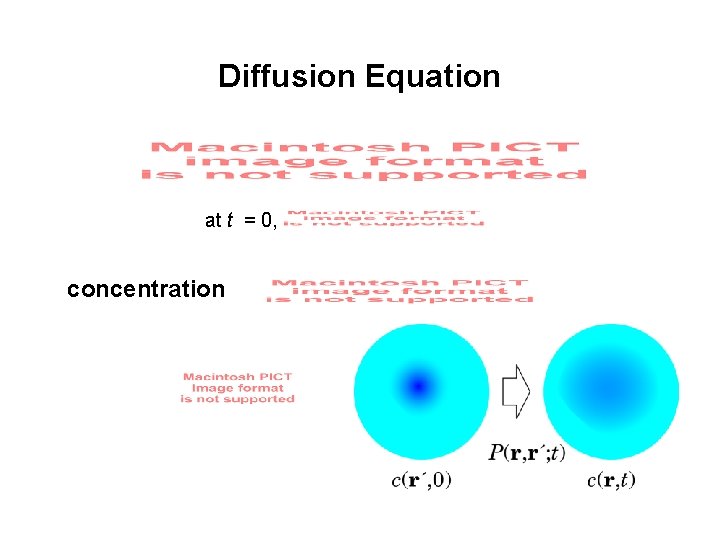
Diffusion Equation at t = 0, concentration
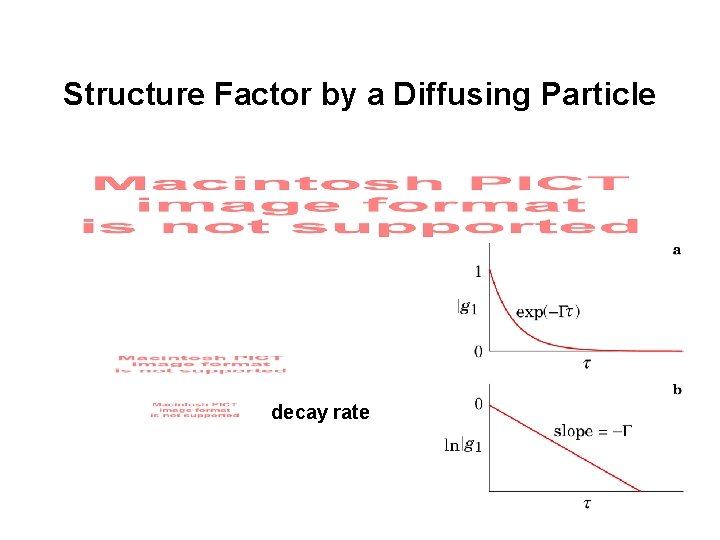
Structure Factor by a Diffusing Particle decay rate
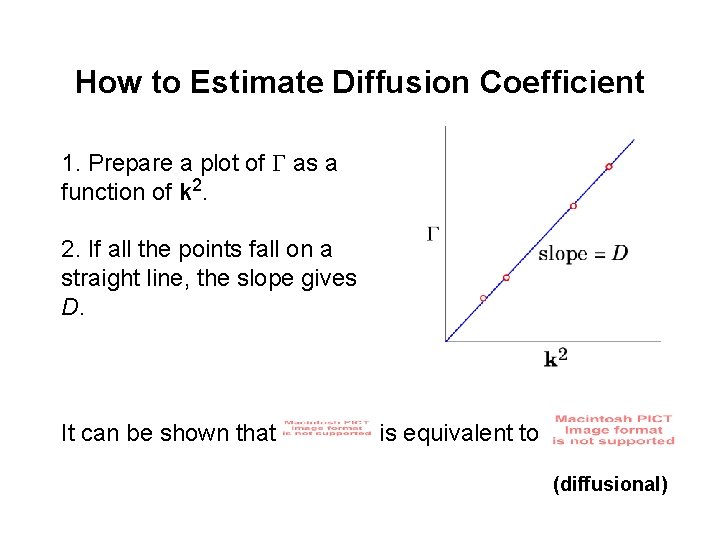
How to Estimate Diffusion Coefficient 1. Prepare a plot of G as a function of k 2. 2. If all the points fall on a straight line, the slope gives D. It can be shown that is equivalent to (diffusional)
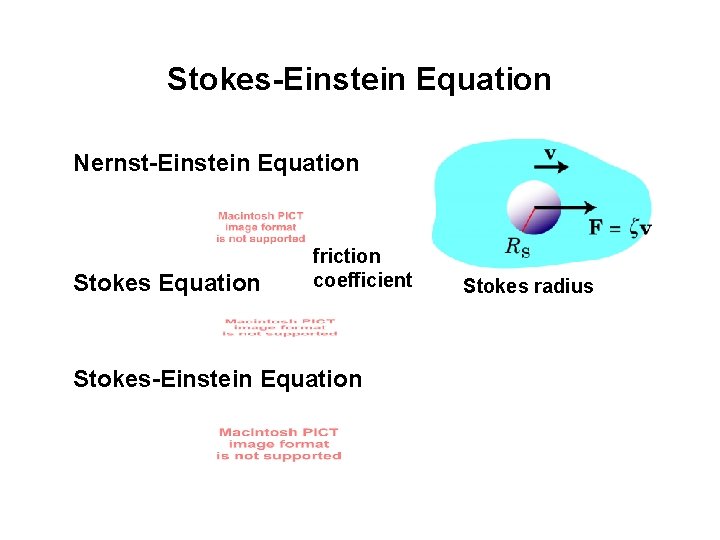
Stokes-Einstein Equation Nernst-Einstein Equation Stokes Equation friction coefficient Stokes-Einstein Equation Stokes radius
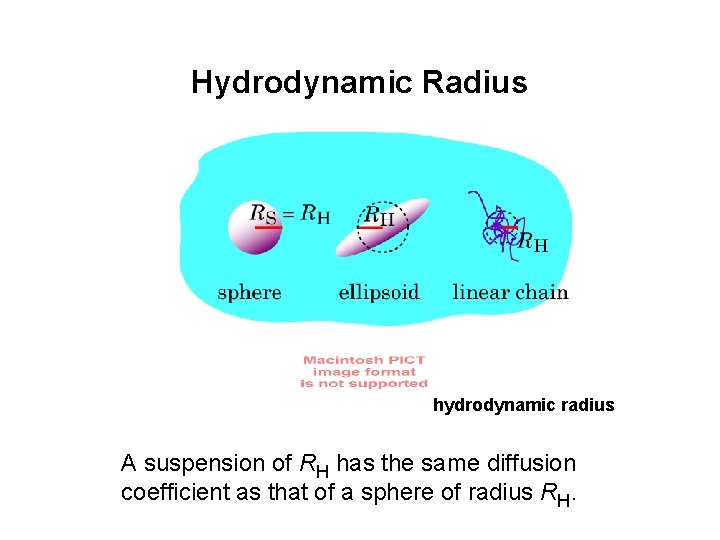
Hydrodynamic Radius hydrodynamic radius A suspension of RH has the same diffusion coefficient as that of a sphere of radius RH.
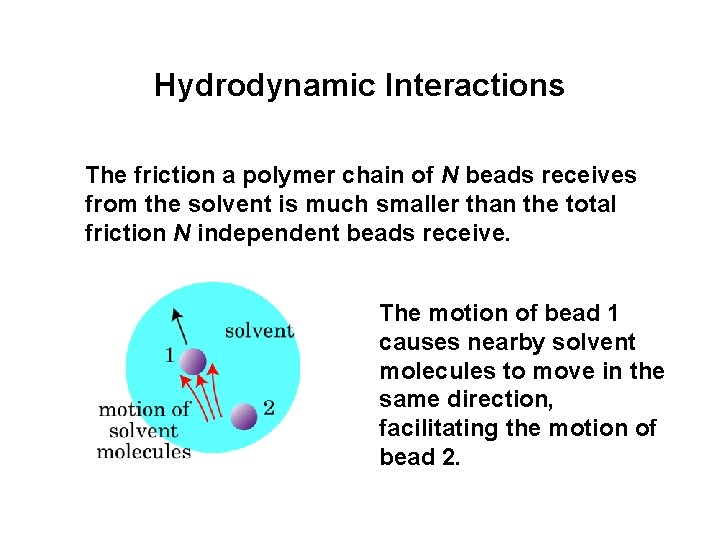
Hydrodynamic Interactions The friction a polymer chain of N beads receives from the solvent is much smaller than the total friction N independent beads receive. The motion of bead 1 causes nearby solvent molecules to move in the same direction, facilitating the motion of bead 2.
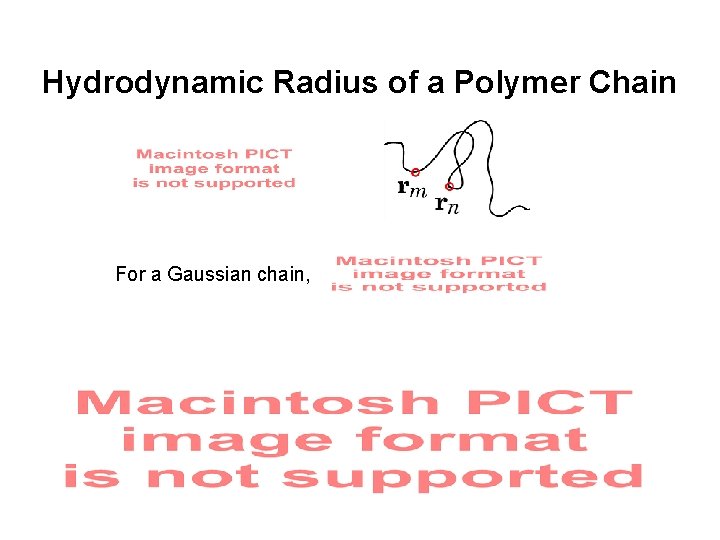
Hydrodynamic Radius of a Polymer Chain For a Gaussian chain,
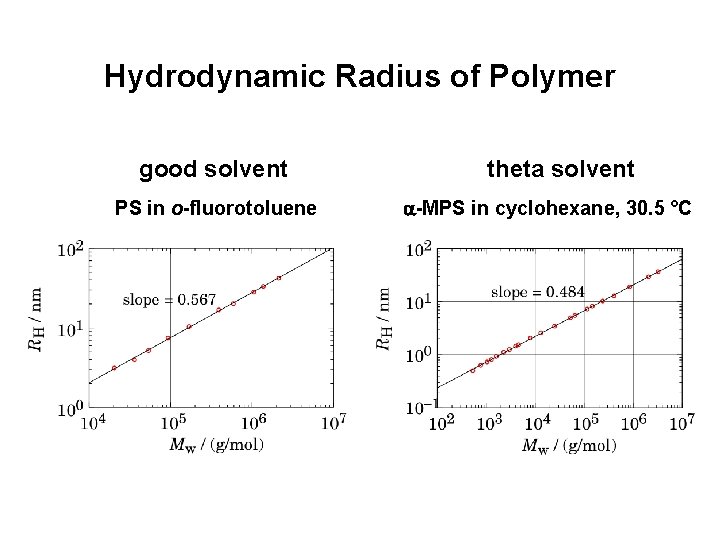
Hydrodynamic Radius of Polymer good solvent PS in o-fluorotoluene theta solvent a-MPS in cyclohexane, 30. 5 °C
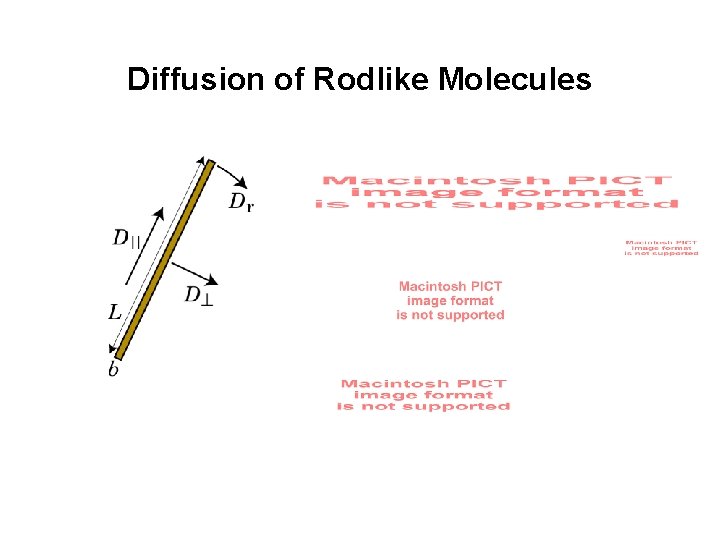
Diffusion of Rodlike Molecules
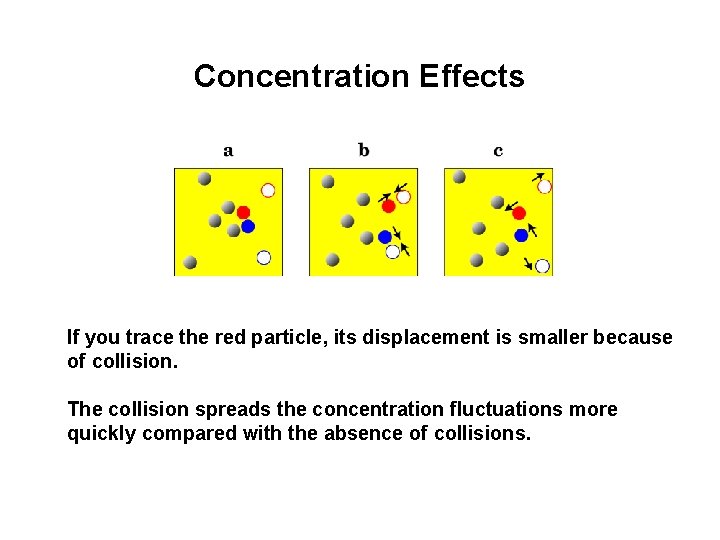
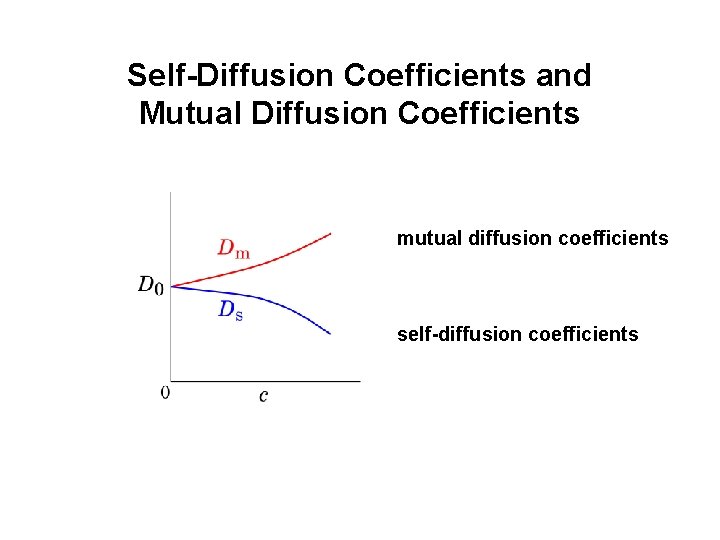
Concentration Effects If you trace the red particle, its displacement is smaller because of collision. The collision spreads the concentration fluctuations more quickly compared with the absence of collisions.
Self-Diffusion Coefficients and Mutual Diffusion Coefficients mutual diffusion coefficients self-diffusion coefficients
Self-Diffusion Coefficients DLS cannot measure Ds. As an alternative, the tracer diffusion coefficient is measured for a ternary solution in which the second solute (matrix) is isorefractive with the solvent.
Mutual Diffusion Coefficients DLS measures Dm in binary solutions: specific volume with backflow correction In a good solvent, A 2 M is sufficiently large to make k. D positive.