
Dynamic Speed Limits to improve local air quality

- Slides: 14
Dynamic Speed Limits to improve local air quality Henk Stoelhorst Rijkswaterstaat, Centre for Transport and Navigation
Agenda: § Reduction of speed limits due to air pollution § Experience pilot scheme A 13 Overschie § Experience on other 80 km zones § Dynamic speed limits § Conclusions 1
Strategic view Dutch Motorway Speed Limits • Road design motorway network: 120 km/h (120 where possible) • Safety and environmental considerations: 100 km/h near urban areas and ring roads around cities (100 where necessary) • Recently, on particular spots with local air quality problems: 80 km/h (80 by exemption) 2
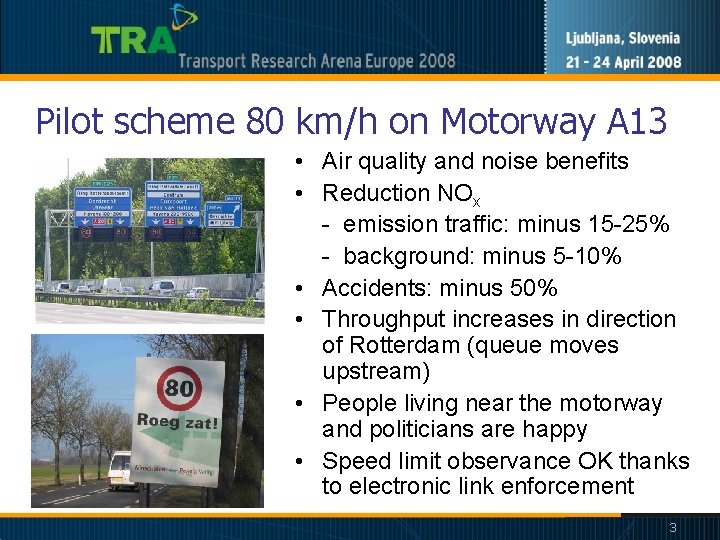
Pilot scheme 80 km/h on Motorway A 13 • Air quality and noise benefits • Reduction NOx - emission traffic: minus 15 -25% - background: minus 5 -10% • Accidents: minus 50% • Throughput increases in direction of Rotterdam (queue moves upstream) • People living near the motorway and politicians are happy • Speed limit observance OK thanks to electronic link enforcement 3
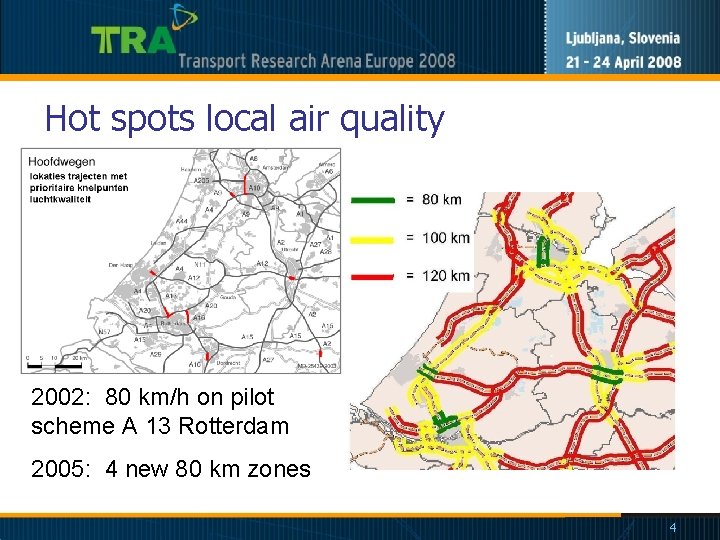
Hot spots local air quality 2002: 80 km/h on pilot scheme A 13 Rotterdam 2005: 4 new 80 km zones 4
Invoering 80 per 1 november 5
Practical experience 80 km zones (1) • Local air quality: improved on all spots. Traffic emissions reduce with 20 -30% for NOx and 10% PM 10 • Noise: measured reduction 0 - 1 d. B(A), reduction of noise peaks with met 1, 0 – 2, 5 d. B(A) • Traffic safety: too limited time period for accident analysis, positive expectation based on structural effect A 13 and on speed reductions • Throughput: different observations, some sections revealed capacity reductions with congestion increase 6
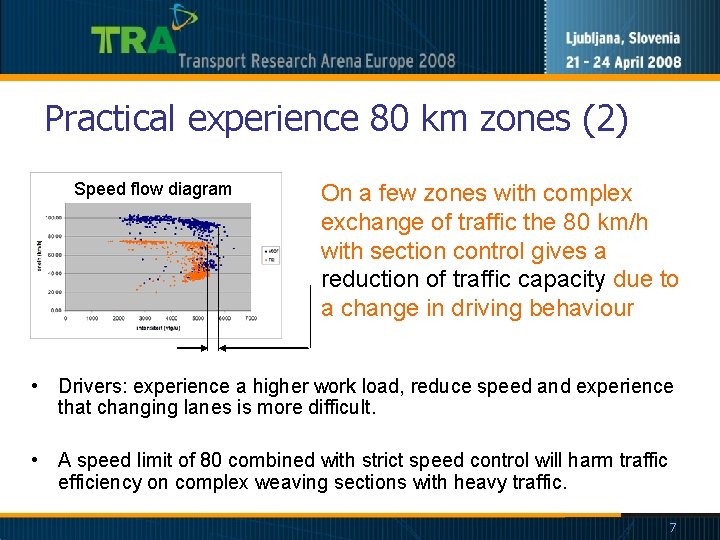
Practical experience 80 km zones (2) Speed flow diagram On a few zones with complex exchange of traffic the 80 km/h with section control gives a reduction of traffic capacity due to a change in driving behaviour • Drivers: experience a higher work load, reduce speed and experience that changing lanes is more difficult. • A speed limit of 80 combined with strict speed control will harm traffic efficiency on complex weaving sections with heavy traffic. 7
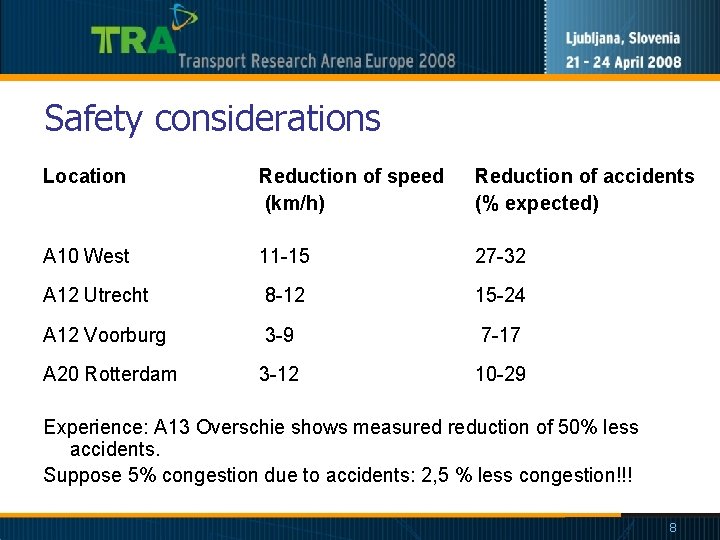
Safety considerations Location Reduction of speed (km/h) Reduction of accidents (% expected) A 10 West 11 -15 27 -32 A 12 Utrecht 8 -12 15 -24 A 12 Voorburg 3 -9 7 -17 A 20 Rotterdam 3 -12 10 -29 Experience: A 13 Overschie shows measured reduction of 50% less accidents. Suppose 5% congestion due to accidents: 2, 5 % less congestion!!! 8
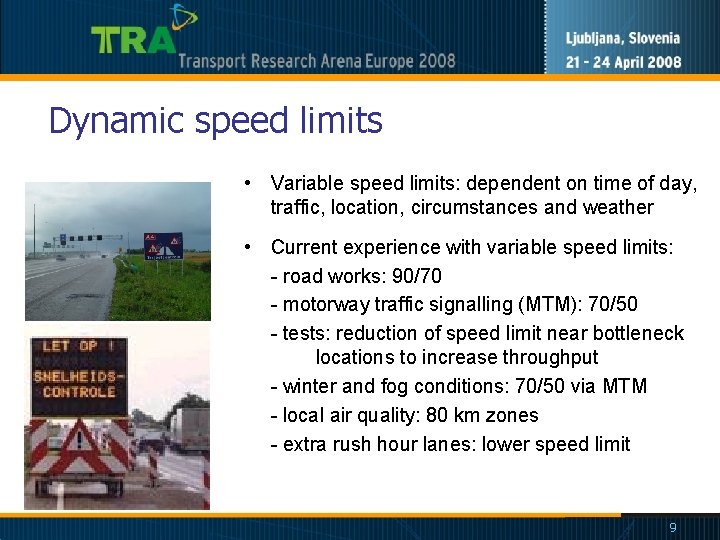
Dynamic speed limits • Variable speed limits: dependent on time of day, traffic, location, circumstances and weather • Current experience with variable speed limits: - road works: 90/70 - motorway traffic signalling (MTM): 70/50 - tests: reduction of speed limit near bottleneck locations to increase throughput - winter and fog conditions: 70/50 via MTM - local air quality: 80 km zones - extra rush hour lanes: lower speed limit 9
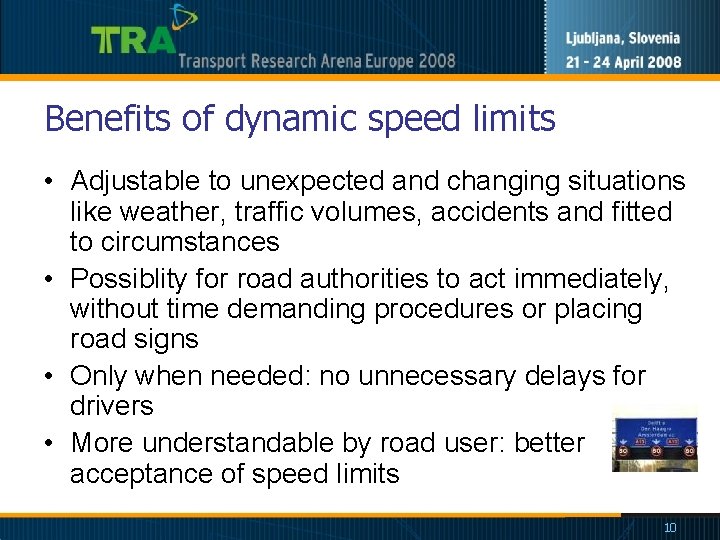
Benefits of dynamic speed limits • Adjustable to unexpected and changing situations like weather, traffic volumes, accidents and fitted to circumstances • Possiblity for road authorities to act immediately, without time demanding procedures or placing road signs • Only when needed: no unnecessary delays for drivers • More understandable by road user: better acceptance of speed limits 10
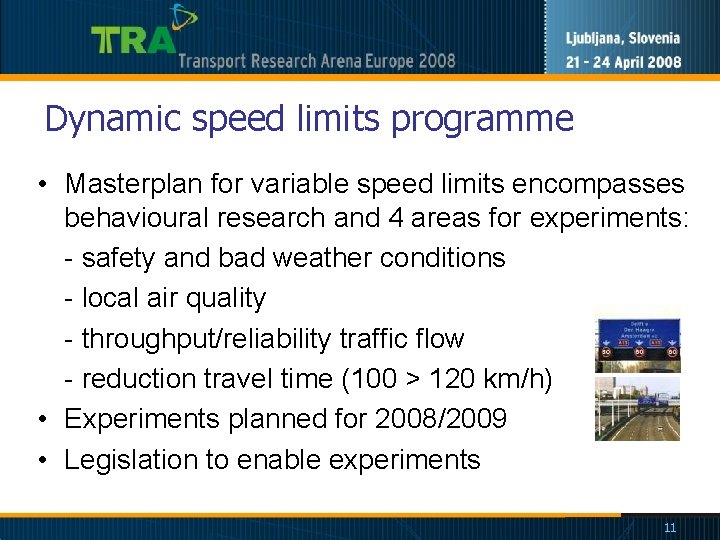
Dynamic speed limits programme • Masterplan for variable speed limits encompasses behavioural research and 4 areas for experiments: - safety and bad weather conditions - local air quality - throughput/reliability traffic flow - reduction travel time (100 > 120 km/h) • Experiments planned for 2008/2009 • Legislation to enable experiments 11
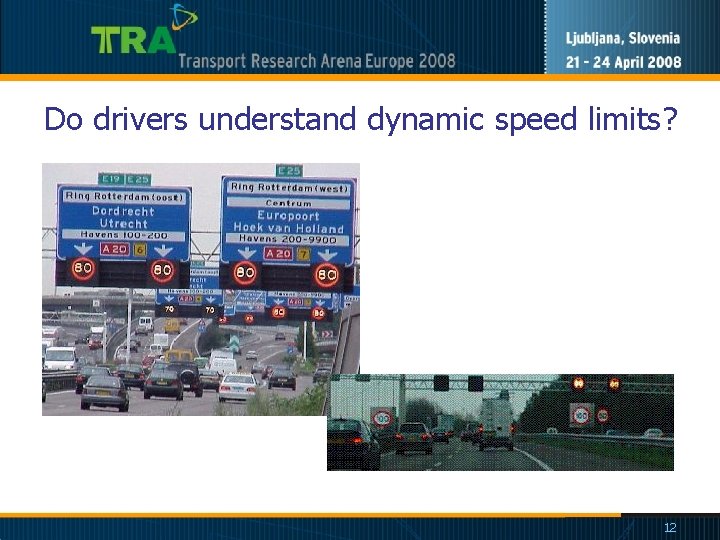
Do drivers understand dynamic speed limits? 12
Conclusions • Speed limit reductions with strict enforcement are an effective tool to reduce local traffic emissions • Be careful when applying the measure on sections with heavy bottlenecks and complex weaving sections • Dynamic speed limits dependent on actual circumstances like traffic, weather, road and environmental conditions look promising 13